The Angel Named Night Who Fought Beside Abraham in the Dark
Abraham rode against four kings with too few men, so the sages named who fought in the dark beside him, an angel called Night.
Table of Contents
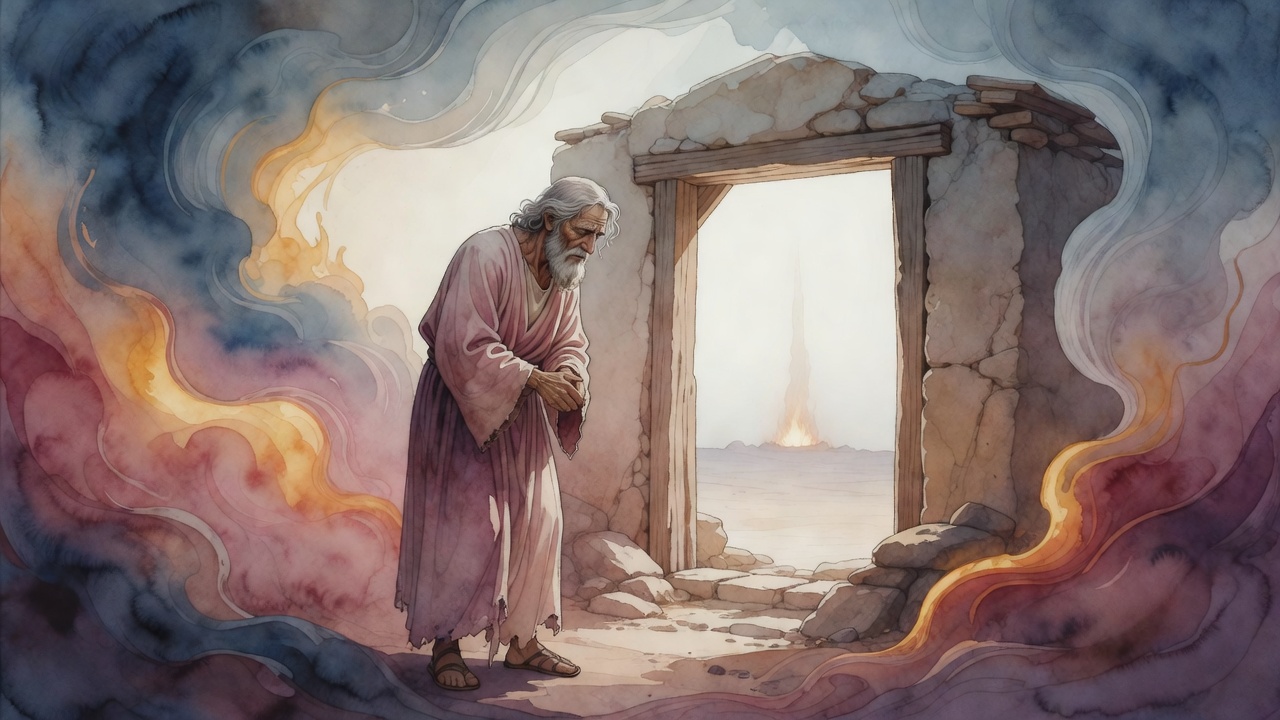
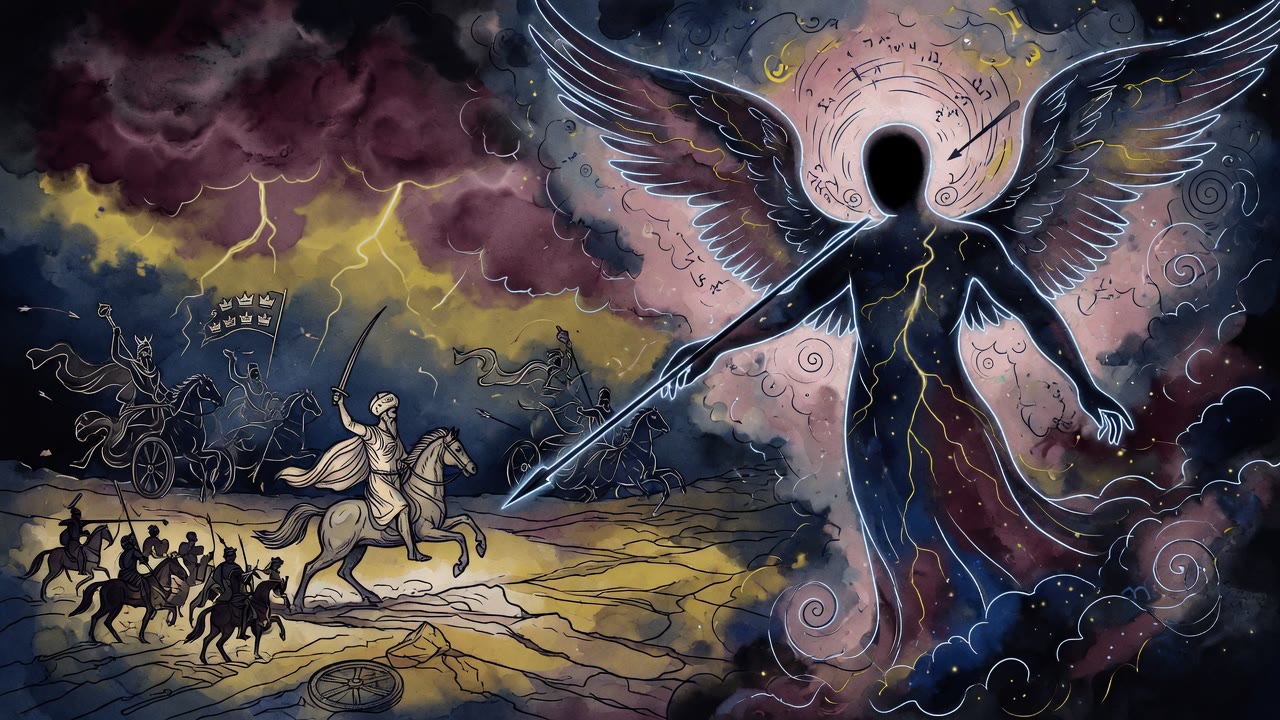
The torches went out one by one as Abraham rode north, and he did not order them relit. Three hundred and eighteen men rode behind him into a country with no moon. Somewhere ahead, four kings drove a column of captives and plunder toward their own cities, and chained somewhere in that column was Lot, his brother's son, taken when Sodom fell. The kings had armies. Abraham had a household. He chose the dark on purpose.
 Click for full size
The Hour That Took His Side
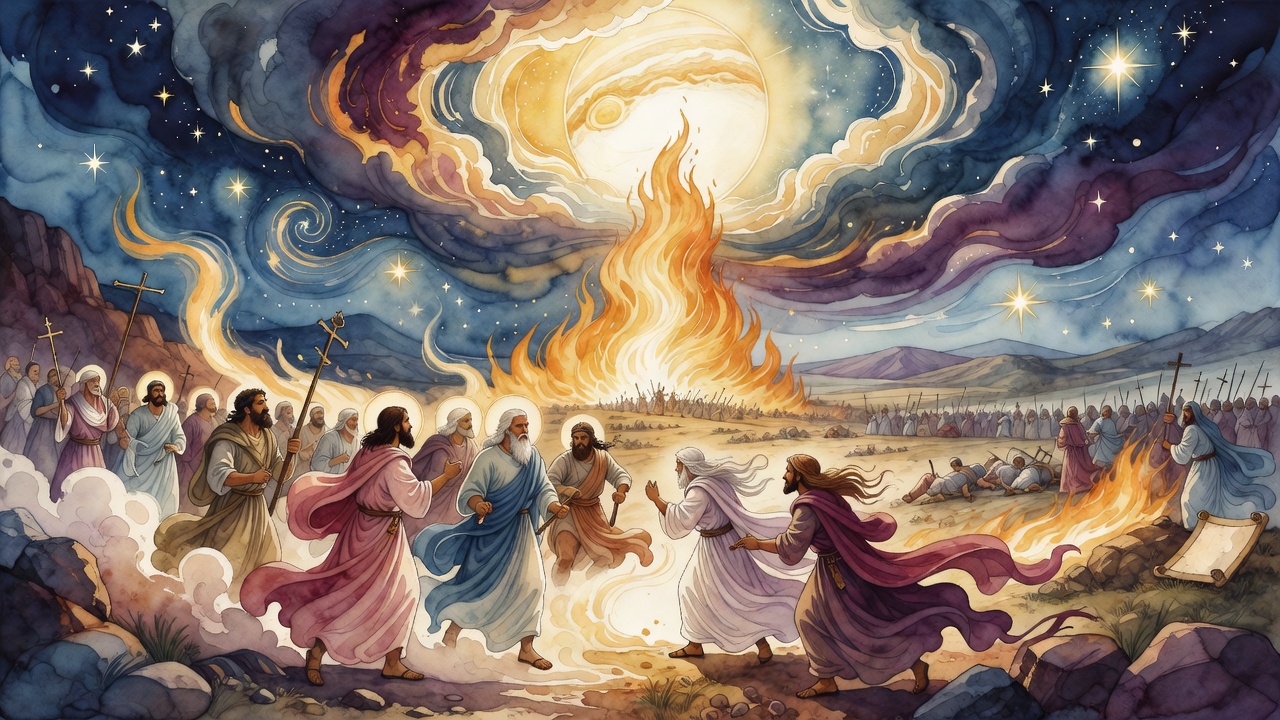
The sages who later studied this raid asked a plain question with a strange answer. Who fought beside the old man when the numbers made no sense? Not Eliezer alone, not the trained servants alone. Rabbi Yochanan gave the name of the one who came down to stand with him, and the name was Night.
He proved it from a verse that had nothing to do with battle. In the Book of Job a man curses the hour of his own conception, and he says, "and the night that said, A man-child is conceived." A night that speaks. A night with a mouth and an opinion. If night could speak in Job, Rabbi Yochanan reasoned, then night could be summoned, and the one summoned for Abraham wore that name the way a soldier wears his own.
Picture it that way, because the sages did. Not a metaphor for late hours. A presence. The darkness over the road thickened into something that had chosen a side, and the side it chose was the man with too few men.
The Smith Sharpened the Answer
Another voice cut in. Rabbi Yitzchak Nappacha, the smith, did not like calling the angel itself by the name Night. He said the angel was called that for a different reason. A deed of the night was done for Abraham. The hours of darkness themselves did the work, the way they once did it for an army at a different river.
He reached for the song Deborah sang after Sisera's chariots were broken. "From heaven they fought," she had sung, "the stars in their courses fought against Sisera." The constellations had left their tracks and gone to war. A whole sky had turned soldier once, on Israel's behalf, against a general who had never lost.
The smith's claim was simple and enormous. What happened to Sisera in the open field happened to the four kings on that black road. The cosmos enlisted. Abraham did not bring enough men because he did not need enough men. He brought the night, and the night brought the stars, and the stars came down off their courses to fight a war that belonged, on paper, to a coalition of empires.
Rabbi Shimon ben Elazar listened to both readings and gave his verdict in a smith's idiom. "Better is the smith's word," he said, "than the smith's son's word." The craftsman had hammered the better blade. Let the deed of the night stand.
Iron Could Not Be Worn
So the road ran the way Deborah's field had run. The four kings had marched all the way from the east, sacking cities, dragging kings of the plain behind them in their own chains. They feared no household out of Hebron. They had crushed giants on the way down, the Rephaim and the Emim and the Horites, peoples whose names were used to frighten children.
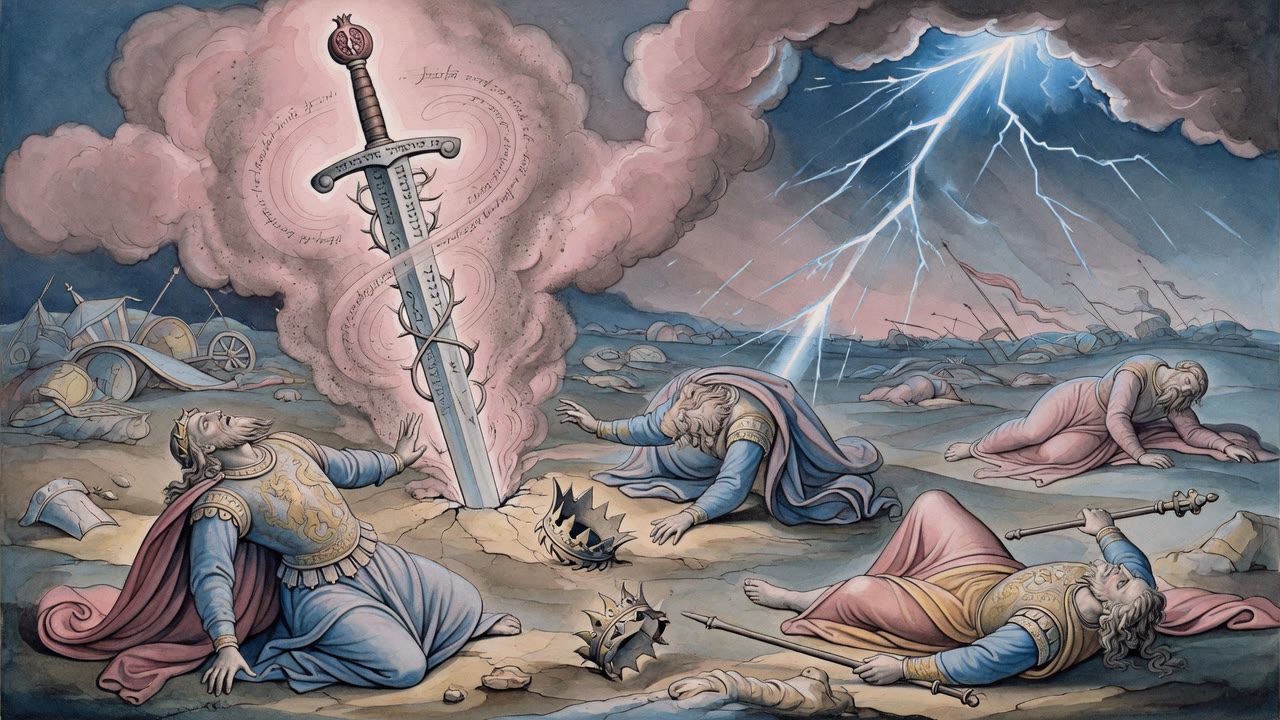
Then the dark closed over their camp and would not lift on schedule. The lights overhead did not hold their stations. A heat like the one that had stripped Sisera's men of their armor came down on the four kings, and the captives in the column felt the chains slacken in confused hands. Abraham struck the way a man strikes when the weather itself is his ally. He divided his small force in the blackness and fell on them and did not stop.
The Border Where His Strength Failed
He chased them north, scattering kings and freeing the captives, and he kept riding until he reached a place called Dan. There, Rabbi Yochanan said, the strength went out of the righteous man's arms.
It was not the enemy that drained him. It was a thing he was shown at that border. He saw, standing on the ground his sword had won, that this very spot was where his own descendants would one day set up a calf of gold and bow to it. The future bent down in front of him and worshipped an idol, and his hands went weak on the reins. He had ridden through the night with the stars at his back, and at Dan the only thing strong enough to stop him was the sight of his children's sin.
Even the enemy felt the weight of that place without knowing why. When ruin later came down on the land from the north, the prophet marked the same border. "From Dan was heard" the snorting of the horses, the whole earth trembling at the sound. Dan was the edge of Abraham's strength and the gate of Israel's grief, one line on the map carrying both.
What He Refused at the Gate of Sodom
He came back down out of the dark a war hero, and the king of Sodom rode out to meet him with an offer. The man whose city Abraham had just saved bowed and said, "Our Lord Abram, give unto us the souls which thou hast rescued, but let the booty be thine." Keep the plunder. Keep the gold the four kings had dragged from a dozen cities. Just return the people.
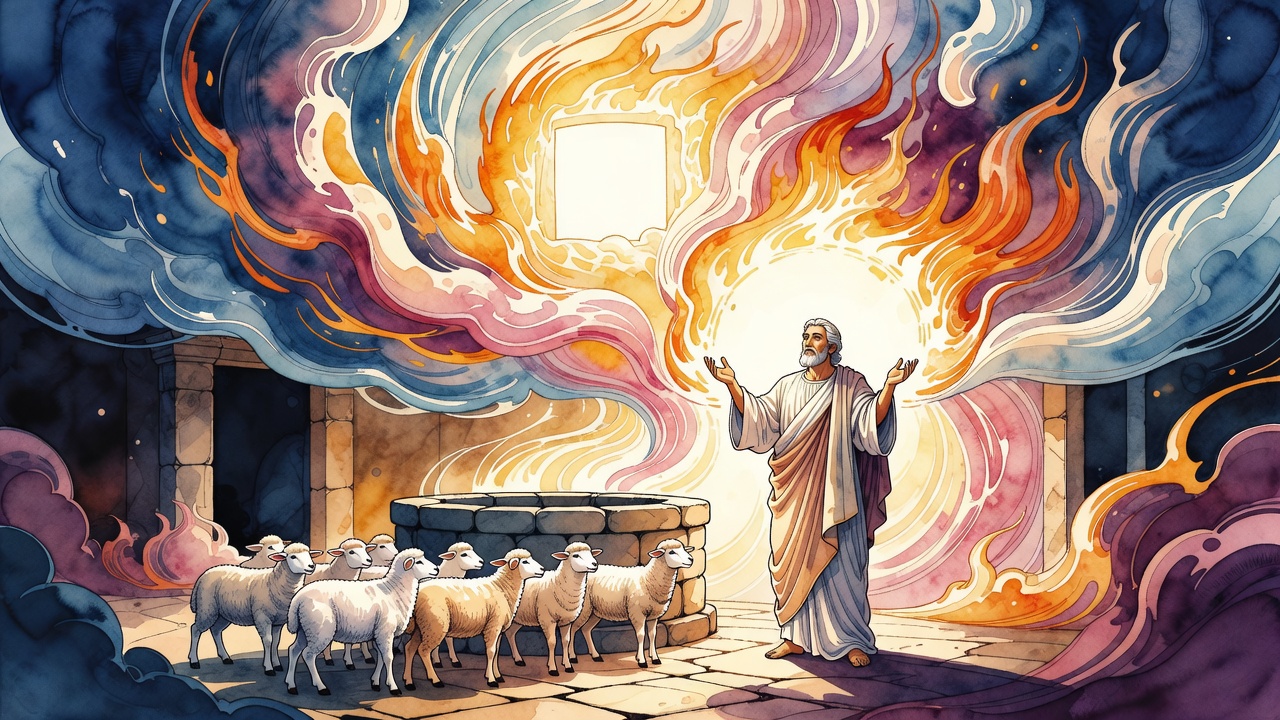
Abraham had ridden through a night that the heavens themselves had fought for him. He would not let a king of Sodom claim a thread of it. He lifted his hand and swore, "I lift up my hands to the Most High God, that from a thread to a shoe-latchet I shall not take aught that is thine, lest thou shouldst say I have made Abram rich." Not a sandal-strap of it. He would not let any mouth on earth say the man who won by the stars had been made wealthy by Sodom.
He made one exception, and it was not for himself. The young men had eaten on the march. And Aner, Eshcol, and Mamre, the allies who had ridden out with him into the dark, would take their portion. The men who fought beside him in the night, the human ones, would not go home empty. The night had already taken its own pay.
← All myths