Parshat Vayishlach5 min read

Kings Marched on Jacob Until Terror Froze Them

After Shechem fell, allied kings gathered to wipe out Jacob. Their own counselors recited Abraham's miracles until the armies turned home.

Curated by Arthur · Told by Maggid ·
Table of Contents
  1. Swords After a City
  2. Counselors Who Recited Miracles
  3. Armies That Turned Around
  4. The Sons Answer With One Voice
  5. What Held When Steel Did Not
Kings Marched on Jacob Until Terror Froze Them Click for full size

Swords After a City

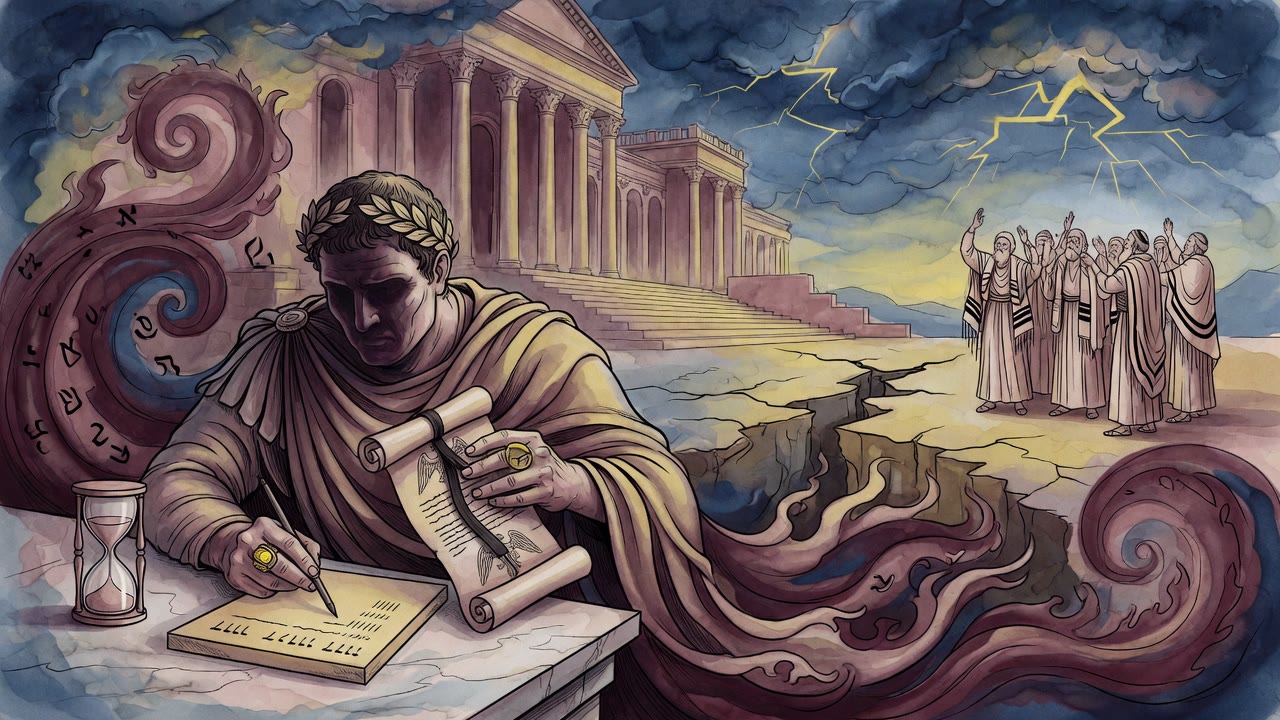
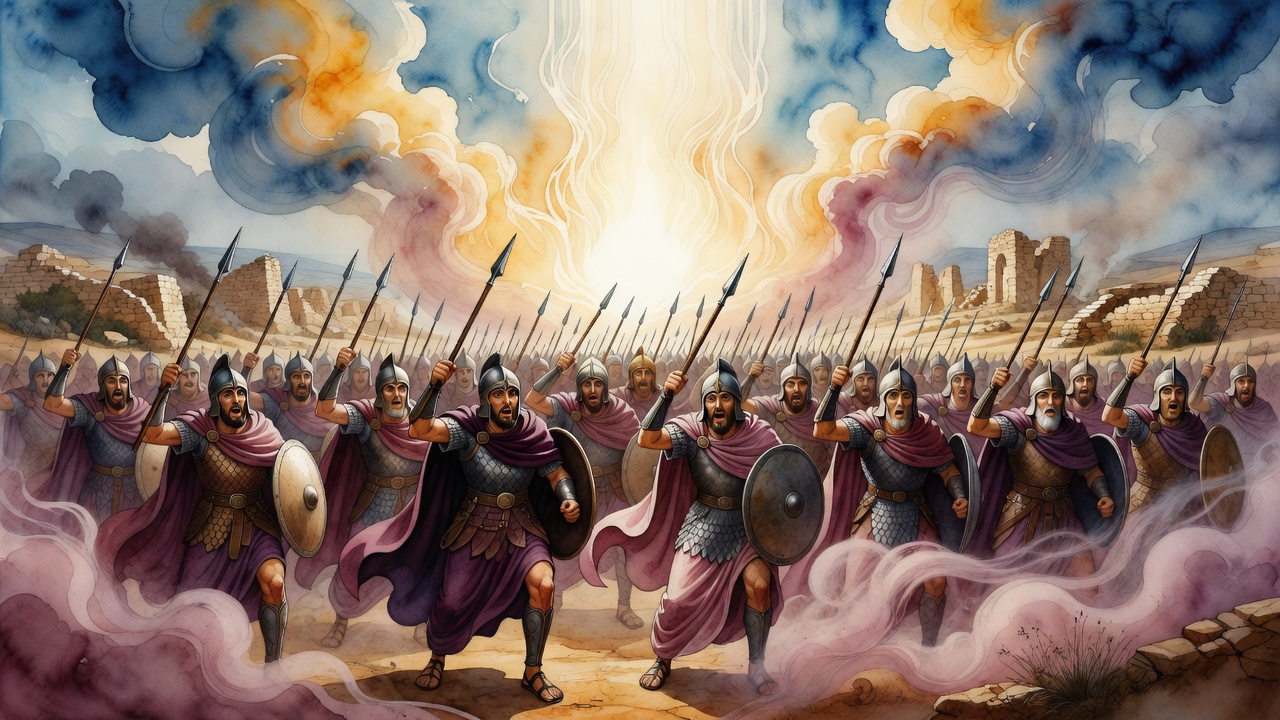
Jacob's sons had left a city smoking. Shechem lay broken from their raid, and the surrounding kings did not treat that slaughter as a private quarrel. They mustered. Alliances formed overnight. Horses, spears, and the cold arithmetic of revenge filled the camps that ringed the hill country. One household of herdsmen had made war on a town. Now a coalition meant to erase that household before it became a nation.
Jacob stood where a father stands when sons have already chosen steel. The ground under his feet held graves of a people his children had cut down. The ground beyond the ridge held armies that wanted the same for him. Divine favor had followed Abraham's line before. Divine favor did not promise an easy morning.

The kings advanced as if history had already written Israel small enough to step on.

Counselors Who Recited Miracles

Inside the war councils the royal advisors did something stranger than strategy. They did not praise Jacob's numbers. They did not invent a treaty. They told stories. Miracle after miracle done for Abraham, for Isaac, for Jacob, for the sons already stained with Shechem's blood. Plagues remembered. Paths opened. Enemies broken by a Name rather than a larger host.

The highlight reel of heaven's interventions became a weapon against the war itself. One minute a king sharpened a blade. The next he heard of a God who needed no reinforcement from local chariots. The counselors were not singing hymns for pleasure. They were trying to keep their masters from walking into a fire that had already burned greater powers.

Storytelling turned into a shield. The kings listened and felt their courage drain into something colder than strategy. Fear of Jacob's sons was ordinary. Fear of the God who stood behind them was not a calculation any general could map.

Armies That Turned Around

The coalition broke without a clash. Kings wheeled their columns home, each to his own city, as if the road itself had grown teeth. No trumpet of victory sounded from Jacob's camp. No charge answered a charge. The field stayed empty while the threat dissolved into dust trails retreating in every direction.

Jacob and his sons held their ground the whole day, waiting for a battle that never came. They watched. They listened for drums that stayed silent. When evening fell and no army advanced, they went home under a sky that had chosen not to open for slaughter.

A war can end in blood. This one ended in memory. The kings had been ready to fight men. They would not fight the ledger of miracles read aloud in their own tents.

The Sons Answer With One Voice

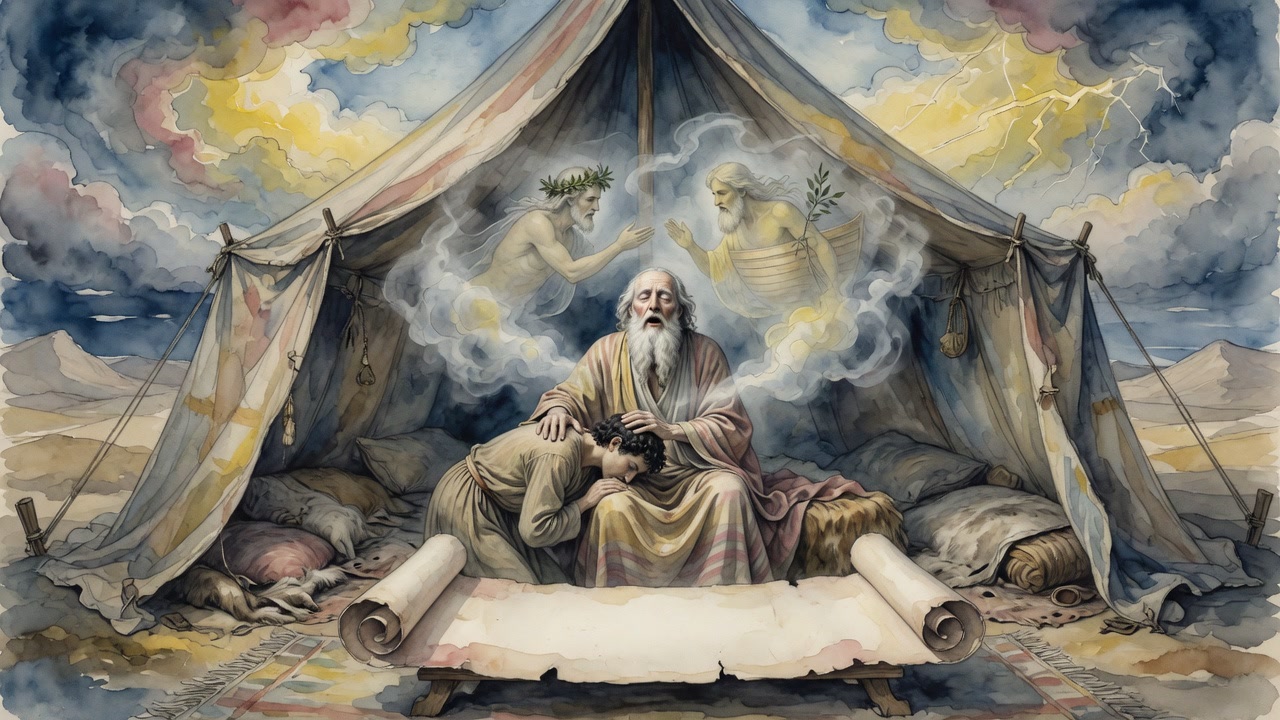
Later anxiety found Jacob from another angle. An accident shook him. The details stayed thin, but the fear was thick. He looked at the twelve who would carry the line and wondered whether any heart among them still leaned toward idols. Abraham had produced blemished branches in Ishmael and the sons of Keturah. Isaac had produced Esau. Jacob named the pattern out loud and asked whether his own house hid the same rot.

The twelve answered as one body. "Hear, O Israel, our father, the Eternal our God is the One Only God." The words hit like the later Shema, spoken first as sons to a trembling father. As his heart was one in naming the Holy One, so their hearts were one. Jacob, flooded with relief, answered, "Praised be the Name of the glory of His majesty forever and ever!"

The messianic secrets still stayed veiled. Each son still received a blessing that only hinted at futures not yet born. Unity did not erase danger. It proved the house could still stand under one Name after steel and after fear.

What Held When Steel Did Not

Shechem's ruin had invited an empire of neighbors. Recited miracles turned that empire around. Jacob's doubt invited a different invasion, the suspicion that his own sons would fracture into idol-service. Their shared confession turned that invasion around as well.

The family that could burn a city also stood all day without swinging a sword when heaven did the work through memory. The family that could make a father fear idolatry also locked its voice into a single line of loyalty. Both turns left the camp smaller than a kingdom and larger than a raid.

Night came without the alliance of kings. Night came with a father who had heard his sons refuse to be double-hearted. The road ahead still held Egypt, famine, and a long thin future. For one day the coalition of nations learned to fear a Name, and for one moment the coalition of brothers proved it still belonged to that Name.

Jacob did not need to invent a larger army. He needed sons who would not sell the altar for a quieter life under foreign gods, and neighbors who remembered what happened to people who tested Abraham's God. Both arrived. One through counselors who told the truth in a war tent. One through twelve mouths that refused to splinter.


← All myths
From the tradition

Sources

2 sources

The texts behind this telling. Some cards carry a translation of the source; others are our own retelling of it, and each card says which. Every card links out to the original.

Legends of the Jews 6:234Legends of the Jews

Retold in our words. Read the original at the link below.The Legends of the Jews by Louis Ginzberg (1909) · Public Domain

It’s a story often overlooked, nestled within the larger narrative of Jacob’s sons.

Okay, maybe more than a pickle. They’d essentially committed an act of war against an entire city.

It first appears, "Well, they're Jacob's sons! Surely they had some divine protection. " And you wouldn't be entirely wrong. But divine protection doesn't always mean smooth sailing. Sometimes, it means navigating choppy waters with a little help from above.

In Ginzberg's retelling in, Legends of the Jews, the surrounding kings weren't exactly thrilled about the decimation of Shechem. Understandably so! They gathered their armies, ready to retaliate against Jacob and his family. An alliance of kings, poised to wipe out the fledgling Israelite nation before it even truly began.

But what stopped them? What prevented this devastating preemptive strike?

Here's where things get interesting. The royal counselors, advisors to these assembled kings, stepped in. They didn't advocate for war. Instead, they launched into a detailed recounting of all the miracles and mighty deeds God had performed for Abraham, Jacob, and his sons. We're talking about a highlight reel of divine intervention, a greatest-hits compilation of God's power.

One minute you're sharpening your swords, the next you're hearing about plagues, parting seas, and miraculous victories. It’s quite the deterrent.

And it worked!

The kings, upon hearing these tales, were overcome with fear. Fear. Not of Jacob’s sons, not of their military might, but of the God who stood behind them. They realized they weren’t just fighting a tribe; they were potentially fighting the Almighty. And that, my friends, is a battle no one wants.

So, the kings turned their armies around and retreated, each heading back to his own city. They stood their ground that entire day, expecting a battle that never came. They waited. They watched. And as evening fell, and no armies advanced, they finally returned home.

What does this story tell us? Perhaps it's a reminder that even when we face seemingly insurmountable odds, there's always a larger power at play. Or maybe it's a lesson in the power of storytelling itself – how narratives can shape perceptions, instill fear, and even prevent wars. Whatever your takeaway, it's clear that this close call shaped the destiny of the Jewish people. And it all hinged on a few well-placed stories.

Full source
Legends of the Jews 1:393Legends of the Jews

Retold in our words. Read the original at the link below.The Legends of the Jews by Louis Ginzberg (1909) · Public Domain

That feeling runs deep in our stories, especially when we look at the patriarch Jacob.

Jacob, wrestling with his own past and the legacy of his forefathers, finds himself in a moment of deep anxiety. An accident, the details of which aren't specified here, shakes him. He worries that his sons, the future of the Israelite nation, might not be spiritually ready, not pure enough to receive the secrets of the Messianic era.

He voices his fears, drawing on the past. "Ishmael and the sons of Keturah," he says, referring to branches of Abraham's lineage, "were the blemished among the issue of my grandfather Abraham; my father Isaac begot a blemished issue in Esau." In other words, even the great patriarchs had children who strayed from the path. And now, Jacob fears, the same might be true of his own sons. As Ginzberg tells us in Legends of the Jews, Jacob suspects that perhaps "among you, too, there is one that harbors the intention to serve idols."

Then, something extraordinary happens. The twelve sons, standing united, declare with one voice: "Hear, O Israel, our father, the Eternal our God is the One Only God." It's a powerful affirmation, a clear echo of the Shma, the central prayer in Judaism, a declaration of God's oneness. "As thy heart is one and united in avouching the Holy One, blessed be He, to be thy God, so also are our hearts one and united in avouching Him."

Their declaration is so forceful, so unified, that Jacob is overcome with emotion. He responds, "Praised be the Name of the glory of His majesty forever and ever!" This phrase, traditionally recited quietly in the synagogue, is here a spontaneous outburst of joy and relief.

Even though the full revelation of the Messianic time remains veiled, each son receives a blessing that hints at the future. It's like a puzzle, each piece containing a fragment of the larger picture. As we find in Midrash Rabbah and other sources, these blessings are full of symbolism and allusions to events yet to come.

What does this story tell us? Perhaps it's a reminder that doubt and fear are part of the human experience, even for the greatest among us. But it's also evidence of the power of unity, of shared faith, and the enduring hope for a better future. And maybe, just maybe, it suggests that even when the full picture isn't clear, there are always glimpses of light, whispers of promise, waiting to be discovered.

Full source