Abraham the Wall, Rebecca Among the Thorns
Abraham holds firm in Nimrod's furnace and names himself a wall. Generations later Rebecca keeps clean among the swindlers of Padan Aram.
Table of Contents
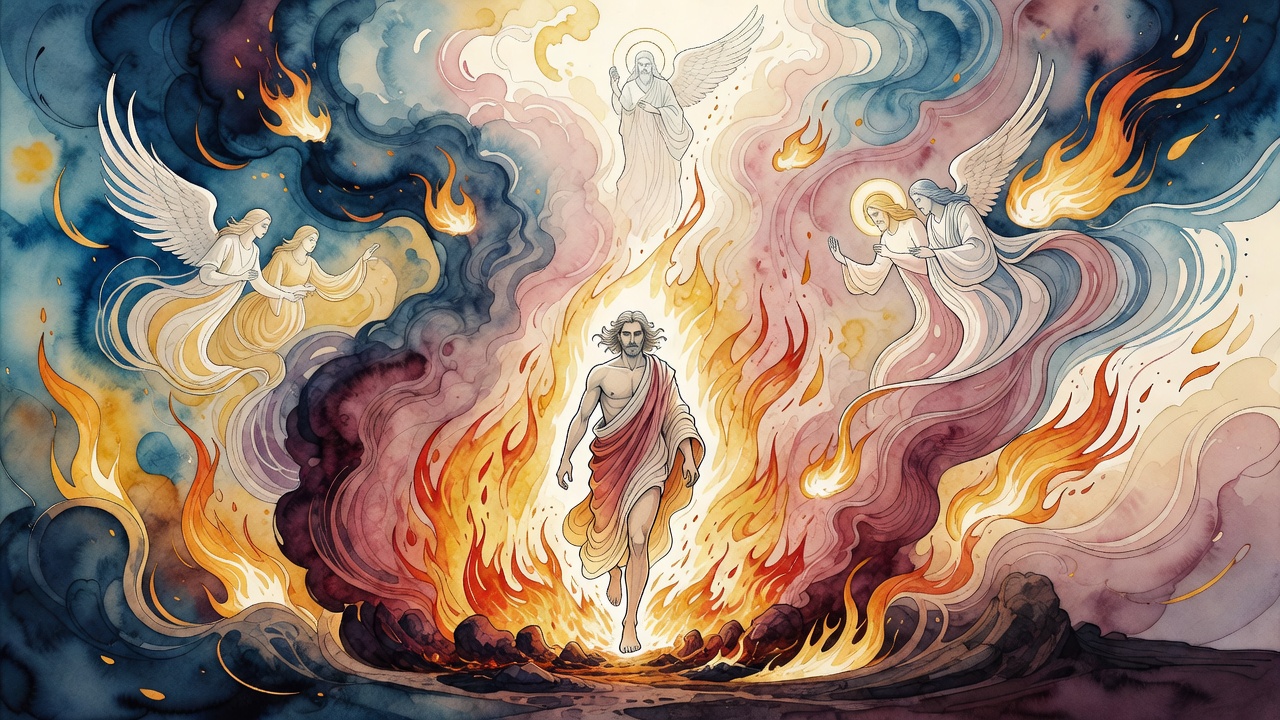
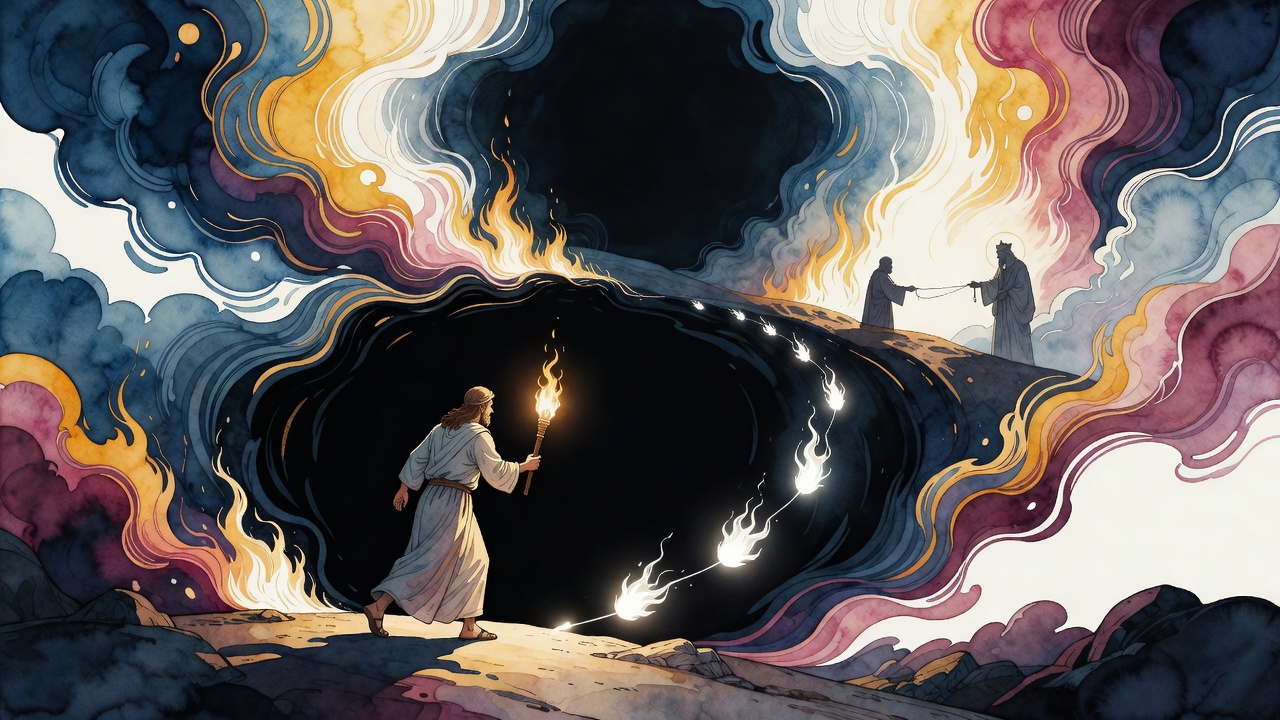
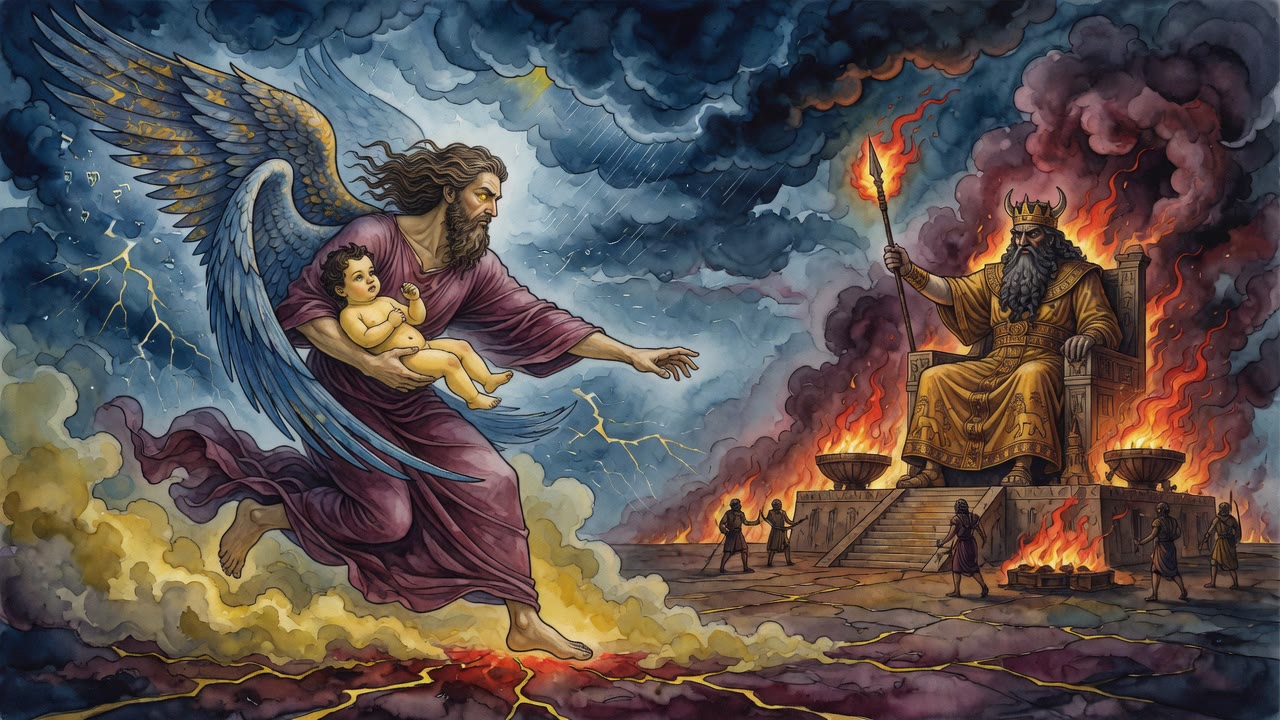
The furnace mouth opened like a throat. Heat slapped Abraham's face before the guards shoved him forward. Idols waited behind him in the city, cold and polished. He had refused them. Nimrod's answer was fire.
 Click for full size
I Am a Wall
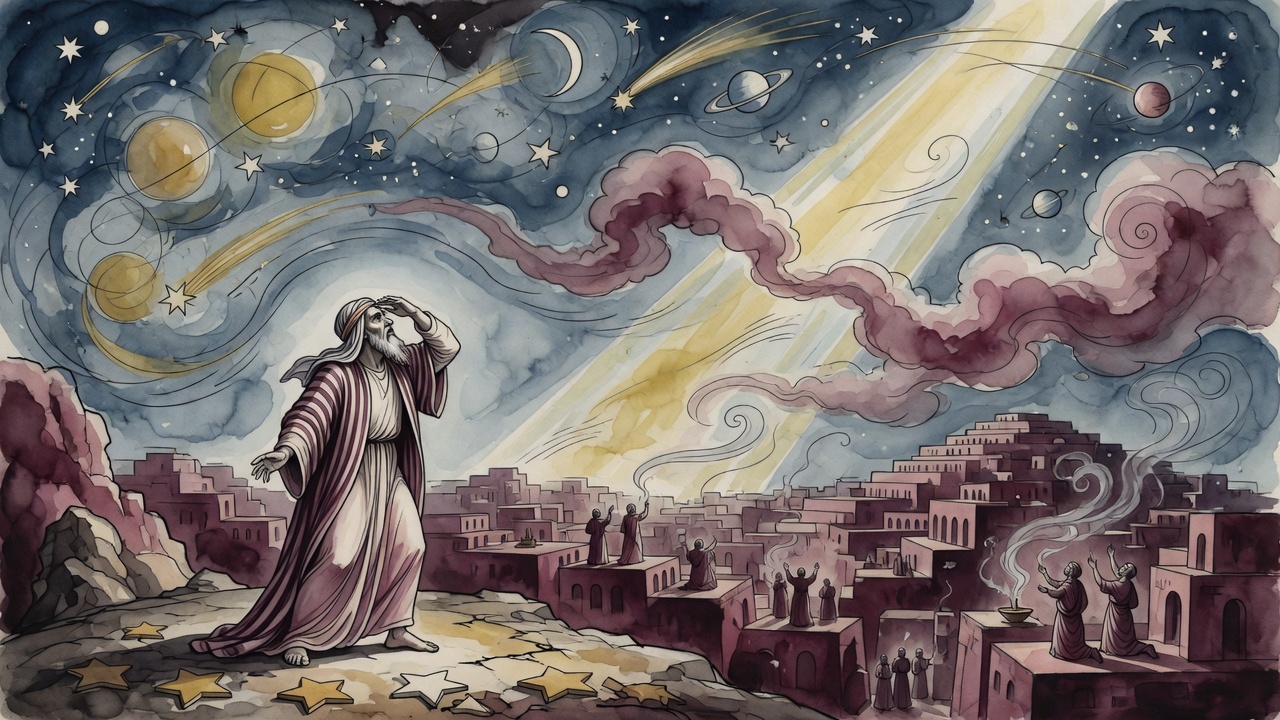
Heaven put a choice in images before the man who would not bow. If he stands firm in his convictions like a wall, rescue will build him up in this world like a silver turret on stone. If he sways like a door, poor in deeds, swinging one way and then the other, heaven's stand with him will last only as long as a drawing lasts on a wall, a shape that fades when the light shifts.
Abraham did not sway.
"I am a wall," he said before the Holy One, "and I will establish my good deeds like a wall." He claimed more than survival. He claimed a future of towers: offspring and factions of righteous people he would raise the way a wall raises height against wind. Breasts like towers meant the nursing of generations who will not fold.
Then the fire took him.
Out of the Fire of the Chaldeans
The Holy One answered the wall with a promise that matched the heat. "Just as you descended into the fiery furnace, so I will bring you out intact." That is what is written: "I am the Lord who took you out of Ur of the Chaldeans" (Genesis 15:7). Ur, in the old tongue, means fire. Exit from the Chaldeans was exit from the blaze.
Abraham walked out without the smell of burning on his skin. The city that had thrown him in still stood. The idols still waited for other knees. He did not go back to bow. A wall does not swing on a hinge to please a crowd.
Peace found him in the eyes of heaven: not the peace of comfort, the peace of a man who had been measured against flame and had not become a door.
A Lily in a Field of Thorns
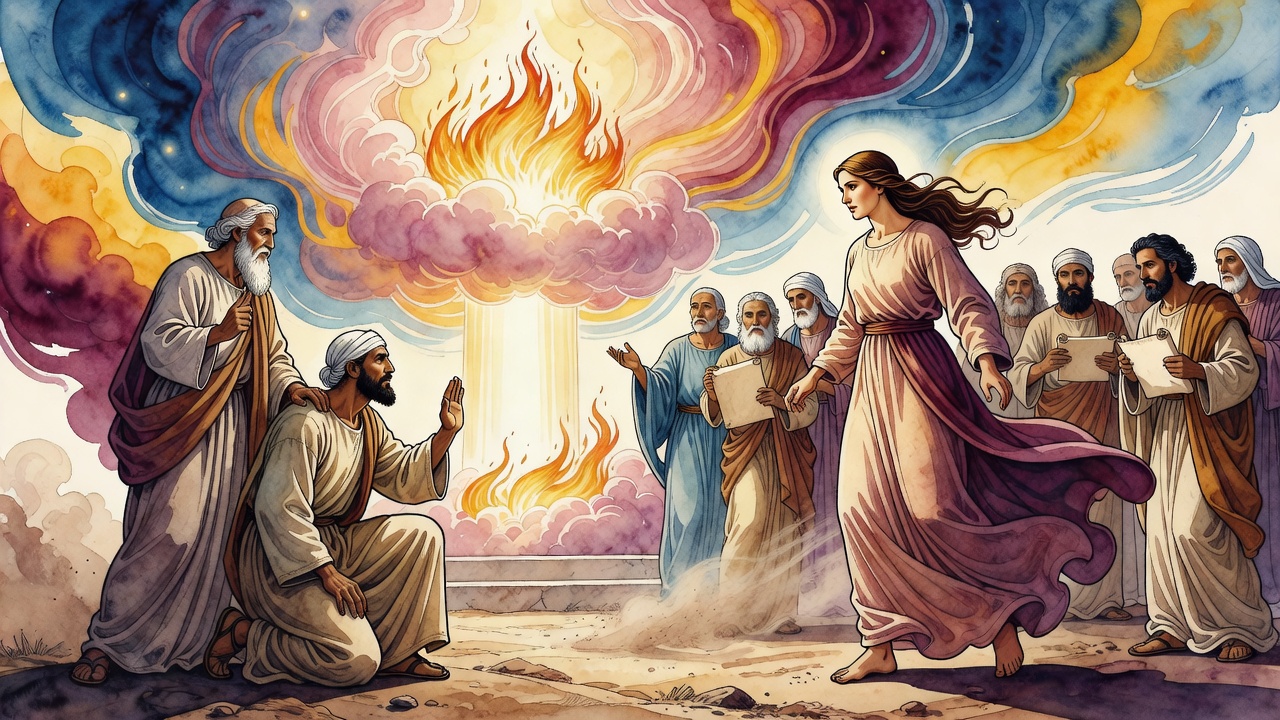
Generations later, in Padan Aram, a girl grew up among people the Torah names as Arameans three times over. Daughter of Betuel the Aramean. Sister of Laban the Aramean. From Padan Aram itself (Genesis 25:20). The verse piles the labels until their meaning hardens: her father a swindler, her brother a swindler, the people of her place swindlers.
Thorns on every side. Bargains with hooks in them. Smiles that counted coins while they sized up a guest.
Rebecca did not grow thorns to match them.
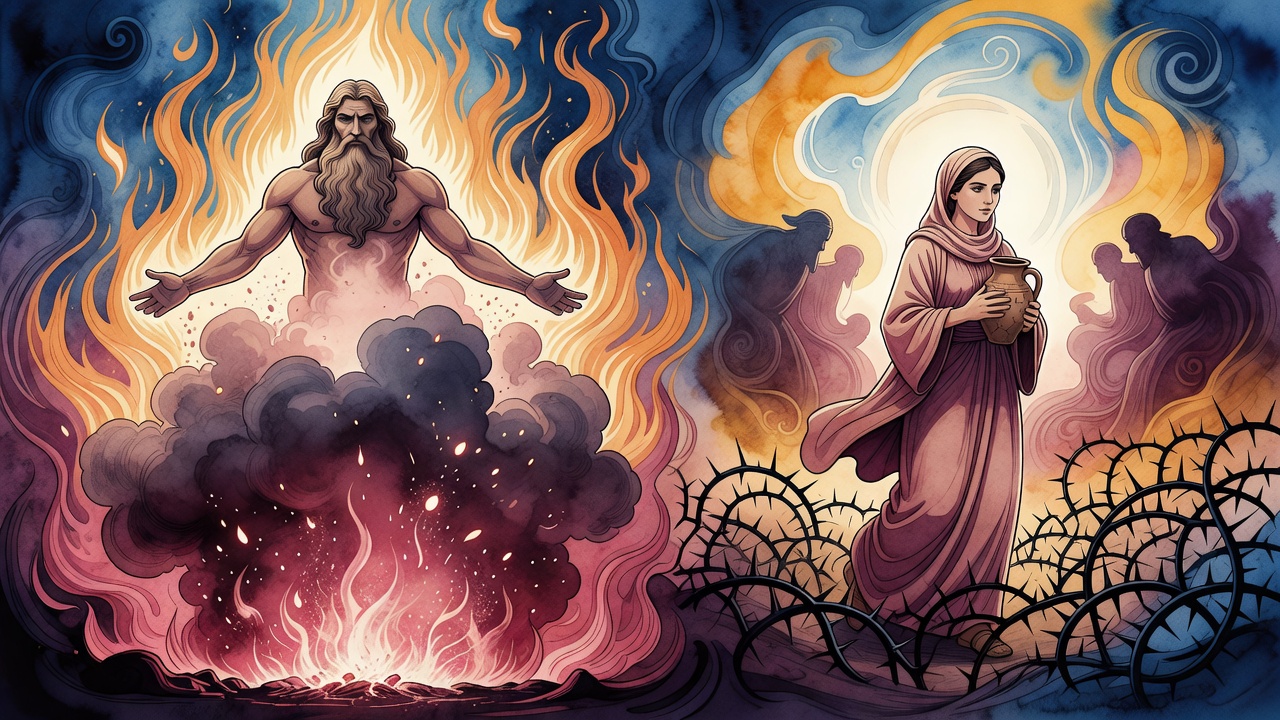
She stayed honest in a house that ran on deceit. She kept a clean measure where the custom was to tilt the scale. The Song places her there: "Like a lily among the thorns, so is my love among the girls" (Song of Songs 2:2). Not a lily in a garden. A lily that has to bloom with spikes pressing its stem.
The Road Back Into the Thorns
When Isaac later sent Jacob to the same country, to Laban son of Betuel the Aramean, the verse again gathers the whole line under one charge of swindling. Jacob walked into the thicket his mother had left. He did not learn their craft as a native art. Still he would sweat for wages that changed overnight, marry under a veil that lied, and raise sons in a house where love was a ledger.
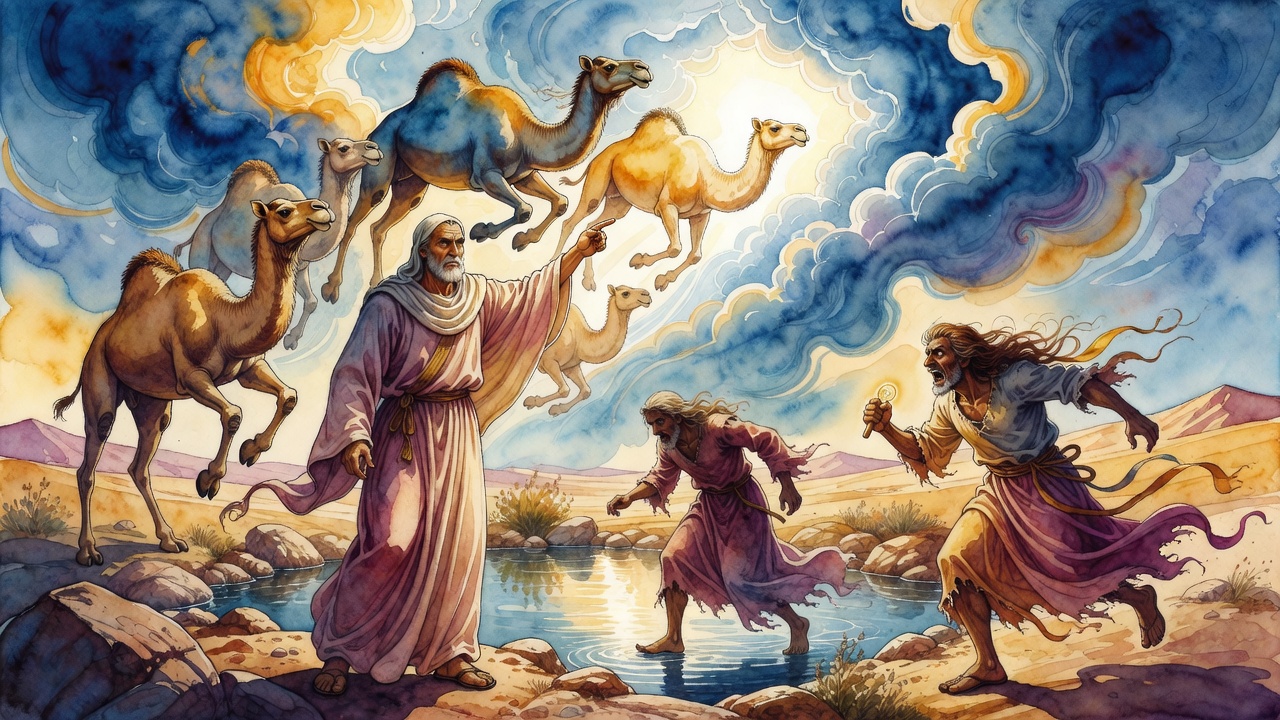
Rebecca had already proved a body can leave that country without becoming it. She had drawn water for a stranger's camels until the jar emptied and refilled and emptied again, a test of open hands in a land of closed fists. The wall that was Abraham had a granddaughter who would not sway into the family trade.
Thorns remained thorns. The lily did not apologize for being soft where they were sharp.
What Held and What Bloomed
Abraham's wall did not mean he never feared. It meant that when the furnace door shut, his yes to the One God did not swing. Rebecca's lily did not mean Padan Aram turned gentle. It meant a righteous woman could step out of a nest of deceivers without carrying their method as inheritance.
Isaac, forty years old, took her as wife from that thorny ground. The line of the wall married the lily among thorns. Later nights would bring twins who wrestled, a stolen blessing, a flight back toward Laban's fields. The pressure never fully left the blood. The choice to hold firm, or to bloom clean anyway, returned in every generation that remembered Ur and Padan Aram.
In the Song's court of images, a wall receives a silver turret if it stands. A door receives only a temporary panel. Abraham chose stone. Rebecca chose the flower that does not turn into a thorn to survive the thicket. Both walked out of their trials still themselves, one from flame and one from a house of traps, each still named by the choice that held.
← All myths