Abraham Walked On After Sodom Fell to Ash
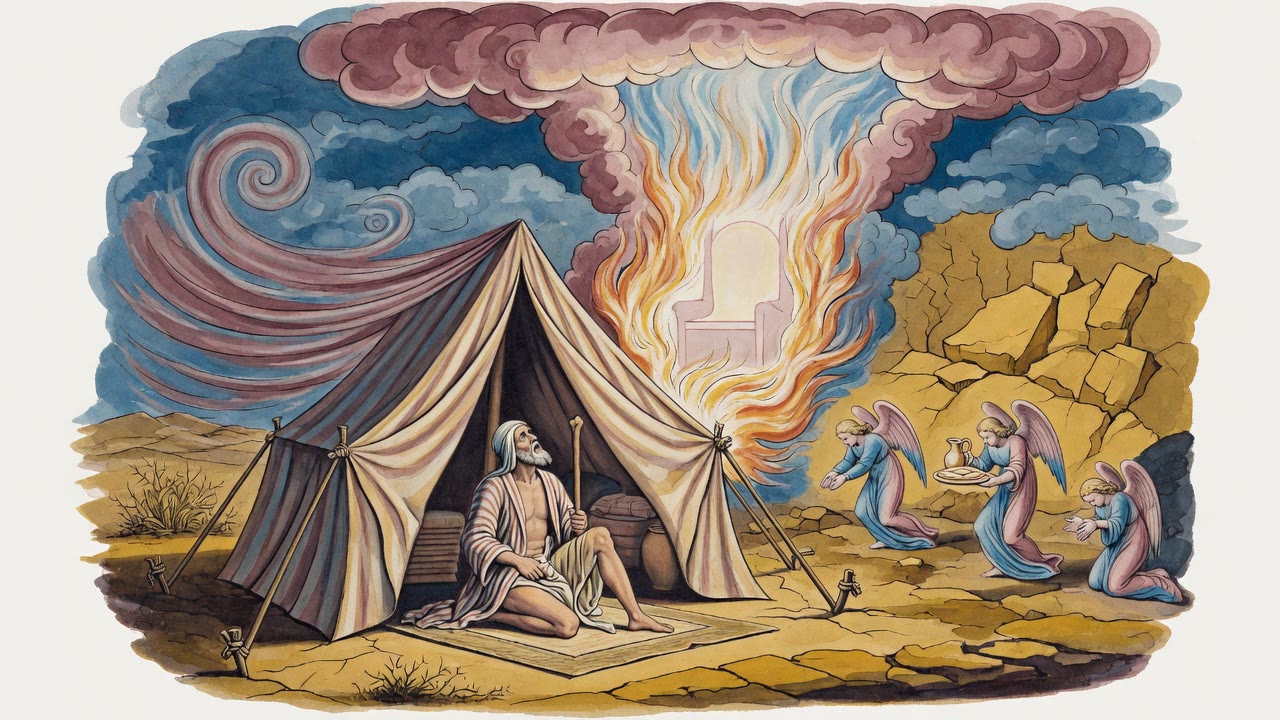
After the plain burned, Abraham did not freeze in grief. He moved to Gerar and opened the same tent that Sodom had refused to learn.
Table of Contents
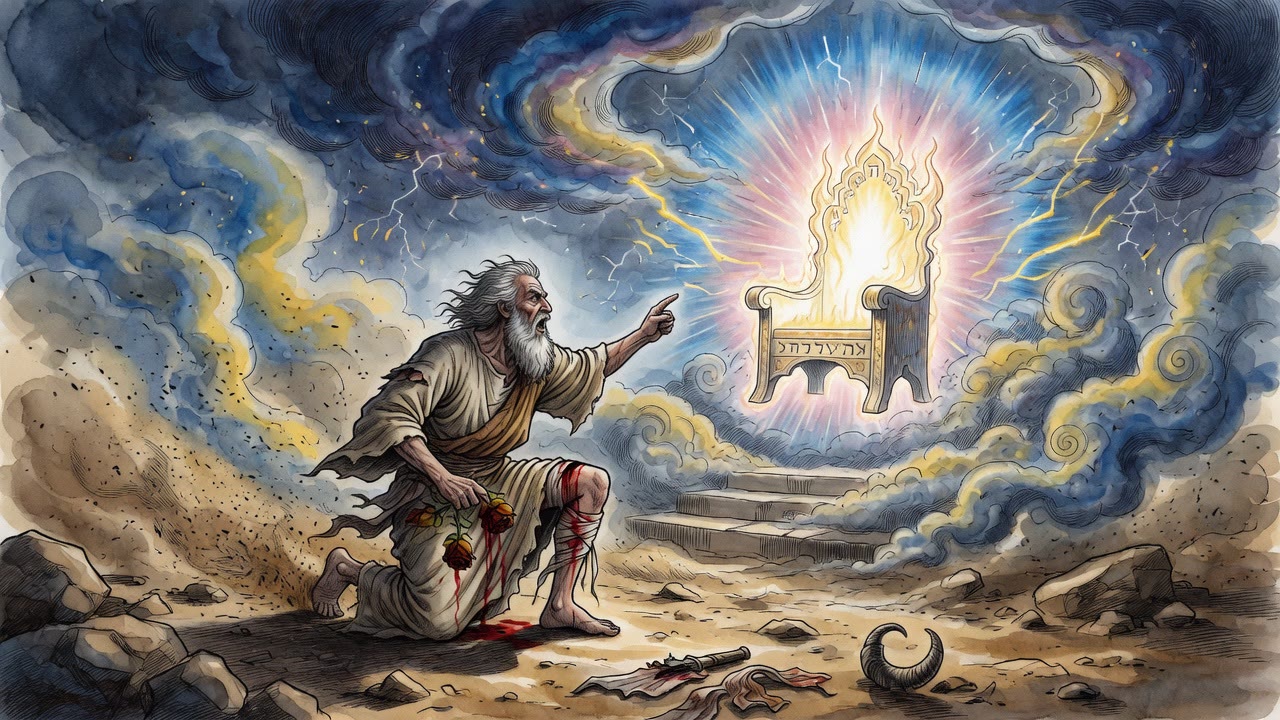
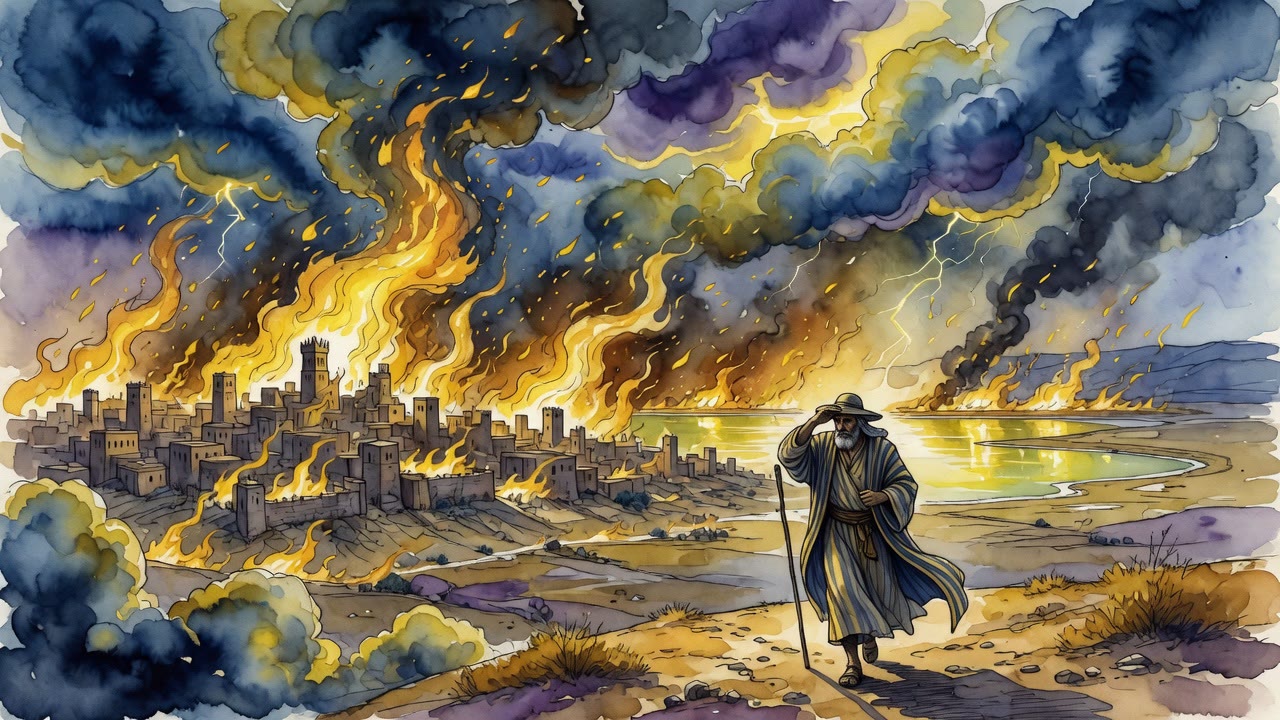
After Sodom went to ash, Abraham did not stand forever at the overlook. He left the ruined plain behind and moved. Not fleeing. Not performing grief for an audience. Simply continuing. The mountain had fallen. The rock had moved from its place. The world in which those cities existed had crumbled, and the man who had argued for them still had a tent to pitch.
 Click for full size
Job's line fit the geography: the mountain falls away and the rock is moved from its place (Job 14:18). Abraham walked into the next chapter with the same open flaps he had always kept.
Near Enough to See
The rabbis refused to let his former address look accidental. He had lived near Sodom, not in it, not of it, but near enough to watch the road. He stayed, he said in their reading, because travelers needed hospitality, and he provided it. Sodom had been generous to no one. "The hand of the poor and needy found nothing there" (Ezekiel 16:49).
Every meal Abraham served on that road was an unspoken rebuke to the city that starved the stranger. When the city was gone, the rebuke had nowhere to land. The contrast collapsed into silence and smoke.
So he went to Gerar. Same table. New horizon. The work of feeding did not retire when the wicked neighbors did.
Separated Without Sealing the Door
Another midrash hears a careful grammar in Leviticus: "I have separated you from the peoples." Not "I have separated the peoples from you." If the verse had run the other way, the sages said, the nations would have no path back, no conversion, no joining under the wings. Sorting the good out of a mixture leaves room to find more good later. Sorting the bad out once and for all locks the pile.
God's wording leaves the door. Israel is set apart in practice, not sealed against arrivals. Rabbi Levi lists the differences that make the separation visible: ox and donkey not yoked together, vineyard not sown with mixed seed, gleanings left for the poor, ox unmuzzled at the threshing floor, a guardrail on the roof so blood does not fall from carelessness.
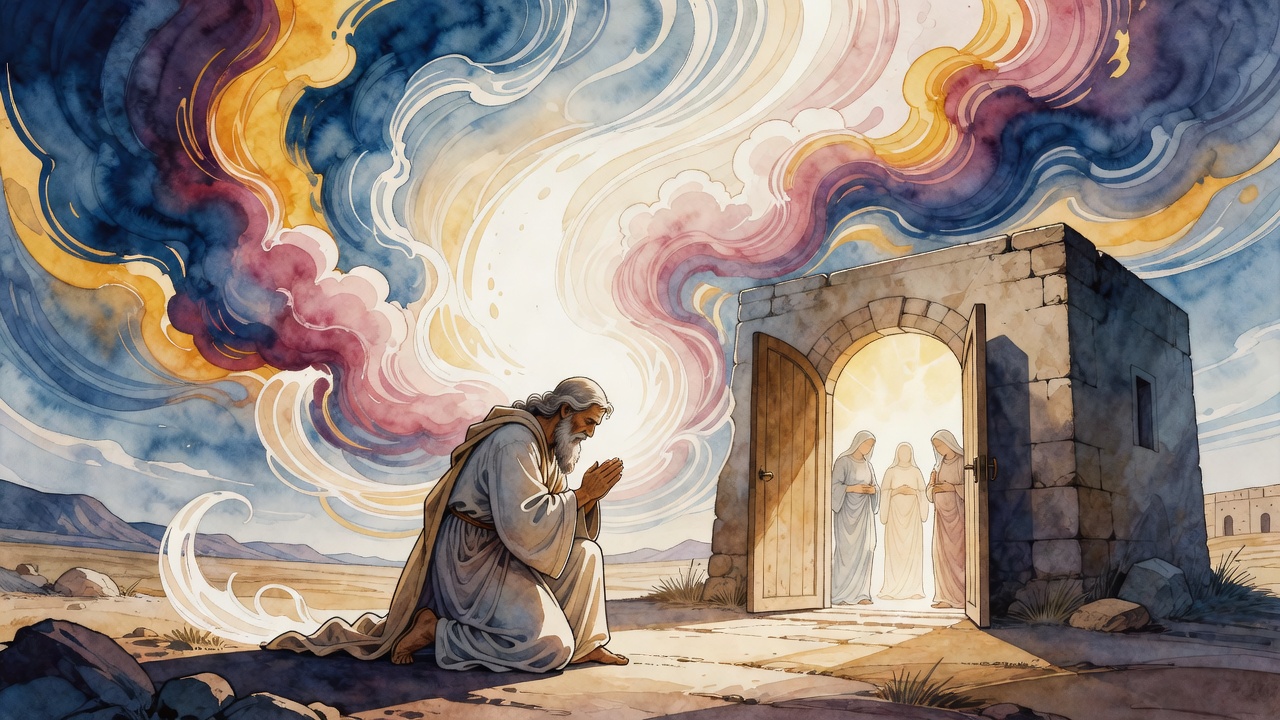
Abraham's tent was an early form of that separation. Different ethics. Same open entrance. Holiness that does not require cruelty to stay pure.
The Tent That Faced Every Side
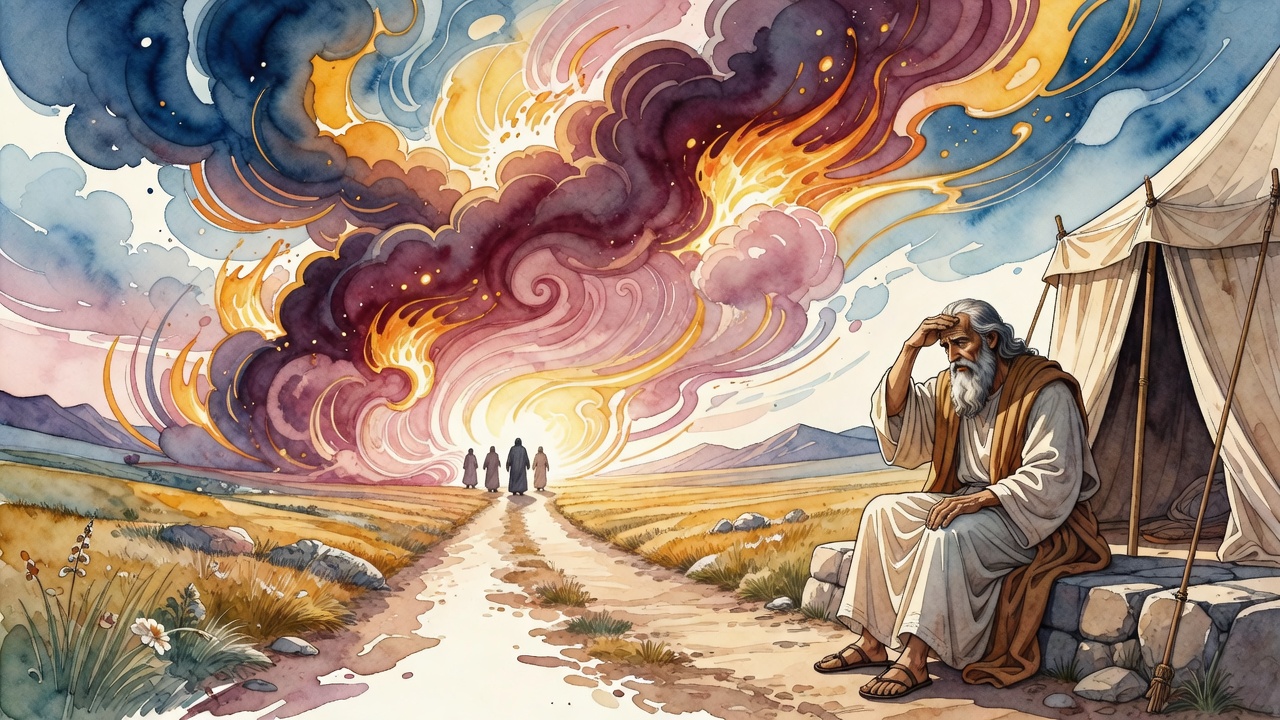
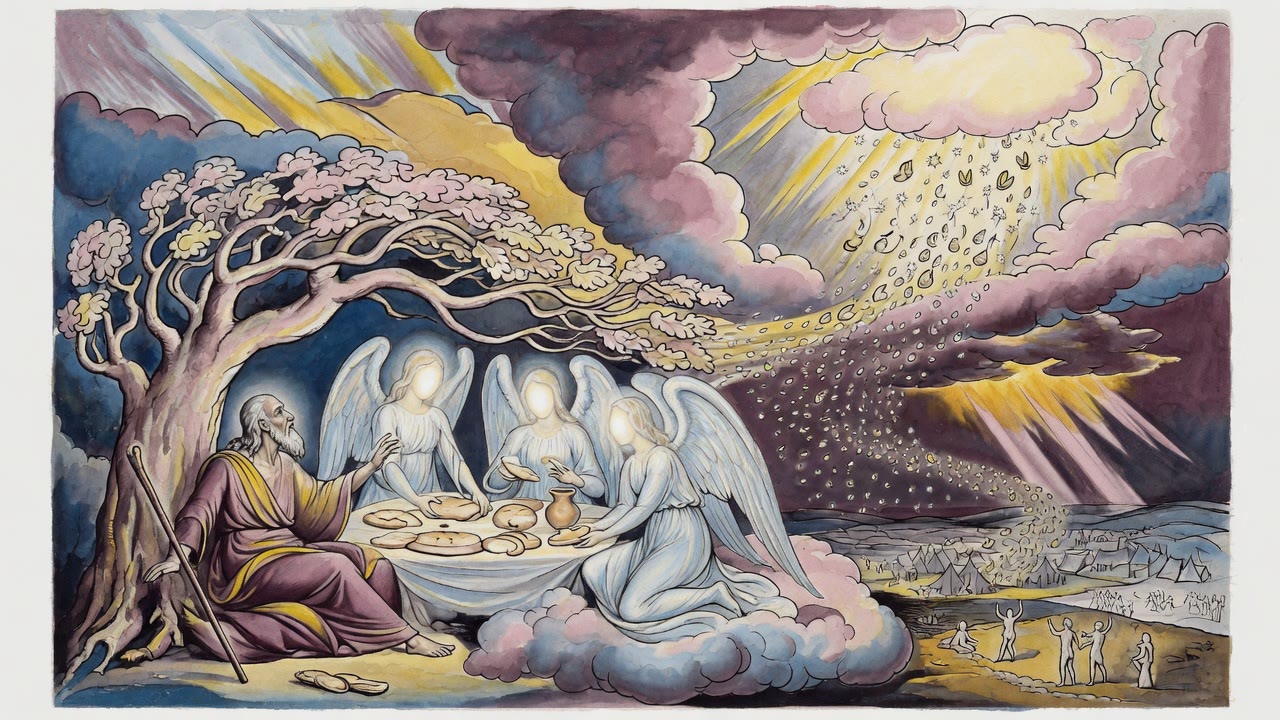
In Gerar the old habits resumed. Dust on the threshold. Water for feet. Bread for anyone who looked like they had walked too far. The catastrophe on the plain did not make him smaller. It made the next table more necessary.
People who watch cities burn sometimes decide the world is not worth feeding. Abraham decided the opposite. If Sodom would not house the poor, then every surviving road needed a house that would.
That is the continuity the midrash admires more than the famous arguments. Not only the bargaining with God. Not only the binding on the mountain. The refusal to stop being Abraham after the map changed.
Separation as Practice, Not Pose
Israel's later differences in field and kitchen and roof are not museum pieces. They are the long echo of a man who would not plow by Sodom's rules. Separation without hospitality becomes pride. Hospitality without separation becomes absorption into the plain that burns.
Abraham held both. He left the ash behind without carrying the city's hardness with him. He kept the practices that made his household unlike the cities of the valley, and he kept the door that those cities had nailed shut.
What the Smoke Could Not Teach
Smoke teaches fear. It does not teach how to set a table. Abraham already knew the second lesson before the first was written in the sky. When the lesson of fear was over, he returned to the work that had always been his answer to a cruel age.
Gerar would bring its own tests, its own half-truths and recoveries. The man who walked there from the overlook carried no illusion that the next place would be simple. He carried a pattern: separated for a purpose, open for a stranger, unfinished until the next guest sits.
Sodom's hand had been closed. His stayed open. That was the whole difference the fire could not erase.
Travelers who later entered his tent in Gerar would not have seen ash on his clothes. They would have seen water and bread and a man who still believed a stranger's hunger was his business. The midrash wants that image more than another speech about justice. Justice without a table becomes a lecture. Abraham kept the table.
Separated from the peoples, and still the first to wave a dusty guest inside. That paradox is not a problem to solve. It is the pattern to copy.
← All myths