Lot Splits His Roof as Sodom Burns at Dawn
Abraham had bargained heaven down from fifty righteous. Inside the city, Lot's wife drew a line through her own house so the guests stood only on his half.
Table of Contents
The two travelers crossed Lot's threshold, and his wife drew a line through the house as if kindness itself were contraband.
 Click for full size
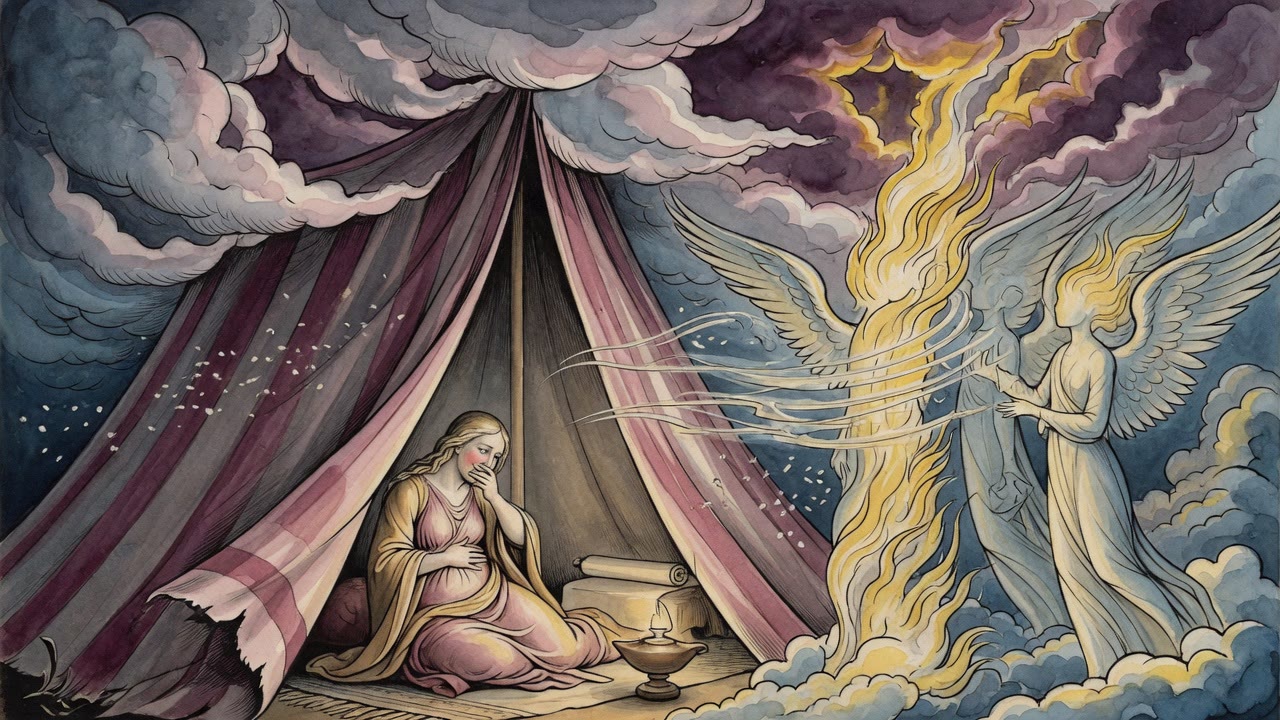
"The whole town has sworn off hospitality," she said. "You bring guests under our beams? Do you want them to kill you and kill me with you?" She did not stop at refusal. She struck a bargain cold enough for Sodom. "Divide the house. Guests stand only in your portion, never in mine. Whatever judgment falls, let it fall on your half of the roof."
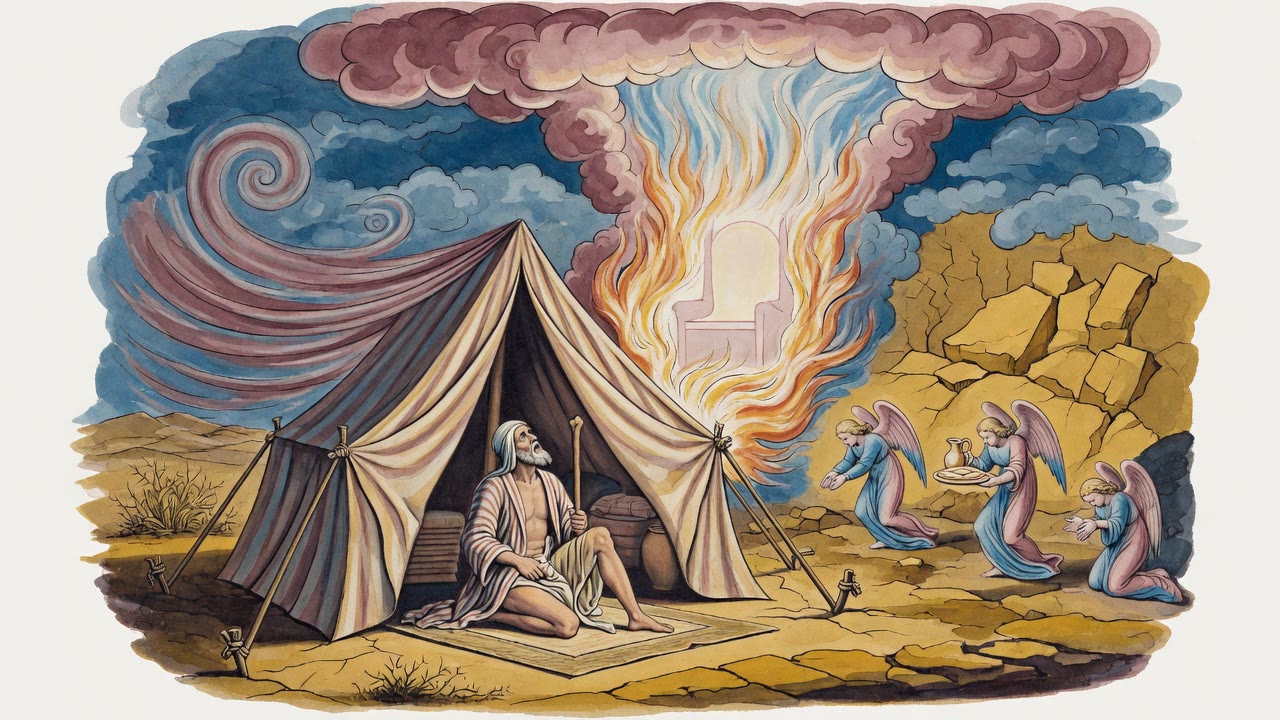
Lot agreed. The strangers lodged beneath the beams that were his alone. When the mob hammered the door that night, his plea named that thin mercy: they have come under the shadow of my roof, not ours (Genesis 19:8). The defense of two men rested on one set of rafters in a city where even a wife measured kindness and sliced a house in two rather than share its danger.
Abraham Bargains From Fifty
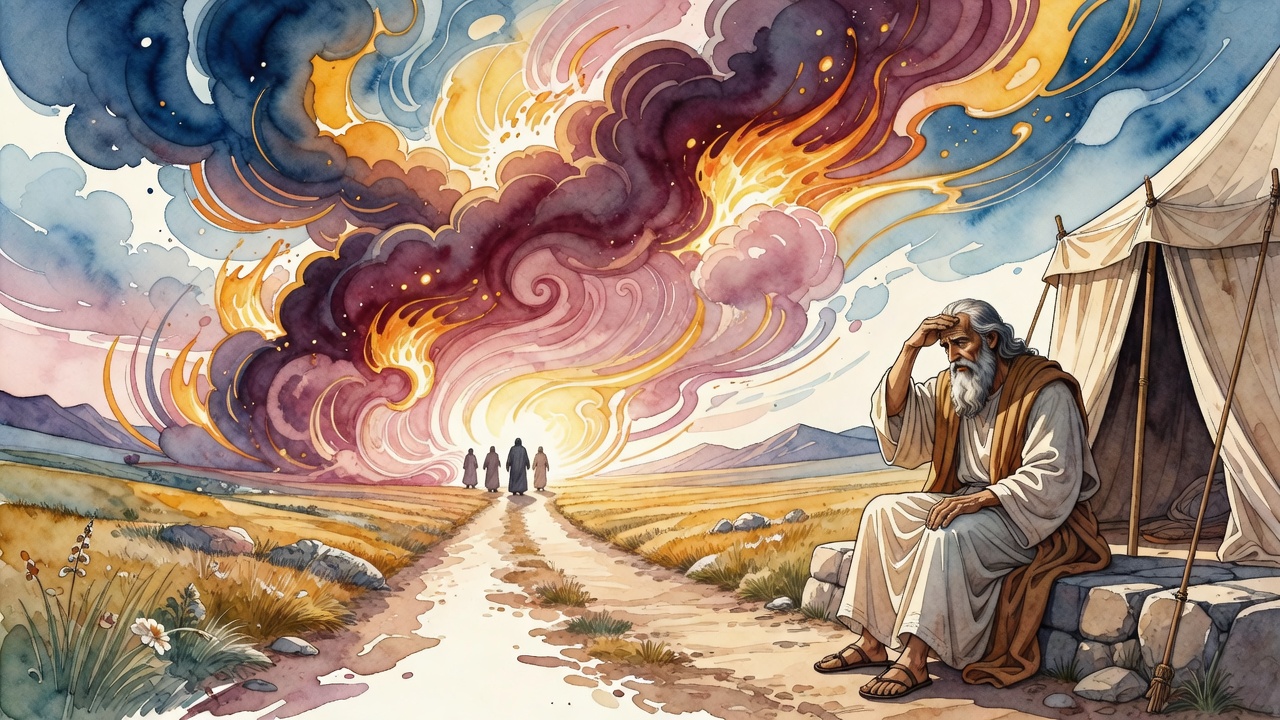
Hours earlier, far from that door, Abraham had already fought for the plain. The Holy One would not hide the doom from him. The land was Abraham's gift by promise. To overturn five cities without a word would look like the gift withdrawn. Abraham might look on the smoking ground and say in his heart that the Holy One had gone back on His word. So Heaven opened counsel, and Abraham stepped into it with arithmetic of mercy.
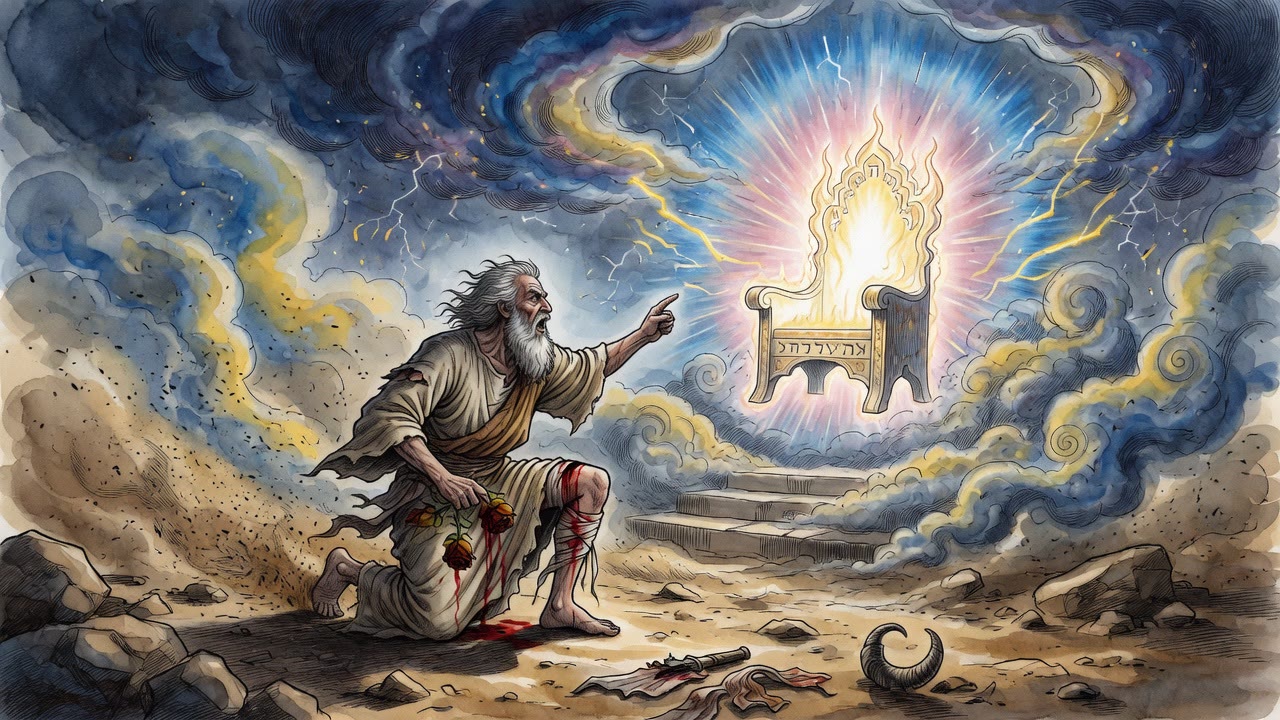
Five towns. Ten righteous for each. Fifty. He remembered the Flood: eight righteous in Noah's house had not turned the waters. Eight was too small a latch for a drowning world. He opened at fifty and bargained downward, town by town, soul by soul, against cities that held no ten (Genesis 18:24). Each number he spoke was a hand stretched over a map already darkening.
The Roof That Was Only His
Inside Sodom the math of righteousness collapsed to one man and a halved house. Lot's wife measured risk like grain poured into two bowls. The law of the city lived in her mouth. The guests stood on Lot's side of the line, and the night closed in with fists and threats. Men of the city, young and old, surrounded the house and demanded the strangers be brought out.
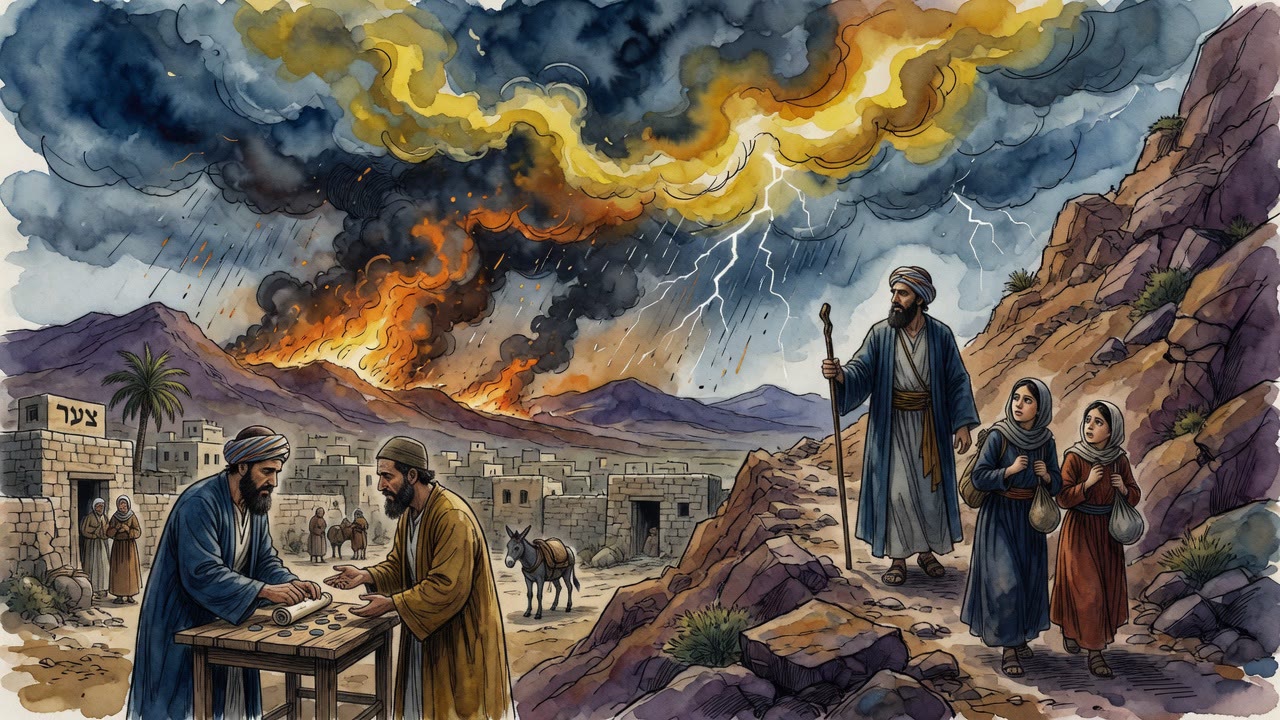
Lot went out and shut the door behind him. He offered his daughters. He pleaded. The crowd pressed until the angels pulled him back and struck the men outside with blindness so they groped for the doorway they could no longer find. Hospitality in that city was not a virtue. It was a capital risk, and even his own walls would not share it.
Zoar Waits on One Arrival
At the edge of dawn the angels pressed him toward the little town. "I cannot do a thing until you arrive there." Zoar, Tzo'arah, is written short a letter, missing its vav. The sages weigh that lack. Zoar's days numbered three hundred sixty-five, a single year younger than Sodom, the least of the cities of the plain. The missing six marks the six hours by which the sun's year overruns the moon's, three hundred sixty-five days and six hours, neither more nor less.
Destruction waited on Lot's feet. Until he reached the small town, the fire held its breath. One fleeing man became the hinge of a verdict already sealed. He ran with his daughters while the plain behind him waited for permission to burn.
Fire When Sun and Moon Stand Together
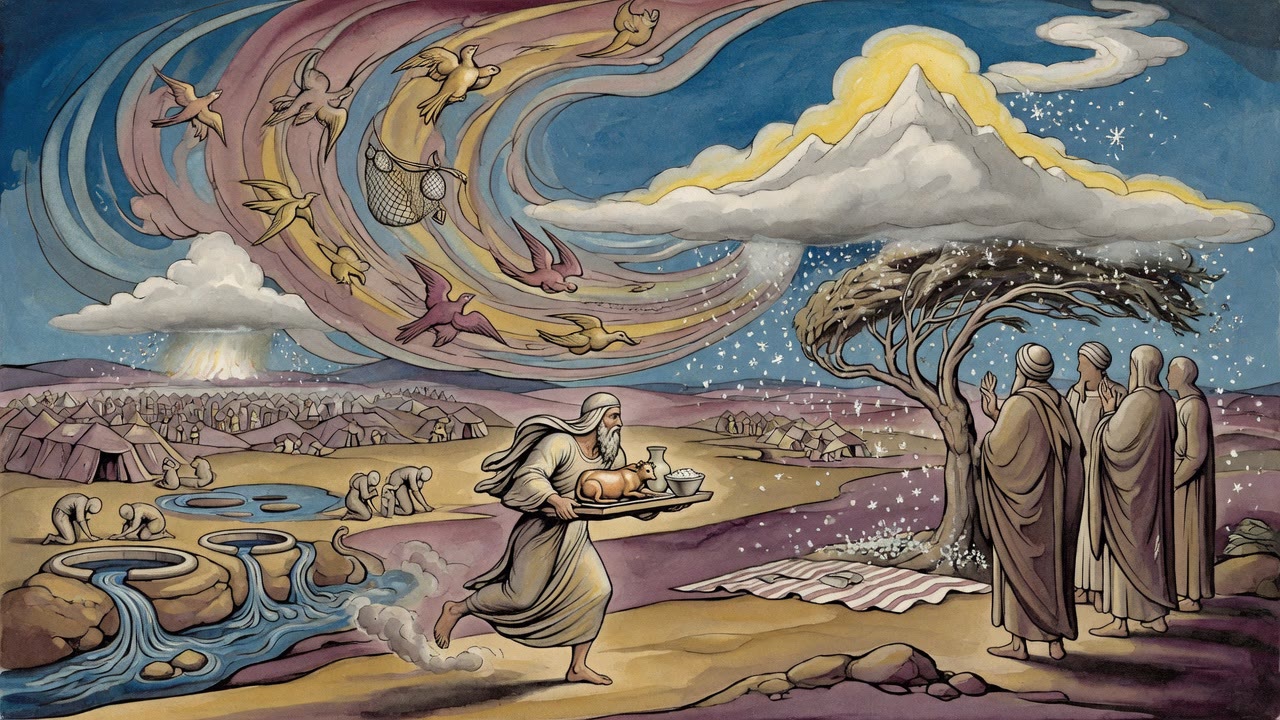
Why dawn? Those who bowed to the sun would boast that night fire would have failed under their god's reign. Those who bowed to the moon would answer the same for day. The Holy One struck on the sixteenth of Nisan, the hour when sun and moon stand together in the sky, so neither could claim a refuge (Genesis 19:23). Then the moon shall be confounded, and the sun ashamed. The fire came from the LORD, not as caprice, but as a court verdict rendered in open light.
Lot ran under a roof he alone had owned for one night. Behind him the plain smoked. Abraham, who had been told so the gift of the land would not look like a lie, watched the smoke rise from a distance and knew the cities fell for their own guilt. The halved house, the missing letter on Zoar's name, and the shared sky at sunrise all said the same thing: judgment does not hide, and hospitality that costs a man his whole roof still weighs more than a city that would not share a door.
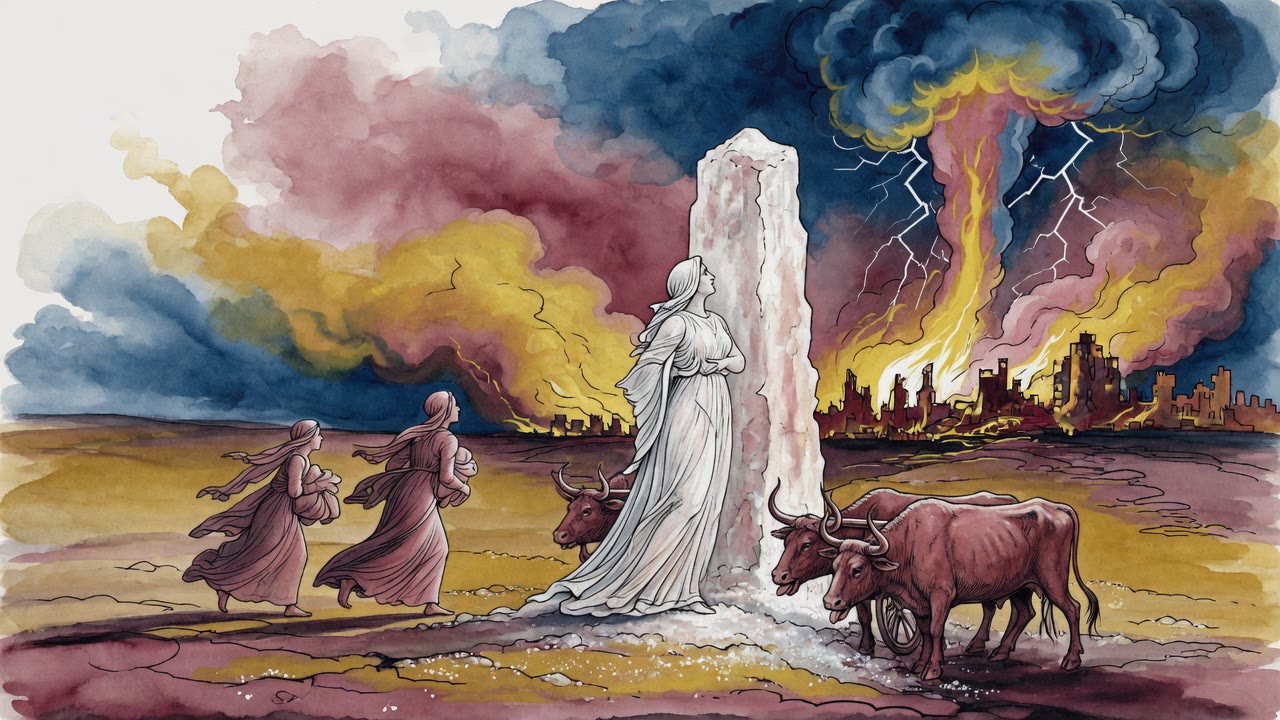
His wife looked back and became a pillar on the road, salt where a divided heart had stood. Lot reached Zoar small and alive. The roof that was only his had bought two strangers one night and bought him a town one dawn.
← All myths