Adam Watched the Book and Lost the Torah
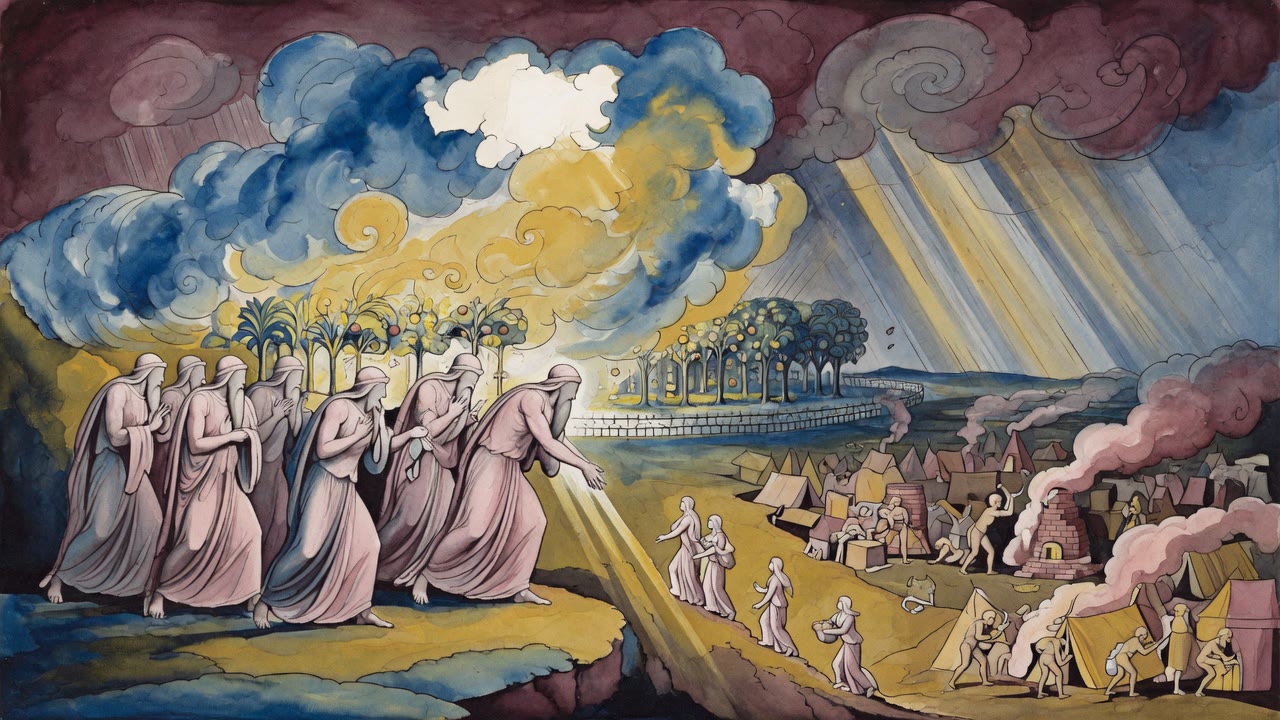
Newly formed Adam sees every generation scroll past. Worthy of Torah and the tribes, he stumbles on six commands and the gift waits for his children.
Table of Contents
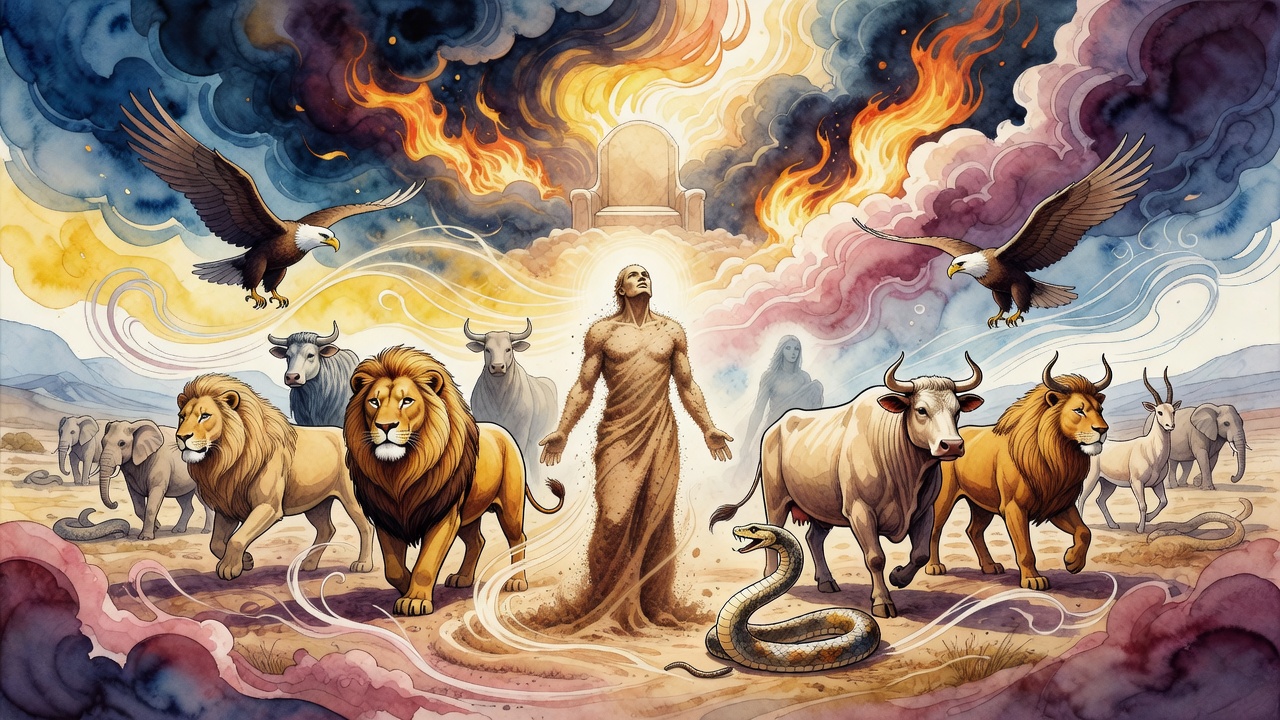
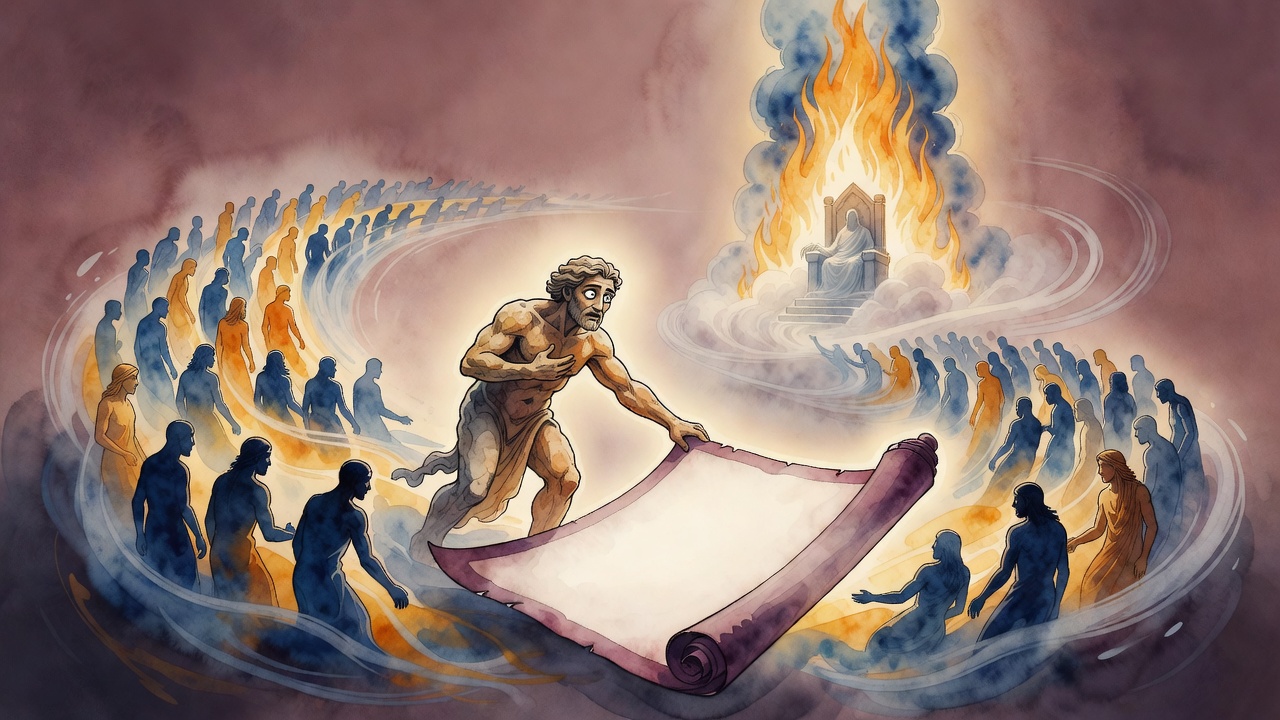
Adam lay newly formed on ground still warm from the shaping. Clay clung under his nails. Breath moved in his chest for the first time, and the air tasted of garden and river mud. God did not show him only trees and a gate. He unrolled a scroll wider than the sky and held it open before eyes that had never closed.
 Click for full size
Generation after generation passed. Scholars bent over tables. Scribes cut reed pens. Providers stacked grain. Leaders raised hands over camps not yet born. "Your eyes saw my unformed substance, and on Your book they were all recorded" (Psalms 139:16). Before a single descendant drew breath, the book of human history already ran under Adam's gaze like a river he could not step into.
Glory First, Then the Labor
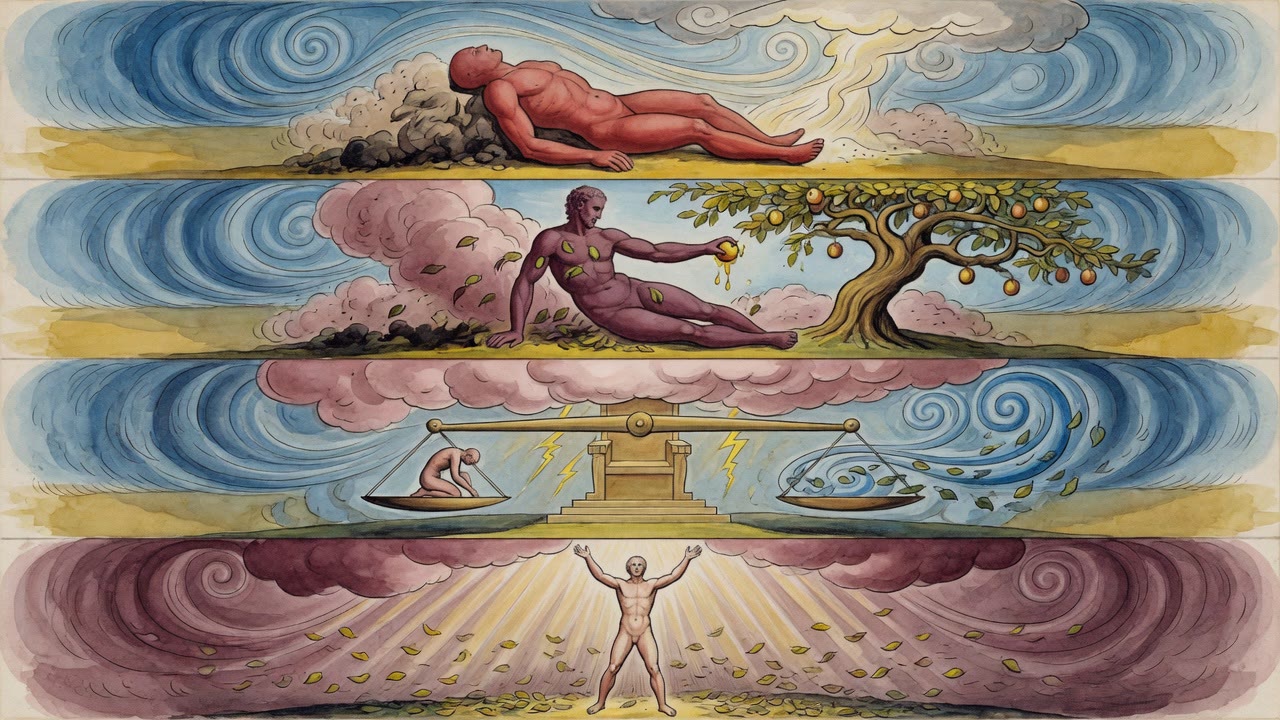
The making itself had come in two tempos. First the headline: "And God created the human in His image" (Genesis 1:27). A sweeping announcement. The whole act named at once. Glory spoken as if the work were already finished and framed.
Then Scripture slowed. Deep sleep fell. A side was taken and built into woman. Flesh that had been one became two under hands that refused to rush. The broad claim and the particular labor were not two creations fighting for the same hour. They were one person named first in glory and then in the work of his forming. Adam woke to a companion and to a body that remembered sleep it had not chosen.
Eve stood where the rib had been. He reached. She answered. The garden held them both without yet naming the tree that would test the bond.
Almost the Torah Itself
God weighed the handiwork. Adam was shaped by divine hands, not born of a woman who had known fear. Six commandments already sat on him as a light yoke: judgments about idolatry, bloodshed, theft, sexual bounds, and the court that would later grow denser under Sinai's fire. For a breath of heaven's time he looked like a vessel that could hold more.
The Holy One considered giving him the whole Torah. Six hundred and thirteen words of law and love waited behind the six. The tribes that would one day stand under standards, twelve numbers folded into the small word "this," also sat within reach of that first man. He was worthy on the ledger of origin. He was the first image-bearer. The scroll of generations already proved he would father every scholar the book had shown.
Adam opened his mouth to praise and felt the weight of what might land on his shoulders. The garden was quiet enough to hear a leaf turn. A bird cut the air and left it empty again. He wanted the gift. He did not yet know how thin six commands would prove under hunger and a whispered argument.
He walked the length of a path that still smelled of first rain. Fruit hung within reach he had not yet taken. The scroll's faces faded when he blinked and returned when he opened his eyes, as if the future refused to leave him alone with the present.
The Stumble That Closed the Door
He stumbled. Fruit, speech, blame, exile. The six that should have been simple became a cracked vessel. God looked at the man who had seen every generation and still failed a short list, and the larger gift drew back.
How much more would six hundred and thirteen overwhelm him? The Torah would not be poured into a vessel that had already leaked. The tribes would not ride on a household where two sons would end in murder. Cain's field and Abel's blood still waited in the book Adam had already watched, and the Holy One would not pretend ignorance of that page.
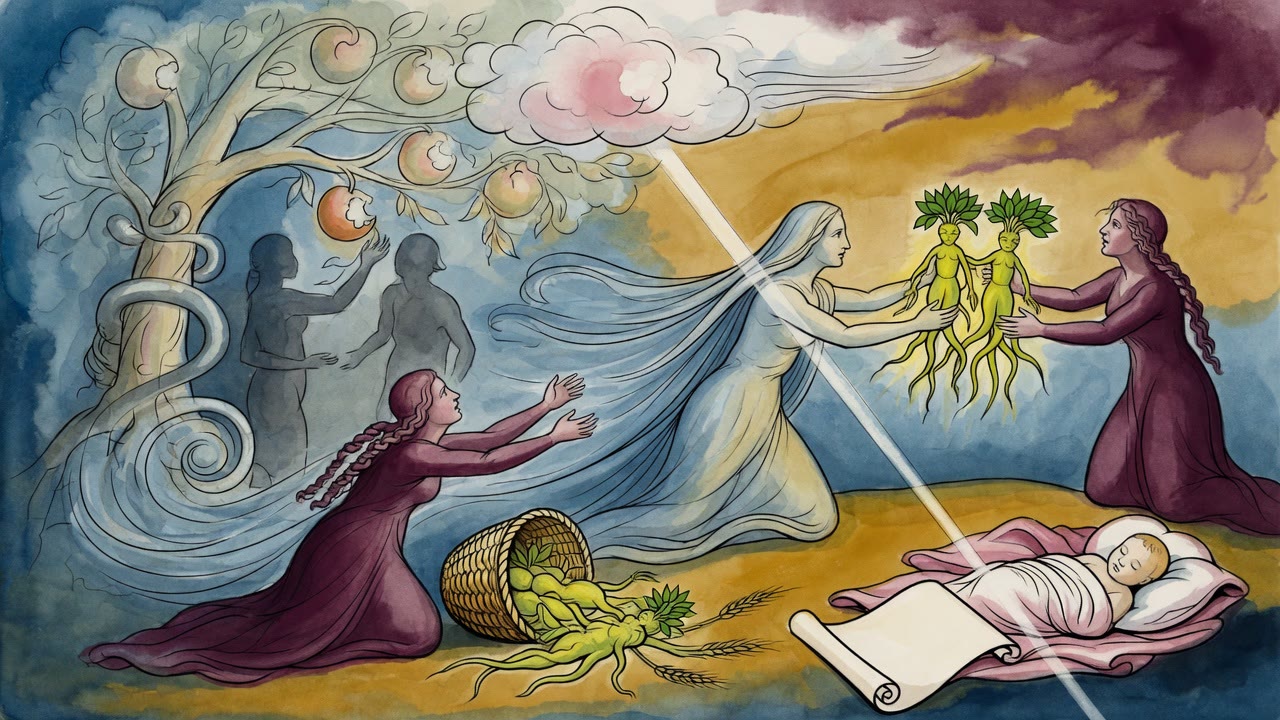
So the decision settled. Entrust the Torah not to Adam but to his children. Let later generations carry what the first could not. The book of generations stayed open as a principle: every human shares one ancestor, and the shame of one face is the shame of a likeness of God. Ben Azzai would one day call that book the great principle. Rabbi Akiva would point instead to "love your neighbor as yourself," the same spine in a shorter line. Do not degrade the fellow who was made in the same image, even when your own mouth still tastes exile.
Adam heard none of those later names. He heard only the garden go colder at the edges and the gift move out of his hands into a future he could see but not enter.
What Remained on the First Man
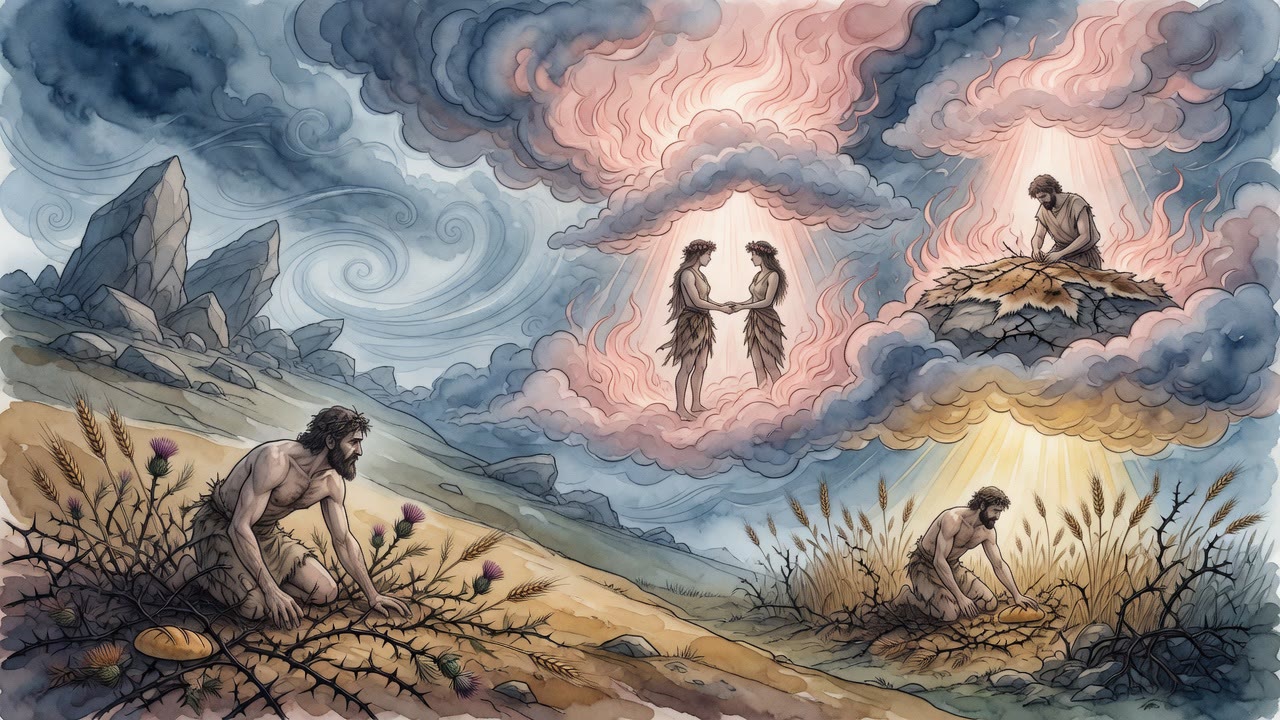
He still walked. He still named. He still worked soil that would now answer him with thorns. Eve still breathed beside him. The image still held in the bone. What he had lost was not personhood. It was the right to be the first receiver of the full speech that would one day shake a mountain.
At night he could still see the scroll: faces of scribes, hands of providers, children who would stand at Sinai while he lay under dust. What changed for good was quiet. No angel barred a second offer with a flaming sword for the Torah alone. The offer simply did not return. The children would wear what the father had been too early and too broken to hold.
In the morning he rose and pressed his palm to the ground that had made him. Glory had named him first. Labor had shaped him second. The book had shown him everyone. The law that could have been his went ahead of him into time, and he followed with a body still stamped with image and a history already writing past his reach.
← All myths