Aristeas Saw Jerusalem Working in Holy Silence
The curtain at the entrance never stopped moving in the breeze, and he could scarcely look away. Then he noticed seven hundred priests working without a word.
Table of Contents
 Click for full size
The Mountain Lifted the Temple Into Sight
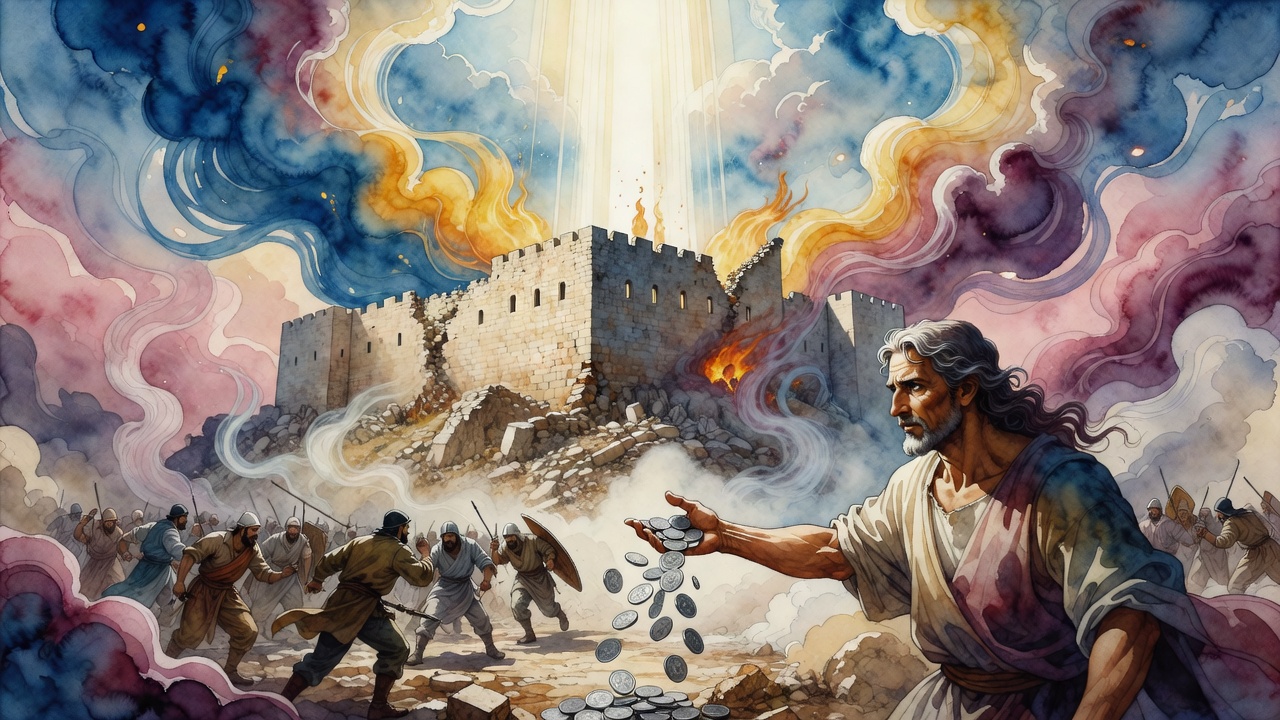
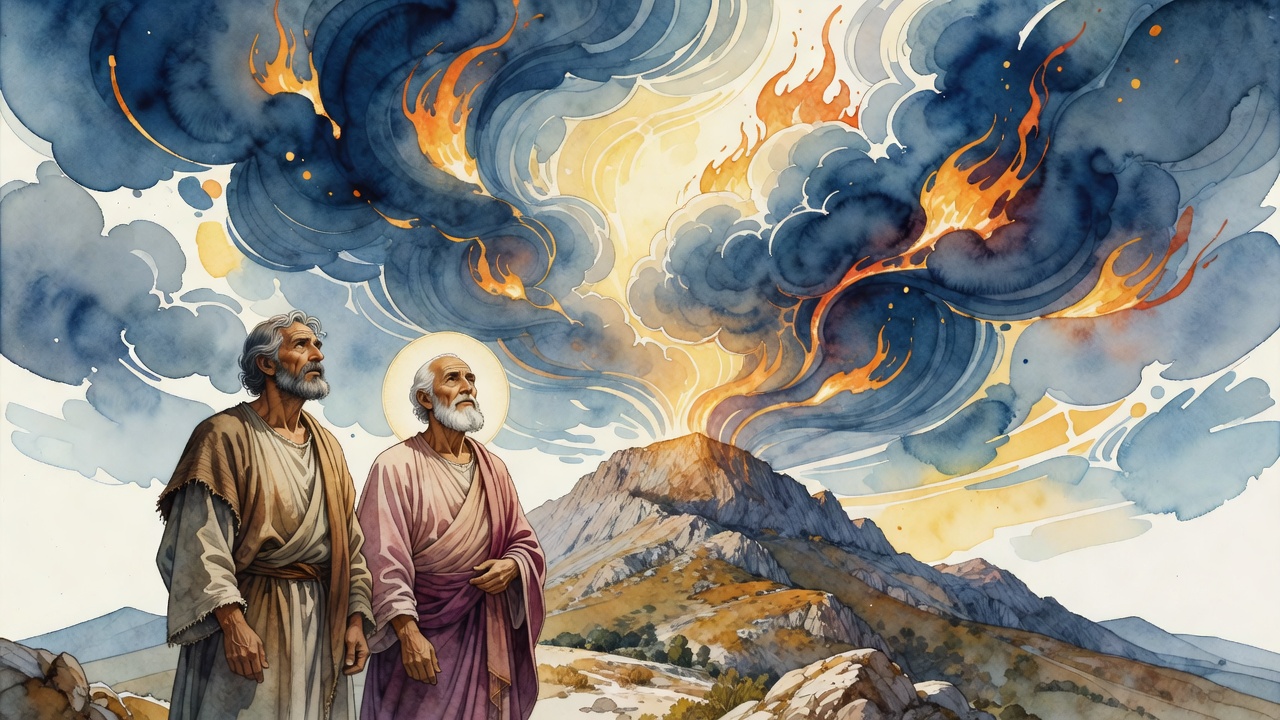
Aristeas came looking for translators. Jerusalem made him look at geography first. The city stood in the middle of Judea on a high mountain, the Temple built at the summit in all its splendor, surrounded by three walls more than seventy cubits high. Everything about the approach taught the body before the mind could form a sentence: the ascent, the walls, the scale of the gates, the sense that this ground was not like other ground.
The farms of the surrounding country surprised him too. They were dense and well-managed, irrigated through natural channels, with the land bearing everything in abundance. Aristeas had expected a provincial outpost. He found a place that looked as if it had been designed to sustain itself across centuries without needing help from any larger power.
The Curtain Moved Like Breath
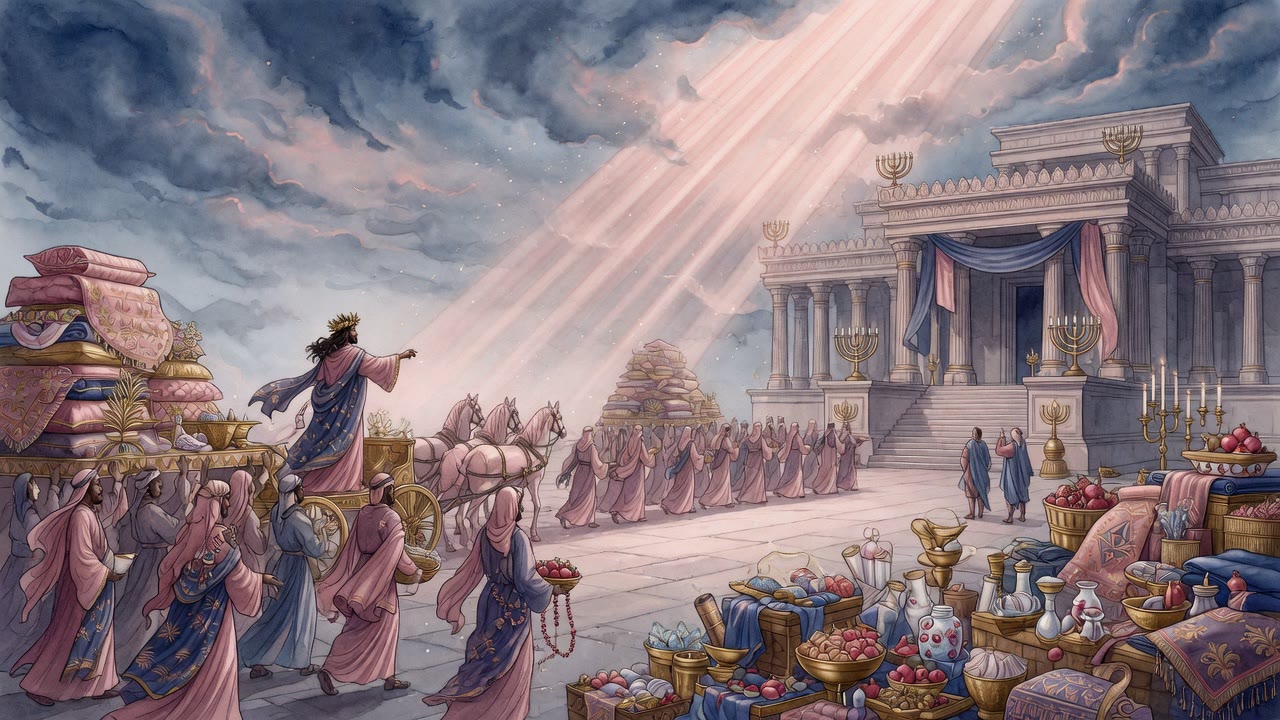
Inside the Temple precincts, the details became physical. The door, the fastenings, the lintel, the fabric of the entrance all matched the scale of the place. The curtain was in perpetual motion from the draught, bulging out from below in a way the text calls a pleasant spectacle, one from which a man could scarcely turn away. The altar stood in keeping with the place itself, reached by a gradual slope arranged for the purpose of decency, and the ministering priests moved in robes that suited the whole.
Nothing in the scene was accidental. Even the movement of cloth had weight. Holiness at Jerusalem was not experienced as stillness. It breathed. The curtain moved. The priests moved. The water moved. And all this motion was ordered so precisely that the order itself was what struck the visitor as miraculous.
Water Ran Under the Mountain Without Stopping
The Temple floor sloped down toward the appointed places where water washed the blood from the sacrifices, because many thousands of animals were offered there on the feast days. An abundant natural spring gushed from within the Temple area without stopping. Below the site, as Aristeas was taken out four furlongs to see them, lay cisterns so vast he could hear the sound of the meeting waters before he reached the edge. Countless pipes carried water from the springs outward through the mountain, converging in streams that fed the drainage of the sanctuary above.
The scale of the hidden plumbing astonished him as much as the visible architecture. All that blood washed away in what the text calls the twinkling of an eye. The Temple did not simply perform sacrifice. It had been built to perform it at scale, day after day, with a system of water that kept the sacred space usable and clean.
Seven Hundred Worked in Silence
The most astonishing detail came from the priests themselves. When those who had been on duty were relieved, those waiting rose spontaneously to take their places, without any word of command. No one called the next shift forward. No one assigned the tasks aloud. Seven hundred priests worked at the sacrifices in complete silence, with thousands more bringing up the animals, and what Aristeas heard was nothing. The most complete silence reigned, he wrote, so that one might imagine there was not a single person present.
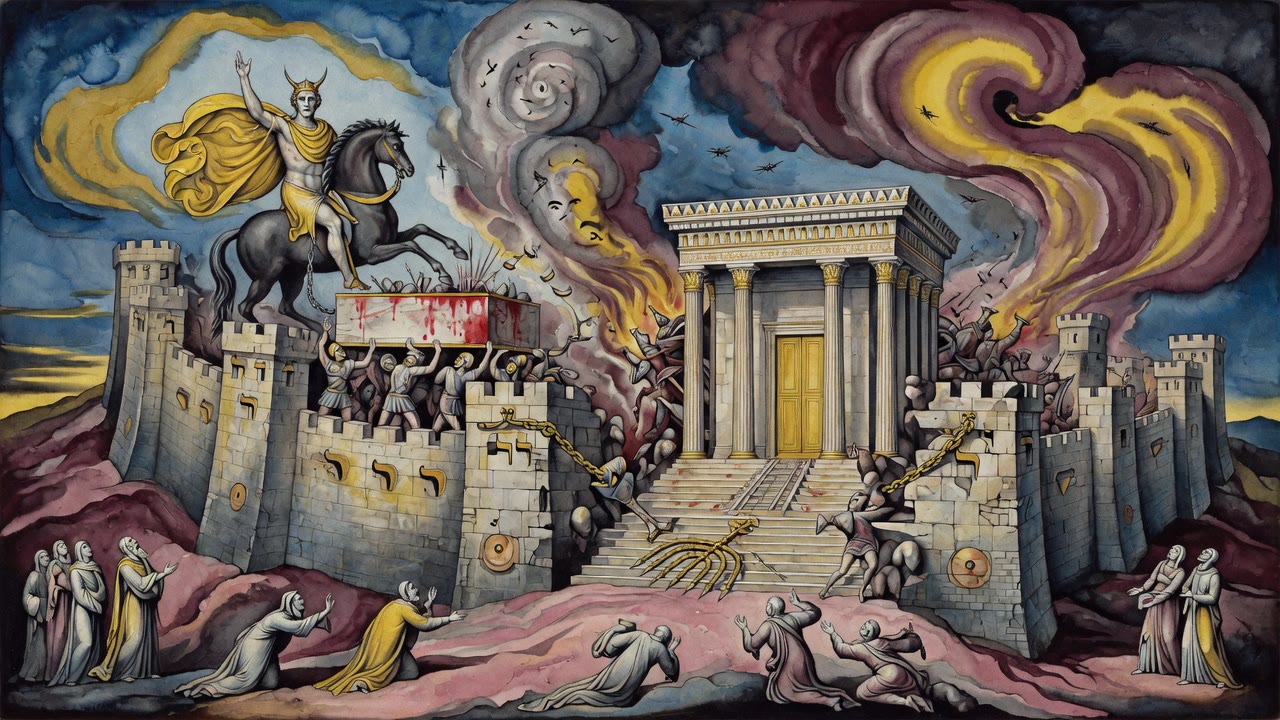
The guards swore oaths and kept those oaths to the letter: though five hundred in number, they would not permit more than five to enter at a time. The fortress that protected the Temple had been built so strongly that it could defend the sanctuary from any assault. And within this structure of stone, water, oath, and silence, Aristeas saw a people who had made holiness into a system that could run without the noise of authority reminding everyone what to do.
← All myths