Balak Staged a Crowd to Make Balaam Curse
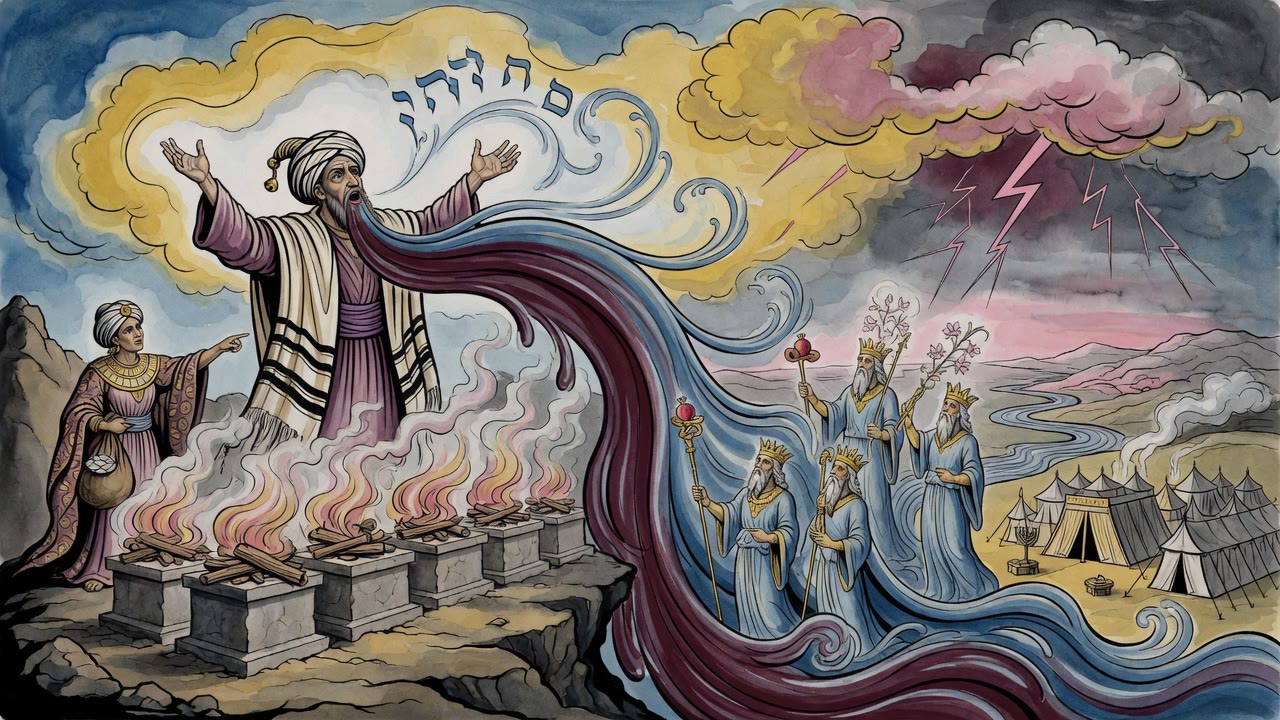
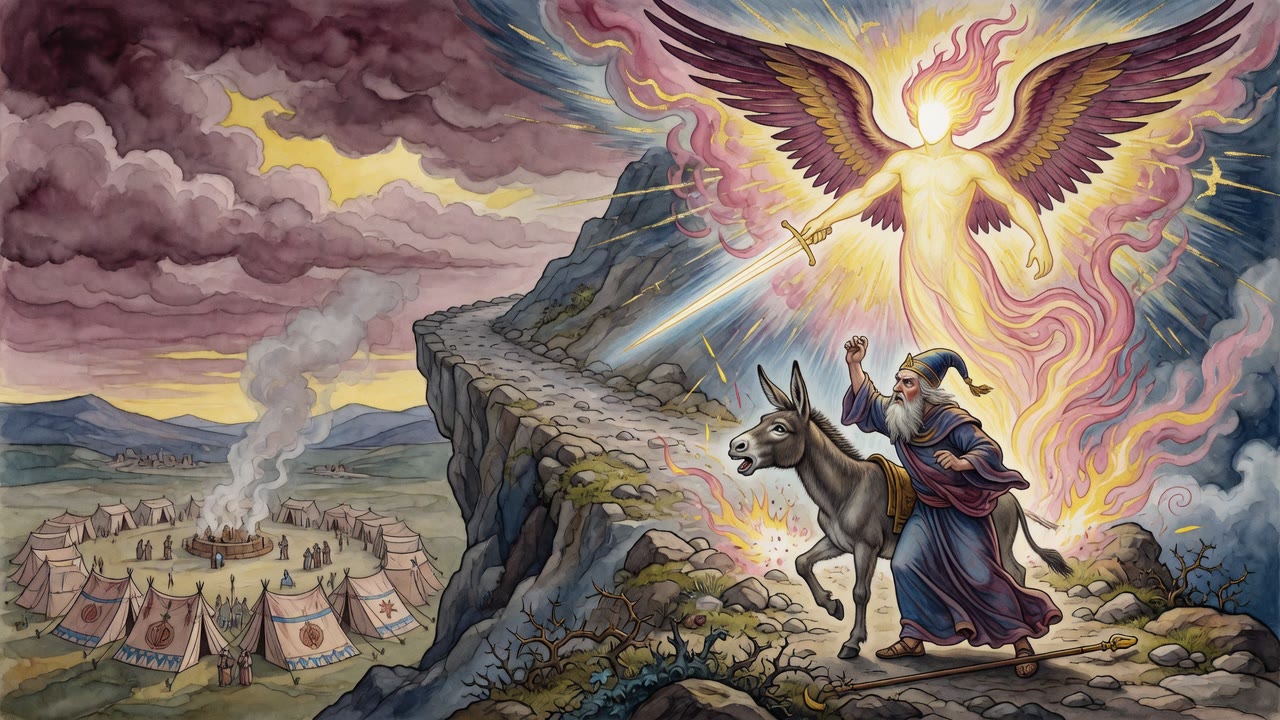
Balak promised Balaam great honor, then served one ox and one sheep. Across the river, Israel's waters shone with the purple of the cloud.
Table of Contents
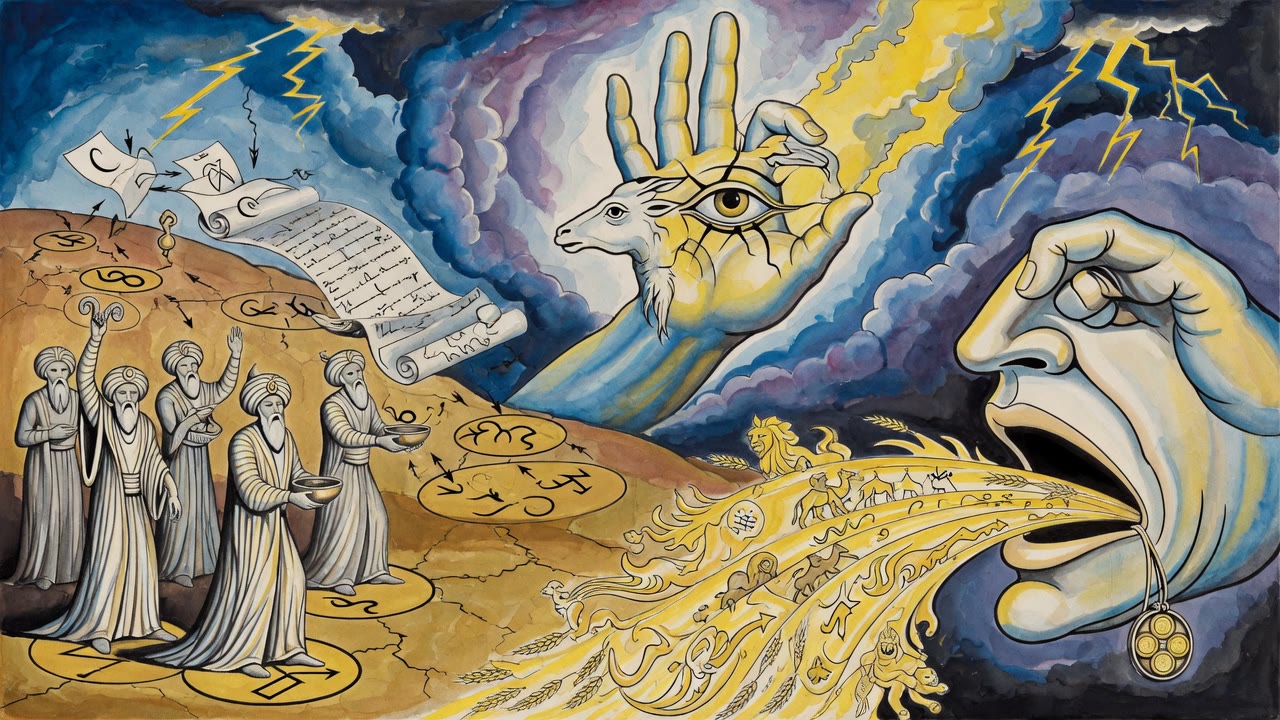
Balak did not take Balaam straight to a high place and ask for a curse. He took him on a tour designed like a courtroom exhibit. From the border into the heart of Moab, the king arranged crowds. He erected bazaars so the seer would see families bargaining, children darting between stalls, a nation that looked busy and harmless.
 Click for full size
Then Balak pointed. "Look thou, how Israel plan to destroy these multitudes of people that have done them no injury."
The sentence was a weapon. It painted Israel as the coming slaughter and Moab as the innocent market. A prophet who curses needs a story he can stomach. Balak supplied the story before the sacrifice.
The Honor of One Ox and One Sheep
Balak had promised Balaam very great honor (Numbers 22:17). When the guest arrived, the welcome feast was one ox and one sheep. The proverb rises like a slap. The pious promise little and do much. The wicked promise much and do little.
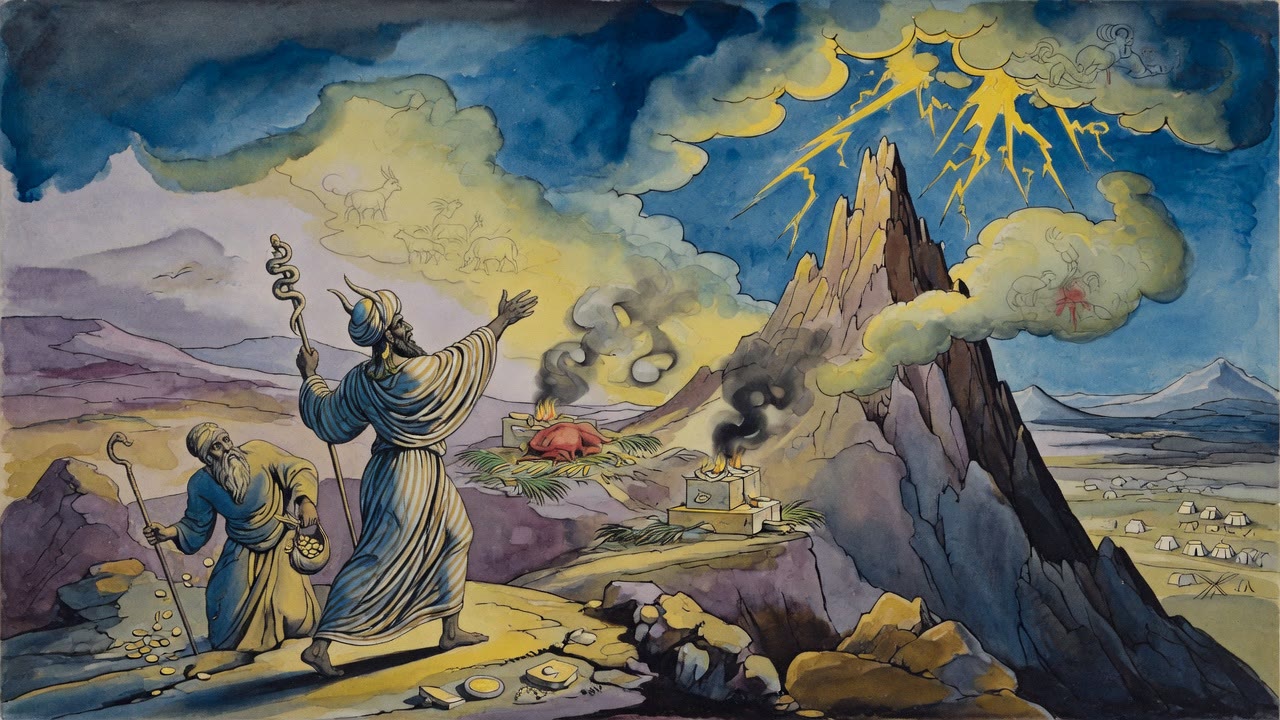
"Is that all that he offers me?" Balaam thought, swallowing the insult. "He will have to pay for this tomorrow." His revenge was not a knife. It was a demand for many sacrifices, a public drain on the king's herds. Even a hired tongue keeps a ledger of disrespect.
Servants cleared the thin meal while Balaam smiled with his teeth only. Honor deferred becomes fuel. The next day's altars would smoke not only for ritual but for pride. Moab's king had bought a seer and underpaid the purchase at the first sitting.
What Israel Actually Looked Like
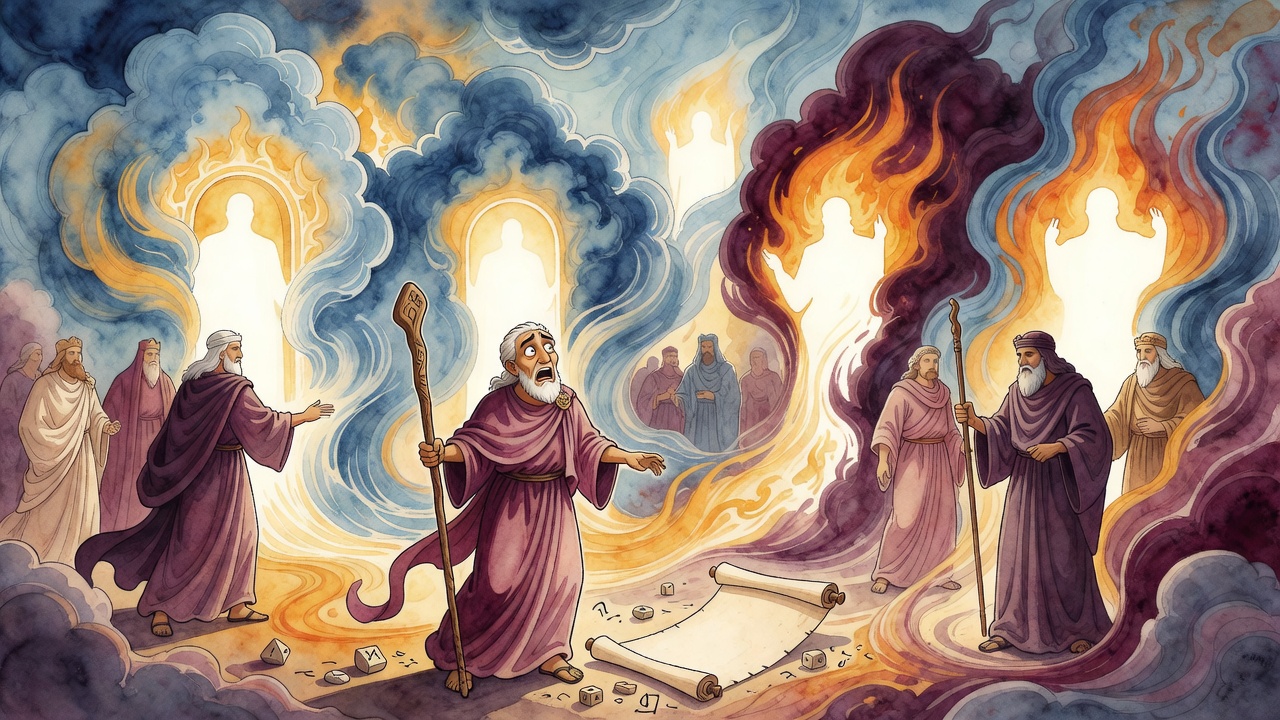
Across the Jordan, the camp Balak feared was not a wandering mess. It was a square twelve thousand cubits on each side. In the middle lay four thousand cubits for the sanctuary and the dwellings of priests and Levites. East of the sanctuary lived Moses, Aaron, and Aaron's sons. South, the Kohathites. West, the Gershonites. North, the Merarites. Each Levitical strip held a hundred cubits. Each triad of tribes under one standard held four thousand.
Cattle stayed outside. A cloud of glory separated human dwellings from beasts. Rivers ringed the camp and divided its quarters. On the Sabbath, when riding was forbidden, board bridges kept the parts of the people able to meet. The purple of the cloud threw its color into the water until the rivers shone like sun and stars. Nations who saw those radiant waters feared Israel and still praised the God who worked such signs.
From a high overlook the square would have looked like a living seal pressed into the wilderness. Standards, bridges, glowing rivers. No bazaar trick could invent that geometry. Balak staged crowds. Israel was a crowd already ordered by heaven.
The Staged Market Against the Ordered Square
Balak's bazaars were theater. Israel's rivers and standards were architecture. One king built a picture of victims so a curse would feel like defense. The other people lived inside a geometry of holiness so dense that water itself looked enlisted.
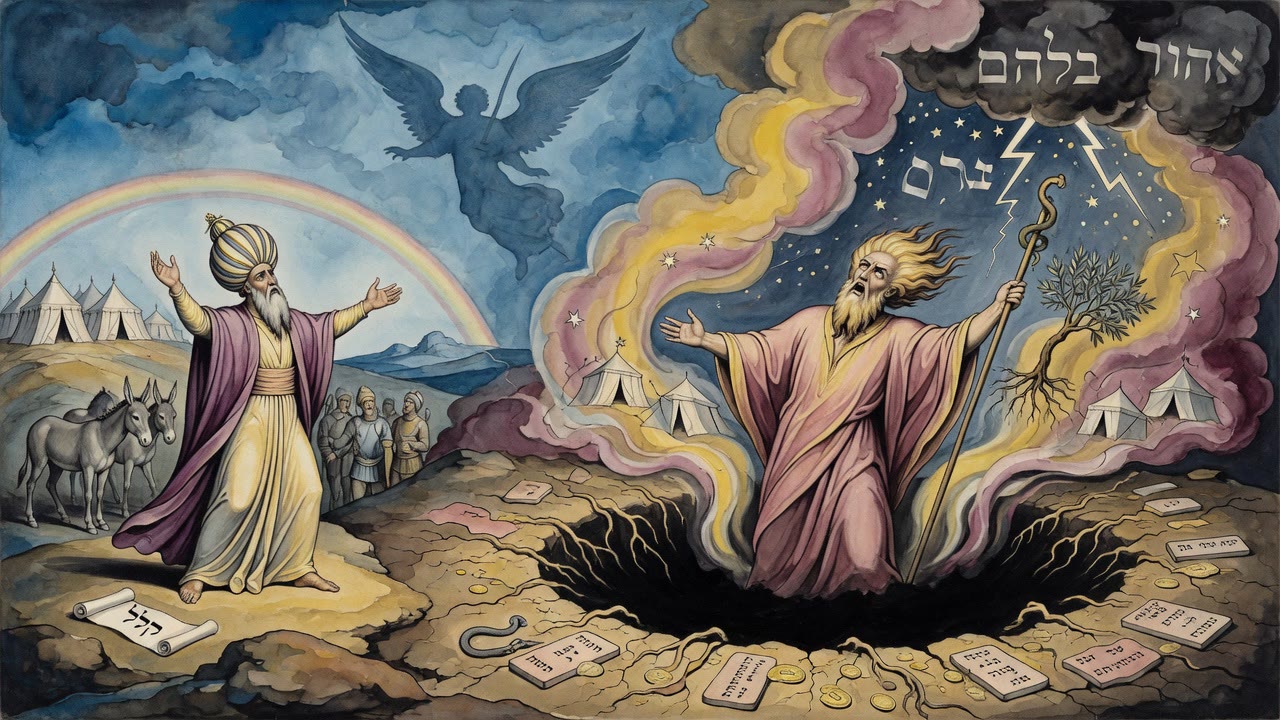
Balaam stood between them with a mouth for hire and a pride that counted portions of meat. The children in Moabite stalls were real enough to the eye. The claim that Israel intended their slaughter was the lie that greased the hire. Balak needed the seer angry at Israel, not angry at a thin supper. He almost got the order wrong.
A child in a staged market laughed at a merchant's fruit. Across the river a child in the square crossed a Sabbath bridge without breaking the day. Two childhoods, two kinds of kingship. Only one camp made the rivers hold light.
Tomorrow's Sacrifices
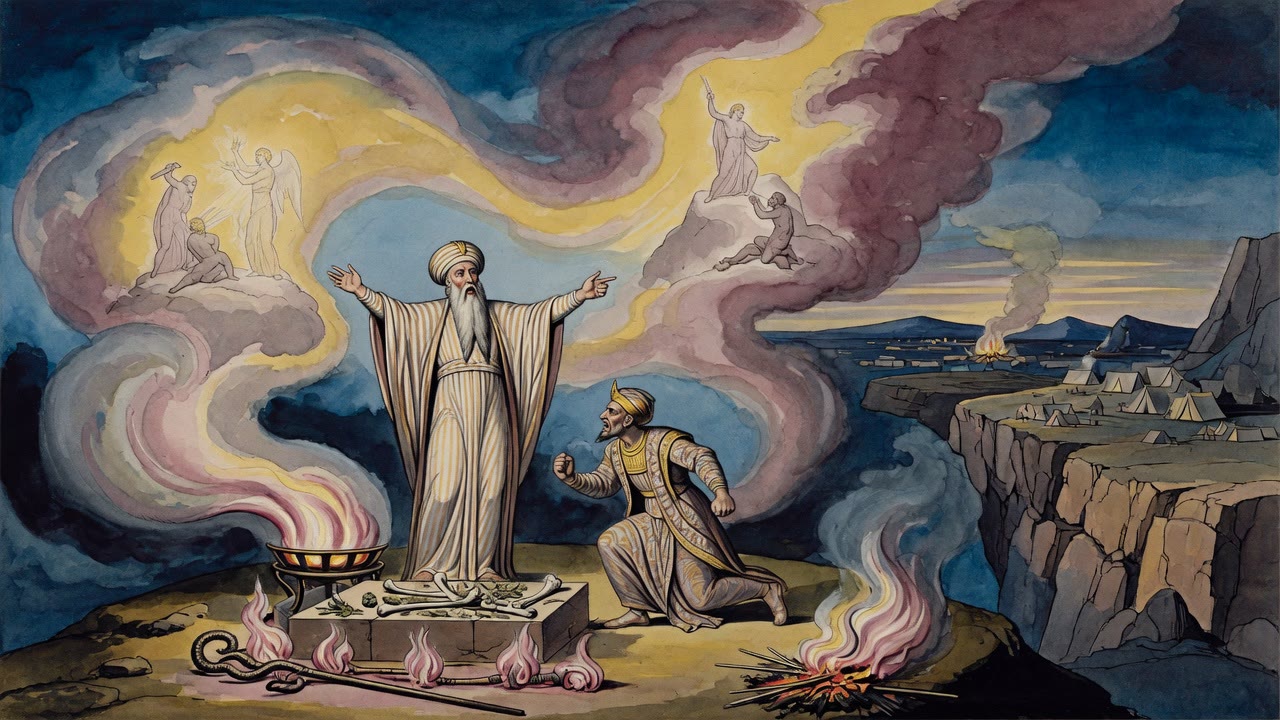
Night settled on a kingdom that had shown its guest a false panic and a true stinginess. Balaam planned the next day's burnings as punishment for the meal. Balak planned the next day's overlooks as stages for words that would stop a people he could not beat with spears.
Neither man controlled the speech that would finally leave Balaam's mouth. That failure is later. On this night the drama is smaller and meaner. A king curates a crowd. A prophet counts oxen. Across the river a camp gleams with borrowed purple, and the nations already know which side the light prefers.
Morning would bring overlooks and smoke. Night still held the smell of the single ox roasting thin. Balaam turned the insult over like a coin. Balak turned the staged laughter of market children into a brief he hoped would travel. Across the river the purple water kept shining, indifferent to both men's schemes, loyal only to the cloud that colored it.
← All myths