6 min read

Bar Kappara Ruined the Prince's Banquet with Fox Tales

Left off the guest list, Bar Kappara wrote death on the door. Invited at last, he told three hundred fox fables until every dish went cold.

Curated by Arthur · Told by Maggid ·
Table of Contents
  1. Ink on the Doorpost
  2. Three Hundred Foxes Between Courses
  3. Tables That Never Lacked a Radish
  4. Laughter That Is Not Torah
  5. What Remains After the Dishes
Bar Kappara Ruined the Prince's Banquet with Fox Tales Click for full size

Ink on the Doorpost

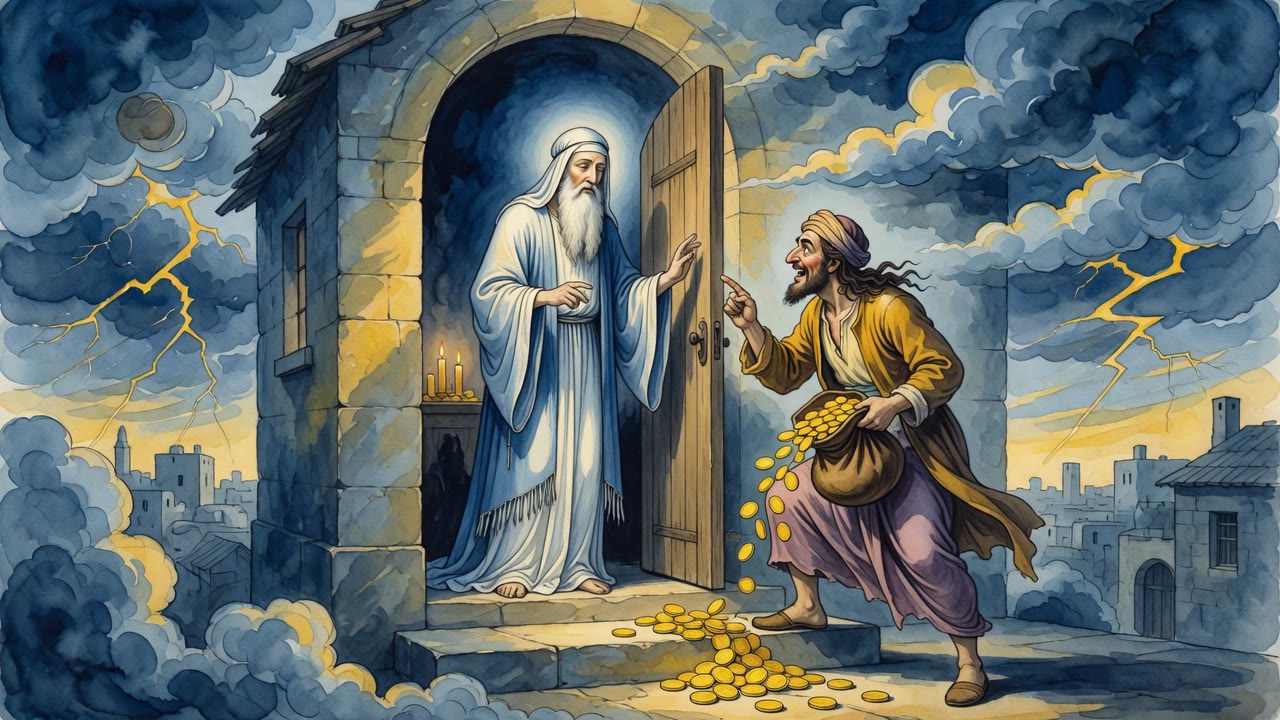
Bar Kappara stood outside the house of Simeon ben Rabbi and smelled roasted meat he had not been invited to taste. Lamps burned. Voices rose. The son of Rabbi Judah the Prince had filled his table and forgotten the man whose tongue could turn a study hall upside down. Bar Kappara did not knock. He took charcoal and wrote on the door where every guest would pass: After joy, death.
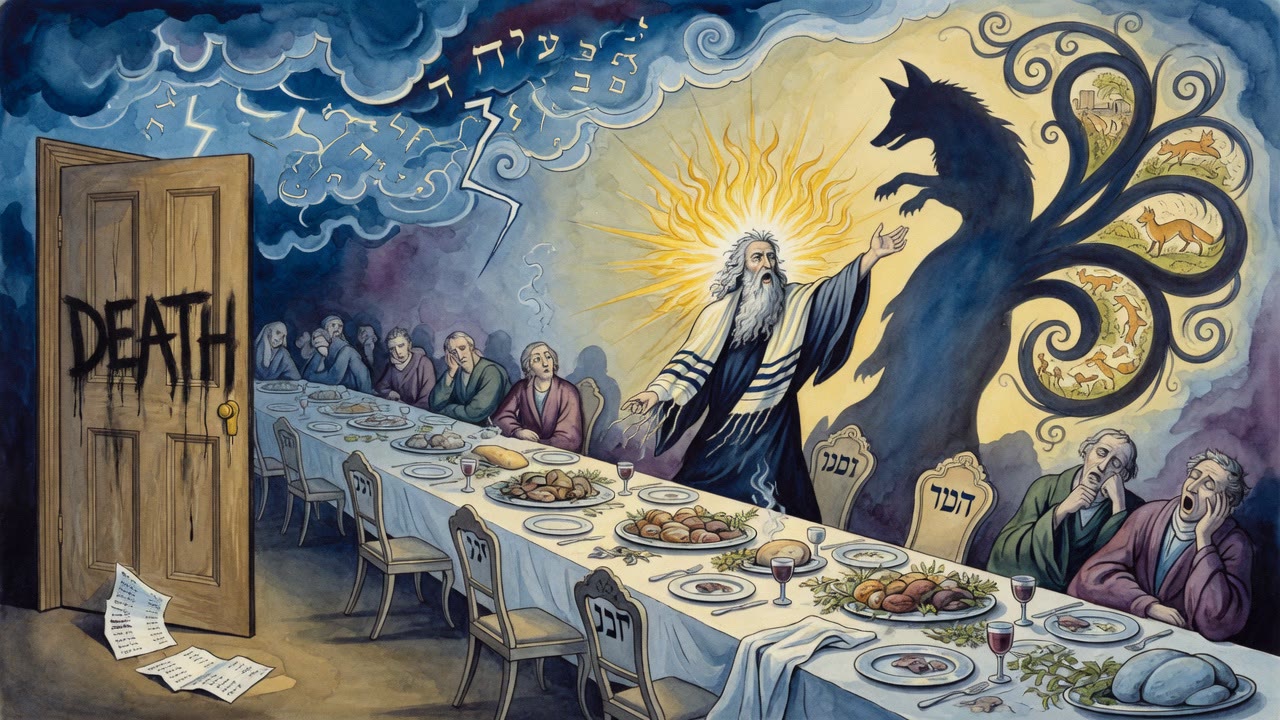
The line was not a curse. It was a slap delivered as philosophy. Pleasure thins. A banquet ends. The man left in the street wanted the house to remember that its laughter had a crack in it. Inside, someone finally read the words and went still. Outside, Bar Kappara walked away with an empty stomach and a full ledger of insult. A servant later claimed the charcoal dust stuck to his sleeve for days, as if the door itself refused to forget.

Guests wiped their hands after touching the post. The feast continued, but the first course had already been seasoned with a warning. Someone joked too loudly to cover the chill. The joke died halfway. Even wine cannot wash a sentence like that from wood while the man who wrote it still walks the street hungry.

Three Hundred Foxes Between Courses

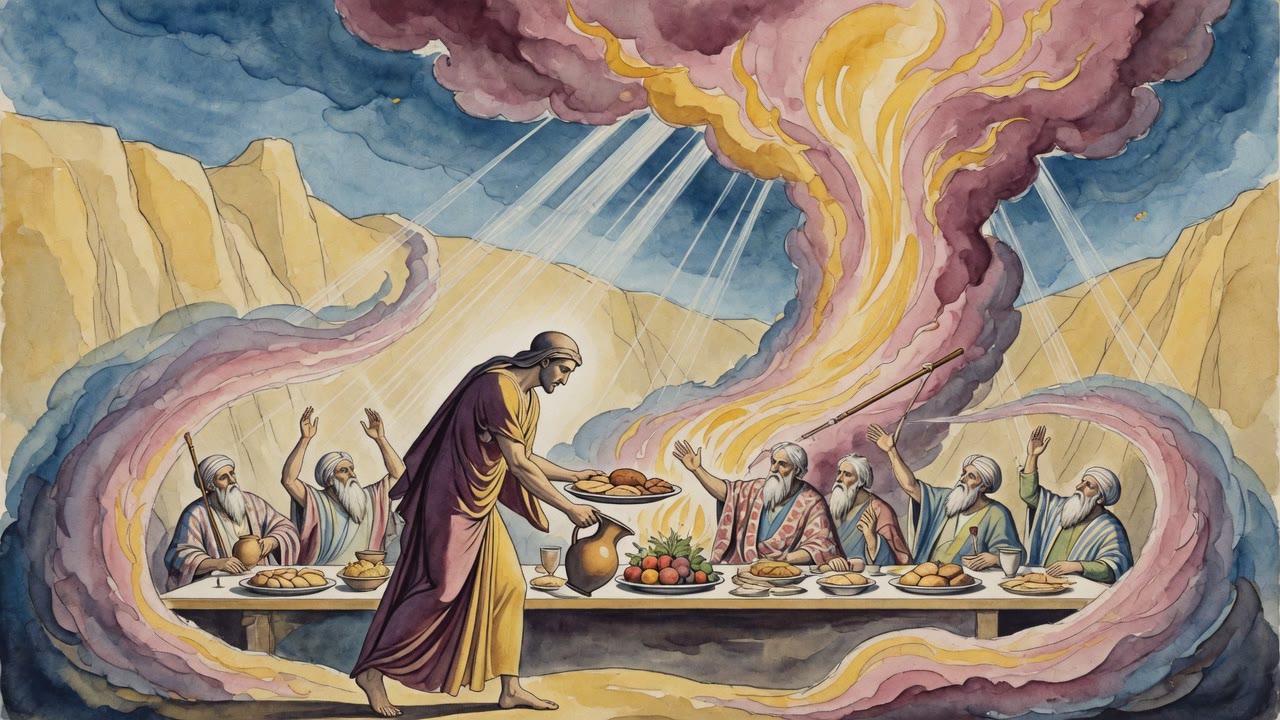
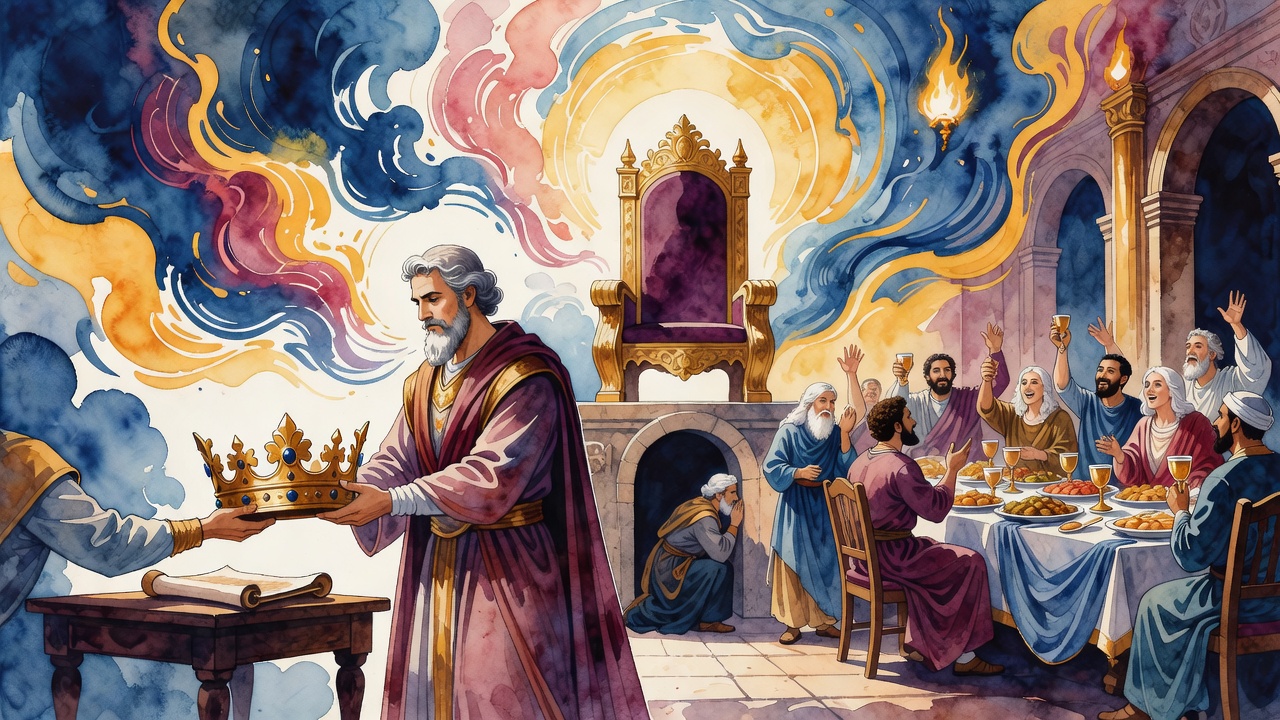
Later they invited him. Pride works that way. A slight becomes a debt, and the debtor wants to pay with interest. Bar Kappara entered, washed, and sat among the sages and the fine linen. Platters came. He began to speak. Fox stories poured out of him, one after another, clever, biting, impossible to ignore. Guests bent double. Cups shook. The servants tried to serve while men gasped for air.

Between every course he told more. The tradition numbers them in the hundreds, three hundred fox-fables before the next dish could cool on the tongue. Meat congealed. Bread stiffened. The banquet of the prince's son became a ruined kitchen of cold sauces and unfinished blessings. Bar Kappara had not struck a face. He had stolen the heat from the food with pure wit.

When the last laugh died, the insult was paid. Then, as the sources insist, he made peace. Revenge without reconciliation is only another empty plate. Simeon waited until the room could breathe. "You have ruined my dinner," he said. Bar Kappara answered without raising his voice. "You ruined my name first. Now we are even, and we can eat like men who remember how names work." They clasped hands over a dish that would never warm again.

Tables That Never Lacked a Radish

In another generation of the same household glory, the tradition measures greatness by produce. Antoninus the emperor and Rabbi Yehudah the Prince were paired as proud ones whose tables never missed radish, lettuce, or cucumber, summer or winter. Wealth that can force a cucumber into the wrong season is a kind of soft power. Physicians among the sages even assigned jobs to the vegetables: radish cuts the meal for digestion, lettuce turns food in the stomach, cucumber opens the path.

The school of Rabbi Yishmael warned that a large cucumber can be as hard on the body as a sword. Small ones, they allowed with a smile, are the wholesome kind. Bar Kappara's ruined dinner sits beside those everlasting tables like a cracked cup next to gold. One feast shows friendship across empire, plate after plate without lack. The other shows how a single forgotten invitation can turn a hall of abundance into a theater of cold dishes.

Dignity is measured by what reaches the table. Dignity is also measured by who is missing from the list. Imagine Antoninus lifting a winter radish while, in a side room of Jewish memory, Bar Kappara's foxes still run across a cold tablecloth. Power can stock a kitchen. Power cannot force a slighted scholar to stay quiet.

Laughter That Is Not Torah

Kohelet Rabbah reads a verse about a feast made for laughter and hears two kinds of joy. One feast belongs to empty revelry, laughter forced like a mask. Another cheer comes from Torah itself, precepts that gladden the heart without needing a hired jester. Money, the same midrash says, sometimes answers and sometimes indicts. Spent for righteousness, it speaks for you. Hoarded or turned selfish, it testifies against you.

Bar Kappara's foxes were not idol laughter. They were a scholar's weapon. Still, the cold food teaches a limit. Wit can level a slight. Wit can also empty a blessing. When the room finally quieted and peace was made, the meat had already failed its purpose. The better feast is the one where no guest is erased from the door and no one needs three hundred animals to reclaim his name.

A young student at the edge of the hall learned two menus that night: the menu of produce that never fails a prince, and the menu of stories that can starve a table in an hour. He went home hungry and wiser than the men who had eaten first. Years later, when he hosted his own students, he counted the seats twice before the pots left the fire.

What Remains After the Dishes

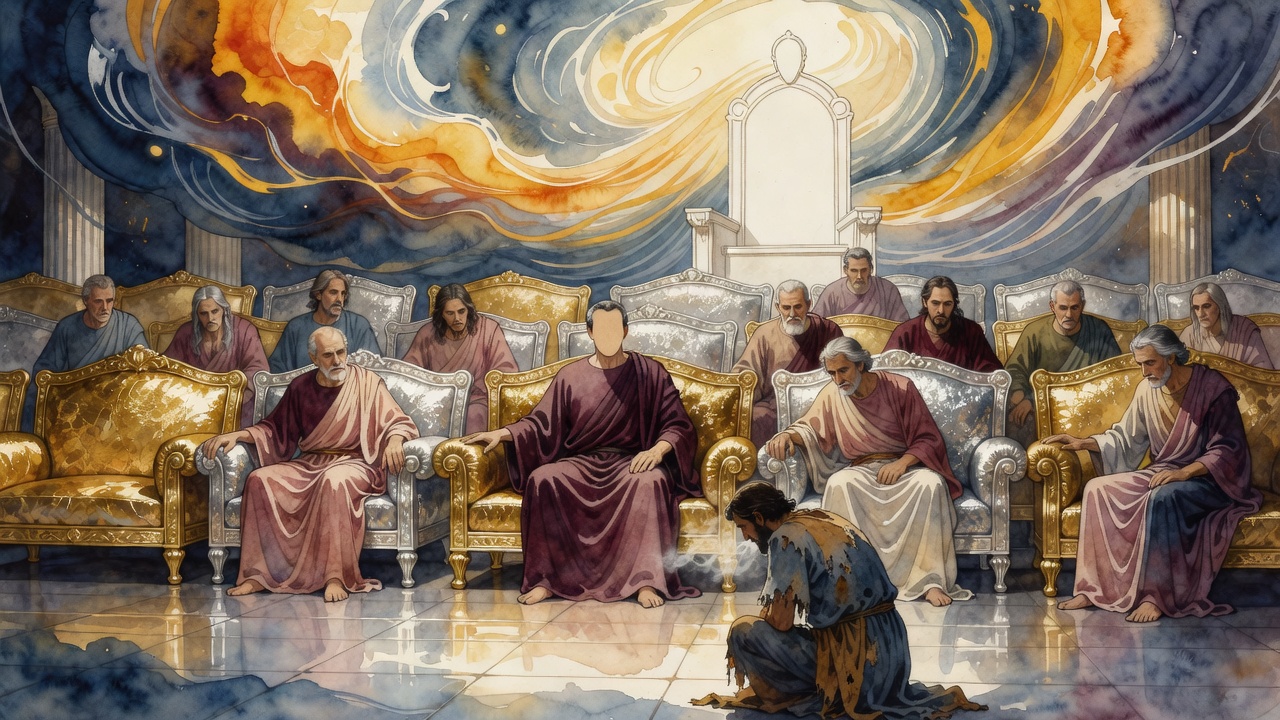
Simeon learned what his father already knew: a prince's house is judged by more than radishes out of season. It is judged by the man left standing in the street with charcoal on his fingers. Bar Kappara learned that a perfect revenge still wants a handshake. The guests learned that laughter has a cost when it is aimed like a spear.

Somewhere a servant scraped grease from a platter that never warmed a belly. The door was scrubbed. The words After joy, death were gone from the wood. They were not gone from anyone who had walked under them. The house returned to study and law, but for one season every invitation was checked by a nervous steward who had watched cold gravy form a skin.


← All myths
From the tradition

Sources

3 sources

The texts behind this telling. Some cards carry a translation of the source; others are our own retelling of it, and each card says which. Every card links out to the original.

Exempla of the Rabbis, No. 212Exempla of the Rabbis (Gaster, 1924)

Retold in our words. Read the original at the link below.The Exempla of the Rabbis, Moses Gaster (1924) · Public Domain

This cluster of short tales from the Exempla of the Rabbis preserves vivid scenes from the world of the Sages. In the first, Simeon ben Rabbi, son of the great Rabbi Judah the Prince, forgot to invite the witty scholar Bar Kappara to a banquet. Stung by the slight, Bar Kappara scrawled a mordant line on the door, "After joy death," a warning that pleasure is fleeting. When he was finally invited to a later feast, he took his revenge through sheer cleverness, keeping the assembled guests so helpless with laughter, reportedly telling three hundred fox-fables between every course, that the food grew cold and the dinner was ruined. Having repaid the insult with his wit, he afterward made peace and was reconciled with his host.

The remaining tales are darker and touch on the perils of forbidden healing. Eleazar ben Dama was bitten by a snake, and a man named Jacob of Kefar Sama offered to cure him by invoking the name of Jeshua ben Pandira, a name the Sages associated with heresy. R. Ishmael forbade the cure, and Eleazar died rather than be healed through an illicit invocation, a stark statement that the manner of healing matters as much as the cure. In the last, a spell was cast on Hananya, the nephew of R. Joshua, in Capernaum, driving him to ride into Tiberias on an ass on the Sabbath in violation of the day. R. Joshua undid the enchantment with an ointment and counter-spells and then sent his nephew safely away to Babylon, out of reach of those who had bewitched him.

Full source
Yalkut Shimoni on Torah 110:21Yalkut Shimoni on Torah

Translation of the source text.Torat Emet (Yalkut Shimoni) · CC-BY-NC

"Two nations are in your womb" Rav Yehudah said in the name of Rav: do not read "nations" (goyim) but "proud ones" (ge'im) this refers to Antoninus and Rabbi, from whose table neither radish nor lettuce nor cucumbers were ever absent, neither in the days of summer nor in the days of the rains. For the Master said: a radish cuts up the food, lettuce turns the food over, and a cucumber widens the intestines. But did the school of Rabbi Yishmael teach: why is it called a cucumber (kishut)? Because it is as hard (kasheh) for the whole body of a person as swords (charavot)? That is no difficulty: this case refers to large ones, that case to small ones.

Full source
Kohelet Rabbah 10:19Kohelet Rabbah

Retold in our words. Read the original at the link below.The Sefaria Midrash Rabbah, 2022 · CC-BY

The first reading, that sounds like a recipe for a pretty good Friday night.

The Rabbis saw multiple layers within this simple verse. "A feast is made for laughter"… but what kind of feast are we talking about? The Rabbis suggested that this refers to a feast made for idol worship. In that context, the "laughter" is artificial, a forced revelry.

What about "wine cheers the living?" The Rabbis offered an alternative interpretation: this isn’t just about getting tipsy. Instead, the "wine" is actually the Torah! As it says in (Psalms 19:9), "The precepts of the Lord are upright, cheering the heart." According to Rabbi David Luria, unlike the fleeting joy of idolatry that needs external stimulation to create happiness, Torah itself brings happiness without needing external stimuli. Torah brings true, lasting joy from within. It's a powerful idea. The fleeting pleasures of a party versus the enduring joy of wisdom and connection to something bigger than yourself.

Then there's the final piece: "Money answers everything." This one is particularly nuanced. Rabbi Yehoshua of Sikhnin, quoting Rabbi Levi, offers a critical caveat: sometimes money answers, and sometimes it doesn't. When you use money for righteous acts, for tzedakah, for making the world a better place, then it "answers." It speaks on your behalf, as it says in (Genesis 30:33), "My righteousness will speak on my behalf."

But when you hoard it, or use it for selfish purposes, it becomes an indictment. It testifies against you, echoing the verse in (Deuteronomy 19:16), "To give false testimony against him." In other words, the power of money isn't inherent; it's determined by how we use it.

The Talmud tells us a story about Rabbi Shimon ben Lakish that perfectly illustrates this point. He was called by a neighbor and saw people celebrating, dancing, and being given food and drink. Thinking this was a good thing, he joined in, hoping for some of the same. He stood, danced, and sang, and they gave him only a wineskin of aged wine. This reminds us of the verse: "A feast is made for laughter," where empty revelry doesn't necessarily bring true fulfillment or reward.

So, what’s the takeaway here? Is Ecclesiastes telling us to shun joy? Absolutely not! It’s inviting us to think critically about where we seek our happiness. Are we chasing fleeting pleasures, or are we investing in things that truly nourish the soul – wisdom, connection, and acts of righteousness? Are we using our resources – including our money – in ways that bring lasting good?

It's a question worth pondering, and one that resonates just as powerfully today as it did centuries ago.

Full source