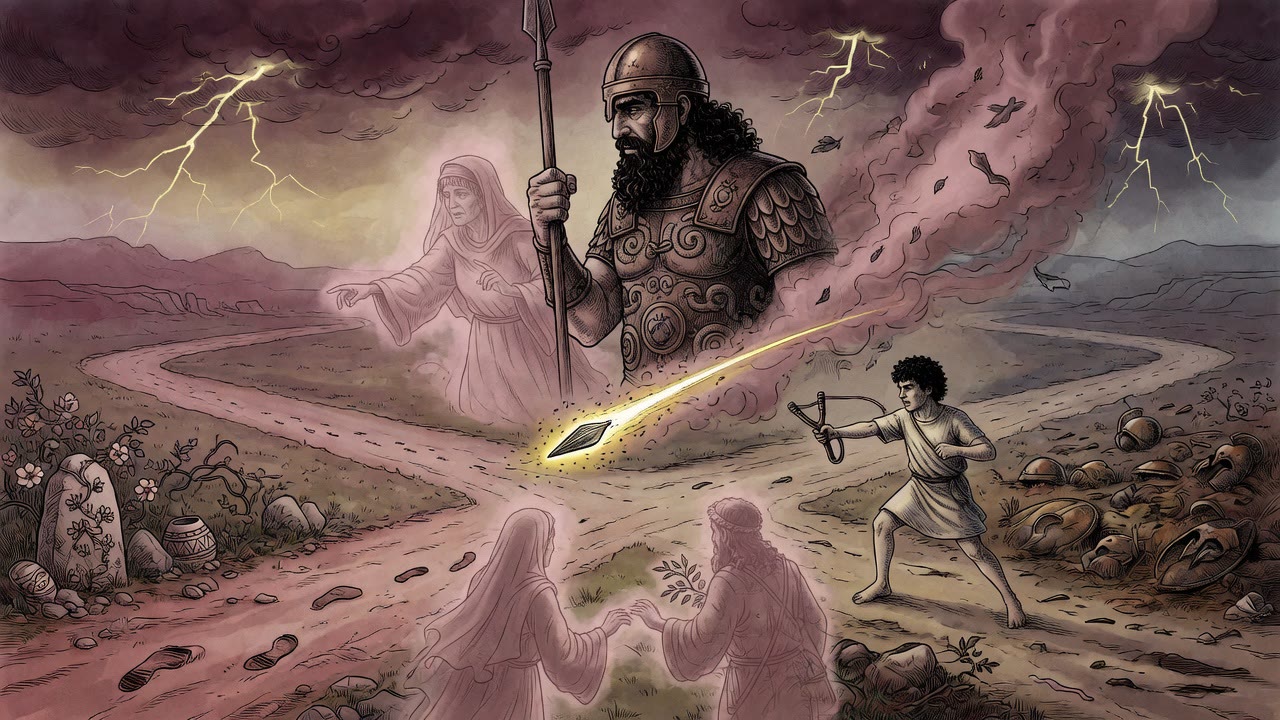
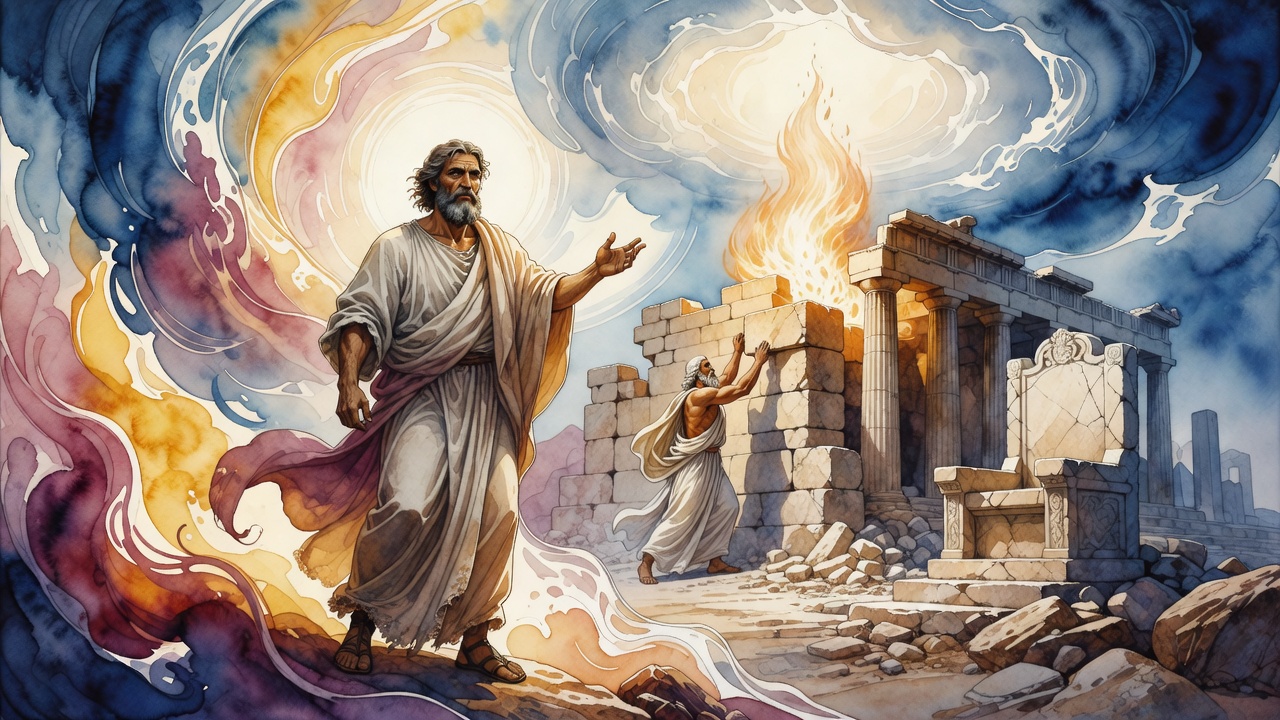
Boaz Bound His Inclination on the Threshing Floor
Ruth lay at Boaz's feet in the dark and asked for redemption. He blessed her, then swore by the living God that he would not touch her until morning light.
Table of Contents
 Click for full size
Grain Dust and a Quiet Request
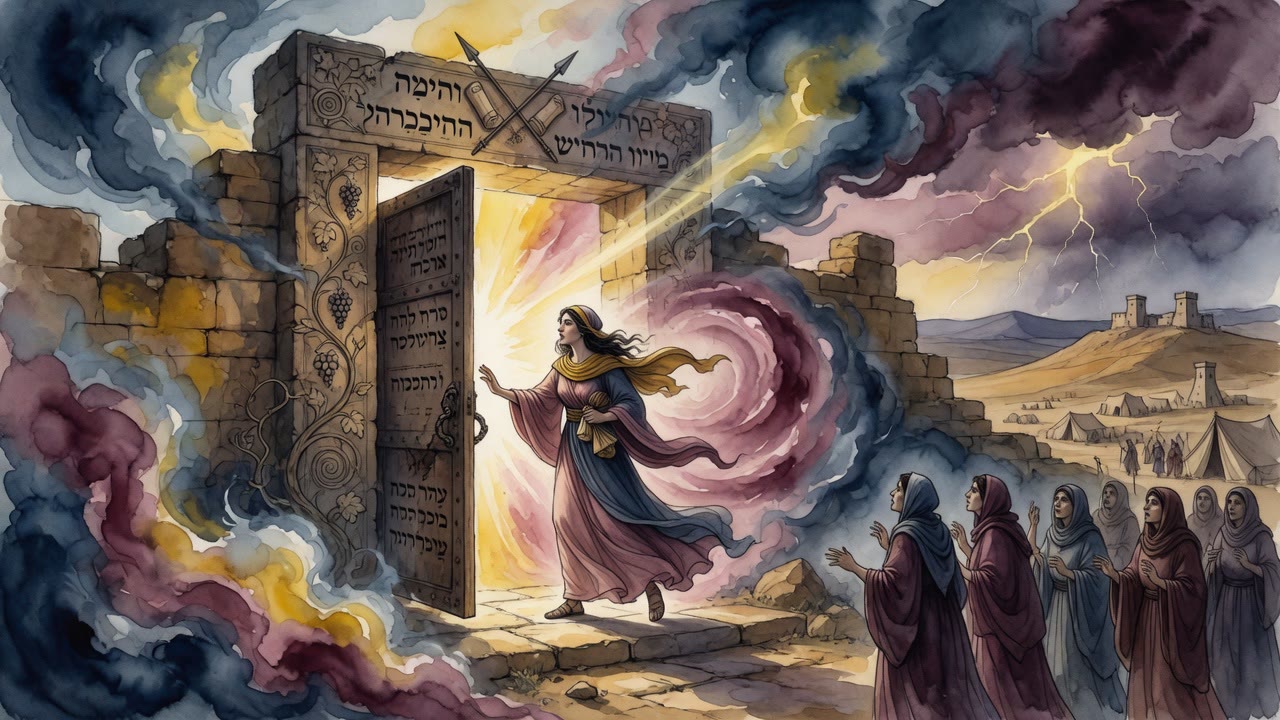
Midnight on the threshing floor smelled of chaff and crushed grain. Ruth lay at Boaz's feet and asked to be redeemed. He did not curse the Moabite woman who had come in the dark. He opened his mouth to bless her. "Blessed are you to the LORD, my daughter. You have made your latter kindness greater than the first."
He read her heart. A woman might prefer a poor young man to a rich old one. "I am eighty years old," he marveled, "yet she has come to sanctify the Name of Heaven." He told her to wait until morning, when the nearer kinsman would be tested in daylight and law. Then the other voice arrived, the one that does not need a door.
Night held them both in a privacy that could have become theft. Boaz chose another use for the dark. The grain piles rose around them like mute witnesses. Wind moved across the floor and found nothing shameful to report.
Ruth waited without pressing. Boaz waited without taking. The midrash will measure both waits against a later garden where waiting failed.
The Whisper and the Oath
The evil inclination whispered: you are free and she is free. Take her. Rabbi Yehudah ha-Levi son of Rabbi Shalom heard that whisper in the teaching. Boaz seized the impulse and bound it under oath. "As the LORD lives, I will not touch her." When she feared empty words, Rabbi Huna added, he swore again that he would not dismiss her with soft noise and no deed.
Hands stayed still. Morning would decide lawfully what night must not steal. Generations later David rose at midnight to give thanks, remembering wonders done for his grandfather and grandmother on a floor of grain. A king's praise hour was born from an old man's restraint.
Desire was real. The midrash does not pretend otherwise. What matters is what Boaz did with the real thing when no court was watching and the only law present was the one he put in his own mouth.
The Man Who Trusted Himself
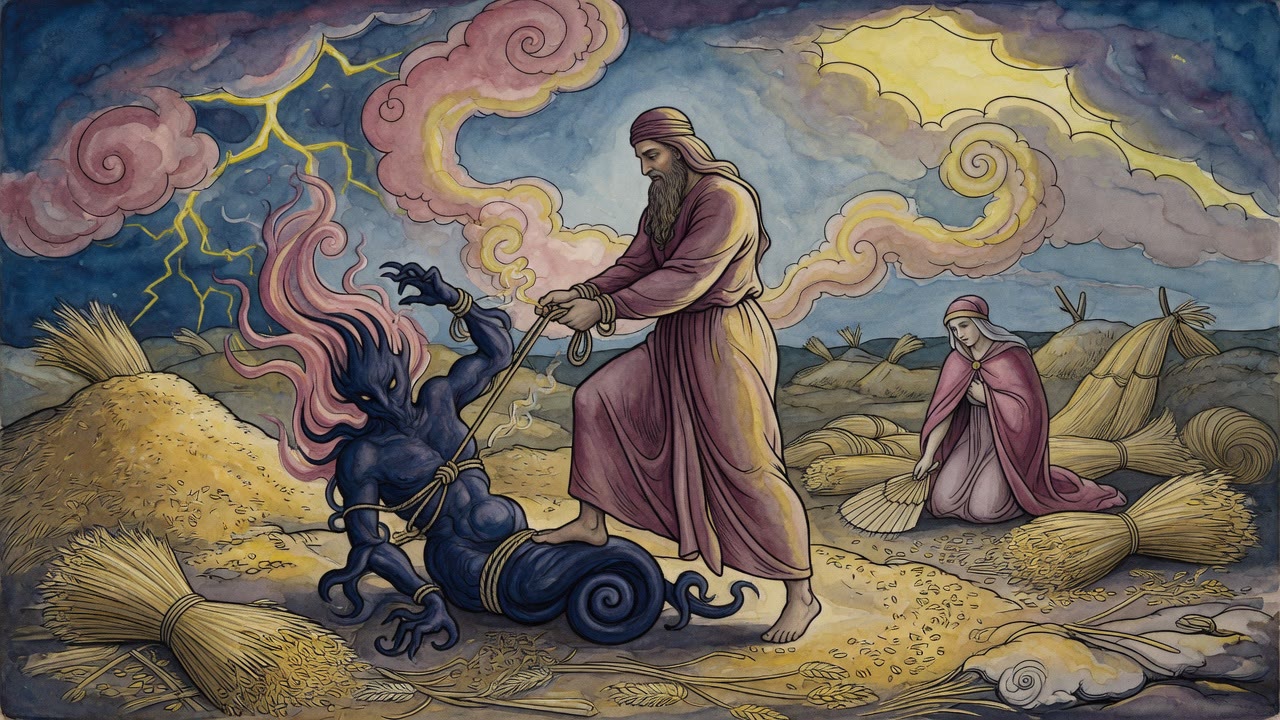
Another man, a sectarian who mocked the sages, trusted himself past the day of his death. His teacher repeated the maxim: never trust yourself until you die. The man laughed it off. On Yom Kippur he wandered into a garden and met a woman, adorned and radiant. He desired her. "I am married," she said. No matter. "Wife of a priest." No matter. "A menstruant." No matter. He would not turn away until he had taken her.
Afterward shame wasted him for months though no fever touched him. At last she returned and told the truth: she was a spirit. The trial had come because he scorned the teaching. Rabbi Ishmael said pray over the soul's departure, for nothing is harder. Rabbi Yochanan likened it to a rope hauled through the narrow hawse-hole of a ship. The soul tears loose. That is why no one should trust the self as if the self were a fortress.
The garden and the threshing floor are two tests of the same night-watch. One man binds. One man loosens every rope and calls it freedom until the spirit returns to name the trap.
Two Nights, Two Ends
Boaz on the threshing floor and the scorner in the garden stand as opposite midnights. One binds desire with an oath and becomes an ancestor of kings. The other loosens every boundary and learns too late that the self is a poor guardian.
Three sages at the edge of death would later choose psalm verses for the "time of finding," the wringing-out of a life: abundant goodness stored for those who fear You; refuge and song and shelter; let every pious one pray at the time of finding. Boaz had already practiced that hour in advance. He found the moment when no one watched but Heaven, and he spent it on a vow.
Ruth waited for morning light. The nearer kinsman would speak. Boaz would speak. The lineage of David would begin not in a stolen hour but in a kept one. Midnight thanks in a later palace still answers that kept hour with song. The midrash sets the two nights beside each other so the choice stays sharp: bind the whisper, or follow it into a garden that was never empty of judgment.
Chaff stuck to Ruth's cloak and to Boaz's beard. The nearness of midnight could have become a different story with one loosened hand. Instead the floor kept only the sound of grain settling and an old man shaping an oath.
Across another night, in a garden bright with false beauty, the scorner learned that "no matter" is a sentence Heaven can reverse. The spirit who wore a woman's form left him with months of clean shame and no fever to blame.
David's later midnight rising still answers the threshing floor. Kings inherit more than land. They inherit the hour a grandfather chose restraint when desire had every practical excuse.
← All myths