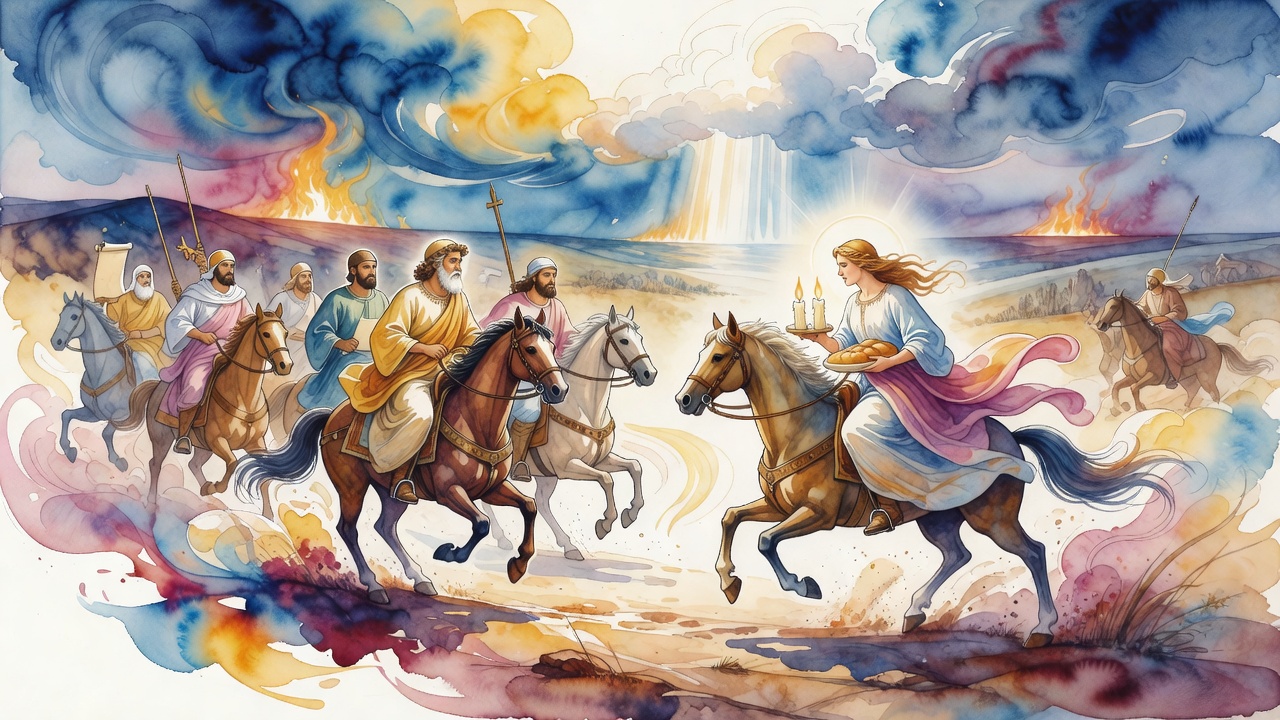
David Lifted His Head After Nathan Spoke
After Bathsheba, nations said David had no salvation left. Nathan arrived with pardon, and the head owed to the block was lifted up in mercy instead.
Table of Contents
 Click for full size
A Head Held in the Balance
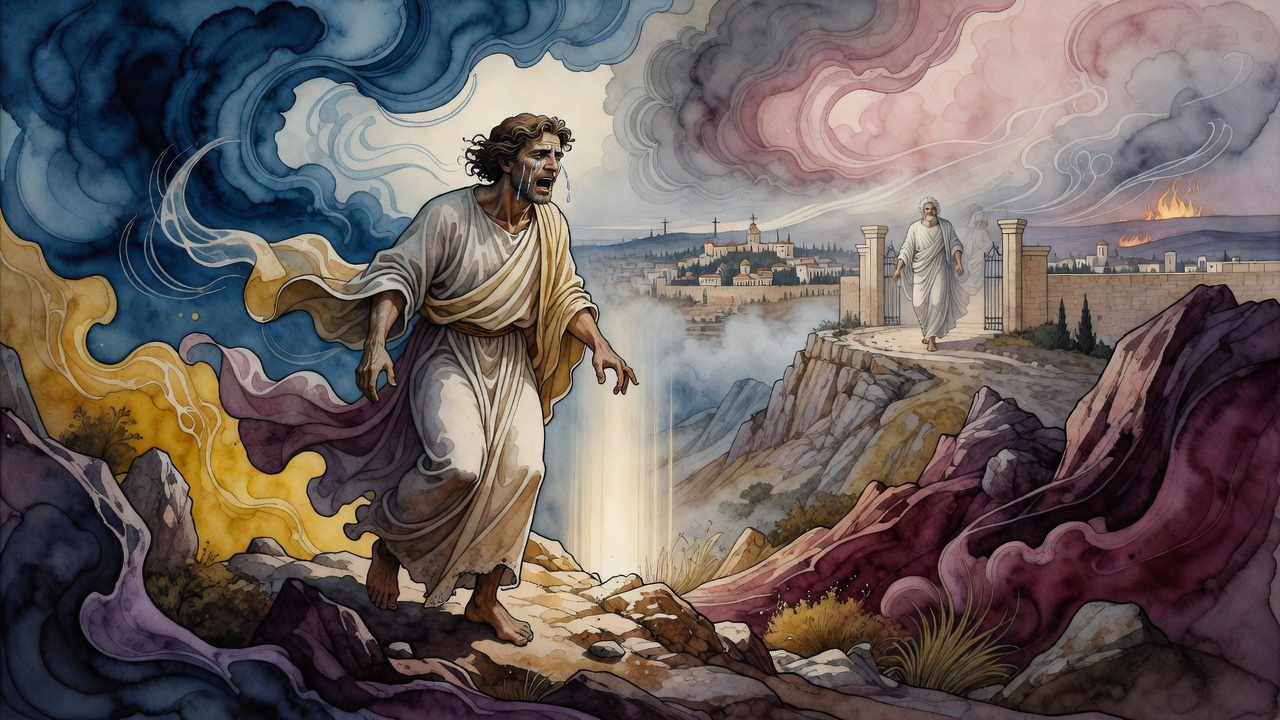
David sat with his face in his hands after the deed with Bathsheba. Outside the palace, the nations sneered lines from the Psalm: "Many say of my soul, there is no salvation for him in God." What man, they asked, could take the ewe-lamb, kill the shepherd Uriah, topple Israel upon the sword, and still find rescue? Even Heaven seemed to side against him. The Torah decrees that the adulterer and adulteress shall surely be put to death. By that law, David's head was forfeit.
David did not answer with a lawyer's trick. He answered with the next breath of the same Psalm: "You, O Lord, are a shield about me, and the lifter of my head." The head he owed in execution, the lifting off of the head, he begged to have lifted up instead. Shield me through the merit of my fathers. Restore me to the throne. Do not let the block have the last geometry of my neck.
Nathan's Verdict of Mercy
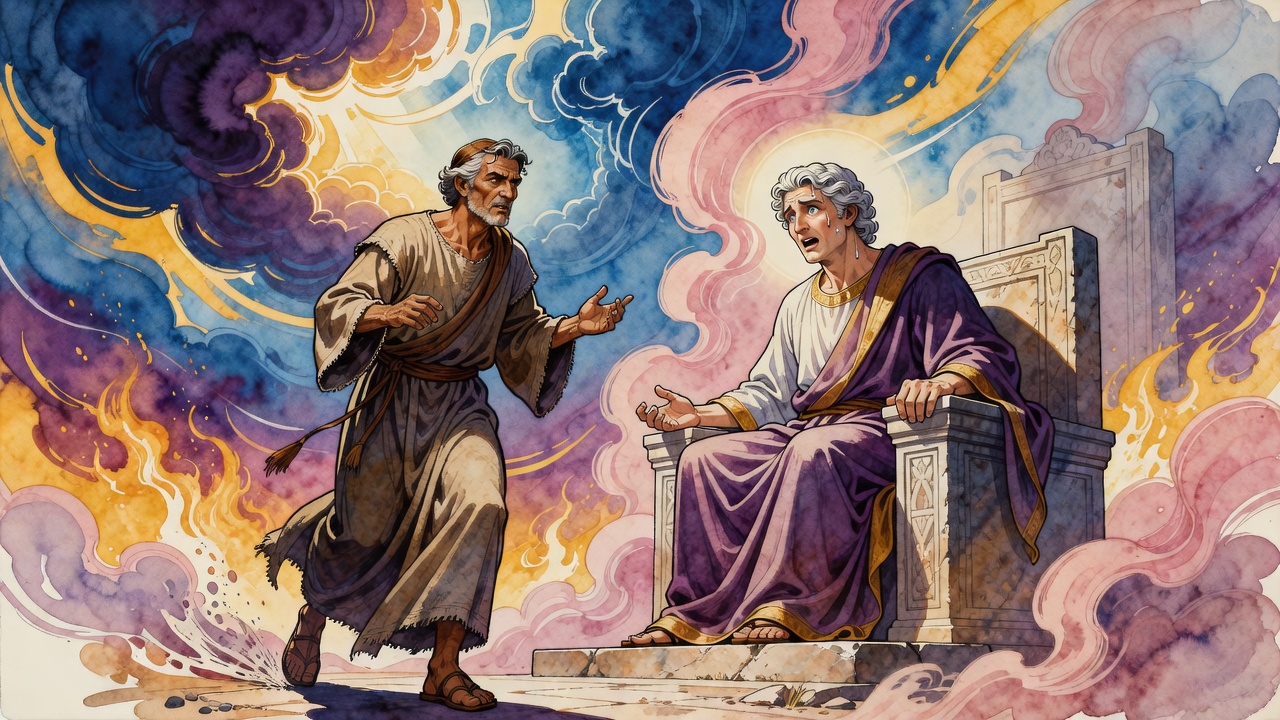
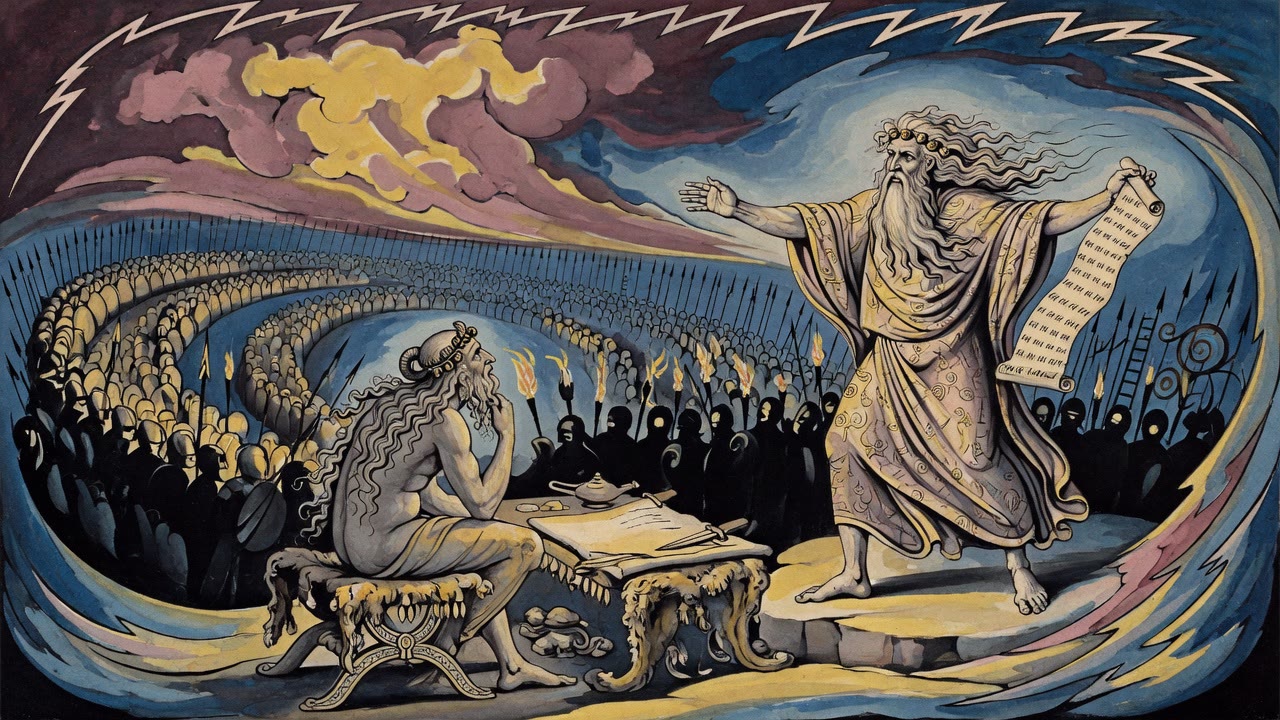
The prophet Nathan came with a story about a rich man and a poor man's lamb, and David condemned himself before he knew he was the rich man. Then Nathan spoke the sentence that still rearranges air in a room: "The Lord also has put away your sin; you shall not die." The same phrase that can mean a head lifted to the sword can mean a head lifted in pardon. David lived. The child would not. The sword would not leave his house. Mercy is not the erasure of consequence. It is the refusal to let consequence be the only word.
He walked the palace corridors with a head still on his shoulders and a heart that knew the arithmetic. Nations had written him off. Heaven had not finished writing.
Midnight Oaths Against the Easy Path
The same David who needed lifting had practiced, long before and after, the art of binding himself at night. "Awake, my glory," he sang at midnight, and his own evil inclination mocked him: "You are a king. Kings rise at the third hour of the day. Why do you stagger up in the dark?" David answered, "My honor is nothing before the honor of my Creator."
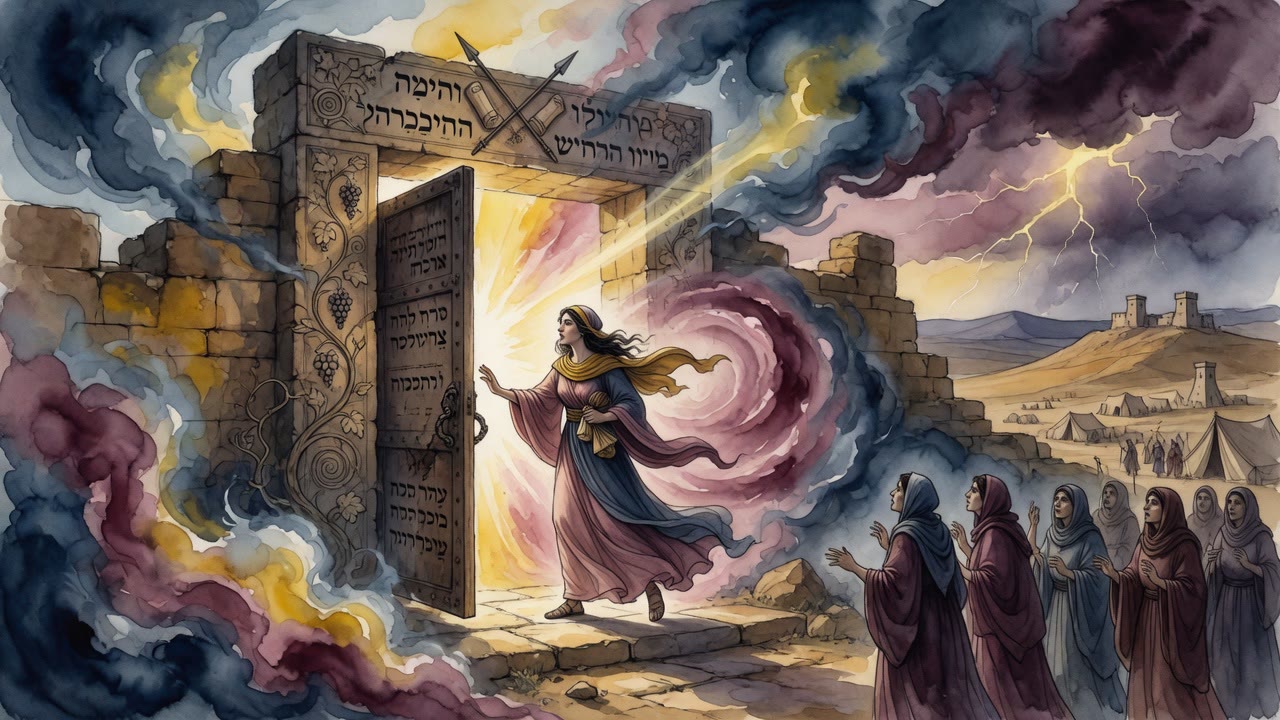
He owed thanks for a midnight wonder in his bloodline. Boaz woke startled and found Ruth at his feet. "Who are you?" "I am Ruth, your handmaid." "Stay the night." When she pressed him about redemption, Boaz swore, "As the Lord lives." The sages teach that oath was aimed at his own inclination, which whispered that both were unwed and the night was soft. The righteous man bound himself: not this night. So too David, when Saul lay helpless at his feet, swore twice not to strike the LORD's anointed, beating back the easy kill.
A Heart of Stone and a Head Still Up
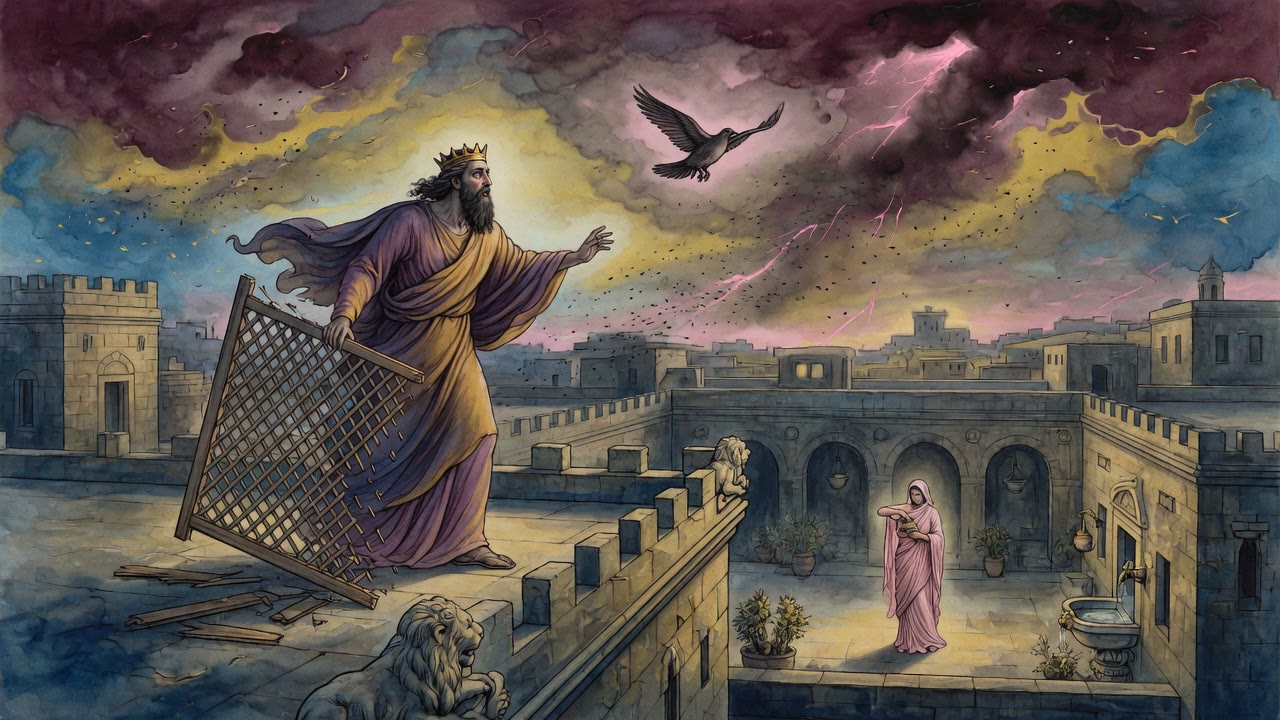
Israel would one day cry that the inclination is too harsh, and the Holy One would answer: clear it little by little, and in the world to come I will remove the heart of stone. David lived between those poles. He failed with Bathsheba in the soft hour of afternoon rooftops. He succeeded, again and again, with midnight oaths and refused swords. Nathan's pardon did not make him innocent. It made him a man whose head could still rise to pray.
He sat with the Psalm open like a wound and a bandage at once. Many said there was no salvation. One prophet said otherwise. The lifter of heads had chosen the harder mercy: keep the king alive, and let the rest of the story hurt until it teaches.
At midnight the palace was quiet. David rose. The inclination muttered about royal sleep. He put his feet on cold stone and opened his mouth anyway. A head once nearly lifted off now lifted itself toward the Name, not because the nations approved, but because Nathan's sentence still held like a beam under a cracked roof.
In the days after Nathan left, David found the palace full of ordinary sounds that felt like accusations: a woman's laugh in a corridor, a soldier's report about a far skirmish, the scrape of a chair. He still wore the crown. He still signed orders. He also sat with the knowledge that the law had every right to his neck and that mercy had rewritten the sentence without rewriting the past. Bathsheba's name stayed in the house. Uriah's absence stayed in the army lists.
When midnight came, the old discipline returned like a scar that still knows weather. He rose. The inclination still mocked royal sleep. He still answered with the Creator's honor first. Boaz's oath in the family story was not a decoration; it was a pattern David had broken in one season and kept in others. Restraint toward Saul and failure toward Uriah lived in the same biography. The lifter of heads had not hired a simple man.
He wrote and sang until the words scraped. "Many say of my soul" became a line he could sing without lying, because many still said it. "You are a shield about me" became a line he could sing without cheap comfort, because the shield had let arrows through and still refused the final one. A head lifted in pardon must keep lifting itself toward the Name, or the pardon becomes only a delayed fall. David chose the harder posture: alive, guilty, singing, awake.
← All myths