Chiya's Sons Named the Fall of Two Royal Houses
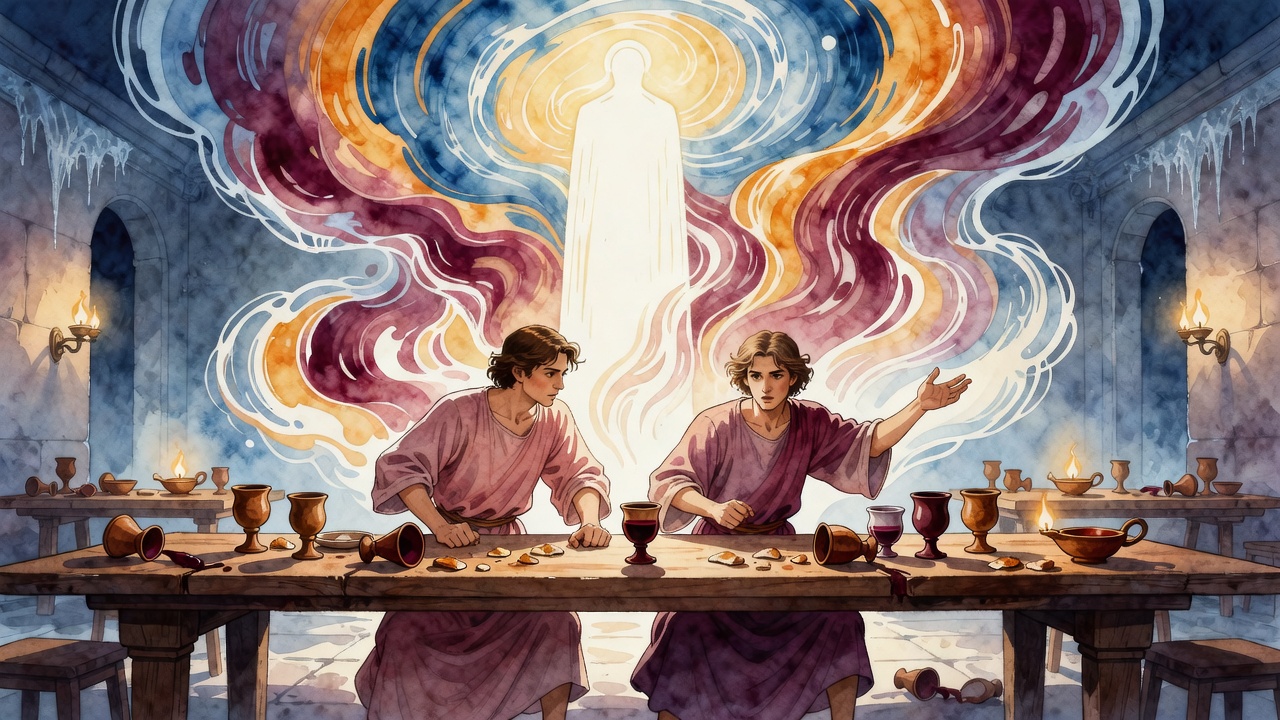
Drunk at Judah HaNasi's table, Chiya's sons said Messiah waits until both Davidic houses end, and the room went cold.
Table of Contents
 Click for full size
Wine at the Nasi's Table
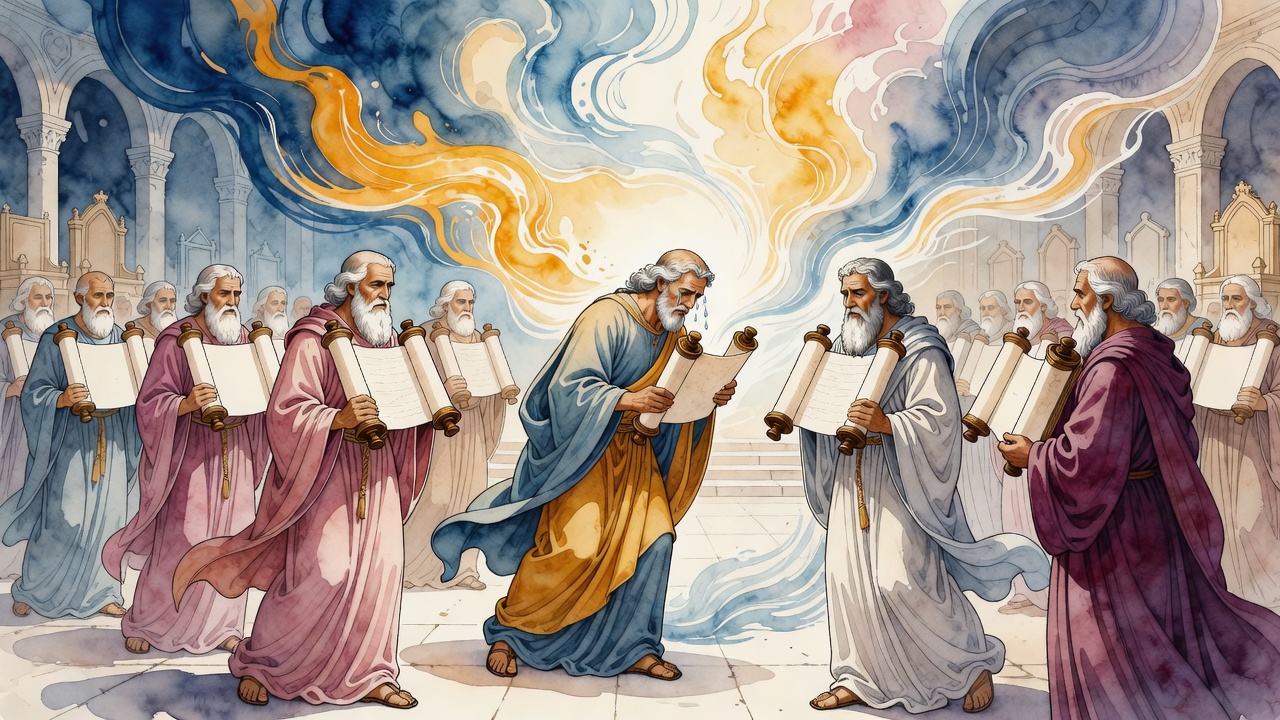
At a banquet in the academy of Rabbi Yehuda HaNasi, redactor of the Mishnah around 200 CE, the wine ran freer than the caution. The sons of Rabbi Chiya, Yehudah and Chizkiyah, sharp enough to cut the air when sober, said aloud what no one says when sober. The ben David, the descendant of David who would be Messiah, would not come until the two princely houses of Israel had both ended.
They meant the Reish Galuta, the Exilarchate of Babylon, the officially recognized royal line of the diaspora that traced itself to David. They meant the Nasi in the Land of Israel, Yehuda HaNasi's own patriarchal house, tracing through Hillel back toward David as well. Both houses, the brothers said, had to fall. Only then would the true ben David have room to stand.
Yehuda HaNasi heard his own dynasty named as an obstacle. He answered that the boys spoke like minim, sectarians who wished for the fall of their own line. The sentence stuck anyway. Later centuries watched both houses fade. The Nasi line ended in the early fifth century. The Exilarchate lasted until around the eleventh century and then dissolved. The Messiah has not yet come. The exemplum remains, cold as a cup left half full.
Much Wisdom, Much Grief
Kohelet sighed that in much wisdom is much grief, and Midrash Shmuel does not soften the sigh. The finer the vessel, the costlier its flaw. Scorch a thread of the fine linen of Beit Shean, and the loss is great. Scorch coarse cloth of Arbel, and the loss is small. Two men enter a shop. One feasts on white bread, rich meat, aged wine, and walks out sick. One eats plain bread and lentils with cold water and walks out hale. Suffering is the portion of human beings, not of camels. As the serpent's cunning, so its curse. Wisdom raised David and Solomon and undid Doeg and Ahitophel.
Chiya's sons had enough wisdom to see a structural truth: sacred offices can occupy the throne-space of redemption. They lacked the sober charity to say it without wounding the man who fed them. Grief came with the insight, for them and for the table.
Knowledge Against the Temple
Hannah sang, "For the LORD is a God of knowledge," and the sages bent close. Knowledge is the door through which a person approaches the Maker. Rabbi Elazar weighed da'at against the Holy Temple itself. As the Sanctuary is the dwelling of the Divine on earth, so knowledge is its dwelling in the mind. A people void of understanding forfeits compassion. To know is to remain within the range of mercy.
The brothers' knowledge was real. Their timing was a knife. Yehuda HaNasi's table was not a study hall for abstract messianism that afternoon. It was a living court of a living prince. Knowledge that cannot wait for the right hour becomes another kind of wine, sharp and public and hard to take back.
A Face Lit by Torah
Elsewhere a gentile stopped short before Rabbi Judah ben Ilai, dazzled by a face lit from within. He guessed the light came from vice: usury, swine, or drink. Judah denied all three. The four cups of Passover left his head aching until Shavuot (the festival seven weeks later). "The Torah makes it shine," he said. "A man's wisdom lights up his face" (Ecclesiastes 8:1). When Rabbi Abbahu returned from Caesarea glowing, students whispered of buried treasure. Rabbi Yochanan said he had heard fresh Torah, even if it was only an old tosefta recited well.
Chiya's sons had Torah enough to shine and tongue enough to burn. The banquet needed the shine without the arson. A face can light a room. A sentence can torch a dynasty's peace for a generation of memory.
Clearing the Stage
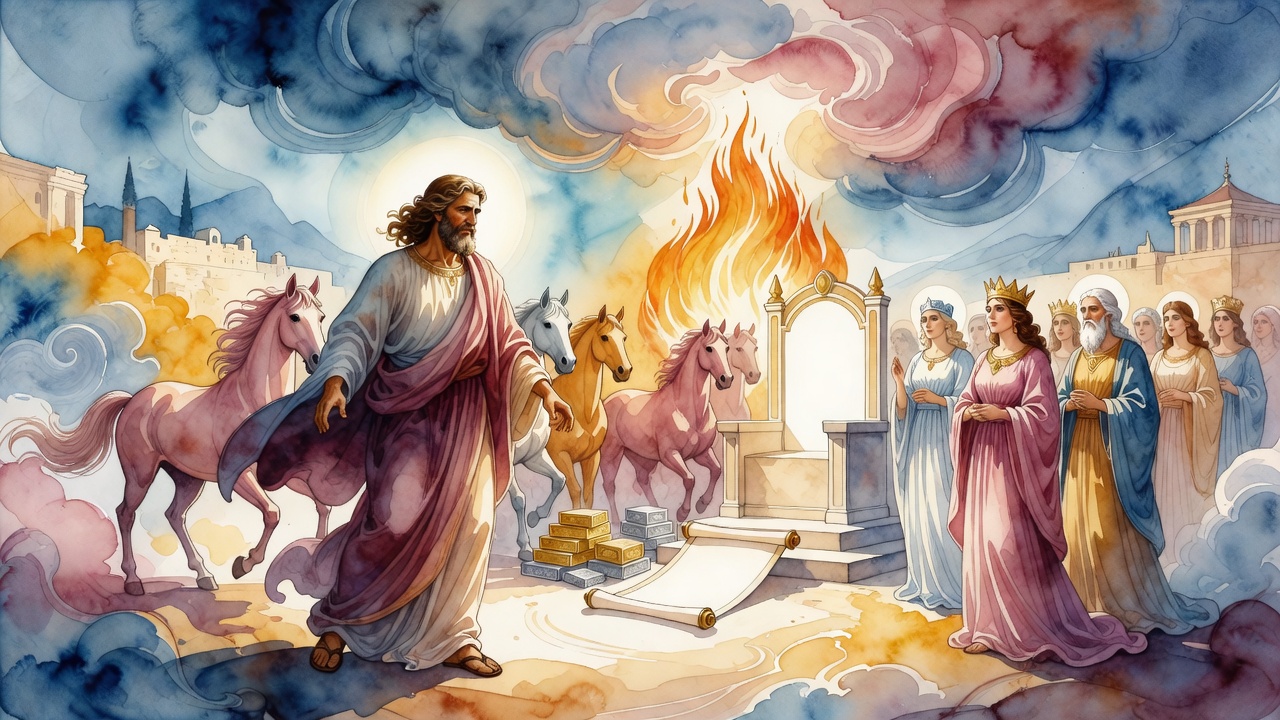
The tradition keeps the drunken prophecy because later ages recognized its logic. Institutions, even noble ones, can sit in the chair prepared for something last. Until they clear the stage, the ben David has nowhere to stand. Saying so at the Nasi's own table was either courage or cruelty. The story refuses to decide. It only shows the wine, the claim, the rebuke, and the long afterward in which both houses did, in fact, end.
Wisdom without grief is a children's toy. Grief without wisdom is only noise. The sons of Chiya had both, poured into one cup, and the academy still tastes it when the tale is told. Yehuda HaNasi went on redacting the Mishnah. The brothers went on being brilliant. The two houses went on ruling until history did the work the wine had named too early. Between the banquet and the last Exilarch stretches a long patience the Messiah still has not broken with arrival. The empty chair remains the loudest object in the room.
← All myths