5 min read

The Poor Torah Sage Who Would Not Sit Idle

He could open a locked verse and set it down clean. He could not buy a fig. The rich man he approached looked at his patched cloak and said no.

Curated by Arthur · Told by Maggid ·
Table of Contents
  1. First He Sought a Stronger Mouth
  2. Commerce Closed Its Door
  3. He Learned a Craft With Bare Hands
  4. Joy Now and the Days of Darkness

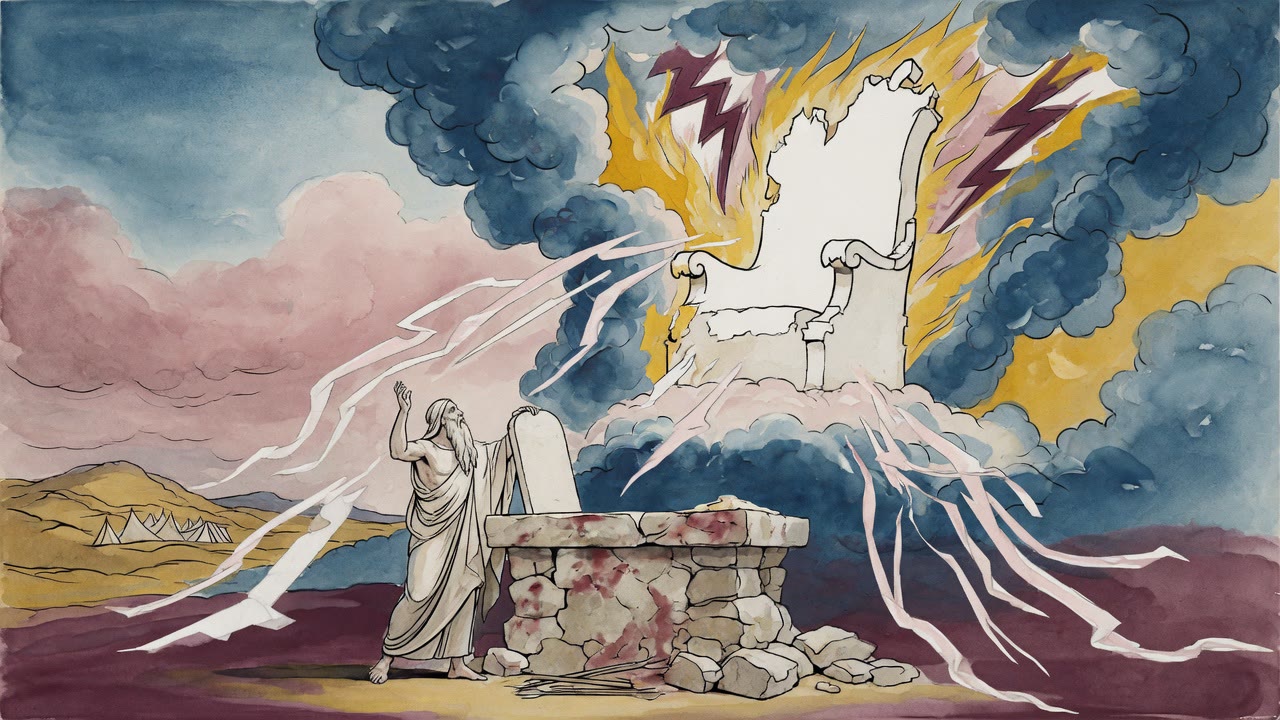
The poor man stood in the market with a full mind and empty palms and felt the living walk past him as if he were already half a ghost.

The Poor Torah Sage Who Would Not Sit Idle Click for full size

He knew verses. He could open a difficulty in Torah and set it down clean. Bread did not answer that skill. Coin did not rise from the ink on a scroll. "How can the knowledgeable poor man walk before the living" was not a riddle for the study hall alone. It was the question under his ribs when a cart of fruit rolled by and he had nothing to trade for a single fig.

He could have sat. Sitting is easy when shame freezes the joints. He did not sit.

First He Sought a Stronger Mouth

When the text itself went dark on him, when a line of Torah locked and would not open under his own pressure, he did not pretend mastery. He hunted a teacher whose knowledge ran deeper than his, a man who could walk a verse the way a guide walks a mountain path in fog.

They sat on a low bench while flies moved over a water jar. The teacher opened the knot. The poor man's face loosened. Understanding is a kind of food. It does not fill the belly, but it keeps the mind from starving into bitterness. Eternal life, the hard readers said, is earned by study that goes deep, not by a vague nod toward holiness from a distance.

He left the bench with the verse clear and the market still loud with prices he could not meet. A seller shouted dates by the handful. A child tugged a goat past his knees. He stepped aside, hand empty, and kept the new reading warm in his chest the way a man keeps a coal alive between two palms on a cold road.

Commerce Closed Its Door

Someone told him to partner with the wealthy, the ones the verse could call "the living" when living means those who have room to breathe and buy. He went. He spoke carefully. He named a small plan that needed seed coin and honest hours.

The wealthy man looked at his patched cloak and did not look long. Partnership is a risk. Limited means look like a hole in the boat. The door closed with politeness sharp enough to cut.

The poor man stood in the street and felt heat climb his neck. Anger wanted a speech. He swallowed it. A fool's many words would not stock a shelf. He turned from the closed door and kept walking.

He Learned a Craft With Bare Hands

If capital would not come, skill still could. He apprenticed his hands to a craft that left calluses and a smell of work on the skin by evening. A tool became as familiar as a verse. The Holy One, he was told and chose to trust, would support a man who refused idleness, and he would live.

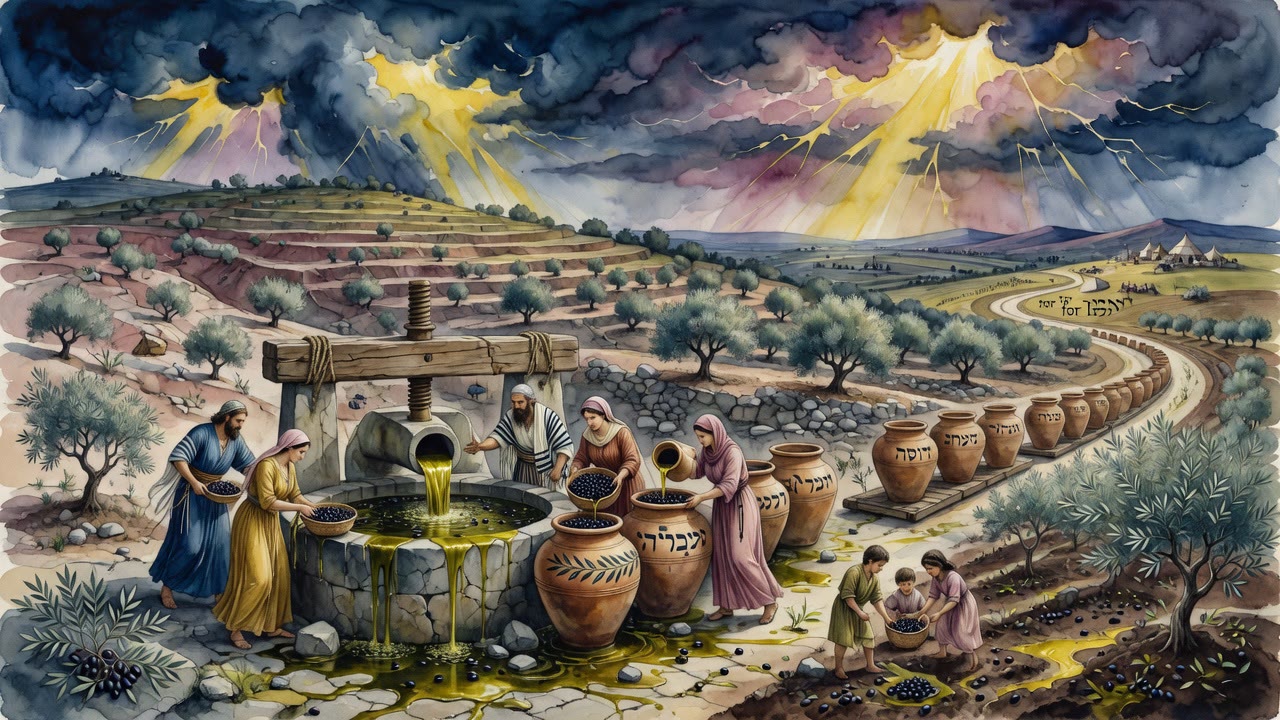
Boards or leather or metal took the shape his fingers forced. Coins arrived in small numbers, enough for bread, enough for oil, enough to keep studying after the light failed for other men. He walked before the living with dust on his sandals and Torah still in his mouth. Wisdom had refused to stay abstract. It had put a tool in his grip.

On the good days he almost forgot how thin the margin was. On the bad days he counted the coins twice and still went to the bench for another line of text, because joy in Torah was the joy he had been told to take across many years (Ecclesiastes 11:8).

Joy Now and the Days of Darkness

"If a man lives many years, let him rejoice in all of them, and remember the days of darkness, for they shall be many" (Ecclesiastes 11:8). Joy meant Torah joy, not the thin sparkle of a full purse. Darkness meant a stretch that will come, long and sure, part of every human span.

The poor craftsman-sage held both. He rejoiced when a verse opened. He remembered that nights would stack. He did not treat study as a game that ends when the body fails. He also heard a harder claim: all the Torah taken in this world is vapor, hevel, beside the Torah that will open in the days of the Messiah. A puddle is not the ocean. A glimpse is not the full face of the sea.

That claim did not empty his bench. It set his work in scale. What he learned now was real bread for the mind and real prep for a light he had not yet seen. Vanity here did not mean waste. It meant proportion. The Messiah's teaching would make today's best reading look like a child's first letters, and still those letters must be learned or the later book has no door.

Evening found him at the tool and then at the page. Market noise thinned. He set the craft down, washed his hands, and opened the scroll with fingers that still remembered the day's labor. He walked among the living because he had refused to die of pride or of freeze. Somewhere ahead, darker days waited in their many. Somewhere further, a Torah larger than any market or any poverty waited to be revealed. Between those horizons he kept the tool and the text and did not choose idleness as his inheritance.


← All myths
From the tradition

Sources

2 sources

The texts behind this telling. Some cards carry a translation of the source; others are our own retelling of it, and each card says which. Every card links out to the original.

Kohelet Rabbah 8:1Kohelet Rabbah

Retold in our words. Read the original at the link below.The Sefaria Midrash Rabbah, 2022 · CC-BY

The Kohelet Rabbah, a fascinating collection of rabbinic interpretations on Ecclesiastes, wrestles with this very question. It's not just about being smart; it’s about how knowledge translates into a meaningful life, especially when you're facing hardship.

So, what’s the answer? The Kohelet Rabbah offers a few perspectives, each with a practical edge.

First, if you’re feeling lost, especially in your understanding of Torah, don't go it alone! The text suggests seeking out someone with greater Torah knowledge to explain things to you. It's about finding a mentor, someone who can illuminate the path. As Matnot Kehuna explains, you need to study Torah extensively to earn eternal life. It's not enough to just have a general idea; you need to dive deep.

What if the problem isn’t spiritual, but material? What if you're poor? The verse shifts to "how can the knowledgeable poor man walk before the living?” Here, the Kohelet Rabbah gets really interesting. One interpretation, supported by Maharzu, sees "the living" as the wealthy – those who have the resources to thrive.

Should the poor man try to partner with the wealthy? Maybe not. Etz Yosef points out that the wealthy may be hesitant to partner with someone of limited means.

So, what should he do? Give up? Absolutely not! The advice here is incredibly practical: engage in commerce. Start a business!

But what if you’re so poor you don’t even have the capital to start a business? (Etz Yosef clarifies that this is the depth of poverty being addressed). Should you just sit idle? Again, the answer is a resounding no. Learn a craft! The Kohelet Rabbah assures us that the Holy One, blessed be He, will support you, and you will live.

It’s a beautiful message, really. It’s not just about wisdom or knowledge in the abstract. It's about taking action, seeking guidance, and using your skills to create a life for yourself. We have the ability to learn, to create, and to connect with others, and that ultimately, that's what gives our lives meaning. So, what craft will you learn? What mentor will you seek? The choice, it seems, is ours.

Full source
Kohelet Rabbah 8:1Kohelet Rabbah

Retold in our words. Read the original at the link below.The Sefaria Midrash Rabbah, 2022 · CC-BY

The book of Ecclesiastes, or Kohelet in Hebrew, grapples with these very questions. And the rabbis of the Midrash (rabbinic interpretive commentary), in Kohelet Rabbah, offer a fascinating take on one particular verse: "For if a man lives many years, let him rejoice in all of them, and remember the days of darkness, as they will be many. Everything that is coming is vanity" (Ecclesiastes 11:8).

But what if it's not about either? What if it's about something deeper?

The Rabbis in Kohelet Rabbah see layers within this verse. "If a man lives many years, let him rejoice" – they interpret this joy as the joy of Torah. Not just any joy, but the profound, lasting joy that comes from engaging with sacred wisdom. It's a joy that transcends the fleeting pleasures of the world.

Then comes the sobering reminder: "Remember the days of darkness." These aren't just any bad days, the Midrash suggests. They are many. Inevitable. Part of the human experience.

So, how do we reconcile this call to joy with the certainty of hardship? Is it naive to rejoice when we know darkness looms? Or is it precisely because of that looming darkness that joy becomes so vital?

Here's where it gets really interesting. The Midrash doesn’t stop at earthly joy and earthly sorrow. It elevates the conversation to a Messianic level. It states that the Torah we study in this world, the wisdom we glean here and now, is ultimately "vanity" – hevel in Hebrew, meaning vapor or breath – relative to the Torah of the Messiah.

Wait, what? Our Torah study, our efforts to understand God's word, are meaningless? That seems harsh!

But think about it this way: Imagine trying to describe the ocean to someone who's only ever seen a puddle. Our understanding of Torah, as profound as it may seem, is just a glimpse, a reflection of a far greater, more complete truth that will be revealed in the Messianic age. It is a preparation for something even greater.

This doesn't diminish the importance of our current study. Quite the opposite! It elevates it. It suggests that our efforts here are building blocks, preparing us for a deeper understanding, a more profound connection with the Divine in the world to come.

Perhaps it's a call to embrace joy, not as a denial of hardship, but as a way to fortify ourselves against it. To immerse ourselves in wisdom, not as an end in itself, but as a preparation for a future we can only dimly imagine. To remember the days of darkness, not with despair, but with the knowledge that even they are part of a larger, ultimately redemptive story. It is a reminder that our efforts to understand the Divine are never in vain, even if they are but a glimpse of the ultimate truth.

Full source