Daniel Walked Out of the Lions' Den Into a City That Still Hated Him
The lions licked Daniel's hands like dogs. Outside the pit, priests and princes still wanted a charge that would stick.
Table of Contents
Belshazzar beat on his own door.
 Click for full size
He had ordered the royal doors guarded the night he drank from the vessels of the Temple. No one could enter, even a man claiming to be king. He stepped out for a short time. The guards, Cyrus and Darius, did not notice him pass. When he came back and demanded admission, they obeyed him perfectly. He swore he was Belshazzar. They struck him dead at the gate while the name was still in his mouth.
Daniel had already read the writing on the wall. He fled to Shushtar.
The Bargain for the Temple Vessels
Cyrus received him and made a bargain. Pray that God grant success against the king of Mosul, and Cyrus would send the Temple vessels back to Jerusalem. Daniel prayed. God answered. Cyrus won. The vessels began their road home.
Cyrus could return vessels and still keep a ruler's suspicion. He allowed the Jews to rebuild the Temple, but only with wood. Stone would last. Wood could burn if Jerusalem rebelled.
He also could not understand why Daniel would not bow to Bel. The idol seemed to eat. That was proof enough for a king who liked visible gods.
Ashes Caught the Priests of Bel
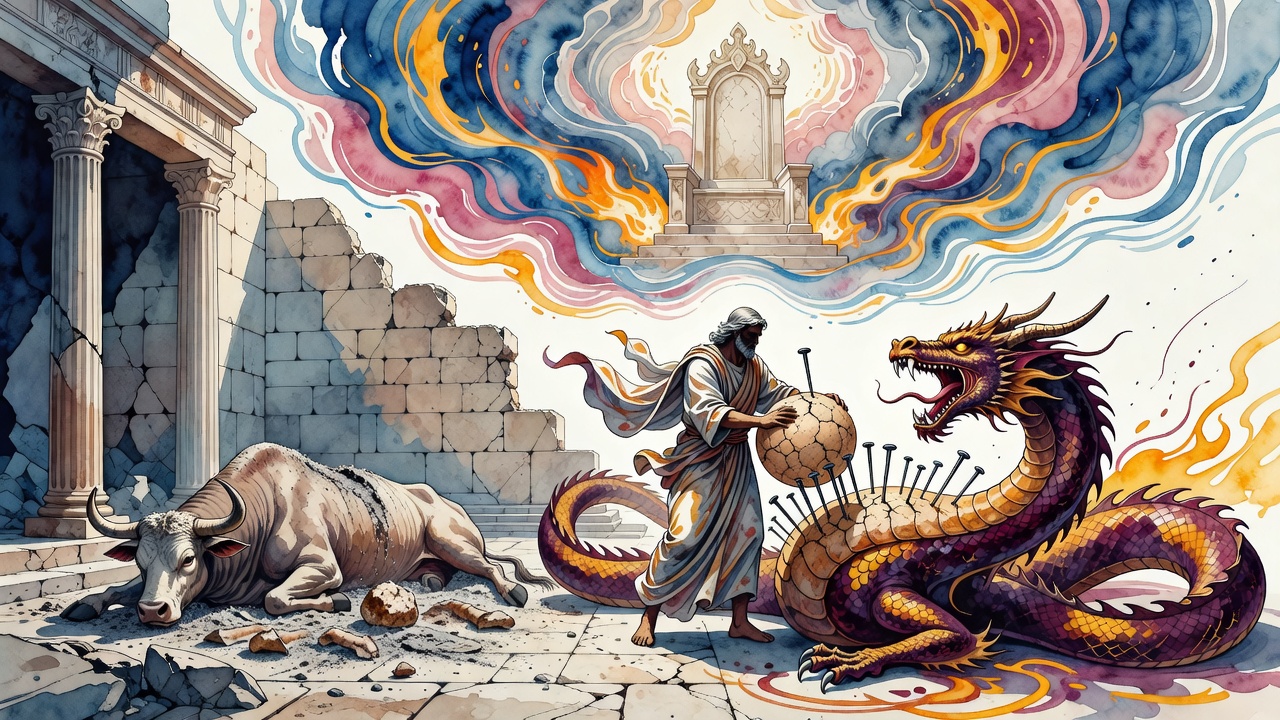
Every day the priests laid out a bullock, ten rams, ten sheep, one hundred doves, seventy loaves, and ten barrels of wine. By morning the table was bare. "Would that you believed in the glory of our god Bel," the king said, "who consumes what is laid upon this table."
Daniel did not flinch. "Let not the heart of the king be deceived. There is no breath in it. It is the work of a craftsman. The priests eat what you set down."
They locked the temple. Ashes went across the floor while the priests were kept ignorant. The doors were sealed with the king's ring and Daniel's ring. In the morning the seals were untouched and the table was empty. Darius fell on his face before Bel. Daniel pointed at the floor. Footprints of men, women, and children crossed the ash. Seventy priests were hauled in. Under threat of death they showed the hidden passages through which they crept each night to feast in the idol's name.
The stone had never been hungry. The priests had. The king could no longer pretend otherwise. Daniel had turned the temple floor into a witness, and the court learned that a Jew could make an empire's god look like a pantry.
The Decree Closed Around Prayer
Darius set three officials over the empire and made Daniel chief of the three. Honor made him visible. The other officials could not find corruption in him, so they built a law around his devotion. For thirty days, petition to any god or man except the king would mean death.
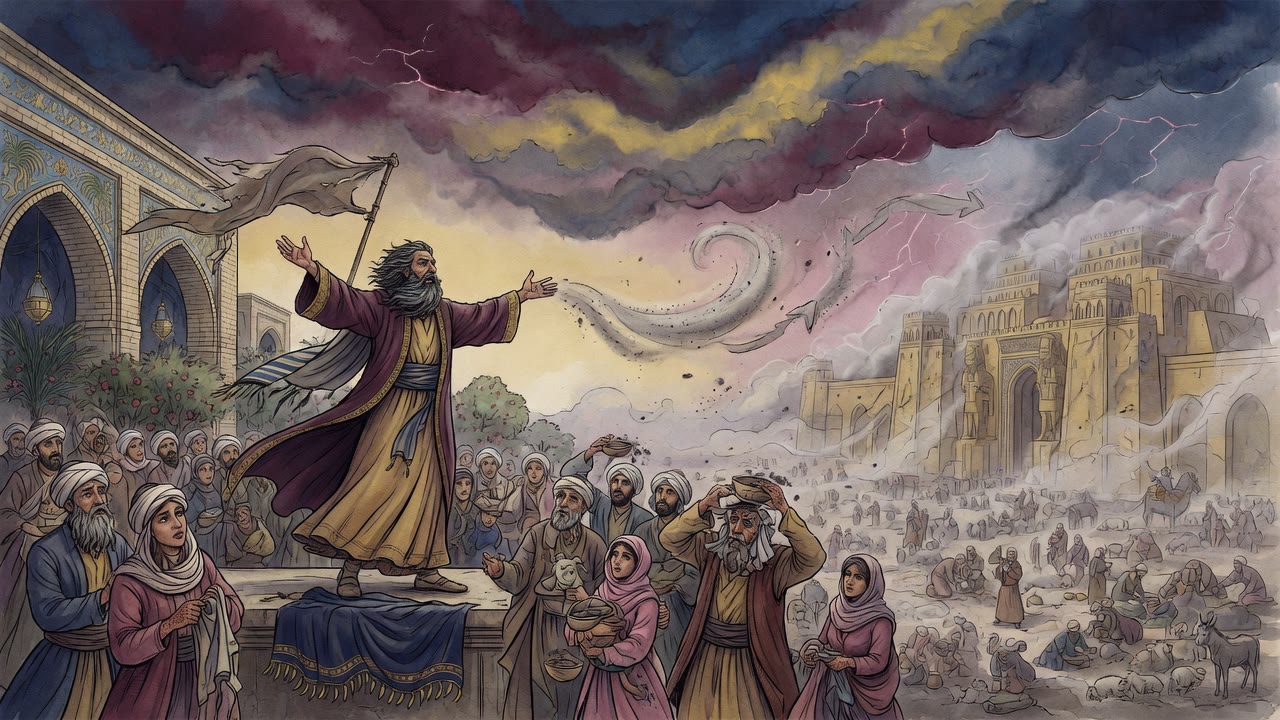
Darius signed it. Daniel opened his windows toward Jerusalem anyway. They watched him pray, dragged him in, and reminded the king that the law of the Medes and Persians could not be altered even by the mouth that had sealed it. When the hour of minchah (מנחה), the afternoon prayer, arrived, Daniel prayed in the presence of the king and the princes. He would not hide the thing they had come to punish. Darius spent the night without sleep and without food. At dawn he ran to the den.
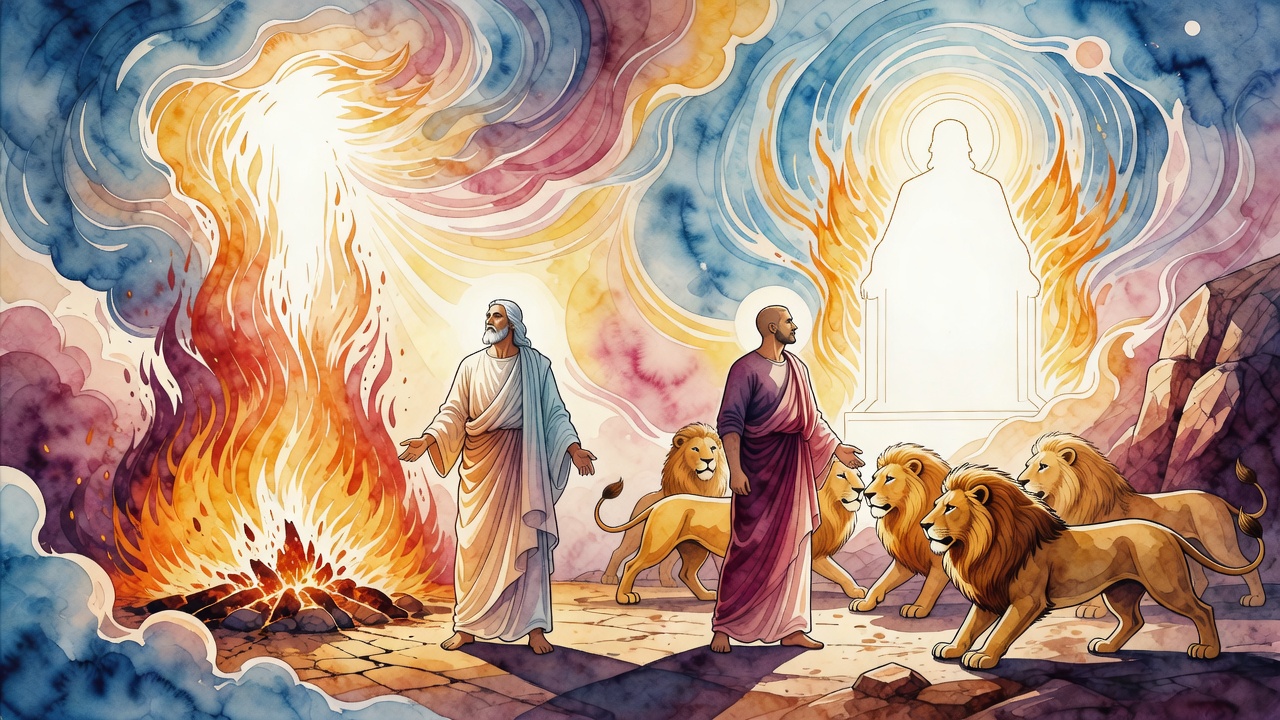
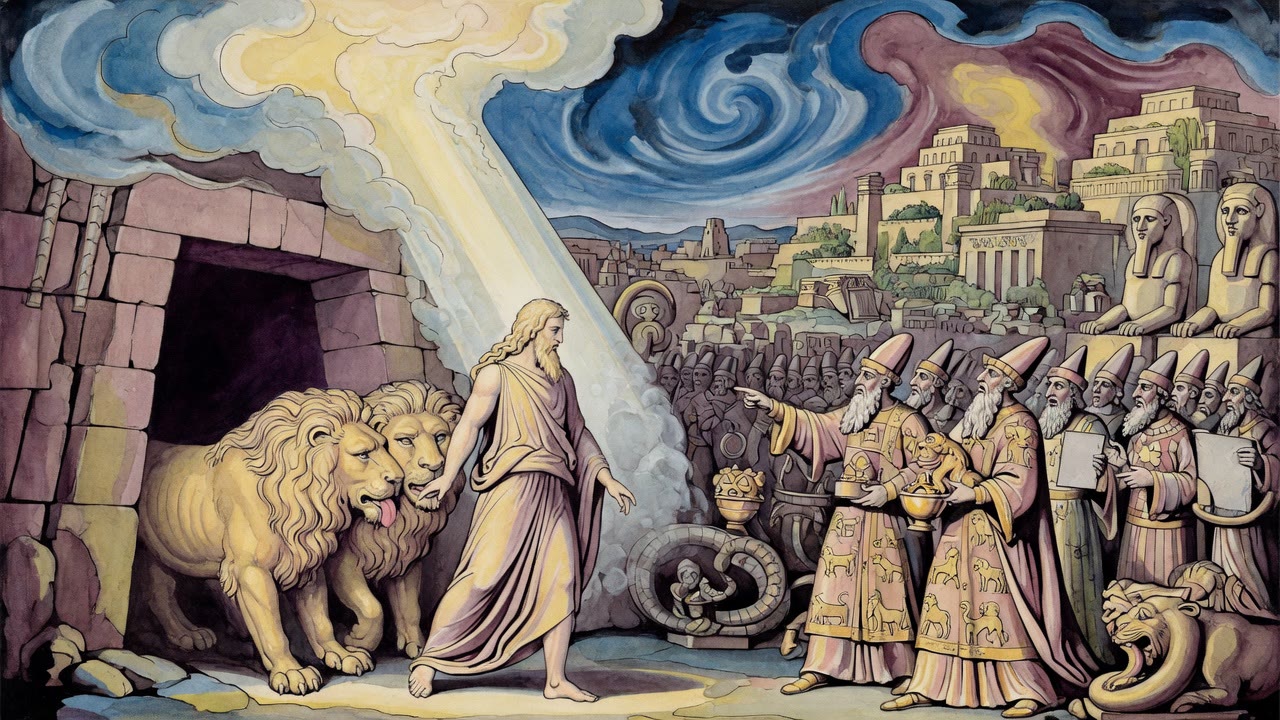
Seven lions waited, starved six days. A rock rolled there from Palestine to seal the mouth of the pit. Inside, the beasts did not tear him. They greeted him like loyal dogs, licking his hands and wagging their tails before the man who would not skip the hour.
A Stew Crossed From Judah by the Hair
Far away in Judah, Habakkuk had cooked a stew and broken bread into a bowl for the harvesters. An angel stopped him. Carry that meal to Daniel in the lions' den in Babylon. Habakkuk said he had never seen Babylon and did not know where the den was.
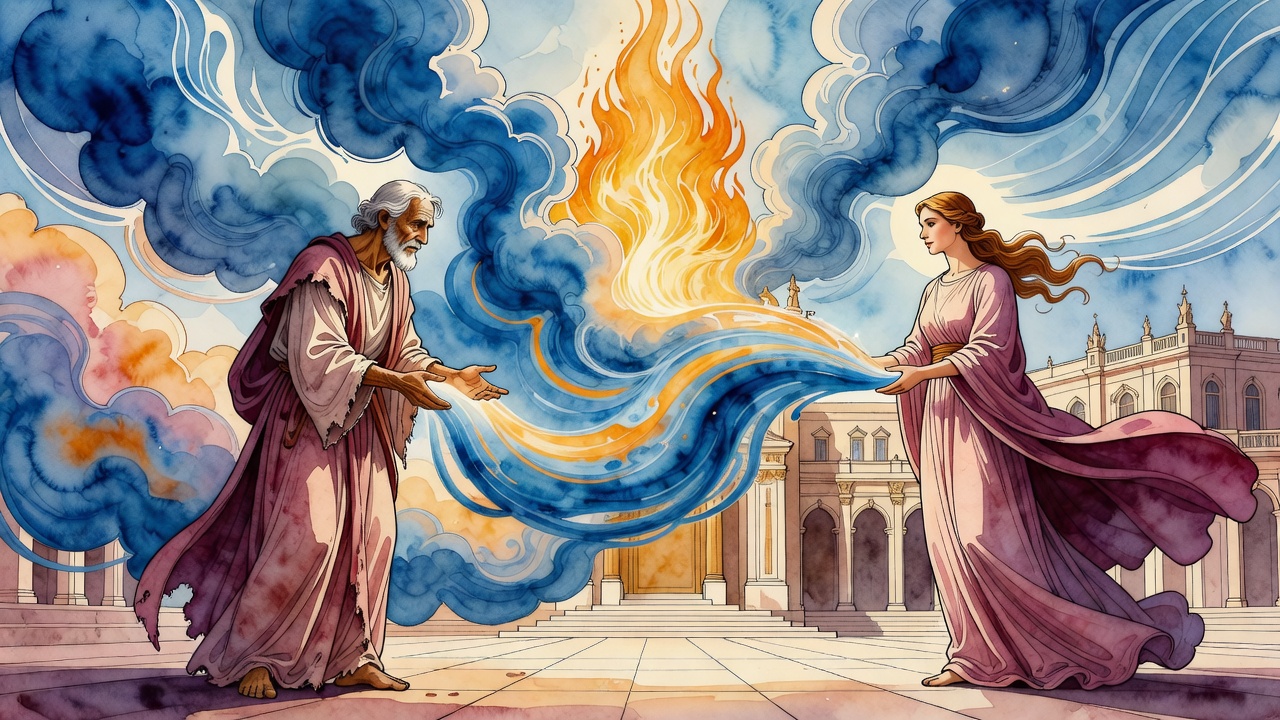
The angel seized him by the hair of his head and, with one rush of wind, set him down above the pit. "Daniel, Daniel, take the dinner that God has sent you."
Daniel ate. He blessed the God who had not forgotten him. The angel returned Habakkuk home in an instant. On the seventh day the king came to mourn and found Daniel alive among the lions. He pulled him out. The men who had accused him went in, with their families. The city that had demanded Daniel's death watched him walk out of the den and did not love him for it.
The Old Man Named a Successor
Daniel came up with lion spit on his wrists, and the city was still hungry for him. Priests of a broken idol, jealous princes, a crowd that had threatened to tear down the king's house: none of that appetite died when the lions failed. The den had been honest. Teeth want food. The court wanted honor, control, and a way to make prayer look like treason, and that hunger had more patience than any beast.
The king sent word through the empire proclaiming what God had done, and he called on his people to help rebuild the Temple. Daniel was old. The honors could not make his body young. He asked to be released from office. The king agreed only if he chose a successor worthy of the work. Daniel chose Zerubbabel.
The court loaded him with gifts. Then the old statesman withdrew to Shushan and stayed until his death. God had given him knowledge of the end of time that had not been granted to Haggai, Zechariah, or Malachi. In the fullness of his years he lost the memory of the revelation. The man who had read the writing on the wall and walked out of the lions' den ended honored, diminished, and still held by God. The city that had hated him kept its appetite. He no longer stood in its way.
← All myths