5 min read

Zerubbabel Won the Temple Vessels by Truth

Daniel hid the Temple vessels beneath a deadly stone. Zerubbabel recovered their future when he proved that truth outranks wine and kings.

Curated by Arthur · Told by Maggid ·
Table of Contents
  1. The Stone Kept Its Guard
  2. Cyrus Left Wood Instead of Stone
  3. Ashes Told the Truth
  4. Three Guards Wrote Under the Pillow
  5. Truth Asked for Jerusalem

The stone beside Daniel's house did not warn thieves. It killed them.

\n\n

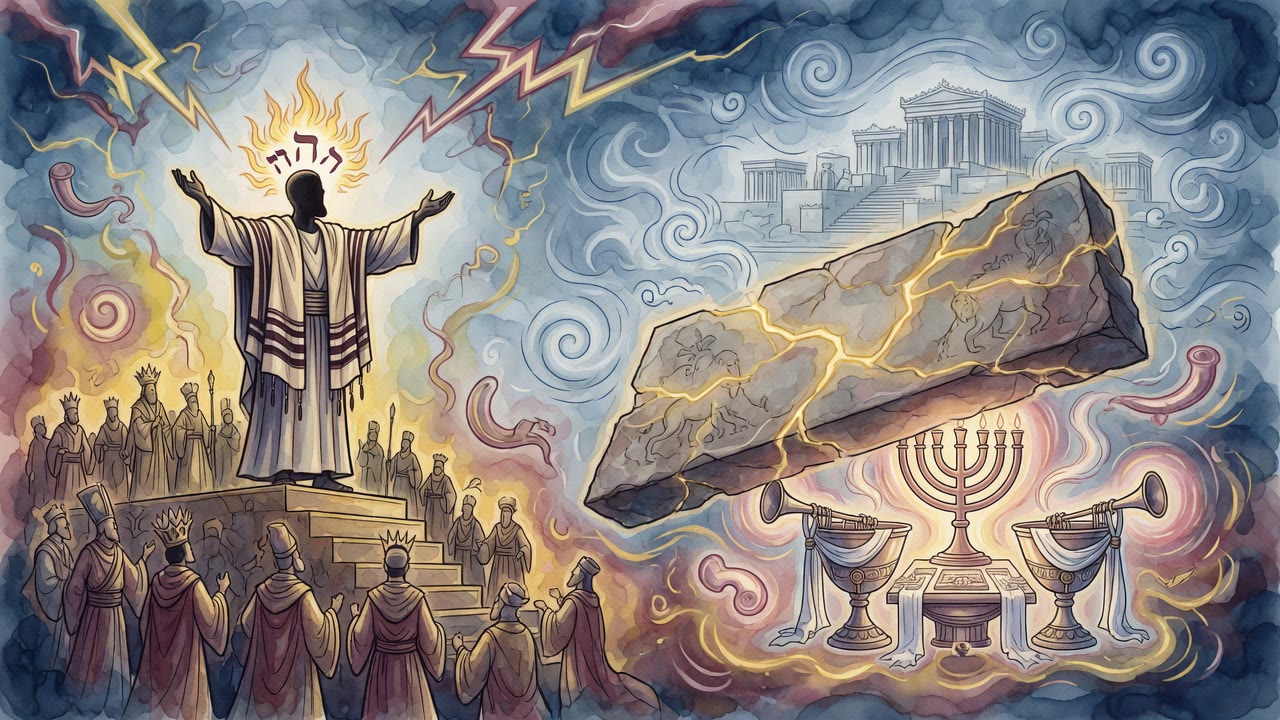
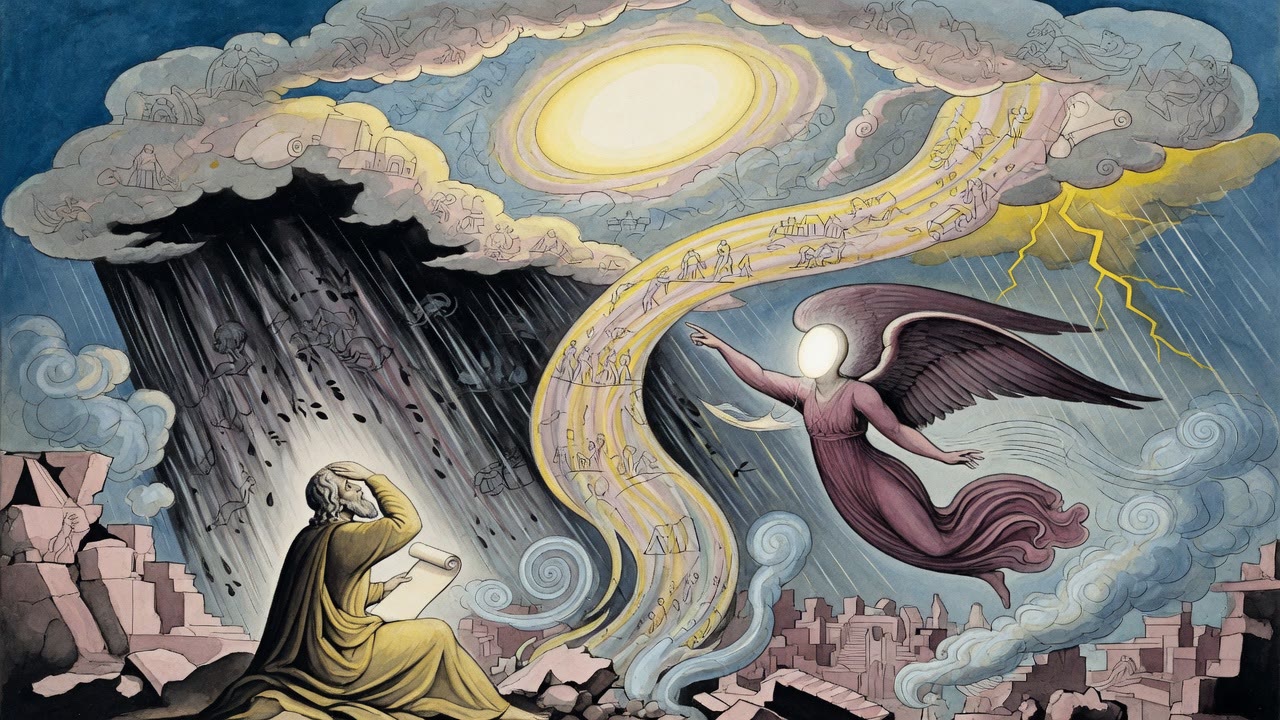
Beneath it lay the vessels of the Jerusalem Temple, holy objects carried away when the sanctuary fell. Daniel had hidden them where greedy hands could not make them trophies. Whoever tried to roll the stone aside dropped dead. Whoever tried to dig near it met the same end when a storm broke over the excavation and cut the workers down.

\n\n

The Stone Kept Its Guard

\n\n

The vessels waited in darkness. No guard stood there with spear or seal. The stone itself held the office. It did not explain. It did not bargain. It kept the holy things under the earth until the right request could be spoken by the right mouth.

\n\n

That mattered because kings could be generous and suspicious in the same breath. A ruler might permit Jerusalem to rise and still fear what Jerusalem could become. Permission could come wrapped in limits. Favor could come with a fuse hidden inside it.

\n\n

Cyrus Left Wood Instead of Stone

\n\n

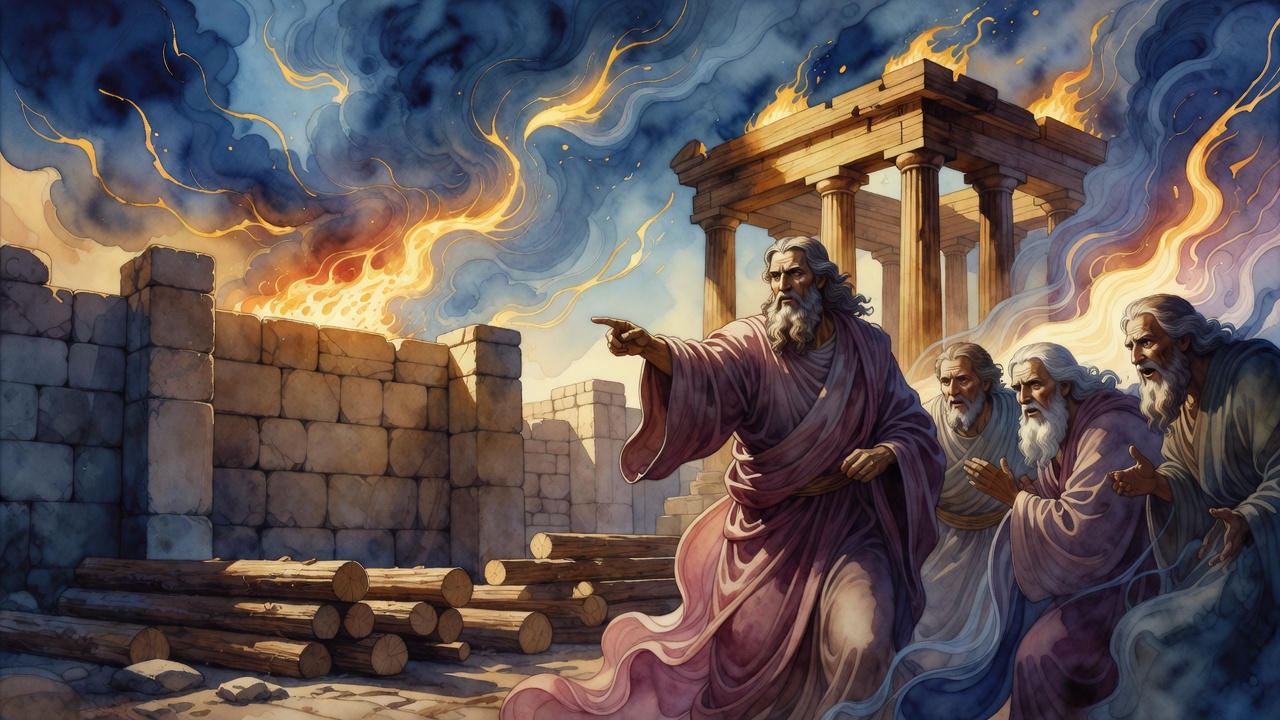
Cyrus gave the exiles leave to rebuild, but not as freely as hope might have wanted. "Wood," he said. "Use wood." Stone would endure if rebellion ever stirred in the city again. Wood could burn.

\n\n

That was the measure of royal kindness. A king could open a road home and still keep a torch ready in his mind. Daniel knew how to stand near power without being dazzled by it. He had seen courts applaud truth only after truth trapped them.

\n\n

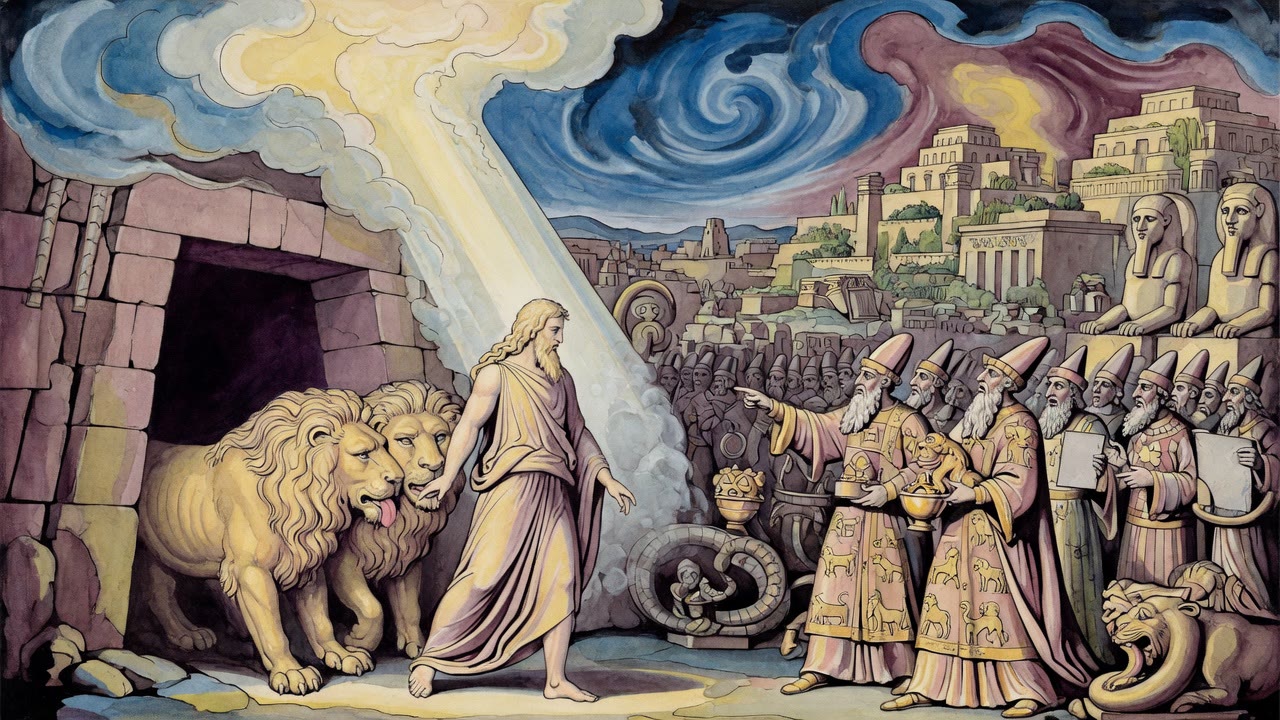
The idol Bel gave him such a moment. Food was set before the idol at night, and by morning the dishes had vanished. The king took the empty plates as proof that Bel lived and ate. Daniel looked at the floor and thought of footsteps.

\n\n

Ashes Told the Truth

\n\n

He scattered ashes across the chamber before the doors were sealed. The priests came through their hidden passages after dark, ate the offerings, and left the idol with a miracle to claim.

\n\n

Morning made the floor speak. Footprints crossed the ash. The god had not eaten. Men had crept in, swallowed the food, and clothed their appetite in holiness. Daniel did not win by shouting at the king. He let dust take testimony.

\n\n

That was how truth moved in exile: quietly, physically, with marks no decree could erase. Ash on stone. Prints on a floor. A fraud caught in its own passageway.

\n\n

Three Guards Wrote Under the Pillow

\n\n

After Daniel, Zerubbabel rose in royal service. He stood close enough to the throne to hear sleep settle over the king. He and two other guards watched through the night, young men with power near them and no army of their own.

\n\n

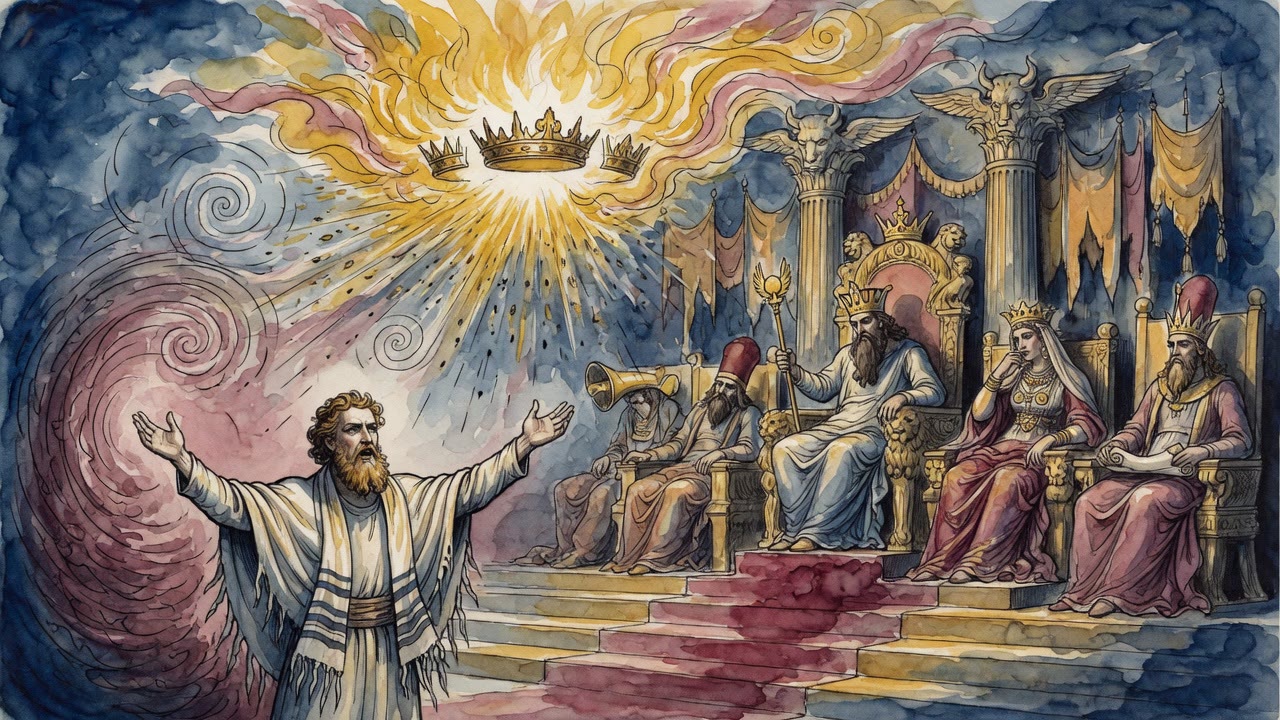
They made a contest. Each would write what he considered the mightiest thing in the world, and the king would judge when he woke. The first wrote wine. The second wrote the king. Zerubbabel wrote that women are the mightiest in the world, but truth prevails over all.

\n\n

The papers went beneath the royal pillow.

\n\n

Morning brought the court together. Wine received its praise first. It can seize the senses, loosen grief, blur rank, and make a poor man forget the weight on his back. Then came the king. He commands armies. He signs, and men cross deserts. He frowns, and houses tremble.

\n\n

Truth Asked for Jerusalem

\n\n

Zerubbabel did not deny either force. He spoke of women who rule even kings, of mothers who bear rulers and beloveds who bend them. Then he lifted truth above them all. The earth asks for truth. The heavens sing for it. Creation shakes before it because wrong cannot stand inside it. "Blessed be the God of truth."

\n\n

The room changed. The assembly cried that truth was greater than everything else, and the king turned to Zerubbabel with delight. "Ask what you want."

\n\n

Zerubbabel did not ask for a private estate, a treasury, a robe, or a higher chair. He asked for Jerusalem. Let the city be restored. Let the sanctuary be rebuilt. Let the Temple vessels go back to the place from which they had been taken.

\n\n

The hidden stone had kept them from thieves. Truth now brought them before a king. Letters of safe-conduct were issued. Privileges were granted to those returning to the land. Gifts were sent for the Temple and its officers. The vessels that had slept beneath danger were no longer loot. They were on their way home.

\n\n

← All myths

From the tradition

Sources

2 sources

The texts this telling draws on, in full. Open a card to read inline, or expand it for a wider, quieter read.

Legends of the Jews 11:24Legends of the Jews

There's a story told in Legends of the Jews – a masterful compilation by Rabbi Louis Ginzberg – about the aftermath of Daniel’s time and the legacy he left behind. It speaks of a hidden stone near Daniel’s house, a stone that concealed the sacred Temple vessels. Legend says anyone who dared disturb it met a swift and terrible end. Attempts to unearth the stone were thwarted by storms, a clear sign that something sacred was being protected.

The story doesn’t end there. It shifts to Zerubbabel, Daniel’s successor, a man who held the king's favor and a position of great influence. He and two others served as the king’s personal bodyguards. And

One night, while the king slept soundly, the guards decided to engage in a little philosophical contest. They each wrote down what they believed to be the mightiest force in the world. The first declared, "Wine is the mightiest thing!" The second, perhaps playing it safe, proclaimed, "The king is the mightiest on earth!"

Zerubbabel? Zerubbabel went deeper. He wrote, "Women are the mightiest in the world, but truth prevails over all else."

Intriguing. When the king awoke, he gathered his court and the three guards. He asked each to defend their claim. The first sang the praises of wine, how it washes away sorrow and loosens inhibitions. The second extolled the king’s power, his dominion over the land.

Then came Zerubbabel's turn. He spoke eloquently about the power of women, how they influence even kings. But he didn't stop there. "Truth," he declared, "is supreme. The whole earth yearns for truth, the heavens sing its praises. All creation trembles before it. In truth, there is no wrong. Unto truth belong might, dominion, power, and glory. Blessed be the God of truth!"

And according to Legends of the Jews (drawing from sources like 1 Esdras in the Apocrypha), the assembly erupted: "Great is truth, it is mightier than all else!" The king, deeply impressed by Zerubbabel’s wisdom, offered him any wish.

Now, Zerubbabel could have asked for riches, power, anything for himself. But what did he request? He asked for permission to restore Jerusalem, to rebuild the Beit Hamikdash (the Holy Temple), and to return the sacred Temple vessels to their rightful place.

And King Darius not only granted his wish, but also provided letters of safe-conduct, privileges for the Jews returning to Palestine, and abundant gifts for the Temple and its officers. What a moment!

This story, seemingly about a philosophical debate, is really about the power of truth and the courage to speak it. Zerubbabel’s words didn't just win him favor; they paved the way for the restoration of a nation and the rebuilding of its spiritual center. It reminds us that sometimes, the simplest truths can have the most profound impact. What truths are we holding back, and what could happen if we dared to speak them?

Full source
Legends of the Jews 11:13Legends of the Jews

Cyrus could look like a savior and still keep a ruler's suspicion. Ginzberg's Legends of the Jews remembers that he allowed the Jews to rebuild the Temple, but only with wood. Stone would last. Wood could burn if Jerusalem rebelled.

The same mixed portrait appears in the story of Bel. Cyrus pressed Daniel to bow before the idol because the god seemed to eat the dishes placed before him. Each night the offerings vanished. To the king, that was proof enough that Bel was alive.

Daniel saw the fraud hiding under the miracle. The priests of Bel entered through underground passages after dark, ate the food themselves, and let the idol receive the credit. Daniel did not argue with the king's appetite for proof. He gave him proof of another kind. He scattered ashes across the temple floor before the doors were sealed.

By morning, the god had eaten again. But the ashes held the truth. Footprints crossed the floor, marking the secret path of the priests who had crept in under cover of night. Cyrus could no longer pretend the idol had consumed anything. Daniel had turned the temple itself into a witness.

Full source