5 min read

David Called Himself Godly for Staying Silent

Insults filled David's ears and he kept his mouth shut. He dared call that silence godly, then begged to be judged only beside the wicked.

Curated by Arthur · Told by Maggid ·
Table of Contents
  1. Incline Your Ear
  2. The Partnership of Silence
  3. Judge Me, and Do Not Judge Me
  4. Tears as Bread
  5. What He Asked to Keep
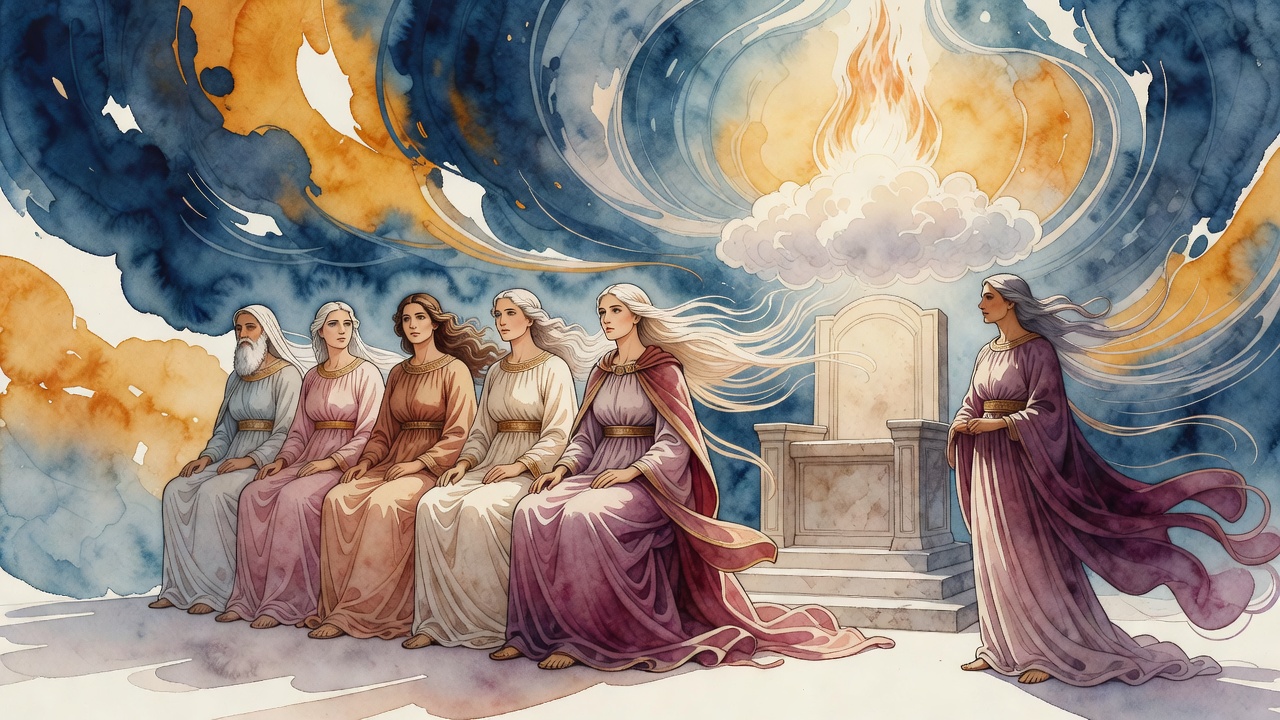
David Called Himself Godly for Staying Silent Click for full size

Incline Your Ear

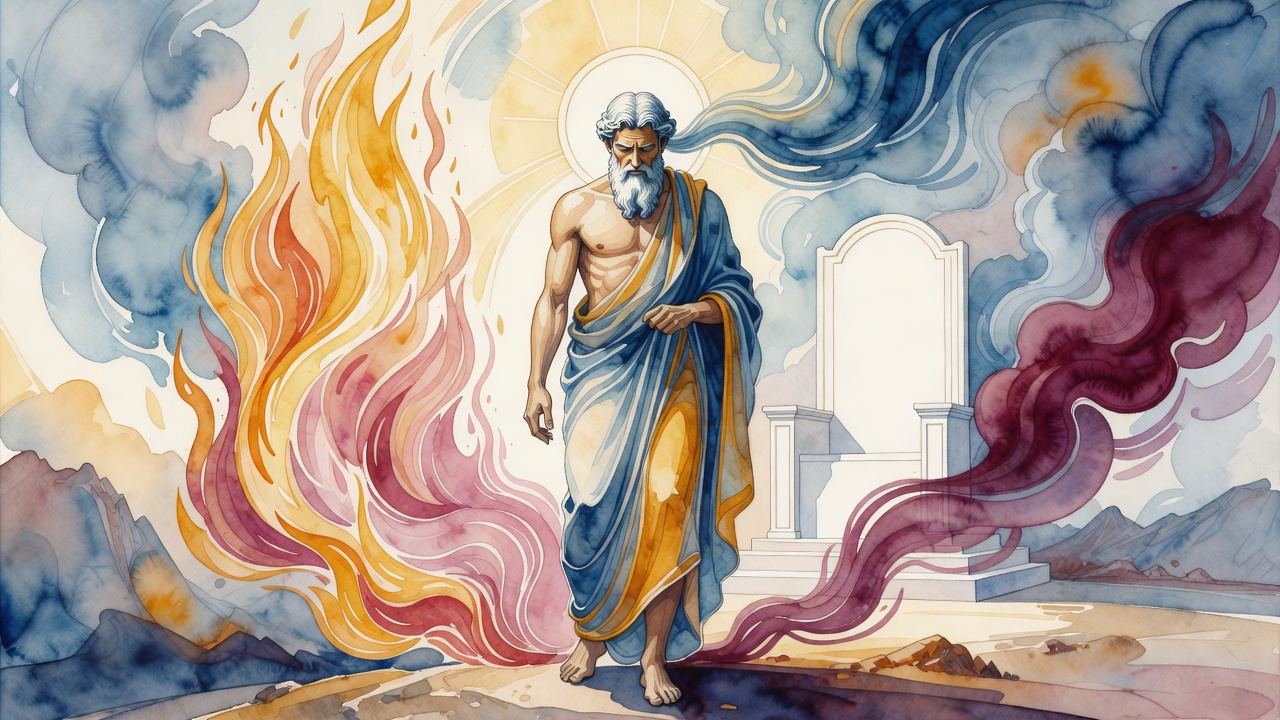
David pressed his face toward heaven with a beggar's grammar. Incline Your ear, O Lord, for I am poor and needy. The king of Israel spoke like a man with empty pockets. The palace still stood. The army still answered. Inside the prayer he was a petitioner with no leverage left except the hope that God still leans.

Then he added a claim that still startles the study hall: preserve my soul, for I am godly. Godly. From the man who had blood and lust and politics on his hands. The midrash does not let the word pass as vanity. It digs for the one practice that could justify such boldness without pretending David was marble.

Moses once blessed Judah with a plea that God hear his voice. David, of Judah's line, turns the same hunger inward. Hear me. Preserve me. I have practiced something costly, and I am naming it before You. The petition is not royal theater. It is a man who knows how easily a king becomes noise.

Outside the prayer, counselors still waited for orders. Inside the prayer, David ranked himself among the poor so that Heaven would not measure him by the crown alone. The midrash hears that ranking as the start of honesty, not as a pose.

The Partnership of Silence

Rabbi Abba in the name of Rabbi Alexandri taught the measure. Whoever hears his disgrace and remains silent, though he could answer, becomes a partner with the Holy One. God hears the blasphemies of the nations and could erase them in a breath. He holds back. That restraint is called godly in the prophets. David heard the mockers and closed his mouth the same way. The strength was not the sword on some of those days. The strength was the swallowed reply.

Courtiers wait for a king to explode so they can measure their own safety by the shrapnel. David denied them the show. Silence under insult is not passivity in this teaching. It is gevurah, strength expressed as restraint, a human echo of the divine refusal to obliterate every offense on schedule.

He could have ordered throats cut. On the days the midrash praises, he ordered his own tongue to wait. That order is harder than any battlefield command, because the enemy is the itch to be right in public and to leave the mocker smaller than he arrived.

Judge Me, and Do Not Judge Me

In another psalm he seems to contradict himself. Judge me, O Lord, plead my cause against an ungodly nation. Then elsewhere: enter not into judgment with Your servant, for no living man is justified before You. The rabbis braid the two into one conditional cry. When You judge the righteous, leave me out of that scale. I know my cracks. When You judge the wicked, then stand me beside them and be my shield.

He wants advocacy without illusion. He wants the court of heaven to use the right docket. The prayer is not a lawyer's trick. It is a sinner who still believes justice has departments, and who is brave enough to ask for the one that will not annihilate him while still begging for defense against those who hunt him.

Tears as Bread

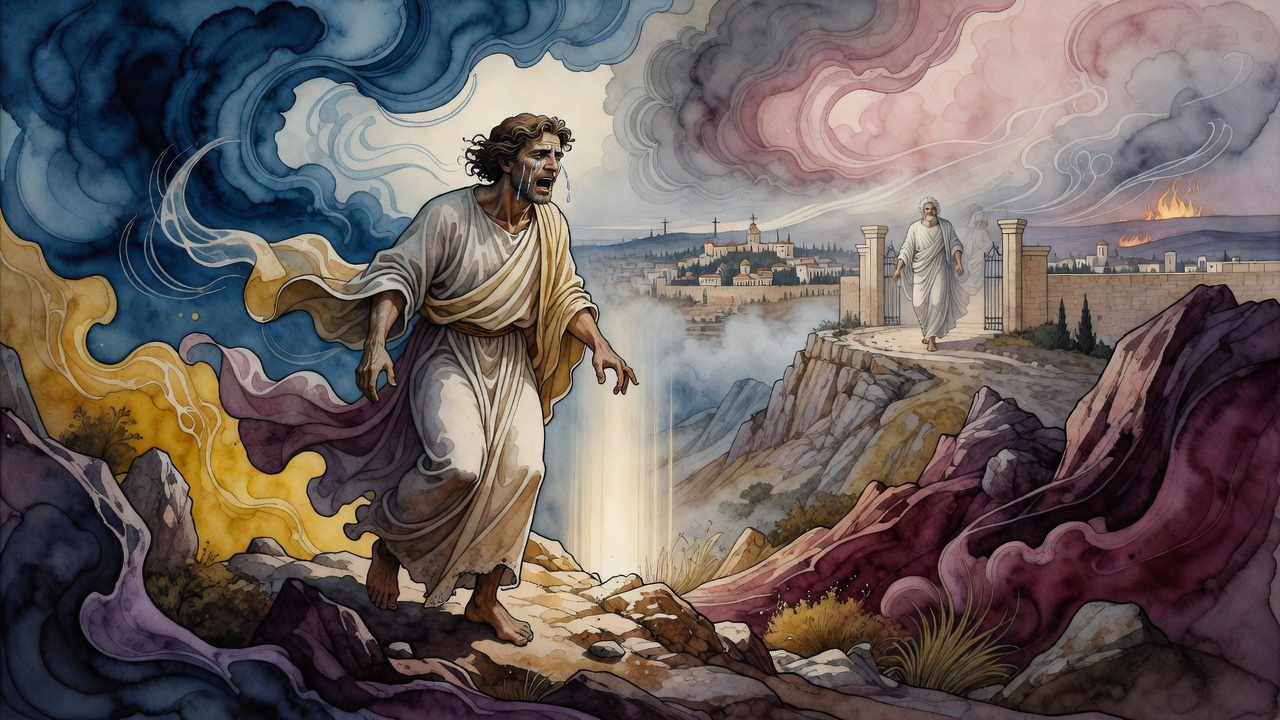
Grief filled him so completely that food lost its argument. My tears have been my bread day and night, the psalm says, and the sages take the body at its word. Distress crowds the stomach. Elkanah once asked Hannah why she wept and why she would not eat in the same breath, as if one explained the other. David knew that meal of salt water. A king can sit at a loaded table and still be starving for a verdict.

Silence under insult and hunger under sorrow are not weakness in these tellings. They are the costs of staying in relationship with a God who sees too clearly for easy speeches. The midrash refuses to scold the closed mouth or the closed throat. It recognizes both as signs that the soul is full of something heavier than bread.

What He Asked to Keep

Preserve my soul. Not my reputation. Not my palace. The soul that managed not to answer every slight. The soul that still dared to call itself godly by imitation, not by perfection. Heaven's restraint found a human echo in a man who could have filled rooms with his defenses and chose, on the days the tradition lifts up, to let the words die where they fell.

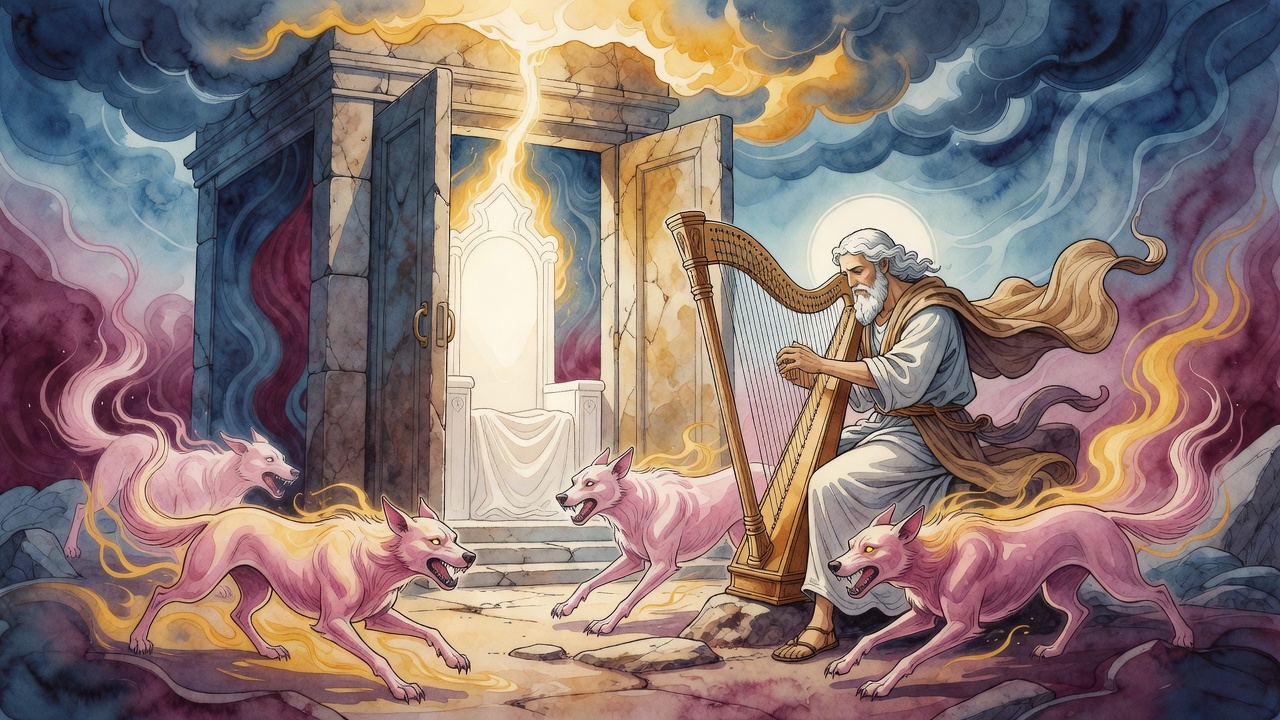
The harp is quiet in this scene. Only the ear of God is asked to lean closer. Somewhere a mocker waits for a royal explosion that never comes. Somewhere a king learns that partnership with the Holy One sometimes looks like a closed mouth and a wet face over an untouched plate.


← All myths

From the tradition

Sources

3 sources

The texts behind this telling. Some cards carry a translation of the source; others are our own retelling of it, and each card says which. Every card links out to the original.

Midrash Tehillim 86:1Midrash Tehillim

Retold in our words. Read the original at the link below.Rabbi Mike Feuer, Jerusalem Anthology · CC-BY

King David certainly knew that feeling. And the ancient rabbis, through the lens of Midrash Tehillim (a collection of interpretations on the Book of Psalms), explored this very human struggle through his words.

The passage focuses on Psalm 86, opening with David's heartfelt plea, "Incline your ear, O Lord." Rabbi Levi, in a fascinating connection, links this to the blessing Moses bestowed upon Judah as he was about to leave this world, saying, "And this for Judah he said" (Deuteronomy 33:7). a moment of transition, of blessing, and of divine attention being requested. Just as Moses hoped for Judah, David hopes for himself.

David continues, "Incline your ear, O Lord, and answer me, for I am poor and needy." It’s a raw expression of vulnerability. But then comes a twist: "Preserve my soul, for I am godly." Godly? David? It seems almost audacious, doesn't it?

The rabbis delve deeper. They point out that the Holy One, blessed be He, is also called "godly," as we find in (Jeremiah 3:12): "I am godly, says the Lord." So, what does it mean for David to call himself "godly"? Is he claiming some sort of divine status?

Not exactly. Rabbi Abba, citing Rabbi Alexandri, offers a powerful interpretation: "Whoever hears his disgrace and remains silent, and has the ability to protest, becomes a partner with the Holy One, blessed be He." Let that sink in. God, in His infinite power, hears the blasphemies of the nations. He could obliterate them in an instant. But He remains silent. He exercises restraint. And according to this interpretation, that restraint, that capacity to absorb insult without immediate retaliation, is a reflection of the divine.

And David, too, heard his disgrace and remained silent. We all know David wasn't perfect, but in these moments of quiet strength, he mirrored the divine attribute of gevurah (strength/might) in a very specific way. That is why, "Preserve my soul, for I am godly." It wasn’t about claiming perfection, but about aspiring to emulate God's capacity for self-control in the face of adversity.

This passage from Midrash Tehillim isn’t just about King David. It's about us. It's about the power of silence, the strength it takes to resist the urge to lash out, and the potential to become a partner with the divine by choosing restraint. It makes you wonder: in what moments can we choose to be "godly," to hear our disgrace and remain silent, knowing that true strength sometimes lies not in the roar, but in the quiet?

Full source
Midrash Tehillim 26:1Midrash Tehillim

Retold in our words. Read the original at the link below.Rabbi Mike Feuer, Jerusalem Anthology · CC-BY

King David certainly did. He grapples with this very dilemma in the Psalms, and the Rabbis of the Midrash Tehillim (a collection of interpretations on the Book of Psalms) dive deep into his words, revealing the layers of meaning within.

The verse that sparks this midrashic (rabbinic interpretive commentary) exploration is from (Psalm 26:1): "To David, judge me, O Lord, and plead my cause against an ungodly nation; O deliver me from the deceitful and unjust man." It’s a powerful plea for divine justice. David wants God to be his advocate, his defender.

Then, the Midrash throws us a curveball. It juxtaposes this verse with another, seemingly contradictory one, from (Psalm 143:2): "And enter not into judgment with thy servant; for in thy sight shall no man living be justified." Wait a minute… David wants to be judged, but also doesn't want to be judged? What’s going on here?

The Rabbis, masters of resolving apparent contradictions, offer a beautiful interpretation. They suggest that David's prayer is nuanced, conditional. When you judge the righteous, God, don’t include me in that accounting. I know my imperfections. But when you’re judging the wicked, then judge me, O Lord! Stand by me. Be my shield.

We all crave justice, especially when we feel wronged. But we also recognize our own flaws, our own shortcomings. We hope for mercy, for understanding, for a little bit of grace.

The Midrash doesn't stop there. It offers another interpretation, a subtle variation on the same theme. David is saying, "Until the judgment is not yet finished, judge me." While the process of discerning good from evil is still underway, include me in the reckoning. But once the final verdict is reached, "do not enter into judgment with me." Once the dust settles, let me off the hook. Perhaps David is asking for God's help in the midst of the struggle, the messy, uncertain period before things become clear. He wants divine intervention while he's battling the "ungodly nation" and the "deceitful and unjust man." But once the battle is won, maybe he's hoping for a little leniency.

What does this all mean for us today? We are neither wholly righteous nor completely wicked. We are works in progress, striving to do better, even as we stumble along the way.

And perhaps, like King David, we can find solace in knowing that we can appeal to a power greater than ourselves. A power that understands our imperfections, that can guide us through the darkness, and that, hopefully, will show us a little mercy in the end.

Full source
Yalkut Shimoni on Nach 77:12Yalkut Shimoni on Nach

Translation of the source text.Yalkut Shimoni on Nach (Sefaria) · CC-BY-NC

It is written: "My tears have been my bread day and night" (Psalms 42:4). From here you learn that distress satisfies a person so that he does not seek to eat. And likewise Elkanah says, "Hannah, why do you weep, and why do you not eat?" - from here that weeping feeds [a person].

Full source