6 min read

David Opened the Chamber of Tears at Midnight

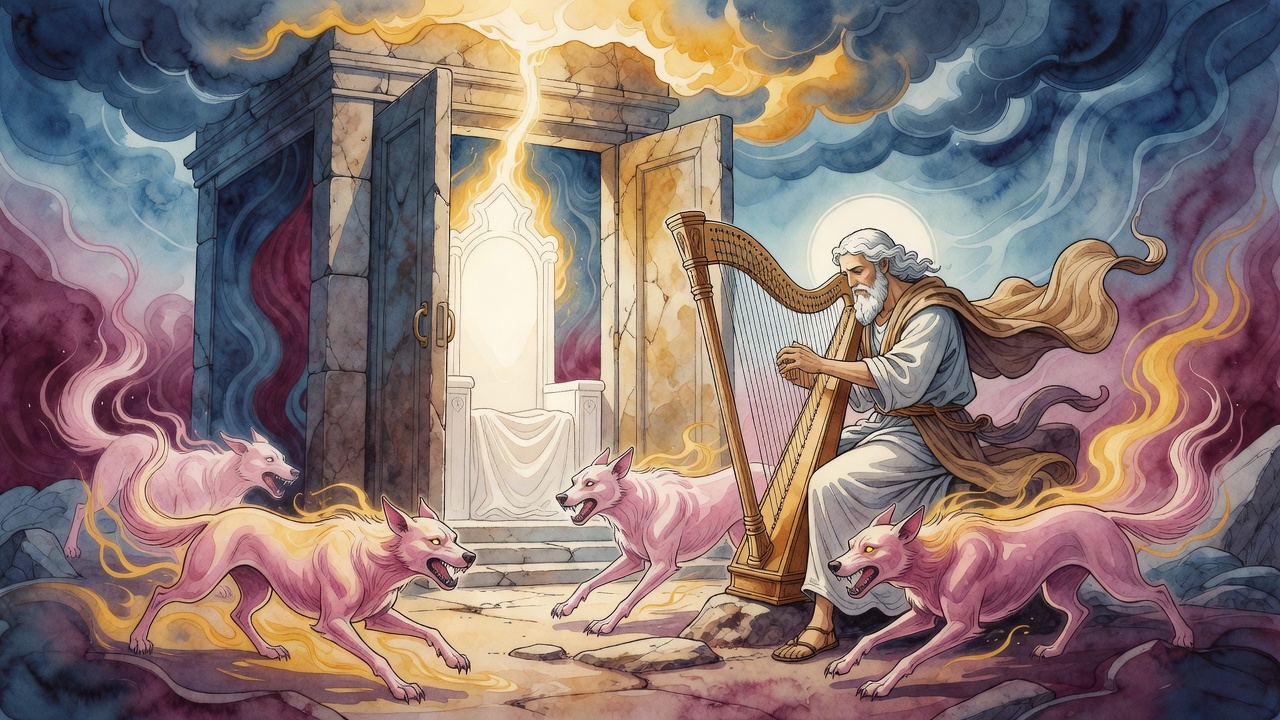
David struck the harp of Netzaḥ until the Chamber of Tears unlocked, and the dogs of the second watch lost their claim on his unique soul.

Curated by Arthur · Told by Maggid ·
Table of Contents
  1. The Locked Room
  2. Music of Endurance
  3. Hav Hav in the Dark
  4. Pity That Gathers
  5. After the Strings Stilled
David Opened the Chamber of Tears at Midnight Click for full size

The Locked Room

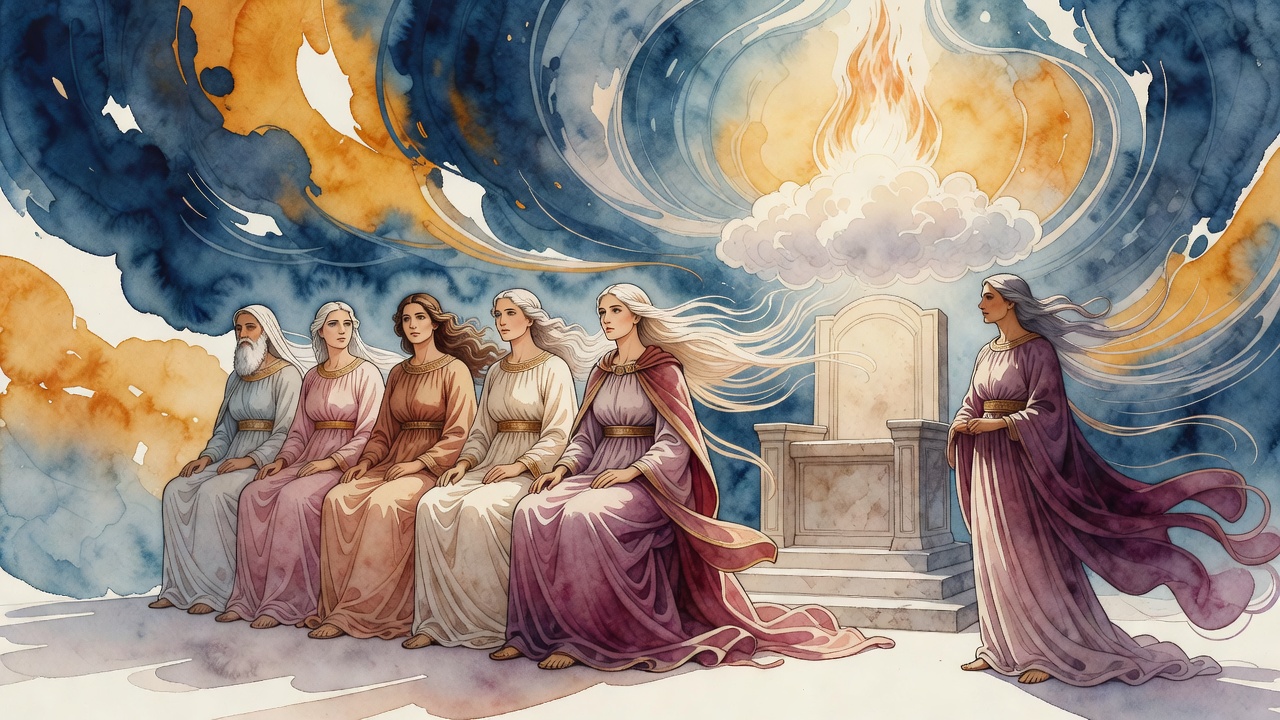
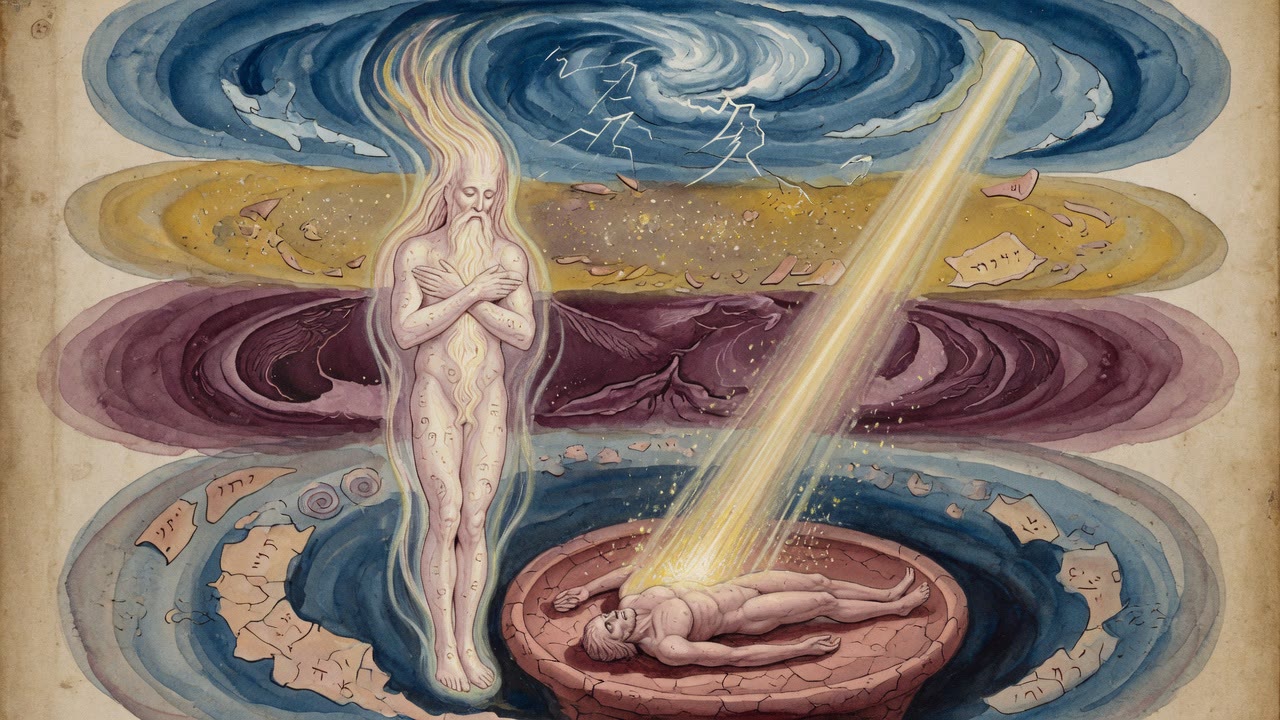
David sat with the harp across his knees while the palace slept. A single lamp smoked. Outside, the second watch prowled the walls of the city and the walls of the night. Inside his chest a door would not open. The mystics name a Chamber of Tears above, a room no key of iron can touch. Permission to enter comes only through water that leaves the eye without a license from pride.

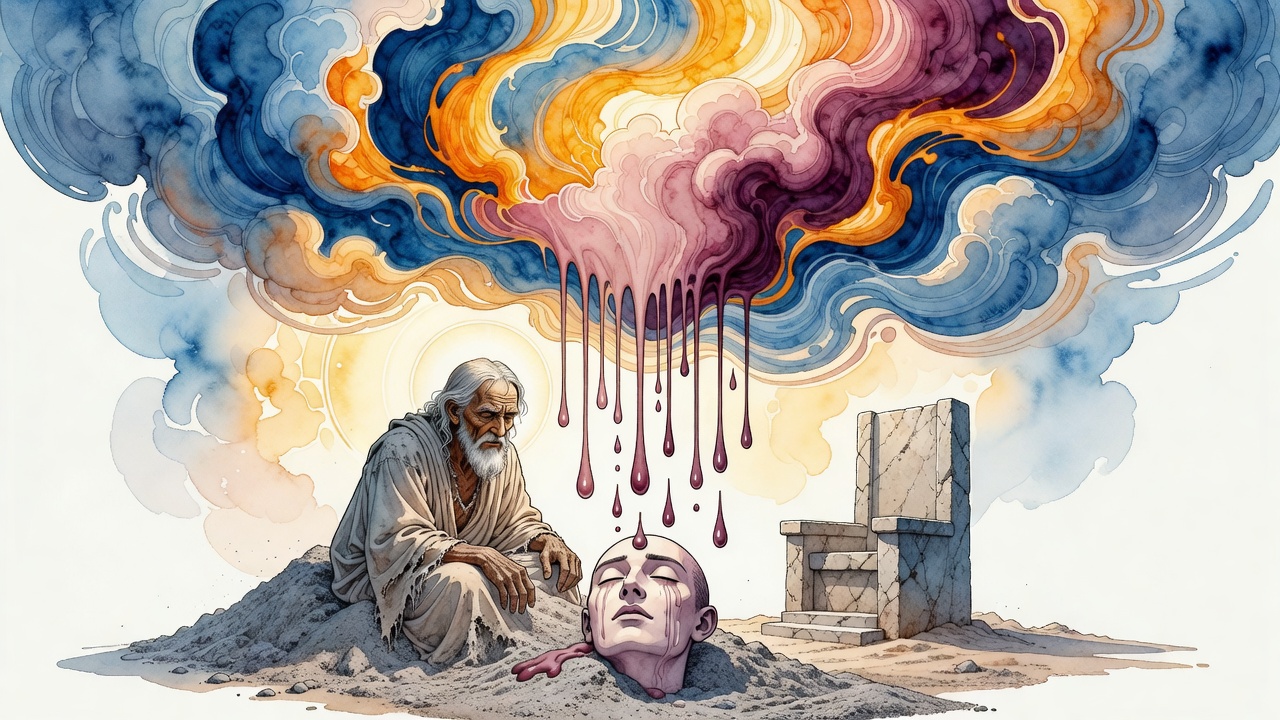
He had tried strategy against enemies. He had tried royal decree against courtiers. He had tried a clean conscience and found it stained in places he preferred not to inventory. The chamber stayed shut. Then he let the first salt fall onto the wood of the harp. The lock answered as if it had been cut for that exact weight of water and no other.

"With crying they shall come," the prophet said of the return from exile. David learned the same law in a smaller room: gathering begins when the face breaks and stops performing strength for an audience that is not even awake.

He did not sob for show. Kings have people who would weaponize a wet face by morning. This was private breakage, the kind that makes the upper room's hinges move because the lower man has finally stopped negotiating with his own image.

Music of Endurance

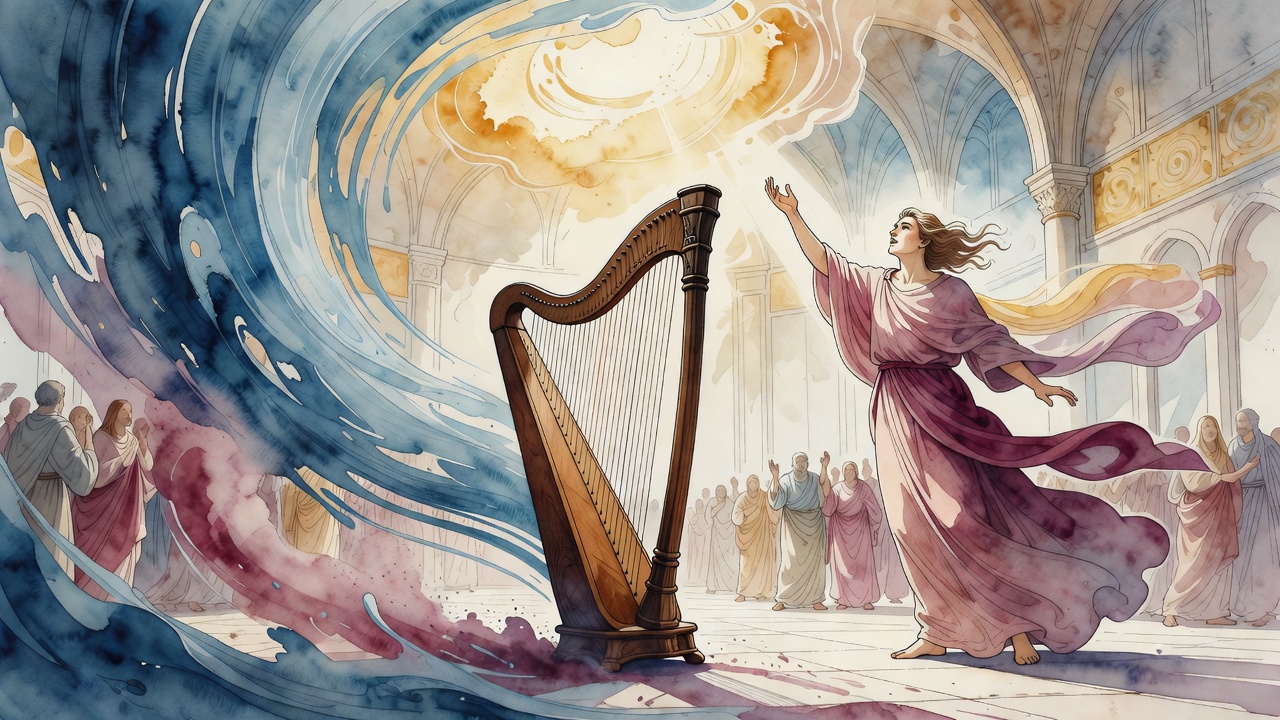
His hands found the strings that belong to Netzaḥ, endurance, the victory that does not lie. The conductor's word, menatzeah, runs through the psalm headers like a watermark on holy paper. This is not entertainment for a bored court. It is the seventh kind of music the repair texts map to the sefirot (divine emanations), the sound that holds when falsehood would rather charm and call the charm worship.

"The Eternal of Israel does not tell falsehood." The line sits inside the music of Netzaḥ. David played until the note stopped flattering him and started telling the truth about the night: the blood on his history, the love that had cost other men, the fear that the dog outside had a receipt with his name on it.

Hod answered as the eighth, the bow of acknowledgment after victory's long line. String answered string. The chamber's hinges loosened further. Endurance without bowing becomes stubbornness. Bowing without endurance becomes collapse. Together they made a music the upper room could respect.

His fingers knew the frets better than his mouth knew confession. The harp said what the tongue still half refused. That is why the chamber took the music as seriously as the tears. Both were forms of water under pressure, one salt, one sound.

Hav Hav in the Dark

Below the window, the dogs of destruction worked their shift. "Give! Give!" they bark in the second watch, angels of ruin hungry for what is thrown to them: the unfit offering, the soul that slips past the altar's pure edge, the scrap of a life that holiness has declared treifah and cast aside. Gehinnom (the realm of punishment after death) has a legal appetite. The dog is not a stray in an alley. It is claim with teeth.

David had written the plea already in ink that would outlast his pulse: save my soul from the sword, my unique one from the hand of the dog. Tonight he had to mean it with more than ink. He did not throw them a scrap to buy quiet. He threw them a song that refused their invoice, backed by tears that had opened a room they cannot enter.

The howl thinned. The second watch still turned on its cosmic schedule, but the unique soul stayed in the room with the harp. Judgment's dogs can shout for what is thrown away. They cannot collect what has been locked into the Chamber of Tears under a seal of honest water.

Somewhere a rejected offering still found a mouth. David was not responsible for every scrap in Israel. He was responsible for not becoming scrap himself while the lamp smoked and the city slept.

Pity That Gathers

When Israel begins repentance in crying, the texts say, she takes pity at once. The feminine Presence moves toward the sound of broken pride the way a mother moves toward a child who has stopped performing bravery. David was king and still a man who knew how to break without dissolving. His tears were not theater for heaven's applause. They were the only key cut to the chamber's wards.

Exile, later, would need the same key on a national scale: not clever midrash alone, not military cleverness alone, but water from the eye and music that tells the truth. David stored that knowledge in psalms so later nights would not face the dogs empty-handed when palaces were gone and only the harp of memory remained.

He felt the pity land not as a warm blanket but as a clearing of space. Room to stand. Room to keep playing. Room to be gathered back toward a center he had wandered from in smaller ways than exile and larger ways than a single sin.

After the Strings Stilled

Dawn found him with salt on his beard and the harp cooling under his palm. The chamber above had taken its due and given back a measure of return: not every enemy gone, not every ledger erased, but a path through the watch that had meant to claim him. He rose king again, with the ordinary burdens of court waiting in the corridor.

The dogs retreated to their legal hunger elsewhere. The next midnight would come. So would the strings. So would the choice to open the face or perform the crown until the face became a mask even he believed. David chose, that night, the salt and the true note. The Chamber of Tears kept his key-print for the next time the bark rose under the window.


← All myths
From the tradition

Sources

3 sources

The texts behind this telling. Some cards carry a translation of the source; others are our own retelling of it, and each card says which. Every card links out to the original.

Tikkunei Zohar 52:11Tikkunei Zohar

Retold in our words. Read the original at the link below.Sefaria-hosted English translation · CC-BY

The Tikkunei (spiritual repair) Zohar, a central text of Kabbalah that expands on the Zohar itself, speaks of hidden chambers, spiritual spaces locked away until the right key unlocks them. And these keys? They're not what you might expect.

It tells us of a profound connection between repentance, tears, and redemption. "When Israel begins repentance in crying," it says, "then immediately… she took pity upon him… 'With crying they shall come…' (Jeremiah 31:8) – with the merit of his crying, they will be gathered from exile." It suggests that genuine remorse, expressed through tears, has the power to bring about healing and return. image: a collective crying, a shared outpouring of grief and regret, powerful enough to reverse exile and bring about reunification. Powerful stuff.

The text goes even further, revealing the idea of a specific "Chamber of Tears." This isn't just a metaphor for sadness; it's a literal spiritual space, a container of potent energy. But here's the kicker: "there is no permission to open [this chamber], except through tears."

Why tears? What's so special about them? Well, consider what tears represent: vulnerability, honesty, a breaking down of defenses. Perhaps it's only when we allow ourselves to be truly vulnerable, to confront our pain and express it openly, that we can access the deeper truths held within this chamber.

And the Tikkunei Zohar doesn't stop there. It also mentions a "Chamber of Music," locked and inaccessible except "through music." King David, known for his musical prowess as much as his leadership, understood this. The text points to the story in (2 (Kings 3:1)5), "...and it was, when the player of music played..." suggesting that David approached that chamber specifically with music.

Think about the power of music. How a melody can transport you to another time, another place. How a rhythm can stir your soul. Music, like tears, bypasses our intellectual defenses and speaks directly to our emotions.

So, what does this all mean? Are there literal chambers waiting to be unlocked? Perhaps. But maybe the Tikkunei Zohar is also offering us a powerful metaphor for accessing our own inner depths. Maybe the "chambers" are within us: places of pain, places of joy, places of untapped potential. And maybe the keys – tears and music – are always available to us, waiting for us to use them.

The connection the text makes between the Hebrew words for crying (BeKhi) and heart (LeV) is also telling. Both have a numerical value of 32. And then there's the image of the Yod, the smallest letter in the Hebrew alphabet, representing both a "tear" and the "daughter of the eye." It's as if the smallest, most seemingly insignificant act of vulnerability – a single tear – holds immense power.

What chambers are waiting to be unlocked within you? What music needs to be played? What tears need to be shed? Perhaps the answer lies in embracing our vulnerability, in allowing ourselves to feel deeply, and in recognizing the transformative power of both sorrow and joy.

Full source
Tikkunei Zohar 56:22Tikkunei Zohar

Retold in our words. Read the original at the link below.Sefaria-hosted English translation · CC-BY

Jewish mysticism is filled with the idea that music isn't just entertainment – it's a key to unlocking deeper truths. And the Tikkunei (spiritual repair) Zohar, a central text of Kabbalah, gives us a glimpse into that world, exploring different types of music and their connection to the divine.

So, according to the Tikkunei Zohar 56, the seventh type of music is connected with "conducting," or nitzu-aḥ in Hebrew. This isn't about leading an orchestra in the way we might think. Here, nitzu-aḥ is linked to Netzaḥ, one of the Sefirot – the ten attributes or emanations through which God reveals himself. Netzaḥ represents "eternity" or "endurance," and it's associated with steadfastness and victory. It makes you wonder, doesn't it? Is music a way to tap into that eternal quality?

The text even brings in verses from the Hebrew Bible to illustrate the point. "And also, the Eternal of Israel does not tell falsehood..." (1 (Samuel 15:2)9). The Tikkunei Zohar connects this verse to the music of Netzaḥ. What's the link? Perhaps the idea that true, enduring music, like truth itself, doesn't deceive.

Then there's (Psalm 22:1), "To the conductor me-natze-aḥ on ayelet ha-shaḥar..." and (Psalm 12:1), "To the conductor: Upon the eighth shminit..." See how the word for "conductor," me-natze-aḥ, keeps popping up? The text then asks, "What is the eighth? Hod." Hod is another of the Sefirot, representing "splendor," "majesty," or "reverberation". And it tells us that Netzaḥ is upon it. So, we have this interplay between eternity (Netzaḥ) and splendor (Hod), brought together through music.

But wait, there's more!

The eighth type of music, according to the Tikkunei Zohar, is connected with "thanksgiving," or hoda-ah in Hebrew. This is where it gets really interesting. The text points to (Psalm 136:1), "Give thanks hodu to Y”Y..." (Y”Y is a way of writing God's name). And it states, "And this is most certainly Hod."

So, hoda-ah (thanksgiving) is linked to Hod (splendor). When we express gratitude, are we tapping into something radiant and divine?

The passage concludes by saying, "To the conductor: me-natze-aḥ – Give thanks hodu – with those they allude to Netzaḥ and Hod, and they are 'miracles.'" So, the act of conducting, the expression of thanksgiving, these aren't just musical techniques or emotional responses. They're pathways to experiencing the miraculous connection between Netzaḥ and Hod, between eternity and splendor.

Isn't it amazing how the Tikkunei Zohar weaves together seemingly disparate concepts – music, the Sefirot, biblical verses – to reveal a deeper understanding of the divine? It makes you think about the power of music, doesn't it? It’s not just something we listen to, but something we participate in, something that can connect us to the very fabric of existence. Maybe the next time you hear a beautiful melody, you’ll remember Netzaḥ and Hod, and the miraculous possibilities that music holds.

Full source
Tikkunei Zohar 124:17Tikkunei Zohar

Retold in our words. Read the original at the link below.Sefaria-hosted English translation · CC-BY

The Torah tells us (Exodus 22:30) that if an offering is treifah, basically unfit, then "you shall throw it to the dog." Okay, makes sense. But the Tikkunei (spiritual repair) Zohar, a central text of Kabbalah, takes this simple instruction and spins it into something far more profound. It asks: does this mean the literal image of a dog descends to accept this rejected offering?

The answer, according to the Tikkunei Zohar, is yes… and no. It's not just about a stray dog getting a free meal. It’s about a much deeper, darker force. This "dog" becomes a symbol, a representation of something far more sinister.

This is the dog that David, King of Israel, cries out about in (Psalm 22:21): "Save my soul from the sword, my unique-one from the hand of the dog." It's a plea for salvation from a primal, ravenous entity.

Who or what is this "dog"?

The Tikkunei Zohar equates these dogs with the "angels of destruction." These aren't your fluffy, guardian-angel types. These are forces of chaos, demanding their due. The text says they "shout out during the second watch of the night," barking and howling, crying "Hav! Hav!" – "Give! Give!" As we find in BT Berakhot 3a, this is the time of night associated with judgment and the stirring of spiritual forces.

Where does this insatiable hunger come from? The Tikkunei Zohar connects them to Gehinom, often translated as hell. These dogs, these destructive forces, are fueled by the "poison of death." (Proverbs 30:15) reinforces this image: "To the leech are two daughters: Hav and Hav," always craving, always needing more. Rejected offerings, symbols of imperfection, are not simply discarded. They are consumed by these forces of destruction, these howling "dogs" that represent the darkest aspects of existence. It is a vivid reminder that even in the realm of the sacred, there are shadows lurking.

So, what does this all mean? It's easy to get lost in the imagery of barking angels and hellish hounds. But perhaps the Tikkunei Zohar is trying to tell us something important about the nature of imperfection and the constant struggle between good and evil. That even our failures, our flawed offerings, become part of the cosmic drama, fueling forces we may not fully understand. And that even in the darkest night, we can cry out like David, and hope for salvation from the "hand of the dog."

Full source