5 min read

The Innkeeper Trusted the King and Lived

Guards seized a night innkeeper by mistake. He claimed the king's house, then confessed trust, and the king set him free.

Curated by Arthur · Told by Maggid ·
Table of Contents
  1. The Wrong Man at the Door
  2. Morning Before the Throne
  3. Leave Him Alone
  4. One Father, Many Bodies
  5. Trust After the Lie Breaks
The Innkeeper Trusted the King and Lived Click for full size

The Wrong Man at the Door

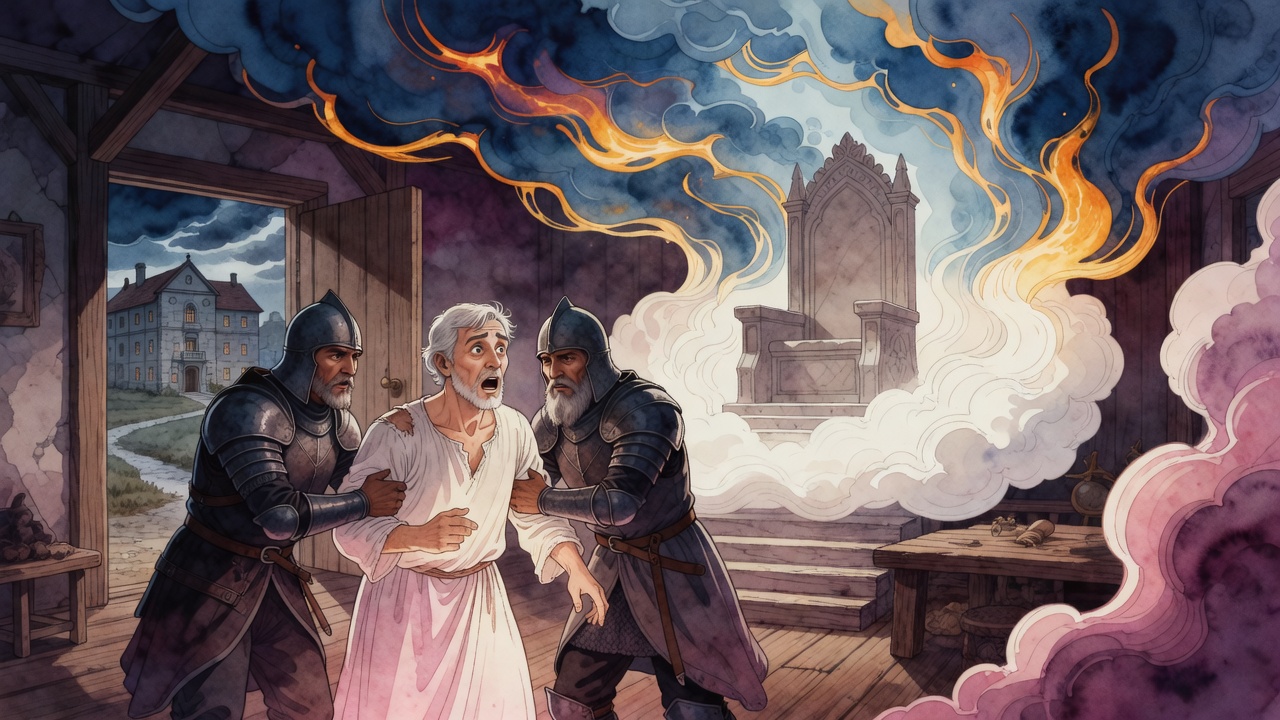
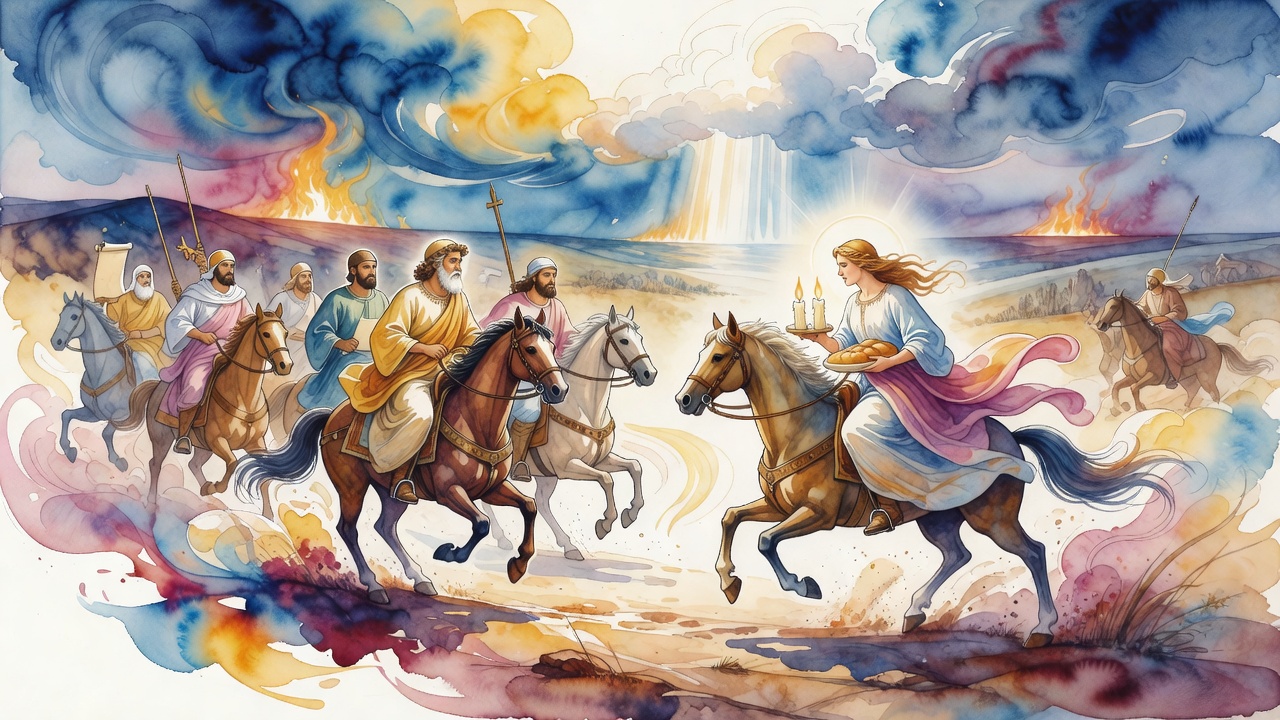
The guards wanted a different body. They found an innkeeper instead, a man whose name did not match the warrant and whose hands smelled of yeast and smoke. Night made faces easy to confuse. They seized him at the threshold of his own house and began to drag him toward the road. He did not have a sword. He had a lie ready, or something sharper than a lie.

"Do not do this to me," he said, "for I am a son of the king's house." The words hung in the dark like a rope thrown at a wall. The guards stopped. A claim like that was either suicide or salvation. They held him until morning rather than risk killing a prince in the street.

Morning Before the Throne

At first light they brought him in and announced, "We found your son last night." The king looked at the stranger the way a man looks at a cracked cup. "My son, do you know me?" The innkeeper's mouth went dry. He had never stood in this room. He had never seen this face except on coins and banners.

"No," he said. The single word should have ended him. The king asked the only question left. "Then how are you my son?" The innkeeper dropped the costume. He threw himself on the only mercy he had invented in the dark. "I beg you. I am not your son, but I trusted in you."

Leave Him Alone

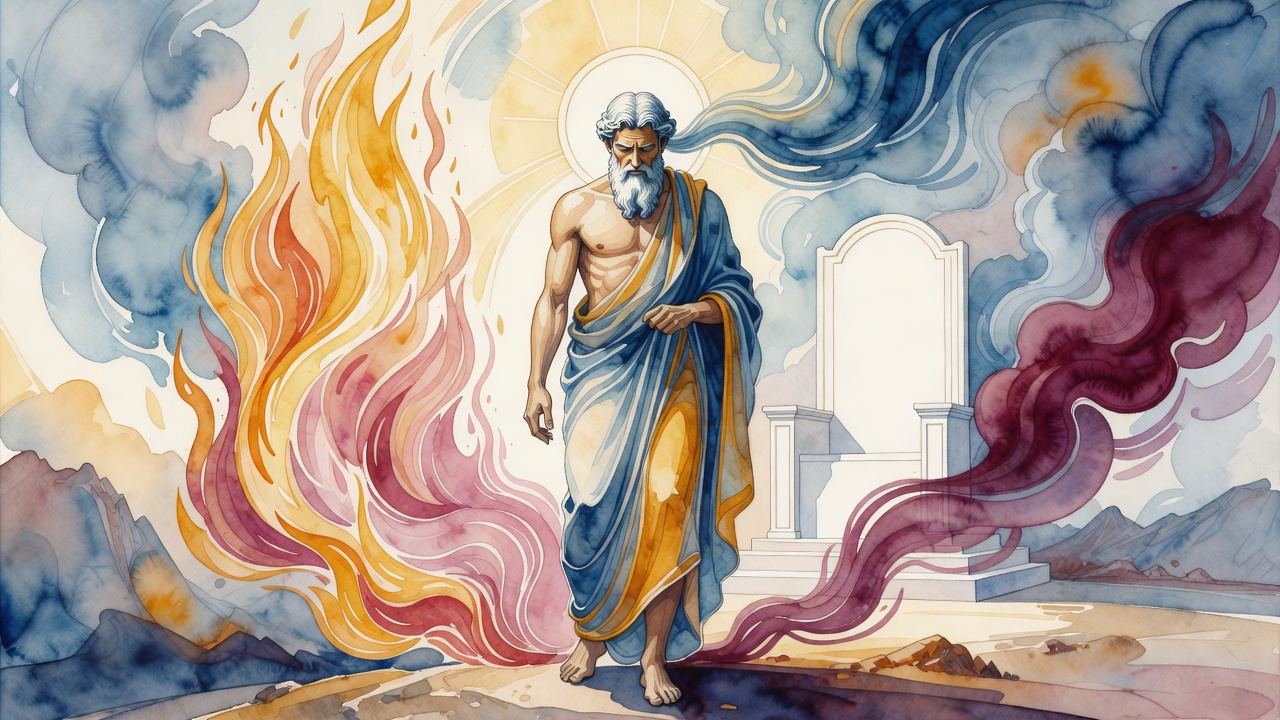
The king turned to the guards. "Since he trusted in me, leave him alone." No genealogy. No bribe. No proof of blood. Trust, spoken after the false claim had already failed, became the door. The man walked out with his neck unbroken and his story stuck to the beams of every inn that later told it. Kiston, the great man of that country in the midrash's frame, stands near the tale as the kind of name people already knew. The innkeeper had no such name. He had only the gamble of hope.

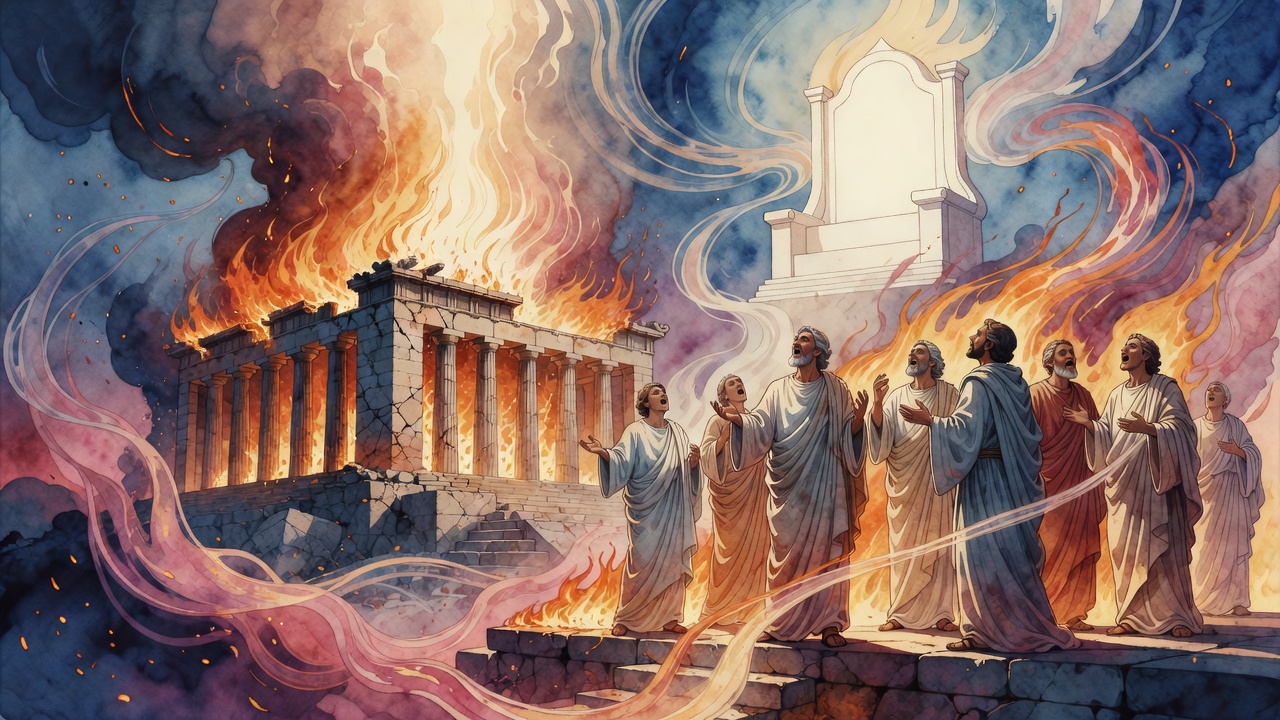
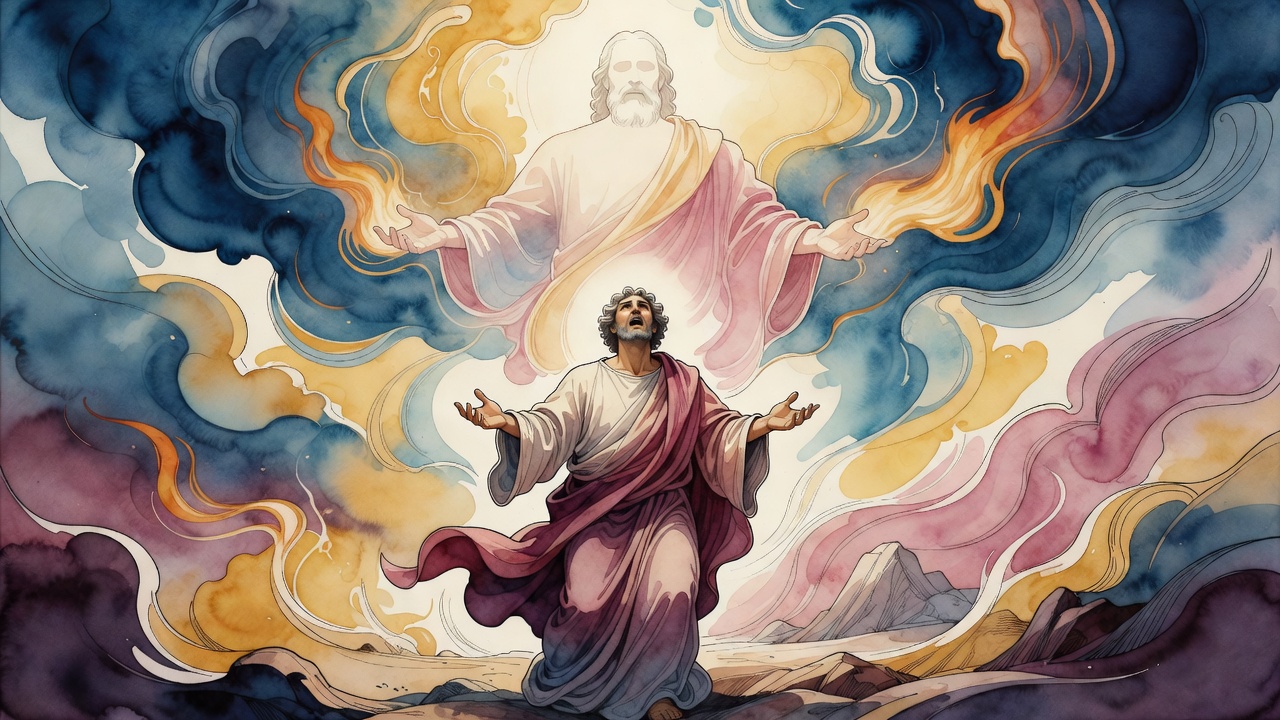
David would put the same wager into a psalm. "In You, O God, I have trusted, so let not my enemies rejoice over me." And not only for himself. All who hope in the Holy One shall not be ashamed (Psalm 25). The innkeeper's night becomes the psalm's daylight: enemies at the door, no pedigree that holds, and a king who answers trust with release.

One Father, Many Bodies

Later teachers pressed the point past royal courts. Bodies compete. One man's bread looks like another man's loss. Souls, said Rabbi Schneur Zalman in the language of the Tanya, share one root in one Father. Look only at flesh and love collapses into bargain. Look at the shared source and the stranger in the guards' hands is not only a case file. He is kin at a depth the warrant cannot see.

That does not make every lie holy. The innkeeper admitted the lie. The king did not crown him. The king refused to feed him to the guards because trust had been placed where trust belongs. Love of the fellow, Hillel's whole Torah in one line, begins when the other person is not reduced to a threat or a tool. The guards saw a capture. The king heard a human being gambling on mercy.

Trust After the Lie Breaks

The hardest moment in the story is not the seizure. It is the second speech, after "No," when pretence is gone and only hope remains. Many prayers never reach that room. They stay in the first claim, the costume of worthiness, the insistence that we deserve the title we grabbed in the dark. The midrash makes the man strip. Only then does the king speak freedom.

Israel has stood in that posture more than once: not prince by obvious right in the eyes of the nations, yet trusting the King who knows the difference between blood and hope. Enemies prepare to rejoice. The psalm answers before the verdict. The innkeeper walks home smelling of fear and yeast, and the tale stays open so every later night-arrest of the soul has a script for the morning.

By noon the innkeeper was back among his jars, hands shaking as he wiped a table that did not need wiping. Customers asked why the guards had come. He told them only that the king had been kinder than the night. He did not preach. He poured water. Trust had saved his neck; boasting might spend the gift. In the psalm the enemies still wait to rejoice. The story does not pretend the road outside the palace is safe forever. It only says that hope spoken cleanly can open a door iron cannot force.

Later ages would retell the scene whenever a Jew stood without papers before a power that could kill. The claim of sonship fails. The confession of trust remains. Between those two sentences the whole religion of hope fits. David sings so the innkeeper will not be alone in the archive of the frightened.


← All myths
From the tradition

Sources

2 sources

The texts behind this telling. Some cards carry a translation of the source; others are our own retelling of it, and each card says which. Every card links out to the original.

Midrash Tehillim 25:4Midrash Tehillim

Retold in our words. Read the original at the link below.Rabbi Mike Feuer, Jerusalem Anthology · CC-BY

The ancient rabbis understood that feeling deeply. They explored it through stories, allegories, and interpretations of scripture that we call midrash (rabbinic interpretive commentary). And one particular midrash, Midrash Tehillim, which focuses on the Book of Psalms, offers a powerful glimpse into the nature of trust and divine grace.

It all starts with the verse, "Another thing, O Lord, I have trusted in You." From this simple statement, the rabbis spin a tale...

A man named Kiston. The midrash describes him as a "great person" with a good reputation. Now, picture another man in the same country, an ordinary innkeeper, caught in a case of mistaken identity. Guards, patrolling the area, seize him, believing him to be someone else.

Desperate, the innkeeper cries out, "Do not do this to me, for I am a son of the king's house!"

It's a bold claim, a desperate gamble. The guards, intrigued, decide to hold him until morning. They bring him before the king himself.

"We found your son last night," they announce.

The king turns to the man and asks, "My son, do you know me?"

The innkeeper hesitates. He doesn't recognize the king. Fear grips him.

"No," he admits.

The king, understandably confused, asks, "Then how are you my son?"

Here's the turning point. The innkeeper abandons his pretense. He throws himself on the king's mercy. "I beg you," he says, "I am not your son, but I trusted in you."

Think about the sheer audacity of that statement! He's admitting he lied. He's admitting he's not who he claimed to be. But he's also declaring his faith in the king's compassion.

And what does the king do?

He turns to his guards and says, "Since he trusted in me, leave him alone."

Wow.

The midrash then connects this story back to King David's words in the Psalms: "In You, O God, I have trusted, so let not my enemies rejoice over me. And not only me, but all those who hope in You shall not be ashamed." (Psalm 25).

See the connection? The innkeeper's trust, even born of desperation, saved him. David, too, places his ultimate trust in God, confident that he will not be abandoned.

What does this little story teach us? It's not necessarily about blood relation or lineage. It's about the power of faith, the courage to place your hope in something beyond yourself. The midrash suggests that even when we fall short, even when we're caught in our own fabrications, a sincere act of trust can unlock unexpected grace. A reminder that hope, even in the darkest of times, can be a powerful force.

Full source
Tanya, Likkutei Amarim, Chapter 32Tanya (Likkutei Amarim)

Retold in our words. Read the original at the link below.Kehot Publication Society English Translation via Sefaria (CC-BY-NC) · CC-BY-NC

"You shall love your fellow as yourself" (Leviticus 19:18). Hillel the Elder called this the entire Torah, with everything else being commentary. Chapter thirty-two of the Tanya explains how to actually do it.

The key, says Rabbi Schneur Zalman, is which part of the other person you are looking at. If you focus on bodies, his body versus your body, his interests versus yours, his status versus yours, love is impossible. Bodies are separate. They compete for the same resources. Every gain for him is a potential loss for you.

If you focus on souls, the picture reverses. All Jewish souls share a single root in the one God. They are, in the Tanya's language, "all of a kind, and all having one Father." Siblings from the same parent. The more weight you give to the soul and the less weight you give to the body, the more natural it becomes to love the other person, because at the soul level, there is no "other." You are one.

This is why people who prioritize their physical existence cannot sustain genuine love. Their love is "dependent on a thing" (Avot 5:16), conditional, transactional, subject to change when circumstances shift. But love rooted in the shared divine source of all souls is unconditional, because the source never changes.

The Tanya addresses an obvious objection: what about people who sin? Aren't we supposed to hate the wicked? Yes. But only under specific conditions. The obligation to hate applies only to someone who is your "companion in Torah and commandments," whom you have personally rebuked, and who has refused to change. For everyone else, Hillel's instruction applies: "Be of the students of Aaron, loving peace and pursuing peace, loving people and drawing them near to Torah." Even total strangers. Even people who seem far from observance. The Tanya says you should draw them close with bonds of love. And perhaps the light of your love will inspire their return.

At the cosmic level, this love is not just an ethical imperative. It is a structural necessity. God's light can only rest in a unified vessel. Disunity among souls creates cracks that the Shechinah cannot inhabit. The prayer says: "Bless us, our Father, all of us as one." Only as one.

Full source