David Read the Lion and Bear as Signs Before Facing Goliath
A lion took a lamb at the edge of the flock. David killed it with his hands. After the bear, he treated both carcasses as orders.
Table of Contents
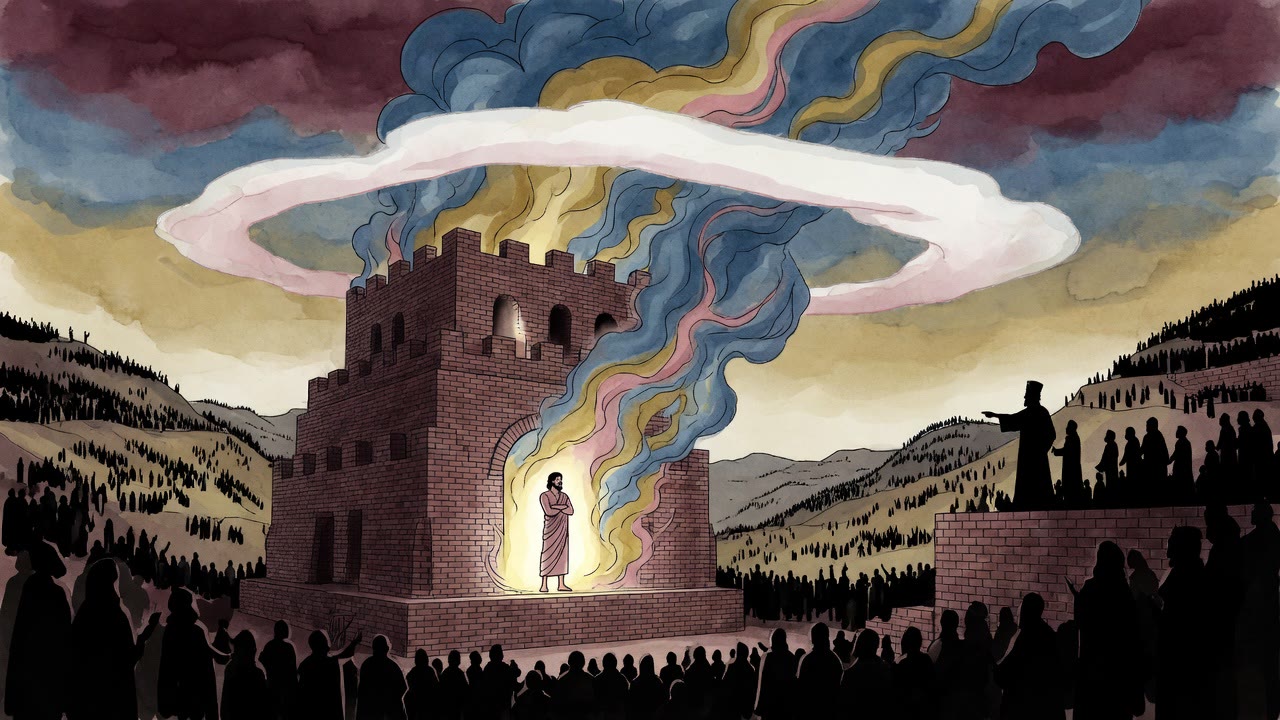
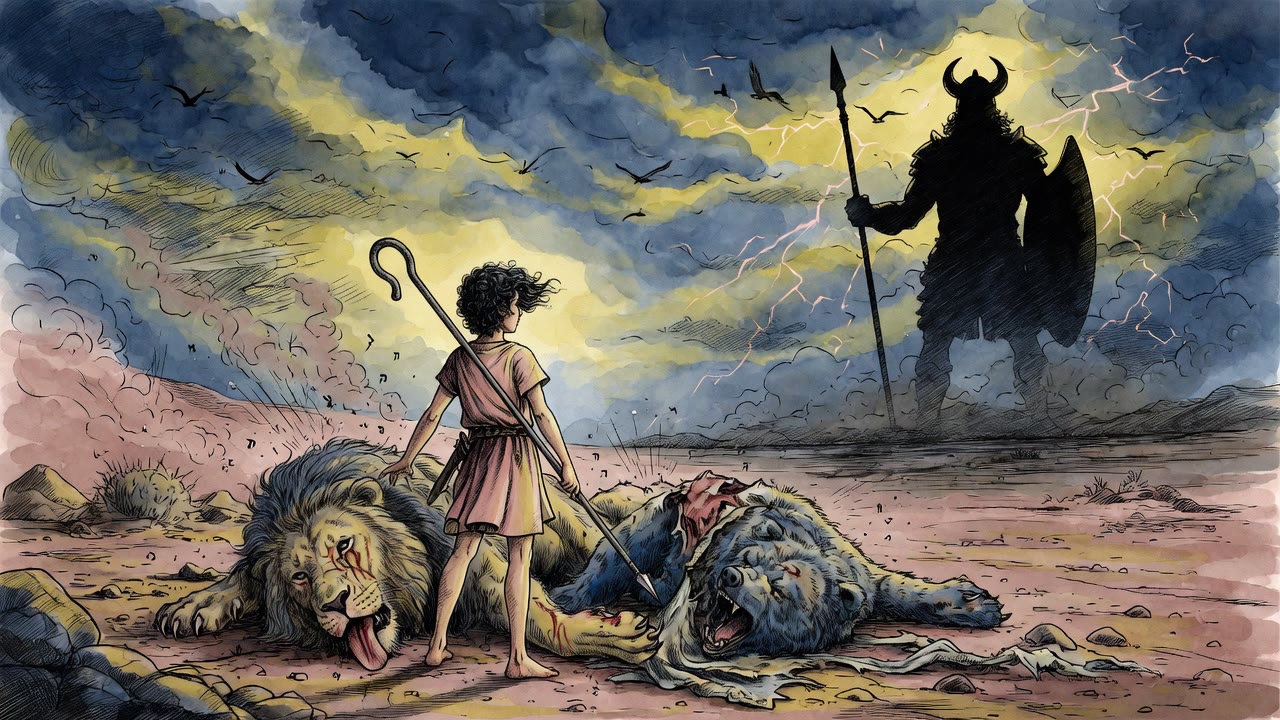
The lion came out of the scrub at the edge of the flock and had a lamb by the neck before the dogs finished barking. David was alone on that hillside with a staff and a sling and no help within shouting distance. He went in. He got a hand into the mane, pulled the head back, and stayed with it while it turned on him, and when it stopped moving he was sitting in the dirt with his sleeve open and the lamb bleating somewhere behind his shoulder.
 Click for full size
He told nobody. Shepherds lose sheep. Shepherds do not usually walk away from the thing that took them.
The Bear Came for the Same Flock
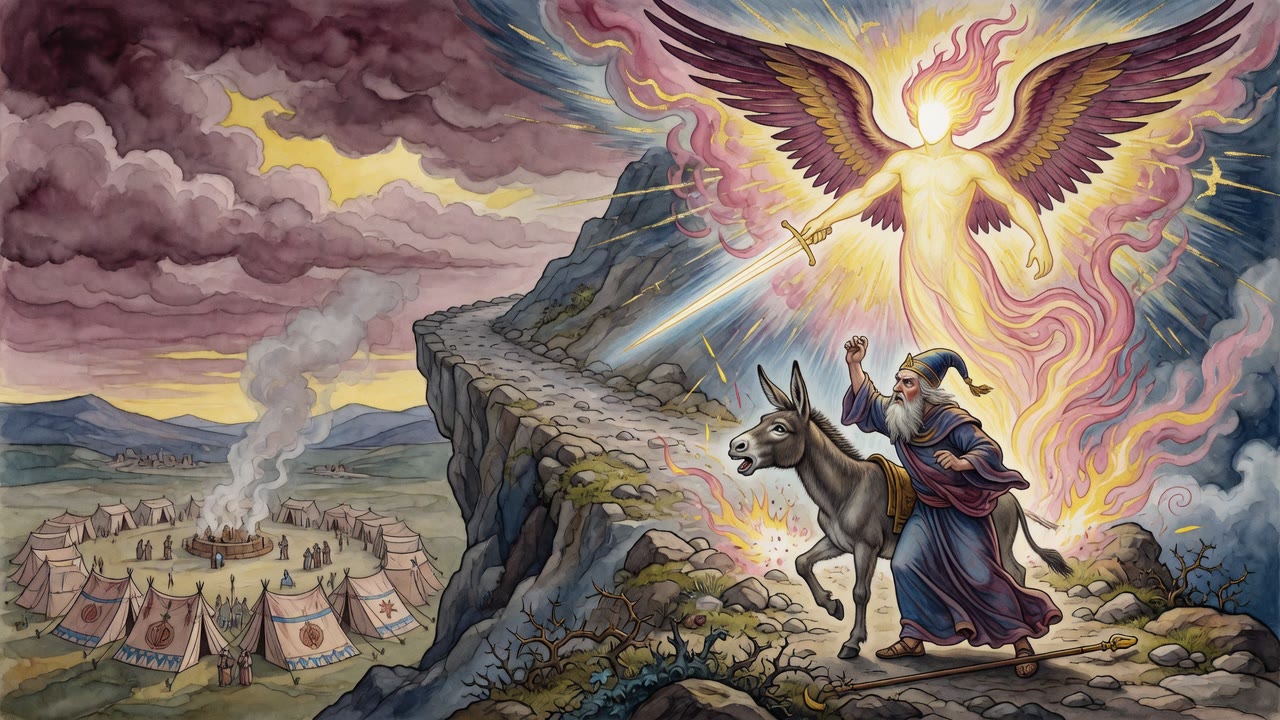
Later a bear came down for the same flock. The same boy went in. The same boy walked home. Once is a story to tell at a well. Twice is arithmetic.
David sat a long time with the second carcass. He never said heaven had rescued him from it. He said the harder thing, the one he kept repeating afterward to anyone who would listen. "Both the lion and the bear your servant has slain" (1 Samuel 17:36). Slain. His hands, his weight, his knee against the animal's ribs. Something had been put into his arms that did not belong to a boy who carried lambs for a living, and it had been put there twice, out on a hill where nobody was watching and nothing was at stake but a few sheep.
Two dead animals, two signs, and he read them the way another man reads weather. Nobody practices for nothing.
He Stopped Calling It Luck
"Why should I be afraid of the Philistine," he said. "I have killed wild beasts with these hands. Something is going to happen in Israel, and Israel is going to be saved through me."
He did not wait for a prophet to decode the hillside. He took the hint. Four righteous people were given such hints. David was one of them, and he acted on his. The lion and the bear were not random threats. They were rehearsals. Each kill was a sentence he could later speak in a valley, already proven in private, already paid for in blood and torn cloth.
He kept the count in his body. Not as a boast for the well. As a map. If God had trained his hands on a lion, a man in bronze was not a new kind of problem. It was the same problem, standing up and shouting.
The Valley That Would Not Move
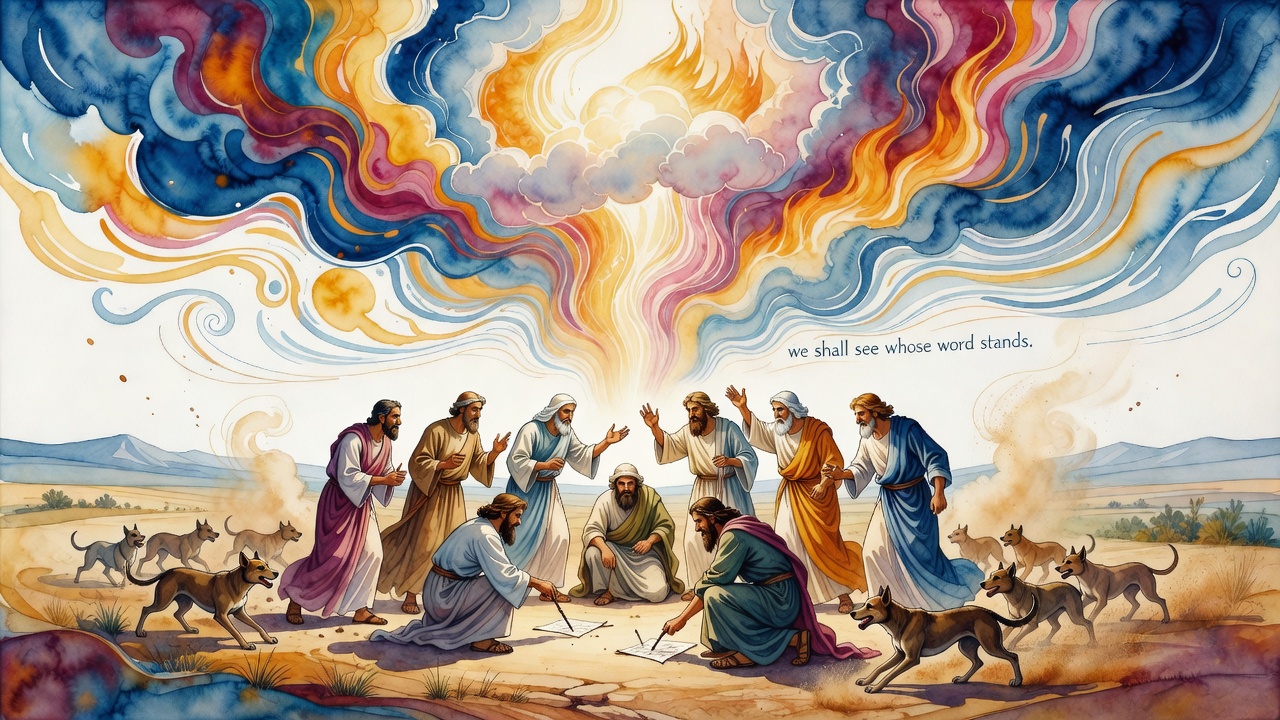
By the time he reached the valley with bread for his brothers, the two armies had been facing each other across the floor of it for forty days and neither had come down. Every morning the Philistine walked out and shouted. Every morning the line of Israel held still and let him shout. Men who had killed in real battles studied the ground at their feet. His brothers told him to go back to the sheep.
David watched the giant the way a shepherd watches movement in the scrub, and kept walking. The hillside had already taught him what to do with a predator that takes what is not its own. The valley was only a larger scrub, with two nations for an audience.
Three Weapons and One Name
Goliath came down carrying a sword, a spear, and a javelin. One blade for close work, one for the reach, one to throw. Three answers to three distances, bronze on his chest, bronze on his shins, a shield bearer walking ahead of him. He looked at the boy coming toward him with a stick and asked whether he was a dog.
David did not argue about the stick. "You come to me with a sword, a spear, and a javelin," he said. "But I come to you with the name of the Lord of hosts, the God of Israel" (1 Samuel 17:45).
He had worked that sentence out on a hillside with a dead bear in front of him. Now he said it louder, in front of two armies, to a man who had brought an arsenal to a fight that had already been decided where nobody could see. The psalm was already in his mouth. "These with chariots and these with horses, but we, in the name of the Lord our God, will call. They knelt and they fell, but we rose and gained courage" (Psalms 20:8).
What Fell and What Stood
The stone left the sling. The giant went down. Israel kept the shape of that line long after the body was in the ground, and sang it back at itself whenever the ground shook. The three weapons were still on Goliath when he went down. He never got to use any of them.
That is the piece that stayed: a full arsenal lying in the dust beside a man who had counted on it, and a shepherd walking back up the slope who had counted on two dead animals nobody had seen him kill. The hint had been taken. The valley paid it out in public.
← All myths