Parshat Naso6 min read

Delilah's Silver Becomes Micah's Idol and Moses' Grandson Serves It

The silver that betrayed Samson is melted into a household god, and the priest hired to serve it traces his blood straight back to Moses.

Curated by Arthur · Told by Maggid ·
Table of Contents
  1. The Silver That Remembered Samson
  2. The Sanctuary Three Miles From the Real One
  3. The Levite Who Came Down the Road
  4. The Name the Verse Would Not Speak

Delilah counted the silver out on her knees, eleven hundred pieces from each Philistine lord, the price of one man's hair. She had sold Samson a strand at a time. Now the coins were hers, and they were cold, and they went where blood money always goes. Into the hands of her son.
His name was Micah, and he had a furnace.

The Silver That Remembered Samson

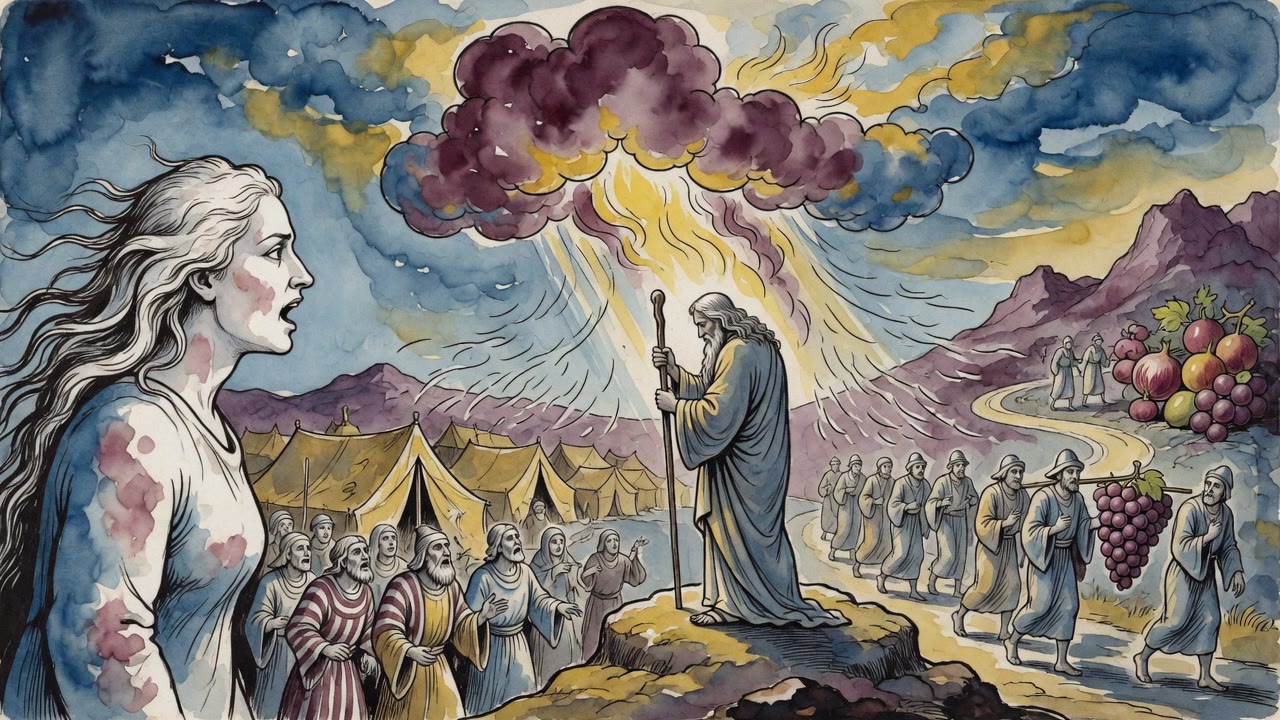
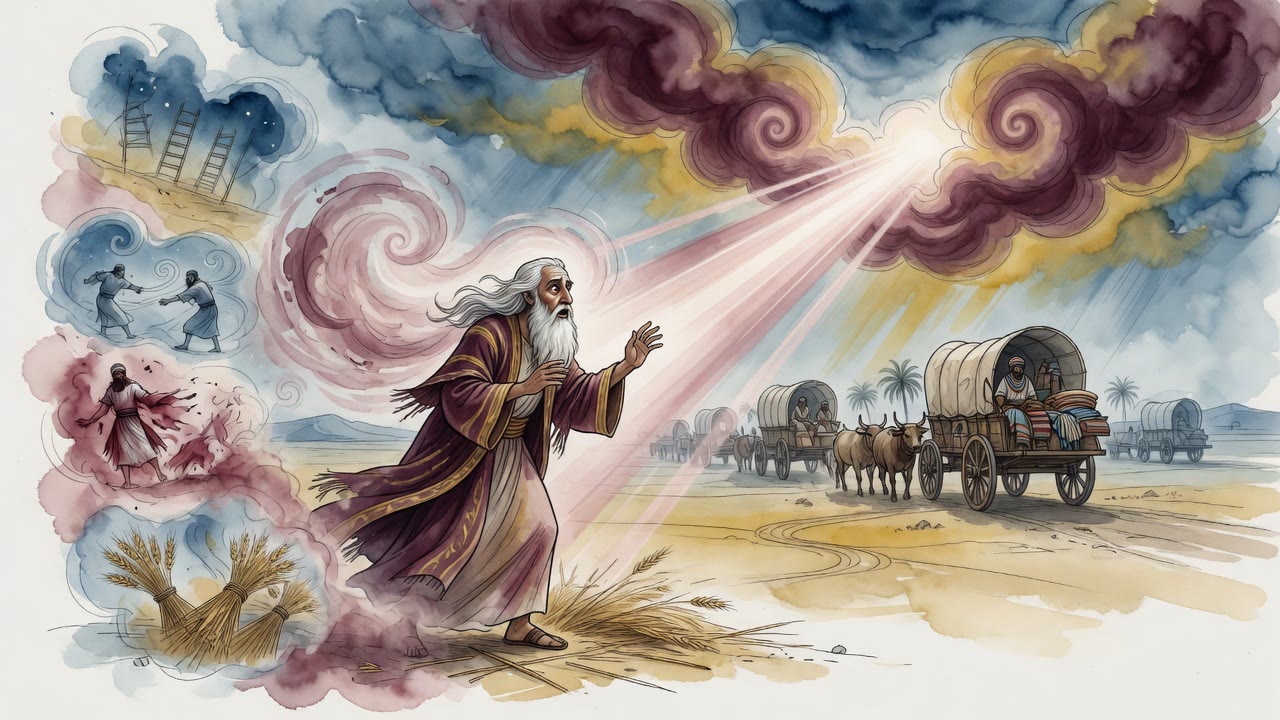
Micah owed his life to a miracle, which made what he did with the silver worse. In Egypt the taskmasters had set the Israelites a quota of bricks, and when the count came up short they took children and packed them into the wall as filler, mortared them in alive. Micah had been one of those children. He was already inside the wall, already part of it, when Moses came down the line.

Moses wrote the explicit Name, the Shem HaMeforesh (שֵׁם הַמְּפֹרָשׁ), on a shard and pressed it against the small dead body in the brick. The boy's chest moved. Moses pulled him out of the wall by the arms, wet with mortar, and set him on his feet in the world again.

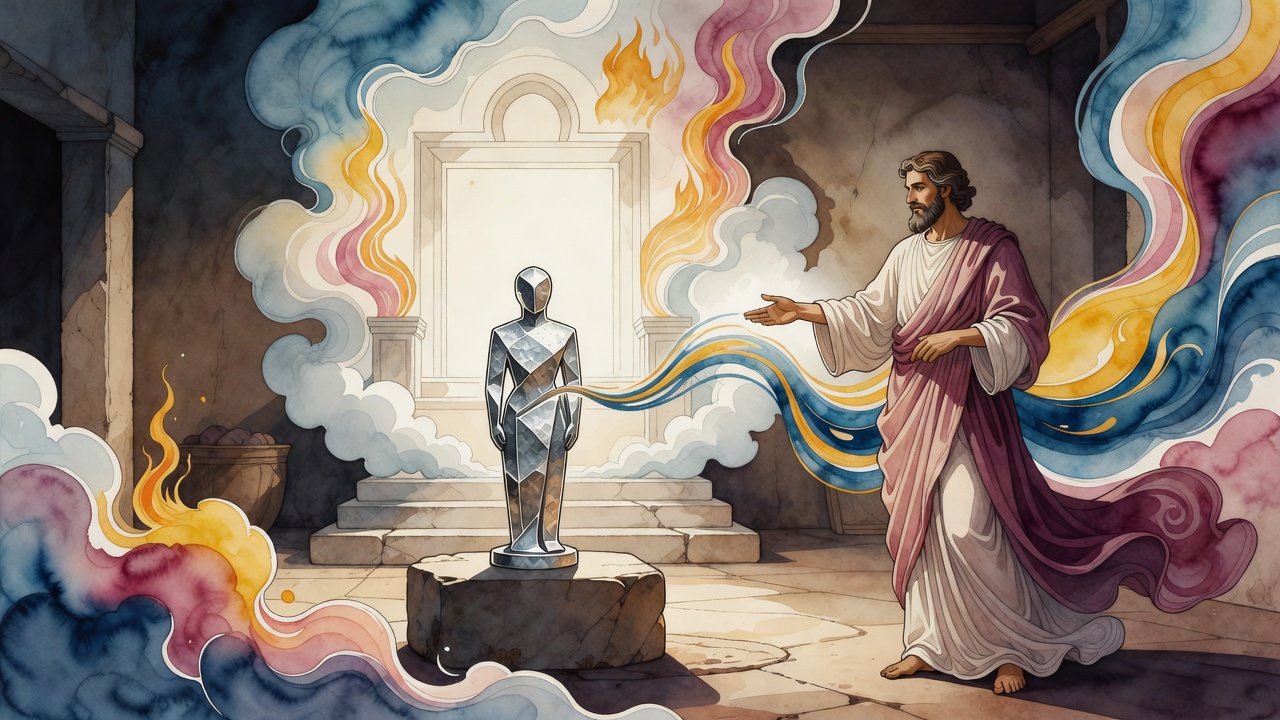
That boy grew up, took his mother's Philistine coins, and built a god out of them. He melted Delilah's silver in the furnace and poured it into a mold, and when it cooled he had an image. The same hands Moses had lifted out of the wall now lifted an idol off the casting bench.

The Sanctuary Three Miles From the Real One

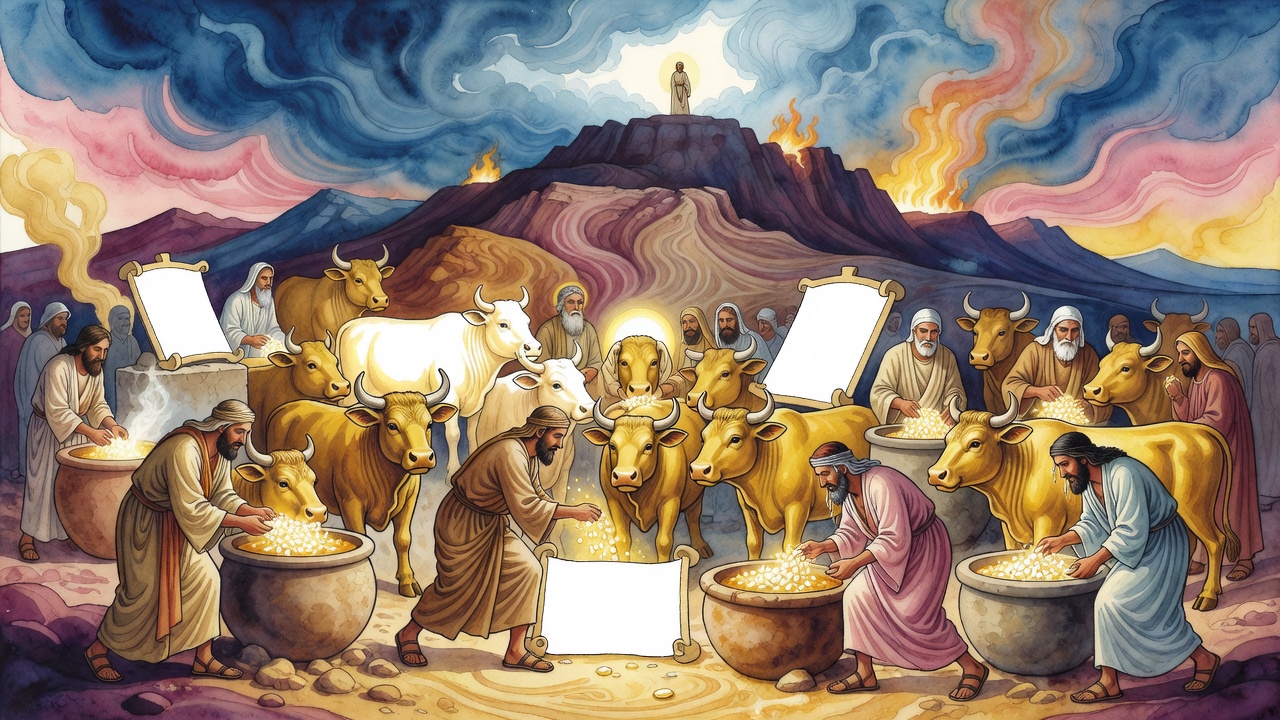
Micah did not hide it. He built a house for it, a private mikdash (מִקְדָּשׁ), a sanctuary of his own, and he stocked it the way a merchant stocks a shop. Three images of boys. Three calves. A lion. An eagle. A dragon. A dove.

Each one sold a different thing. People went to the dove for a wife and to the eagle for riches. The calves answered for daughters, the lion for strength, the dragon for long life. Nothing was free. A sacrifice cost real coin, didrachms, and even a pinch of incense had its price, paid to Micah, always to Micah.

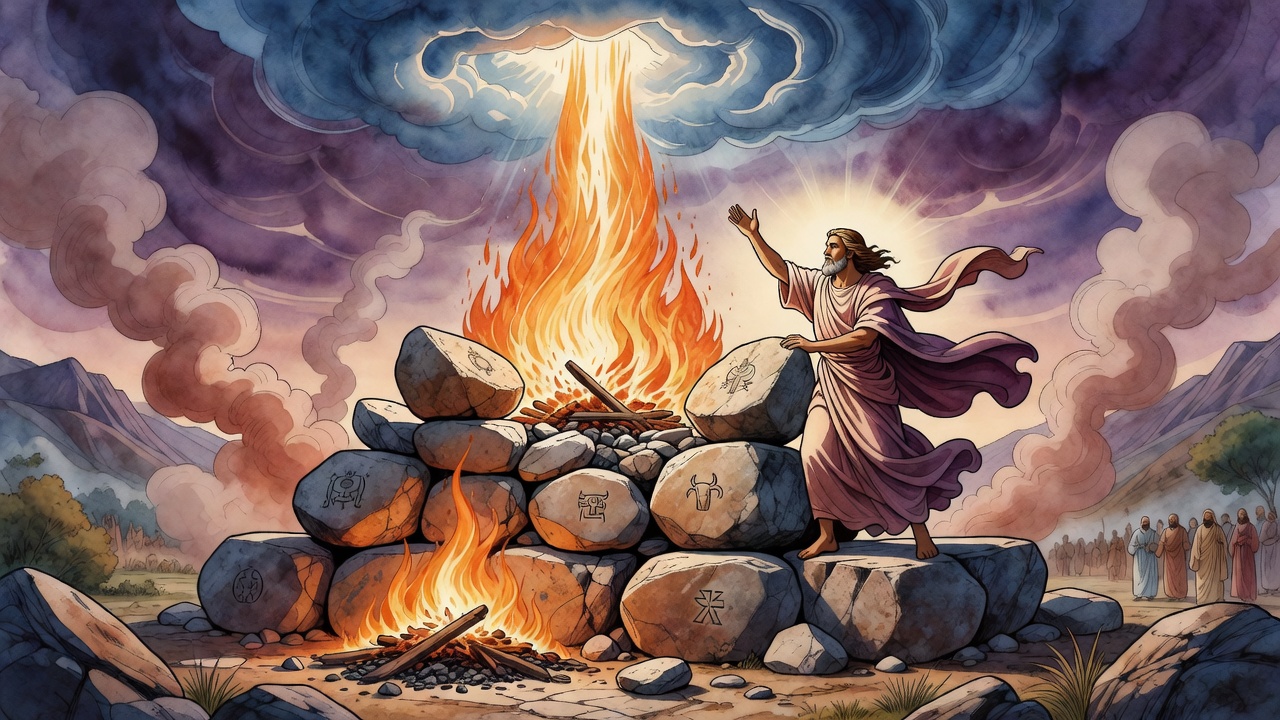
He set it up near Shiloh, where the true sanctuary stood. From Gerav to Shiloh was three miles, and on a still day the smoke of the altar at Shiloh and the smoke of Micah's idol rose together and braided into one column over the hills. The ministering angels saw the two smokes mingle and moved to shove Micah out of the world.

The Holy One stopped them. "Leave him," He said. "His bread is set out for any traveler who passes."

That was the whole defense. Micah kept an open table. A man walking the road hungry could turn in at the idol-shrine and eat, and because of that one mercy the God whose altar he insulted from three miles off would not let the angels touch him.

The Levite Who Came Down the Road

A young man came through, a wanderer out of Bethlehem looking for a place. His father was a Levite, his mother of Judah, and Scripture would later call him by his mother's line. Micah took him in, paid him a wage, and dressed him as a household priest. The shrine had everything now. Images, an altar, smoke, and a man of the holy tribe to stand before it.

The young man knew the work was a sham. He had been taught better, taught by the highest mouth in Israel, and he carried one of that teaching's lines into the shrine and turned it inside out. He had heard that it is better to do avodah zarah (עֲבוֹדָה זָרָה) for hire than to fall on the charity of other men. The phrase was a warning. Strange work over dependence, take any honest labor before you beg. He read it as a license. Avodah zarah also means the service of strange gods, and that is the meaning he chose.

So he served idols and despised them at the same time. When a worshipper came leading an animal to slaughter before the image, the priest would stop him at the threshold. "What good can this thing do you?" he would ask. "It cannot see. It cannot hear. It cannot speak." The man would stand there shaken, his knife half-raised, doubting the whole errand. Then the priest would soften. "Bring a dish of flour and a few eggs instead. That is enough." The worshipper left lighter, half-converted, and the priest ate the flour and the eggs himself.

The Name the Verse Would Not Speak

Later Scripture set down his name and his line, and the line is the wound. "And Jonathan the son of Gershom, the son of Manasseh" (Judges 18:30). Son of Manasseh, the wicked king who filled Jerusalem with idols. Except Gershom had no son named Manasseh in his blood. Gershom was the son of Moses. The priest of the idol was Moses' own grandson.

The verse could not bear to write it plainly, so it hung a letter into the name, a suspended nun (נ) floating above the line, and turned Moshe into Menashe to spare the holiest mouth in Israel the disgrace of his grandchild. From here the sages drew the rule. The fault is hung upon the faulty one. A man who does the deed of Manasseh gets written into Manasseh's house, no matter whose grandson he is.

The rescued child of the brick wall and the grandson of the man who rescued him stood at the two ends of the same shrine. One had melted Delilah's silver into a god. The other had been born to the man who carried the Name that raises the dead, and he used his inheritance to talk frightened pilgrims out of their goats and pocket their eggs. The smoke kept rising three miles from Shiloh, and God kept the angels off the open table, and the idol stood in the house of Micah until the day the land of Dan went into exile.


← All myths
From the tradition

Sources

4 sources

The texts this telling draws on, in full. Open a card to read inline, or expand it for a wider, quieter read.

Legends of the Jews 2:72Legends of the Jews

The story of Micah is, frankly, a wild ride. It all starts with Delilah. Yes, that Delilah – the one who betrayed Samson. According to the Legends of the Jews, Delilah took some of the money she got from the Philistine lords for revealing Samson's secret and gave it to her son, Micah. And what did Micah do with this blood money? He used it to make an idol.

The truly unbelievable part? Micah owed his very existence to a miracle, a miracle performed by Moses himself!

Ginzberg, in his masterful retelling of Jewish lore, paints a vivid picture: During the harsh years of Egyptian oppression, the Israelites were forced to produce a quota of bricks. If they failed, their children were used as building material – literally incorporated into the walls. This was Micah’s destined fate. He was to be entombed alive.

Can you imagine?

But then, a miracle happened. Moses, in his compassion, intervened. He wrote the ineffable Shem HaMeforesh – the explicit Name of God – and placed it on Micah’s lifeless body. The boy miraculously came back to life! Moses then pulled him from the wall, rescuing him from a horrific death.

And how did Micah repay this incredible gift? By creating an idol. The Legends of the Jews emphasizes the sheer audacity of it.

According to some traditions, Micah’s transgression went even further back. As we find in various Midrashic (rabbinic interpretive commentary) sources, including some interpretations of Midrash Rabbah, he wasn't just a run-of-the-mill idol-maker; he was the one who fashioned the Golden Calf! The one that led the Israelites astray in the desert while Moses was receiving the Torah on Mount Sinai. Talk about biting the hand that feeds you!

Later, during the time of Othniel, one of the Judges of Israel, Micah set up shop – his idol, that is – not far from the sanctuary at Shiloh. He even managed to persuade a grandson of Moses to serve as a priest before his idol. It's a truly bizarre and disheartening image.

So, what are we to make of Micah? Was he simply a bad seed? Or is there a deeper lesson here? Perhaps his story serves as a cautionary tale about the dangers of ingratitude. About forgetting the miracles in our own lives and straying from the path of righteousness. About the enduring human capacity to, despite everything, choose the wrong path. It's a story that makes you wonder: what miracles have we received, and how are we using them?

Full source
Legends of the Jews 2:73Legends of the Jews

The story of Micah and his homemade sanctuary is a wild ride through the human tendency to, well, improvise. We find this tale tucked away in Ginzberg's Legends of the Jews, painting a picture of a very unorthodox place of worship. Forget grand temples and solemn rituals. Think more… religious petting zoo.

Micah, it seems, wasn’t content with the established ways. He decided to build his own little mikdash, his own sanctuary. But instead of following tradition, he filled it with… stuff. Lots of stuff.

Ginzberg tells us Micah stocked his sanctuary with quite the menagerie. Three images of boys, three calves, a lion, an eagle, a dragon, and a dove. It's like a bizarre Noah's Ark of idols! Each one catered to a specific need, a specific desire.

Need a wife? Apparently, you went to the dove. Want riches? The eagle was your bird. According to Legends of the Jews, if you were hoping for daughters, you made your appeals to the calves. Strength? That was the lion’s department. And for a long life? Well, you had to cozy up to the dragon.

Can you imagine? A spiritual vending machine!

But here's the kicker: it wasn't just about showing up and asking nicely. Oh no. Micah had monetized the whole operation. Sacrifices and incense, cost money. Everything had to be purchased from Micah himself, and it wasn't cheap. We're talking didrachms for a sacrifice – a significant sum in those days – and even incense would set you back a coin.

So, what are we to make of Micah's bizarre sanctuary? Was it genuine religious fervor, or just a clever business venture disguised as spirituality? Was he a visionary, or just a charlatan?

Perhaps it's a reminder that our spiritual longings can be easily exploited. Maybe it's a cautionary tale about the dangers of straying too far from established traditions. Or maybe, just maybe, it's a darkly humorous look at the human desire to find easy answers and quick fixes, even in matters of faith. Whatever the case, it's a story that sticks with you, a strange little corner in the vast landscape of Jewish legend.

Full source
Yalkut Shimoni on Nach 72:1Yalkut Shimoni on Nach

"And there was a man of the hill country of Ephraim" (Judges 17:1). Why was Micah not counted among those who have no share in the world to come? Because his bread was available to passersby. "And he passed through the sea of distress" (Zechariah 10:11) - Rabbi Yochanan said: This refers to the idol of Micah. It is taught, Rabbi Natan says: From Gerav to Shiloh was three miles, and the smoke of the altar and the smoke of Micah's idol mingled with one another. The ministering angels sought to push him away. The Holy One, blessed be He, said to them: Leave him be, for his bread is available to passersby. And on account of this matter, the men of the concubine at Gibeah were punished. The Holy One, blessed be He, said to them: For My honor you did not protest, yet for the honor of flesh and blood you protested.

"And there was a young man from Bethlehem in Judah, of the family of Judah, and he was a Levite" (Judges 17:7). "Of the family of Judah" - it appears he comes from Judah; "and he was a Levite" - it appears he comes from Levi. Rather, his father was from Levi and his mother from Judah, and Scripture calls him by the family of his mother, for the family of the mother is called a family. Alternatively, since he did the deed of Manasseh, who came from Judah, Scripture calls him "of the family of Judah," as it is written, "And Jonathan the son of Gershom, the son of Manasseh, he and his sons were priests to the tribe of Dan until the day of the exile of the land" (Judges 18:30). Was he the son of Manasseh? Was he not the son of Moses, as it is written, "And the sons of Moses, Gershom and Eliezer" (1 Chronicles 23:15)? Rather, since he did the deed of Manasseh, Scripture attached him to Manasseh. As Rabbi Yochanan said in the name of Rabbi Shimon ben Yochai: From here we learn that the fault is hung upon the faulty one. Rabbi Yose son of Rabbi Chanina said it from here: "And his father had never grieved him in his lifetime, saying, Why have you done so? And he too was very handsome, and his mother bore him after Absalom" (1 Kings 1:6). But is it not written that Adonijah was the son of Haggith, while Absalom was the son of Maacah the daughter of Talmai king of Geshur? Rather, since he did the deed of Absalom, who rebelled, Scripture attached him to Absalom. So here too, since he did the deed of Manasseh, Scripture attached him to Manasseh. Rabbi Elazar said: A person should always cleave to good people, for Moses married the daughter of Jethro and from him came Jonathan, while Aaron married Elisheba daughter of Amminadab and from him came Phinehas. Was Phinehas not descended from Jethro, as it is written, "And Eleazar son of Aaron took for himself a wife from the daughters of Putiel" (Exodus 6:25) - does this not mean from the daughters of Jethro, who fattened calves for idolatry? No, from Joseph, who scoffed at his evil inclination [Putiel read as one who scoffed]. But did not the tribes scorn Phinehas, saying, Have you seen this son of Puti, whose mother's father fattened calves for idolatry, that he should kill a prince of a tribe in Israel? Rather, if his mother's mother was from Joseph, his mother's father was from Jethro; and if his mother's father was from Jethro, his mother's mother was from Joseph. The wording is also precise, for it is written "from the daughters of Putiel" - two [families]. Learn from this.

Full source
Legends of the Jews 2:74Legends of the Jews

The tradition often reminds us that even the best lineages can have some…interesting…twists and turns. Let's

The texts suggest a possible reason for a "degeneration" in Moses' family. (It's a harsh word, I know.) The idea is that Moses married the daughter of a priest who served idols. Think about the cultural context for a moment. Mixed beliefs were going to cause some issues.

The story really gets interesting when we focus on Moses' grandson. He wasn't just any run-of-the-mill idolater. Oh no, he had…principles. Twisted ones, maybe, but principles nonetheless.

This grandson had heard from Moses a particular teaching: that it's better to do Avodah Zarah (עֲבוֹדָה זָרָה) for hire than to be dependent on others. Now, Avodah Zarah literally means "strange worship" or "foreign service." The intention, of course, was to discourage relying on others and to encourage self-sufficiency through, you know, unusual work.

But here's where the grandson took a… different… interpretation. He understood Avodah Zarah in its more literal sense: "service of strange gods." And instead of shunning it, he decided to engage in idol worship..for profit.

Now, before you picture him as some zealous convert, know that he wasn't exactly a true believer. In fact, he seemed to be actively trying to undermine the whole system. As the story goes, whenever someone would bring an animal to sacrifice to an idol, Moses' grandson would question their motives. "What good can the idol do thee?" he'd ask, pointing out the obvious: "It can neither see nor hear nor speak."

Pretty bold. But here's the catch. Remember, he was concerned about his livelihood. He didn't want to completely alienate the idolaters. So, after planting those seeds of doubt, he'd offer a "solution." "If thou bringest a dish of flour and a few eggs, it will suffice," he'd suggest. And guess who ended up eating that offering? You guessed it – the grandson himself!

It's quite a picture, isn't it? A grandson of Moses, seemingly undermining idol worship while simultaneously profiting from it. It’s almost comical, if it weren’t so… strange.

What are we to make of this story? Perhaps it's a reminder that even within the most sacred narratives, we find human foibles, contradictions, and the ever-present struggle between faith and self-interest. And maybe, just maybe, it's a cautionary tale about the dangers of taking things too literally, and the importance of understanding the true intent behind our traditions. It certainly gives you something to think about, doesn't it?

Full source