5 min read

Shiloh's Open Roof and the Seven Enclosures of Molekh

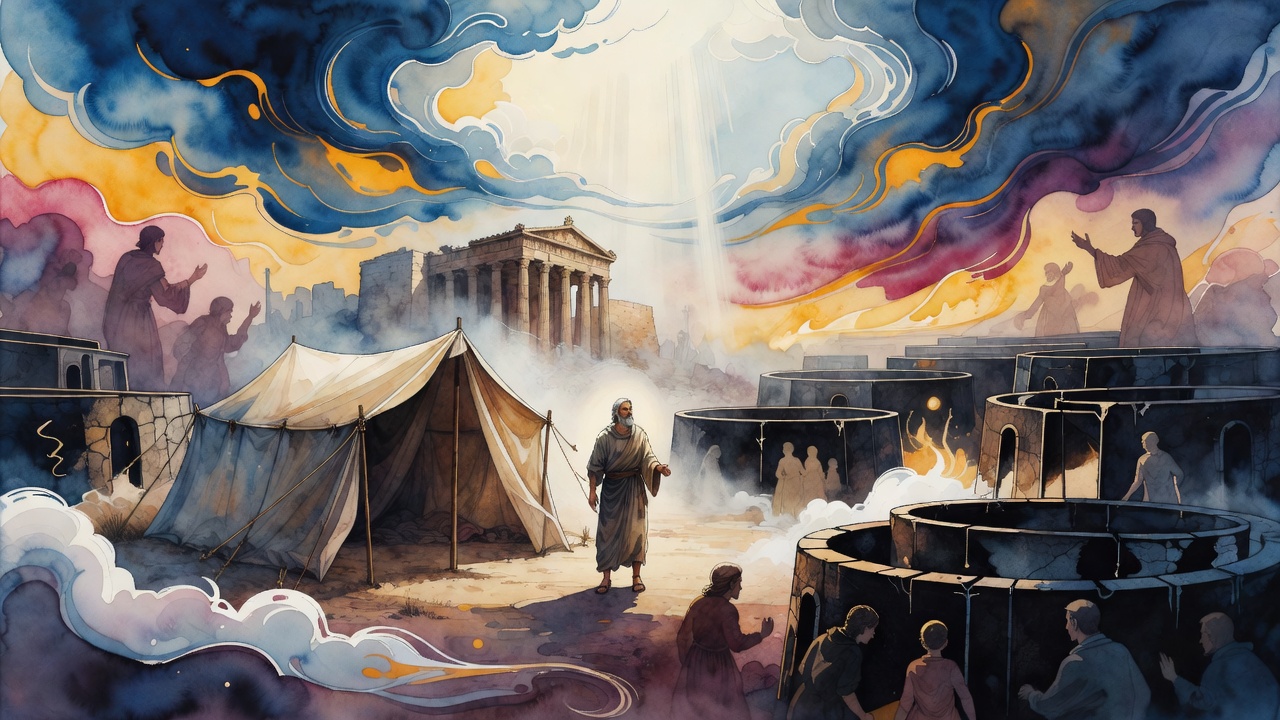
Shiloh stood between tent and Temple, open to the sky. Just outside Jerusalem, Molekh's seven enclosures took children the priests could not stop.

Curated by Arthur · Told by Maggid ·
Table of Contents
  1. The Sanctuary That Was Neither Tent nor Temple
  2. The Seven Enclosures That Swallowed Children
  3. What Disciplines Worship and What Corrupts It
  4. The Law That Governed the Open Sky

The Sanctuary That Was Neither Tent nor Temple

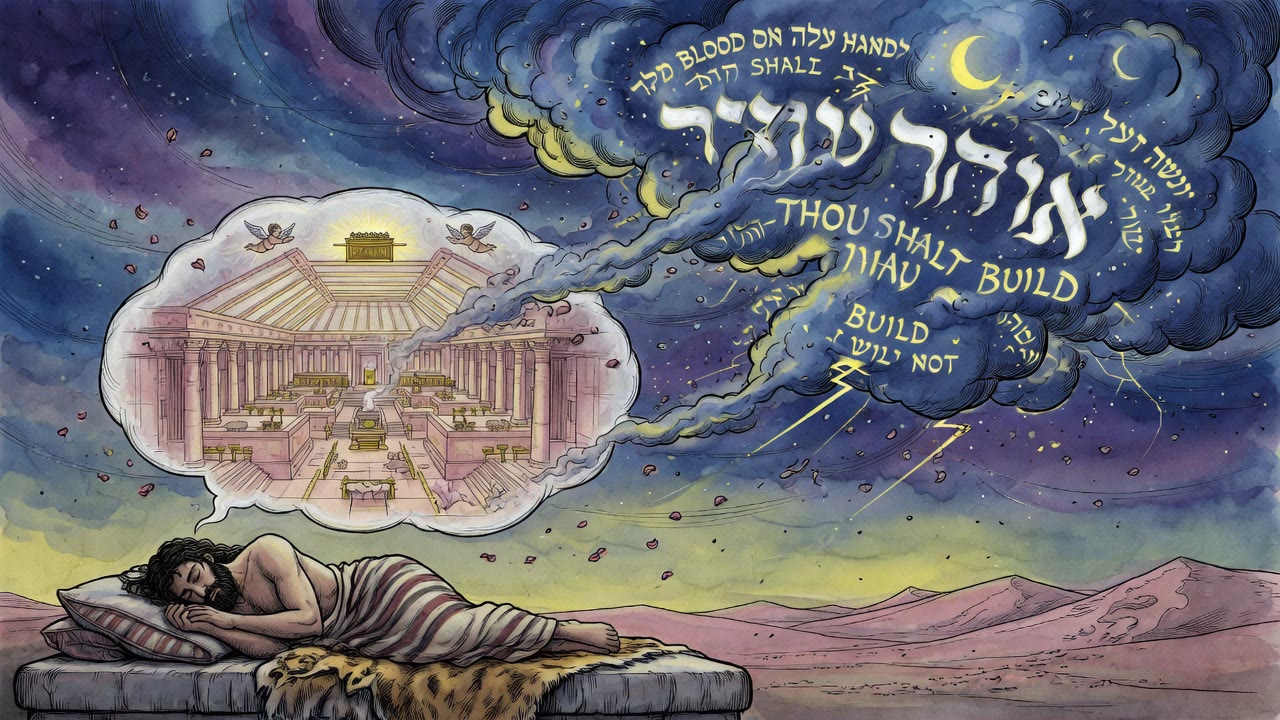
Hannah carried her weaned son to Shiloh and Scripture called the place the house of the Lord. That single word, house, made the rabbis stop. Another verse called Shiloh a tabernacle, a tent among the people. A house has walls. A tent has cloth. Which was it?

The answer was both, in the most literal and strange sense. Stone from below, curtains from above, and no roof. Shiloh was not the wilderness Tabernacle anymore, not the portable sanctuary that had traveled through the desert with the pillars of cloud and fire. But it was not Jerusalem either. It stood halfway between movement and permanence, exactly halfway between the road and the settled land. Stone walls that could not be folded up and carried, and curtains overhead that admitted the sky. Open to heaven in a way that the Temple in Jerusalem, with its cedar ceiling and its thick inner walls, would never be again.

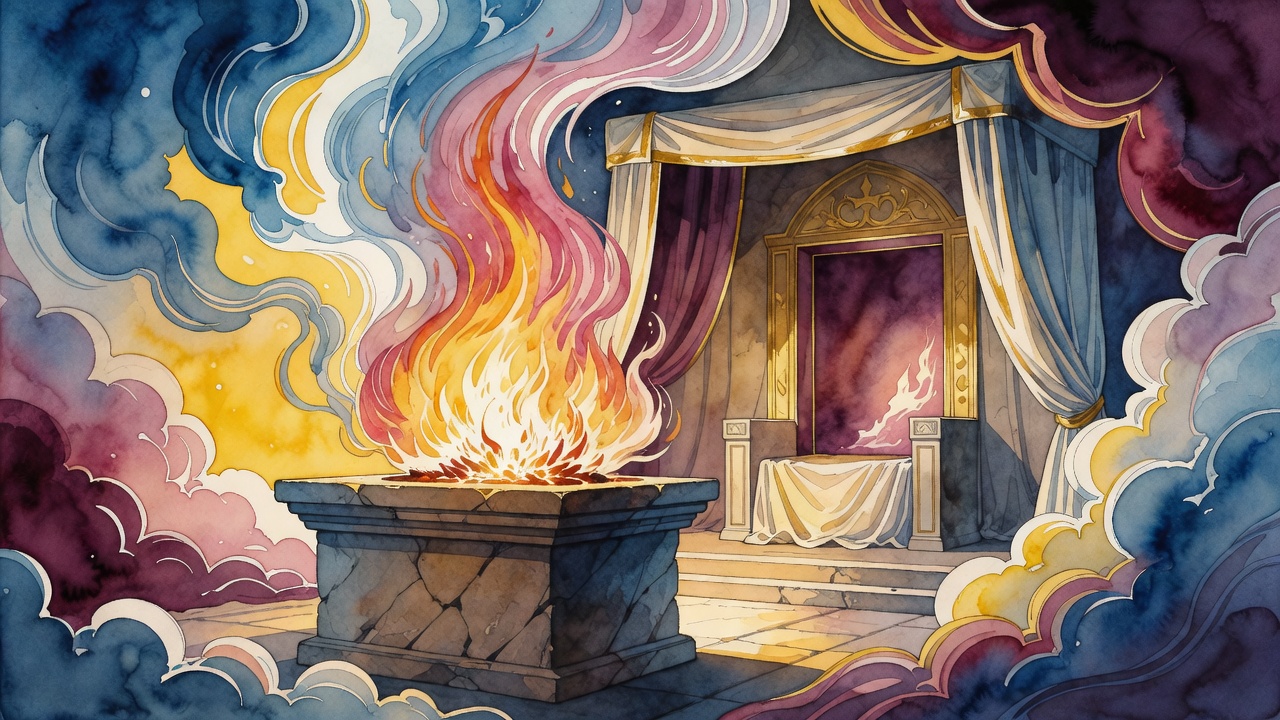
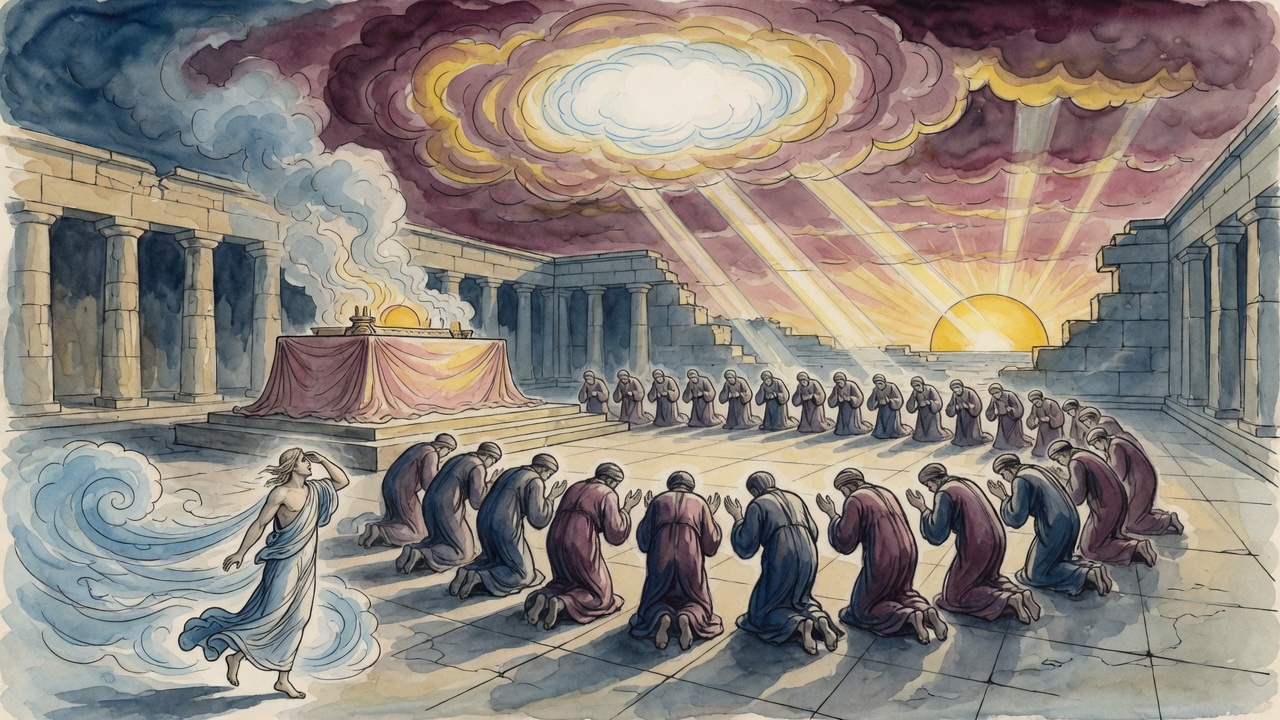
What happened inside that open sanctuary was disciplined. The priests were there. The calendar was kept. The offerings were brought in their proper order. The law of the altar governed what went up in smoke and what went to the priest's portion. The fire in Shiloh burned where it was supposed to burn.

The Seven Enclosures That Swallowed Children

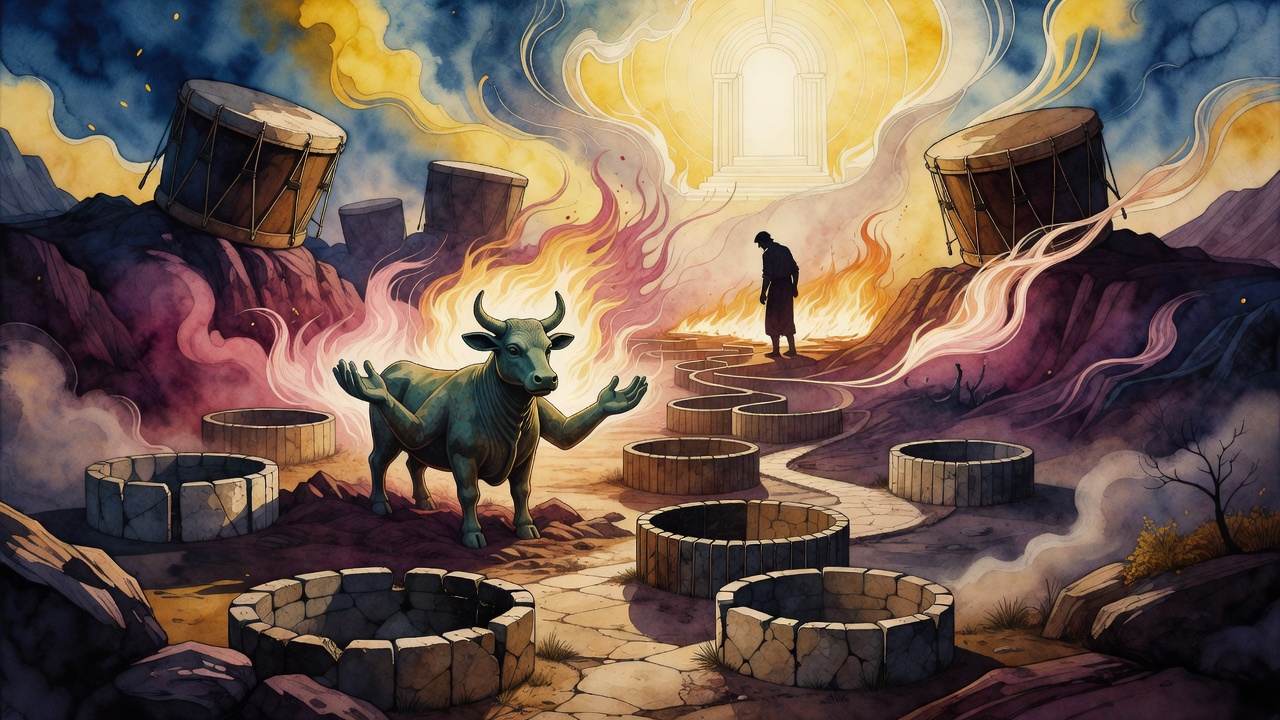
Outside Jerusalem, on the slope of the Valley of Hinnom, stood something built on a completely different logic. Molekh's sanctuary was not open to the sky. It was enclosed seven times over. Seven conclosures nested inside each other, each one requiring a different price to enter. The first enclosure: flour. The second: turtledoves. The third: a lamb. The fourth: a ram. The fifth: a calf. The sixth: an ox. The seventh: your child.

The figure at the center was made of bronze, its arms outstretched and angled downward, heated from below by the fire that never stopped burning. When a parent placed their child into the metal arms, drums and cymbals played loudly enough outside to drown the sound of what was happening within. The tradition remembered those drums as the specific purpose of the name Topheth, the fire-place: the toph, the drum, beat so that the father would not hear his son's voice and turn back.

The priests of Shiloh could offer a sheep. The priests of Shiloh could accept a firstborn calf at the altar and give back the calf's weight in blessing. What they could not do was compete, in this kind of horror, with a sanctuary designed so that each step inside made the next step harder to refuse.

What Disciplines Worship and What Corrupts It

The tradition set these two sanctuaries side by side not to draw an obvious lesson but to ask a harder question. Shiloh worked because it had a structure. Open sky above, stone walls below, priests who knew the law, an altar fire maintained by the calendar. The openness of the roof was not disorder. It was the particular form that the presence took at Shiloh, the half-finished holiness of a people not yet fully arrived in their land.

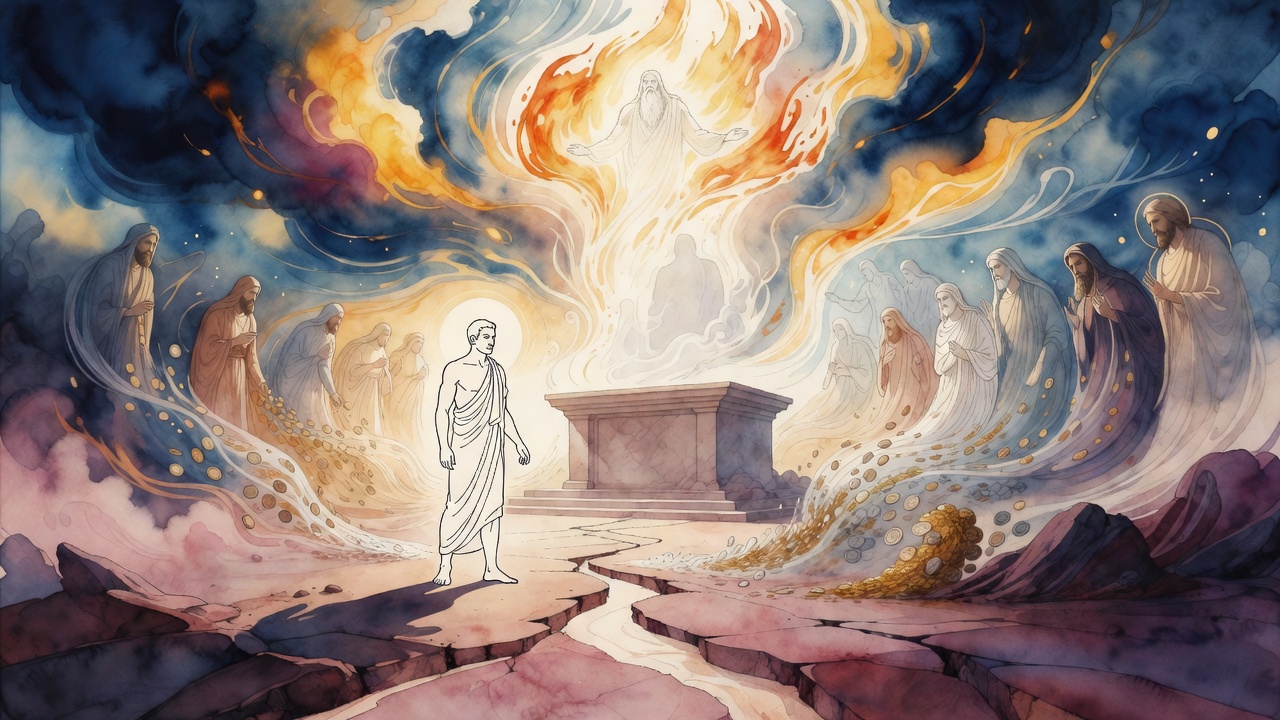
Molekh worked on different logic. It enclosed rather than opened. Each enclosure was a gate that cost something, and having paid for the last gate you had already paid too much to go back empty-handed. The drums outside were not for celebration. They were engineering. The structure of the place was designed to keep you moving forward even when the last thing in your arms was the one thing you should not give.

The question of where the flame was allowed to burn was not only a legal question about the altar. It was a question about what a sanctuary did to the person who entered it. Did it open them toward the law, or did it close them step by step until they could not see what they were carrying?

The Law That Governed the Open Sky

After Shiloh, the portable sanctuaries were permitted for a time, high places where individuals could bring their offerings while the central shrine was being established. After the Temple was built in Jerusalem, the high places were forbidden. The discipline tightened as the people settled. The fire moved from the open sky of Shiloh to the enclosed inner chambers of the Temple, where only priests could see it and only the one legitimate fire was permitted to burn.

Molekh's drums continued. The Valley of Hinnom continued. The prophets cried out against it through the whole period of the monarchy and into the exile. The distance between Shiloh's open roof and Molekh's seven enclosures was not only geography. It was the entire moral distance between a service that kept the human being oriented toward the sky and a service designed to walk them down, enclosure by enclosure, until they handed over everything.


← All myths

From the tradition

Sources

3 sources

The texts this telling draws on, in full. Open a card to read inline, or expand it for a wider, quieter read.

Yalkut Shimoni on Nach 79:1Yalkut Shimoni on Nach

"And she brought him to the house of the LORD at Shiloh" (1 Samuel 1:24). Our rabbis taught: before the Tabernacle was erected, the high places were permitted and the service was performed by the firstborn. Once the Tabernacle was erected, the high places were forbidden and the service was performed by the priests. The most holy offerings were eaten within the hangings, and the lesser holy offerings anywhere. When they came to Shiloh the high places were forbidden, and there was no roof there, but rather a house of stones below and curtains above; and that was the "resting place." The most holy offerings were eaten within the hangings, and the lesser holy offerings and the second tithe in any place where it could be seen. When they came to Jerusalem the high places were forbidden and were never again permitted, and that was the "inheritance." From where are these matters derived? Rabbi Hiyya bar Abba said in the name of Rabbi Yohanan: one verse says, "And she brought him to the house of the LORD at Shiloh" - implying it was a house. And another verse says, "And He forsook the tabernacle of Shiloh, the tent He had set among men" (Psalms 78:60) - implying it was a tent. How can both be? This teaches that there was no roof there, but rather a house of stones below and curtains above.

Full source
Sifrei Devarim 65:4Sifrei Devarim

Our journey starts in the book of Sifrei Devarim, which lays out some pretty specific rules about where and how sacrifices should be made. But here's the twist: it wasn’t always so clear-cut.

Before the mishkan, the portable sanctuary, landed in Shiloh, the bamoth were permitted. What are bamoth, you ask? They’re best understood as "high places," essentially local altars where people could offer sacrifices. Think of them as decentralized places of worship, scattered across the land. As the text says, “Before they came to Shiloh, the bamoth were permitted." Simple enough. But then everything changed. Once the mishkan, the Tabernacle, found its home in Shiloh, these local altars became forbidden. Centralization was the name of the game. It was all about unifying worship in one designated spot.

Just when you think you've got it figured out, the story takes another turn! The mishkan moved again, this time to Nov and Giveon. And guess what? The bamoth were permitted once more! It's like the rules kept changing along with the location of the central sanctuary.

Finally, we arrive at Jerusalem. This is where things get permanent. With the establishment of the Temple in Jerusalem, the bamoth were forbidden, “and not permitted again.” This time, the rule stuck. The Temple became the singular, exclusive place for sacrifice. The text emphasizes this permanence with the verse "You shall not do as all that we do here today.” It's like saying, "This is how we do things NOW, and it's not going back!"

So, what’s the reasoning behind all this back-and-forth?

Sifrei Devarim offers a clue: "Today, bamoth are forbidden to us. When we come to Eretz Yisrael, the Land of Israel, we do not move the mishkan and bamoth are permitted to us.” The idea seems to be about stability and permanence in the promised land. Once settled, the central sanctuary remains fixed, and local altars are no longer needed or allowed.

But here's another interesting perspective, offered by Rabbi Yehudah. He clarifies that even when bamoth were permitted, there was a distinction between individual and communal sacrifice. "I might think that the congregation sacrificed on a bamah; it is, therefore, written 'a man, all that is fitting in his eyes'. An individual sacrifices on a bamah, but not the congregation.” In other words, even during the periods when local altars were allowed, they were primarily for personal offerings, not large-scale communal rituals.

What does this all mean? It’s a reminder that religious practice isn't always static. It evolves with circumstances, reflecting the changing needs and aspirations of a community. The story of the bamoth shows us a dynamic relationship between centralized authority and local expression, between the universal and the individual, in the spiritual life of ancient Israel. It makes you wonder, doesn't it, how our own traditions have shifted and adapted over time, and what that says about us today?

Full source
Yalkut Shimoni on Nach 277:1Yalkut Shimoni on Nach

The abominable worship of Molekh, and the horrifying sacrifices made in the Valley of Ben-hinnom.

The Yalkut Shimoni on Nach 277, drawing on earlier rabbinic traditions, paints a disturbing picture. Even though Jerusalem was rife with idolatry, the place of Molekh was set apart, located outside the city in a remote location. Why? Perhaps to distance the act from the heart of the community, to create a space where such horrors could be compartmentalized, even tolerated by some.

So, what did this place look like? Imagine an idol, a statue fashioned with the face of a calf, its arms outstretched like someone waiting to receive a gift. But this was no ordinary offering. The statue, Around it were seven enclosures, each designated for a different type of sacrifice.

In Yalkut Shimoni, people would enter these enclosures based on the nature of their offering. A bird for the first, lambs for the second, sheep for the third, and so on, escalating to calves, cows, and bulls. But the true horror was reserved for the seventh enclosure. This was for those who would sacrifice their own child.

Can you imagine the scene? The parent, driven by desperation, misguided belief, or some other unimaginable pressure, brought their child to this horrific idol. The Yalkut Shimoni tells us they would even kiss the statue before... before what? Before placing their child in front of the Molekh. It is about this that the prophet Hoshea cries out, "those who sacrifice men kiss calves" (Hoshea 13:2).

Then, the fire inside the idol would be stoked until the outstretched hands glowed red hot. And then... then the unthinkable happened. The infant was placed into those burning hands, a sacrifice of the most precious kind.

But the horror didn't end there. To drown out the child's screams, drums were brought forth and beaten with deafening force. The purpose? To prevent the father from hearing the cries of his child, to stifle any flicker of humanity, any chance of a last-minute change of heart. The goal was to prevent the father's "innards become revolted" and change his mind.

The Yalkut Shimoni offers a chilling explanation for the valley's name, Ben-hinnom. It suggests it derived from the moaning [nohem] of the children consumed by the flames. A constant, agonizing soundtrack to this horrific ritual.

This account, while deeply disturbing, offers a stark reminder of the dangers of idolatry and the extremes to which misplaced faith can lead. The story serves as a powerful condemnation of practices that devalue human life, particularly the lives of the most vulnerable.

What are we to make of such a story? It's easy to dismiss it as a relic of a barbaric past, something unimaginable in our modern world. But perhaps its true power lies in its ability to shock us, to force us to confront the darkness that can reside within the human heart. It reminds us to be vigilant against ideologies that promote hatred, intolerance, and the sacrifice of human dignity for any cause, no matter how seemingly noble. And, ultimately, to cherish and protect the sanctity of every life.

Full source