5 min read

Elazar Sweated Sixty Cloths After a Hasty Verdict

Rabbi Elazar sentenced a man for an insult, then soaked sixty cloths a night until his pride dried into hard clarity.

Curated by Arthur · Told by Maggid ·
Table of Contents
  1. Vinegar Son of Wine
  2. Sixty Cloths and a Wife Who Left
  3. Keep Far From a False Matter
  4. The Plaintiff Speaks First
  5. What the Cloths Could Not Undo
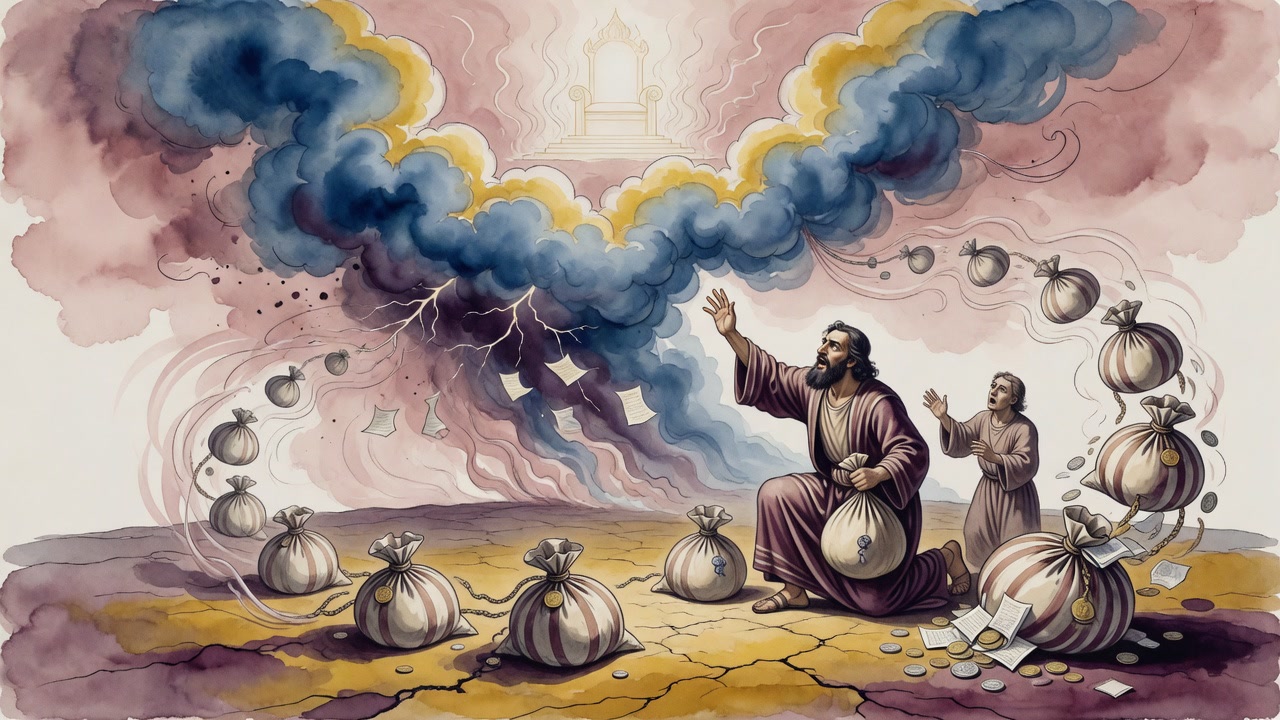
Elazar Sweated Sixty Cloths After a Hasty Verdict Click for full size

Vinegar Son of Wine

The insult landed like a slap. A man called Rabbi Elazar, son of Rabbi Shimon bar Yochai, "vinegar, son of wine," meaning a sour child of a sweet father. Elazar's face tightened. He held power in that hour, and he used it. He condemned the man to death for a petty wound to pride.

Later the truth arrived too late for anyone's comfort. The executed man had, unknown to the court that day, already committed a capital crime. Technical justice had fallen into place by accident. Elazar's conscience refused the accident. He knew what he had done. He had killed from insult, not from careful judgment. The street still held the echo of the nickname, and under it lay a body the law had taken for the wrong reason even if the ledger later balanced.

Sixty Cloths and a Wife Who Left

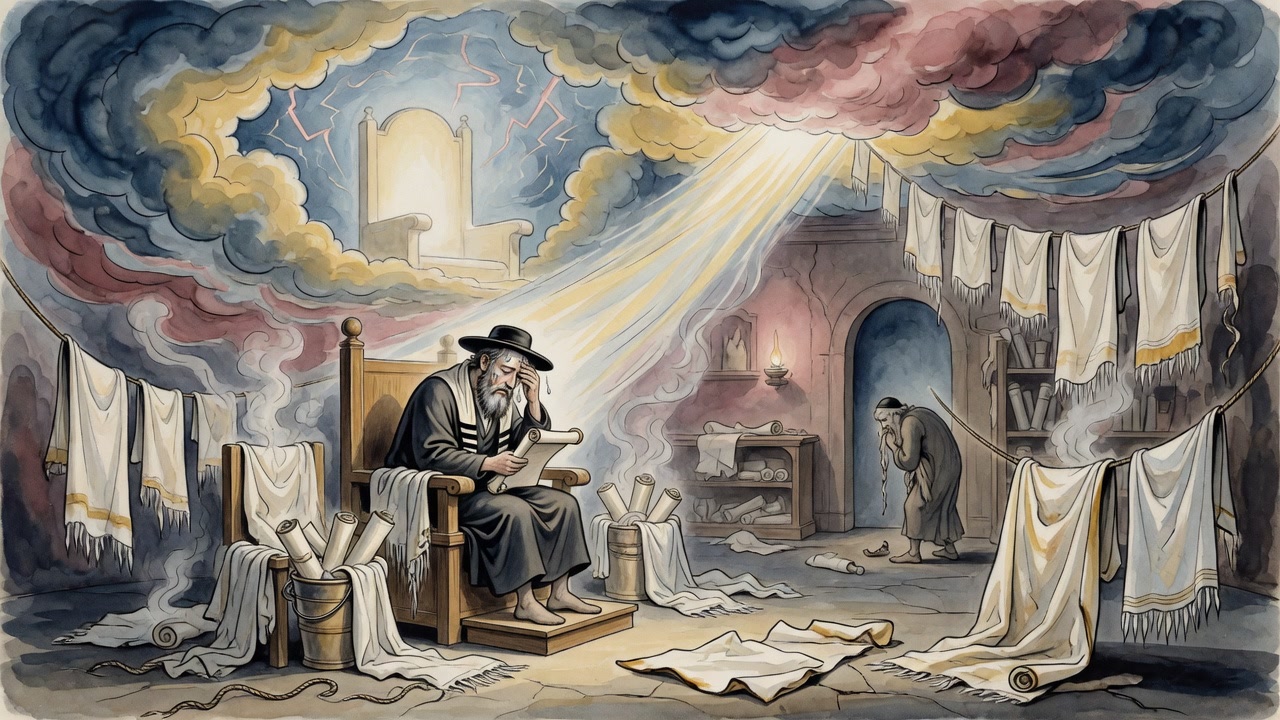
He built a penance out of sweat. Every night sixty woolen cloths were spread beneath him. Every morning they were found soaked through. His body thinned under the discipline. His wife spent her own inheritance nursing him, keeping him home from the study hall, afraid the debates would finish what the penance had begun. She wrung the cloths herself some mornings and counted them, as if counting could reverse a sentence.

Eventually she lost patience and left him to his fate. Sailors who believed they owed him their lives took over his care. One morning he rose after a night of perspiration and walked straight into the academy. Sixty doubtful legal questions waited for the room. Elazar decided every one against the unanimous opinion of his colleagues. Providence later vindicated each ruling. The man who had been wrong about a life became terribly right about sixty cases, as if suffering had scoured his mind clean of the easy consensus that once let pride speak first.

Keep Far From a False Matter

The Torah's court rules stand over that story like a cold lintel. "Keep far from a false matter." A judge may not hear one side before the other arrives. A litigant may not slip into chambers and make his case sweet while his opponent is still in the street. The whisper before the hearing is itself the falsehood the verse flees. Even a clever inference is not enough for blood. Two witnesses who swear a Sabbath crime, one naming figs and one naming grapes, do not lock into a single proven act.

"Do not slay the innocent and the righteous" is read as a guardrail for the man who still has grounds for acquittal. A capital court reopens a verdict only to acquit, never to convict. Money can be returned. A life cannot. Monetary cases alone may be reopened against a defendant, because coin has a path back to its owner and breath does not.

Elazar had not kept far enough. Pride had been his false witness. The cloths could not reverse the sentence. They could only force him to live inside its weight, night after night, until his body became a courtroom he could not leave.

The Plaintiff Speaks First

Sifrei Devarim insists that the plaintiff gets the first word. Order in speech is order in justice. Whoever arrives with a claim must open, so the defendant answers a known charge and not a fog of rumor. Elazar's case had inverted the room. The insult spoke first, and the law hurried after it like a servant after a master who should never have been obeyed.

The Mekhilta of Rabbi Shimon ben Yochai closes its trial architecture with a double edge. Even when human hands set the guilty free for lack of proof, God says He will not acquit the wicked, and then, through repentance, He does. Heaven keeps a court that human haste cannot mimic. Elazar's penance was a human attempt to sit in that higher court alone, on wool, without partners, without the second side of the case ever returning to speak.

What the Cloths Could Not Undo

Elazar returned to rulings with a clarity that made the academy stare. The paradox stays unsoftened. His wife was right that the body needed rest. He was wrong to let pride harden into a verdict. The sweat was neither pure heroism nor pure folly. It was a man trying to boil out a single irreversible minute until the salt of it stained every cloth he owned.

Courts after him still hear the insult before the evidence if they are not careful. A nickname can still walk into a chamber before the witnesses. The sixty cloths hang in the tradition as a warning soaked all the way through. Speak second. Hear both sides. Never let a slur write a death sentence. The academy may later prove you right sixty times. The one time you were wrong for pride will still stand outside the door, waiting.


← All myths
From the tradition

Sources

3 sources

The texts behind this telling. Some cards carry a translation of the source; others are our own retelling of it, and each card says which. Every card links out to the original.

Bava Metzia 83b-84aHebraic Literature (1901)

Retold in our words. Read the original at the link below.Project Gutenberg eBook #14368, Hebraic Literature · PD-US-pre-1929

Rabbi Elazar, the son of Rabbi Shimon bar Yochai, once condemned a man to death for a petty reason, the man had called him "Vinegar, son of Wine," a sly way of saying he was the bad son of a righteous father.

Only later did it emerge that the executed man had, unbeknownst to anyone, committed a capital crime. Technically, justice had fallen into place. But Rabbi Elazar's conscience did not accept the technicality. He knew he had killed a man out of wounded pride, not out of judgment.

Sixty Woolen Cloths a Night

He took on a peculiar penance. Every night, sixty woolen cloths were spread beneath him, and every morning they were found soaked with the sweat of his suffering. His body was prostrated by the self-inflicted affliction. His wife, using her own inheritance, tried to nurse him back to health, keeping him home from the study hall, worried the debates would finish what the penance had begun.

Eventually she lost patience and left him to his fate. He was then cared for by sailors who believed they owed him their lives, and at last he rose one morning after a night's perspiration and walked straight to the academy.

Sixty Rulings Against the Room

At that session, sixty doubtful legal questions came before the assembly. Rabbi Elazar decided every one of them against the unanimous opinion of his colleagues. In time, providence itself vindicated him, each ruling proved correct.

The story in Bava Metzia 83-85 holds two truths in tension. His wife was right that his body needed rest; he was wrong to let pride harden into a verdict. But his suffering had also scoured him into the kind of clarity that could see sixty cases past the consensus of the room. The Sages did not flatten the paradox. They preserved it, bloodied cloths and all.

Full source
Mekhilta DeRabbi Shimon Ben Yochai 23:7Mekhilta DeRabbi Shimon Ben Yochai

Translation of the source text.Mechilta de-Rabbi Simon b. Jochai, ed. D. Hoffmann, Frankfurt 1905 · Public Domain

"Keep far from a false matter" (Exodus 23:7). How do we know that a judge may not hear the words of one litigant before his fellow arrives? Scripture teaches, "Keep far from a false matter." How do we know that a litigant may not make his words pleasing to the judge before the other litigant arrives? Scripture teaches, "Keep far from a false matter."

"And do not slay the innocent and righteous." If not, what had entered My mind, to slay innocent and needy souls? Rather, this is one who has grounds for acquittal. From here we learn that we do not punish on the basis of inference. How do you say: if there are witnesses against him but no warning was given, or warning was given but no witnesses, he is exempt? If two testify that he profaned the Sabbath, one testifies that he gathered figs and one that he gathered grapes; one testifies he gathered black ones and one that he gathered white ones, could it be that since he profaned the Sabbath in any case, let him come and be executed? Scripture teaches, "do not slay the innocent and righteous."

"Do not slay the innocent and righteous", this teaches that we reopen the case to acquit him. Could it be that we reopen it to convict him? Scripture teaches, "do not slay the innocent and righteous." I know only of execution; how do I know of exile? It says "a matter" here and it says "a matter" elsewhere [a verbal analogy]: just as the "matter" stated elsewhere is exile, so the "matter" stated here is exile. I know only of exile; how do I know of flogging? It says "wicked" here and it says "wicked" elsewhere (Deuteronomy 25:2): just as the "wicked" stated elsewhere is flogging, so the "wicked" stated here is flogging. Could it be that even in monetary cases we do not reopen to convict? Scripture teaches, "the innocent and righteous do not slay", in a capital case you do not reopen against him, but in a monetary matter you may reopen. Could it be that just as your hand is clear, so is My hand clear? Scripture teaches, "for I will not acquit the wicked." "For I will not acquit the wicked", yet I do acquit him through repentance.

Full source
Sifrei Devarim 235:7Sifrei Devarim

Retold in our words. Read the original at the link below.Sifrei by Rabbi Shraga Silverstein · CC-BY

Sifrei Devarim turns to The Plaintiff Always Gets the First Word.

The text gets even more interesting. It specifies, "’This woman’..we are hereby taught that he states his case only while she is standing." Why standing? It could be about maintaining decorum, ensuring respect, or perhaps even emphasizing the gravity of the situation. The husband standing, presenting his accusations while his wife stands before him, waiting to hear them.

The text continues: "’This woman I took and I drew near to her’ and there are witnesses that she was adulterous in her father's house (i.e. during her betrothal)." This brings us to the heart of the matter: the accusation involves adultery that allegedly occurred while the woman was still betrothed, during the period known as erusin.

Why is this detail about where the alleged adultery happened so important? Well, it hinges on interpreting other verses, specifically from (Leviticus 20:10), which states, "If a man commits adultery with another man's wife…" The Sifrei asks: What if witnesses come forward after the marriage, claiming the woman was unfaithful before the marriage, while she was still in her father's house? Where does the law stand then?

The text explains that without further clarification, we might assume the punishment would be the same regardless of where the adultery occurred. We might think she'd be executed "at the gate of that city," as described elsewhere in Deuteronomy (22:24). But, the passage in Sifrei comes to clarify and exclude one instance. If witnesses testify in the house of her husband that she committed adultery in the house of her father, then the execution would instead take place at "the door of her father's house" (Deuteronomy 21).

It's a subtle distinction, but it highlights the meticulousness of Jewish law in ensuring justice and applying the correct consequences based on the specific circumstances. It all hinges on the phrase, "If a man take a wife." This phrase is key, because it is delineating the circumstances of the case and the location of the adulterous act.

It's more than just a dry legal ruling. It's a reminder that justice demands careful consideration of all the facts, and that even seemingly minor details can have significant implications. And above all, it reminds us of the importance of giving everyone their say.

Full source