Translation of the source text.Tanna debei Eliyahu Zuta, Warsaw 1880 · Public Domain
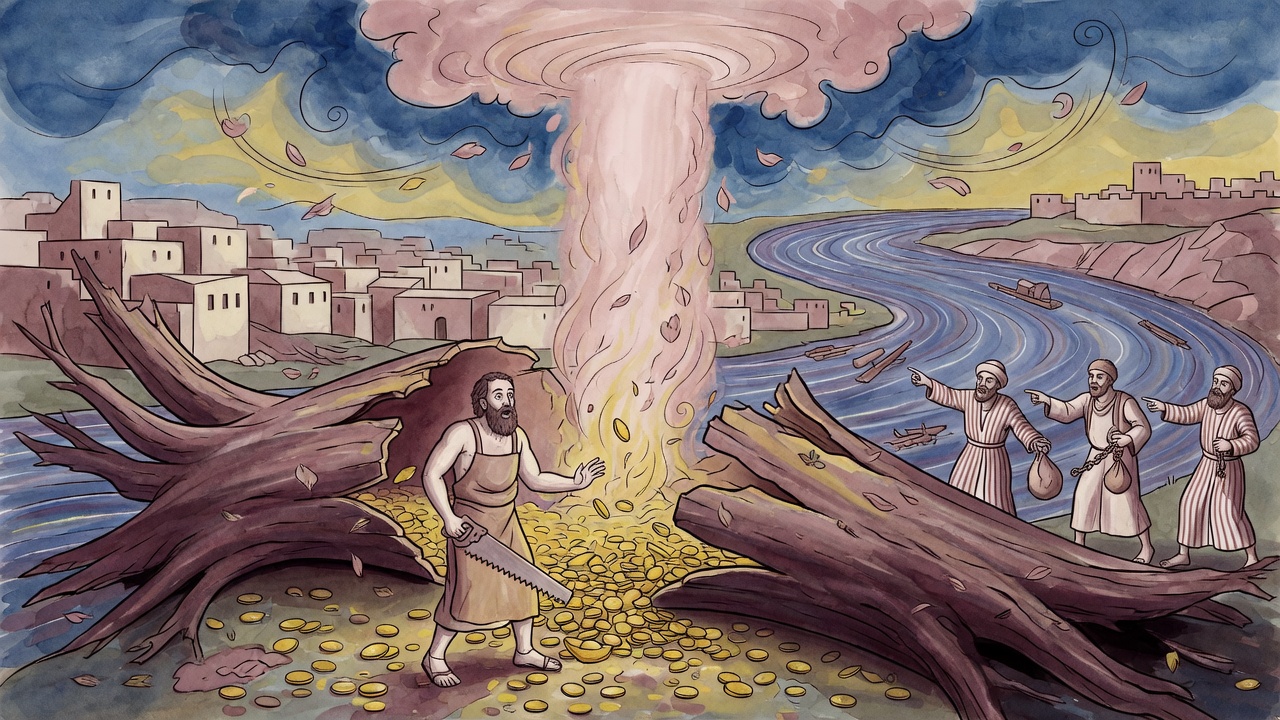
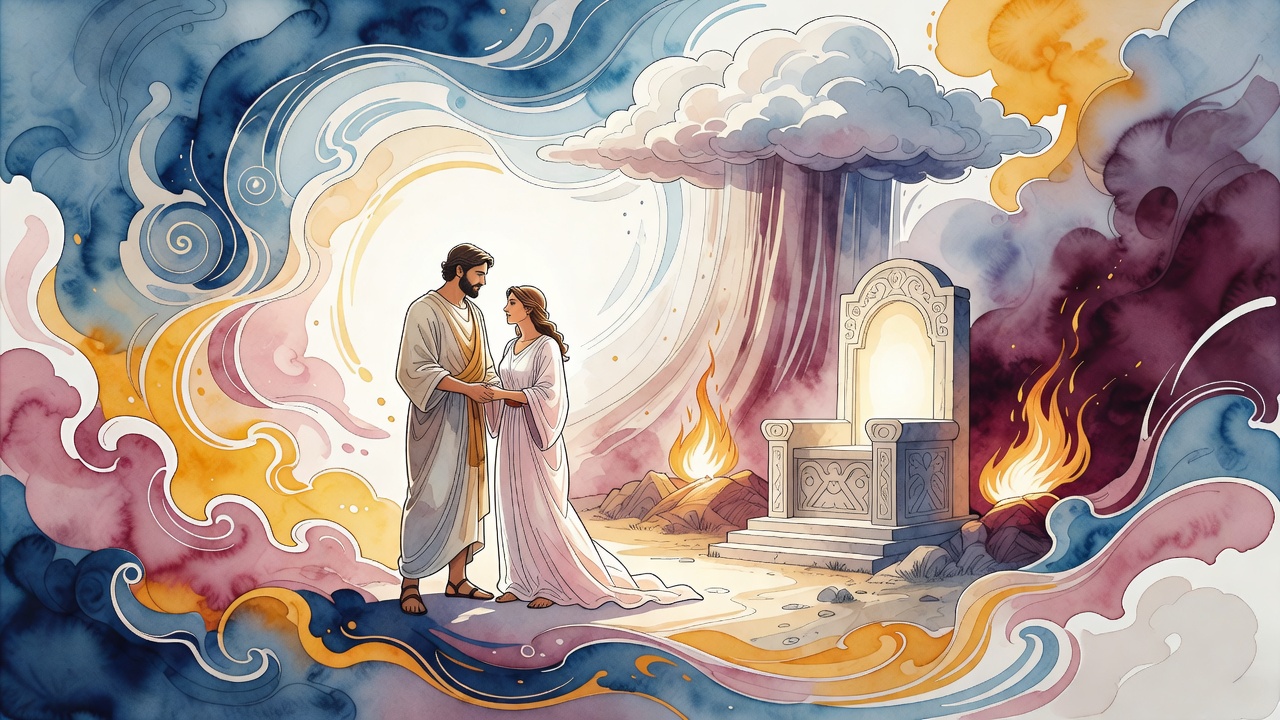
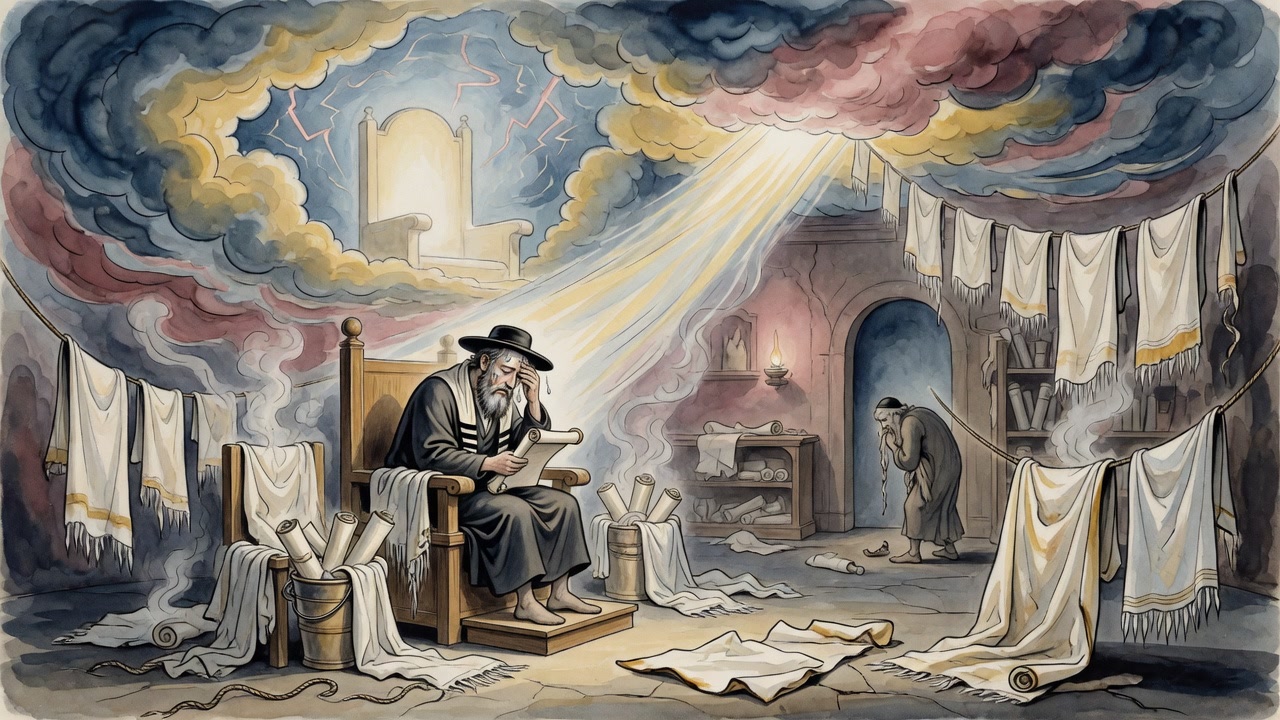
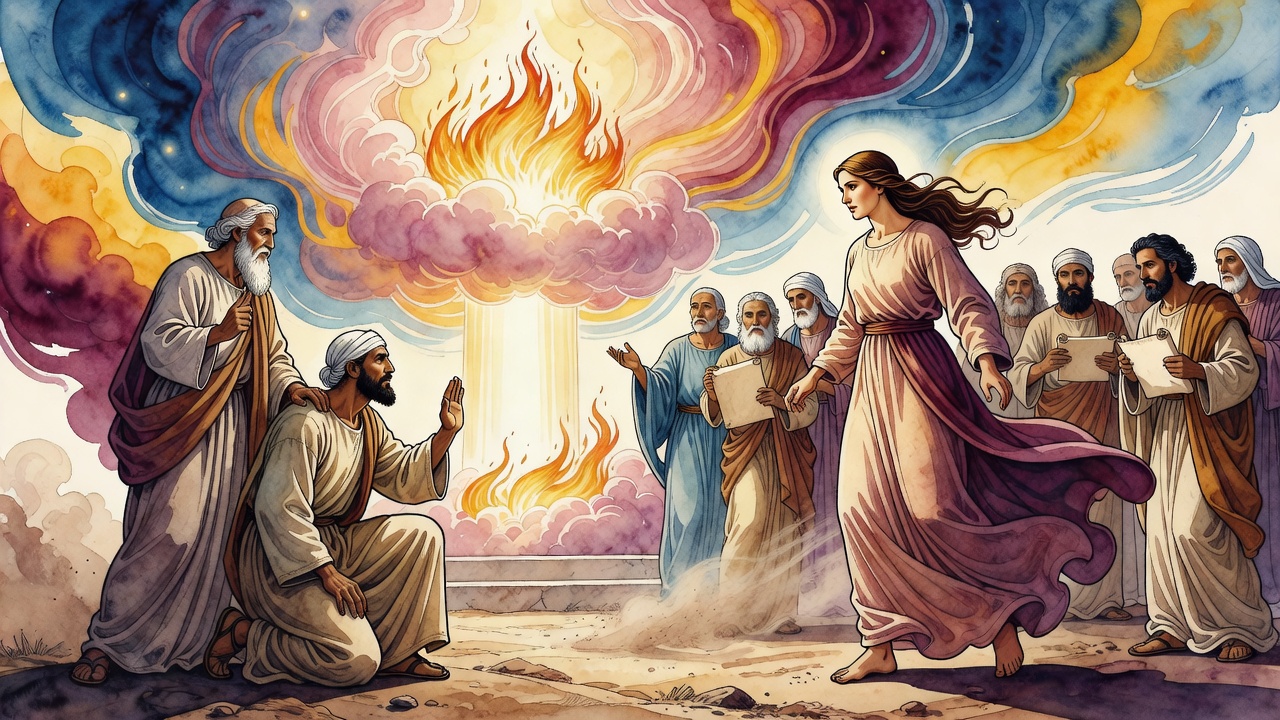
The Holy One, blessed be He, created everything in His world except the trait of falsehood and the trait of injustice, which the Holy One, blessed be He, did not create and did not make, as it is said (Deuteronomy 32:4), "The Rock, His work is perfect," and so forth; and it says (Zephaniah 3:5), "The Lord is righteous in her midst, He does no injustice; morning by morning He brings His judgment to light, it does not fail; but the unjust knows no shame"; and it says (Job 34:11), "Far be it from God to do wickedness," and so forth; and it says (ibid.), "For the work of a man He repays him," and so forth. I call heaven and earth to witness upon me that men are not gathered to death, and no creature comes to distress, except through eating and drinking and rejoicing, that a man eats and drinks and rejoices with his wife and his children and with the members of his household until he departs to his eternal home. And fruits and produce do not come to rotting except through the ways of men; and men do not come to shame except through their ways; and the eyes of men do not grow dim in the midst of their days except through their ways; and men are not defiled by plague-spots except through their ways; and women are not defiled by a flux except through their ways, as it is said (Isaiah 42:5), "Thus says God the Lord, He who created the heavens and stretched them out," and so forth. Go forth and learn from the way of the world: does a man build a house except in order to bring into it good fruits, to bring into it fine vessels, and to kindle in it the fire and to light in it lamps? So too men, through their ways are they judged, and they are judged because they transgressed the words of Torah and proper conduct, in order to save them from the day to come, as it is said (Hosea 7:13), "Woe to them, for they have strayed from Me." (In the Yalkut the reading is "And not only that, but...") In three things let a man look every day: at the hour he enters the privy, they say to him, "See, your way is like the way of a beast"; and at the hour they let blood from him, they say, "See that you are flesh and blood"; and at the hour he stands over the dead, they say to him, "See where you are going." And still you do not repent; rather you sit and multiply superfluous talk, as it is said (Proverbs 19:3), "The folly of a man perverts his way, and his heart frets against the Lord." And he speaks falsely, and he transgresses what is written in the Torah (Exodus 23:7), "Keep far from a false matter," and so forth; and it says (Zechariah 8:17), "And let none of you devise evil in your hearts against his neighbor." And how should he act? Rather: if a man makes himself righteous and speaks truth, they hand over to him an angel who conducts himself with him in the way of the righteous and speaks truth; and if a man makes himself wicked and denies and speaks falsehood, they hand over to him an angel who conducts himself with him in the way of the wicked, and denies and lies; and if a man makes himself one who conducts himself in the average measure, they hand over to him an angel who conducts himself with him in the way of the average measure; and if a man makes himself pious to bear everything, they hand over to him an angel who conducts himself with him in the way of the pious and bears everything, as it is said (Jeremiah 17:10), "I the Lord search the heart, try the kidneys," and so forth. And through David it is said (Psalms 18:26-28), "With the pious You show Yourself pious, with the perfect man You show Yourself perfect; with the pure You show Yourself pure, and with the crooked You show Yourself perverse; for You save an afflicted people, but haughty eyes You bring low." What is the meaning of "for You save an afflicted people"? These are Israel, for whom poverty is becoming. "But haughty eyes You bring low", these are the idolaters who deny the Torah. And it says (Lamentations 3:38), "Out of the mouth of the Most High do not the evil and the good come?" Is it possible to say so? But do not good traits go forth from before Him? Rather, say thus: good does not go forth to the doers of evil, and evil does not go forth to the doers of good; rather, good toward good and evil toward evil. And from where for you, know that it is so. For there are four traits in the way of the world: there are those who marry a woman for the sake of harlotry, and there are those who marry a woman for the sake of greatness, and there are those who marry a woman for the sake of money, and there are those who marry a woman for the sake of Heaven. And he who marries a woman for the sake of harlotry, in the end there goes forth from him a stubborn and rebellious son; and he who marries a woman for the sake of Heaven, in the end there are born to him sons who save Israel in a time of distress and who increase Torah and commandments in Israel; and he who marries a woman for the sake of money, in the end they make him dependent on others; he who marries a woman for the sake of greatness, in the end someone from that family arises against him who diminishes his seed after him. And from where do we know of one who marries a woman for the sake of harlotry that they bring forth from him a stubborn and rebellious son? As it is said (Deuteronomy 21:11), "And you see among the captives a woman of beautiful form, and you desire her and would take her for yourself as a wife", in the end people murmur against him, and because people murmur against him he goes and marries another woman, for thus it is said afterward, "If a man has two wives," and it is said afterward, "If a man has a stubborn and rebellious son." And from where do we know of one who marries a woman for the sake of money that in the end they make him dependent on others? For so we found regarding the sons of Eli the priest, who married women improperly for them, and in the end they became dependent on others, as it is said (I Samuel 2:36), "And it shall come to pass that everyone who is left in your house shall come to bow down to him for a piece of silver and a loaf of bread, and shall say, Attach me, I pray, to one of the priestly offices, that I may eat a morsel of bread." And from where do we know of one who marries a woman for the sake of greatness that in the end someone from that family arises against him and they diminish his seed after him, so that he does not inherit this world? For so we found regarding Jehoshaphat king of Judah, who went and made a marriage alliance with the king of Israel because he saw that he had seventy sons, as it is said (I Kings 22:45), "And Jehoshaphat made peace with the king of Israel." And from where do we know that someone arose from that family and was diminishing his seed after him? As it is said (II Kings 11:1), "And Athaliah the mother of Ahaziah saw that her son was dead, and she arose and destroyed all the royal seed; and Jehosheba the daughter of King Joram, sister of Ahaziah, took Joash the son of Ahaziah and stole him away," and so forth, "and he was not put to death; and he was with her hidden in the house of the Lord six years," and so forth. And were it not for the covenant that the Holy One, blessed be He, made with David, then Joash too would have been killed, and the kingship of the house of David would have been nullified entirely. And what further? Both He who brings a woman for the sake of harlotry, and he who marries a woman for the sake of money, and he who marries a woman for the sake of greatness, go forth and inquire and see what is said concerning that matter. A parable: of two men who are of one tribe and of one neighborhood and of one family, one poor and one rich; and it was fitting and proper for that rich man that he himself marry, or give to his son, the daughter of the poor man who is of his tribe and of his family and his neighbor, and to bring him near and to lend to him. But if he did not do so, but went and attached himself to one who is not fitting for him, of him it is said (Malachi 2:10), "Have we not all one father? Has not one God created us? Why do we deal treacherously each man against his brother, profaning the covenant of our fathers? Judah has dealt treacherously, and an abomination has been committed in Israel and in Jerusalem; for Judah has profaned the sanctuary of the Lord which He loves, and has married the daughter of a foreign god." Therefore nothing remained of them, because they forsook the seed of Israel whom the Holy One, blessed be He, chose out of the seventy tongues, and went and attached themselves to idolaters who are not fitting for them; therefore it is said afterward (ibid.), "May the Lord cut off, to the man who does this, him who is awake and him who answers from the tents of Jacob, and him who offers an offering to the Lord of Hosts", that he shall have none awake among the sages, nor answering among the disciples, nor one who asks laws as is the manner in the study house, nor one who answers a law among the disciples, nor a priest who offers an offering to the Lord. And from where do we know that one who marries a woman for the sake of Heaven has born to him sons who save Israel in a time of distress and who increase Torah and commandments in Israel? Go forth and learn from Amram, who married a woman for the sake of Heaven, and there went forth from him Moses and Aaron, who used to save Israel and used to increase Torah and commandments in Israel. Go forth and learn from Boaz son of Salmon, who married a woman for the sake of Heaven, and there went forth from him David and Solomon his son, who used to save Israel and used to increase Torah and commandments in Israel. And of them, and of such as them, and of those similar to them, and of one who does as they did, Scripture says (Isaiah 66:22), "For as the new heavens and the new earth which I am making stand before Me, says the Lord, so shall your seed and your name stand."

 Click for full size