6 min read

Job Swore His Own Furrows Would Weep If He Had Cheated Them

Boils from his scalp to his soles, and Job was still saying my land. The men listening heard a rich man who had learned nothing from losing it all.

Curated by Arthur · Told by Maggid ·
Table of Contents
  1. Try the World On and See If It Fits
  2. What the Furrows Would Have Said
  3. Ten Sons and the Rightful Tenth
  4. Spat On Outside the Furnace
  5. If I Am Lying, Let My Words End

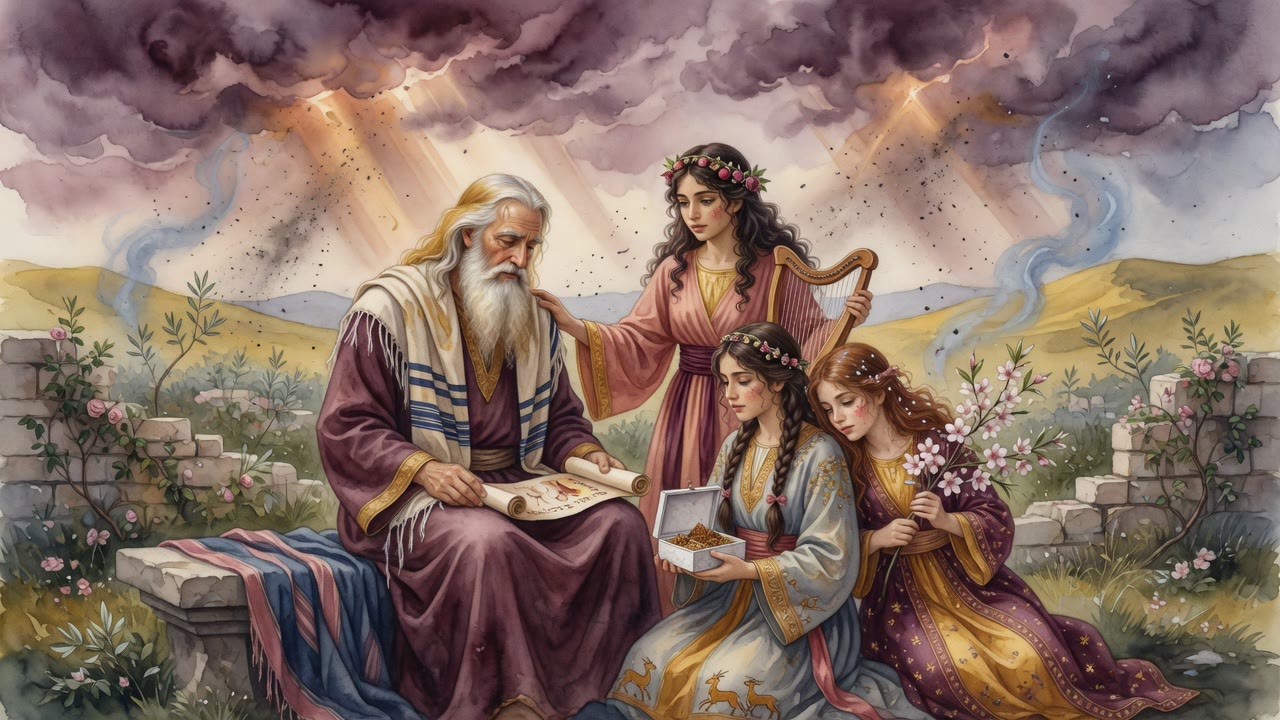
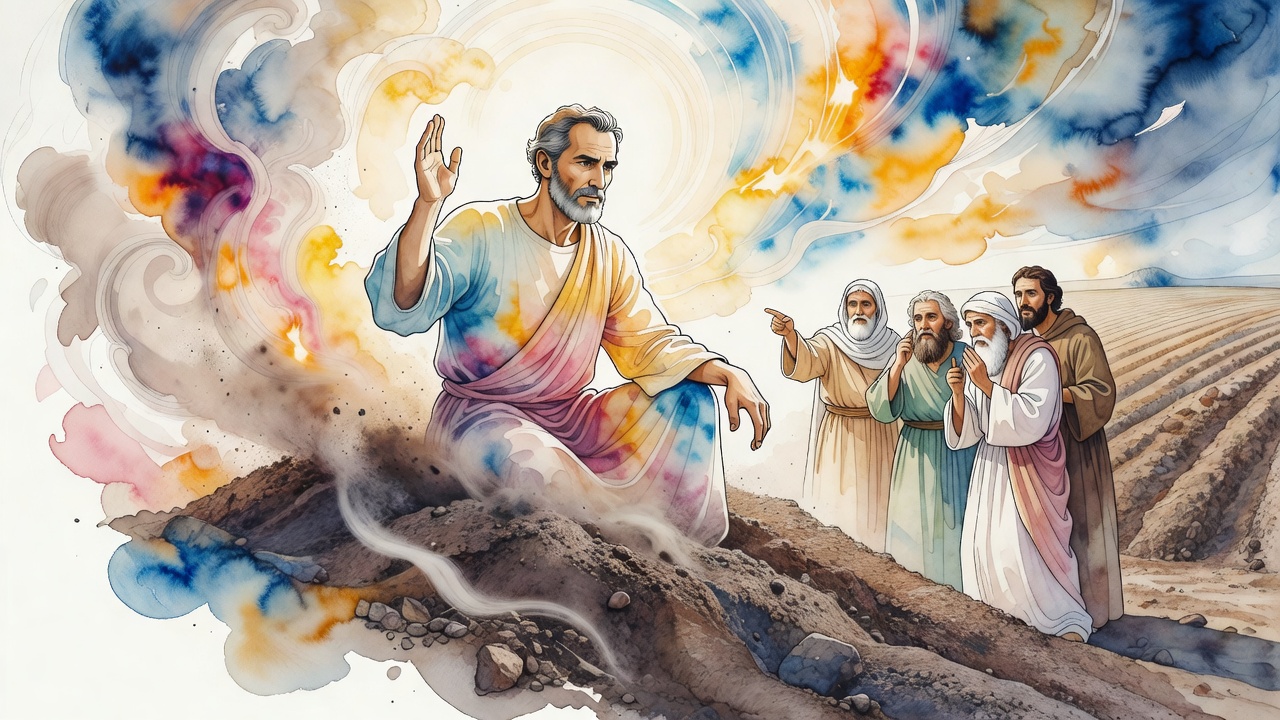
Job sat in the ashes with his skin broken open from the soles of his feet to the crown of his head, and he said "my land."
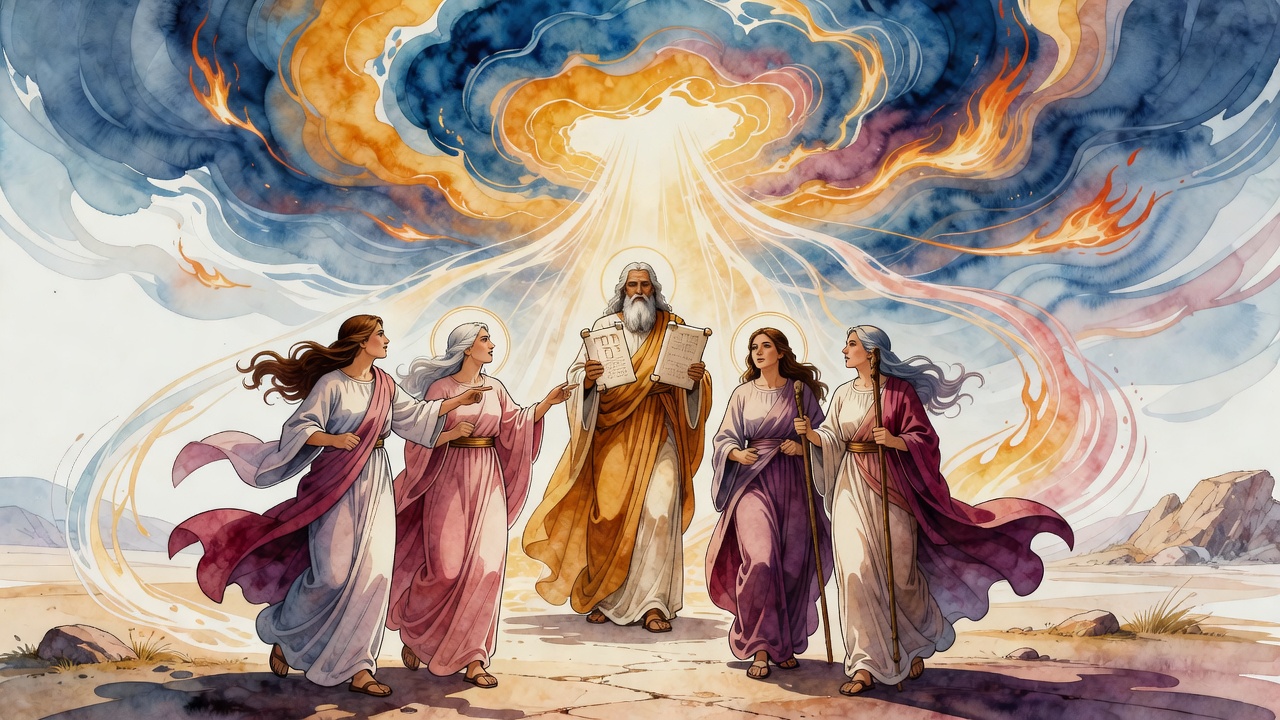
Job Swore His Own Furrows Would Weep If He Had Cheated Them Click for full size

The men around him heard the wrong thing in it. What claim does a man have on the earth? Three cubits of dirt at the end, enough to lie down in, and not a handful more. The ground belongs to God, who fills heaven and earth. And this one, scraping himself with a piece of broken pot, still calling fields by his own name.

Try the World On and See If It Fits

Rabbi Chiyya put the challenge as a scene in a market.

A man is selling a cloak. A stranger walks up and says the cloak is his. Fine, says the seller. Put it on. If it fits you, take it.

So wrap creation around your shoulders, Job. Get an arm into the sky. If the world hangs on you properly, go on calling the furrows yours.

What the Furrows Would Have Said

He answered from inside the ash heap, and the answer had nothing to do with deeds of ownership.

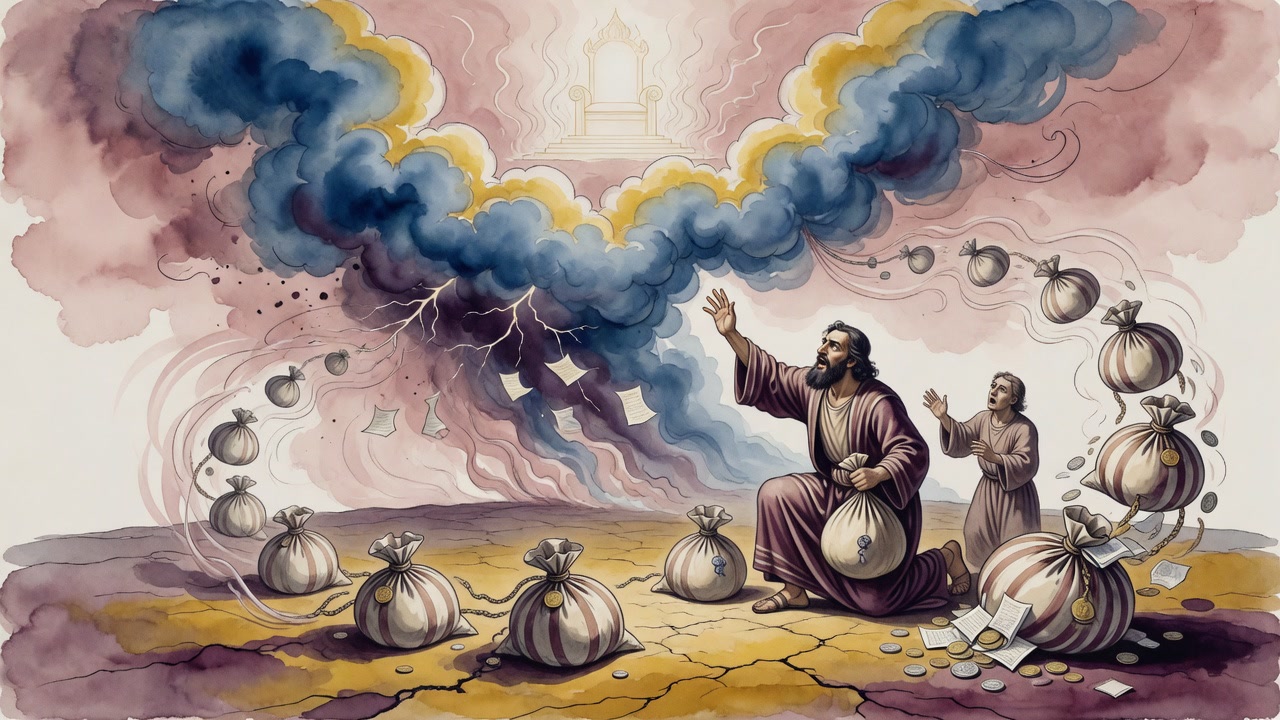
"If my land cries out against me, and its furrows weep together" (Job 31:38). He was not swearing that he owned it. He was swearing on how he had farmed it, and every clause named a way a field learns to scream.

If my land cries out against me: if I held back the tithe. If its furrows weep together: if I sowed it with forbidden mixtures. If I ate its strength without money: if I never redeemed the second tithe. If I crushed the life of its owners: if I kept back the share that belongs to the poor, who are the ones the ground is finally for.

His friends had spent days guessing at a hidden sin. He handed them a witness nobody can bribe. A field that has been cheated learns to cry out, and Job swore his had stayed quiet through every year he still had cattle and walls. Dig up any row I ever planted and ask it.

Ten Sons and the Rightful Tenth

The practice he was swearing on was older than the law that commanded it.

Rabbi Chuna traced the line back. Abraham lifted his hand and refused the spoils of the four kings, and the word for that lifting is the word the Torah would later use for setting aside the priest's portion. Isaac measured out a harvest of a hundredfold, which no sensible farmer does, since blessing does not settle on what has been counted. He measured it because he meant to tithe it, and the blessing came after. Jacob stood at Bethel with a stone under his head and said, "Of all You give me, I will surely tithe to You" (Genesis 28:22).

A Samaritan came at Rabbi Meir with that vow. Your truthful Jacob tithed one tribe out of twelve and never touched the rest. Where is the honest tenth?

Rabbi Meir counted it out for him. Jacob raised Ephraim and Manasseh to full standing, so the sons came to fourteen. Four of the fourteen were firstborn to the four mothers, and a firstborn is already holy, and you cannot tithe what has already been set apart. Fourteen less four leaves ten. Levi was the tenth.

The man had nothing left to say except "happy is your nation."

Rabbi Nechemiah did the other arithmetic. A landlord rents out a field and takes half the crop, or a third, or a quarter, and everyone calls that ordinary business. God sends the wind that moves the clouds, and the clouds, and the rain, and the dew, and the fruit that swells on the branch, and asks for one part in ten.

Spat On Outside the Furnace

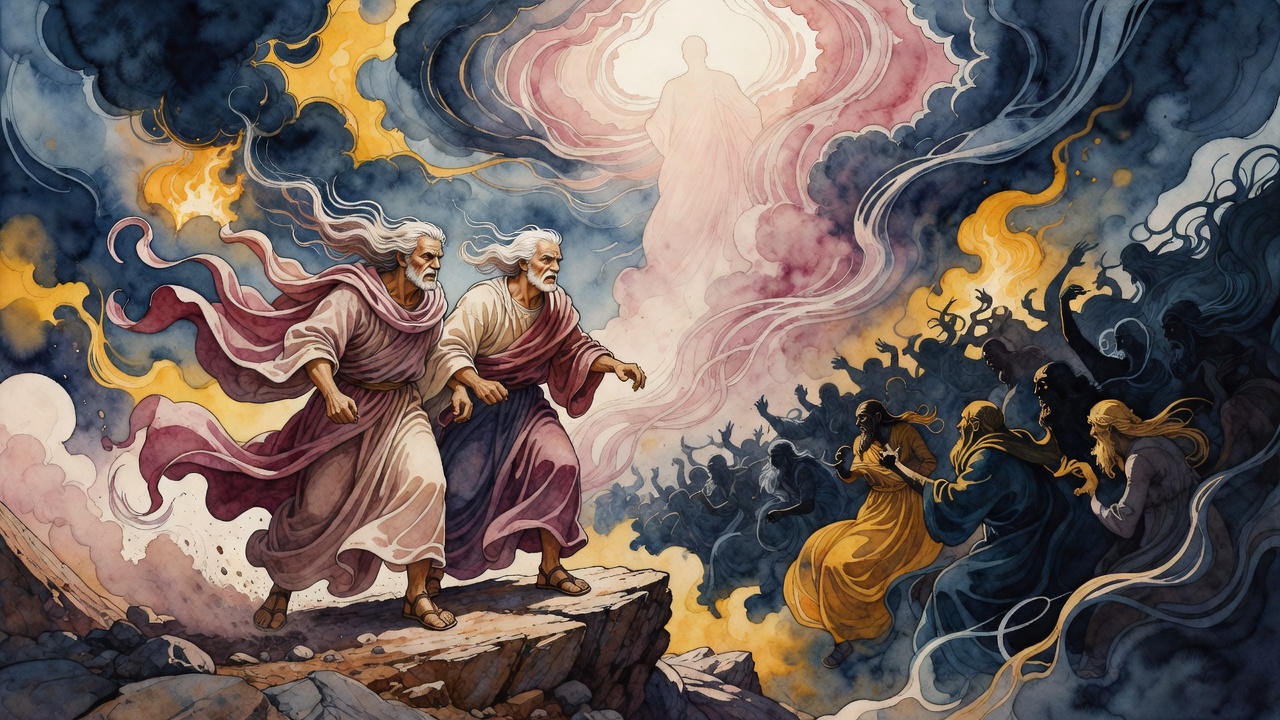
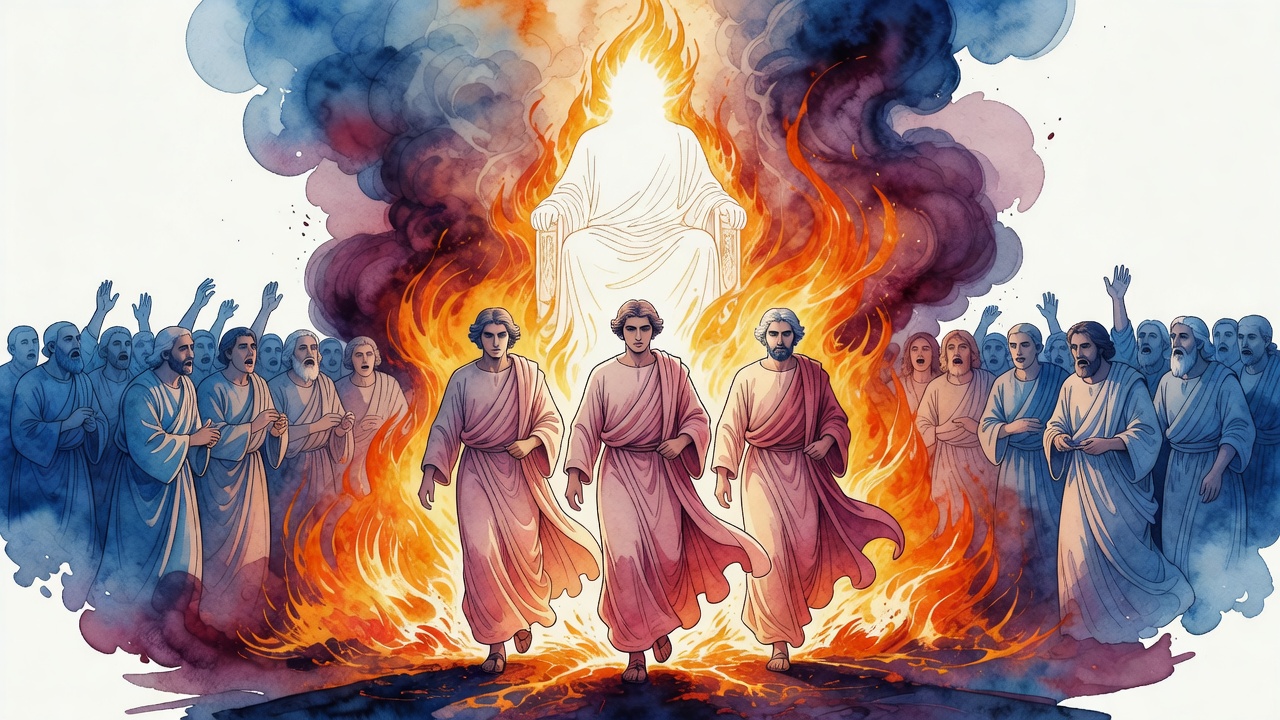
Hananiah, Mishael, and Azariah walked out of Nebuchadnezzar's furnace with their clothes unburned, and the crowd that had gathered to watch them die closed in and spat on them.

They kept spitting until it lay on the three of them in clots. You serve a God who let His own House burn, they said. Look at Him. Now look at yourselves.

The three lifted their faces and gave the answer Daniel had given: "To You, O Lord, belongs righteousness, and to us shame of face" (Daniel 9:7).

Rabbi Yudah had already stacked up the evidence for that sentence. Israel carried an idol across the seabed on the very day the water stood up in two walls, and the water let them through anyway. On the morning the manna first fell, they took God's own bread and set it in front of other gods, and the bread fell again the next morning.

If I Am Lying, Let My Words End

"The words of Job are ended" (Job 31:40).

Except that they are not. He keeps talking after that line, and the sages refused to read it as a stray editorial note. They read it as the last clause of the oath. If I am lying about the land, let my speech stop here. Take away the right to stand in front of You and say I have cleared the holy portion out of my house.

His friends had been trying to shut him up with theology for weeks. He offered a harder silence than any of theirs, and he offered it against himself.

Then he sat back down in the ashes and waited to hear whether the ground would say anything.


← All myths
From the tradition

Sources

3 sources

The texts behind this telling. Some cards carry a translation of the source; others are our own retelling of it, and each card says which. Every card links out to the original.

Pesikta DeRav Kahana 10:7Pesikta de-Rav Kahana

Translation of the source text.Pesikta de Rav Kahana according to an Oxford manuscript, Dov Mandelbaum ed., N.Y. 1987 · CC-BY

[7] "If my land cries out against me, and its furrows weep together" (Job 31:38). They said to Job: do you have anything upon it [the earth] except three cubits at the hour of your death, that you say, "If my land cries out against me" (ibid.), as though it were yours? Rabbi Chiyya the Great said: it is like a man who was selling a cloak in the market, and another passed by and saw it and said, "It is mine." He said to him, "Wrap yourself in it; if it fits you, it is yours, and if not, it is not yours." So the Holy One said to Job: am I not the One of whom it is written, "Do I not fill the heavens and the earth?" (Jeremiah 23:24), and you say, "If my land cries out against me" (Job 31:38), as though it were yours? And Rabbi Shimon ben Chalafta said: it is like a man who was selling a maidservant in the market, and another passed by and saw her and said, "She is mine." He said to him, "Rebuke her; if she obeys you, she is yours, and if not, she is not yours." So the Holy One said to Job: am I not the One of whom it is written, "He looks at the earth and it trembles, He touches the mountains and they smoke" (Psalms 104:32), and you say, "If my land cries out against me" (Job 31:38), as though it were yours? In that hour Job said before the Holy One, blessed be He: Master of the worlds, I did not speak before You thus; rather in this manner I spoke before You, "If my land cries out against me" (Job 31:38), if I did not bring out its tithes as is fitting. "And its furrows weep together" (ibid.), if I sowed it with forbidden mixtures. "If I ate its strength without money" (Job 31:39), this is the second tithe, of which it is written, "and you shall turn it into money and bind up" and so forth (Deuteronomy 14:25). "And caused the life of its owners to expire" (Job 31:39), this is the tithe of the poor. "And if I did not do so, let thorns grow instead of wheat, and foul weeds instead of barley; the words of Job are ended" (Job 31:40). Rabbi Hoshaya taught: the Torah has taught you proper conduct, that a field which brings up thorns is good to sow with wheat, and a field which brings up foul weeds is good to sow with barley. And what is the reason? "Instead of wheat let thorns come forth" (ibid.). Until now he goes on prophesying many prophecies, yet you say, "the words of Job are ended" (ibid.)? Rather Job said: if I did not do so, let my words be ended and let me have no opening of the mouth to say before You, "I have removed the holy thing from the house" (Deuteronomy 26:13). Therefore Moses warns Israel and says to them, "You shall surely tithe" (Deuteronomy 14:22).

Full source
Pesikta DeRav Kahana 10:8Pesikta de-Rav Kahana

Translation of the source text.Pesikta de Rav Kahana according to an Oxford manuscript, Dov Mandelbaum ed., N.Y. 1987 · CC-BY

"To You, O LORD, belongs righteousness, but to us shame of face, as at this day" (Daniel 9:7). Rabbi Yehudah son of Rabbi La'ai said: idolatry crossed the sea with Israel. And what is the reason? "And He shall pass through the sea of trouble" (Zechariah 10:11), and this term "trouble" (tzarah) means nothing but idolatry, as it is written, "and the molten image is too narrow (tzarah) when one gathers oneself" (Isaiah 28:20). Rabbi Yudan said: it is written, "And the house of Joseph, they also went up against Beth-el, and the LORD was with them" (Judges 1:22), they were going to serve idolatry, and you say, "and the LORD was with them"! Is there a greater righteousness than this? Hence, "To You, O LORD, belongs righteousness, but to us shame of face" (Daniel, ibid.). Rabbi Yehudah son of Rabbi Simon said: it is written, "And they took that which Micah had made, and the priest that he had," and so forth (Judges 18:27). "And they took that which Micah had made", the idol-image. "And the priest that he had", the idolatrous priest. "And they came to Laish" (ibid.), in peace. "unto a people quiet and secure" (ibid.), they were serving idolatry, and it was prospering in their hands, yet you say, "unto a people quiet and secure" (ibid.); is there a greater righteousness than this? Hence, "To You, O LORD, belongs righteousness, but to us shame of face" (Daniel, ibid.). Rabbi Shmuel bar Nachman said: you find that on the day the manna came down for Israel, on that very day Israel served idolatry; and not only that, but they took of it and offered it to their idolatry. This is what is written, "and My bread which I gave you, fine flour and oil and honey I fed you, and you set it before them, and it came to be (va-yehi)" (Ezekiel 16:19). What is "and it came to be" (va-yehi)? Rabbi Yudah said: as you say, "and it came to be (va-yehi) on the morrow", and even so, you did not withhold the manna from before them; is there a greater righteousness than this? Hence, "To You, O LORD, belongs righteousness, but to us shame of face" (Daniel, ibid.). Rabbi Lazar said: when Hananiah, Mishael, and Azariah came out of the fiery furnace, they recited this verse. You find that as soon as Hananiah, Mishael, and Azariah came up out of the fiery furnace, all the kings of the nations of the world gathered upon them. This is what is written, "and the satraps, the prefects, and the governors, and the king's counselors, being gathered together, saw these men," and so forth (Daniel 3:27). And all the nations of the world were saying to them, "You knew that your God had the power to do for you all these miracles, and you caused Him to destroy His house and to exile His children!" And all the nations of the world were spitting in their faces until they made of them a lump of spittle, and Hananiah, Mishael, and Azariah were lifting up their faces toward above and saying, "To You, O LORD, belongs righteousness, but to us shame of face" (Daniel, ibid.). Rabbi Yehoshua son of Rabbi Nechemiah said: "To You, O LORD, belongs righteousness" (ibid.), it is the justification of the judgment (tziduk ha-din), that we provoke You so many times and You bear with us. It was taught in the name of Rabbi Nechemiah: it is the way of the world that a man has a field and gives it out for a half, a third, or a quarter; but the Holy One, blessed be He, is not so. The Holy One causes the winds to blow and brings up clouds and sends down rains and makes the dews fly and grows plants and fattens fruits, and He told us to set aside only one out of ten. Therefore Moses warns Israel and says to them, "You shall surely tithe" (Deuteronomy 14:22).

Full source
Pesikta DeRav Kahana 10:6Pesikta de-Rav Kahana

Translation of the source text.Pesikta de Rav Kahana according to an Oxford manuscript, Dov Mandelbaum ed., N.Y. 1987 · CC-BY

[6] "Keep, my son, the commandment of your father, and do not forsake the teaching of your mother" (Proverbs 6:20). Rabbi Chuna said: the first fathers set aside terumah and tithes. Abraham set aside the great terumah, "I have lifted up my hand to the LORD" (Genesis 14:22), and "lifting up" means nothing other than terumah, as you say, "and you shall lift up [set aside] from it the terumah of the LORD" (Numbers 18:26). Isaac set aside the second tithe, "And Isaac sowed in that land" and so forth (Genesis 26:12). Rabbi Abba bar Kahana said: but does the blessing not rest upon what is measured, nor upon what is weighed, nor upon what is counted? Then why did he measure it? In order to tithe it. This is what is written, "and the LORD blessed him" (ibid.). Jacob set aside the first tithe. This is what is written, "and of all that You give me I will surely tithe to You" (Genesis 28:22). A certain Samaritan came and asked Rabbi Meir, saying to him, "Do you not say that this Jacob, your father, was truthful?" He said to him, "Yes, for it is written, 'You shall give truth to Jacob' (Micah 7:20)." He said to him, "He set aside the tribe of Levi, one out of ten of the tribes; should he not have set aside also from the second [group]?" He said to him, "You say they were twelve, but I say they were fourteen, 'Ephraim and Manasseh shall be to me like Reuben and Simeon' (Genesis 48:5)." He said to him, "And here is the trouble, that you give me no help: when you add flour, you add water." He said to him, "Do you not concede to me that there were four matriarchs?" He said to him, "Yes." He said to him, "Take out from them the four firstborn of the four matriarchs, for the firstborn is not tithed. Why? Because he is already holy, and the holy does not bring forth holy [a holy one cannot serve as the tenth]." He said to him, "Happy is your nation; what is within it!" "And do not forsake the teaching of your mother" (Proverbs 6:20): your nation. This is what David says, "To do Your will, my God, I desire, and Your Torah is within my innermost parts" (Psalms 40:9). Rabbi Acha bar Ulla said: is there Torah within the innermost parts? Is it not written, "upon their heart I will write it" (Jeremiah 31:32)? Rather David said, "Let it come upon me if any thing went down into my innermost parts before I had tithed it." This is what is written, "and over the king's storehouses was Azmaveth son of Adiel, and over the storehouses in the field, in the cities, and in the villages" and so forth (1 Chronicles 27:25). Therefore Moses warns Israel: "You shall surely tithe" (Deuteronomy 14:22).

Full source