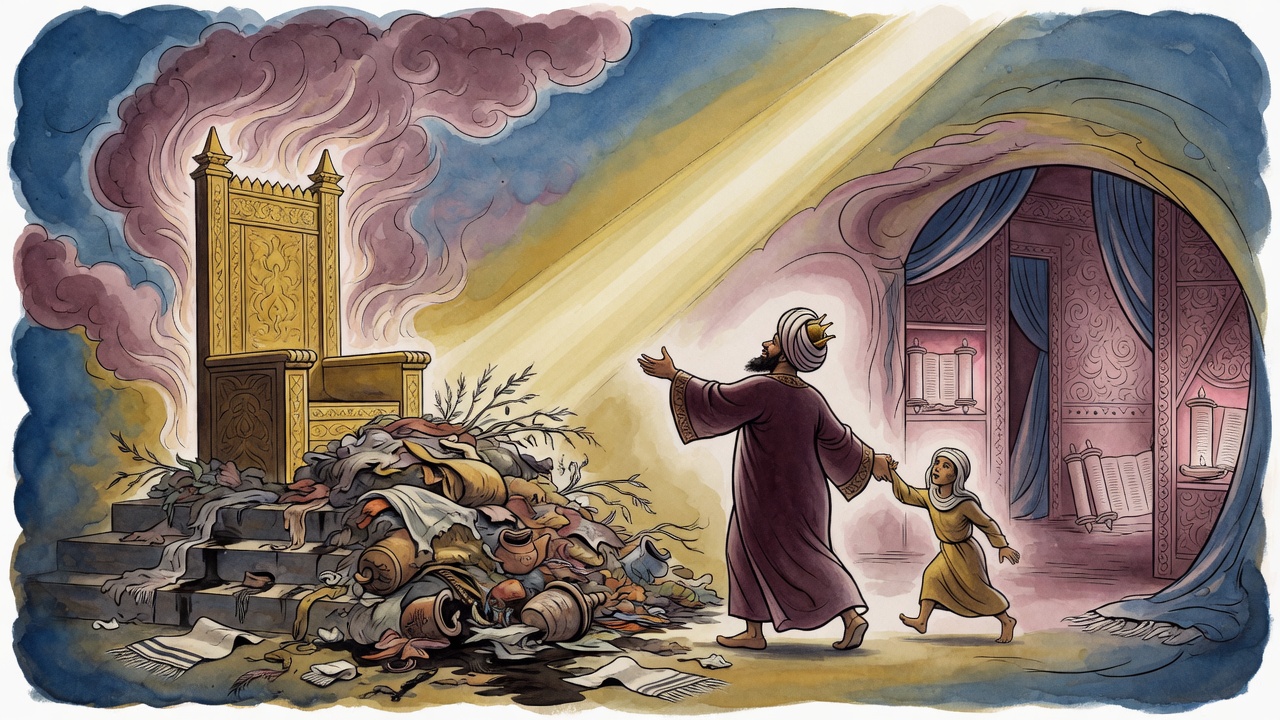
Elijah Named the Hidden Feast of the Pious Thief
A man left gold with a neighbor who prayed like a righteous person. The neighbor denied it until Elijah put a secret feast on the wife's tongue.
Table of Contents
 Click for full size
Gold Left With a Prayer
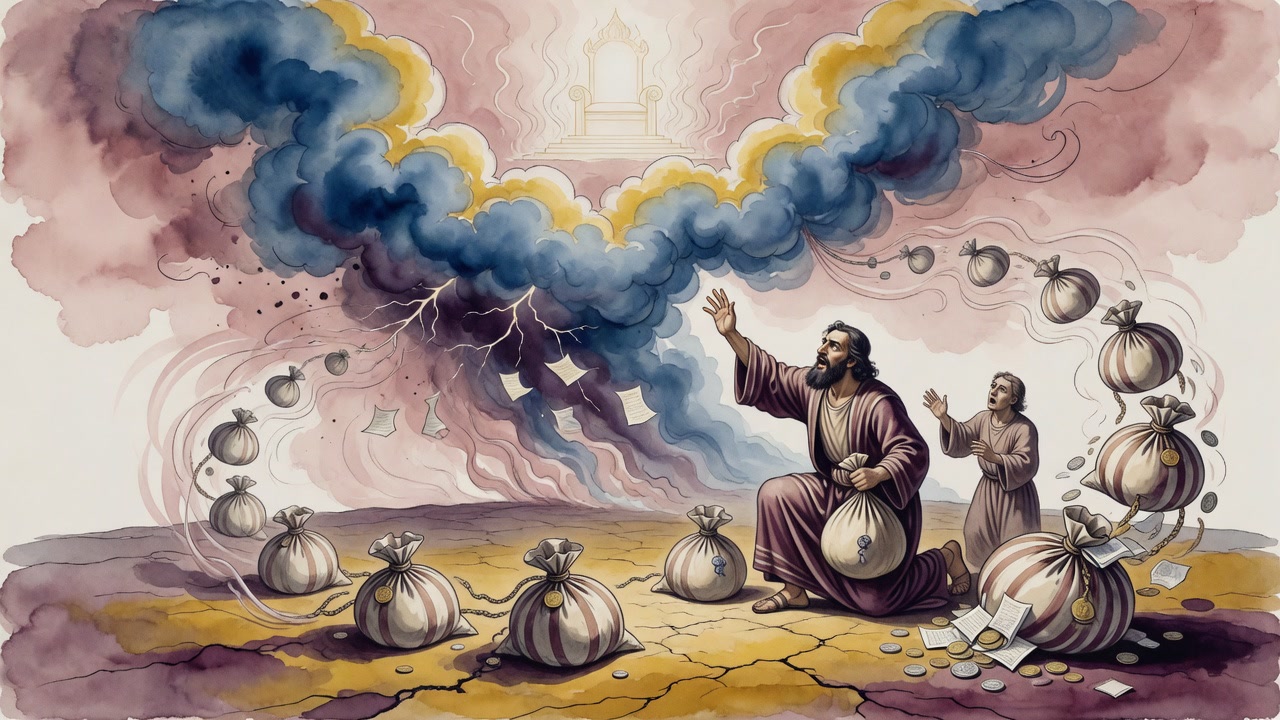
The traveler counted his coins twice, then a third time, and still felt safer handing them to the man with the long fringe and the soft voice. That neighbor prayed at every hour. He bent like a reed in the wind of the commandments. His house smelled of study and oil lamps. Children in the street pointed him out as the one who never missed a word of blessing.
Who steals from a face like that?
The traveler left the bag under the table where holy books sat and went on his road with a lighter step. When he returned for his money, the pious mouth opened and said it had never held a deposit. No witness. No receipt. Only the empty space where trust had stood, and a shrug polished by practice.
The Prophet at the Door
Elijah found the cheated man on the road with dust on his clothes and a case he could not prove before any court. The prophet did not litigate. He did not summon angels with trumpets. He handed the man a weapon made of knowledge.
"Go to the wife," Elijah said. "Speak of the feast they keep when no one watches. Speak of leaven on Pesah and swine on the Day of Atonement. Tell her you know the table they hide under their piety. Watch her face. The gold will follow the shock."
The traveler's throat tightened. He had never seen such a table. Elijah had. Heaven keeps accounts the courts cannot open, and the prophet walks those ledgers the way other men walk market lanes.
The Room Where the Mask Split
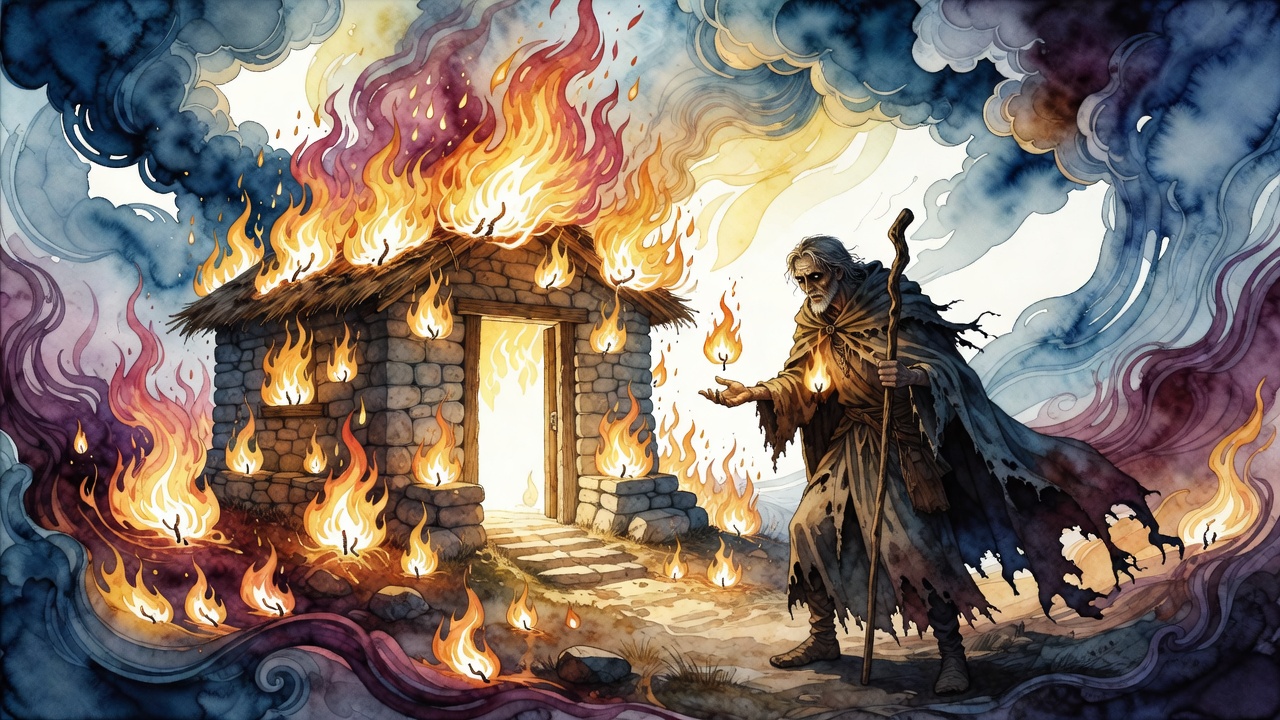
He stood in the doorway of the "holy" house and spoke the secret as if he had sat at that forbidden meal and wiped his mouth with their cloth. The wife's face went white. The husband's hands stopped mid-gesture over a book he had been pretending to study. The public fringe still hung from the garment, but the private house had been named in a voice that did not shake.
They returned the gold because exposure is a harder judge than any magistrate with a fee. Money can be denied with a calm mouth. A life of double food cannot survive a precise accusation spoken in front of the person who shared the sin.
The traveler walked out heavier by the weight of his coins and lighter by the weight of his faith in appearances. He did not thank the couple. He thanked the road that had sent him Elijah.
What Collapsed After the Door Shut
The couple had been converts. The story does not mock conversion. It mocks costume. When the costume tore, they did not mend it with repentance. They fled back to the practices they had never truly left, as if the Torah had been a rented coat for a season of respectability and market trust.
Elijah does not always raise the dead. Sometimes he only raises the truth until a false house cannot stand under it. The fringe can stay on the garment while the heart has already left the covenant.
Night after the gold returned, the traveler slept with his bag under his head and dreamed of fringes that moved like snakes. He woke and checked the coins by lamp. They were real. The dream was only memory teaching caution.
A Second Hearing on the Road
Another tale from the same stream sets a Jew and a heathen arguing religion before a stranger who is Ha-Satan in plain clothes, the Accuser working a roadside court. They stake money on which faith is true. The Accuser awards the purse to the heathen. The Jew, emptied, does not quit the road or his God.
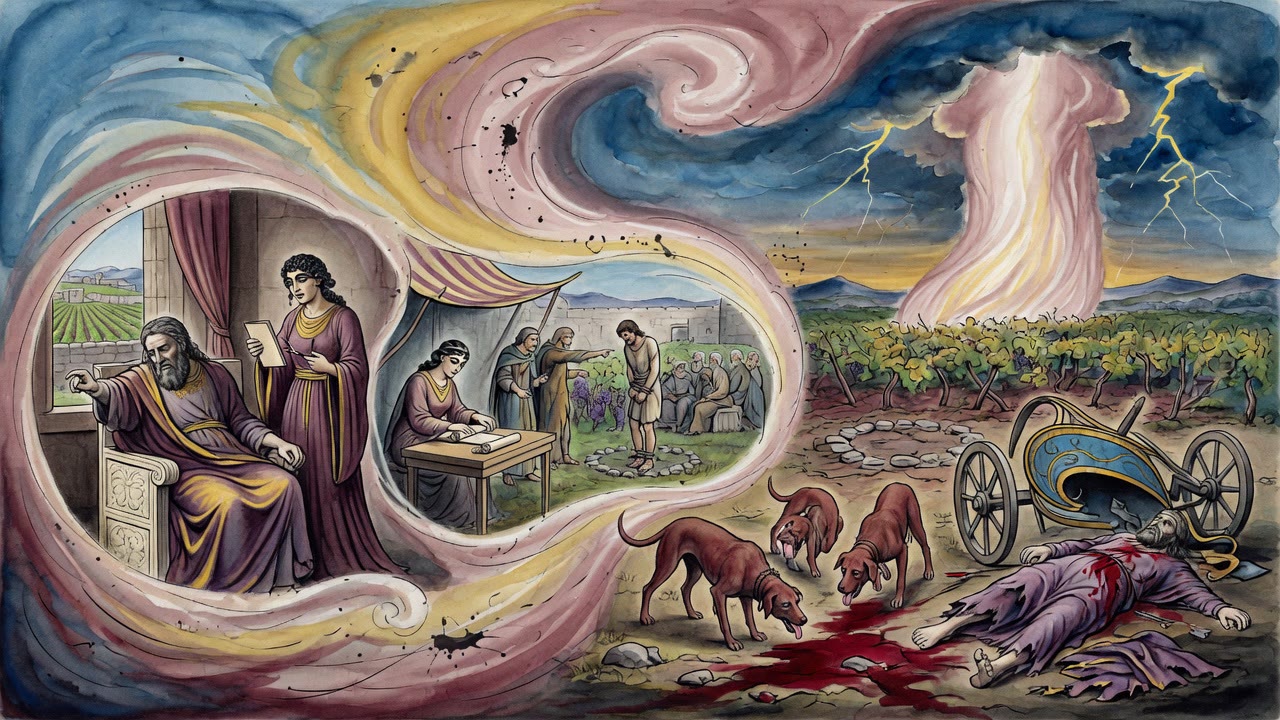
Later he overhears the hidden powers speaking of a princess's cure and a spring buried under ordinary ground. He heals the emperor's daughter. He finds the water. Fortune turns hard and bright. The heathen, hearing of the reversal, tries the same eavesdrop without the patience and the wound that earned the first hearing. The shedim who once spoke carelessly are waiting this time. They kill the imitator.
Two stories, one pressure: the world of masks and secret rooms. In one, false piety steals a deposit until Elijah pries the door with a named feast. In the other, a false judge steals a wager until careful listening reverses the loss. Greedy copying without the hard work of the first hearing ends in blood on the same ground that made another man rich.
In the market the next week, people still pointed to the "pious" house out of habit. Habits die slower than reputations. Children stopped asking that household for blessings first. The street had learned a new map of trust, drawn with Elijah's blunt charcoal.
In the week after, the traveler passed the house once more and did not look up at the mezuzah (the scroll case fixed to a doorway). He had learned that wood and parchment can dress a thief. Elijah's method stayed with him like a second pulse: name the hidden table, and the false mouth loses its market.
← All myths