Elazar Led the Red Heifer East Without Help
While Aaron still lived, Elazar led a flawless red cow east alone. One glance away from the slaughter, and the whole statute of purity collapsed.
Table of Contents
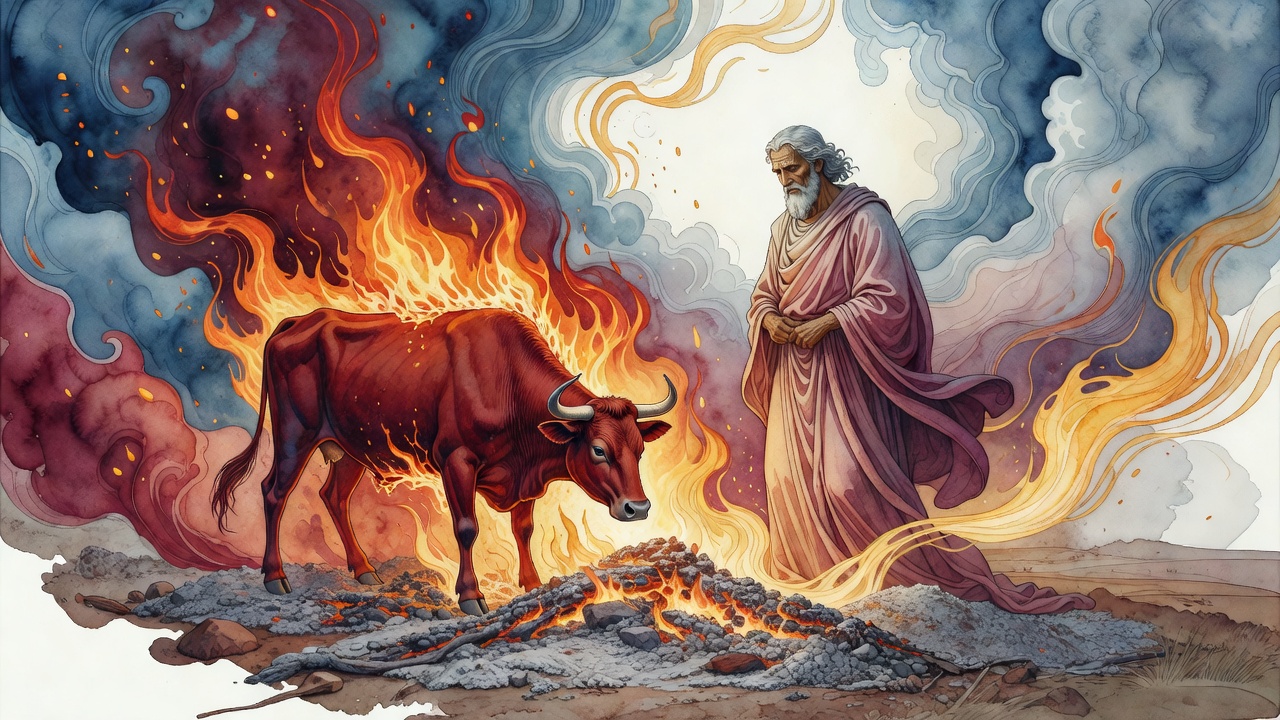
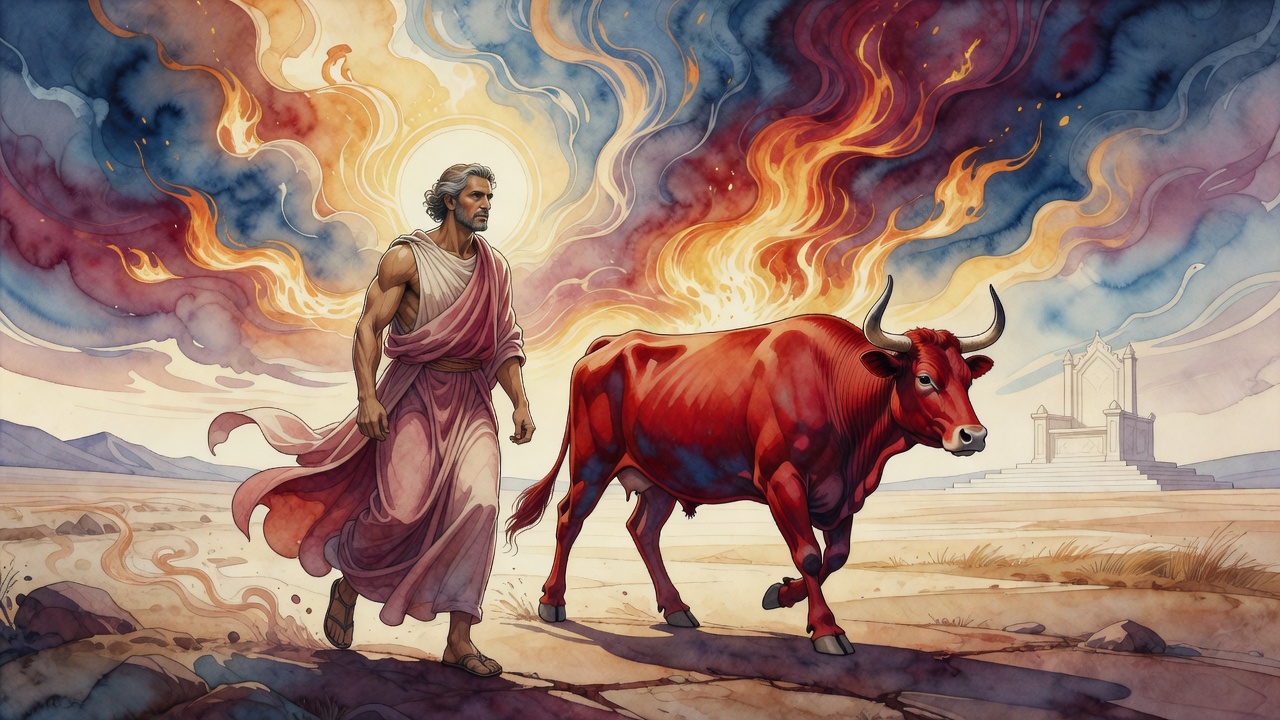
The cow was red without a white hair anyone could argue over, and no yoke had ever sat on her neck. Men from the treasury led her as far as the ropes allowed, then stepped back. From there the work belonged to Elazar the priest, not to his father Aaron, who still held the high office and still breathed the air of the camp.
 Click for full size
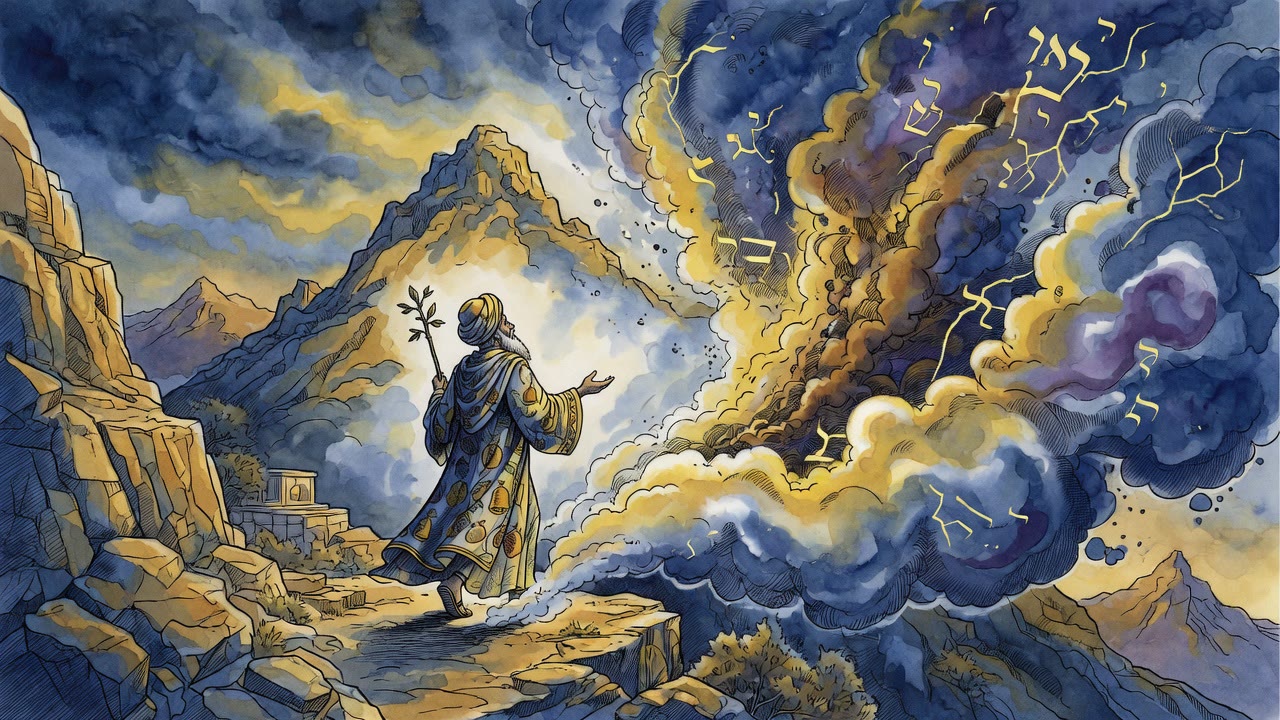
"Give it to Elazar the priest," the command had said. The adjutant, not the man with the full crown of anointing, would walk this animal into the statute that has no neat reason. East of the tents, toward the place later ages would call the Mount of Anointment, the cow went alone because a second beast would confuse every eye that watched (Numbers 19:1-3).
Gold on the Body That Must Stay Clean
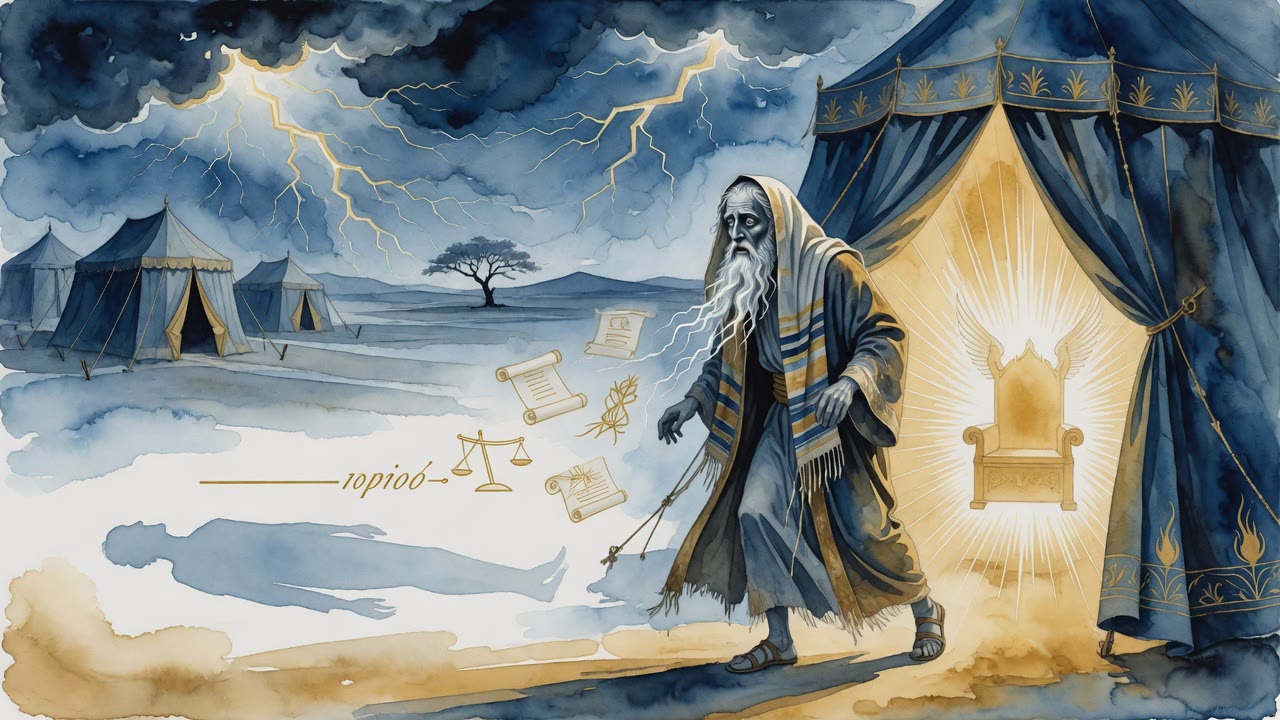
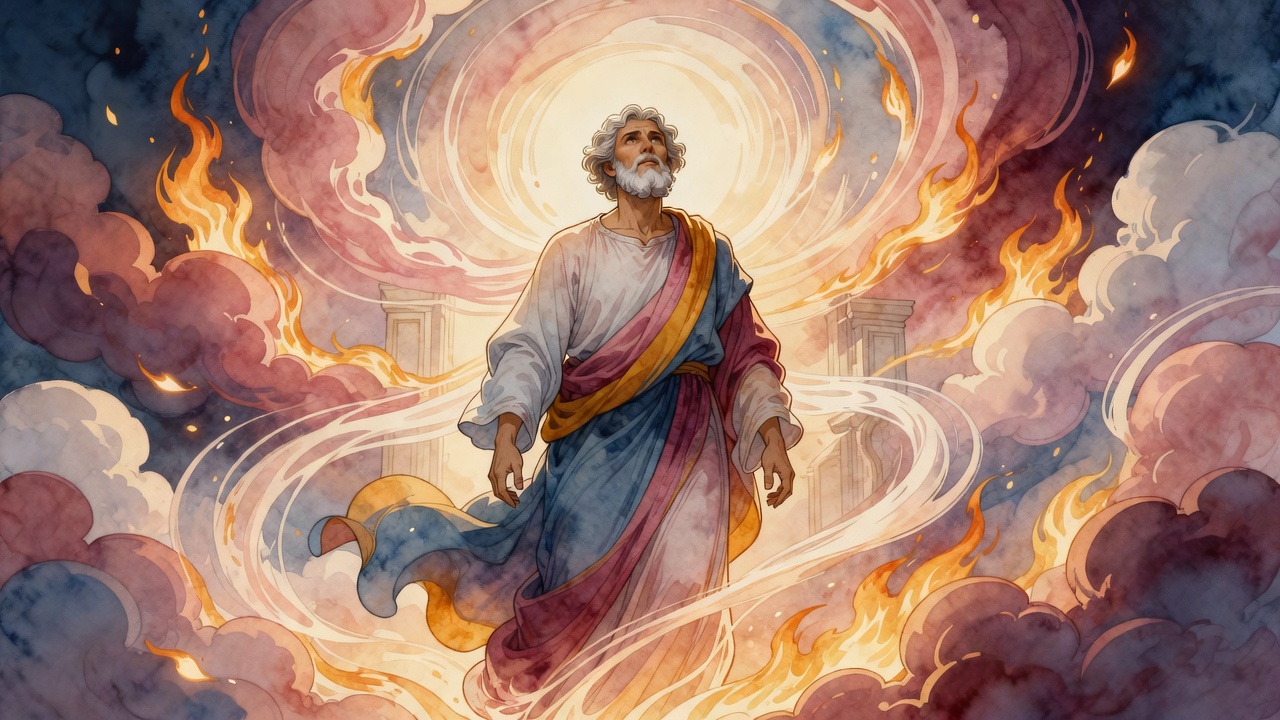
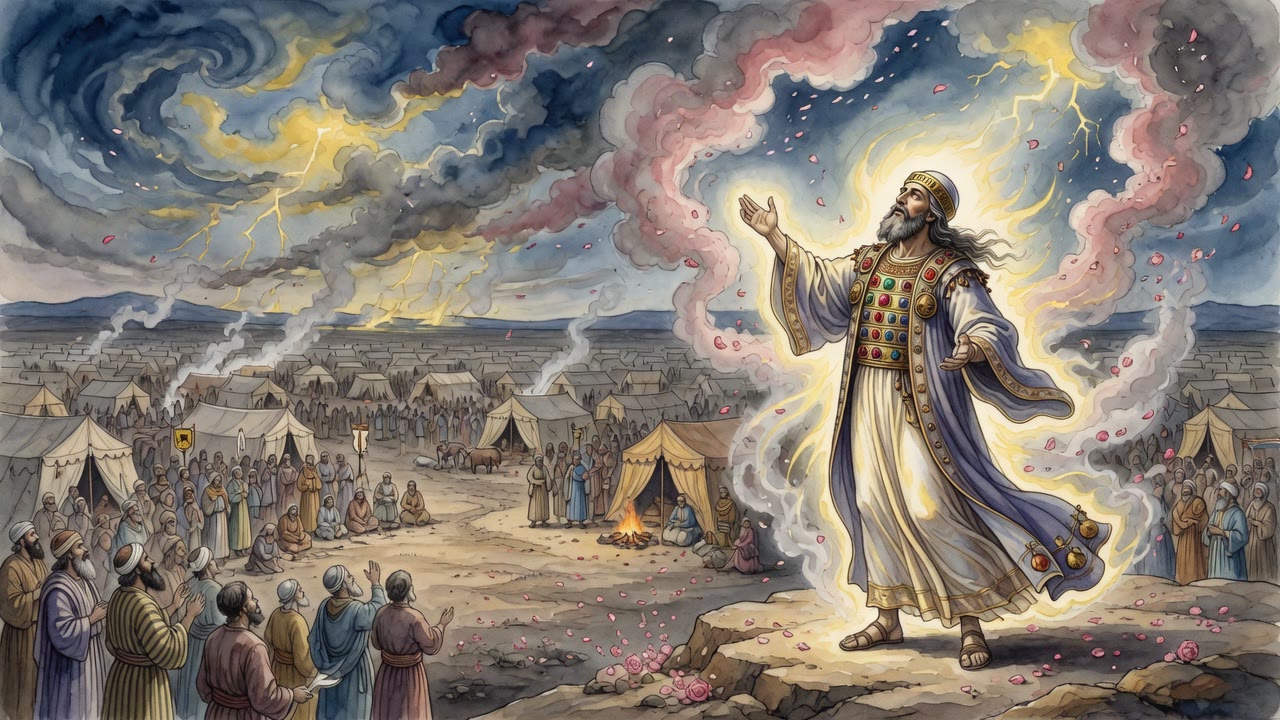
Elazar dressed for the work while arguments already lived in other mouths. Some teachers would later insist the garments for this rite were white, like the linen of the Day of Atonement. Rabbi Yochanan ben Zakkai, when pressed by disciples who remembered his own earlier teaching of white, would strike the table with what he had seen with his own eyes and refuse to forget it: gold. Golden vestments on the body that must not lose a thread of attention while a red cow becomes ash for a people who touch death every week.
Elazar felt the weight of fabric that announced rank and the heavier weight of a law called chukah, a statute that begins general ("This is the statute of the Torah") and then narrows to one animal, complete, unblemished, never yoked. The particular details are not decoration. They are the whole door. Miss a detail and the general name of Torah on the rite becomes an empty plaque.
Aaron did not take the lead rope. The living high priest stayed behind the line of this particular hour. A son walked east with a cow the color of clay after rain, and the camp watched a transfer of labor that would shape every red heifer after him.
No Black Twin on the Road
Someone thought to ease the stubborn animal with a darker cow beside her, a twin of habit to pull her along. The order cut that kindness off. Take it out, the verse says, singular. Two animals on the road and the crowd would not know which body was holy. One stubborn red back. One priest. One path toward open ground where the sanctuary still faced him when he turned to sprinkle.
Dust rose under hooves. Flies found the heat along her flank. Elazar's hand stayed on the rope until the ground east of the encampment opened and the city of tents fell behind like a low wall. He turned her so that when blood rose it could be thrown toward the holy place, not toward empty desert that held no claim.
A boy who had followed too far was waved back by a Levite. The work did not need an audience of children. It needed a slaughter that did not become carrion mid-cut, and a priest who did not invent company for a cow that Torah had already named alone.
He Must Watch or the Ash Is Nothing
"He shall slaughter it before him." Another man could hold the knife. Elazar could not hold another task in his head while the blade moved. If he turned to settle a dispute, if he measured wood for the fire, if his eyes left the neck for a breath of ordinary camp business, the whole act fails. Attention is not courtesy here. Attention is the hinge.
The knife went in clean. The cow did not become neveilah, a carcass ruined by a bad cut. No long blade tried to drop two heifers at once for speed. Blood filled the vessel. Elazar's fingers dipped and threw seven times toward the face of the sanctuary, red arcs against the light, while the animal that had never worn a yoke finished becoming the raw material of purity for people who would bury parents and still need a road back into the camp.
Fire took the hide, the flesh, the blood, the dung. Cedar, hyssop, and scarlet thread went into the burn. Ash cooled into the store that would meet living water and touch the unclean. Elazar's garments would need their own washing. The man who made Israel pure would step through impurity on the way out of the statute. That was not a mistake in the law. That was the shape of the law.
After Aaron, the Line of the Cow
Later teachers would argue who may burn the next red cows. Rabbi Meir held that after this first one, which belonged to Elazar while Aaron still lived, the high priest himself could process those that followed. Others, Rabbi Yossi among them, opened the work to high priest or ordinary priest alike. The first scene stayed fixed: a son, not a father, alone with a red body east of the ropes, eyes locked on a slaughter that could not share his mind with anything else.
When Elazar walked back, ash sealed and hands still marked by the day, Aaron met him with a look that held both pride and the knowledge of a throne that had not needed to leave the camp to keep the people clean. The cow was gone. The statute remained. Somewhere a man who had touched a corpse already waited for water mixed with that ash, counting days until he could reenter the place where God sat among a people who die and still insist on approaching.
Elazar did not explain the chukah. He had done it. The red went into gray. The gray would wait for the next death in the tents, and the next, and the next.
← All myths