6 min read

Rabbi Yossi Haglili Asked to Return to an Argument He Had Lost

A cow drank the water made from red heifer ashes, and thirty-two elders ruled on its flesh. Rabbi Yossi Haglili lost that room, then came back.

Curated by Arthur · Told by Maggid ·
Table of Contents
  1. The Cow That Drank From the Jar
  2. Thirty-Two Elders and a Man With No Verse
  3. The Word Had Been in the Verse All Along
  4. He Came Back With One Word
  5. What Tarfon Saw in the Ram
Rabbi Yossi Haglili Asked to Return to an Argument He Had Lost Click for full size

The Cow That Drank From the Jar

A cow got at the water, and by nightfall the question had reached men who would not sleep until it was settled.

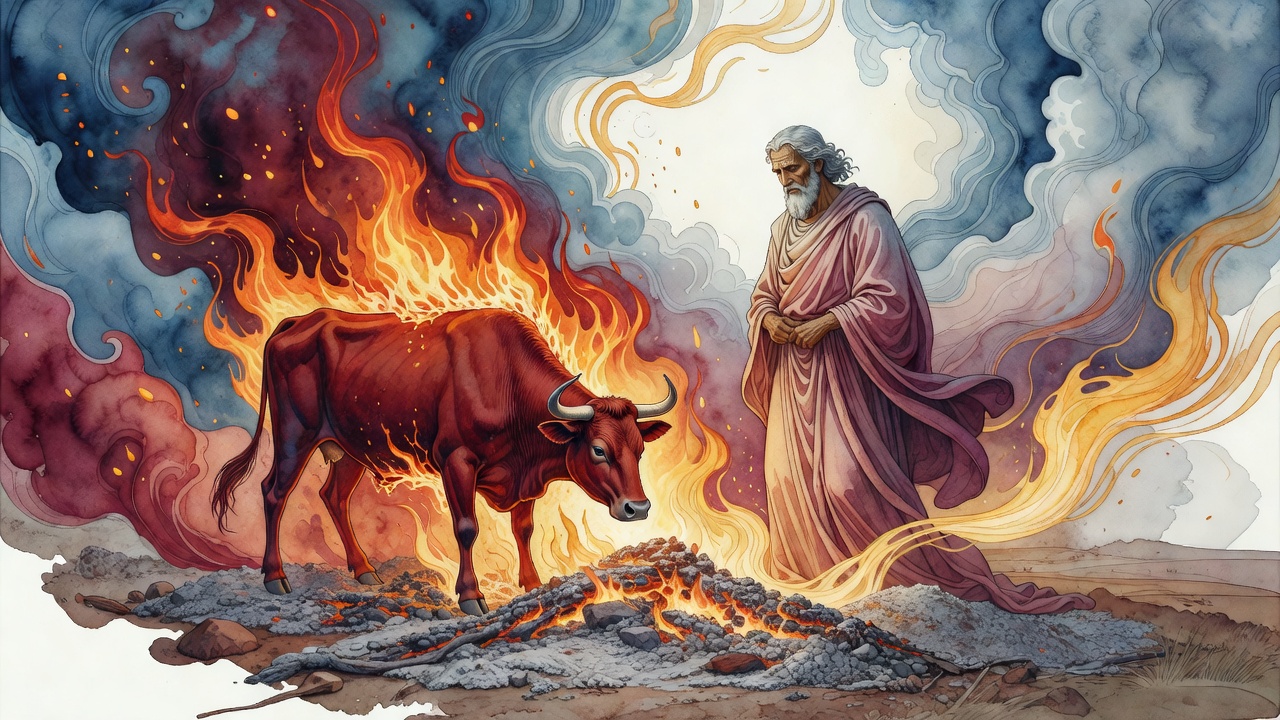
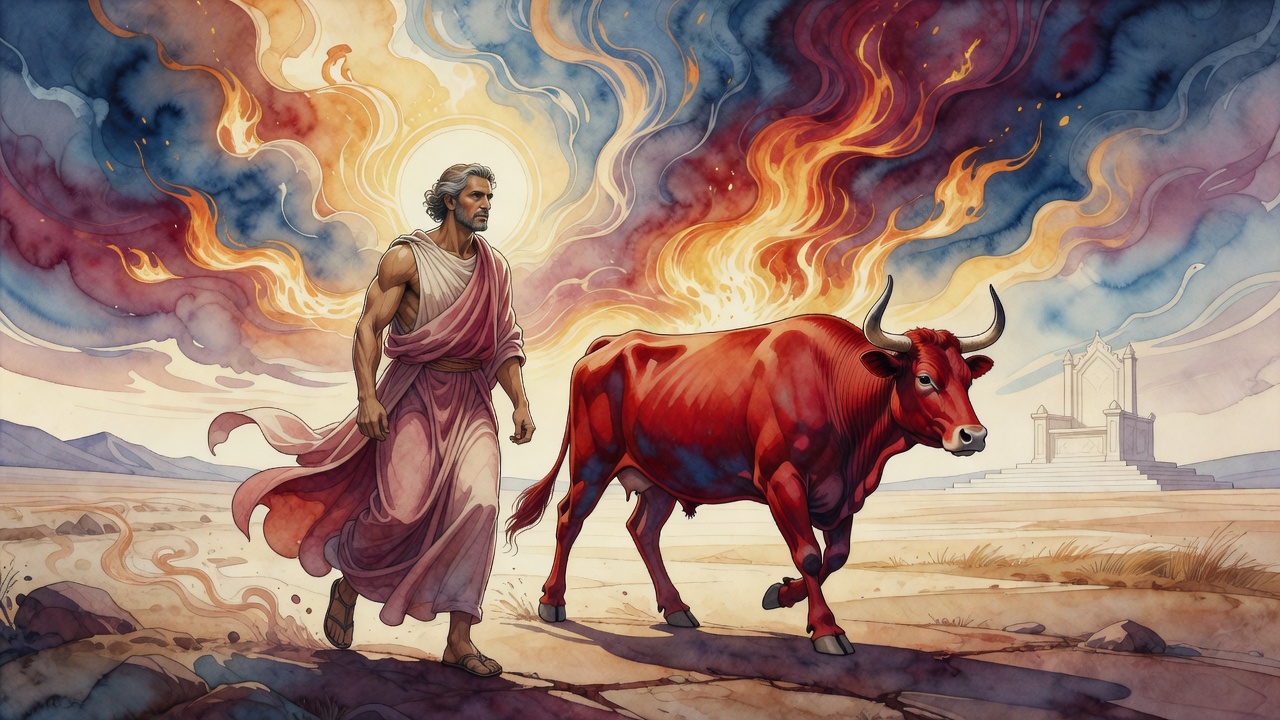
The water in that jar had cost an animal and a day. A red heifer without blemish had been taken outside the camp and burned entire, and Elazar stood where the smoke hit his face and watched it go. Another man fed the fire. Elazar only looked, and the looking was the job. Skin, flesh, blood, dung, all of it burned together. When blood came off on a hand, the hand was wiped back along the body of the animal, because blood that did not return to where it belonged spoiled the whole burning. When a scrap of flesh the size of an olive leaped out of the flames, someone put it back in. Bone could stay out. Flesh could not. From the knife to the last gray handful, no one working that fire was allowed to turn his mind to any other task.

What was left went up the Mount of Olives and was kept in a clean place, under guard. Mixed with living water it was the one thing in the world that could lift the seven days a corpse laid on a living man. A sword that had killed carried the same seven days. So did the lid of a coffin. So did a child dead in the womb of its mother. Death reached that far, and one gray powder answered all of it.

Now a cow had swallowed some. If the animal were slaughtered before the day was out, was its flesh clean or unclean?

Thirty-Two Elders and a Man With No Verse

They put it to thirty-two elders.

Rabbi Akiva held that the flesh was unclean. Water set apart for sprinkling did not stop being what it was because a cow's throat happened to be in the way.

Rabbi Yossi Haglili held that the flesh was clean.

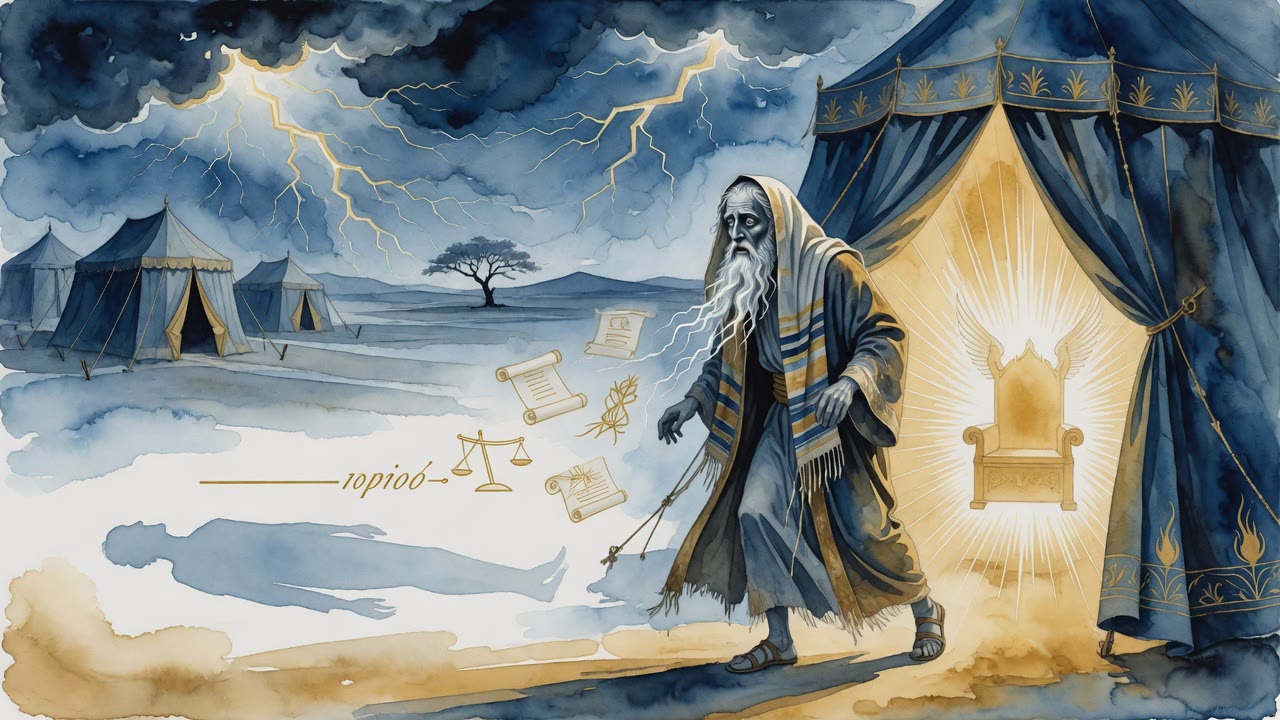
The elders ruled clean, and it did him no good at all. Akiva turned and asked him for the verse, and Yossi had no verse. He had a conviction, and a feel for how the thing must work, and nothing he could lay on the table between them. Akiva took him apart in front of the whole assembly and put him out of the argument. The ruling went exactly the way he had said it would go. He was not standing inside it when it did.

He walked home a man who had been right in public and beaten in public on the same afternoon.

The Word Had Been in the Verse All Along

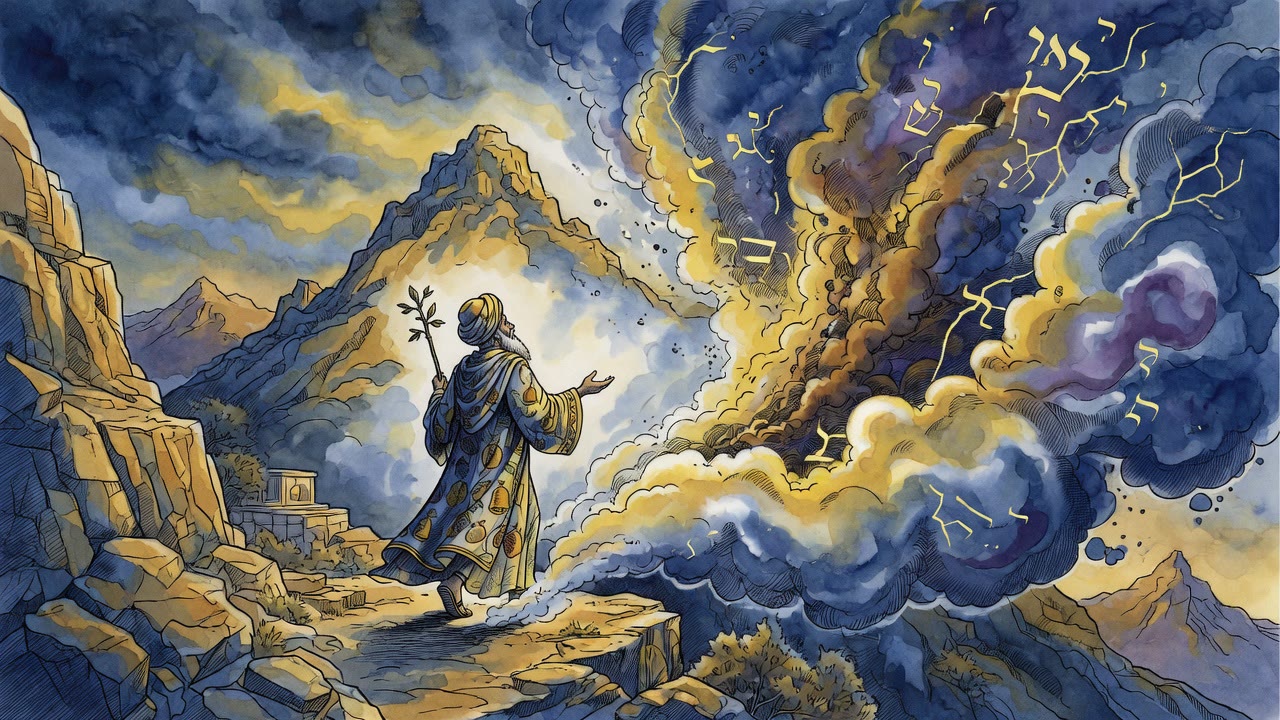
He found it later. Not in a dream, not in a flash. He went back through the passage about the ashes, line by line, until he reached the clause saying the powder shall be for the congregation of the children of Israel in keeping, a thing under guard, held for the waters of sprinkling.

In keeping. Only for as long as somebody is keeping it. The moment the water was inside an animal, nobody was guarding it and nobody could sprinkle a drop of it on anything living or dead. It had stopped being sprinkling water somewhere between the jar and the cow's belly. So the flesh was clean, and now he could say why.

He went to Akiva and asked for the door back. "May I return?"

Akiva barely looked up. "Shall I allow everyone to return, and not you, because your name is Yossi Haglili?"

The Galilee sat in the name and the whole room heard it sit there. Yossi returned anyway.

He Came Back With One Word

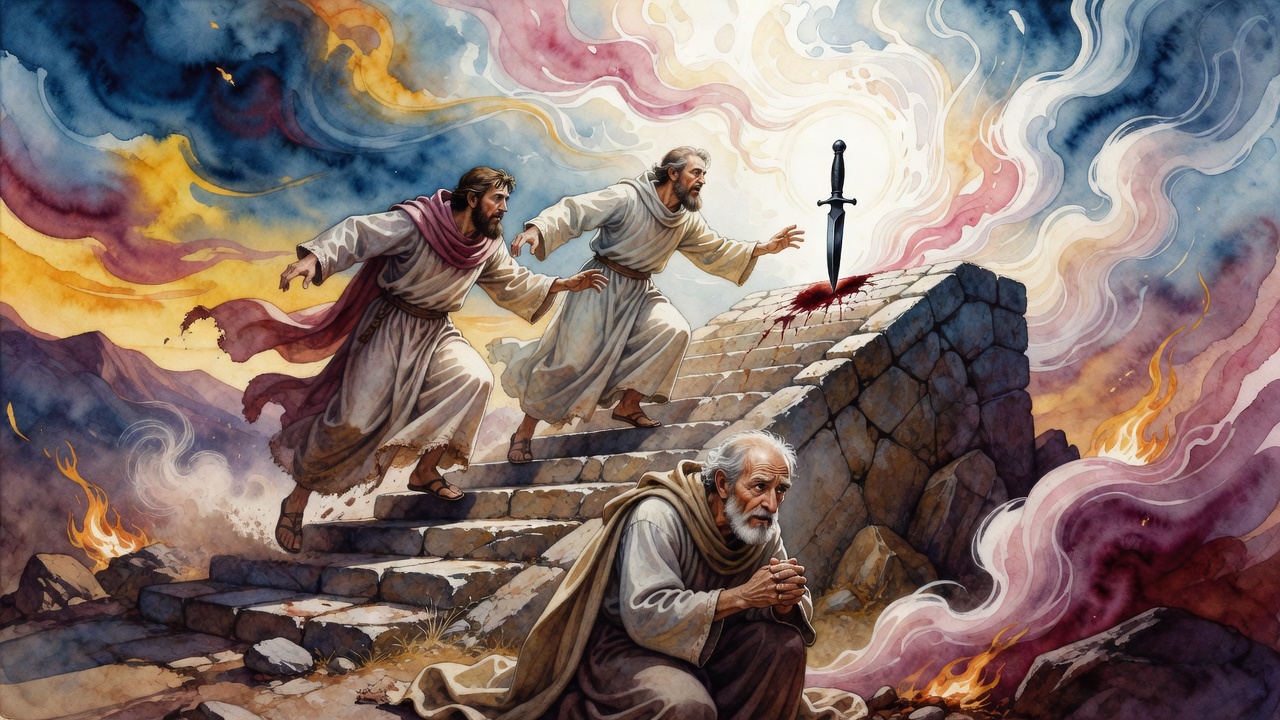
He used it like a blade.

Akiva argued. Shimon ben Nanas came in beside him and argued. Neither of them could get around the clause. A thing held in keeping is sprinkling water. A thing swallowed is held by nobody. The flesh is clean. Yossi did not raise his voice and did not stop, and the men who had watched him thrown out of that argument watched him stand in the middle of it and hold the floor.

Akiva did not concede. He also did not answer.

What Tarfon Saw in the Ram

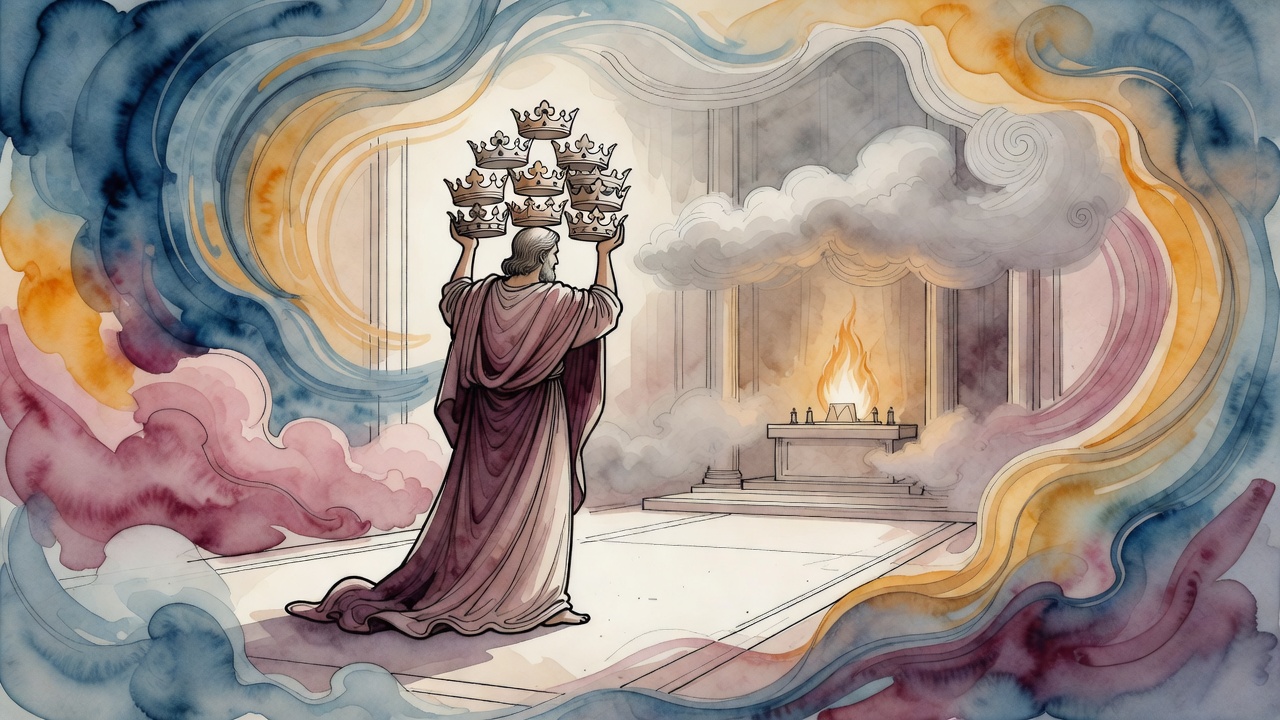
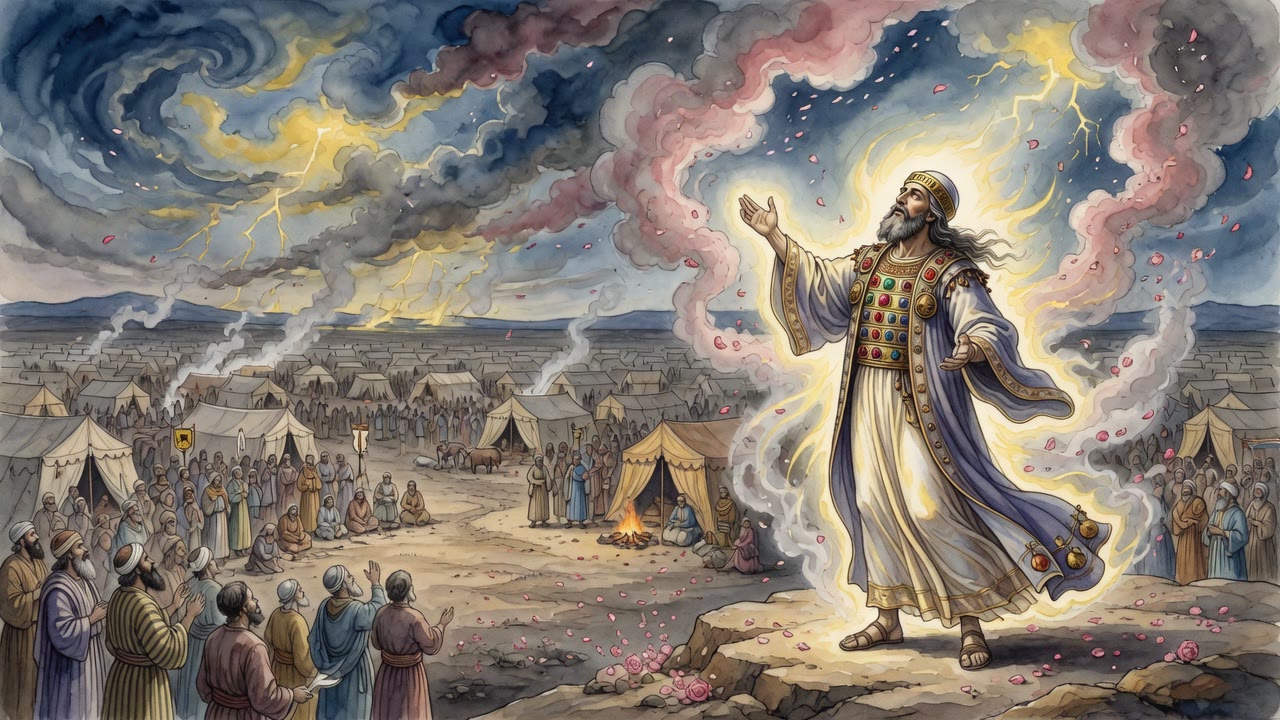
Rabbi Tarfon had been watching, and when it was over he spoke Daniel's vision across the room as though it had been written for that afternoon.

A ram butting westward and northward and southward, and no beast could stand before him, and there was none that could deliver out of his hand, and he did according to his will and grew great. "That," Tarfon said, "is Akiva."

Then a he-goat came out of the west over the face of the whole earth and did not touch the ground, and it had one horn between its eyes. "That is Yossi Haglili. And that horn is his answer."

The goat came at the ram in the fury of his power, and struck him, and broke his two horns. The two horns were Akiva and Shimon ben Nanas. And the ram had no strength to stand before him, and the goat cast him to the ground and trampled him, and there was none that could deliver the ram out of his hand.

None to deliver him. Tarfon named them last, so that nobody in the room could pretend he meant somebody else. The thirty-two elders.


← All myths
From the tradition

Sources

2 sources

The texts behind this telling. Some cards carry a translation of the source; others are our own retelling of it, and each card says which. Every card links out to the original.

Sifrei Bamidbar 124:1Sifrei Bamidbar

Retold in our words. Read the original at the link below.Sifrei by Rabbi Shraga Silverstein · CC-BY

This ritual, used for purification, has some fascinating details that our sages unpacked with incredible care.

The Sifrei Bamidbar, a collection of legal interpretations on the Book of Numbers, digs deep into the verses about the red heifer. The text starts with a seemingly obvious point: "And he shall burn the heifer before his eyes" (Bamidbar 19:5) teaches us that performing other work while burning the heifer invalidates the process. Seems logical. But the Sifrei doesn't stop there. It asks: couldn't we have figured that out ourselves? After all, if being preoccupied invalidates the slaughtering of the heifer, shouldn’t it certainly invalidate the burning?

The answer, according to the Sifrei, is that the verse teaches us something more nuanced: that the invalidation applies from the moment of slaughtering all the way until the heifer is completely reduced to ashes. It’s not enough to just be careful during the burning itself; the entire process demands focus.

The text then contrasts the red heifer with the bullocks burned on Yom Kippur (the Day of Atonement). A fascinating argument unfolds: if outside the Sanctuary, the red heifer’s burning is invalidated by extraneous work, then surely, inside the Sanctuary, the Yom Kippur bullocks would be even more so! But the Sifrei anticipates an objection: perhaps the red heifer is unique because its slaughtering is invalidated by work, unlike the bullocks. To counter this, the text proposes that work should invalidate the bullocks' slaughtering! And so, the need for the verse specifying the red heifer becomes clear again. It's a beautiful example of rabbinic logic, using a fortiori arguments to understand the nuances of the law.

"And he shall burn the heifer before his (Elazar’s) eyes": the Sifrei points out this means someone else does the actual burning, while Elazar, the High Priest's son, supervises. It's like having a foreman on the job, ensuring everything is done correctly.

Then comes an almost gruesome detail: “Its skin, and its flesh, and its blood together with its dung.” Everything must be burned together, remaining in place. This leads to a ruling: if any blood spills, it must be returned to the shechitah (slaughter) site. If not, the heifer is invalidated. And how do you return it? You wipe your hand on the heifer’s body. These aren't just abstract rules; they’re intensely practical and visceral.

The meticulousness continues with the ashes. Even small bits of flesh leaping from the fire must be returned. However, bone is different; it doesn't need to be returned, as the verse doesn't specifically mention it. What if an olive-sized piece leaps out? Back it goes!

The text then presents a debate between Rabbi Yishmael and Rabbi Yehudah about the phrase "he shall burn." Rabbi Yishmael interprets the double use of "he shall burn" as a case of amplification followed by diminution, meaning that as long as most of the heifer is consumed, it's valid. Rabbi Yehudah, however, believes it means the wood supply shouldn’t be diminished, even adding hyssop to increase the ashes.

The Sifrei also explores the specifics of the cedar wood, hyssop, and scarlet thread that are cast into the burning heifer. What kind of hyssop is acceptable? Not "Grecian" or "Desert" hyssop, but the real deal. And the scarlet thread? It must be ushni tola'ath, something whose variant name is scarlet. Rabbi Akiva weighs in on when to cast these items into the fire, arguing it should be when the flames have caught onto most of the heifer, but before it's reduced to ashes.

The aftermath of the burning also has consequences. The Cohein who casts the hyssop becomes tamei (ritually impure) and imparts tumah (ritual impurity) to his garments. He can't enter the encampment until he cleanses himself. Similarly, the one who burns the heifer also becomes tamei, requiring washing and waiting until evening for purification. The Sifrei even clarifies that this rule doesn't apply to "plague-garments" – another example of precise distinctions.

The text also addresses the water used for purification. It states the need for immersion ("in water") twice. Why? To clarify that while both humans and vessels require immersion, humans need a larger amount of water (forty sa'ah).

Finally, the Sifrei discusses the gathering of the ashes. While Kohanim (priests) handle most of the red heifer process, anyone who is ritually pure can gather the ashes – even a woman, according to Rabbi Yishmael. Rabbi Akiva offers a different take, arguing that "a man who is clean" includes a non-Cohein. The ashes must be placed "outside the encampment," specifically on the Mount of Olives, and stored "in a clean place."

The text concludes by considering the use of the ashes for creating the waters of sprinkling. Can we do other work while mixing the ashes with water? The Sifrei says no, drawing a parallel to the heifer itself. And what if a cow drinks these waters? The answer is debated, with Rabbi Yehudah arguing the water is nullified in the cow's intestines. This disagreement leads to a fascinating anecdote about a debate between Rabbi Yossi Haglili and Rabbi Akiva, where Rabbi Akiva initially dismisses Rabbi Yossi's view. Later, Rabbi Yossi finds support for his argument and challenges Rabbi Akiva, using verses from Daniel to illustrate their intellectual battle.

Wow. All this detail about one ritual. What does it all mean? Perhaps it's a reminder that holiness lies not just in grand gestures, but also in the meticulous attention to detail. It’s evidence of the Jewish tradition's commitment to exploring every facet of the divine law, leaving no stone unturned in the pursuit of understanding.

Full source
Sifrei Bamidbar 127:1Sifrei Bamidbar

Retold in our words. Read the original at the link below.Sifrei by Rabbi Shraga Silverstein · CC-BY

It explores the Book of Numbers, Bamidbar in Hebrew, unpacking the intricate laws surrounding ritual impurity and how it's transmitted. Bamidbar 19:16 states, "And all who touch on the face of the field." What exactly does that encompass? Rabbi Yishmael argues that it includes even a dead fetus within its mother's body. Rabbi Akiva, however, expands the scope, including the top lid and frame of a coffin! It's a vivid reminder of the all-encompassing nature of death's presence.

It doesn't stop there. The verse continues, "one slain by the sword." What does Scripture want to teach us here? Well, the sword itself becomes tamei, impure, for seven days, just like someone who touches it. We already know that implements and people become impure through contact. But what about a chain reaction – implements touching a person who touched implements? Where do we learn about that?

The answer, according to Sifrei Bamidbar, lies in Bamidbar 31:24: "And you shall wash your garments on the seventh day and you shall be clean." Garments, are considered implements. So, through this verse, we can infer the impurity spreading through multiple layers of contact.

Then things get really interesting. The text brings up an argument between Rabbi Yoshiyah and Rabbi Yonathan regarding the phrase "dead body." Is a "dead body" simply a subset of "one slain," or is it something distinct? Rabbi Yoshiyah argues that Scripture separates "dead body" from "one slain" only to emphasize that even a tiny piece separating from the body, like an olive-sized piece of flesh, carries the same impurity as the whole body.

Rabbi Yonathan disagrees, pointing out that they are mentioned separately, implying a distinction. So, how do we know that a detached piece is equivalent to the whole? He uses a principle called a fortiori – an "all the more so" argument. If a neveilah, an animal carcass, which has a lesser degree of impurity, transmits its impurity through detached parts, then surely a human corpse, with a greater degree of impurity, should also transmit impurity through its detached parts.

But hold on, comes the pushback. A neveilah only confers impurity until evening, while a dead body confers impurity for seven days. Isn't the dead body already more stringent? The text then explores the concept of carrying a corpse. Again, using a fortiori reasoning, if a neveilah transmits impurity by being carried, surely a dead body does as well!

A counter-argument arises: why isn't the impurity from carrying a dead body only until evening, like with a neveilah? The answer: touching a dead body confers seven-day impurity, so carrying it does too. With a neveilah, touching confers impurity until evening, and so does carrying it. It's about maintaining consistency in the degree of impurity.

Finally, Rabbi Meir offers a different perspective altogether. He points to Bamidbar 31:19, "Whoever has killed a man, etc." Is Scripture referring only to killing with something that can become impure? What about shooting someone with an arrow? That's why, he argues, it continues, "Whoever killed a man or whoever has touched a slain one." The killer is equated with the toucher. Just as the toucher becomes impure through contact, so does the killer, through the act of killing.

What are we to make of all this? It's more than just legalistic wrangling. It speaks to a deep sensitivity to the impact of death, the way it permeates our world and demands our attention. And by understanding these ancient laws, we can gain a deeper appreciation for the profound mystery and enduring power of life and death.

Full source