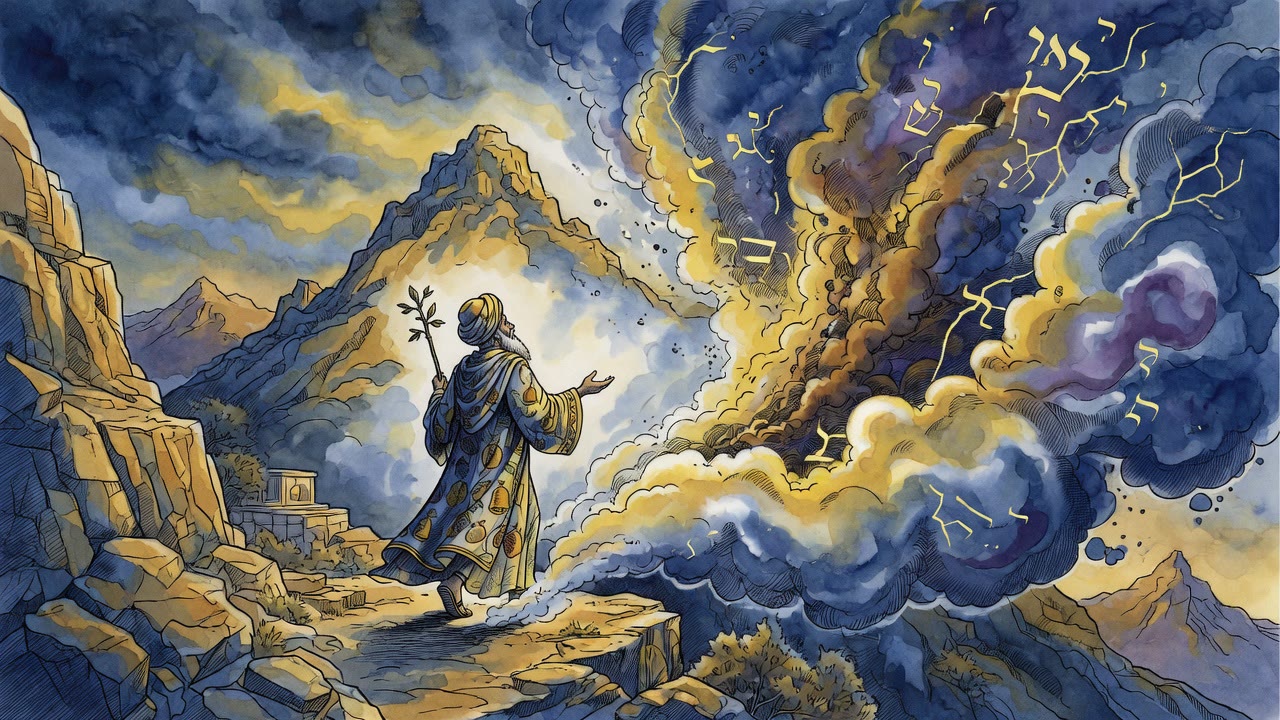
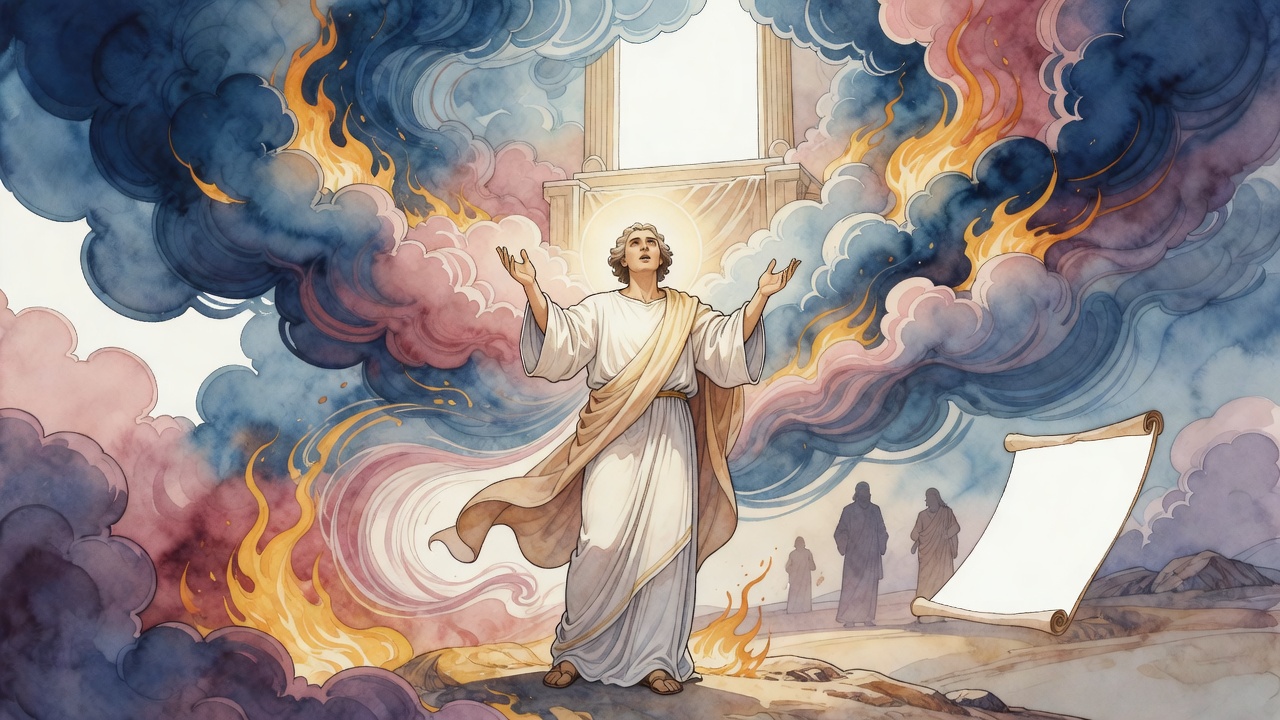
Moses Asked About the Corpse and God Did Not Answer
God taught every law with its cleansing until the corpse, where the answer stopped and Moses walked out of the Tent with a gray face.
Table of Contents
 Click for full size
Every Law Came Down Doubled
Every law Moses carried down came doubled. God named the thing that made a man unclean, then in the same breath named what took it off him. The dead creeping thing in the clay oven, and the smashing of the oven. The skin gone white, and the cedar and the hyssop and the scarlet thread. Moses had learned to wait for the second half the way a man waits for the second sandal.
He was not a shy student. He had climbed the city of the mighty and pulled down the strength it trusted in. He listened like a steward taking inventory, and he knew the sound of a count coming up short.
The Priest, the Corpse, and the Silence
Then the law reached the priests.
"Speak unto the priests, the sons of Aaron, and say to them: none shall defile himself for the dead among his people" (Leviticus 21:1). A priest could bury a mother, a father, a child, a brother, an unmarried sister, and no one else. The high priest could not stand in the room where his own father lay.
Moses waited for the other half of it.
The voice moved on to the corners of beards and the flesh of holy things. Moses stopped it.
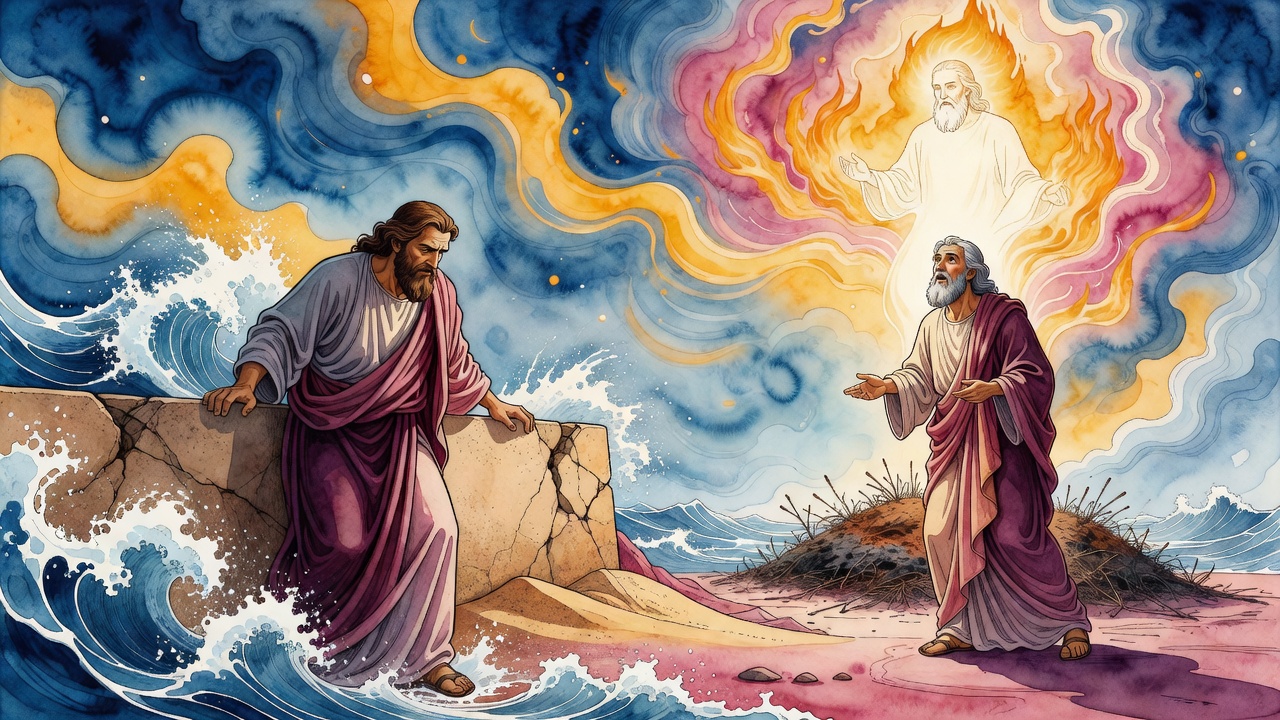
"Master of the Universe," he said, "and if he does become unclean, by what means is his purification?"
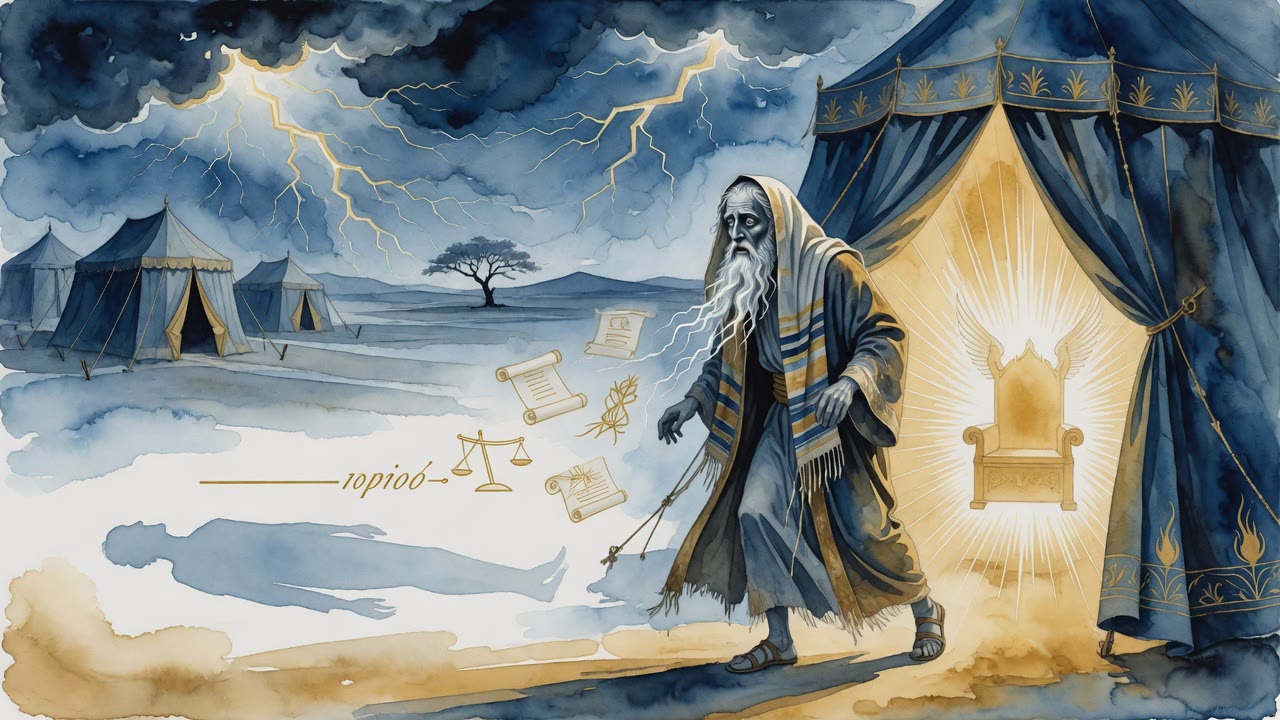
Nothing came back. The cloud sat on the Tent the way it had sat an hour earlier, and the silence held.
The Light Went Out of His Face
A man's wisdom lights his face. The camp knew the look on Moses when he came out with an answer in his mouth, skin lit from underneath like a lamp behind a curtain. That day he came out with nothing, and the strength of his face was changed. It went the gray of ash before ash meant anything to him.
Aaron started to speak and then did not. The sons of Aaron got their law from Moses exactly as it had been given, and no one heard a tremor in his voice. He never mentioned the hole in it.
He had asked heaven about a corpse-touched priest and gotten nothing, and he carried that nothing through the wilderness for a long time.
God Went Back to the Thing He Had Left Open
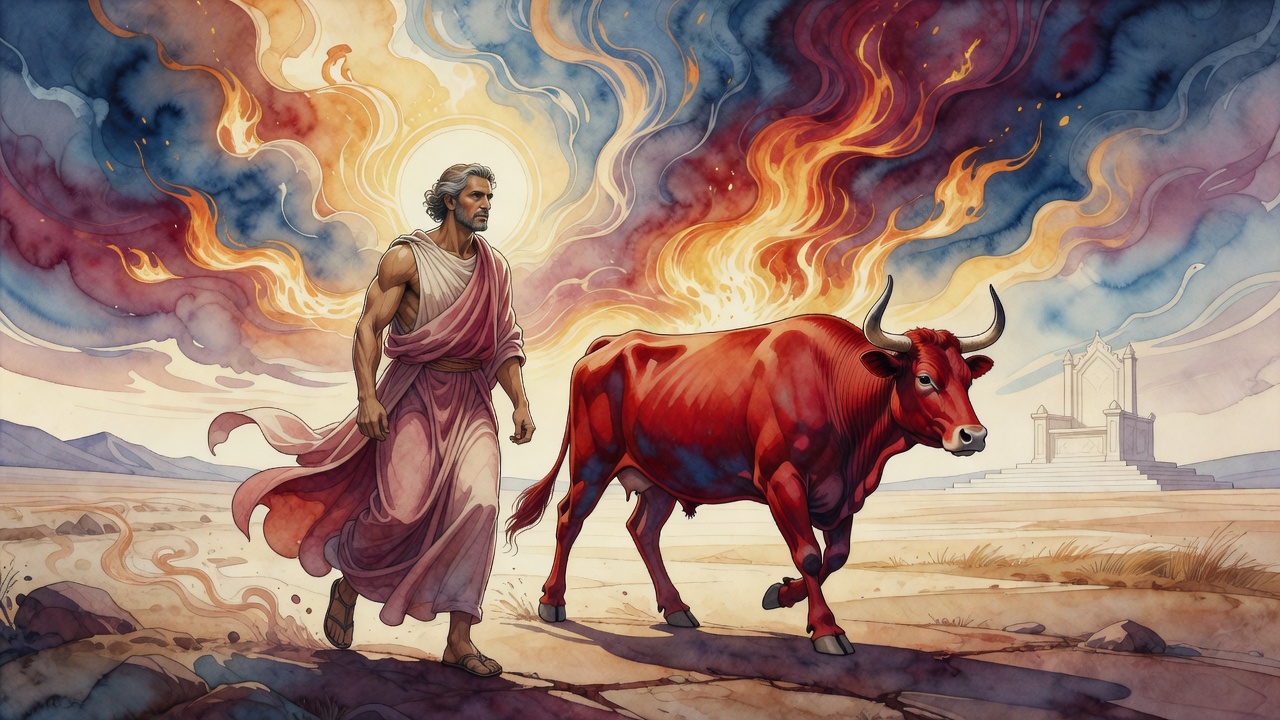
It came around at last to a cow.
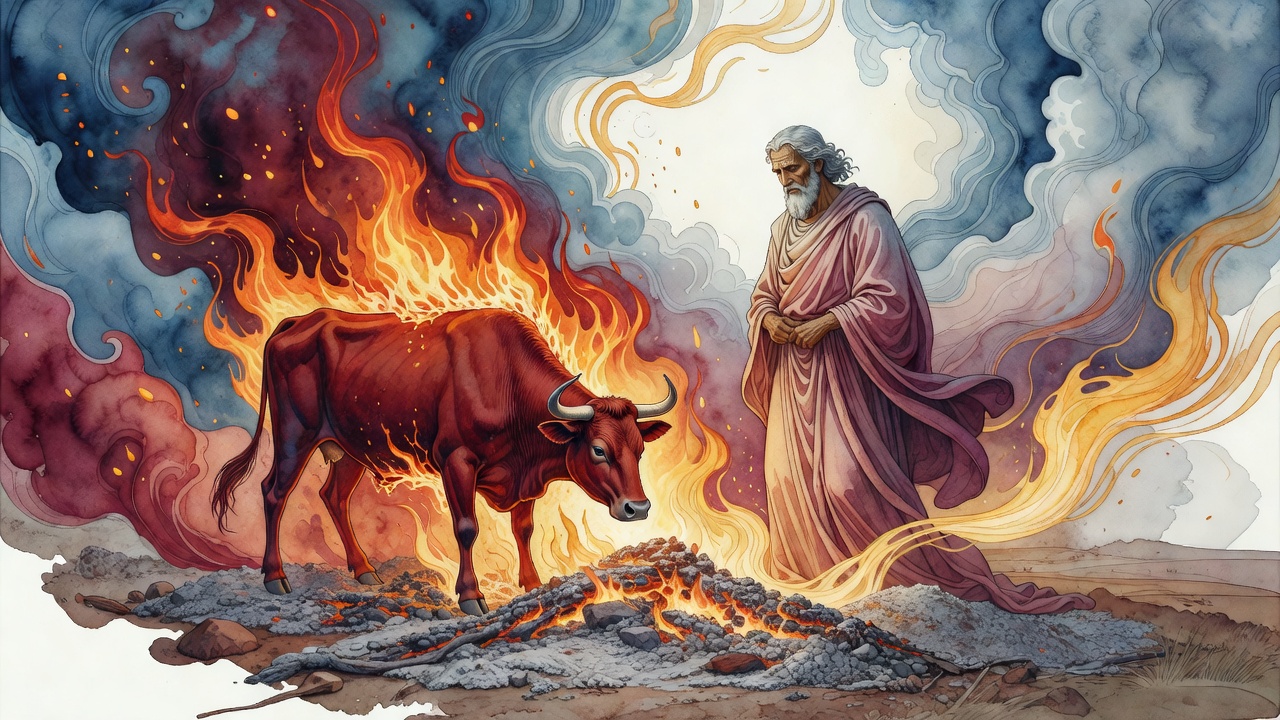
God spoke to Moses and to Aaron together this time. "This is the statute of the Torah" (Numbers 19:2), a red heifer without blemish, with no yoke ever laid across her neck. Elazar took her outside the camp, dipped his finger in her blood, and threw it seven times toward the face of the Tent. Then they burned her entire, hide and flesh and blood and dung, with cedar and hyssop and a thread of scarlet thrown in after her.
And the Holy One said to Moses: that word I spoke to you, go speak unto the priests, and you said back to Me, if he becomes unclean by what means shall his purification be, and I did not answer you. This is his purification.
"And they shall take for the unclean person from the earth of the burning of the sin offering, and running water shall be put upon it in a vessel" (Numbers 19:17).
The color came back into Moses' face while the smoke was still going up.
Sevens Folded Over Sevens
He turned the statute over and found it built out of one number. He counted on his fingers: seven heifers, seven burnings, seven sprinklings, seven launderings, seven kinds of men who go unclean by it, seven who come clean, seven priests. Silver goes into the furnace once and comes out fit for a king's table. This law had gone in seven times, and then seven times again.
Aaron counted the priests and came up short. There were not seven of them anywhere in that law, and he said so.
Moses went back to the opening line. The Lord spoke to Moses and to Aaron, saying, this is the statute of the Torah. Two more names at the head of the count, his own and his brother's. The man who had asked the question was standing inside the answer.
The Verse Said Earth Where It Meant Ashes
One word would not sit still. The heap outside the camp was efer (אפר), ashes, and any child would have called it that. The verse had said afar (עפר), earth.
Moses had heard that word laid on water once before. A priest takes holy water in an earthen vessel and scrapes up dust from the floor of the Tabernacle, and the dust goes into the water for the woman whose husband has grown suspicious of her (Numbers 5:17). Earth onto water there. Earth onto water here. And there the priest could lift his dust before he ever drew the water and it still stood, so here.
He knelt at the heap and pushed his hand into it. Gray, fine, cool underneath, no different from the dirt he knelt on. The fire had worked on her until she looked like plain ground, and she purified anyway.
The man who gathered her up washed his clothes and stayed unclean until dark. The man who sprinkled her washed his clothes too and went home unclean, and the corpse-touched walked away clean on the third day and the seventh.
Moses tipped his hand and let it fall back onto the heap, and a little went off on the wind toward the tents. He did not ask a second question.
← All myths