Two Priests Raced the Altar Until One Knife Fell
Two equal priests sprinted the altar ramp for one sacrifice; a knife found a heart, and a father begged only that the blade stay pure.
Table of Contents
 Click for full size
The Ramp
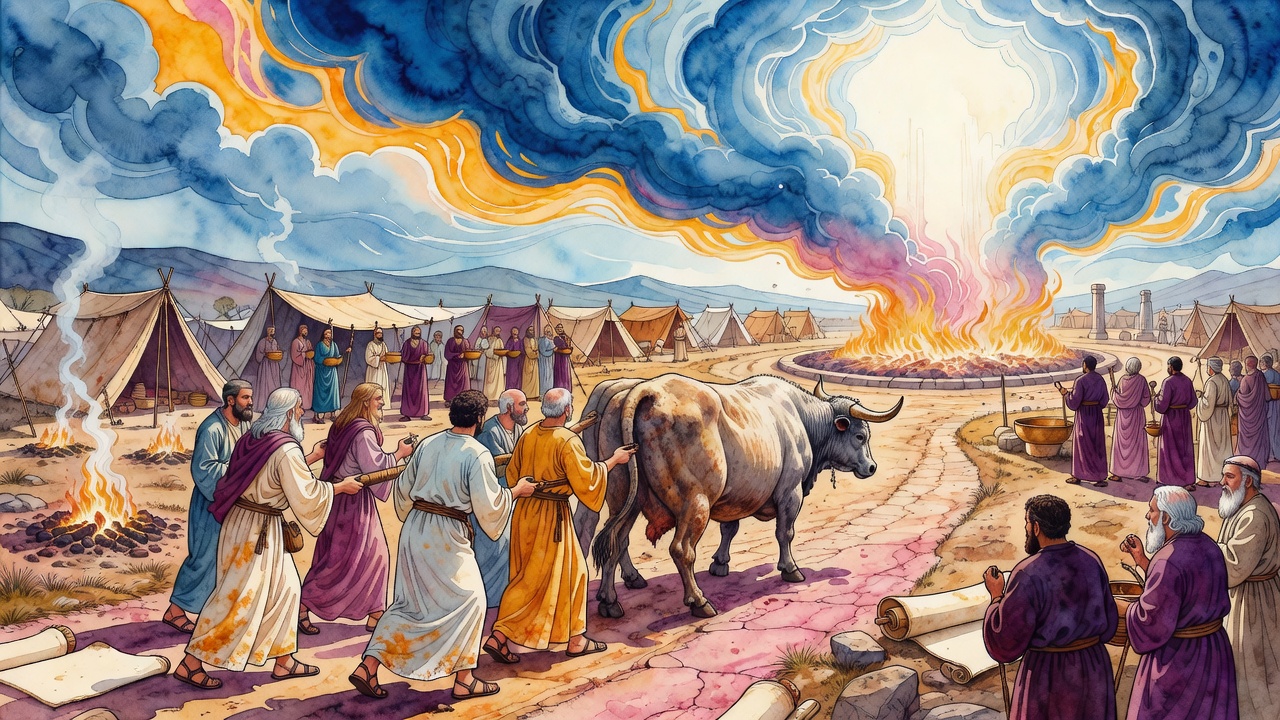
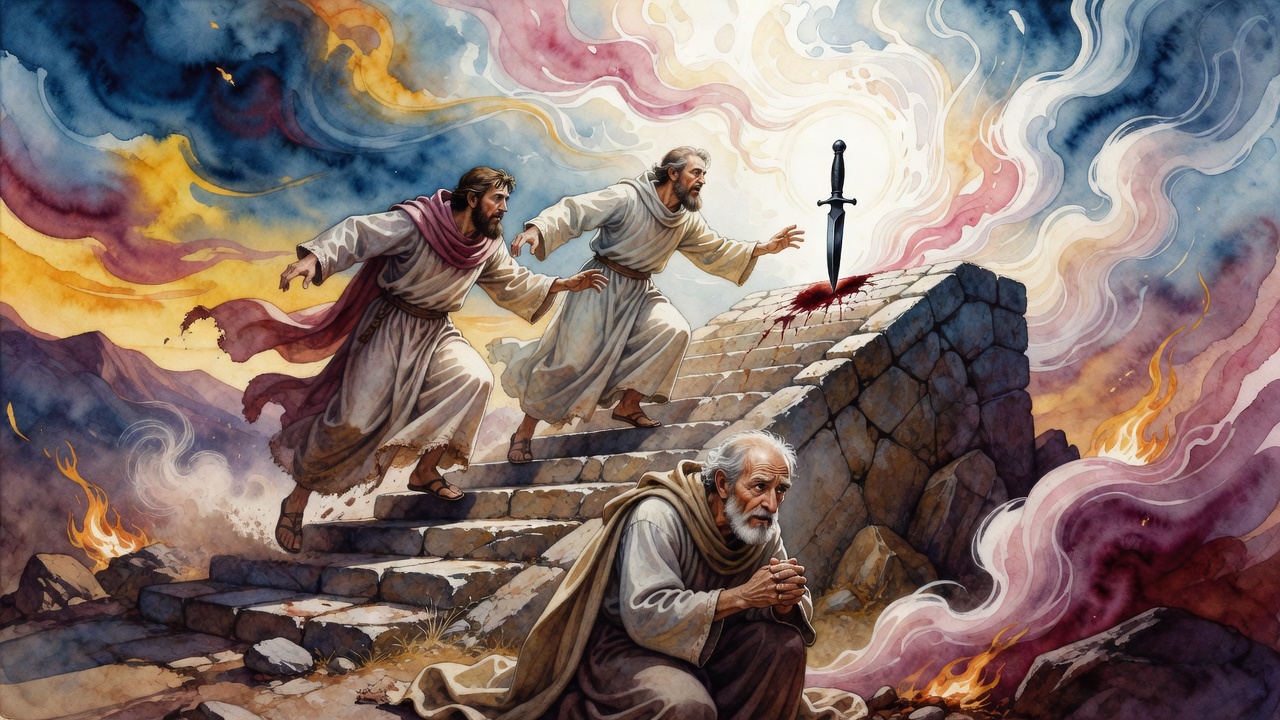
Two Cohanim, equal in family and equal in rank, hit the ramp at the same breath. The morning sacrifice waited on the altar. Only one knife would earn the honor of the first service. Sandals slapped stone. Breath tore in young chests trained for song and slaughter, not for a footrace that would end in blood.
The crowd below watched holy men run like athletes after glory. Someone cheered. Someone covered a child's eyes too late. One priest overtook the other by half a stride. In that half-second of advantage, jealousy found a blade. He seized his sacrificial knife and drove it into his rival's heart on the ramp of the House of God.
Blood ran where oil and wine were supposed to run. The Temple became a crime scene with incense still sweet in the air. The murdered man folded around the hilt. The killer's hands kept the posture of service even as service turned into murder. Zeal for a mitzvah (a commandment) had grown teeth.
Nothing Good From a Quarrel
The sages had already named the slope that ends in a body. Nothing good comes out of a quarrel. First two men dispute over money or honor. Then the dispute hardens into blows. Then the blows draw down legal penalties. What might have been settled with a few calm words climbs step by step into court and punishment, and sometimes past court into a corpse no payment schedule can repair.
Lot was pried away from Abraham by nothing more than a fight between herdsmen (Genesis 13:7). Green pasture and water rights split a household that had walked out of Ur together. A lawsuit in Deuteronomy ends in flogging when words fail. Strife is the seed. The harvest is bitter. On the ramp the seed was prestige twisted into speed, and the harvest was a dead priest still twitching under the same sun that lit the morning offering.
The law that begins "if men quarrel" reaches women too, and a man and a woman together, so no human assailant hides behind the grammar. Stones and fists are named as examples, but any object measurable in court counts if a tribunal can assess whether it could cause harm. A sacrificial knife is more than measurable. It is dedicated, sharp, and in this hour unholy in the most intimate way.
R. Tzaddok on the Steps
Rabbi Tzaddok climbed the steps of the Temple hall with a verse already cutting his mouth. "If there be found a slain one on the earth" (Deuteronomy 21:1). Who brings the heifer of the broken neck for an unsolved murder? Is the Temple itself the city of the killing, or the azarah, the court? The people burst into tears. This was not a field murder on a lonely road. This was blood on the stones that teach Israel how to approach God.
The legal questions were not cold. They were the only language left when the holy place had been used as a weapon rack. A murdered priest is still a murdered man. The ramp is still earth. The eglah arufah still demands someone answer for a corpse found where no one should need to ask who is responsible.
Women wailed. Young priests froze mid-step on lower stairs. The smell of blood mixed with the smell of frankincense until neither could be prayed over cleanly. Tzaddok's question hung in the air longer than the smoke.
The Father and the Knife
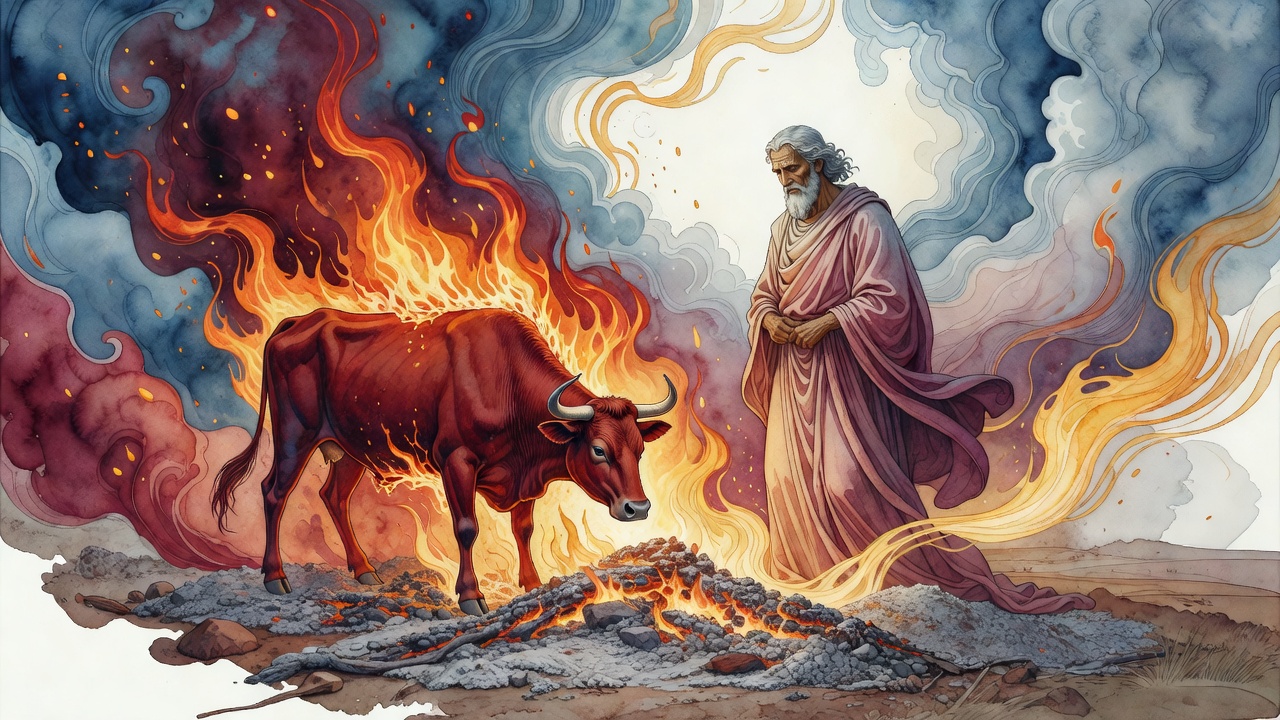
Then the father of the murdered Cohen stepped forward. His son was still palpitating. The knife was still in the wound, a line of steel between two worlds. The father said, "My brothers, let him be your atonement. My son is still palpitating, and the sacrificial knife has not become unclean."
He cared that the blade remain fit for service more than he let the crowd linger on his son's last pulse. The teaching that fell out of that hour was harsher than any eulogy. The defilement of knives weighed more on them than the spilling of blood. Zeal for purity had already killed once. Now purity tried to outrank grief itself.
Some in the crowd nodded as if ritual logic still held. Some turned away as if the nod itself were another wound. The son died with a clean knife as his last public concern, and the midrash does not soften that shock into a gentle moral.
When the Blow Is Fatal
The law of quarrel and compensation only governs when the victim survives and recovers. Damages for humiliation, healing, and loss of work have a ledger. When the blow proves fatal, the whole framework of payments falls away. There is no schedule for a heart stopped on the altar ramp. There is only bloodguilt, tears, and a people forced to see that two men racing toward God can still murder each other on the way up.
The knife that was meant for a lamb had tasted a brother. The quarrel that began as a sprint for honor ended as a corpse that could not be compensated and a father who still spoke of cleanliness while his child died. Nothing good had come out of the quarrel. The ramp kept the stain longer than any washing could reach.
← All myths