Israel Learned to Slaughter Only Before the Tent
Desert knives fed private hunger and goat demons. Torah dragged every blade to the Tent, then taught fat and flock as care for Israel's living assets.
Table of Contents
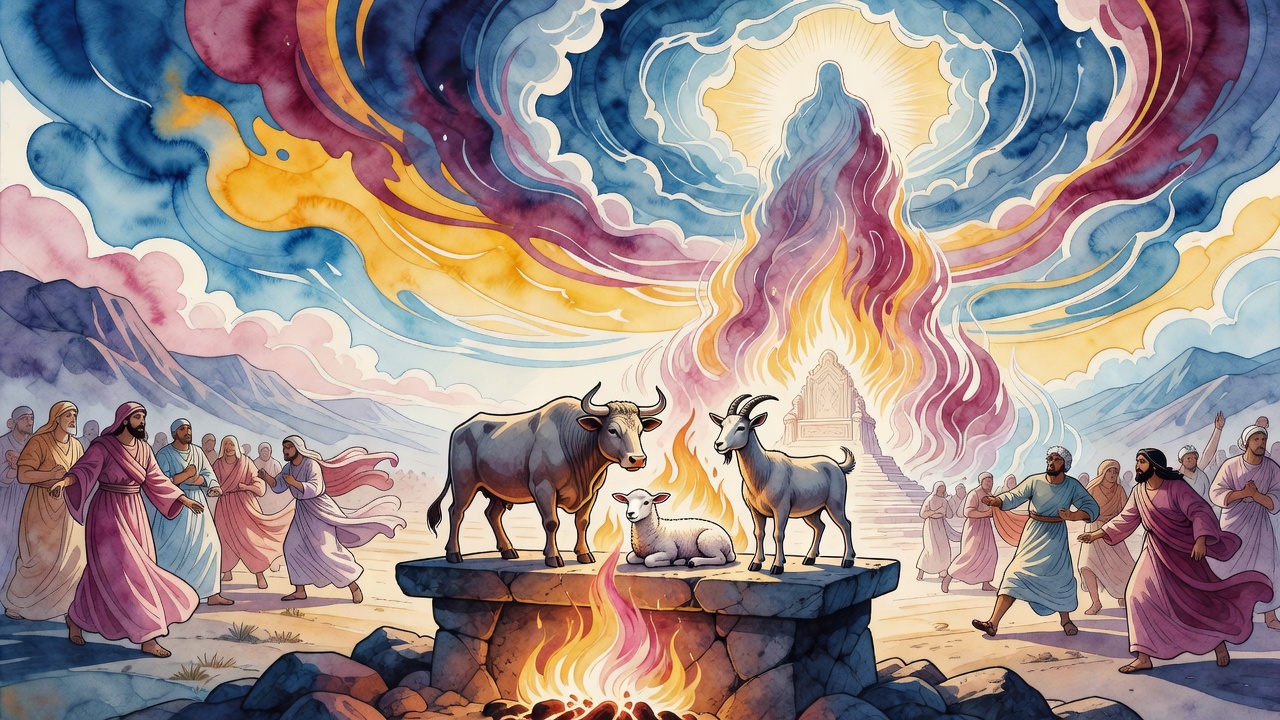
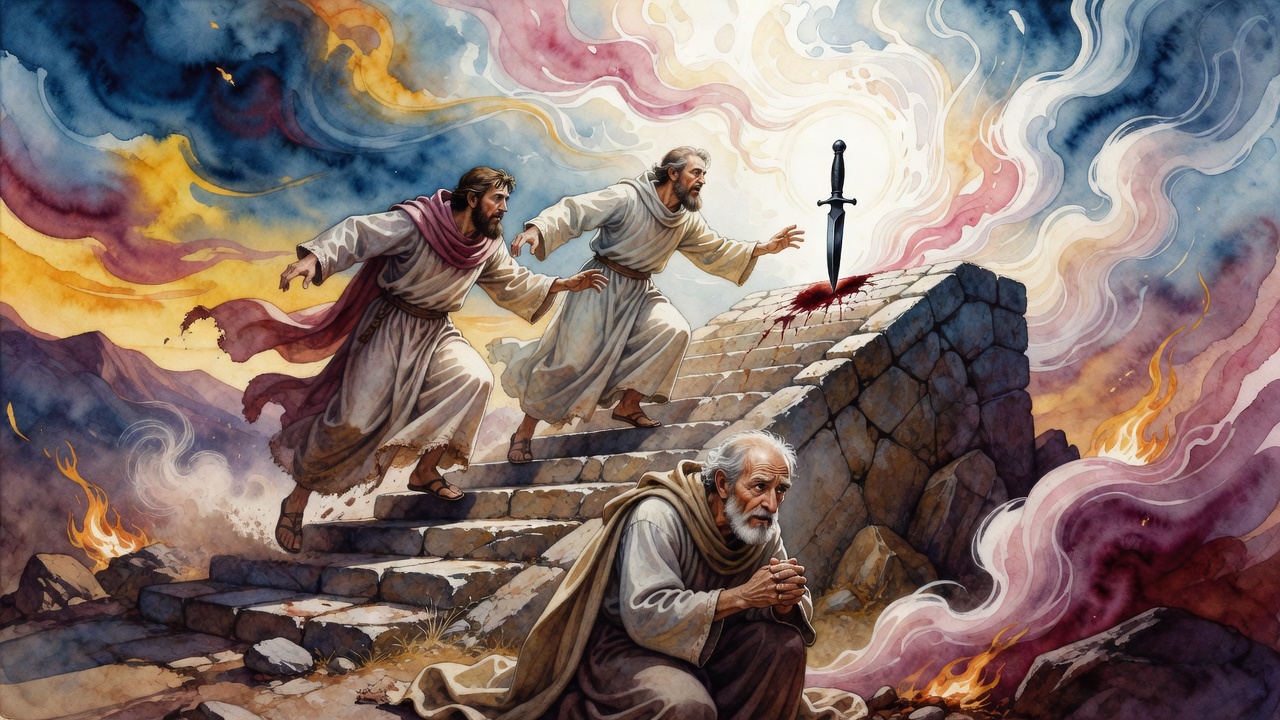
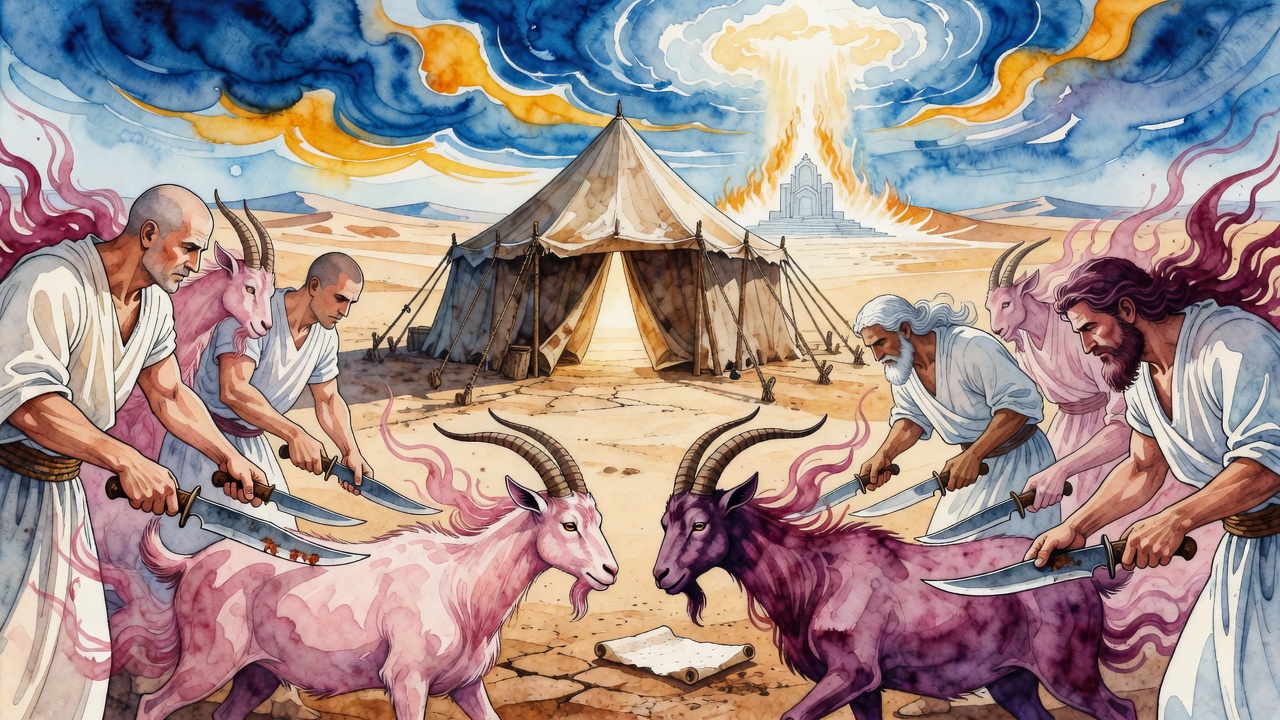
In the desert the knife moved faster than the sanctuary. Rabbi Akiva says Israel stabbed cattle and ate, private hunger answered with private blood. Then the Torah closed that door. If any person from the House of Israel slaughters, and does not bring it to the entrance of the Tent of Meeting, blood will be counted against that person (Leviticus 17:3-4). The craving for meat had been walking toward idols. They shall no longer offer sacrifices to the goat demons after whom they went whoring (Leviticus 17:7).
 Click for full size
Every throat cut away from the Tent became a secret shrine. The law dragged the secret into the open.
Fat That Rises as a Sweet Savour
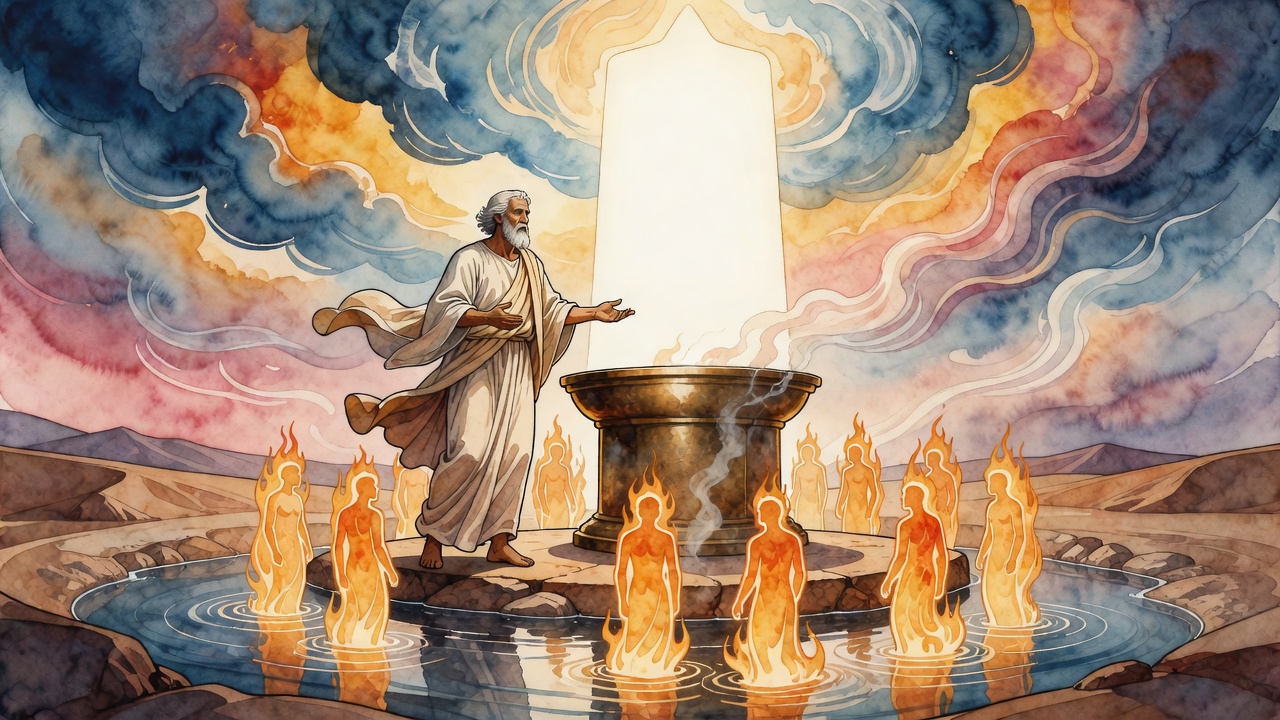
On the altar itself the Book of Jubilees spells the portion heaven claims. Offer them all together on the altar of burnt-offering; it is a sweet savour before the Lord. The whole animal of the burnt offering, the olah, goes up in smoke. For the thank-offering the fat is named with almost greedy precision. Fat on the belly, fat on the inwards, the two kidneys with their fat, the loins, the liver removed with the kidneys. In a world where fat is the richest cut, the richest cut is not kept for the eater's tongue. It is given first. Meal offering and drink offering stand beside the meat. Grain and wine complete the gesture so that nothing chosen is held back.
Sweet savour is not a nose hungry for smoke. It is acceptance. Devotion made visible as heat and ash.
Craving Meat and Leaving the Demons
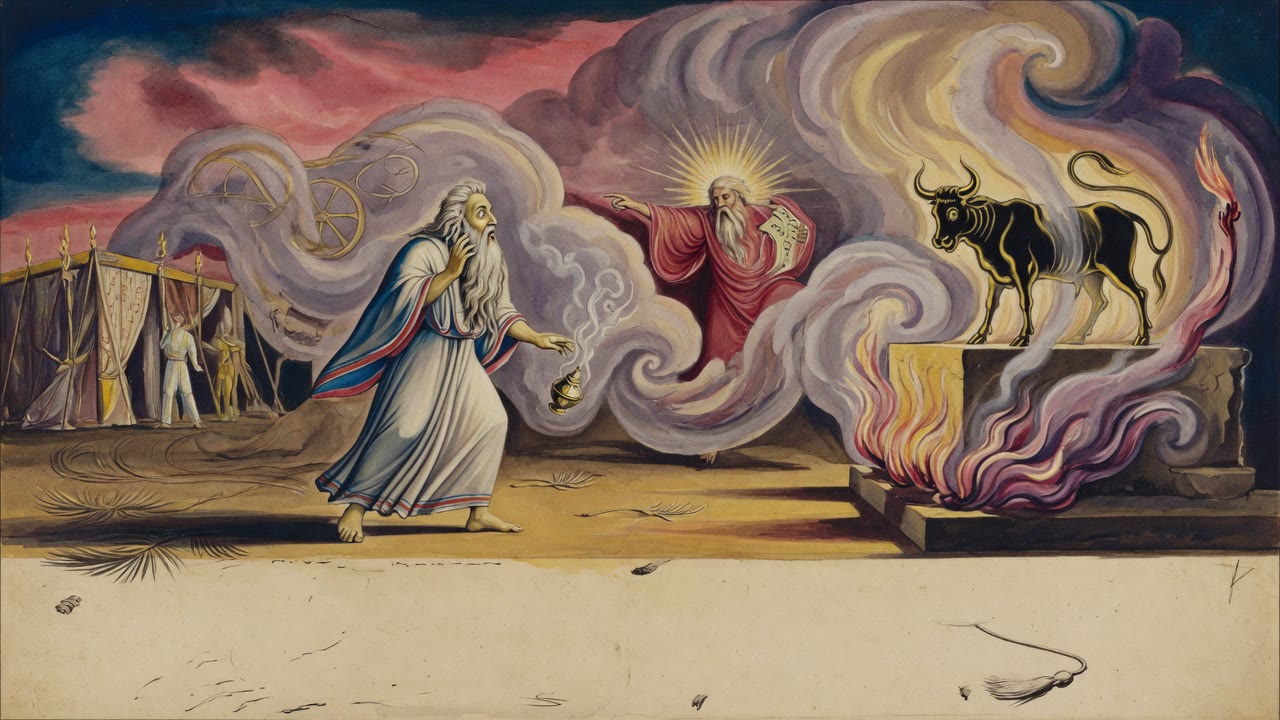
Rabbi Ishmael hears the moment Moses spoke the ban. The people were craving flesh. The caution came then, not as cruelty, but as quarantine against goat-demon worship. When they later pressed toward the Land, they asked the practical question. "O our master, if we wish to eat flesh, how shall we do so?" Moses answered with a map of time. In the desert, slaughter only at the Tent. When the Lord enlarges the territory, flesh may be eaten according to the soul's desire (Deuteronomy 12:20). Permission expands with the border. Holiness does not vanish with the expansion.
Even then Moses narrowed the knife. Do not strip the breeding stock bare. Shear for clothing. Let he-goats fund fields. Drink goat's milk for the household. When slaughter is allowed, take from what the herd bears, from firstlings and offspring, not from the living capital that keeps Israel fed next year. Rabbi Akiva names the motive straight. See how the Holy One cares for the assets of Israel.
Meat by the Weight of Silver
Rabbi Eleazar ben Azariah turns law into a table rule. Ten pounds of silver, eat greens in the pot. Twenty, greens in a casserole. Thirty, a pound of meat from Sabbath to Sabbath. Fifty, meat each day. Why such arithmetic? So that appetite does not bankrupt the house. Rabbi Eleazar ben Shammua adds another brake. Before buying even the weekly pound, consult the household. The verse says, "and you say, Let me eat meat," as if speech inside the home must happen before the butcher is paid.
The altar's fat and the kitchen's restraint share a single spine. Give the best upward. Spend the rest with a mind that remembers tomorrow's flock.
From Secret Stabbing to Shared Fire
What began as desert stabbing ends as ordered fire. The Tent claims the kill so that no goat demon steals the smell. Jubilees claims the fat so that the richest part does not stay in private hands. Deuteronomy later opens local slaughter, yet still binds Israel to offspring rather than ruin, to counsel rather than impulse. The people who once chased meat into the dark learn to bring hunger into a place where heaven and household both keep watch.
The desert generation did not invent hunger. They invented shortcuts. A stab in the sand is faster than a walk to the Tent. A goat-demon cult is easier than waiting for Aaron's line to receive blood in the proper place. So the Torah answers speed with geography. Bring the animal to the entrance. Let the kill happen where the Presence already dwells. If the people later receive permission to eat flesh throughout the Land, that permission still arrives after the teaching of the Tent has trained the hand.
Solomon's proverbs about sheep for clothing and goats for field money sit inside Moses' warning like tools in a belt. Wealth is not forbidden. Waste is. The Holy One who demands fat on the fire also demands that the breeding stock not be eaten into poverty. A people that survives on miracles in the wilderness must still learn arithmetic before it inherits vineyards.
When the thank-offering's kidneys and liver join the fat, the body of the animal becomes a map of gift. The richest interior is not a trophy. It is the portion that rises. The meat left for the household is secondary on purpose. Jubilees and Tanchuma meet there: altar first, appetite second, household consulted, demons locked out.
← All myths