5 min read

God Takes Only the Hunted for His Altar Fire

God sides with the pursued through history and commands that only ox, lamb, and goat, never the predators, rise as offerings on His altar.

Curated by Arthur · Told by Maggid ·
Table of Contents
  1. God Seeks the Pursued
  2. He Is Not Hungry for Smoke
  3. Do Not Cut Off the Ones Who Stood
  4. Fire That Remembers a Side

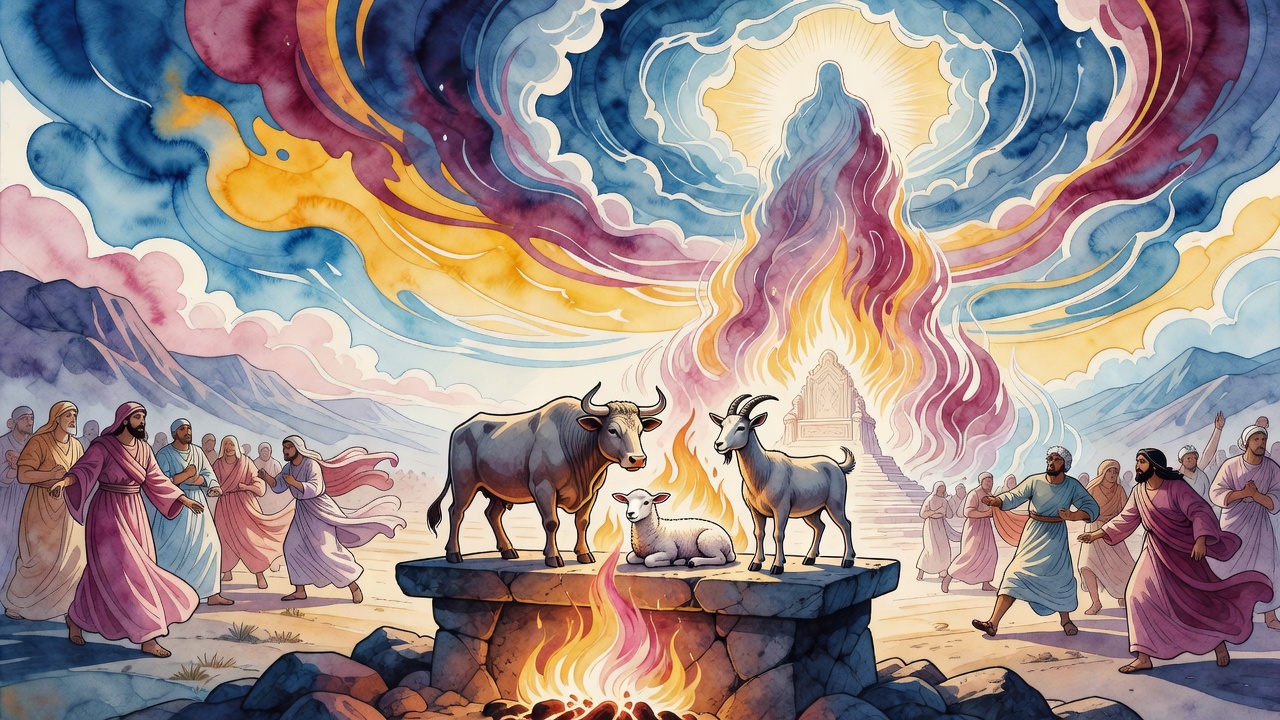
The lion did not climb the altar. The wolf did not. The leopard kept its distance from the fire.
God Takes Only the Hunted for His Altar Fire Click for full size

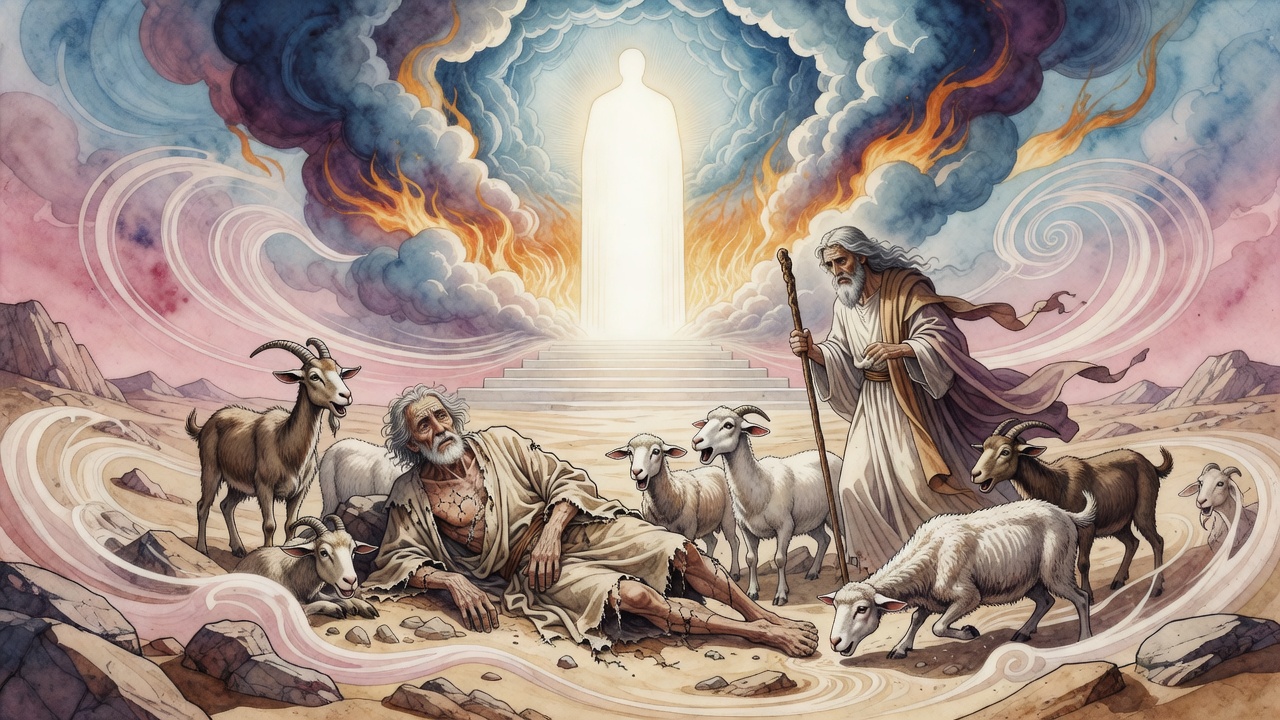
Only the hunted rose in smoke: ox, lamb, goat. Rabbi Yehudah bar Simon laid the rule down where blood already taught politics. The ox is prey to the lion. The lamb is prey to the wolf. The goat is prey to the leopard. So the Holy One said, in effect, bring Me no offering from the side that chases. Bring Me the side that flees (Leviticus 22:27).

Even sacrifice had to choose a team.

God Seeks the Pursued

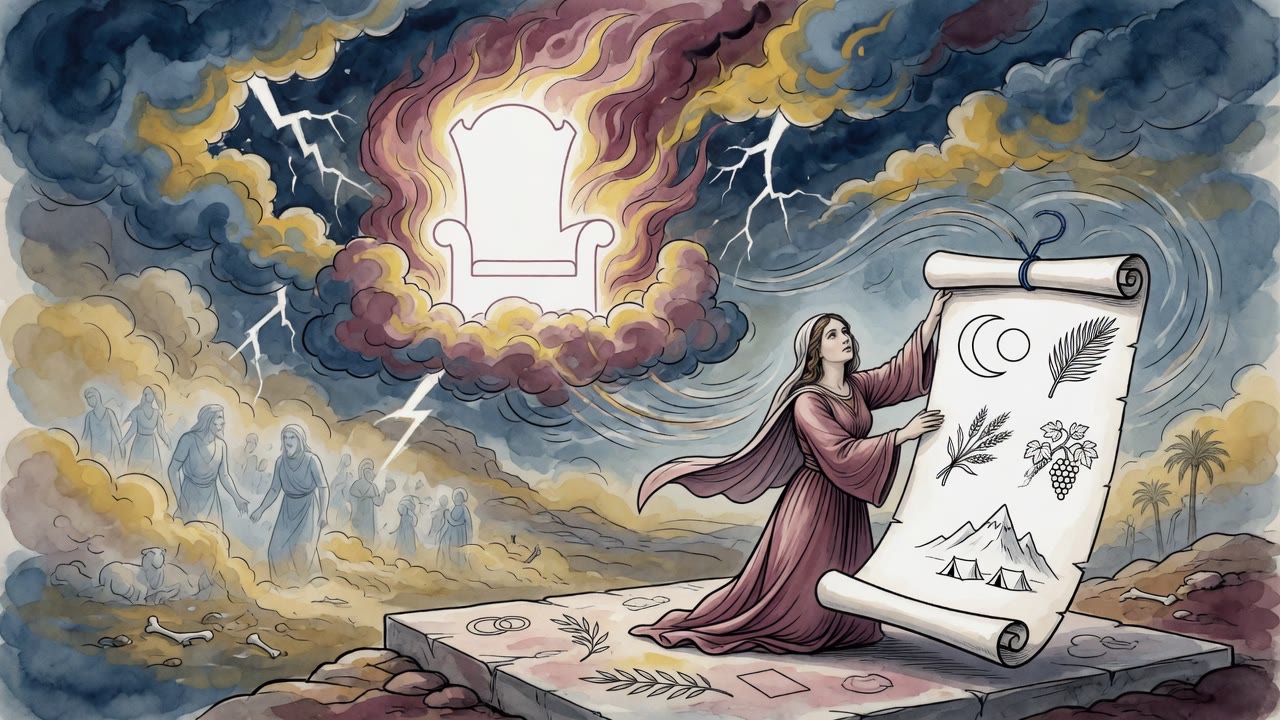
"And God seeks the pursued," Kohelet sang, and Rabbi Huna heard a verdict over history. Righteous chasing righteous, wicked chasing wicked, wicked chasing righteous, even righteous chasing wicked: in every pattern the Holy One turns toward the one who runs. He will one day demand the blood of the hunted from the hand of their hunters.

Walk the scroll and watch it hold. Abel run down by Cain, and the Lord turned to Abel's offering. Noah hounded by his generation, and he found favor while water erased the rest. Abraham against Nimrod. Isaac driven by Philistines. Jacob fleeing Esau. Joseph sold by brothers. Moses hunted by Pharaoh. Israel pursued by the nations to this hour: "The Lord your God chose you." The pattern is not a mood. It is a habit of Heaven.

When the altar menu names only the prey animals, the habit becomes liturgy.

He Is Not Hungry for Smoke

A newborn animal waits until the eighth day before it may rise as an offering by fire. The sages heard a warning folded into the wait. Do not let the evil inclination whisper that the Most High hungers, that He waits for flesh the way a man waits for supper. He needs nothing. Ages passed before Israel stood at Sinai, and no altar fed Him, and He did not grow faint.

David asked who in the skies could be set beside the Lord. Rabbi Avin the Levite turned the word: the Holy One is not the one arranged for. He is the one who arranges bread for the orphan and the hungry. The showbread on the table is His gift ordered toward Israel, not a gift plugging a lack in Him (Leviticus 24:8).

So the hunted on the altar are not divine groceries. They are a chosen symbol. God sides with the pursued even when He accepts fire.

Do Not Cut Off the Ones Who Stood

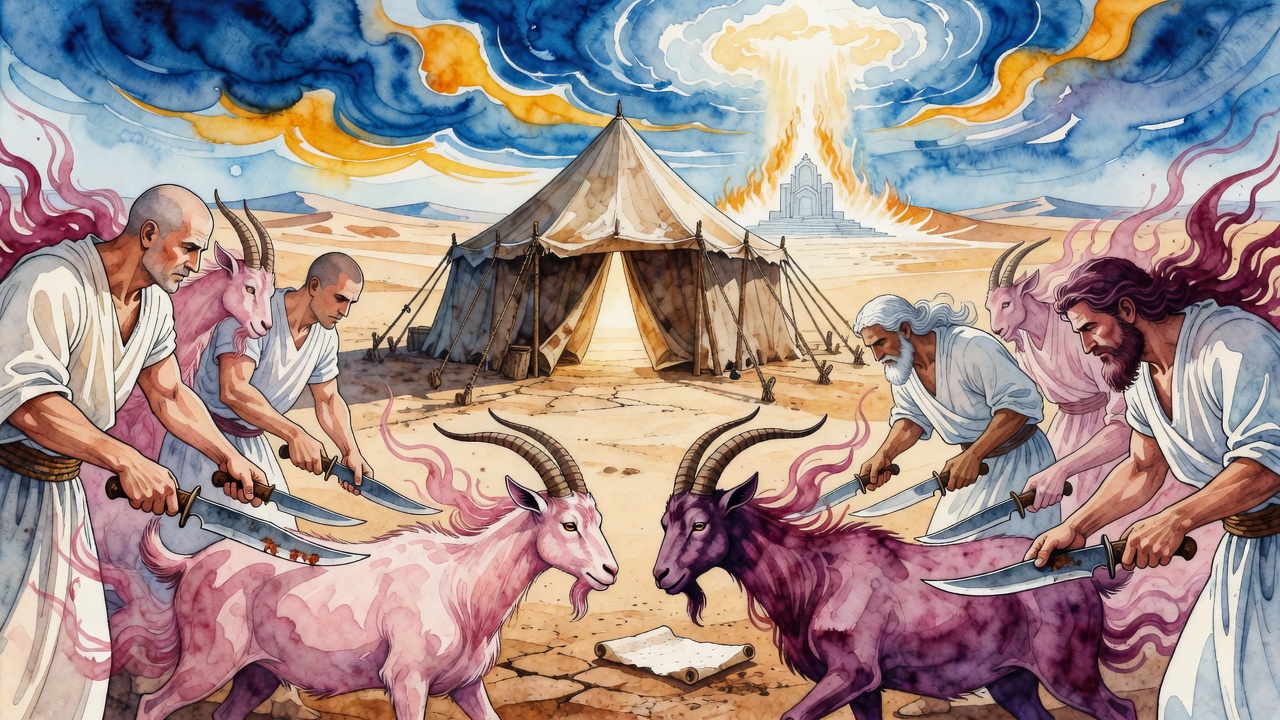
When the calf rose in the camp, the tribe of Levi answered Moses: "Whoever is for the Lord, to me!" (Exodus 32:26). Swords left sheaths. Favoritism died in the gate. Later, when a generation would fall in the desert, Levi was pulled out of the count that carried the decree. "Do not cut off" the Kohathite families who bear the holy things (Numbers 4:18). They had offered themselves when the hour was a blade. Heaven advanced them over the Tabernacle because a tested trust becomes a permanent trust.

The pursued and the loyal share a grammar. Both stand on the weaker-looking side of power. Both are claimed.

Moses heard both lessons in the same wilderness air: altar animals from the hunted, priestly service from those who would not melt into the crowd's sin.

Fire That Remembers a Side

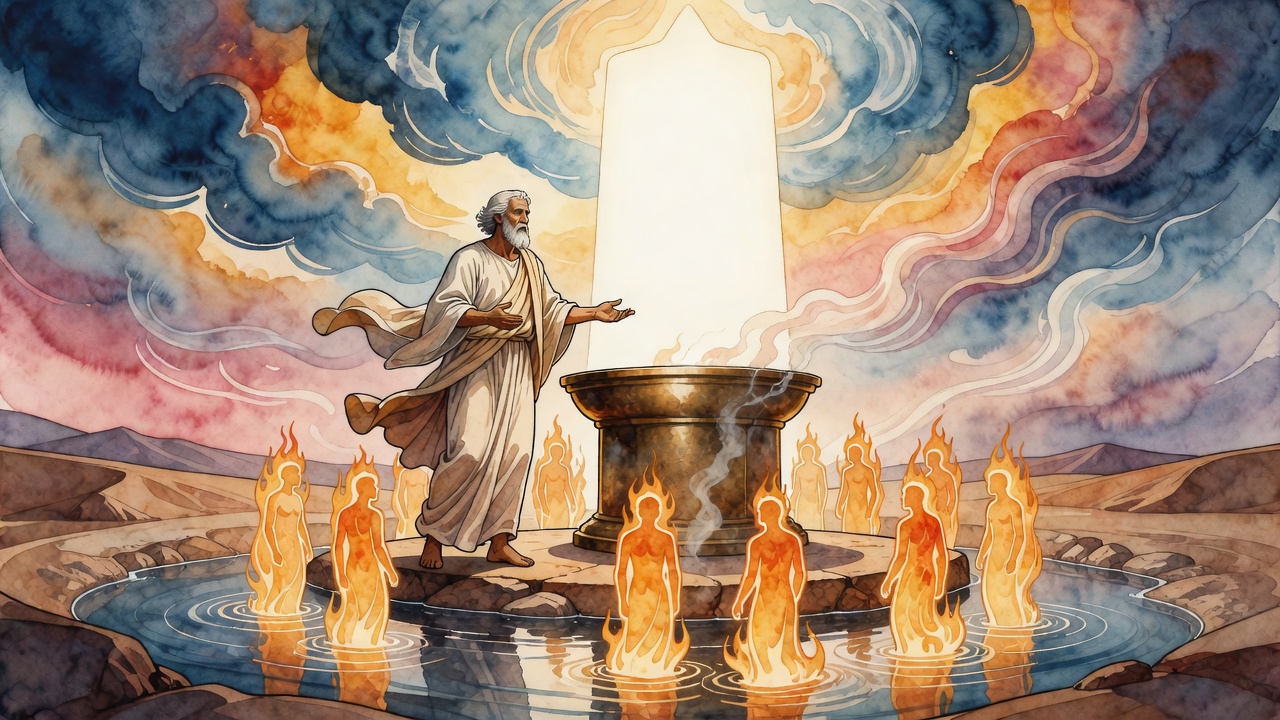
Picture the queue at the sanctuary. A man brings a bull that once fled a lion's shadow. Another brings a lamb that knows the wolf's hour. No one brings the lion. The smoke goes up, and the choice goes up with it. Nations that chase will one day answer for blood. Israel, so often the one in flight, is told its offerings must rehearse the same allegiance.

God does not need the meat. Israel needs the reminder. Every clean animal on the fire is a small refusal to worship the hunter's strength.

Night settled on the courtyard. Coals dimmed. Somewhere a lion called beyond the camp, and no one mistook that voice for a candidate for the altar.

A boy herding goats asked his father why the lion, king of beasts, was unfit for God. The father, who had seen a lion take a calf at dusk, answered without philosophy. "We do not put the chase on the fire. We put the fear that runs." The boy did not forget. Years later, when he brought his first offering, his hands shook for more than one reason.

Across the camp Levi still walked with a different memory of blades, the calf's day when loyalty had a cost. Hunted animals and loyal tribes are not the same story, yet both refuse the easy power of the crowd and the predator. The altar smoke and the census exemption rhymed for any ear trained on both scenes.


← All myths
From the tradition

Sources

3 sources

The texts behind this telling. Some cards carry a translation of the source; others are our own retelling of it, and each card says which. Every card links out to the original.

Midrash Tanchuma Buber, Emor 12:2Midrash Tanchuma Buber, Emor

Translation of the source text.Midrash Tanchuma (Buber), Public Domain, on Sefaria · CC-BY-SA

"And God seeks the pursued" (Ecclesiastes 3:15). Rabbi Huna said in the name of Rabbi Yose: In the future the Holy One, blessed be He, will demand the blood of the pursued from the hand of their pursuers. When a righteous man pursues a righteous man, "God seeks the pursued." When a wicked man pursues a wicked man, "God seeks the pursued." [When a wicked man pursues a righteous man, "And God seeks the pursued." Even if you go back and say that a righteous man pursues a wicked man, in any case, "And God seeks the pursued."]

Know that it is so, for behold, Abel was pursued by Cain; therefore it is said, "And the Lord turned to Abel and to his offering" (Genesis 4:4). Noah was pursued by his generation, "but Noah found favor" (Genesis 6:8), while of his generation it says, "And He blotted out all existence" (Genesis 7:23). Abraham was pursued by Nimrod, "You are the Lord, the God who chose Abram" (Nehemiah 9:7). Isaac was pursued by the Philistines, "And they said, We have surely seen" (Genesis 26:28). Jacob was pursued by Esau, "For the Lord chose Jacob for Himself" (Psalms 135:4). Joseph was pursued by his brothers, "And the Lord was with Joseph" (Genesis 39:2). Moses was pursued by Pharaoh, "And He said He would destroy them, had not Moses His chosen one" (Psalms 106:23). Israel is pursued by the nations of the world, "The Lord your God chose you" (Deuteronomy 7:6).

Rabbi Yehudah bar Simon said in the name of Rabbi [Yose bar] Nehorai: Here too the ox is pursued by the lion, the lamb by the wolf, the goat by the leopard. The Holy One, blessed be He, said: Do not bring before Me an offering from the pursuers, but rather from the pursued, as it is said, "An ox or a lamb or a goat" (Leviticus 22:27).

Full source
Midrash Tanchuma Buber, Emor 20:1Midrash Tanchuma Buber, Emor

Translation of the source text.Midrash Tanchuma (Buber), Public Domain, on Sefaria · CC-BY-SA

[Another interpretation] of (Leviticus 22:27): "And from the eighth day onward [it shall be accepted as an offering by fire to the LORD]." [This teaches] that your evil inclination should not lead you astray to say that there is eating and drinking before Him. Who used to offer sacrifices to Him before Israel arose? David said (Psalms 89:7): "For who in the skies can be compared (ya'arokh) to the LORD?", that is, who used to offer Him sacrifices? Rabbi Avin the Levite said: Who is like the Holy One, blessed be He, who sustains orphans and feeds the hungry? And this expression (ya'arokh) means nothing other than an expression of sustenance, as it is said (Leviticus 24:8): "On the Sabbath day [he shall] arrange it (ya'arkhenu) [before the LORD]."

Full source
Midrash Tanchuma, Bamidbar 26Midrash Tanchuma

Retold in our words. Read the original at the link below.Townsend 1989 translation of Midrash Tanhuma, S. Buber Recension · CC-BY

(Numb. 4:18) “Do not cut off.” This text is related (to Nahum 1:7), “The Lord is good, a shelter in the day of trouble; He knows those who trust in Him.” The nature of the Holy One, blessed be He, is unlike the nature of flesh and blood. In the case of a king of flesh and blood, when a province rebels against him, he acts against it with an indiscriminate punishment and kills the good along with the bad. Now the Holy One, blessed be He, is not like that. Rather, when a generation provokes Him, He saves the righteous and destroys the wicked. The generation of Enosh sinned. He destroyed them but rescued Enoch, as stated (in Gen. 5:24), “And Enoch walked with God.” Why? (Nahum 1:7:) “[The Lord is good, a shelter] in the day of trouble; He knows those who trust in Him.” The generation of the flood provoked Him. So He destroyed them, as stated (in Gen. 7:23), “And He blotted out all existence”; but He rescued Noah, as stated (in Gen. 6:8), “And Noah found favor [in the eyes of the Lord].” And similarly with the Sodomites, He destroyed them, as stated (in Gen. 19:24), “Then the Lord rained down upon Sodom”; but He rescued Lot, as stated (in vs. 29), “and sent Lot away.” He brought darkness upon the Egyptians, but (according to Exod. 10:23) “all the Children of Israel had light in their dwellings.” Why? (Nahum 1:7:) “[The Lord is good, a shelter] in the day of trouble; He knows those who trust in Him.” They went forth from Egypt and came to the desert. [There] they committed that deed (i.e., the incident of the golden calf), [all] except for the tribe of Levi. Thus it is stated (in Exod. 32:26), “[So Moses stood up in the gate of the camp and said,] ‘Whoever is for the Lord, to me!’ And all of the sons of Levi gathered to him.” [What is the meaning of “Whoever is for the Lord?”] Whoever (in Exod. 32:3) has not given a ring for the calf, let him come unto me. [To him] the Holy One, blessed be He, said (in Nahum 1:7), “[The Lord is good, a shelter] in the day of trouble; He knows those who trust in Him.” Moshe immediately arose and killed the sinners, as stated (Exodus 32:28), “And the Children of Levi did like the word of Moses.” With reference to the tribe of Levi, however, which gave their lives for the name of the Holy One, blessed be He, He thus said to Moses and Aaron (in Numb. 4:18), “Do not cut off….” And so He says in another place (i.e., in Numb. 3:15), “Enroll the Children of Levi.” But He has also said (in Numb. 1:49), “However, you shall not enroll the tribe of Levi.” Why? In order to exclude them from the decree. As the Holy One, blessed be He, foresaw that Israel was going to provoke Him and said to them (in Numb. 14:29), “In this desert shall your carcasses drop.” Therefore, the Holy One, blessed be He, said, “The Children of Levi shall not be [part of] this decree, as stated (in Numb. 1:49, cont.), ‘nor shall you take a census of them as part of the Children of Israel.’ Why? Because they are Mine, as stated (Numb. 3:12), ‘and the Levites shall be mine.’” Thus when anyone offers (rt. qrb) a little of himself, they advance (rt. qrb) him a lot. Now they had offered (rt. qrb) themselves, when Moses said (in Exod. 32:26), “Whoever is for the Lord, to me!” And not only that, but the Holy One, blessed be He, said (according to Numb. 1:50) “You shall enroll the Levites to be over the tabernacle of the testimony.” Thus when someone is tested in [one] area and found trustworthy, the Holy One, blessed be He, trusts him forever; for so you find in the case of Joshua. When he was tested with Amalek, he prevailed against him according to the law and according to the commandment. It is so stated (in Exod. 17:13), “And Joshua defeated Amalek and his people….” The Holy One, blessed be He, said to him, “From your tribe (Ephraim) I am raising up one to exact punishment from Amalek, as stated (in Jud. 5:14), “Out of Ephraim came those whose root is in Amalek….” What is the meaning of out of (mny) Ephraim? He appointed (mnh) Ephraim alone to destroy the seed of Amalek. The Holy One, blessed be He, said to him (ibid., cont.), “’After you, Benjamin with your peoples,’ [i.e.,] leave him for Saul ben Kish, the Benjamite; he will uproot him.” Another interpretation (of Jud. 5:14), “Out of Ephraim.” Saul was tested and found untrustworthy in his commission. Rather (according to I Sam. 15:9), “But Saul and the people spared Agag.” He put him back after him (i.e., behind Ephraim, the tribe of Joshua and Samuel) and the kingdom was taken from him, as stated (in Jud. 5:14), “after you (i.e., Ephraim), Benjamin with your peoples.” And I have also tested this tribe (of Levi), and they have been found to be preserving My honor; for they have given their life for the sanctification of My name (in Exod. 32:27-28), “Let each one put his sword on his thigh [….] So the Children of Levi acted according to the word of Moses,” and they did not show favoritism. Therefore, Moses blesses them and says to them (in Deut. 33:9), “Who says of his father and mother, ‘I do not consider them […].’” And [so] I am also advancing him and making him My imperial agent. and I am entrusting him with My house and My sanctity, as stated (in Numb. 1:50), “But you shall enroll the Levites to be over the tabernacle of the testimony….” And what was it that I told you (in vs. 49)? “However, you shall not enroll the tribe of Levi.” [This prohibition] was to exempt them from the decree which I was going to pronounce over Israel. It is simply that I am allotting them great honor. When you number them, [number them] by themselves through the Divine utterance (in Numb. 3:15), “Enroll the Children of Levi.” Now if I have honored the Levites, who bear the tabernacle, how much the more so in the case of the Children of Kohath, who bear the ark, [as stated] (in Numb. 3:31), “And their duties included the ark, the table, the lampstand, the altars, [….]” He therefore said to them (in Numb. 4:18), “Do not cut off [the tribe of the Kohathite families from the Levites].” The Holy One, blessed be He, said, “And if because the Children of Kohath have feared Me, I have allotted glory to them and to their children; then [I will honor] whoever stands in awe of Me and not cut off his name from the world.” From whom do you learn this? From the children of Jonadab ben Rechab. Since they did his will, what is stated about them? (Jer. 35:19), “Someone belonging to Jonadab ben Rechab shall not be cut off from standing before Me forever.” And if in the case of those who are proselytes, because they have done My will, I have done likewise for them (i.e., what they want); in the case of Israel, when they are doing My will, how much the more shall they neither be cut off nor have their name be erased from before Me? Rather, they shall live and abide forever and ever and ever, as stated (in Deut. 4:4), “But you who clung to the Lord your God are all alive today.”

Full source