7 min read

God Dated the Wilderness Census Like a Wedding Contract

Earlier generations got no written date when God raised or removed them. Israel the orphan bride receives week, year, month, and place.

Curated by Arthur · Told by Maggid ·
Table of Contents
  1. Generations Without a Date
  2. Speech Moves Inside the Tent
  3. Counted Like Wheat, Not Like Straw
  4. Moses Holds the Pen
  5. The Contract Closes

The king had taken wives before and left no paper trail. He married the first and wrote her no contract. He sent her away and wrote her no bill of divorce. He did the same with the second and the third. Their arrivals and removals blurred into the kind of history that refuses to be pinned to a week or a throne room. No witness could later point to a month and say, here, this is when she was chosen.
God Dated the Wilderness Census Like a Wedding Contract Click for full size

Then he saw a poor orphan of noble blood. He wanted her, and he refused to treat her like the others. He called his best man and ordered a full contract: which week, which year, which month, which day, which era. She would know exactly when she was taken up. The pen would not skip her the way it had skipped the earlier houses.

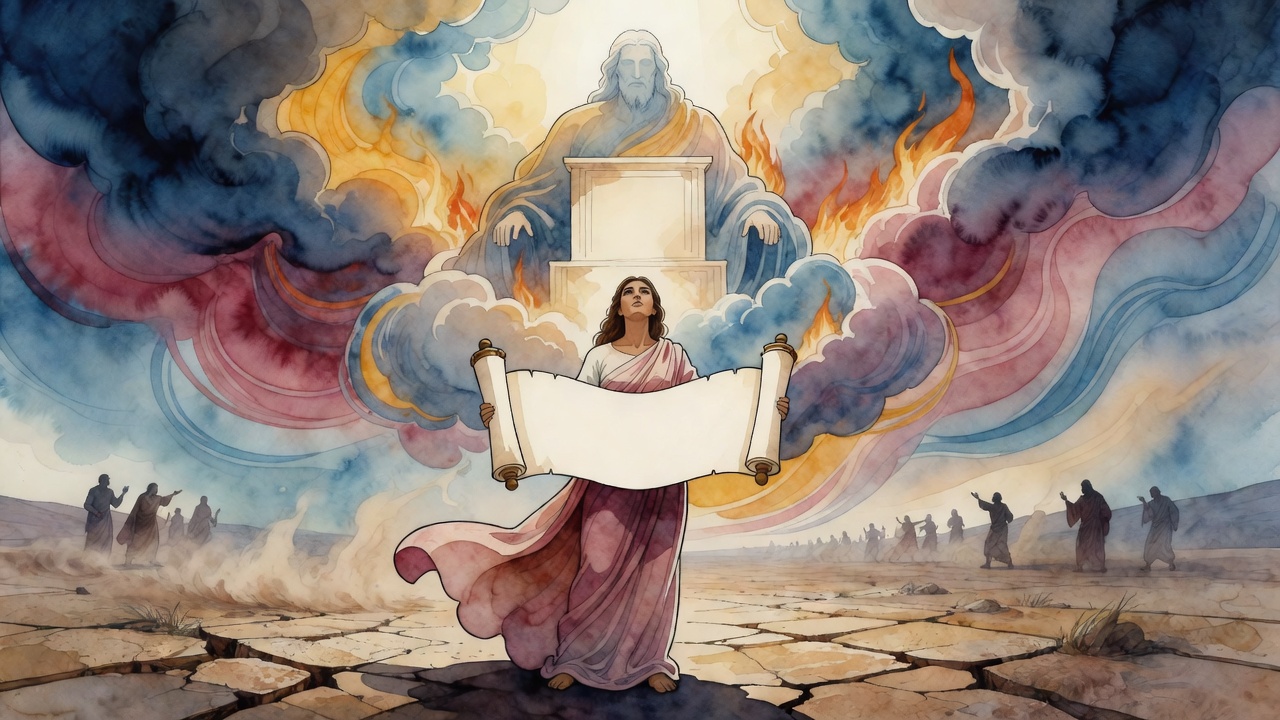
God told the parable on Himself when Moses heard the census command in the Sinai desert, in the tent of meeting, on a dated day (Numbers 1:1-2).

Generations Without a Date

The generation of the flood rose and fell with almost no calendar attached to their making. When they were removed, the verse says only that on that day the springs of the great abyss burst forth and the windows of the heavens were opened (Genesis 7:11). Waters climbed. Breath stopped. No wedding contract framed their beginning. No careful stamp marked when their horn was raised or lowered.

The generation of the dispersion scattered across the earth. The people of Sodom burned in their plain. The Egyptians staggered under plagues that found them without a love-letter of dates. God created, judged, scattered, struck. The record did not court those houses with month and era the way a husband courts a chosen bride. Their stories remain severe and largely undated in the places where affection would have written small numbers in the margin.

Israel is different because Israel comes from Abraham, Isaac, and Jacob. God said He would not behave with these as with those previous ones. Therefore the Torah writes the province, the tent, the first day, the year of the exodus era. The orphan of noble ancestry gets the document the earlier houses never held. A people can point to a morning and say, this is when we were counted as wanted.

Speech Moves Inside the Tent

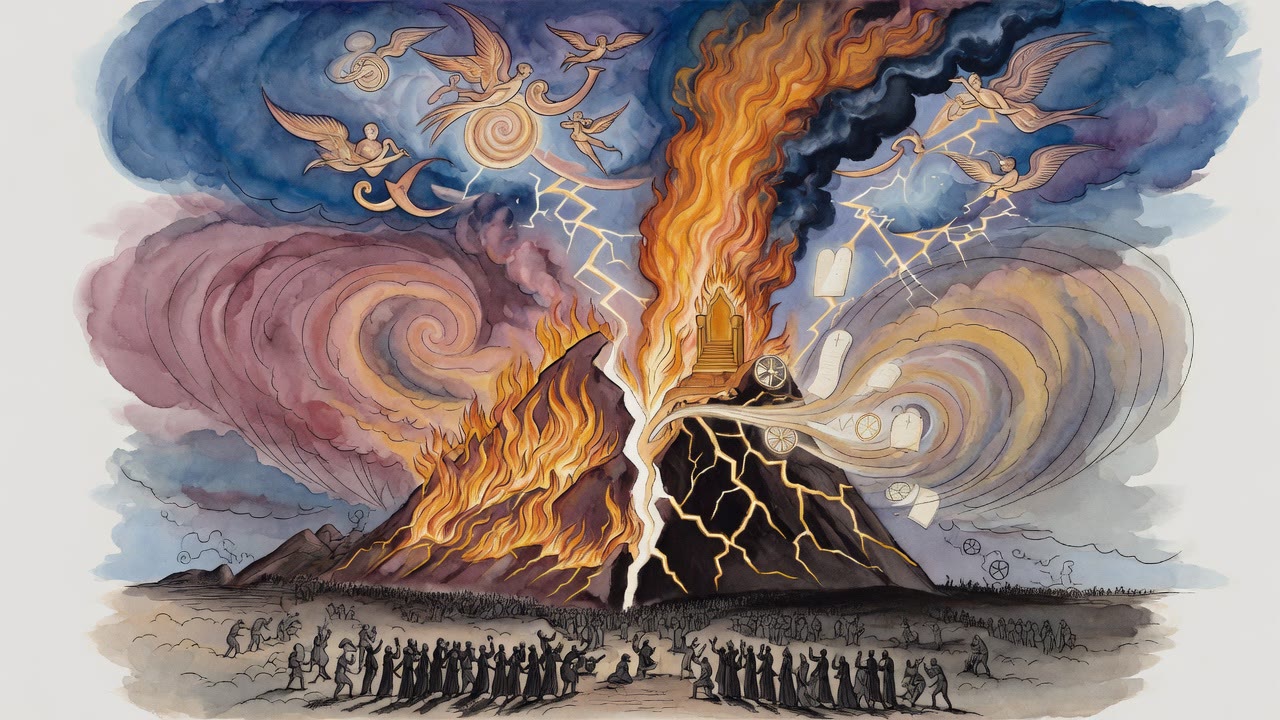
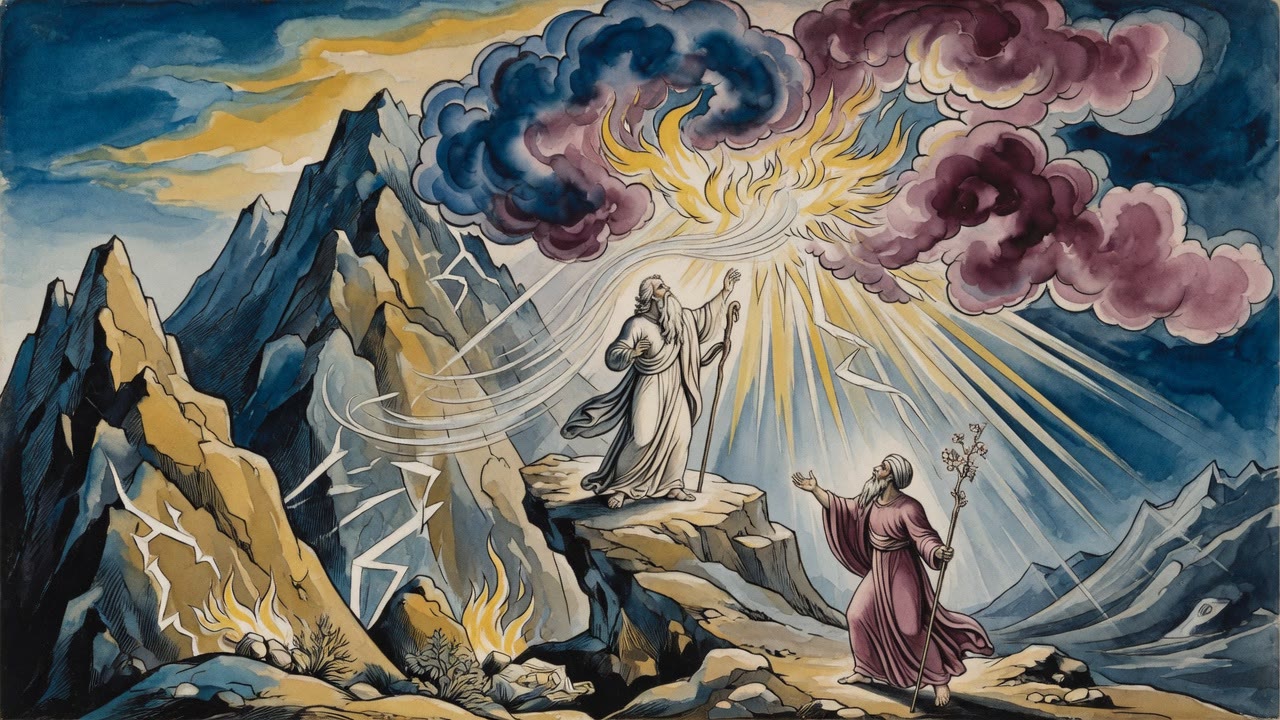
Before the tent of meeting stood, God spoke to Moses at the bush (Exodus 3:4), in Midian (Exodus 4:19), in Egypt (Exodus 12:1), on Mount Sinai (Leviticus 25:1). Each stage was public in its own way: fire in a shrub that would not burn up, a road command in a foreign land, a palace and a land under blows, a mountain smoking while a nation shook at its base.

When the tent rose, God chose humility. Walk humbly with your God, the prophet says (Micah 6:8). Speech moved indoors. Moses would enter, and the Voice would meet him from above the cover between the cherubim (Numbers 7:89). Glory that once filled horizons now preferred the modest room. The best conversations of command no longer needed a skyline of fire.

David's verse is pulled into the same pattern: all glorious is the king's daughter within; her clothing is of gold brocade (Psalms 45:14). Moses is heard in the king's daughter, raised in Pharaoh's house yet defined by what happens inside. Aaron becomes the gold work on the garments, the visible honor that clothes the inner glory. A bride who conceals herself in modesty, even an ordinary Israelite woman, is counted worthy of a priestly house. God's honor, He said, is like that: He speaks from within.

Counted Like Wheat, Not Like Straw

The census is not only paperwork. It is affection with a ledger. Wheat enters the granary with a count and leaves with a count. Stubble and straw are not numbered. They blow. They vanish under a boot. The peoples compared to chaff move without measure (Psalms 35:5). Israel is heaped and counted because God takes pleasure in knowing how many stand under the banners.

In the chamber of hewn stone the Sanhedrin (the high court of seventy-one sages) sat at the navel of the Temple, center of the body of holiness. From morning offering to afternoon offering they held court while smoke and blood marked the day's edges. If one needed to step out, he counted the room first. If twenty-three remained, he could leave. If not, he stayed in his seat with the pressure of a full bladder and a fuller duty. Mixed wine must not be lacking: never less than a third present, the measure that keeps the cup honest and the court alive.

Bodies under rule, counted and retained, echo the marriage contract. Straw is what a hand plans to discard. Wheat is what a house plans to keep through winter. The orphan bride is wheat. The undated generations were handled more like chaff: judged, yes, but not courted with a numbered love.

Moses Holds the Pen

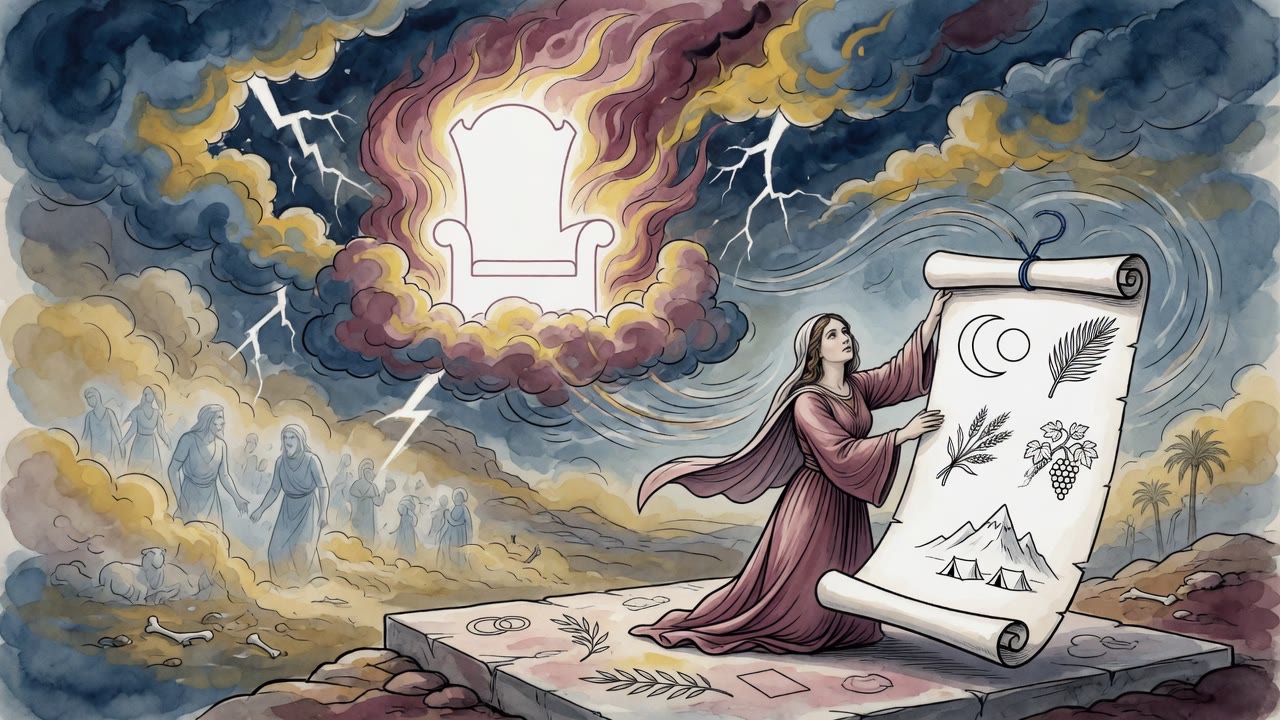
Moses stands in the parable as the one who must write what God insists on dating. Take a census of the whole congregation. Name them. Place them under the banner of a day that will not blur. The orphan bride does not guess whether she was chosen. She can point to Sinai desert, tent of meeting, first of the month, second year out of Egypt. The best man does not improvise. He records.

He has already been called king of Torah, a strong king over a people who received strength as gift (Psalms 29:11). Strength without a contract can still feel like the old pattern of wives taken and dropped. The dated speech inside the tent is the correction. Power now signs its name. The Voice that once burned in a bush now cares about a calendar line.

Moses moves from bush fire to inner room carrying both roles, messenger and scribe of the bond. The people he numbers are not raw recruits for a faceless campaign. They are the bride whose week and year were written on purpose. Each tribe, each name called, is another clause in a document heaven refused to leave blank.

The Contract Closes

When the count began, Israel held something the flood generation never held: a public memory of being wanted on a specific morning in a specific tent in a specific wilderness. Scribes worked. Leaders tallied. Dust rose under feet that now belonged to a dated people. The king who had skipped paperwork before refused to skip it now.

Outside, sand and sky still looked like any desert. Inside, the Voice had chosen humility, and the ledger had chosen love. Straw remains uncounted. Wheat is measured. The orphan of Abraham's house walks into history with a contract in her hand, and Moses keeps the pen steady while God dictates the date.

No earlier wife in the parable could have pointed to her morning. This one can. That is the whole difference between being used and being wed.


← All myths

From the tradition

Sources

3 sources

The texts behind this telling. Some cards carry a translation of the source; others are our own retelling of it, and each card says which. Every card links out to the original.

Midrash Tanchuma, Bamidbar 3Midrash Tanchuma

Retold in our words. Read the original at the link below.Townsend 1989 translation of Midrash Tanhuma, S. Buber Recension · CC-BY

(Numb. 1:1:) “Then the Lord spoke unto Moses in the Sinai desert, in the tent of meeting.” Before the tent of meeting was set up, He spoke with him in the bush, as stated (in Exod. 3:4), “and God called him from the bush. After that He spoke with him in Midian, as stated (in Exod. 4:19), “Then the Lord said unto Moses in Midian.” After that He spoke with him in Egypt, as stated (in Exod. 12:1), “Then the Lord spoke unto Moses and unto Aaron in the land of Egypt.” After that He spoke with him at Sinai, as stated (in Lev. 25:1), “Then the Lord spoke unto Moses on Mount Sinai.” When the tent of meeting was set up, He said, “Humility is beautiful,” as stated (in Micah 6:8), “and to walk humbly with your God.” [So] He began to speak with him in the tent of meeting. Likewise David also says (in Ps. 45:14), “All glorious is the king's daughter within; her clothing is of gold brocade.” “The king's daughter” – that is Moses, as stated (Exod. 2:10), “and she brought him to the daughter of Pharaoh, and he was a son to her.” And it is written (in Is. 19:4), “And I will deliver the Egyptians into the hand of a harsh lord.” – these are the plagues which came upon the Egyptians; (ibid., cont.) “and a strong king shall rule over them” – this is Moses, who was king of Torah, which is called strength, where it is stated (in Ps. 29:11), “The Lord will grant strength to His people.” Ergo (in Ps. 45:14), “All glorious is the king's daughter within.” (Ibid., cont.) “Her clothing is of gold brocade.” This is Aaron, since it is stated (in Exod. 28:13), “And you shall make a gold brocade.” Hence, our masters have said, “Every bride who conceals herself (because of modesty), even though she be an [ordinary] Israelite woman, is worthy of being married to a priest and to raise up high priests, since it is stated (in Ps. 45:14), ‘All glorious is the king's daughter within; her clothing is of gold brocade.’” The Holy One, blessed be He, said, “My honor is like this” – that He speak from within, as stated (in Numb. 7:89), “When Moses went into the tent of meeting to speak with Him, he would hear the voice speaking unto him.” R. Joshua ben Levi said, “If the people of the world had known how auspicious the Temple was for them, they would have surrounded it with military encampments in order to protect it, since it was more auspicious for them than for any of Israel; for thus did Solomon set forth in his prayer (in I (Kings 8:41-4)2), ‘And likewise, unto the foreigner, who is not of Your people Israel […] may You hearken [unto him] from heaven […] and do according to all that the foreigner cries out unto You.’ But when he comes to Israel, what is written? (In II Chron. 6:30) ‘and You shall give to each one according to all his ways, since You know his heart.’ Solomon said, ‘Master of the universe, if he is worthy, give to him; if he is not worthy, do not give to him.’” Moreover, you should not [only] say that the Temple [was auspicious for them]. In fact, if it had not been for Israel, no rain would ever have come down nor would the sun have shown; for it was through their merit that rain falls and that the Holy One, blessed be He, has [the sun] shine in this world. And in the future, the peoples of the world shall see, how the Holy One, blessed be He, clings to Israel, and they shall cling to them [as well], as stated (in Zech. 8:23), “Let us go with you for we have heard that God is with you.”

Full source
Midrash Tanchuma, Bamidbar 4Midrash Tanchuma

Retold in our words. Read the original at the link below.Townsend 1989 translation of Midrash Tanhuma, S. Buber Recension · CC-BY

(Numb. 1:1-2) “Then the Lord spoke unto Moses in the Sinai desert […, ‘Take a census of the whole congregation of the Children of Israel…’].” This text is related (to Cant. 7:3), “Your navel is a round bowl; let not mixed wine be lacking; your belly is a heap of wheat fenced in with lilies.” [And that verse] is speaking about the Sanhedrin (the supreme rabbinic court) of Israel, which was situated in the chamber of hewn stone and is compared with a navel. And why is it compared with a navel? It is that just as the navel is situated in the middle of the body, so the Sanhedrin of Israel was situated in the middle of the Temple. (Ibid., cont.) “Let not mixed wine be lacking.” What is the meaning of “let not mixed wine be lacking?” That there was never one less than a third of them [present]: “Let not mixed wine be lacking” – whoever mixes it properly mixes a third of a cup of wine with two parts water. Thus the Sanhedrin would sit from [the time of] the morning sacrifice until the afternoon sacrifice. But did not one of them go out for his [bodily] needs? So what did they do when one wanted to leave? He would count. If twenty three were present, he would leave; if not, he would not leave. Why? Because it is written (ibid.), “let not mixed wine be lacking.” Thus there was never less than a third of them [present]. It is therefore written, “let not mixed wine be lacking.” (Ibid., cont.) “Your belly is a heap of wheat.” Why is it compared to wheat? Just as this wheat enters the granary with a count and leaves with a count, so too, here the Holy One, blessed be He, said that they should be numbered all the time. It is therefore stated (ibid.), “your belly is a heap of wheat.” The stubble and the straw, however, are not numbered and not measured. Thus the peoples of the world are compared with stubble and straw, as stated (in Ps. 35:5), “They shall be like chaff before the wind.” And so it says (in Obad. 1:18), “and the house of Esau shall be straw.” Why? Because the Holy One, blessed be He, has no pleasure from them, as stated (in Is. 40:17), “All the nations are as nothing before Him; they are considered by Him as less than nothing and void.” But in the case of Israel, the Holy One, blessed be He, does have pleasure from them. They read the shema', pray, and bless the name of the Holy One, blessed be He, every day and at all times on every single thing; therefore, they are numbered all the time. For that reason they were compared with the wheat, as stated (in Cant. 7:3), “your belly is a heap of wheat.”

Full source
Midrash Tanchuma, Bamidbar 5Midrash Tanchuma

Retold in our words. Read the original at the link below.Townsend 1989 translation of Midrash Tanhuma, S. Buber Recension · CC-BY

(Numb. 1:1-2) “Then the Lord spoke unto Moses in the Sinai desert […,] ‘Take a census of the whole congregation.” This text is related (to Ps. 147:20), “He has not done so for any nation, and they do not know His laws, Hallelujah.” [The situation] is comparable to a king who took [his] first wife and did not write her a marriage contract. He divorced her and did not give her a bill of divorce. He did the same for the second and for the third. [In due time] when he saw a certain poor orphan, a woman of noble ancestry, he wanted to marry her. He said to his shoshevin (i.e., to his best man), “I want to marry this one, and I shall not behave with her as with the previous ones. This is a woman of noble ancestry. She is modest in her actions and worthy. Write her a marriage contract [stating] in which week, in which year, in which month, on what day of the month, in which era.” [This is] just as it is written in Esther (2:16), “So Esther was taken unto King Ahasuerus, unto his royal palace in the tenth month, which is the month of Tebeth, in the seventh year of his reign.” Thus the Holy One, blessed be He, created the generation of the flood and did not write down when He created them. He removed them from the world and did not write down when He removed them. It is simply [stated] (in Gen. 7:11), “on that day all the springs of the great abyss burst forth and the windows of the heavens were opened.” And it was similar for the generation of the dispersion (Gen. 10:1-9); similar for the sodomites; and similar for the Egyptians. [However,] when Israel arose, the Holy One, blessed be He, said to Moses, “I will not behave with these as with those previous ones, as these are descendants from Abraham, Isaac, and Jacob. Therefore it is written in which month, on what day of the month, in which year, in which era, in which province I raised up their horn and gave them a head held high.” It is therefore stated (in Numb. 1:1), “Then the Lord spoke unto Moses in the Sinai desert,” i.e., the province; “in the tent of meeting,” i.e., the metropolis; “on the first day of the month,” i.e., the day; “in the second year,” i.e., the year. In which month? (Ibid., cont.) “In the second month.” [“After their Exodus from the land of Egypt,”] i.e., the era. Why (in vs. 2) “Take a census (literally: raise the head) of the whole congregation of the Children of Israel…?” To fulfill what is stated (in Ps. 147:20), “He has not done so for any nation….” What did He do? He raised their heads, as stated (Ps. 148:14), “He has raised up a horn for His people, praise for all His righteous ones, even the Children of Israel, a people near to Him. Hallelujah”.

Full source