5 min read

Israel Unrolled Her Ketubah While in Exile

Nations mocked Israel for waiting on a distant God. She opened the Torah like a marriage contract and found strength to refuse their offer.

Curated by Arthur · Told by Maggid ·
Table of Contents
  1. The Friends at the Door
  2. The King Who Finally Wrote Dates
  3. A Proclamation Without the Whip
  4. What She Answers When He Returns
  5. Counted, Claimed, Still Waiting
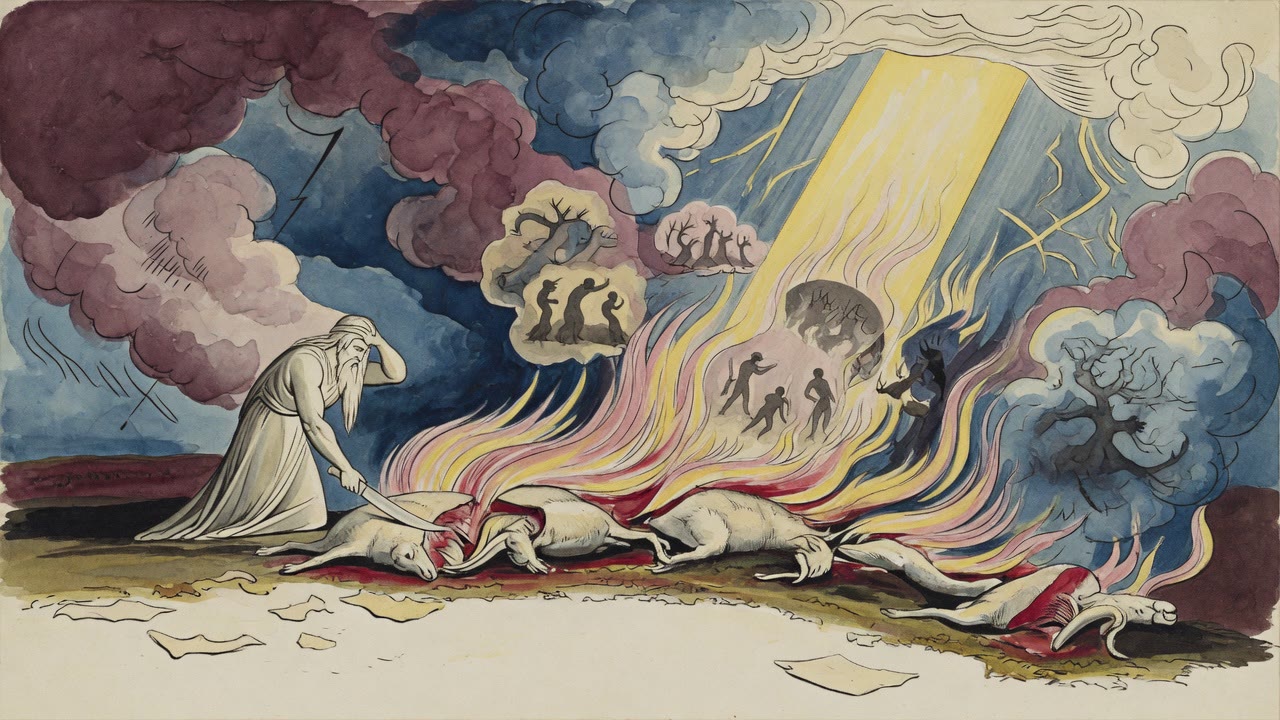
Israel Unrolled Her Ketubah While in Exile Click for full size

The Friends at the Door

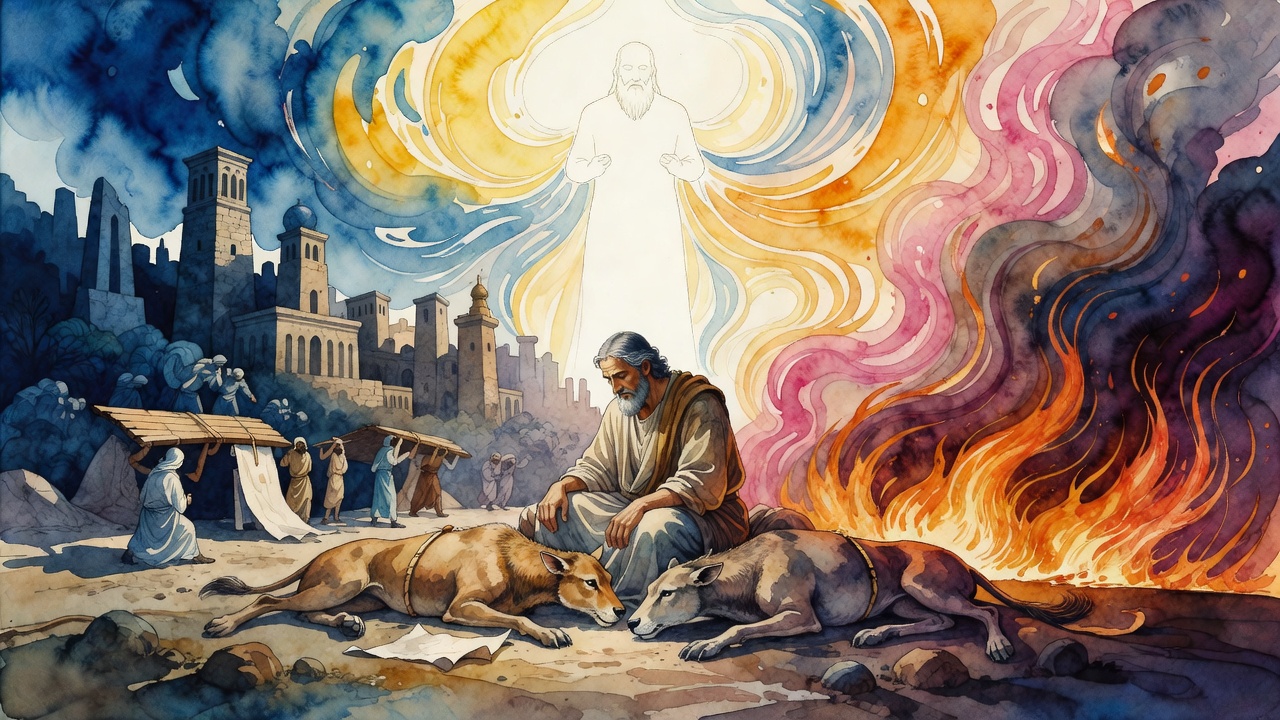
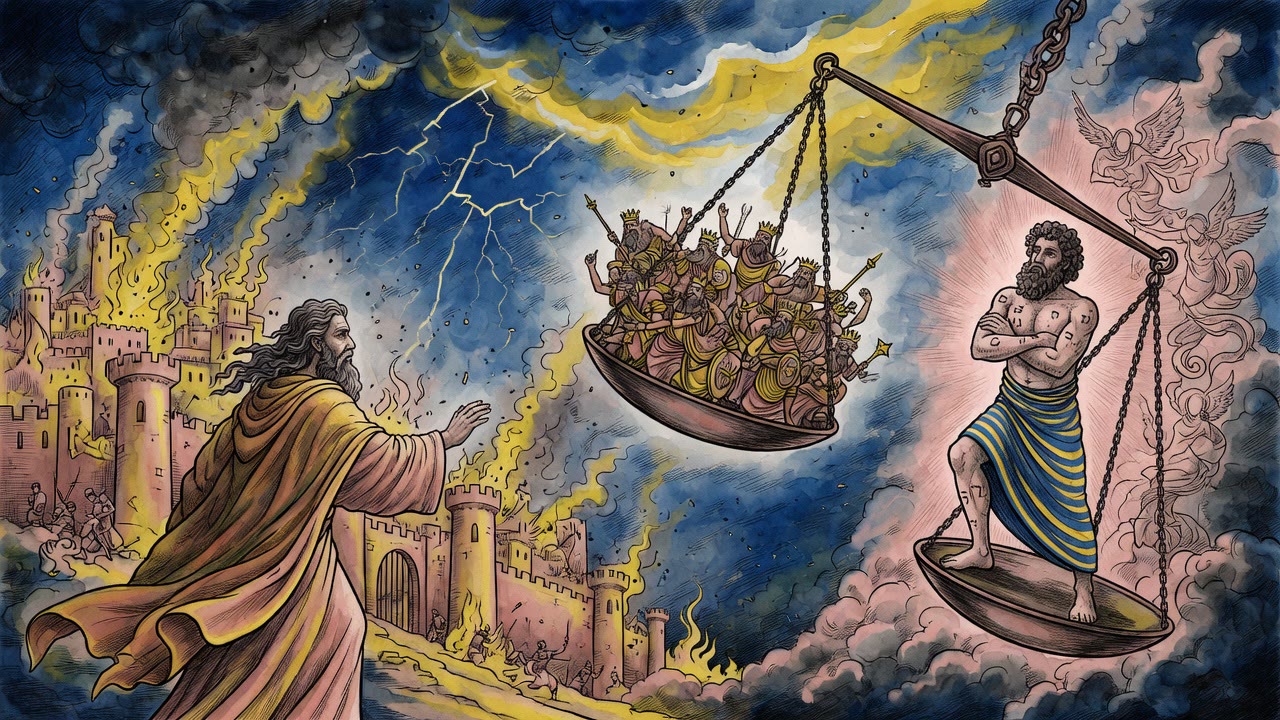
Israel sat in a rented house in a foreign street while neighbors leaned in with practical advice. Your God is late, they said. Take another protector. We will make you generals and governors. Why die for a Name that leaves you small? The mockery was not always cruel. Sometimes it sounded like kindness. That made it sharper.

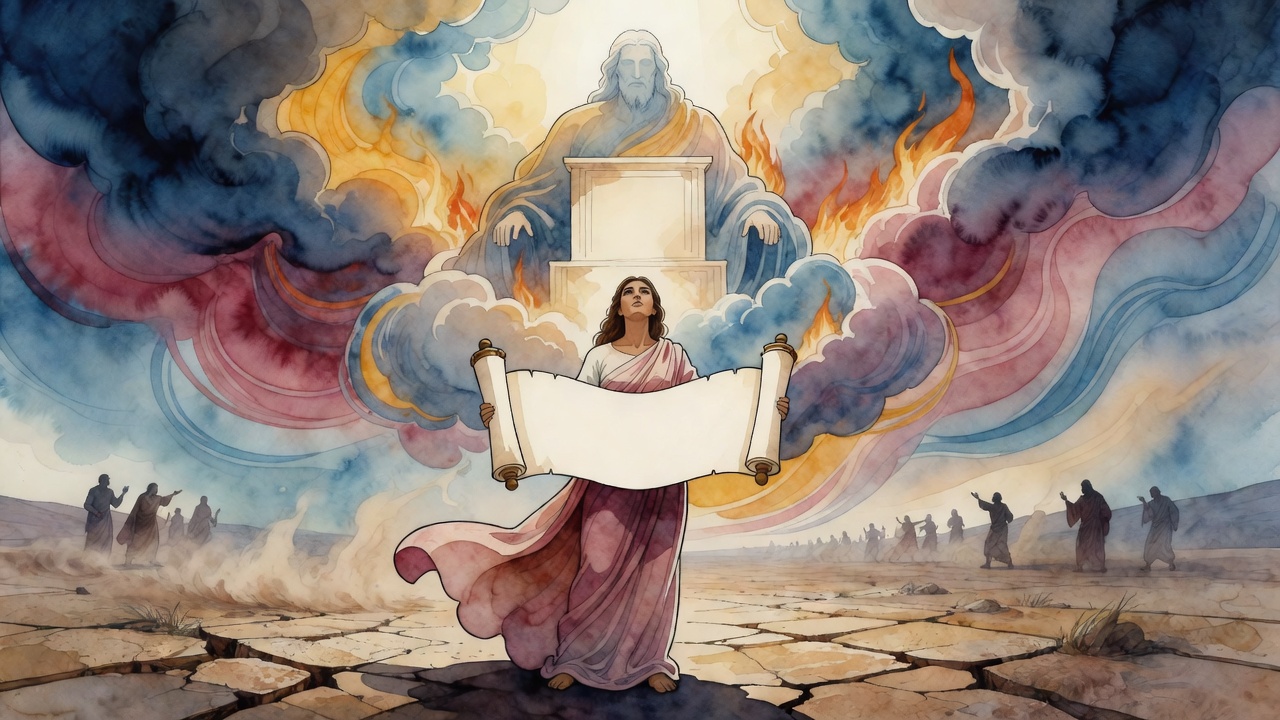
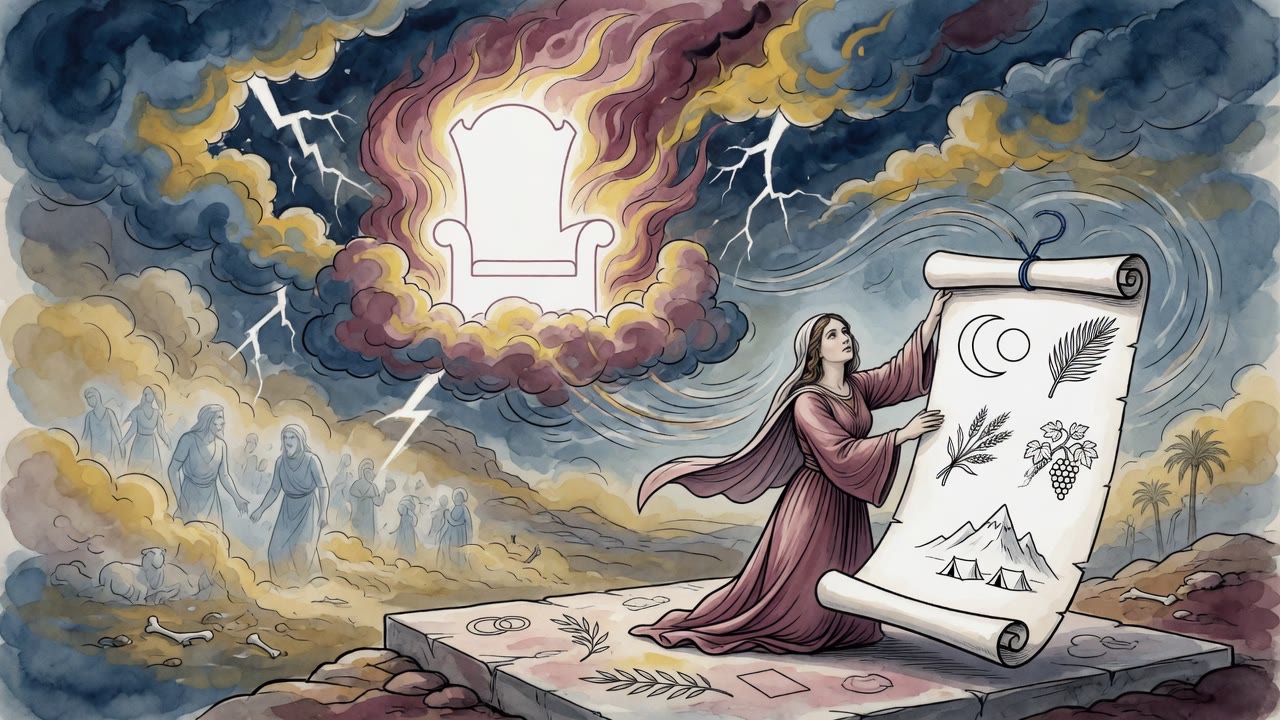
She did not answer at the threshold. She went inside, unrolled a scroll, and read the promises written in a hand older than the empire outside. Bridal canopies, jewels, treasuries of a king who had gone to a far country and not yet returned. Rabbi Abba bar Kahana, in the name of Rabbi Yochanan, called that scroll a marriage contract. The bride waits because the ketubah is still open on the table.

The King Who Finally Wrote Dates

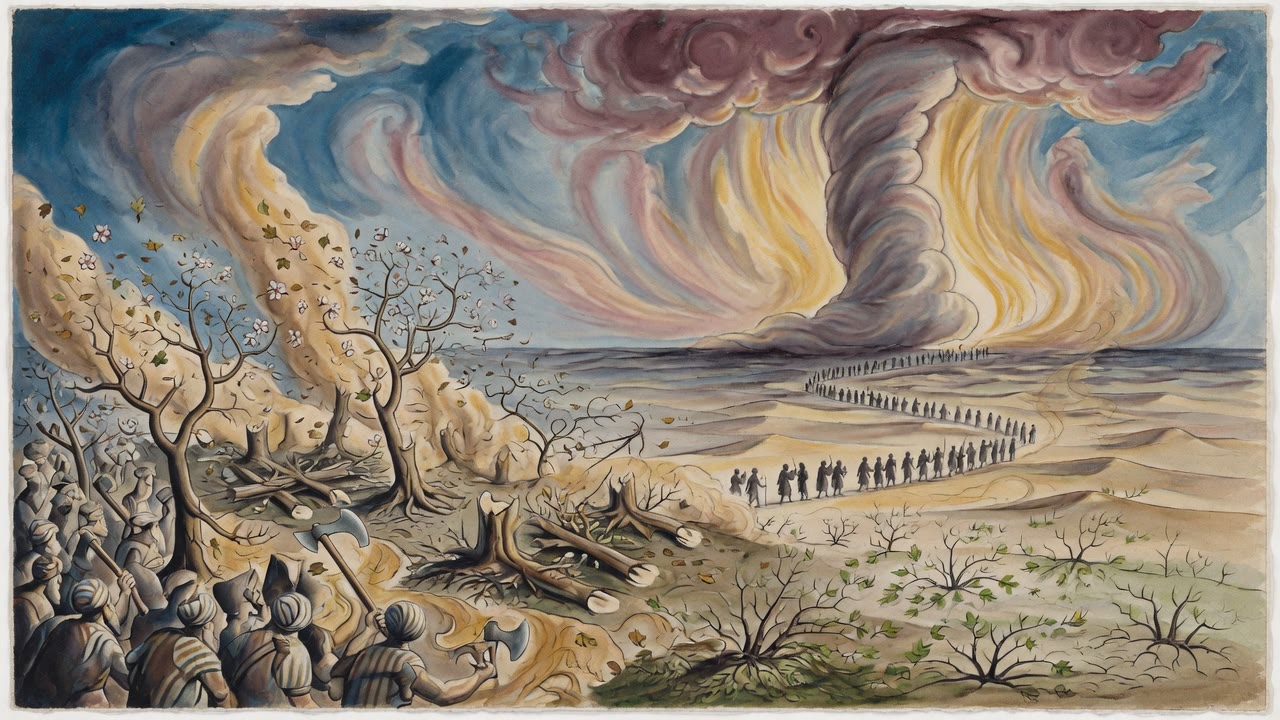
Another parable turns the same love into record-keeping. A king took wives and wrote them nothing, divorced them and wrote them nothing. Flood generation, dispersion, Sodom, Egypt: the Holy One removed them without the care of a dated document. When Israel rose, descendants of Abraham, Isaac, and Jacob, He told Moses to count them with month, day, and year fixed in the open (Numbers 1:1-2). Midrash Tanchuma hears in the Sinai census the first true ketubah dates. This people would not be erased without a paper trail of love.

"He has not done so for any nation" (Psalms 147:20). Other powers rose and fell in the blur of "that day." Israel was numbered in the wilderness like a bride whose wedding week is written down so no one can later claim the king never meant her.

A Proclamation Without the Whip

Micah records the divine plea, "How have I wearied you?" Rabbi Berekhyah answered with a picture. A mortal king sends a royal proclamation to a distant province. The people rise, bare their heads, and read trembling, afraid to slight a word. The Holy One calls the Shema (Hear O Israel) His own proclamation, the decree of the King of kings, yet He does not weary Israel with ceremony. He does not command stiff feet and uncovered heads in dread. "When you sit in your house, and when you walk on the road, and when you lie down, and when you rise up" (Deuteronomy 6:7). The scroll of love is read inside ordinary hours.

Exile makes that easiness look like absence. The nations hear no trumpet and conclude the King is gone. Israel, still murmuring the Shema on roads and beds, knows the difference between a light yoke and a broken covenant.

What She Answers When He Returns

In the Pesikta's telling, when the End comes the King will ask how she waited across so many years. She will answer as the noblewoman answered. Were it not for the generous contract You wrote, my friends would have turned me long ago. "This I recall to my heart, therefore I have hope" (Lamentations 3:21). "Unless Your Torah had been my delight, I would have perished in my affliction" (Psalms 119:92).

The study house becomes the room where the ketubah is kept. Not because ink is magic, but because memory needs a surface. Empires offer careers. The scroll offers a future that does not require forgetting the Name.

Counted, Claimed, Still Waiting

So the wilderness census and the exile reading are one motion. First the King writes dates and numbers because this bride is not disposable. Later the bride holds those pages up against every attractive betrayal. The Shema keeps the proclamation inside the body when the palace feels far. No bare head required. No trembling ritual demanded. Only the refusal to let mockery become a second husband.

Outside, the friends are still talking. Inside, the parchment whispers the old schedule of love. Israel rolls it closed, ties it, and walks back into a world that does not understand why she will not sign their easier contract.

The ketubah does not erase hunger or the sting of a neighbor's successful career. It does something narrower and harder. It keeps the bride from confusing delay with divorce. A king who writes week, month, year, and era onto a census is a king who intends return, even when the return date is not printed in a script the nations can read. Israel learns to live inside that unfinished sentence without letting the sentence become a suicide note.

Children hear the Shema at bedtime and do not know they are handling royal mail. Adults in exile sometimes forget and handle it like leftover custom. The midrash pushes both back toward the same shock. This is not a folk song. This is the King's proclamation folded into sitting and walking so the people will not break under the weight of ceremony while they wait. A light yoke is still a yoke of love. A dated census is still a claim of ownership. A scroll opened at night is still a refusal of every softer god who promises promotion by morning.

When the friends finally tire of their advice, they leave. The house is quiet. The parchment is warm from her hands. Somewhere far from the rented street, the King still knows the numbers He once told Moses to write in the desert air. That knowledge is the other half of the ketubah. She keeps the paper. He keeps the count.


← All myths
From the tradition

Sources

3 sources

The texts behind this telling. Some cards carry a translation of the source; others are our own retelling of it, and each card says which. Every card links out to the original.

Pesikta DeRav Kahana 19:4Pesikta de-Rav Kahana

Translation of the source text.Pesikta de Rav Kahana according to an Oxford manuscript, Dov Mandelbaum ed., N.Y. 1987 · CC-BY

Rabbi Abba bar Kahana in the name of Rabbi Yochanan: A parable to a king who betrothed a noblewoman and wrote her a generous marriage contract, "Such and such bridal canopies I will make for you, such and such ornaments I will give you, such and such treasuries I will give you." Then he left her and went off to a distant province, and he stayed there many years. Her companions taunted her, saying, "How long will you sit waiting? Take yourself a husband while you are still young, while your strength is upon you." She would go into her house, take out her marriage contract, read it, and be comforted. After many days the king came back from the distant province and said to her, "My daughter, I am amazed that you waited for me all these years." She said to him, "My lord king, were it not for the generous marriage contract you wrote me, my companions would already have turned me away from you." So too, because in this world the nations of the world taunt Israel and say to them, "How long will you die for your God and give your lives for Him and be killed for Him? How much suffering does He bring upon you, how much contempt does He bring upon you, how many afflictions does He bring upon you? Come over to us and we will make you generals and governors and commanders." And Israel enter the synagogues and study houses, take a Torah scroll, and read in it, "I will walk among you and be your God... and I will increase you and multiply you and establish My covenant with you" (Leviticus 26:9), and they are comforted. When the End arrives, the Holy One, blessed be He, will say to Israel, "I am amazed that you waited for Me all these years." And Israel will say before the Holy One, blessed be He, "Master of the worlds, were it not for the Torah scroll You wrote for us, the nations of the world would already have turned us away from You." This is what is written, "This I recall to my heart, therefore I have hope" (Lamentations 3:21). And so David said, "Unless Your Torah had been my delight, I would have perished in my affliction" (Psalms 119:92).

Full source
Midrash Tanchuma, Bamidbar 5Midrash Tanchuma

Retold in our words. Read the original at the link below.Townsend 1989 translation of Midrash Tanhuma, S. Buber Recension · CC-BY

(Numb. 1:1-2) “Then the Lord spoke unto Moses in the Sinai desert […,] ‘Take a census of the whole congregation.” This text is related (to Ps. 147:20), “He has not done so for any nation, and they do not know His laws, Hallelujah.” [The situation] is comparable to a king who took [his] first wife and did not write her a marriage contract. He divorced her and did not give her a bill of divorce. He did the same for the second and for the third. [In due time] when he saw a certain poor orphan, a woman of noble ancestry, he wanted to marry her. He said to his shoshevin (i.e., to his best man), “I want to marry this one, and I shall not behave with her as with the previous ones. This is a woman of noble ancestry. She is modest in her actions and worthy. Write her a marriage contract [stating] in which week, in which year, in which month, on what day of the month, in which era.” [This is] just as it is written in Esther (2:16), “So Esther was taken unto King Ahasuerus, unto his royal palace in the tenth month, which is the month of Tebeth, in the seventh year of his reign.” Thus the Holy One, blessed be He, created the generation of the flood and did not write down when He created them. He removed them from the world and did not write down when He removed them. It is simply [stated] (in Gen. 7:11), “on that day all the springs of the great abyss burst forth and the windows of the heavens were opened.” And it was similar for the generation of the dispersion (Gen. 10:1-9); similar for the sodomites; and similar for the Egyptians. [However,] when Israel arose, the Holy One, blessed be He, said to Moses, “I will not behave with these as with those previous ones, as these are descendants from Abraham, Isaac, and Jacob. Therefore it is written in which month, on what day of the month, in which year, in which era, in which province I raised up their horn and gave them a head held high.” It is therefore stated (in Numb. 1:1), “Then the Lord spoke unto Moses in the Sinai desert,” i.e., the province; “in the tent of meeting,” i.e., the metropolis; “on the first day of the month,” i.e., the day; “in the second year,” i.e., the year. In which month? (Ibid., cont.) “In the second month.” [“After their Exodus from the land of Egypt,”] i.e., the era. Why (in vs. 2) “Take a census (literally: raise the head) of the whole congregation of the Children of Israel…?” To fulfill what is stated (in Ps. 147:20), “He has not done so for any nation….” What did He do? He raised their heads, as stated (Ps. 148:14), “He has raised up a horn for His people, praise for all His righteous ones, even the Children of Israel, a people near to Him. Hallelujah”.

Full source
Midrash Tanchuma Buber, Emor 13:2Midrash Tanchuma Buber, Emor

Translation of the source text.Midrash Tanchuma (Buber), Public Domain, on Sefaria · CC-BY-SA

(Micah 6:3): AND HOW HAVE I WEARIED YOU? … [R. Berekhyah said:] A parable about a king who sent his proclamation to a province. What did the people of the province do? They took it, [they stood upon their feet,] and they uncovered their heads, and they read it in fear and in awe, in trembling and in dread.

The Holy One, blessed be He, said to Israel: This recitation of the Shema is My proclamation. I have not burdened you, and I have not told you that you must recite it neither standing upon your feet nor with your heads uncovered, but (Deuteronomy 6:7) WHEN YOU SIT IN YOUR HOUSE, AND WHEN YOU WALK ON THE ROAD, AND WHEN YOU LIE DOWN, AND WHEN YOU RISE UP.

Full source