Parshat Yitro5 min read

The Eagle Set Israel High Above the Arrows

At Sinai God spoke of eagles wings. He found Israel like grapes in sand, then counted each soul the way a merchant counts gems.

Curated by Arthur · Told by Maggid ·
Table of Contents
  1. Wings Over the Road Out of Egypt
  2. Grapes Where There Should Be Sand
  3. Why the Merchant Counts Gems
  4. Three Images, One Body Between Harm
  5. What the Camp Still Carries
The Eagle Set Israel High Above the Arrows Click for full size

Wings Over the Road Out of Egypt

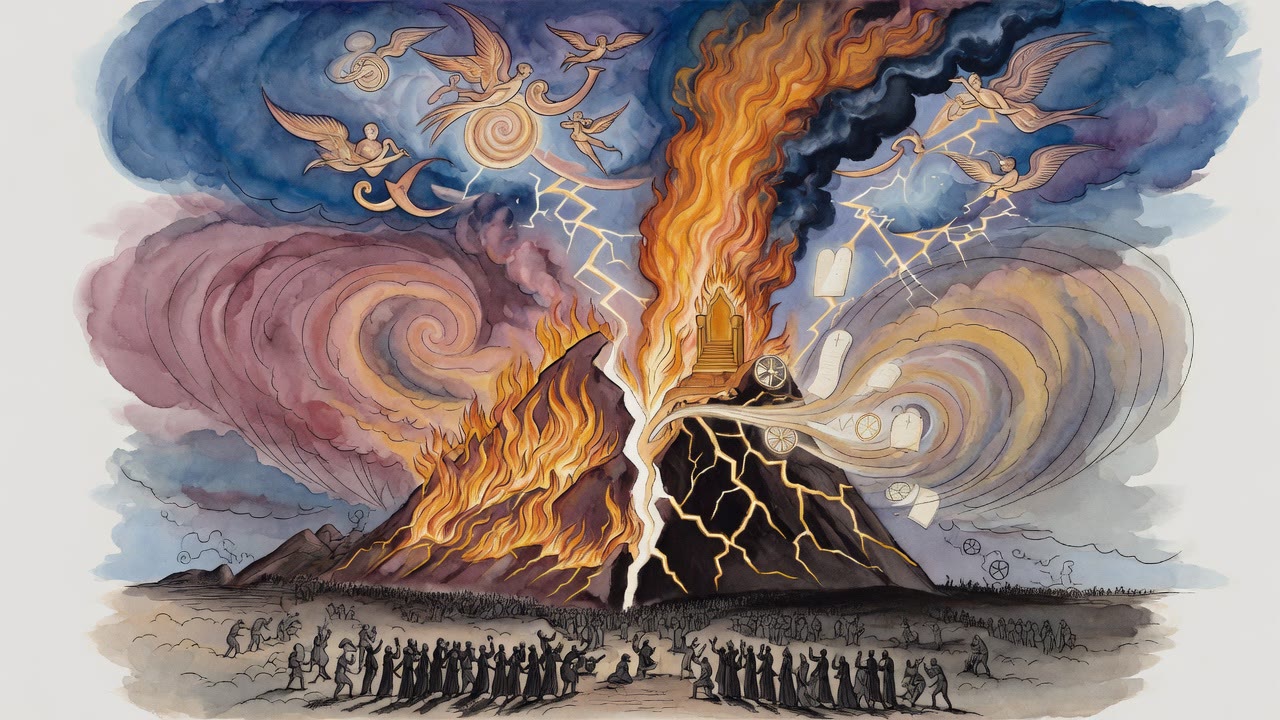
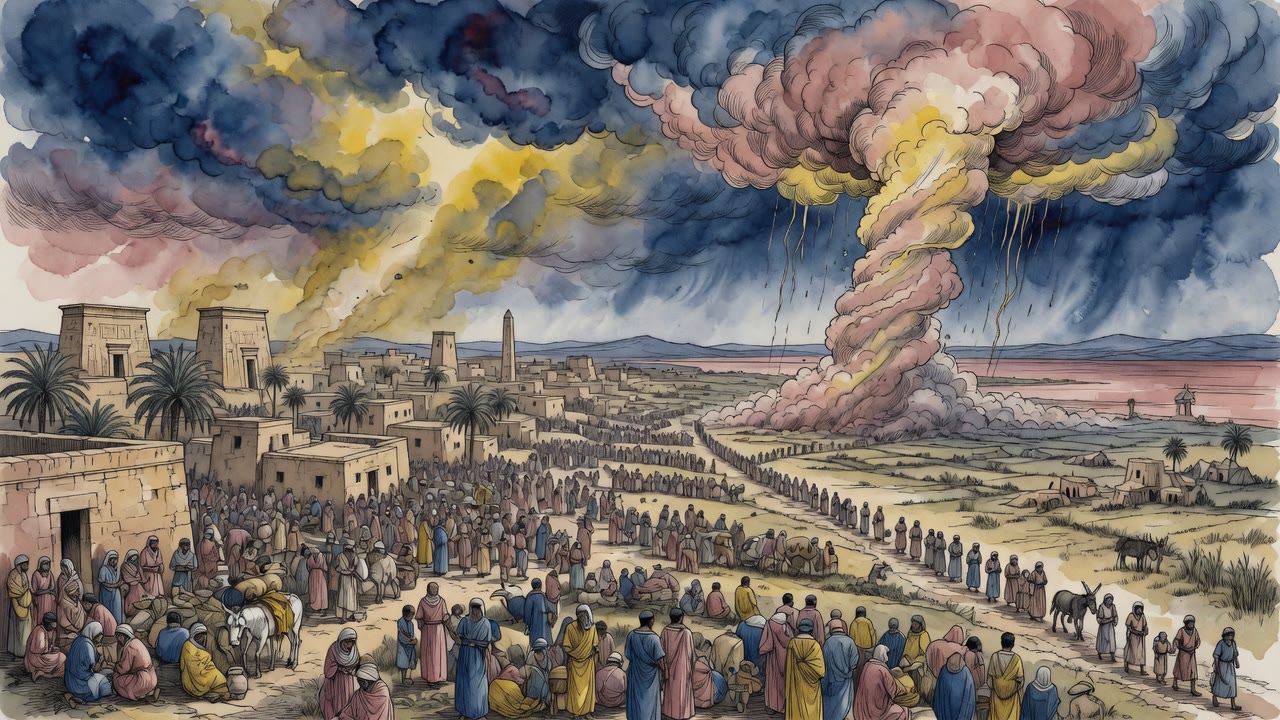
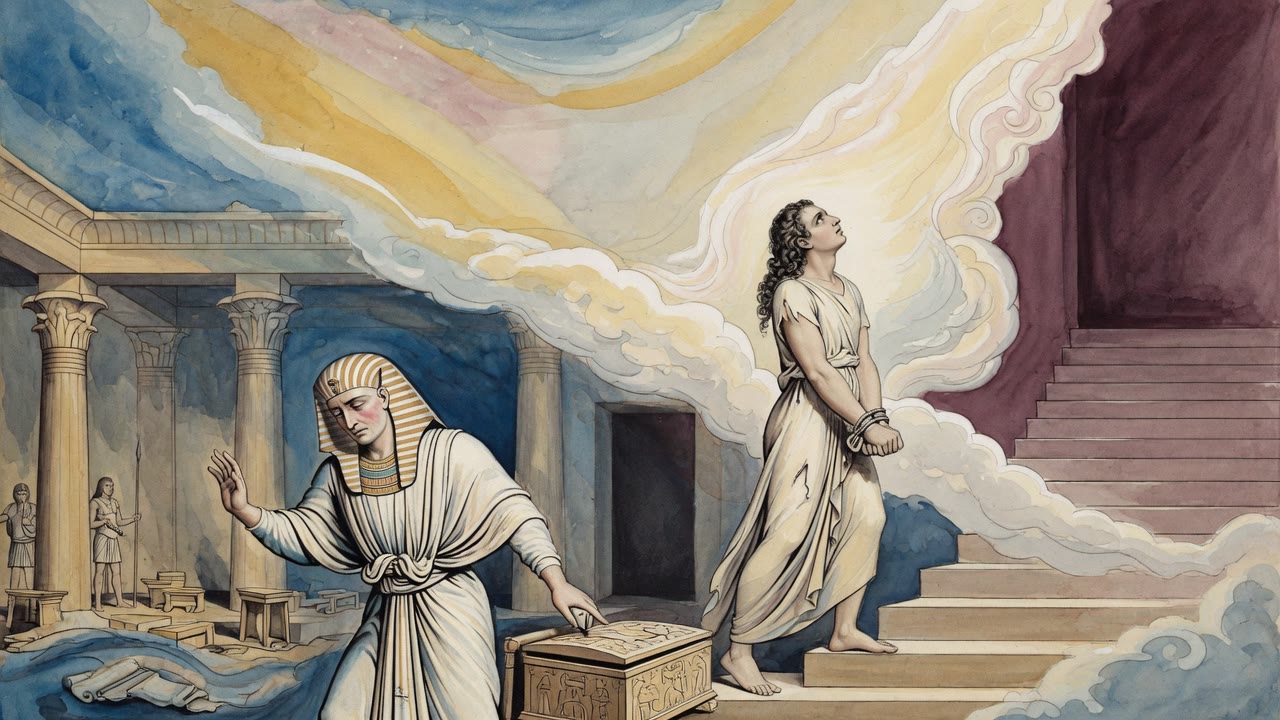
Moses stood with dust in his teeth and the camp of Israel strung behind him like a long, tired rope. Behind them lay brick and river. Ahead rose a mountain that would soon smoke. Between those two places the people walked under a protection they could not yet name.

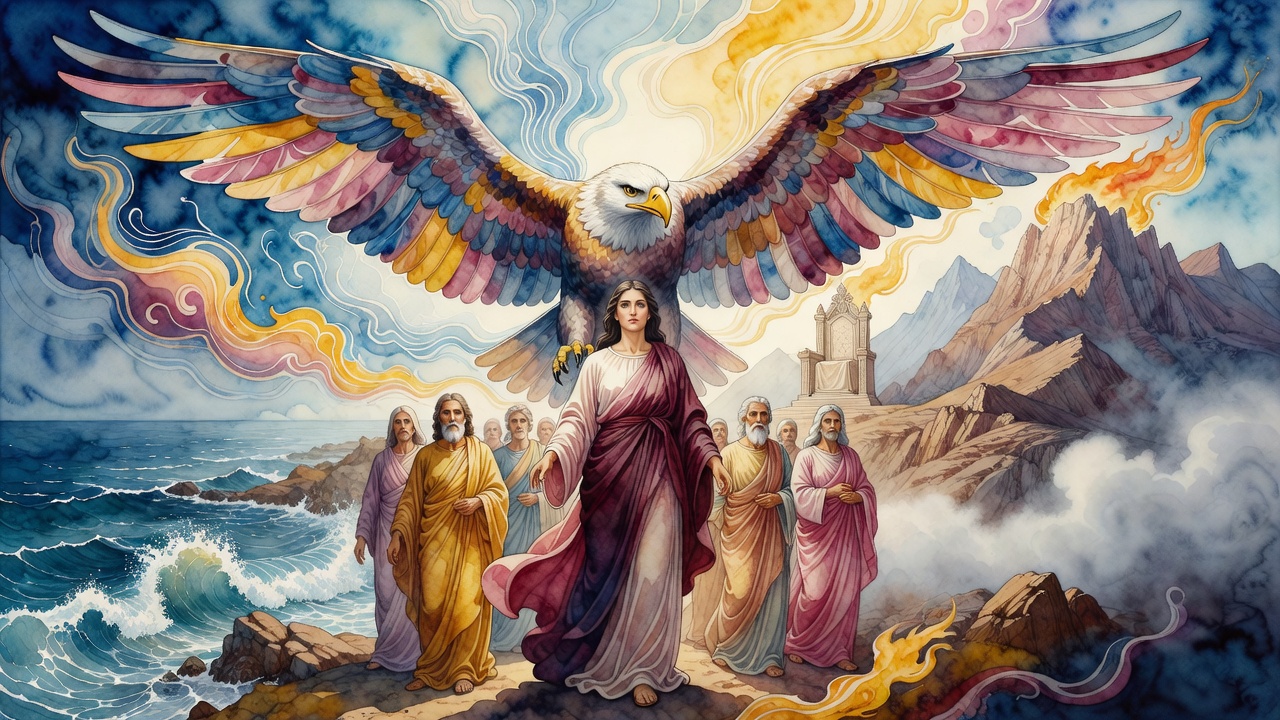
Other birds carry their young under the belly. The threat comes from above, so the parent makes its own body a shield and keeps the chick in shadow. The eagle does the opposite. Nothing flies higher than the eagle, so the danger is not a hawk diving from the sky. The danger is a hunter on the ground who fits an arrow to a string and aims upward. The eagle places the young on its back, above its own spine. If the arrow flies, better it strike the parent than the child.

That is how the Holy One carried Israel out of Egypt. He did not merely drag a nation from one border to another. He set them where the blow would hit Him first. The plagues, the sea, the drowning of chariots, each was a body interposed. God put Himself between the camp and the weapon.

Grapes Where There Should Be Sand

Later the Maggid of the wilderness midrash pictures the same love as a different surprise. A wanderer crosses empty sand and nearly trips over a cluster of ripe grapes. Hosea had already sung it: like grapes in the desert the Holy One found Israel. The world, before Torah, is called a howling waste. Commandment is a lamp and Torah is light, and when the people left Egypt the desert itself began to mean something other than thirst.

He encircled them with clouds of glory. He instructed them until their ears filled with law. He guarded them as a person guards the pupil of an eye, that small dark circle without which sight fails. Then He told Moses to build a Tabernacle so that the King would leave the upper worlds and dwell among them. Standards went up, one banner for each tribe, not as decoration but as the host array of children who bear a name.

Men who had carried bricks now carried poles and skins. Women who had hidden sons under reeds now stitched blue and purple for a portable house. The grapes in the sand had been given vines to grow on.

Why the Merchant Counts Gems

When the census came and firstborn males were numbered, another teacher set a shop on the table of the midrash. A merchant with glass jewels does not linger over each piece. Glass is common. He tips them into a bag and moves on. Fine gems are different. He counts them when he takes them out and counts them when he puts them away. His fingers know their weight.

So the Holy One counts Israel. Not because other nations lack faces, but because this people was carried from birth and called children. Isaiah says the nations are as nothing before Him when the comparison is covenant, not skin. Song of Songs names one perfect dove among many queens. The census is not cold arithmetic. It is a merchant who refuses to let a single stone roll under the stall.

A boy stands still while his name is written. His mother watches the scribe's hand and does not breathe until the ink dries. That is how carefully the desert ledger was kept.

Three Images, One Body Between Harm

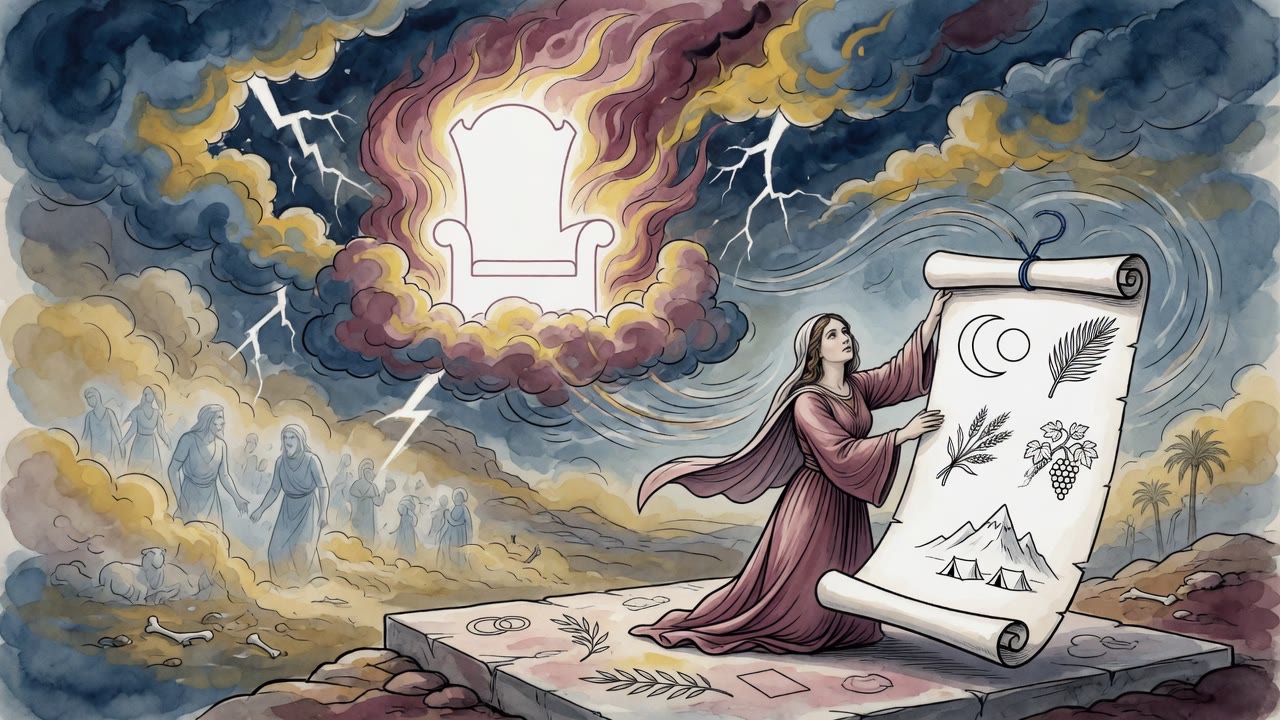
Put the eagle, the grapes, and the gems in one campfire circle and the story stops being three metaphors. Protection is sacrificial. Discovery is tender and astonished. Counting is intimate. The same God who absorbs the arrow from below also stumbles, as it were, upon treasure in sand and then refuses to treat that treasure as bulk cargo.

At the mountain they will hear, You have seen what I did to Egypt, and how I bore you on eagles' wings and brought you to Myself (Exodus 19:4). The verse is not soft. It remembers blood in the Nile and armor under the sea. It also remembers that the people on the wings did not earn the height. They were set there because a Parent chose the wound.

When standards lift and tribes take their places, the banners do not float free of that choice. Each pole is planted in the same love that counted firstborns and hid children above the arrow's path.

What the Camp Still Carries

Years later, when the cloud lifts and the march resumes, a child asks why their tribe's color is not the neighbor's color. An elder points at the grape cluster in Hosea's line and at the merchant's careful fingers. Difference of banner is not rivalry of worth. It is the way a found treasure is arranged so each facet faces the light.

Moses does not lecture the child with three midrashim. He watches the eagle wheel once over the column and thinks of wings. He watches a man count lambs for the firstborn and thinks of gems. He tastes dust and thinks of grapes that should not have been there. The road out of slavery is still under their feet, and the body between them and the arrow has not stepped aside.


← All myths
From the tradition

Sources

3 sources

The texts behind this telling. Some cards carry a translation of the source; others are our own retelling of it, and each card says which. Every card links out to the original.

Mekhilta Tractate Bachodesh 2:7Mekhilta DeRabbi Yishmael

Retold in our words. Read the original at the link below.Mechilta, translated by Rabbi Shraga Silverstein · CC-BY

The Torah describes God bearing Israel "on eagles' wings" (Exodus 19:4), and the Mekhilta asks a pointed question: why an eagle? What makes the eagle different from every other bird?

The answer reveals a profound insight about divine protection. All other birds carry their young beneath them, gripped in their talons or tucked under their bodies. They do this because their greatest threat comes from above, predatory birds that swoop down to snatch their chicks. By keeping their young underneath, these birds use their own bodies as shields against aerial attack.

The eagle operates by entirely different logic. No bird of prey flies higher than the eagle, so the eagle has nothing to fear from above. Its only predator is the human hunter on the ground, who might shoot an arrow upward. Faced with this threat, the eagle makes a remarkable calculation: it places its young on top of its wings, above its own body. If an arrow comes from below, the eagle reasons, better that it strike me than my child.

This is the image the Torah chose to describe God's relationship with Israel during the Exodus. God did not merely transport the people out of Egypt. He positioned them above Himself, absorbing every blow that came from below so that His children would remain unharmed. The plagues, the splitting of the sea, the destruction of Pharaoh's army, in each case, God placed Himself between Israel and danger.

The metaphor is deliberately chosen to be unlike any other bird. God's protection is not defensive. It is sacrificial.

Full source
Midrash Tanchuma Buber, Bamidbar 14:1Midrash Tanchuma Buber, Bamidbar

Translation of the source text.Midrash Tanchuma (Buber), Public Domain, on Sefaria · CC-BY-SA

EACH WITH HIS STANDARD, UNDER THE BANNERS (Numbers 2:2). This is what Scripture says: He found him in a desert land (Deuteronomy 32:10). A great find did the Holy One, blessed be He, find in Israel, like a person who is walking in the desert and finds grapes there. So did the Holy One, blessed be He, find Israel, as it is said: Like grapes in the desert I found Israel (Hosea 9:10). Therefore it is said: He found him in a desert land.

The world was a desert before Israel went out from Egypt. And in the howling waste of the wilderness (Deuteronomy, ibid.), the world was waste and howling before Israel received the Torah. Once Israel went out from Egypt and received the Torah, the world was lit up, as it is said: For the commandment is a lamp and the Torah is light (Proverbs 6:23).

He encircled him, He instructed him, He guarded him as the pupil of His eye (Deuteronomy, ibid.). What is He encircled him? That He surrounded them with clouds of glory. He instructed him, that He made them understand the words of the Torah. He guarded him, happy are the ears that heard it! To what extent did He cherish them? To what extent did He keep them? To what extent did He guard them? As it were, as much as the pupil of His eye. See to what extent He cherished them and kept them and guarded them: that the Holy One, blessed be He, said to Moses, "Tell them to make a Tabernacle, and I will dwell among them", as it were, I leave the upper beings and come down and dwell among them. And not only that, but I will make them standards for My name. Why? Because they are My children, as it is said: You are children of the LORD your God (Deuteronomy 14:1). And they are My hosts, as it is said: And I will bring forth My hosts, My people the children of Israel, from the land of Egypt (Exodus 7:4). And so it says: The standard of the camp of Judah by their hosts (Numbers 2:3). Therefore He made them standards for His name, as it is said: Each with his standard (Numbers 2:2).

Full source
Bamidbar Rabbah 4:2Bamidbar Rabbah

Retold in our words. Read the original at the link below.The Sefaria Midrash Rabbah, 2022 · CC-BY

This particular passage revolves around the census taken of the Israelites in the desert – "Count every firstborn male…" it says. (Numbers 3:40) But it's not just about counting heads. It's about something much deeper: value and significance.

This teaching uses a beautiful analogy. Imagine a merchant with two kinds of goods: glass jewels and fine gems. The glass jewels? He doesn't bother to count them carefully when he takes them to market or when he puts them away. He doesn't scrutinize them. Why? Because they're just glass. They're common.

The fine gems? Ah, those are different. Each one is precious. He counts them meticulously, both when taking them out and when putting them away. He knows their worth.

In this Midrash (rabbinic interpretive commentary), this is how God views the nations of the world versus the Israelites. "For the nations of the world, I did not provide a census," God says, "Why? It is because they are of no significance to Me, as it is stated: 'All the nations are as nothing before Him.'" (Isaiah 40:17). Harsh. But before you bristle, consider the context. It's not about inherent worth, but about relationship.

But then comes the heart of the matter: "But you are My children, as it is stated: 'Who have been carried from birth…'" (Isaiah 46:3). Because of this special bond, God counts them every moment. He cherishes them. He sees each individual. That’s why it says, “Count every firstborn male…”

The passage then quotes the Song of Songs (6:8-9): "They are sixty queens…[and young women without number].… One is my perfect dove…" This "perfect dove," the Rabbah tells us, is Israel. Amidst the many, there is one that is cherished, unique, and seen as perfect in God's eyes.: the vastness of the universe, the sheer number of people on this planet. It's easy to feel insignificant. But this passage reminds us that, at least within this particular theological framework, we are not just a number. We are each precious, each counted, each cherished by something far greater than ourselves. It's a powerful message of individual worth within a collective identity. It speaks to the enduring need to feel seen, valued, and loved. And maybe, just maybe, it offers a glimpse into how we, too, can learn to see the preciousness in ourselves and in each other.

Full source