6 min read

Moses Accused Israel Himself and the Destroying Angels Left

Israel came out of the sea calling herself a queen, the daughter of kings. Forty days later Moses climbed the mountain to keep her from being erased.

Curated by Arthur · Told by Maggid ·
Table of Contents
  1. A Queen, the Daughter of Kings
  2. The Court Was Already Full When He Got There
  3. He Handed Them the Prosecution
  4. What Will I Do With Your Torah
  5. You Commanded Me, Not Them
  6. Trustworthy in All My House
Moses Accused Israel Himself and the Destroying Angels Left Click for full size

A Queen, the Daughter of Kings

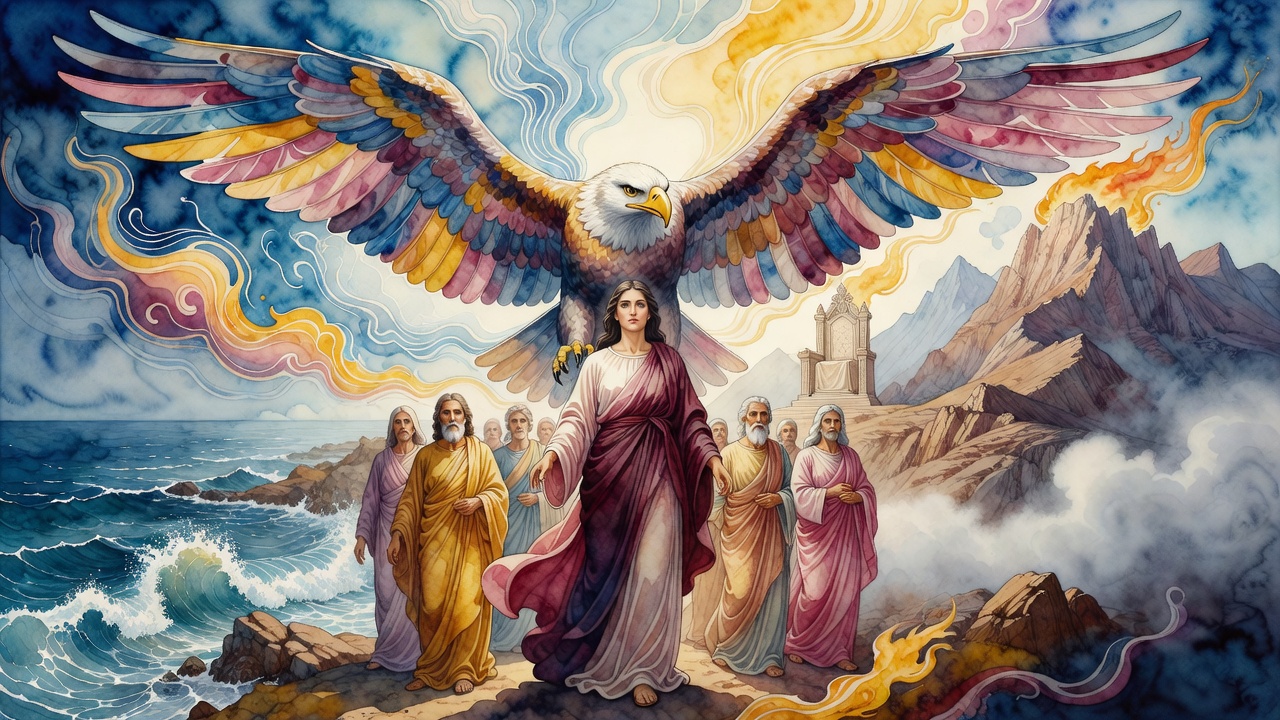
They came up out of the water still shaking, and the first thing Israel did on the far bank was boast about her family.

"I am a queen, the daughter of kings. A beloved one, the daughter of beloved ones. A holy one, the daughter of holy ones. A pure one, the daughter of pure ones." A man goes out to betroth a woman, and sometimes he is ashamed of the woman, and sometimes he is ashamed of her relatives. "But I am not so."

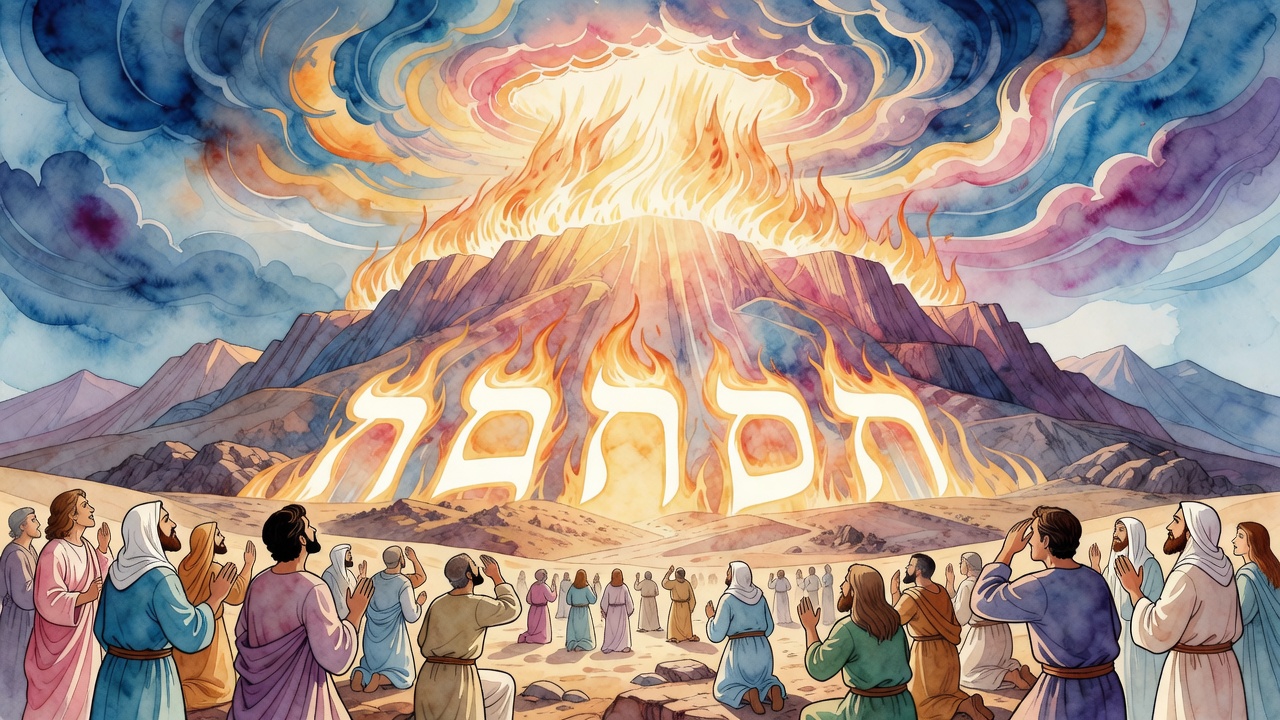
She had grounds. She had not walked out of Egypt. She had been carried. An eagle drops onto its nest, spreads its wings underneath the fledglings and lifts them out on its pinions so that nothing below can reach them, and that had been the shape of the whole march. God underneath. The people on top. The desert going by without touching them. At the mountain He said it without a picture at all. I bore you on eagles' wings and brought you to Myself.

Forty days after that, they were dancing around a calf.

The Court Was Already Full When He Got There

Moses broke the tablets at the foot of the mountain, ground the calf to powder, and went back up with nothing in his hands.

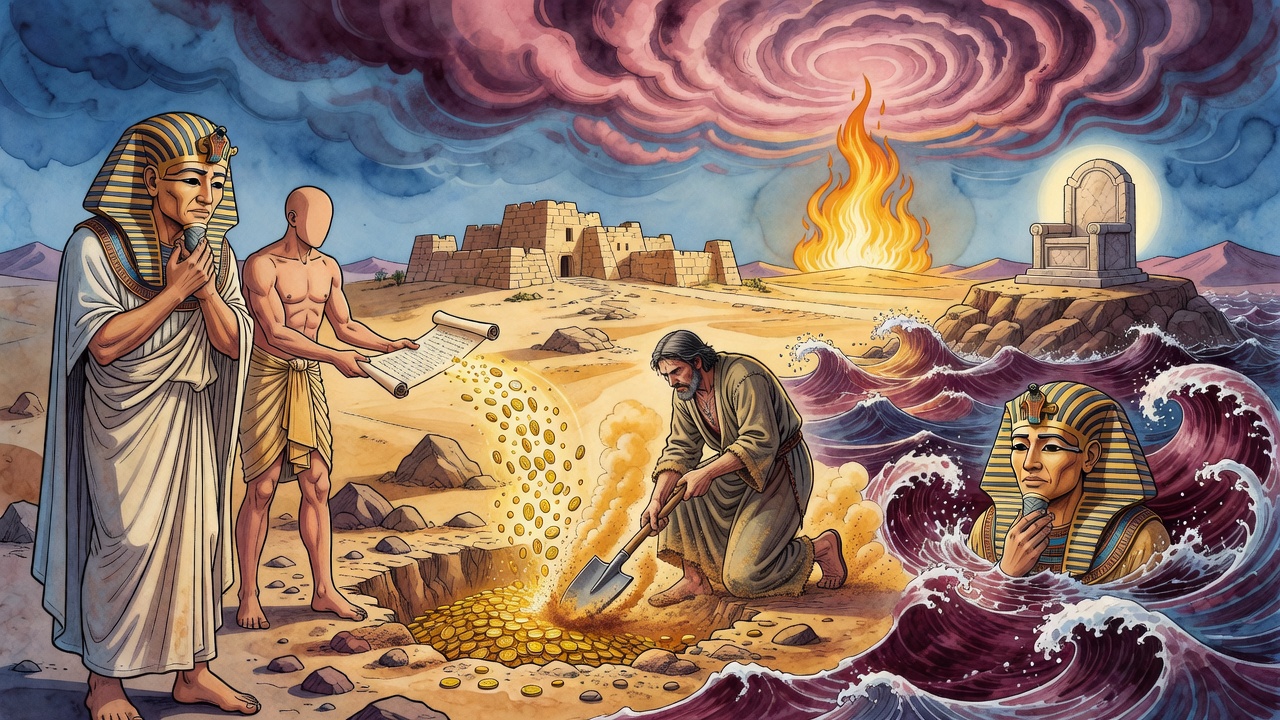
The angels of destruction were waiting. That is the work they exist for, and there was work here. A nation six weeks out of the greatest rescue in its history, caught bowing to metal it had melted itself. The accusers did not have to invent anything. They only had to stand there and let the facts be counted out.

So Moses spoke first, and what he said was: "Please, this people has sinned a great sin."

He Handed Them the Prosecution

He had accused them himself, out loud, before anyone else in that court could open a mouth.

He had learned the move from men who were already dead. Abraham at Sodom had not opened by asking for the city. He opened at fifty righteous men and came down to ten, taking a little more ground at every step. David confessed one sin and one iniquity, took the pardon for that, and only afterward admitted to the rest of them.

Start small. Hold what you take. Ask for the whole thing from higher up.

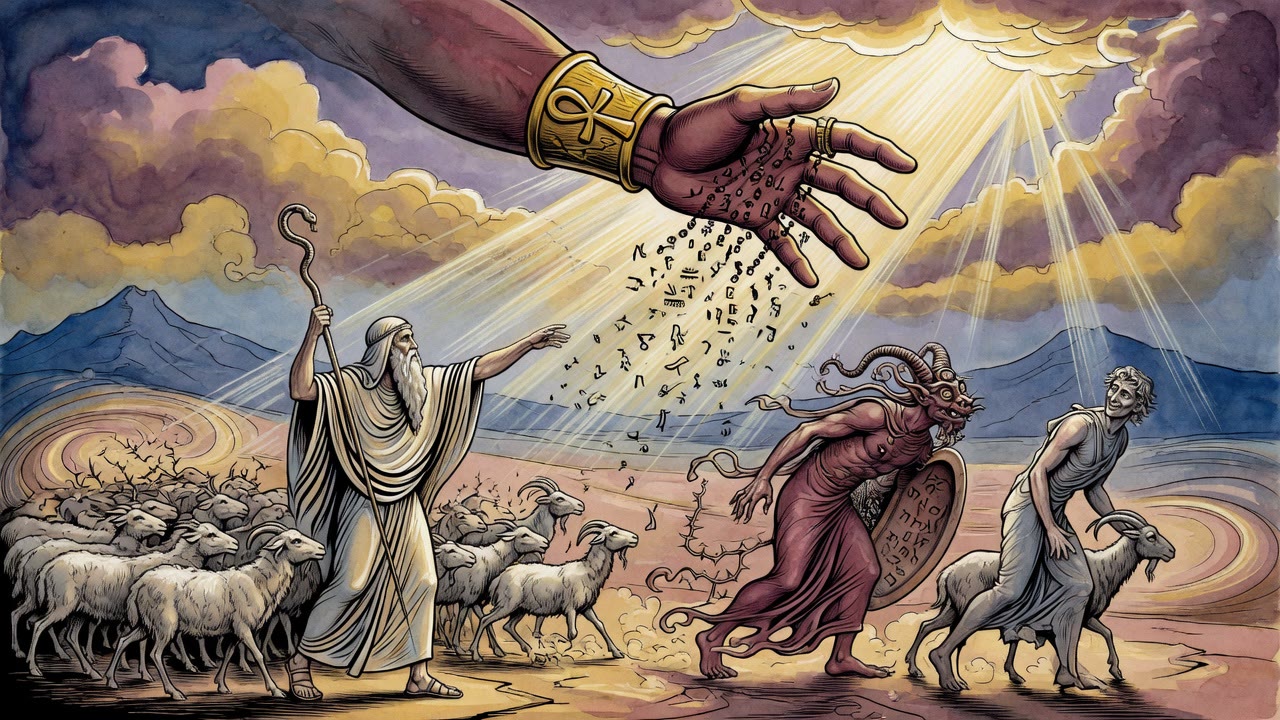
The angels of destruction heard Moses call his own people great sinners and stopped where they stood. There is no need for us in this, they said to each other. While that one is doing the accusing, the people will fall by his hand, and afterward the patriarchs cannot come at us and demand to know why we slandered their children.

Then they turned and went, and the field belonged to two.

What Will I Do With Your Torah

"Now, if You will bear their sin," Moses said, and stopped in the middle of the sentence, and left it open in the air.

Then he made the argument he had climbed up there to make. Every word of it had been handed to him and to nobody else. The Lord spoke to Moses, saying. Speak to the children of Israel. Command the children of Israel. Say to the children of Israel. Say it to whom? If they are wiped out, what is he to do with the Torah in his arms?

That was real leverage and he knew it, and it was not enough for him. He finished the broken sentence. "And if not, erase me out of Your book that You have written."

You Commanded Me, Not Them

He was not done. He went after the charge itself.

Why are You angry at them? They did not break a commandment against idols. You never gave them one.

"Did I not say it at Sinai? You shall have no other gods before Me."

"You said it to me." The word was singular. Not all of you standing at the foot of the mountain. You, one man. "You commanded me. So if idols have been worshipped here, erase me out of Your book."

He had pulled the crime of a whole nation onto a single pronoun and offered to be destroyed under it.

God watched a man lay his life down for people who had just danced, and stopped the argument there. "For your sake I am giving them the Torah." Write these matters down for yourself.

Trustworthy in All My House

The ministering angels objected at once, and not about the calf.

"Are You giving Moses leave to write whatever he wants? He will go down and say to Israel: I gave you the Torah. I wrote it and I handed it to you myself."

"Heaven forbid that Moses would do such a thing," God said. "And even if he did, he is trustworthy." Not so My servant Moses. In all My house he is trustworthy.

So he came down the mountain a second time with the words in his own handwriting, into a camp still smelling of burnt gold, carrying them to a woman who had stood dripping on the far side of the sea a few weeks earlier and told heaven she was nobody's embarrassment.


← All myths

From the tradition

Sources

3 sources

The texts behind this telling. Some cards carry a translation of the source; others are our own retelling of it, and each card says which. Every card links out to the original.

Sifrei Devarim 314:6Sifrei Devarim

Retold in our words. Read the original at the link below.Sifrei by Rabbi Shraga Silverstein · CC-BY

One particularly evocative image is that of an eagle, caring for its young.

This imagery appears in Sifrei Devarim, a collection of legal midrashim (rabbinic interpretive commentary) on the book of Deuteronomy. Here, we find a beautiful interpretation of God’s care for the Israelites, comparing it to an eagle protecting its fledglings. The text uses the phrase "spreading its wings and taking them (upon them)," which immediately calls to mind the verse from (Deuteronomy 1:31): "and in the desert, where you saw how the L-rd your G-d bore you." It paints a picture of God not just leading, but actively carrying us, shielding us from harm.

The image grows richer! The Sifrei Devarim continues, "bearing them on its pinion," directly linking this to (Exodus 19:4): "and I bore you on eagles' wings." Remember that moment? The giving of the Torah at Mount Sinai? It wasn’t just about receiving commandments; it was about being lifted up, elevated, carried to a new spiritual height by God Himself. The image of eagles' wings becomes synonymous with divine protection and grace.

There’s more to unpack. Another interpretation offered in the Sifrei Devarim states, "as an eagle wakes its nest." Now, this takes us in a more eschatological direction, hinting at the future redemption. It connects this image to (Song of Songs 2:8), "The voice of my Beloved, behold He is coming." It's as if the eagle's gentle nudge, waking its young, is a metaphor for the call of the Messiah, awakening us to a new era of peace and fulfillment.

The text continues, "spreading its wings," linking this to (Isaiah 43:6): "I will say to the North "Give (My exiles) etc." Imagine the eagle spreading its wings, a vast and protective embrace reaching out to gather the scattered exiles of Israel. The wings become a symbol of both protection and a call to return.

Finally, "bearing them on its pinion" is associated with (Isaiah 49:22): "and they will bring your sons in (their) bosom." This verse speaks of the nations of the world assisting in the return of the Jewish people to their homeland. The image shifts slightly, suggesting a collaborative effort, with others helping to carry and nurture the returning children of Israel, all under the watchful protection of the Divine.

What's so striking about this passage in Sifrei Devarim is how it weaves together different moments in Jewish history and destiny using this central image of the eagle. It’s not just a one-time event; it's a continuous thread of divine care and protection that runs through our past, present, and future. From the Exodus to the future redemption, God is depicted as a powerful, yet tender, eagle, always watching over us, ready to spread His wings and carry us to safety.

How can we become more aware of the "eagles' wings" that are always there, even when we don't see them? Perhaps the answer lies in reflecting on the times when we felt most vulnerable, and then recognizing the unseen hand that guided us through.

Full source
Mekhilta Tractate Shirah 3:19Mekhilta DeRabbi Yishmael

Retold in our words. Read the original at the link below.Mechilta, translated by Rabbi Shraga Silverstein · CC-BY

The Mekhilta presents a beautiful declaration in which Israel, personified as a bride, proclaims her lineage before God with joyful pride: "I am a queen, the daughter of kings; a beloved one, the daughter of beloved ones; a holy one, the daughter of holy ones; a pure one, the daughter of pure ones."

This fourfold proclamation connects to the verse "the God of my father, and I will exalt Him" (Exodus 15:2). Israel does not come to God as a stranger. She comes with a pedigree of holiness stretching back through generations, through Jacob, Isaac, and Abraham. Every ancestor was beloved by God. Every generation maintained its purity and devotion. Israel's relationship with God is not new; it is inherited, deepened, and confirmed at every stage.

The Mekhilta then offers an analogy to make the point sharper. When a man goes to betroth a woman, sometimes he is embarrassed by her, perhaps she is not what he expected. And sometimes he is embarrassed by her family, her relatives do not reflect well on her. Either way, the match feels compromised.

"But I am not so," Israel declares. "I am a queen, the daughter of kings." There is no embarrassment in any direction. God is not ashamed of Israel, and Israel is not ashamed of her ancestors. The match between God and Israel is perfect in both directions, the bride is worthy, and so is her entire lineage. This is what it means to "exalt" the God of one's fathers: to stand before Him with the full dignity of a family that has loved Him for generations.

Full source
Shemot Rabbah 47:9Shemot Rabbah

Retold in our words. Read the original at the link below.The Sefaria Midrash Rabbah, 2022 · CC-BY

It reveals a surprising strategy employed by the righteous when approaching the Divine.

" Now, don't misunderstand that word – it doesn't mean deception. Instead, it signifies a strategic, step-by-step approach. They begin with a small request and gradually work their way up to the bigger, more important ones.

Think about Abraham. The passage references Song of Songs (7:2) "How fair are your steps in sandals…the handiwork of a craftsman" and connects it to Abraham’s famous plea regarding Sodom and Gomorrah in (Genesis 18:23): "Will You destroy even the righteous with the wicked?" According to this midrash, Abraham didn't just barge in demanding mercy. He approached with careful, calculated steps, building his case incrementally.

David, too, is presented as using this method. We read in (Psalms 32:5), "I acknowledged my sin to You; I did not hide my iniquity." Initially, he frames it as a single sin, a single iniquity. But then, in the same verse, he expands: "I said: I will confess my transgressions to the Lord, and You forgave the iniquity of my sin, Selah." As Shemot Rabbah points out, only after receiving forgiveness for that initial sin does he admit to multiple transgressions. He starts small, gains ground, and then reveals the full extent.

But perhaps the most compelling example is that of Moses. Remember the Golden Calf incident? Moses, in (Exodus 32:31), initially tells God, "Please; this people has sinned a great sin." The text suggests that by initially speaking negatively about the Israelites, Moses drove away the "angels of destruction." The angels figured, why bother getting involved when Moses is already doing the job for them? They wouldn't want the patriarchs blaming them for the destruction of their children.

Once the angels depart, Moses switches tactics. He pleads with God, "Now, if You will bear their sin..." (Exodus 32:32). He argues that the entire Torah, the whole foundation of their relationship, is at stake. "The Lord spoke to Moses, saying," "speak to the children of Israel," and so on. If the Israelites are eradicated, what will Moses do with the Torah? How can he fulfill God's commands? This leads to his powerful, almost desperate declaration: "And if not, please erase me from Your book that You have written" (Exodus 32:32).

The midrash takes it a step further, suggesting Moses even challenges God's own commandment against idol worship. Moses argues that the command, "You shall not have other gods before Me" (Exodus 20:3), uses the singular "lekha" (you). "Did You perhaps say to them: You [lakhem, plural] shall not have?" Moses asks. He positions himself as taking responsibility, offering himself as a substitute. When God sees Moses' willingness to sacrifice himself, He responds by essentially saying, "For your sake, I am giving them the Torah."

The passage concludes with the ministering angels questioning whether God is giving Moses free rein to write whatever he wants. Will Moses claim authorship of the Torah himself? God reassures them, "Heaven forbid that Moses would do such a thing. And even if he were to do so, he is trustworthy." This trust is rooted in (Numbers 12:7): "Not so My servant Moses, in all My house he is trustworthy." According to Rabbi David Luria, even if Moses were to write something God didn't dictate, it would still align with God's will.

So, what does this all mean? It seems the tradition is teaching us about the power of strategic communication, even with the Divine. It highlights the importance of building a relationship, of approaching difficult conversations with careful consideration, and of demonstrating genuine commitment. It's a reminder that even in our prayers, in our most heartfelt pleas, there's room for wisdom, for strategy, and for a willingness to put ourselves on the line. It also emphasizes the unique relationship between God and Moses, where trust and devotion were so profound that they shaped the very foundation of Jewish law and tradition.

Full source