Elijah and Rabbi Meir Turned Shame Into Peace
Inside, the bread sat covered and the cups waited. He swore she would not cross the threshold until she spat in Rabbi Meir's face.
Table of Contents
The door was already shut when she reached it.
 Click for full size
She had gone out before Shabbat to hear Rabbi Meir. She meant to be home while there was still light. The teaching held her. Dusk went down while she still sat among the listeners, and by the time her feet found the street the candles were burning in other windows. Her own house had light too. It did not have a welcome.
The Oath Held the Latch
He stood inside the threshold and made a sentence that would not fade with the anger. She would not enter until she spat in Rabbi Meir's face.
Anger can cool by morning. An oath stays. The demand had no winning side. If she obeyed, she dishonored the sage whose words had kept her late. If she refused, she slept outside her own door, punished for loving Torah too much to leave on time.
She had done nothing wicked. She had listened too long. That was all. Bread sat covered on the table. Cups waited in a row. The room was set for peace, and peace stood in the dark with her shawl pulled close against the night air.
A smaller offense had never looked so large. One late return had been made heavier than food, candlelight, and the blessing over wine.
Elijah Carried the Trouble
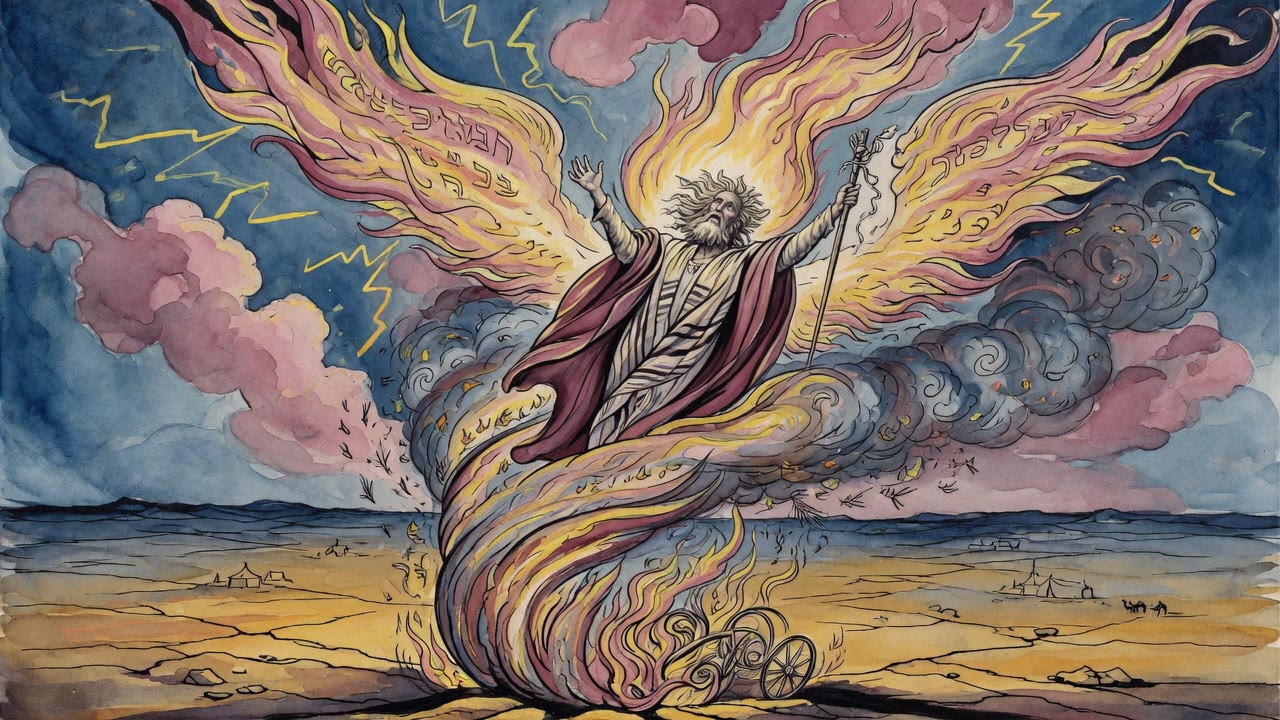
Elijah did not come with thunder. He came the way a person comes who already knows which door is locked.
The problem was not only the husband's temper. It was the shape of the vow. The man had built humiliation into the only path home, and a pious wife stood trapped between two kinds of shame.
Elijah went to Rabbi Meir. He did not drag the husband into the street. He did not tell the woman to be braver than the house allowed. He put the trouble in the hands of the one person with enough honor to spend some of it.
A good woman, he told the rabbi, had fallen into distress because of him. The sermon had kept her late. The oath had kept her out. Now the sage had to decide what his own dignity was for.
Rabbi Meir Lent His Face
Rabbi Meir did not guard his face. He guarded her home.
He stood before the people and announced that his eye was afflicted, and that he needed someone who knew how to cure such pain by spitting into it. The room changed around that sentence. Spittle, which the husband had made into contempt, became medicine. The same act moved from insult to healing without changing its outward shape.
He did not break the oath. He broke its cruelty. He took the force of the husband's words and bent them until they no longer crushed the woman standing under them.
She Spat Into His Eye
Elijah pointed her out. Rabbi Meir called her forward.
She stood before the sage whose teaching had held her past the hour. Her mouth was dry. The demand was too small for the suffering it had caused, too bodily for a scholar's honor, too public for a woman who wanted only to go home.
Rabbi Meir lowered his head. He became the afflicted one. She became the healer. For a breath she hesitated, the spit sitting behind her teeth. Then she spat, and the act landed where he had made room for it.
No contempt passed between them. No public disgrace touched her. The vow was satisfied. Its poison had been drained before it reached the ground.
The House Took Her Back
That night the locked house opened.
Nothing excused the oath. The words had been reckless. They had nearly made a righteous woman choose between reverence and a bed inside her own marriage. A household can be injured by one sentence. It can also be repaired by one face lowered at the right moment.
The prophet saw the trap. The sage lent his honor. She crossed the threshold with her dignity still in her hands, and the bread that had waited under its cloth was finally blessed.
← All myths