5 min read

Er and Onan Died Childless Before the Egypt Road

Seventy souls went down into Egypt with Jacob. Two of Judah's sons never made the trip. Jubilees counts the childless dead among the seventy nations.

Curated by Arthur · Told by Maggid ·
Table of Contents
  1. Seventy Souls and Two Empty Names
  2. The Wives the Scroll Refused to Forget
  3. Isaac Would Not Let the Vow Wait
  4. What the Childless Taught the Living

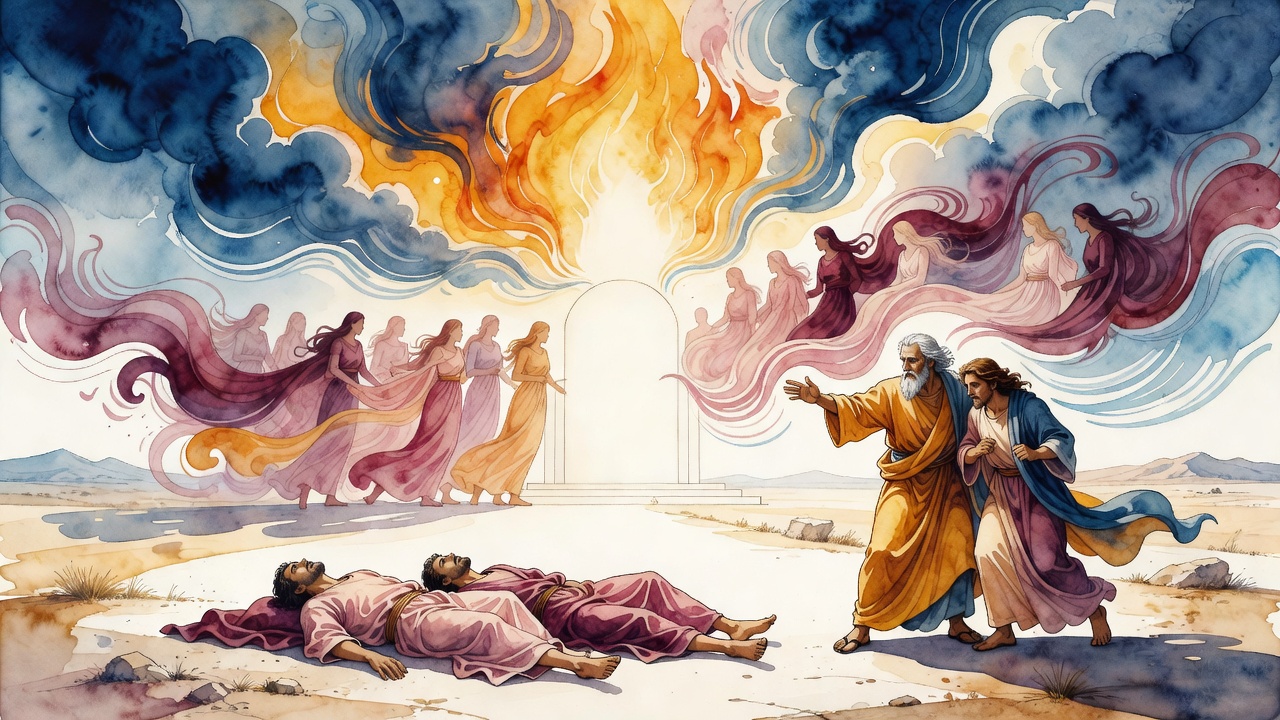
All the souls of Jacob that went into Egypt were seventy. The count is clean until the book stops to name the holes. Five died in Egypt before Joseph and had no children. In the land of Canaan two sons of Judah died, Er and Onan, and they had no children. Israel buried those who perished, and the dead without seed were reckoned among the seventy Gentile nations.

Er and Onan Died Childless Before the Egypt Road Click for full size

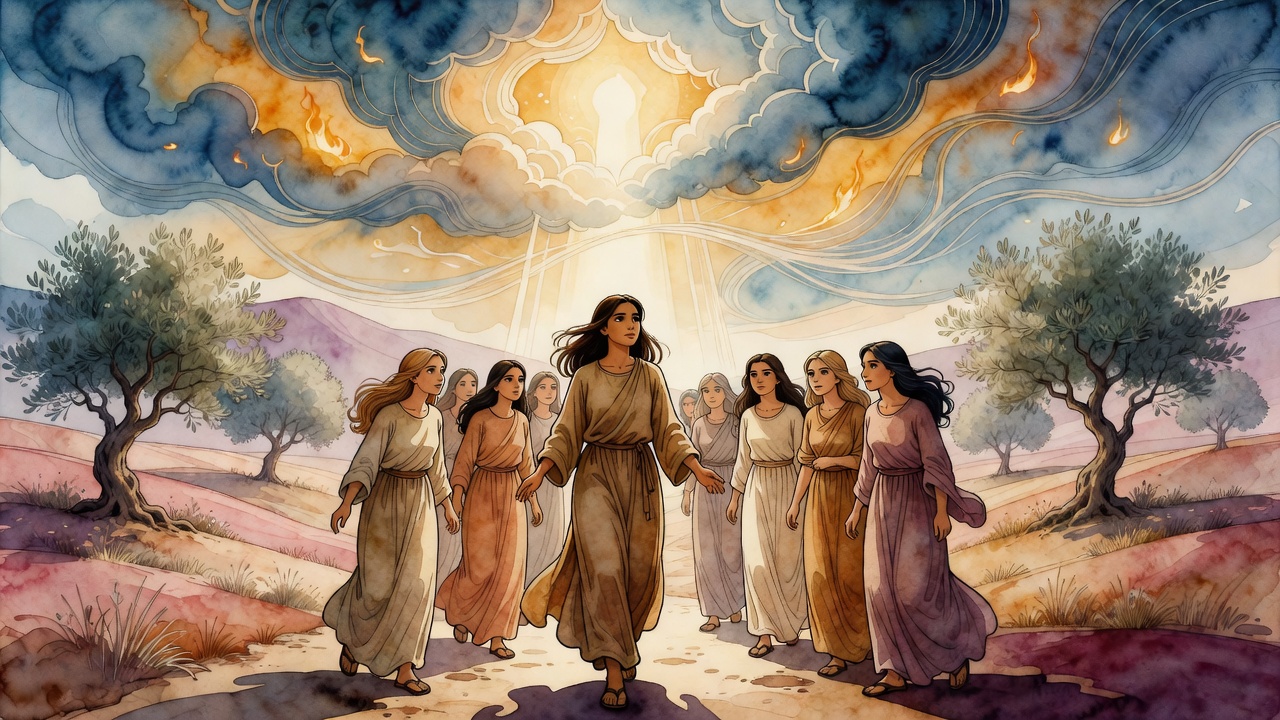
A family walking into Goshen carried graves behind it. The new moon of the fourth month, in the second year of the third week of the forty-fifth jubilee, set their feet on Egyptian soil. The calendar was exact. The absences were exact too.

Seventy Souls and Two Empty Names

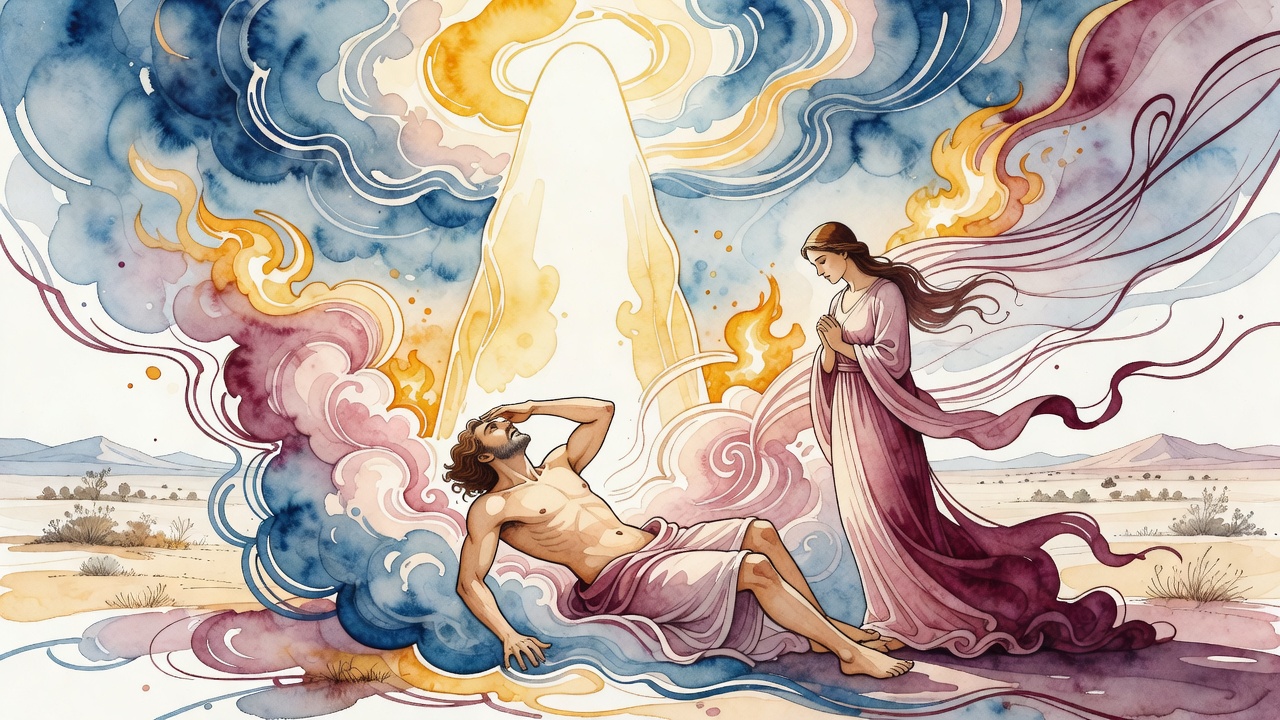
Seventy is a number that sounds complete until the missing names surface. Er and Onan never crossed with the caravan. They had already become a lesson written in Canaan dirt. No children. No line. Burial among a people that still had to learn how exile feels.

The book does not linger in gossip. It places the deaths beside the descent, so blessing and loss hit in one breath. Joseph would rise in Egypt. Two of Judah's first sons would never see that rise. The tribe that would later carry kings began with a double silence.

When Israel buried them, the act was not only grief. It was a boundary. The childless dead were counted with the nations in the strange ledger Jubilees keeps, while the living seventy stepped toward Goshen as a single body that still limped.

The Wives the Scroll Refused to Forget

Other pages of the same book refuse anonymity for the women who built the next generation. Issachar's wife Hezaqa. Zebulon's wife Niiman. Dan's wife Egla. Naphtali's wife Rasuu of Mesopotamia. Gad's wife Maka. Asher's wife Ijona. Joseph's wife Asenath the Egyptian. Benjamin's wife Ijasaka. Names like stones set in a wall so the wall cannot pretend it built itself.

Simeon repented and took a second wife from Mesopotamia as his brothers had done. Repentance here has a geography. It turns a man back toward the marriages that keep a covenant people from dissolving into the land's other beds.

In the first year of the first week of the forty-fifth jubilee, Rebecca called Jacob and commanded him regarding his father and his brother, that he should honor them all the days of his life. Honor was not a proverb on a wall. It was a mother's last administrative order before history tightened.

Isaac Would Not Let the Vow Wait

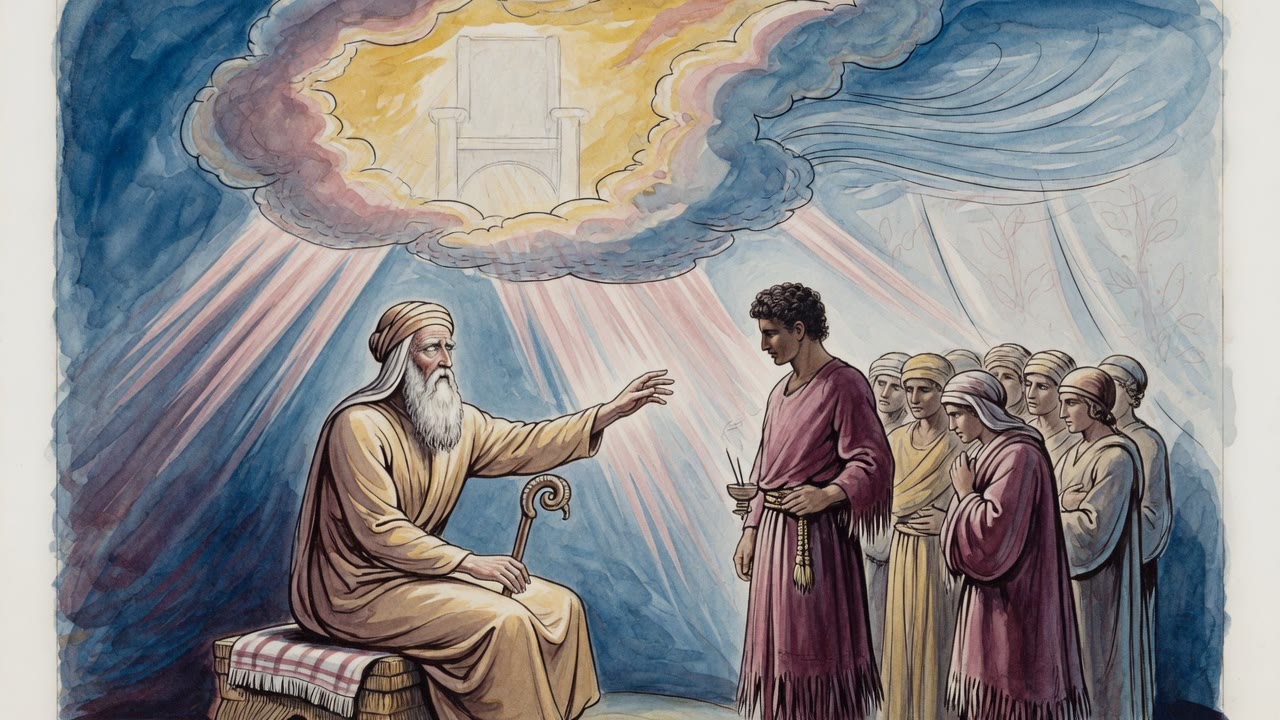
Isaac, near the end of his sight and strength, spoke to Jacob with the impatience of a man who knows unpaid vows open ledgers in heaven. "Set thy mother on an ass and let her go with thee. I know thou camest on my account. May this day be blessed, the day thou sawest me alive and I saw thee."

"Mayest thou prosper and fulfil the vow which thou hast vowed," Isaac said, "and put not off thy vow, for thou wilt be called to account as touching the vow. Make haste to perform it." Then he told Rebecca to go with Jacob her son. Deborah went with them. They came to Bethel.

A dying father does not waste breath on small talk. Isaac tied prosperity to payment. Jacob had spoken holy words in fear years before. The bill had come due on the road between a mother's command and a father's last inspection.

What the Childless Taught the Living

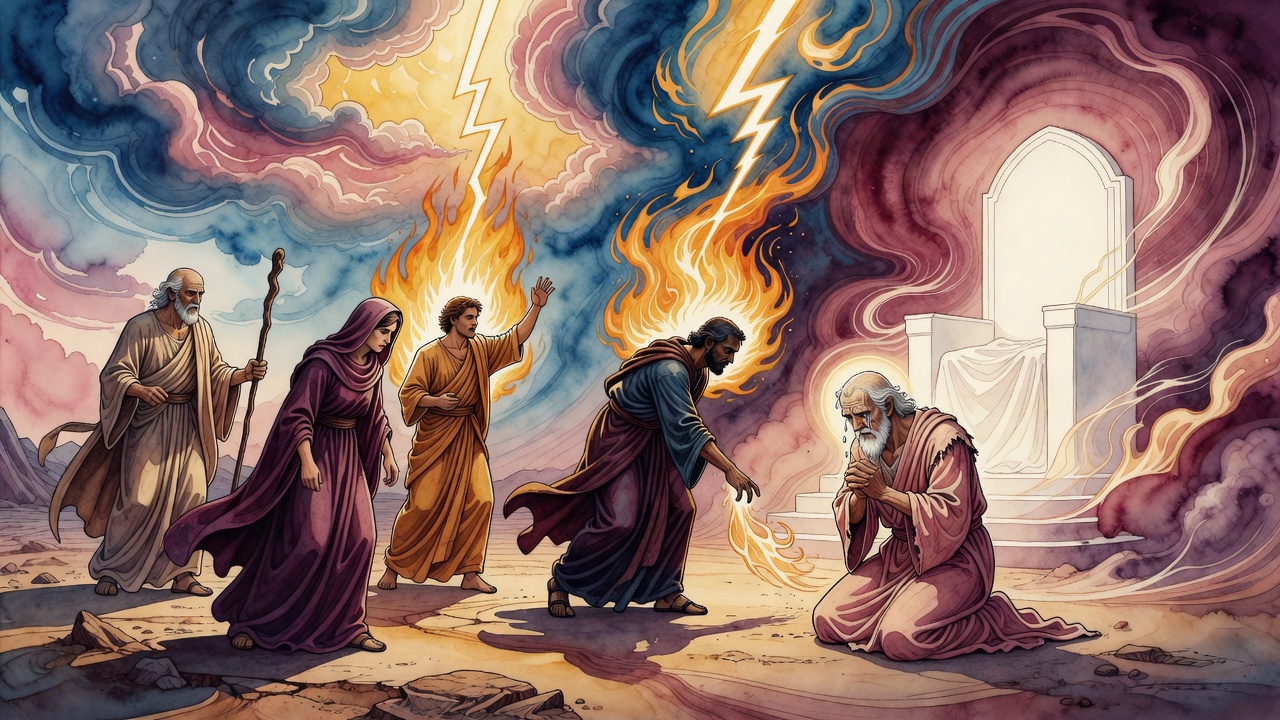
Er and Onan stand at the edge of the Egypt story like unlit lamps. The named wives stand as the opposite claim, that lines continue through women the epic might otherwise skip. Isaac's charge stands as a third claim, that vows outlive comfort.

Jacob entered the years of Joseph carrying all three pressures. Bury the childless without pretending the hole is not a hole. Name the mothers who keep the twelve from becoming a rumor. Pay Bethel before another night of delay opens the account book.

When the seventy walked into Goshen, they walked as a people that already knew death could cancel a name and marriage could restore a future. The jubilee count that stamps their arrival also stamps the warning. Seed is not automatic. Honor is not automatic. A vow left sleeping can kill as quietly as a son who never fathers a child.

Joseph would open storehouses. Er and Onan would remain a silence inside Judah's portion. The named wives would keep cooking, bearing, and arguing in tents the epic barely visits. Isaac's haste would still echo whenever a man tried to postpone holy speech. Egypt received a family already trained by absence and by debt.


← All myths
From the tradition

Sources

3 sources

The texts behind this telling. Some cards carry a translation of the source; others are our own retelling of it, and each card says which. Every card links out to the original.

Book of Jubilees 45:1Book of Jubilees

Retold in our words. Read the original at the link below.Sefaria Community Translation · CC-BY

The number seventy. Specifically, the seventy souls of Jacob’s family who went down to Egypt. "And all the souls of Jacob which went into Egypt were seventy souls." But hidden within that verse, as recounted in the Book of Jubilees, lies a story of loss, lineage, and a subtle connection to the world beyond Israel.

The Book of Jubilees, an ancient Jewish text of the Second Temple period, retells the stories of Genesis and Exodus, often adding details and interpretations that aren't found in the biblical text itself. It's like getting the director's cut of a beloved film, with extra scenes and behind-the-scenes insights.

So, what does Jubilees 45 tell us? It confirms that seventy souls descended into Egypt with Jacob, later known as Israel. These were "his children and his children's children, in all seventy." A good, round, biblically significant number. But The text adds a little twist, a note of sadness. It tells us that five members of Jacob’s family died in Egypt before Joseph, and crucially, they "had no children." These weren't just numbers on a list; they were individuals whose lives were cut short, whose potential lineage was never realized.

The Book of Jubilees doesn't stop there. It also reminds us that back in Canaan, two of Judah’s sons, Er and Onan, also died without offspring. This detail, found in Genesis 38, emphasizes the importance of procreation in ancient Israelite society. To die childless was a tragedy, a break in the chain of generations.

But here’s the really intriguing part: "and the children of Israel buried those who perished, and they were reckoned among the seventy Gentile nations." What does this mean? On the surface it seems to be just saying that those who died were buried by the Israelites. But why the reference to the seventy Gentile nations?

Some understand this to mean that these deceased individuals, though part of Israel, were in some way "counted among" or "associated with" the seventy nations of the world. Perhaps their untimely deaths and lack of descendants placed them in a different category, separate from the continuing lineage of Israel. It's a subtle suggestion of a connection between individual fate and the interplay of humanity. It almost suggests that even within the chosen people, there are echoes of the wider world, a reminder that they are not entirely separate from the fate of all nations.

Finally, the passage grounds this pivotal moment in time: "And Israel went into the country of Egypt, into the land of Goshen, on the new moon of the fourth month, in the second year of the third week of the forty-fifth jubilee." The Book of Jubilees is obsessed with precise dating according to its own unique calendar system. This detail emphasizes the text's concern with placing events within a specific historical and theological framework. It’s like saying, "This isn't just a story; this really happened, at this very specific point in time."

It's more than just a headcount of Jacob’s family. It's a reminder of the fragility of life, the importance of lineage, and the interconnectedness of Israel with the rest of the world. It's a reminder that even in moments of great historical significance, like the descent into Egypt, there are individual stories of loss and unfulfilled potential. And perhaps, it's a reminder that we are all, in some way, connected to the larger story of humanity.

Full source
Book of Jubilees 35:1Book of Jubilees

Retold in our words. Read the original at the link below.Sefaria Community Translation · CC-BY

Book of Jubilees turns to The Wives of Jacob's Twelve Sons Revealed.

We read about Jacob's sons, their journeys, their flaws, their triumphs. But each of them had a partner, a woman who shaped their lives and, in turn, the future of the Israelite nation.

Jubilees 35 gives us a list. Buckle up, because some of these names might be new to you: Issachar's wife was Hêzaqâ; Zebulon's wife, Nî’îmân; Dan's wife, ’Êglâ; Naphtali's wife, Rasû’û, who, interestingly, is noted as being from Mesopotamia. Then there's Gad's wife, Mâka; Asher's wife, ’Îjônâ; Joseph's wife, the well-known Asenath, the Egyptian; and finally, Benjamin's wife, ’Îjasaka.

What do we make of this list? It's more than just names on a page. And these women, though often unnamed in the primary narratives, played an integral role.

Notice that Naphtali's wife, Rasû’û, is specifically identified as being from Mesopotamia. This detail hints at the interconnectedness of the ancient world, and the fact that Jacob's sons weren't living in isolation. They were interacting, and intermarrying, with people from other lands.

Then there's the curious case of Simeon. That Simeon repented – repented of what, we aren't told here, though other traditions paint Simeon as a volatile and sometimes violent figure – and took a second wife from Mesopotamia, just like some of his brothers. This mention of repentance and a second marriage adds another layer of complexity to Simeon's character, hinting at a life filled with both struggle and redemption.

And that's not all! The passage concludes with a touching scene. In the first year of the forty-fifth jubilee – a jubilee being a significant period of time in Jewish tradition – Rebecca calls Jacob, her son, and commands him to honor his father and his brother all the days of his life. It's a simple, yet profound, reminder of the importance of family and respect, values that are central to Jewish tradition.

So, what can we glean from this brief passage in the Book of Jubilees? The names of wives, the origins of spouses, the call to honor family – these are the threads that weave together the tradition of history, reminding us of the human element within sacred stories. It challenges us to consider the lives of those often relegated to the margins, the women whose stories, though less known, are no less important.

Full source
Book of Jubilees 31:45Book of Jubilees

Retold in our words. Read the original at the link below.Sefaria Community Translation · CC-BY

Book of Jubilees turns to Isaac Gives Jacob Final Advice Before Dying.

Here, Jacob is visiting his father, Isaac. Isaac, nearing the end of his days, gives his son some crucial advice, advice that resonates even now. Isaac says, "set thy mother (on an ass) and let her go with thee. And I know, my son, that thou hast come on my account, and may this day be blessed on which thou hast seen me alive, and I also have seen thee, my son."

It's a tender moment, a father's blessing. But there's more to it than just familial affection. Isaac continues, "Mayest thou prosper and fulfil the vow which thou hast vowed, and put not off thy vow; for thou wilt be called to account as touching the vow."

A vow. A promise made to God. In Jacob's case, this refers to the vow he made at Bethel, that if God would be with him and protect him on his journey, he would return and build an altar there. (Genesis 28:20-22) Isaac is urging him, with his last breaths almost, to not delay. Don't procrastinate!

Why the urgency? Isaac explains, "now therefore make haste to perform it, and may He be pleased who hath made all things, to whom thou hast vowed the vow." It’s a powerful reminder that our promises matter, especially those made to the Divine. There's a weight to them.

And it's not just Jacob who gets involved. Isaac turns to Rebecca, Jacob's mother, and says: "Go with Jacob thy son." So Rebecca, along with Deborah, her nursemaid, join Jacob on his journey back to Bethel.

So, what does this little snippet from Jubilees tell us?

It reminds us of the importance of keeping our promises, of honoring our commitments, particularly those we make to something bigger than ourselves. Life gets busy, distractions abound, but Isaac's words echo through the ages: don't put it off.

And it also speaks to the power of family, of mothers and sons and the bonds that tie them together, supporting each other on journeys of faith and fulfillment. It’s a journey they undertake together.

Next time you find yourself putting off a promise, remember Jacob and Isaac. Remember the weight of a vow, and the blessing that comes with fulfilling it. And maybe, just maybe, you'll find the strength to finally get it done. Because sometimes, the most important journeys are the ones we keep putting off.

Full source