Parshat Vayeshev5 min read

Er Died Wicked and Onan Spilled the Seed

Judah gave Tamar to Er, then Onan. Heaven struck both sons, and later a dream told a broken man his earnest tears had been heard.

Curated by Arthur · Told by Maggid ·
Table of Contents
  1. A Wife in the Forty-Fifth Jubilee
  2. The Duty Onan Would Not Own
  3. Tamar and the Broken House
  4. Tears That Reached a Dream
  5. What Judah's Line Learned in Blood
Er Died Wicked and Onan Spilled the Seed Click for full size

A Wife in the Forty-Fifth Jubilee

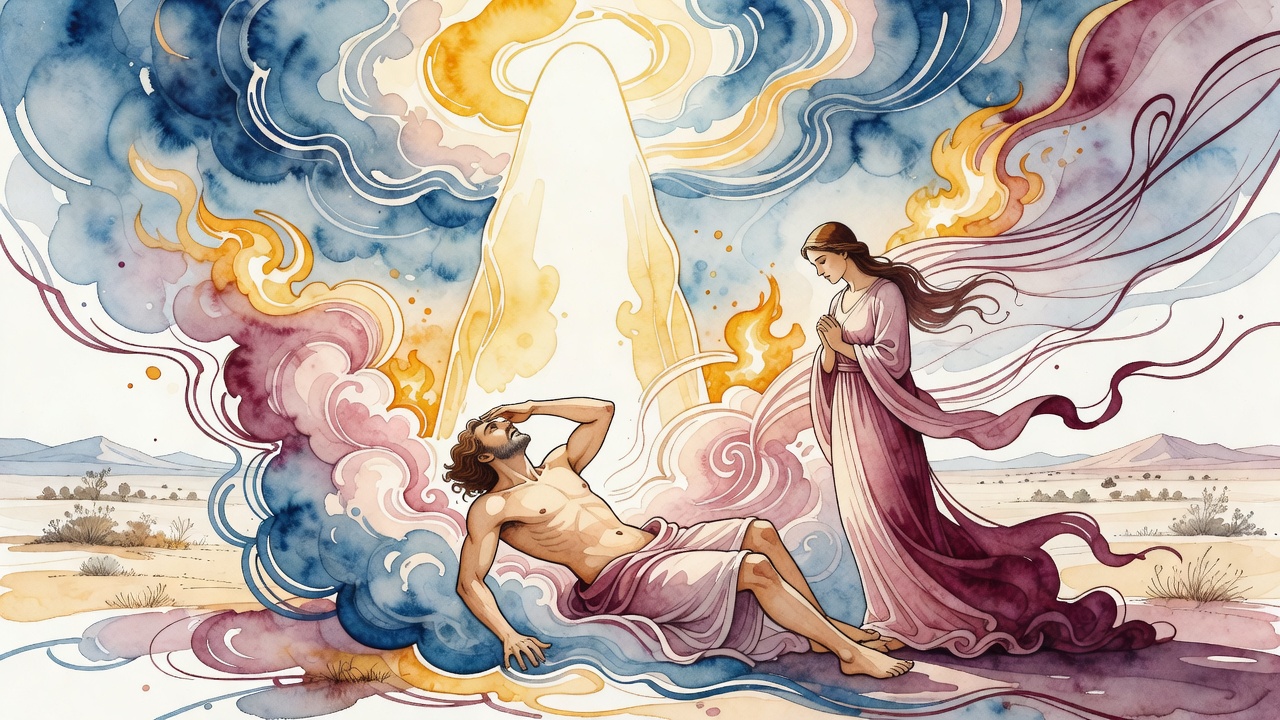
In the forty-fifth jubilee, in the second week, in the second year, Judah took for his firstborn Er a wife from the daughters of Aram named Tamar. The calendar of heaven counted the match with cold precision. Weeks and years marked on tables no human hand wrote. The house of Judah did not know how short the marriage would be.

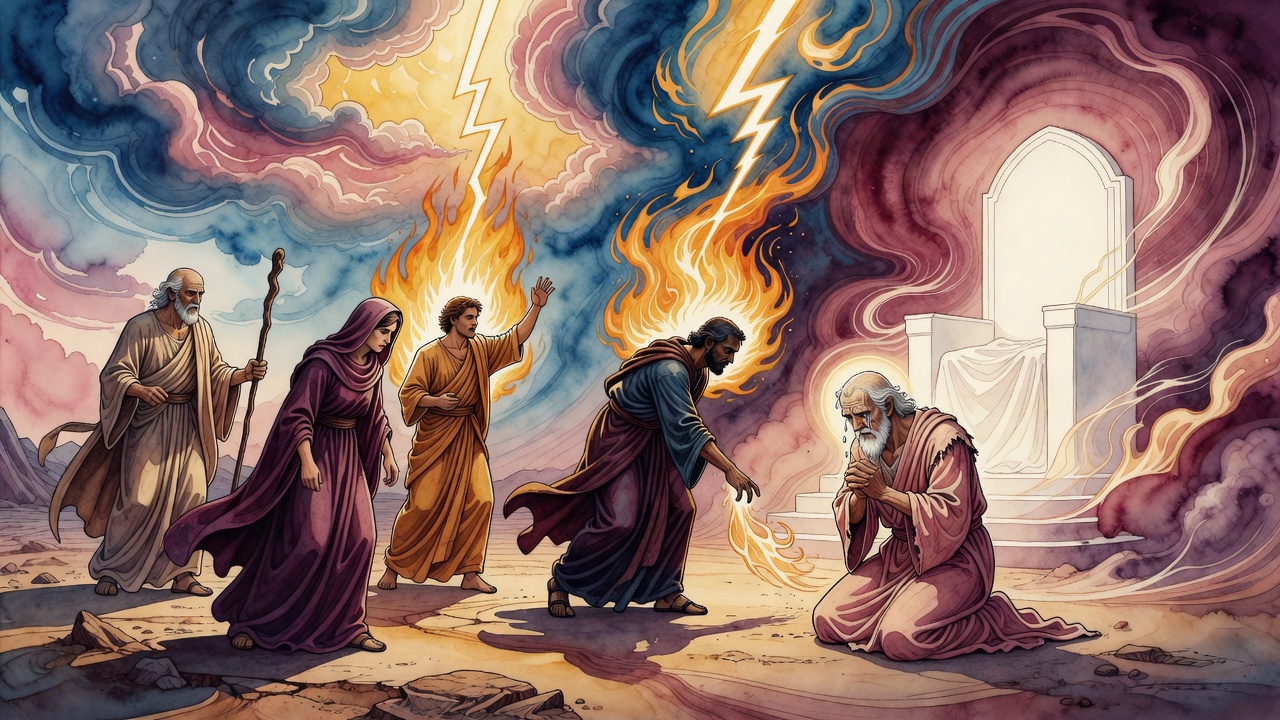
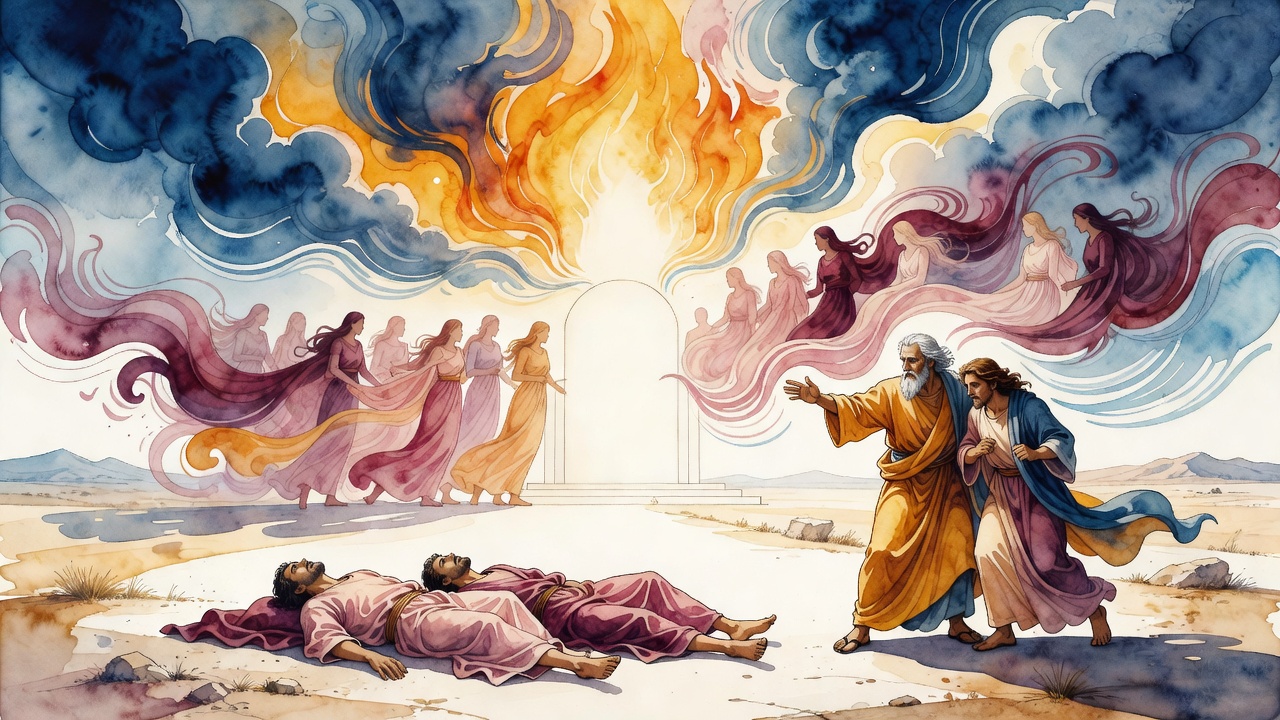
Er looked at Tamar and at the law of his father's house and found a refusal. One telling says he would not come near her because she was Canaanite to his mind, and he wanted other blood, but Judah forbade that path. Conflict brewed in the bed before it reached the grave. Wickedness thickened in the firstborn until the Lord slew him.

No long list of crimes. A verdict. A body. A widow with no child to carry Er's name. The firstborn of Judah ended as a warning rather than a dynasty.

The Duty Onan Would Not Own

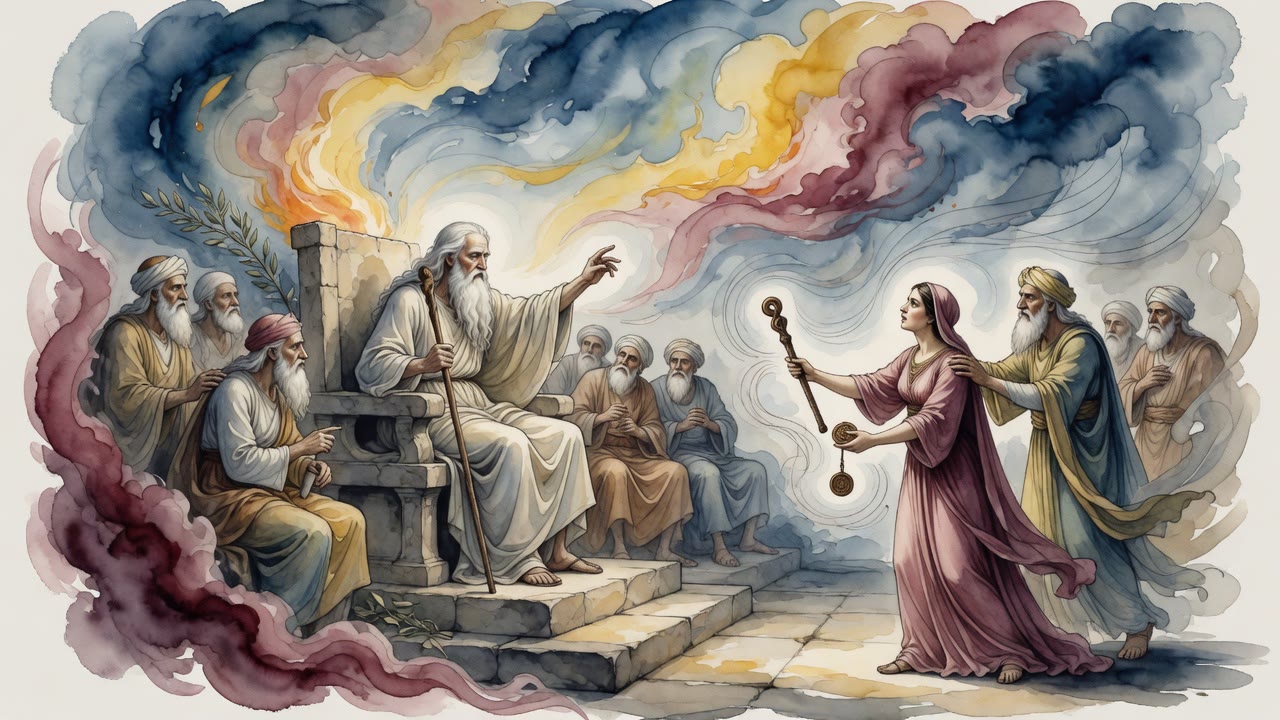
Judah turned to Onan. "Go in unto thy brother's wife and perform the duty of a husband's brother unto her, and raise up seed unto thy brother." The custom of yibbum pressed like a hand on the second son's shoulder. The child would not be counted as Onan's glory. It would repair Er and keep the dead brother's name alive in Israel.

Onan knew the seed would not be his, but his brother's only. He went into the house of his brother's wife and spilled the seed on the ground. Continuity died on the floorboards. The name of Er received no heir. Family duty became a private calculation about ownership and credit.

Heaven's anger, already lit for the first son, found the second. Two brothers. One widow. An empty line where Judah had expected grandsons. The spilled seed was not only lust's waste. It was a refusal to let the dead keep a claim on the living.

Tamar and the Broken House

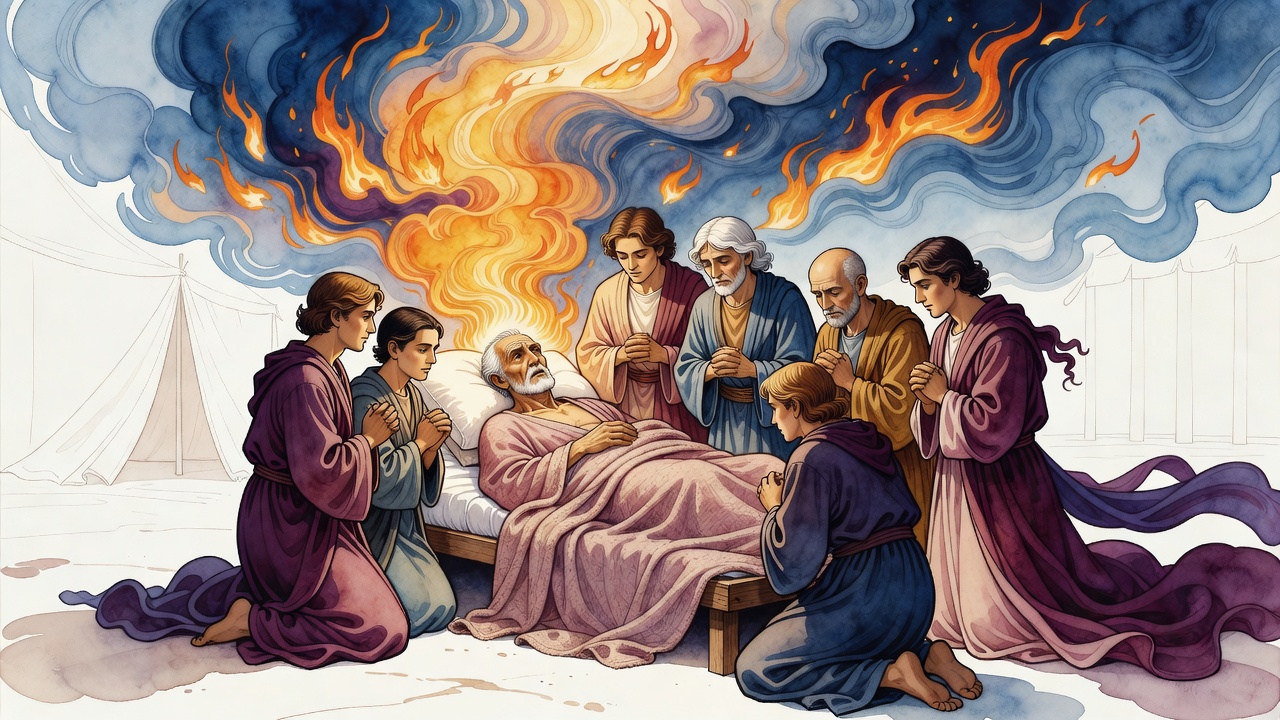
Tamar stood in the wreckage of two marriages that never became generations. Judah's house had taken her and given her death and refusal. The story that began with a dated wedding now ran on grief and law and the hunger of a lineage that would one day carry kings. For a time only silence and delay answered her.

Judah's failures stacked. Sons dead. Duty unpaid. A woman left without the child the custom promised. The firstborn's wickedness and the second's calculation left the same scar on the same bed. The father who could command a marriage could not command a heart toward justice.

Outside the tent, life in Canaan went on. Inside, the future of Judah's line hung on a widow the house had wronged twice.

Tears That Reached a Dream

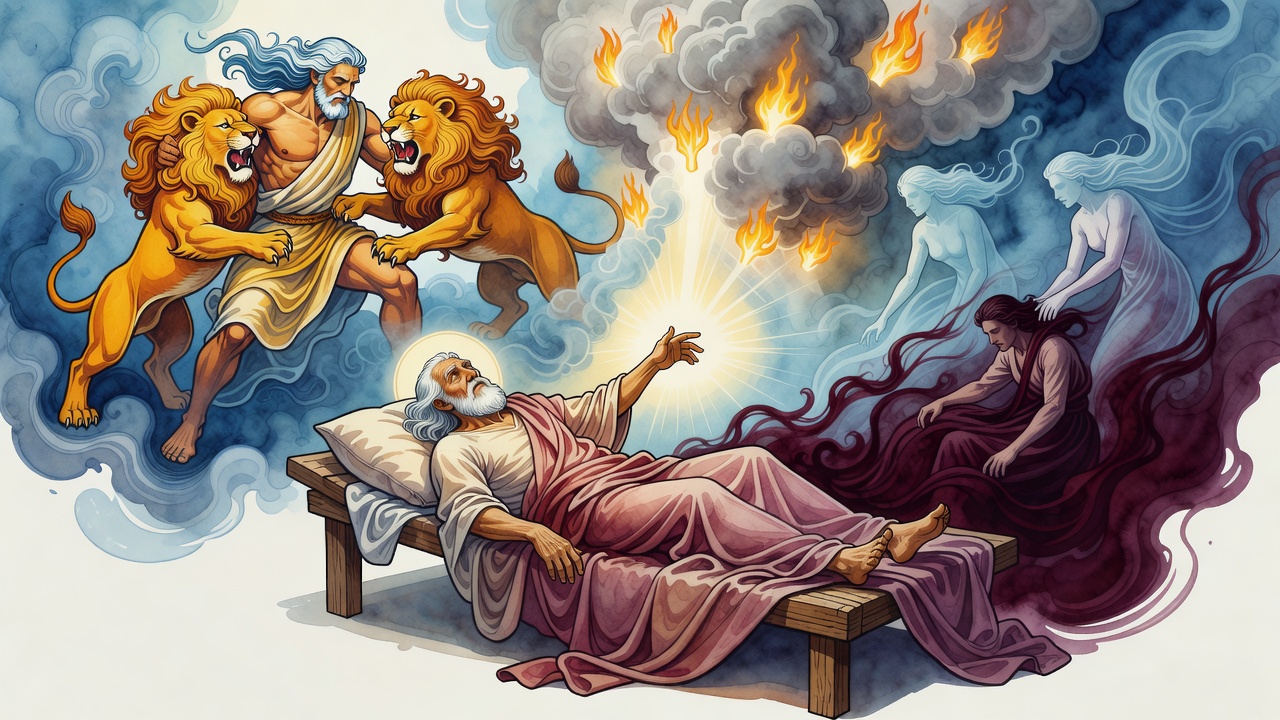
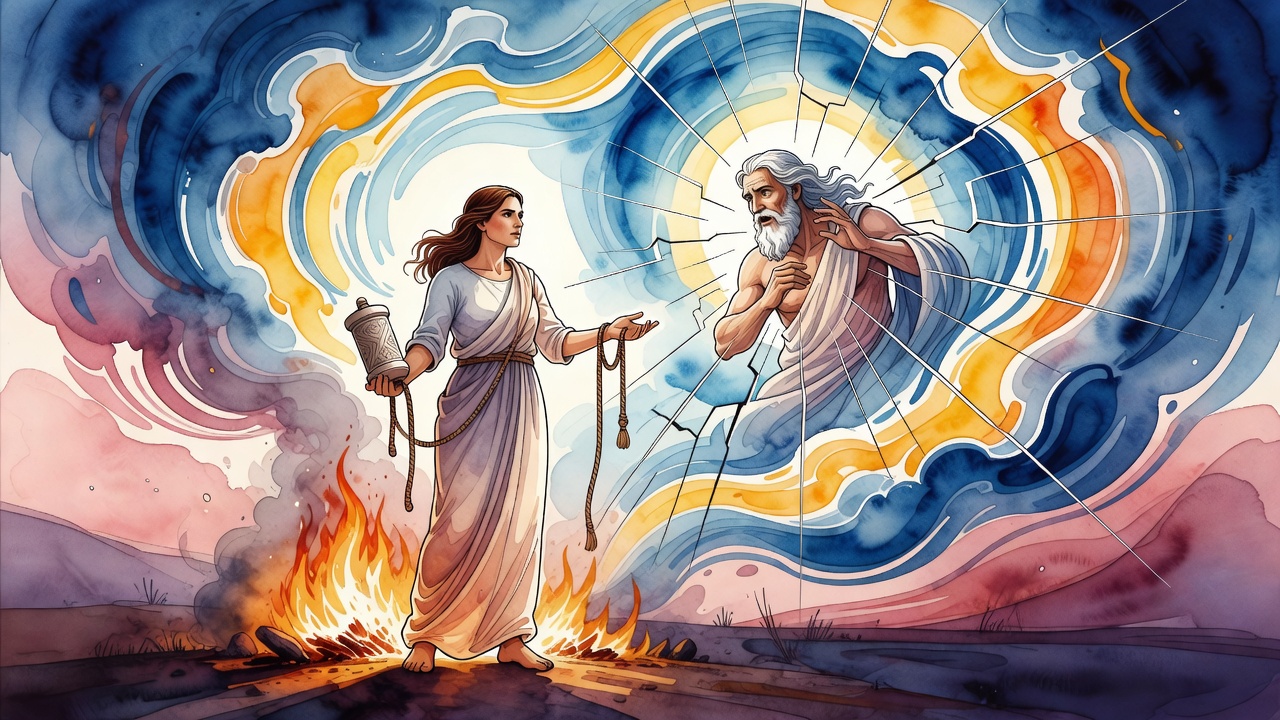
Later the same chapter of Jubilees turns to a man who transgressed greatly and then broke open in lament. He supplicated and wept and did not return to the deed. Heaven answered in a dream. "We told him in a dream that it was forgiven him because he supplicated earnestly, and lamented, and did not again commit it."

Forgiveness came for turning, not for performance alone. He was forgiven because he turned from his sin and from his ignorance, for he transgressed greatly before God. The text sets that mercy beside laws that burn for other pollutions, so the house of Israel would know which doors stay open and which stay shut.

Tears without change mean nothing. Change without tears can still be thin. Both together moved the court above. The dream was not flattery. It was a verdict that required a clean road afterward.

What Judah's Line Learned in Blood

Er's death and Onan's refusal are not footnotes to Tamar's later courage. They are the first collapse. A father who could not govern his sons' lust and fear watched the seed of promise refuse to plant. When repentance finally appears in the wider Jubilees telling, it arrives as hard-won knowledge. Heaven listens to earnest turning. Heaven also strikes those who treat a widow's future as a game of ownership.

Tamar's name remains. Er's name remains only as a warning. Onan's spilled seed remains as a refusal written on the ground. Between them Judah's house learned that lineage is not a right you can waste and still call holy.

The forty-fifth jubilee's careful date had marked a wedding. It also marked the start of a chain that would force Judah to face what his sons destroyed, and what heaven still forgives when a sinner truly turns and does not go back.

Yibbum was meant to be mercy for the dead and structure for the living. Onan turned it into a theft of the future. Er's wickedness had closed one door. Onan's spilled seed closed another. When heaven later answered earnest tears in a dream, the contrast was sharp enough to cut. Some sins end in fire and death. Some end in a clean road after true turning. Judah's house would need both lessons before Tamar's story finished its work.


← All myths
From the tradition

Sources

3 sources

The texts behind this telling. Some cards carry a translation of the source; others are our own retelling of it, and each card says which. Every card links out to the original.

Book of Jubilees 41:1Book of Jubilees

Retold in our words. Read the original at the link below.Sefaria Community Translation · CC-BY

In the forty-fifth jubilee, in the second week, in the second year, Judah took for his first-born Er a wife from the daughters of Aram, named Tamar.

Jubilees sets the marriage of Er and Tamar by jubilee dating. Er's later sin is not narrated in this line.

Full source
Book of Jubilees 41:5Book of Jubilees

Retold in our words. Read the original at the link below.Sefaria Community Translation · CC-BY

The kind that makes you wonder, "Wait, what exactly is going on here?

The Book of Jubilees isn't actually part of the Hebrew Bible, the Tanakh, as we know it. It's considered Apocrypha, a text that's important historically and theologically, but not included in the biblical canon by all groups. Still, it offers a fascinating peek into how ancient Jewish communities understood and expanded upon the stories we do find in the Torah.

The passage starts with a brief mention of Judah’s son who refused to sleep with his wife. Why? Because she was a Canaanite. He wanted to marry within his own family, but Judah forbade it. Right away, we see potential for conflict brewing.

Then, tragedy strikes. "And this Er, the first-born of Judah, was wicked, and the Lord slew him." Ouch. The text doesn’t elaborate on Er’s wickedness, leaving us to wonder what exactly he did to warrant such a fate.

So, what happens next? Judah steps in and invokes the ancient custom of yibbum, often translated as levirate marriage. "Judah said unto Onan, his brother: 'Go in unto thy brother's wife and perform the duty of a husband's brother unto her, and raise up seed unto thy brother.'" In other words, Onan is being told to marry his deceased brother's widow and have a child who would carry on Er's name and legacy.

Now, here's where things get even more complicated. "And Onan knew that the seed would not be his, (but) his brother's only, and he went into the house of his brother's wife, and spilt the seed on the ground…"

Onan wasn't exactly thrilled with the idea of raising up children who wouldn't be considered his own. So, he found a rather… creative way to avoid fulfilling his obligation. The text says he "spilled his seed on the ground."

What are we to make of this? Was Onan’s sin simply about avoiding his duty to his brother? Or was it something more profound? Some commentators suggest that Onan's act was a rejection of the very idea of family continuity and the sacred obligation to perpetuate life.

This passage is a stark reminder that the stories in our tradition, even the seemingly simple ones, can be incredibly layered and complex. They challenge us to confront difficult questions about family, duty, and the meaning of life itself. And sometimes, they just leave us pondering the complexities of human nature. What do you think?

Full source
Book of Jubilees 41:28Book of Jubilees

Retold in our words. Read the original at the link below.Sefaria Community Translation · CC-BY

The Book of Jubilees, an ancient Jewish text from the Second Temple period, offers a powerful glimpse into the mechanics of forgiveness, and it all starts with a transgression.

Chapter 41 recounts a story of unnamed person who committed a pretty significant sin. The text doesn’t explicitly detail the sin, but we know that it caused him immense grief. He began to lament and to supplicate before the Lord, pouring out his heart in sorrow and begging for forgiveness.

In Jubilees, divine forgiveness isn't just handed out like candy. It requires genuine contrition. And apparently, this person's repentance was the real deal. "We told him in a dream," the text reveals, "that it was forgiven him because he supplicated earnestly, and lamented, and did not again commit it." Forgiveness granted not just because of the plea, but because of the demonstrable change in behavior. He turned from his sin. It's a powerful evidence of the idea that true repentance involves both acknowledging wrongdoing and actively choosing a different path. The text emphasizes that he received forgiveness "because he turned from his sin and from his ignorance, for he transgressed greatly before our God."

The Book of Jubilees doesn't stop there. It uses this specific situation as a jumping-off point to address a particularly abhorrent act: incest with one's mother-in-law. The text minces no words. "And every one that acteth thus, every one who lieth with his mother-in-law, let them burn him with fire that he may burn therein, for there is uncleanness and pollution upon them; with fire let them burn them."

Whoa. That’s We need to understand this within its historical and cultural context. The Book of Jubilees, believed to have been written during the Second Temple period (roughly 515 BCE to 70 CE), reflects a very specific set of societal norms and laws. Incest was considered a grave violation of the established order, a profound disruption of familial bonds and a source of ritual impurity.

The punishment prescribed, burning, is shocking to our modern sensibilities. It emphasizes the severity with which such transgressions were viewed. It also highlights the text's concern with maintaining purity and order within the community. This isn't to say we endorse such harsh penalties today, but rather to understand the worldview that informed them.

It's a potent mix of grace and severity. On one hand, we see the possibility of forgiveness through sincere repentance. On the other, we encounter uncompromising condemnation of certain acts deemed fundamentally destructive. It’s a reminder that morality, ethics, and the search for redemption have always been complex, challenging, and deeply human endeavors.

Jubilees 41 forces us to confront difficult questions about sin, forgiveness, and the boundaries of acceptable behavior. It invites us to reflect on what it truly means to turn away from wrongdoing and the consequences of actions that violate the sacred bonds of community and family.

Full source