Even Solomon's Table Could Not Pay the Workers
A son told his father that day laborers from Abraham's line could not be fed enough, even at the daily scale of Solomon's kitchen.
Table of Contents
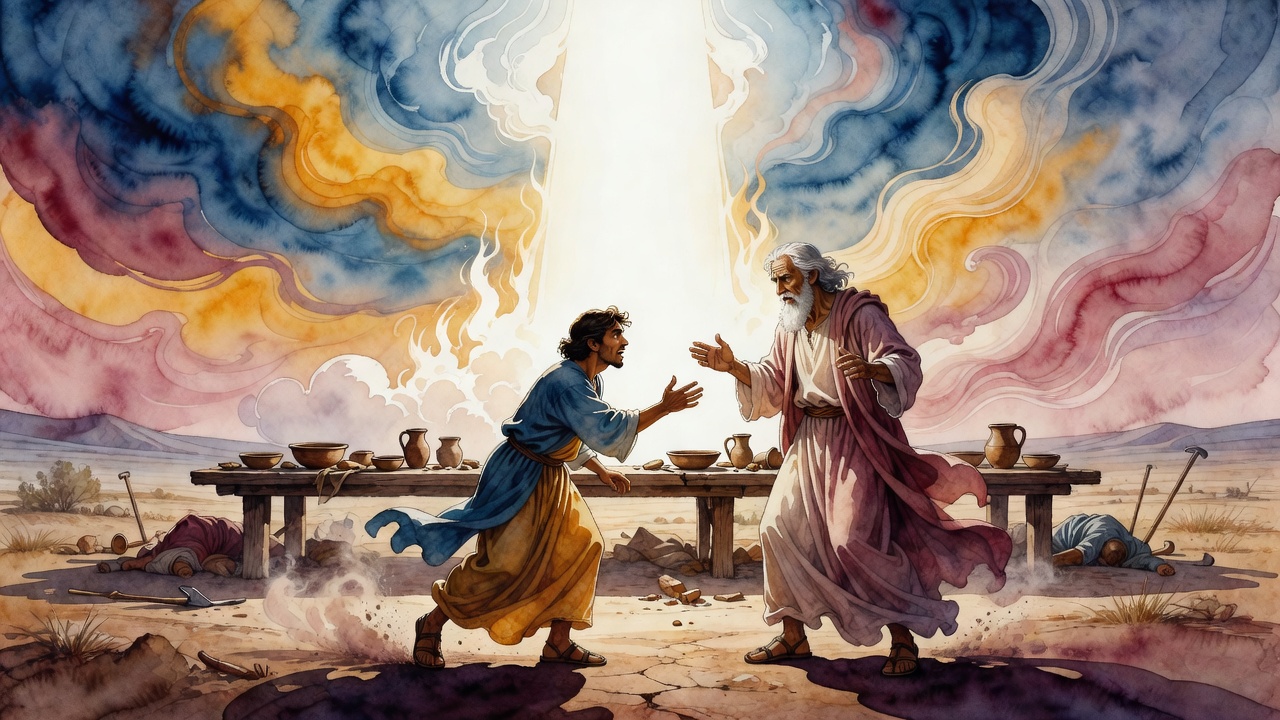
Rabbi Yohanan ben Matya sent his son to the field at dawn with a simple order. Feed the hired workers well. Do not cut corners. The son went out, watched the men bend and lift, watched them eat what was set down, and came back pale with a larger arithmetic.
 Click for full size
"Father," he said, "it is impossible to feed the children of Abraham adequately. Even if I set before them the table of Solomon, I would still owe them more."
The King's Daily Kitchen
Solomon's kitchen was not a metaphor in the son's mouth. Scripture counts it: thirty measures of fine flour, sixty of meal, ten fat oxen, twenty pasture oxen, a hundred sheep, besides deer and gazelles and fatted fowl, every single day (1 Kings 4:22-23). That was the floor the son named, not the ceiling. Even that river of meat and bread, he said, could not match the dignity these laborers carried in their blood.
He was not arguing for thinner soup. He was arguing for thicker responsibility. Workers who descend from the patriarchs are royalty wearing work clothes. Feed them as if the palace were your starting point.
What Is Just in Heaven's Eyes
The law can be kept in the letter and still fail the eyes of Heaven. "To do what is just in the eyes of the Lord your God" is read by Rabbi Yishmael as a demand that conduct line up with divine justice, not only with a checklist. Paying a wage and handing a loaf may satisfy a contract. Treating children of Abraham as cheap backs fails a higher court.
The son's report forced that higher court into a kitchen. Justice here is not only the hour of payment. It is the honor of the meal, the refusal to measure a worker as less than the story he comes from.
Children Even When They Sweat
The same midrashic stream that defines "just" also argues over the name "children." One voice says Israel is called children when it acts like children. Another, Rabbi Meir's, refuses the condition. Even foolish children, even faithless children, remain children of the living God. The field hands sweating under Yohanan's hire fall under that second voice. Their pedigree does not clock out at sundown.
If God will not drop the name "children" when the people fail, a human employer cannot drop the dignity of Abraham's line when the work is hard and the budget is tight.
The Son Who Raised the Standard
Yohanan had told his son to feed them adequately. The son returned with a standard no pantry can fully meet. That is the point. An unreachable measure keeps the household leaning forward. You strain every day toward a table you cannot equal, because the men across from you are not "help." They are a covenant walking on sore feet.
In the evening the workers ate again. Whether the portions grew is not staged as a miracle of loaves. The miracle is the sentence that reclassified them. Once a householder hears that Solomon's kitchen is still not enough, he cannot go back to measuring people by the cheapest bowl that quiets hunger.
After the Report
Students later repeated the son's words when employers grew stingy. The story travels because it flips the usual labor complaint. Instead of workers demanding more, a young heir of the household demands that his own side give more, and he uses the grandest kitchen in Israel's memory as the inadequate baseline.
Out in the field the next morning, backs bent again. Someone poured water. Someone broke bread. The sky did not open. The only change was invisible and permanent: the men were no longer feedable in the ordinary sense. They were a debt of honor that outlasts any single meal.
Yohanan listened to his son and did not laugh. A teacher who cannot learn from his child's conscience has already lost the point of the table. Solomon's daily oxen remain in the book as a number. The son's fear of underfeeding Abraham's children remains as a law of the heart.
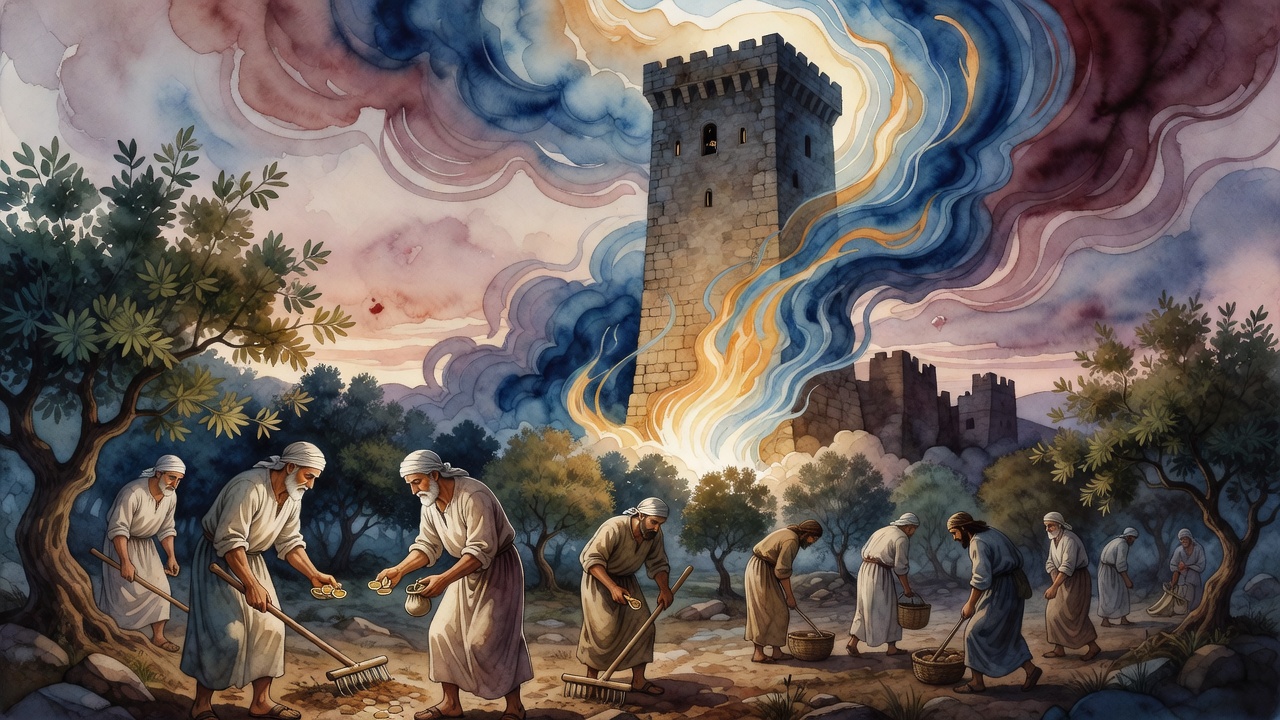
The field that morning smelled of turned earth and last night's dew. The hired men did not look like kings. They looked like backs and wrists and the particular tiredness of work done for someone else's harvest. The son of Yohanan watched them eat and felt the gap between their appearance and their lineage open like a fault line.
He returned to his father not to scold the workers for appetite, but to scold the house for small thinking. "Children of Abraham" was not a sermon phrase in his mouth. It was a labor category. If the patriarchs are the root, then every wage and every loaf is measured against a story larger than the day's contract.
Yohanan could have dismissed the speech as youthful excess. Instead he let it rearrange the household's fear. The new fear was not insolvency. It was the chance of feeding covenant people as if they were tools. Solomon's numbers stayed in the air as a taunt against stinginess: even the palace kitchen is not a full answer to dignity.
By Sabbath the story had left the field and entered the study house. Students argued whether the son had insulted Solomon or honored him by using his table as a failed ceiling. The older men said both can be true. A king famous for daily oxen becomes, in this telling, a measuring stick that still falls short when the diners are Abraham's children with dirt under their nails.
← All myths