The King in the Orchard Tower Paid the Weeders and Expelled the Idlers
From the tower the king watched every hoe. None of the hired men looked up. At dusk he came down with a purse and a list of names.
Table of Contents
 Click for full size
The Water Boy Blamed the Wind
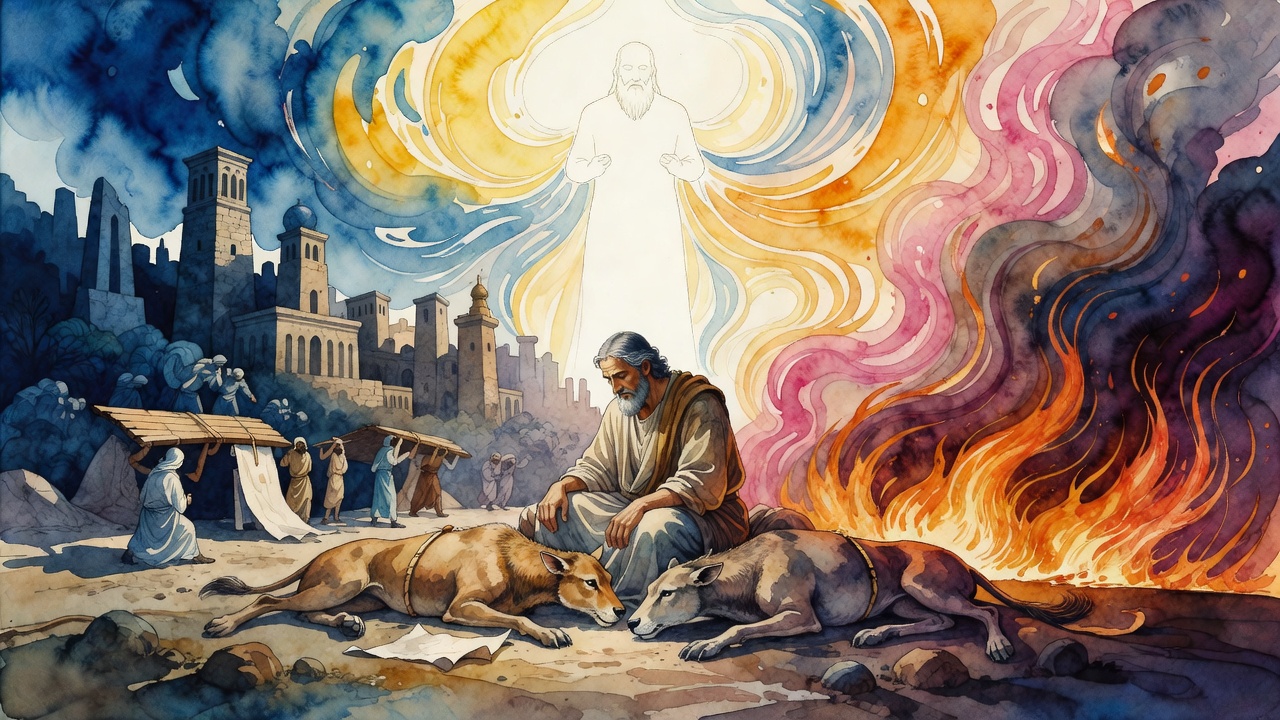
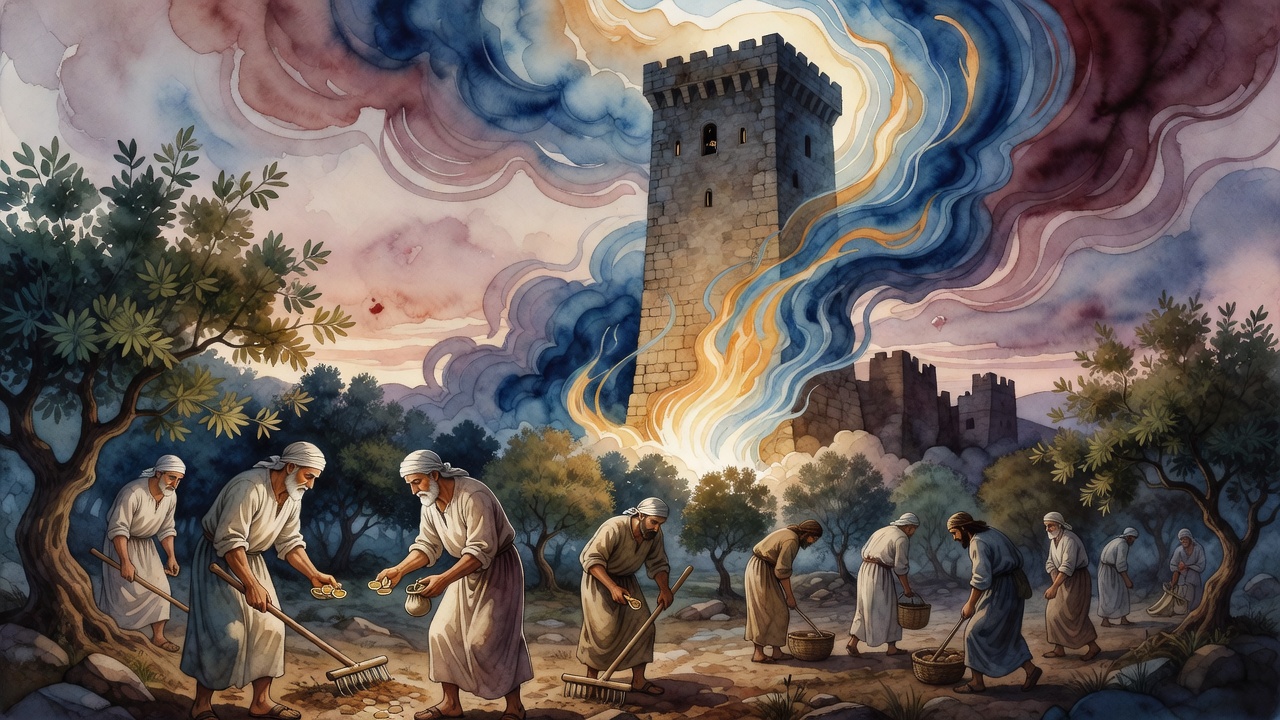
Dust rose from the orchard rows. Men bent and straightened, bent and straightened. None of them looked up at the high tower in the middle of the trees. From that height a king watched every hoe stroke and every idle shuffle. None of the hired men could see his face.
A boy carrying water for the crew thought he heard boards creak above the leaves. He told himself it was only wind. He set the jug down at the end of a row. Water slapped the clay. He wiped his mouth on his sleeve and went back for more.
Some men cut weeds until their palms split. Some gathered stones and stacked them at the field's edge so plows could pass. Some hoed in straight lines that would hold water when the rains came. Others spent the hours moving baskets from a full shed into an empty one and back again. They wiped sweat from their brows and spoke loudly about how hard the day had been.
The King Came Down With a Purse
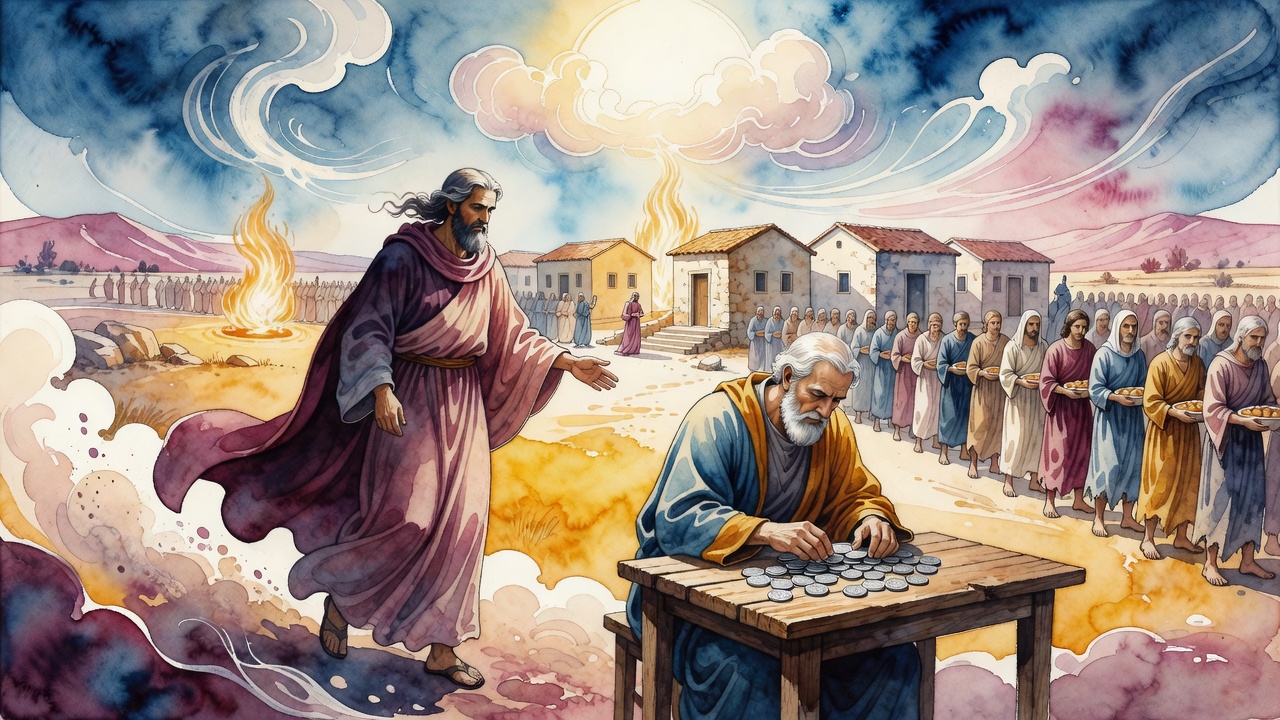
The sun slid west. The king came down the tower stairs with a ledger and a purse. He paid the hoers. He paid the weeders. He paid the stone gatherers. Coin landed in split palms and disappeared into the folds of robes.
He stopped in front of the men whose baskets had only changed houses. "What good are these to me?" he said. He sent them out under guard. They had defied the charge he had spoken at dawn. Work had been named. Motion without fruit was not work.
One of the shufflers protested that his back ached as much as any hoer's. The king pointed at the empty rows beside him and did not answer twice. The boy with the jug stood with his mouth open. He had believed noise was harvest.
The weeders counted coin with split palms. The shufflers went down the road without looking back at the tower. The orchard smelled of cut green and dust. Dusk made the leaves look darker than they were.
The Scribe Gave Away the Third Share
In another town a man earned sixty dinars and divided them like a careful merchant. Twenty for food. Twenty for his house. Twenty saved for his children. Neighbors praised his foresight. The budget looked clean on a slate.
Rabbi Meir told his students of a scribe who earned six selaim a week and also divided in three. Two for food. Two for his house. Two given to the poor.
A student stood up. "That leaves nothing for the children."
The scribe, in Meir's telling, had already answered that question. "If they are good, God will provide for them. If they are bad, why should I leave money to the enemies of God?"
The study house went quiet. After the lesson one student walked home past a beggar he usually ignored. He stopped. He put two coins in the open palm. He had nothing left for a sweet for his own boy. He walked the rest of the way with empty pockets and did not open the locked chest at home.
The Name Waited Until the Work Stood
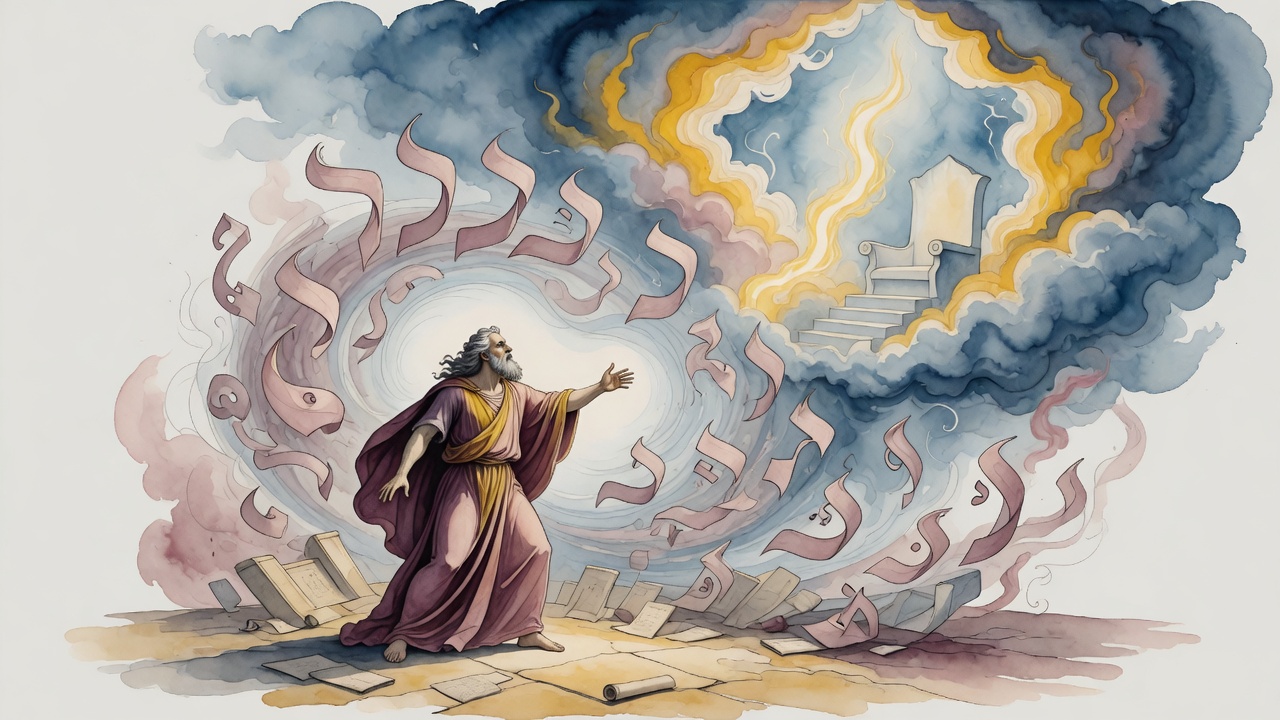
Human kings proclaim a title first, then promise roads and baths. Rabbi Yudan spoke in the name of Akilas and reversed the order. The Holy One creates. He sustains. Only then is the name called fitting.
"To this One it is fitting to call God," Yudan said, "because the works already stand."
Shimon ben Azai heard humility making a person great, not rank shouted before service. A flesh-and-blood king says his name first, then his title. The Holy One creates the needs of the world, and only after that does the verse name God (Genesis 1:1).
In the orchard the pattern held. The king did not begin the day with medals. He began with a charge, watched the labor, and paid what was earned. A laborer who wanted his name painted on the tower would have climbed the stairs at noon and waved. The ones who got paid kept their eyes on the dirt.
The Rows at Quitting Time
Western light caught the sweat on the hoer's neck and the clean hands of the shuffler alike. Only one set of hands went home with coin that would last the week. The boy picked up his empty jug. He looked once at the tower. The boards did not creak. He went back down the row anyway, because someone still needed water in the last light.
The tower stood. The orchard was still hired. Morning would bring the charge again. Torah. Commandments. Deeds that cut real furrows. The shufflers were already gone. The weeders slept with sore hands and wages in the fold of a robe.
The empty baskets sat in the shed. They proved nothing. The king had come down. The ledger had been read. The boy slept with the sound of boards in his ears, no longer sure it had been wind.
← All myths