In the Cave Saul Spoke a Proverb That Evil Shall Go Forth
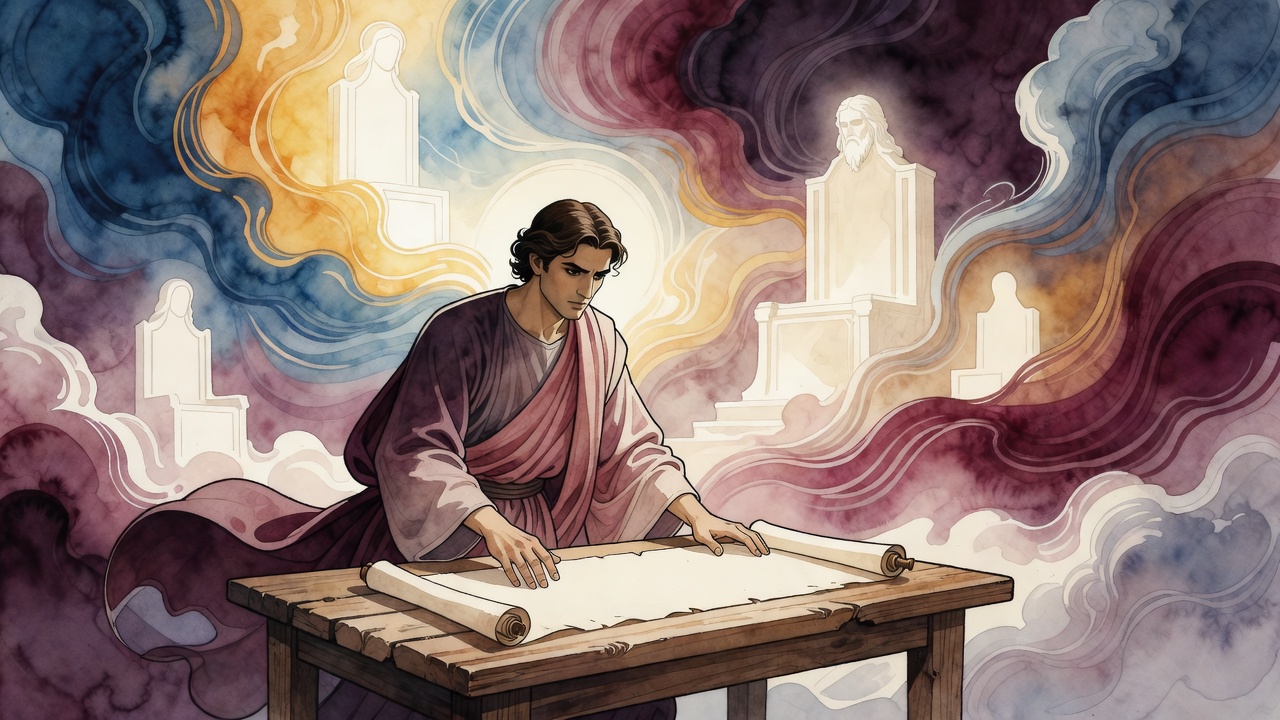
David held a blade behind the king and cut only cloth. Saul looked at the scrap in the sun and spoke a proverb older than any court.
Table of Contents
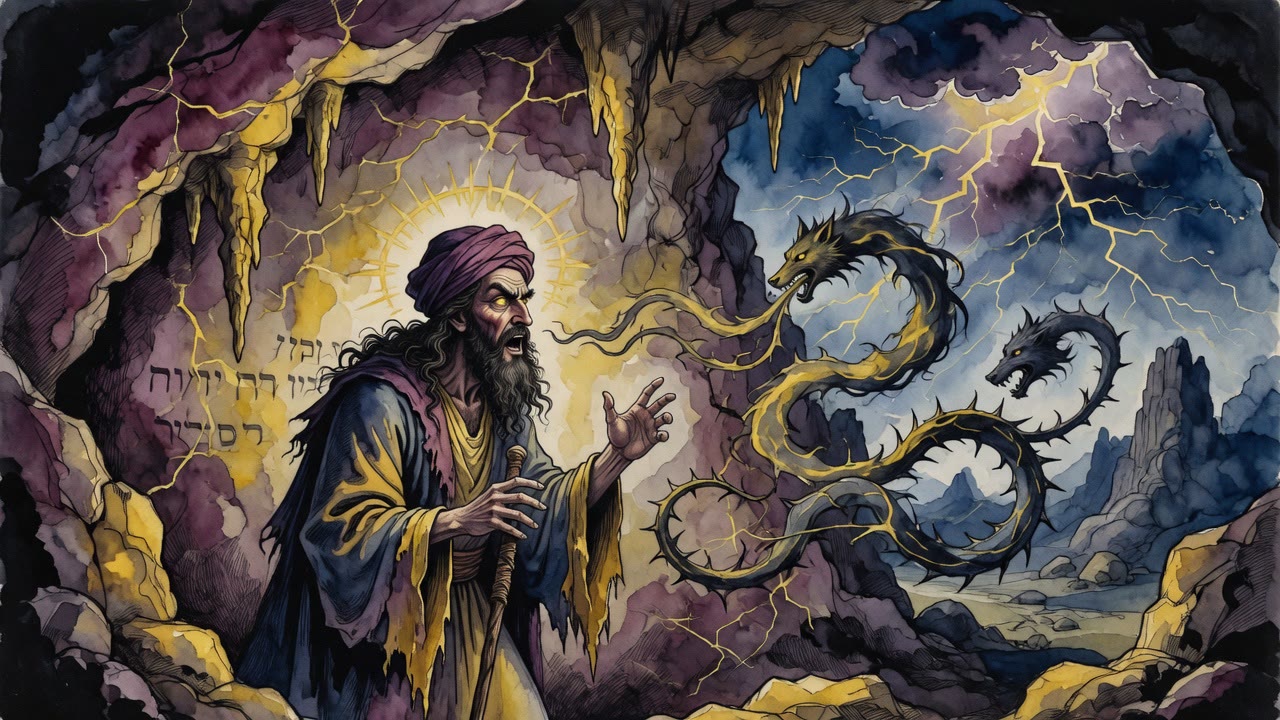
The cave swallowed sound. Outside, the cliffs above the Dead Sea baked white in the noon glare, but in here the air was cool and stale, thick with the smell of bat dung and old water. David and his men pressed themselves flat against the rock at the back of the hollow, where the light gave out. They had run here to hide. They had not expected the hunter to follow them in.
 Click for full size
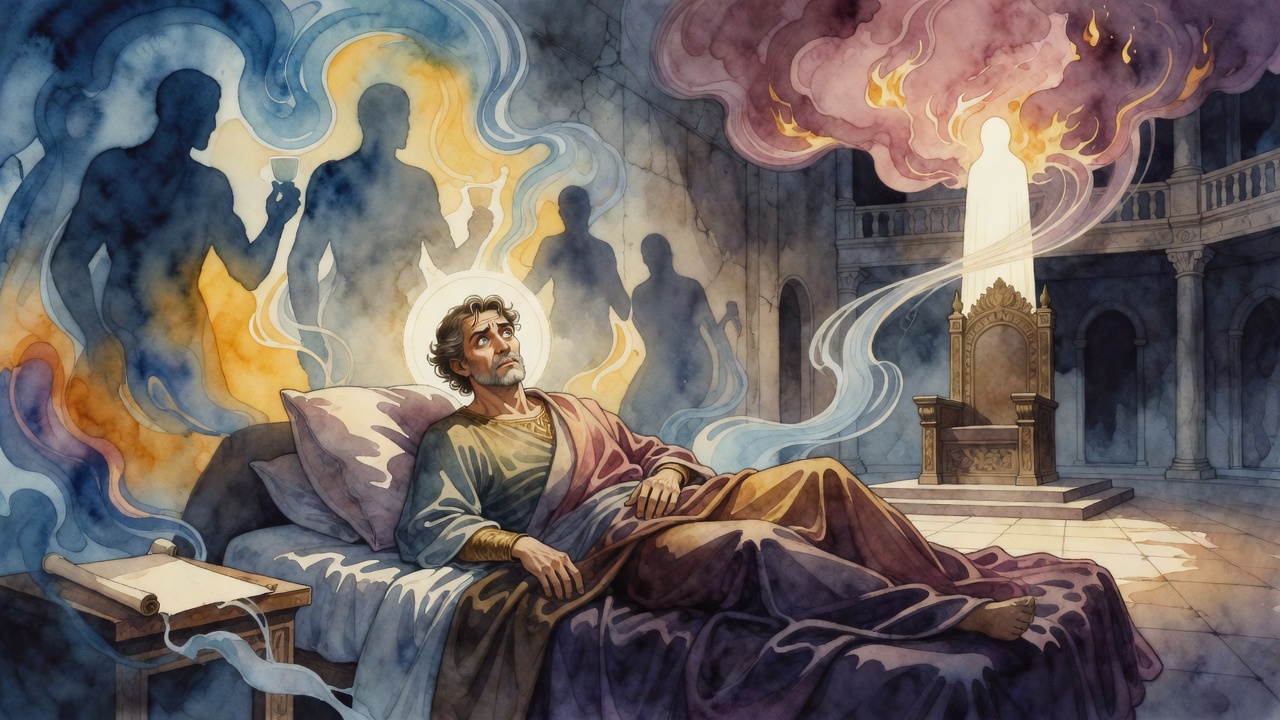
A shadow filled the mouth of the cave. A big man, alone, loosening his belt, stepping in to relieve himself in the cool. He did not look toward the dark. He had no reason to. He was the king, and kings do not check the corners of caves.
The Hunter Walks Into the Dark
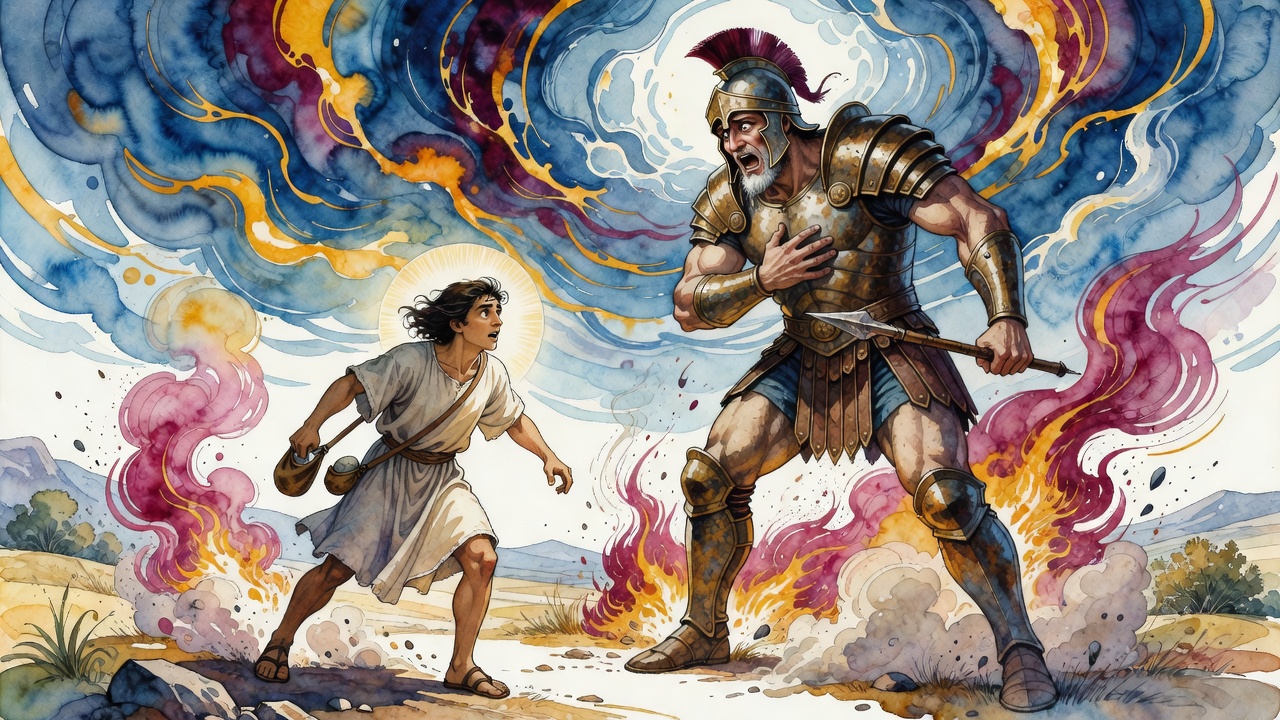
It was Saul. The man who had thrown a spear at David's head. The man who had marched three thousand chosen soldiers across the wilderness for the single purpose of running David down and killing him in some gully where no one would ever find the body.
And now he stood with his back turned, weaponless, close enough to touch.
David's men breathed the words into his ear. "This is the day. This is what God promised, the enemy delivered into your hand to do with as you please." Their fingers found his sleeve and pulled. "Take him. One stroke. It ends here, in the dark, and you walk out into the sun a free man and a king."
David moved. Low, silent, the way a man moves when his own heartbeat is loud enough to give him away, he crept across the cave floor toward the broad unguarded back.
The Blade That Cut Only Cloth
His knife was already in his hand. He could feel exactly how it would go, the weight of it, the angle, the small distance between this breath and a dead king. Saul never heard him. Saul never turned.
David reached out. And he cut.
Not flesh. Cloth. He sliced away the corner of Saul's robe, the trailing hem pooled on the stone, and he drew back into the shadows with the rag clenched in his fist while the king finished and walked out into the daylight, never knowing how near death had stood behind him.
Even that troubled David. A torn corner of cloth, nothing, a scrap, and still his heart struck him for it, as though by cutting the robe he had laid a hand on something he had no right to touch. He held his men back with a hiss. He would not let them rise. The king was the king, and David's hand would not be the thing that brought him down.
The King Hears His Own Name Called
David waited until Saul had gone some way down the slope. Then he stepped to the mouth of the cave, out into the brightness, and called after him.
Saul turned. And there, above him on the rock, stood the man he had been hunting, holding up a corner of torn cloth that flapped in the hot wind. David's voice carried down the hillside. "Look. Look what is in my hand and is not your blood. I was behind you. They told me to kill you. I cut your robe instead. Judge for yourself now whether there is evil in my hand against you."
Saul looked at the rag. He looked at the man who had spared him. The king who had hunted David through the wilderness broke and wept, and lifted up his voice, and said that David was more righteous than he, for David had repaid evil with good.
The Proverb of the Ancient One
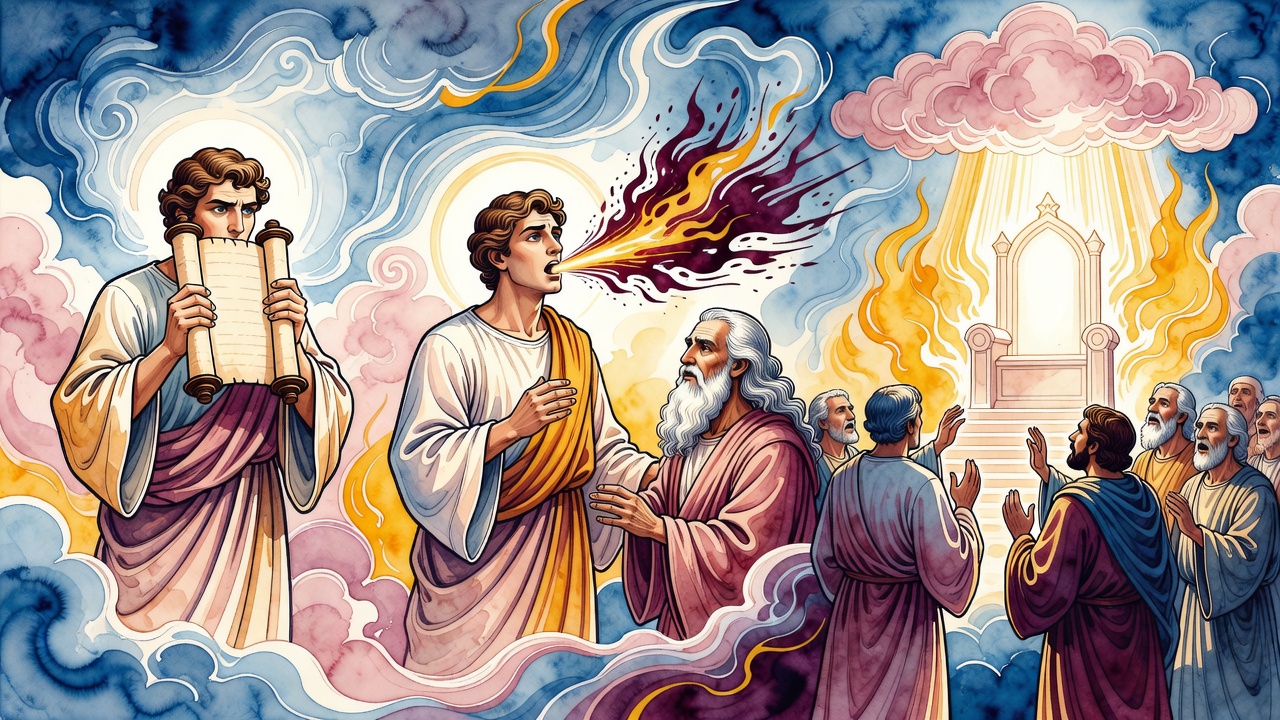
Then Saul said a stranger thing. He reached past his own life, past his own war, and pulled up a saying of the Ancient One. "From the evildoers comes forth evil, but my hand shall not be against you" (I Samuel 24:13). "Let the wicked be undone by their own wickedness. The righteous need not lift the knife at all. God keeps that account Himself."
David stood on the rock with the scrap in his fist. He had not taken the stroke his men wanted. Saul walked farther down the slope with a torn hem and a proverb in his mouth, and the wilderness around Ein Gedi held both of them a little longer.
Two Killers at One Inn
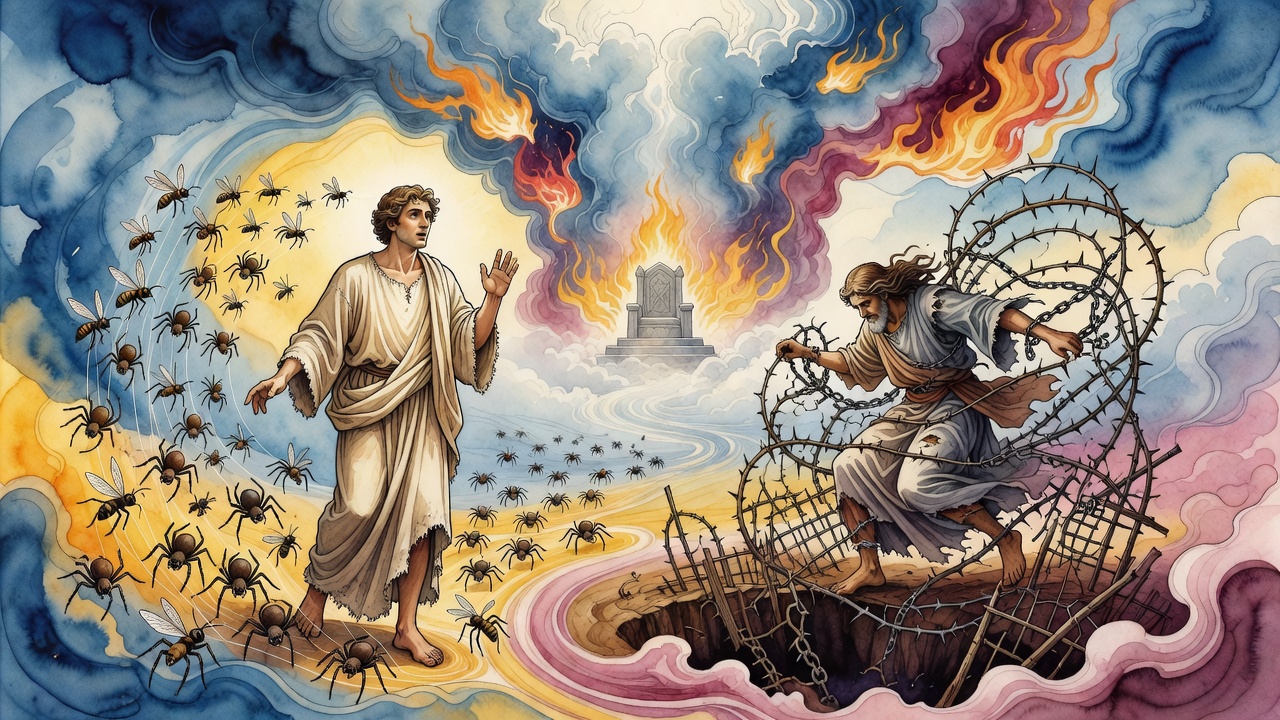
Far from that cave, on a road no court had ever walked, two men who had both killed arrived at the same inn. One had murdered on purpose, in secret, and walked away clean, no witnesses, no sentence. The other had killed by accident, also unseen, and likewise faced no judge. Both had slipped through human justice untouched. So God brought them, by roads neither of them chose, to one wayside house.
The murderer sat beneath a ladder. The accidental killer climbed it. His foot slipped. He fell. He landed on the man below, and the man below was crushed and died. Now there were witnesses. Now there was a court. The one who killed on purpose lay dead, struck down by an act no one planned. The one who killed by accident was dragged before the judges and sent to flee to the cities of refuge for a death he never intended.
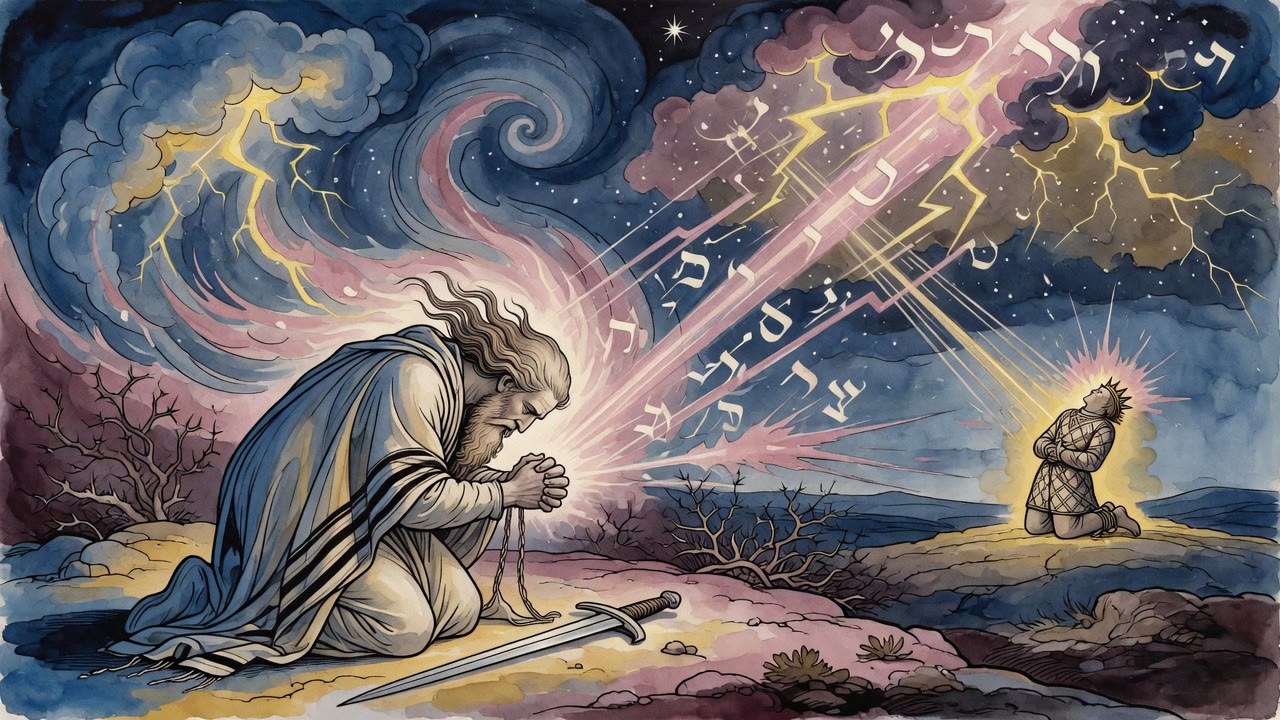
God put him into his hand (Exodus 21:13). The blade no human raised had fallen all the same. From the evil, evil went forth, exactly as Saul said it would in the cave, while David kept his hands at his sides and let the law of the Ancient One do its slow work.
David still held the scrap of cloth. Saul still wore a robe with a missing corner. Neither of them saw the inn. The proverb had a room of its own, and a ladder, and a man who sat where ruin could find him.
← All myths