4 min read

Ezekiel Watched Four Husks Ride the Storm

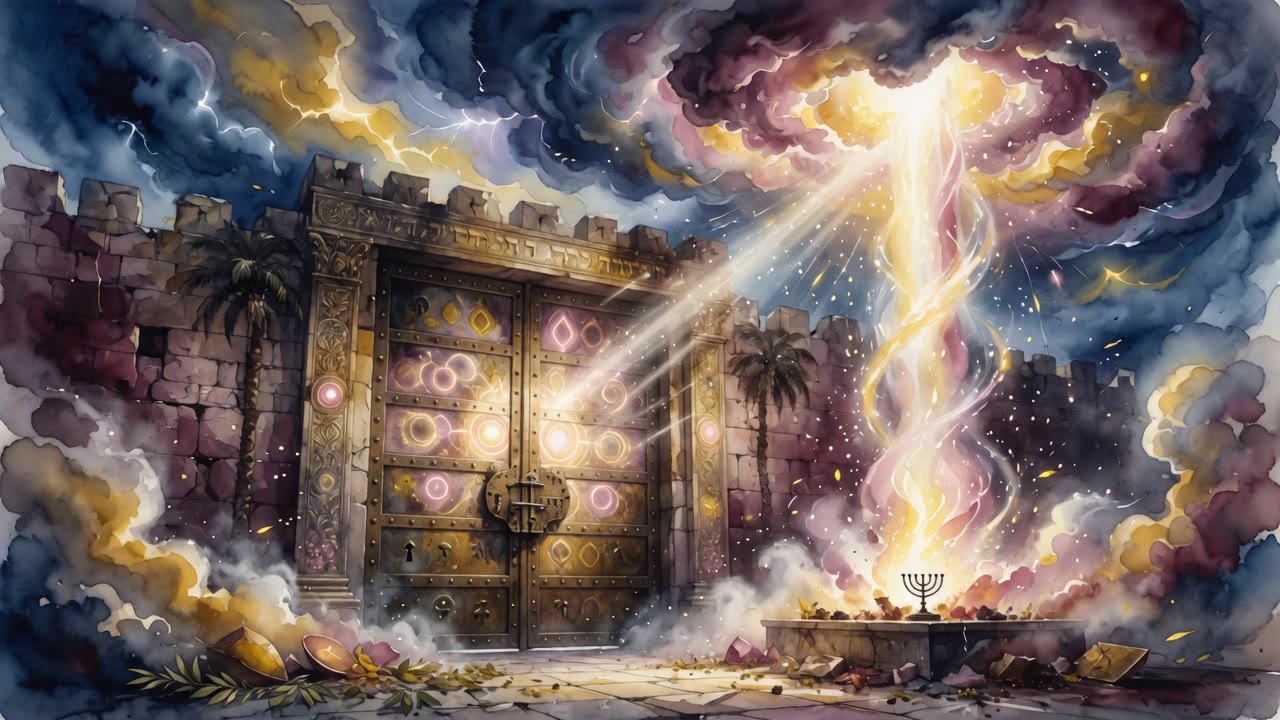
Out of the north the storm came with cloud, fire, and wind. Ezekiel named what he could. Behind the vision, four shells tried to choke the light.

Curated by Arthur · Told by Maggid ·
Table of Contents
  1. Wind From the North
  2. Four Names for What Blocks
  3. Samekh Mem and the Mirror Host
  4. When Mercy Steps Back
  5. Glow Inside the Threat
Ezekiel Watched Four Husks Ride the Storm Click for full size

Wind From the North

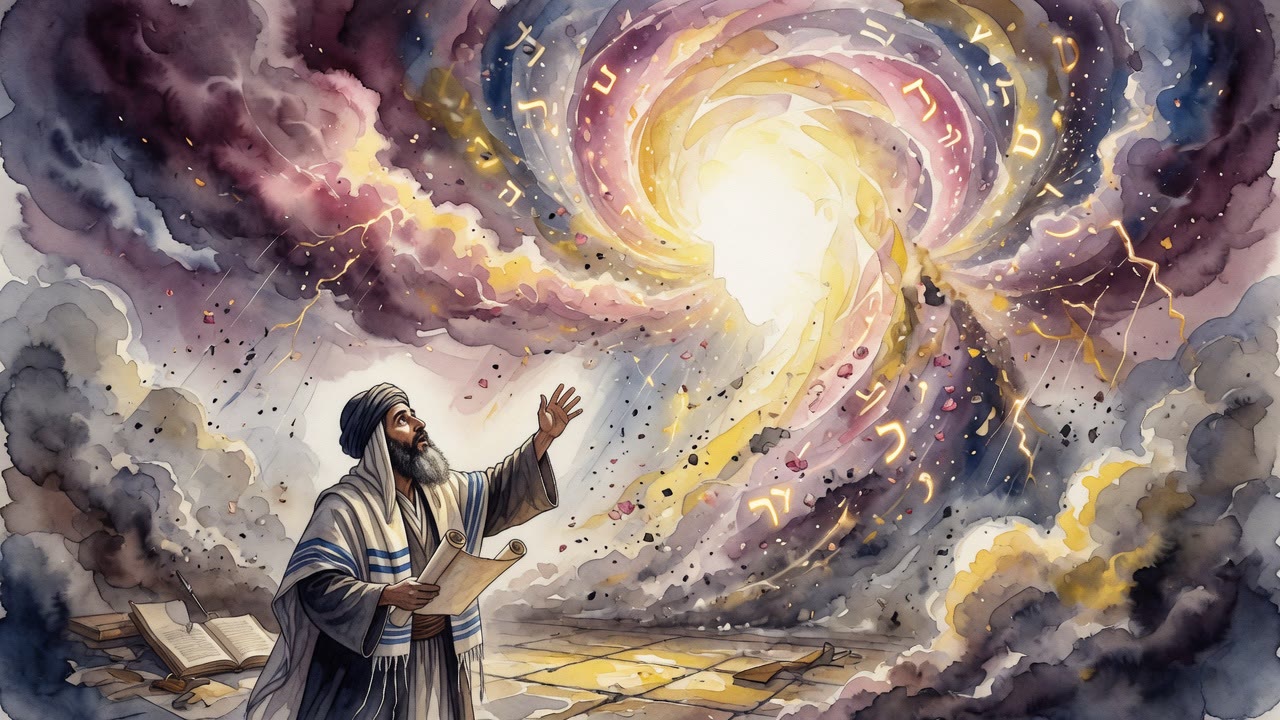
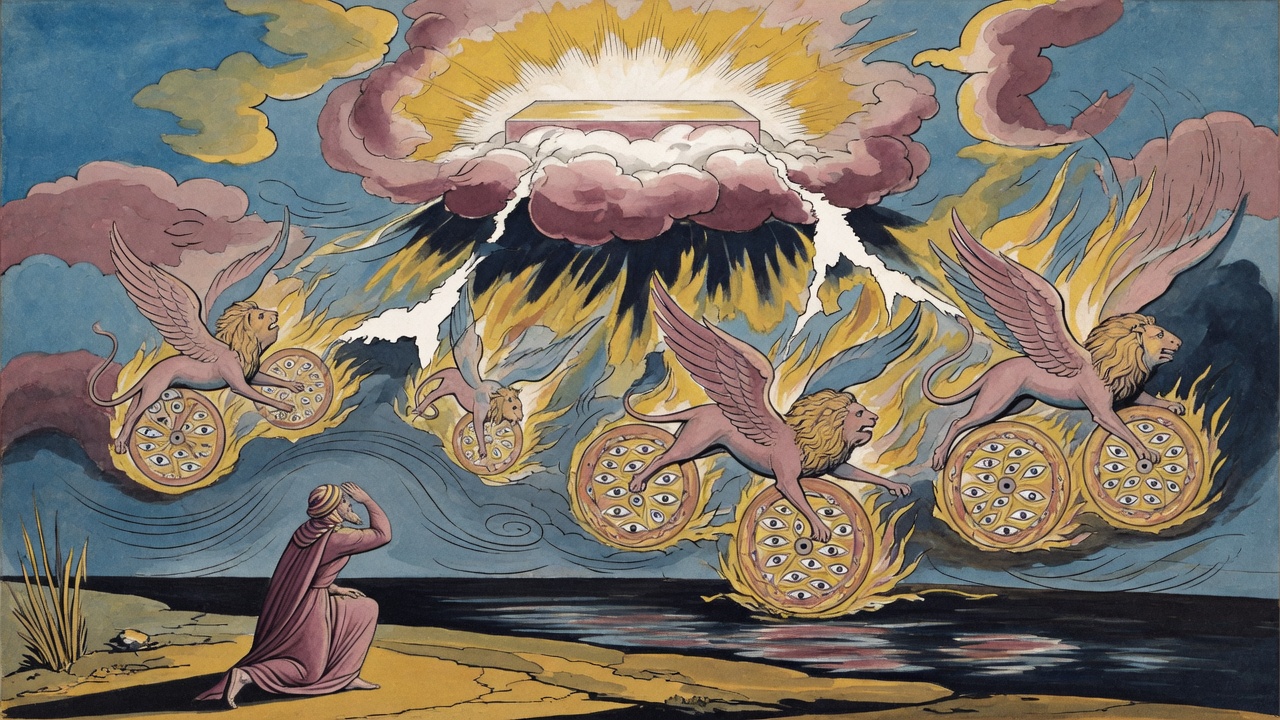
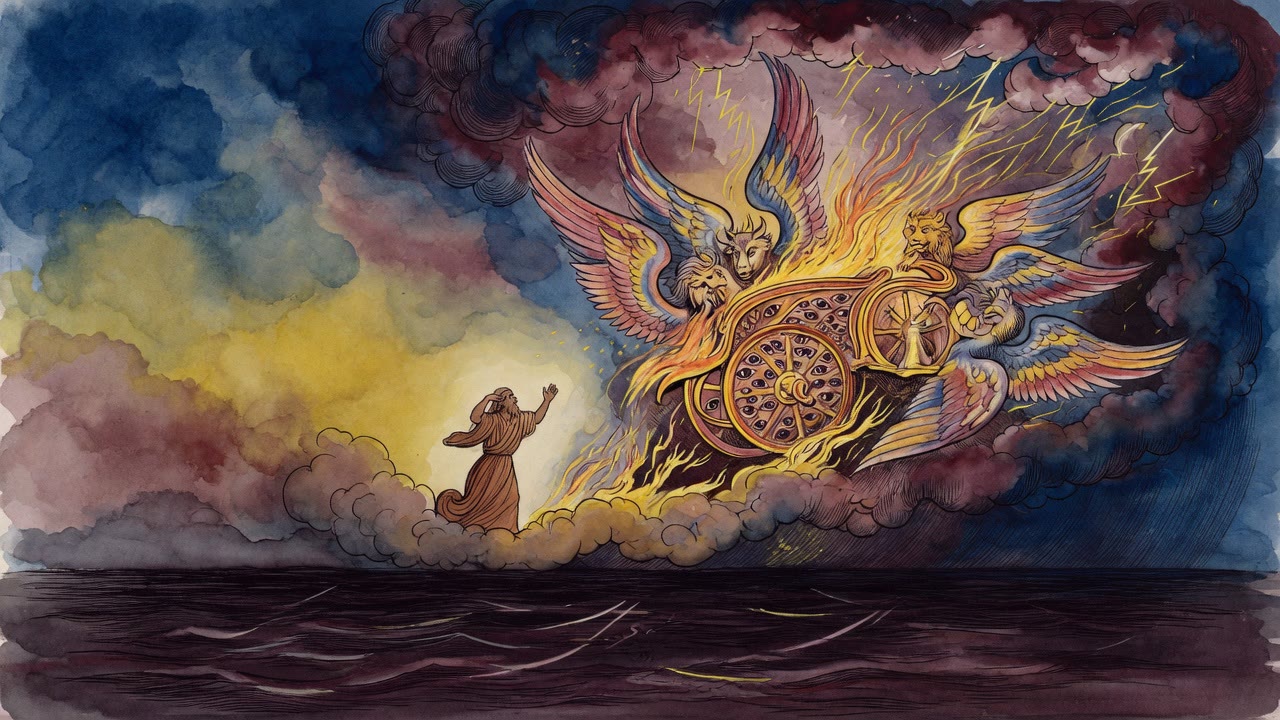
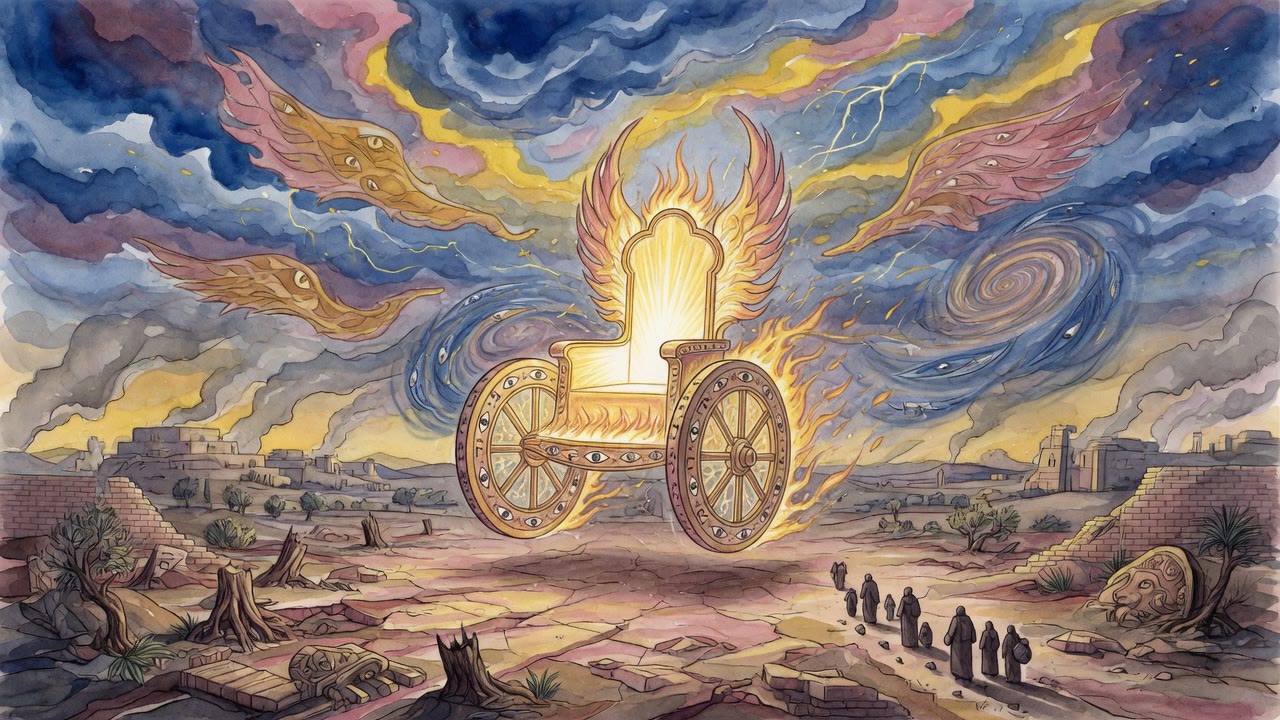
Ezekiel stood among the exiles and the sky tore open toward the north. A stormy wind. A great cloud. Brightness around it. Fire infolding itself. In the midst, something like glowing metal (Ezekiel 1:4). His knees wanted the ground. His eyes refused to close.

Chariot parts would come later. First came the weather of judgment, the kind that makes a prophet taste metal.

He did not yet have the later vocabulary of shells. He had lungs full of storm. Sand bit his teeth.

Ezekiel lifted one hand as if to block the brightness and found the brightness inside the block.

Four Names for What Blocks

Later teachers named four klipot (husks, shells): Nogah, radiance that can mislead; Anan Gadol, a great cloud; Esh Mitlakahat, flaming fire; Ruach Se'arah, storm wind. Forces that can obstruct the light of the sefirot (divine emanations) when the lower world feeds them with its worst acts.

These appear because of what human hands do below. They are not a second creator. They are blockage inside a single sovereignty.

Ezekiel's north wind was the outer weather of those shells riding close enough for a man to see their edges without knowing their full names.

Someone tried to comfort him with talk of ordinary storms. Ezekiel shook his head. Ordinary storms do not carry thrones in their stomachs.

Samekh Mem and the Mirror Host

Isaiah had said: I form the light and create darkness, I make peace and create evil (Isaiah 45:7). Form light on the right. Create darkness on the left. Angels of peace stand in ten categories. The coded name Samekh Mem marks destroyers arranged in ten levels that mirror without equaling.

Even this opposite that, God made them. Symmetry is not dual kingship. It is a structure in which free creatures can fall hard enough to matter.

In exile, Ezekiel felt the left side's weather as national weather. Captivity is a cloud that will not lift until repair finds a hand.

He walked the camp at dusk and heard a song that mixed holy words with a tune stolen from a festival of idols. He carried that grit into prayer and asked for a wind from a cleaner quarter.

When Mercy Steps Back

When lower beings act with merit, mercy directs and the severe watch passes over. When they falter, the Master of Rahamim (compassion) withdraws a pace and justice has room to work. Miriam once learned a piece of that withdrawal in her own flesh when the camp stopped for her.

Ezekiel's generation had spoken and acted enough wrong to fill a storm. The husks fattened. The chariot still came, but the prophet's body paid for every inch of sight.

He saw brightness round about the cloud and did not mistake the brightness for safety. Nogah can shine and still be a shell.

After the vision he sat stunned among the exiles. Sight is not free.

Glow Inside the Threat

In the midst of the fire, the likeness of glowing metal. Chashmal and mystery. A core that is not husk. Shells surround. They do not own the center.

Ezekiel fell, heard, stood, and spoke to a people who preferred softer weather reports. He could not give them soft. He could give them accurate fear and a stubborn center of light.

Years later, when kabbalists mapped his cloud and fire onto four klipot, they admitted that the exile's sky had always been full of structured obstruction, and that every repair below thins a shell above.

On the riverbank of a foreign land, the prophet wiped grit from his mouth and kept looking north. A boy asked if the storm would come again. Ezekiel said the storm never fully left. It only waits for whether mercy or the husks will be fed tomorrow.


← All myths

From the tradition

Sources

3 sources

The texts behind this telling. Some cards carry a translation of the source; others are our own retelling of it, and each card says which. Every card links out to the original.

Asarah Perakim LeRamchal 9:3Asarah Perakim LeRamchal

Retold in our words. Read the original at the link below.Sefaria-hosted English translation · CC-BY

The Asarah Perakim LeRamchal, a foundational text attributed to the great Kabbalist Rabbi Moshe Chaim Luzzatto (the Ramchal), dives deep into this very question. It speaks of four levels, four Klipot (literally "shells" or "husks"), that act as barriers. These aren't just abstract concepts; they're powerful forces that, according to the Ramchal, can actually obstruct and cut off the light of the Sefirot (the divine emanations).

The Sefirot are the ten emanations of God, the channels through which divine energy flows into creation. So, if something is blocking them, that's a pretty big deal.

These four Klipot are related to the worlds of the Samekh Mem, a complex concept in Kabbalah dealing with contraction and limitation. But what are these Klipot, specifically? The Ramchal identifies them as: Nogah (Radiance), Anan Gadol (Great Cloud), Esh Mitlakahat (Flaming Fire), and Ruach (spirit) Seara (Storm Wind).

These names might sound dramatic, and they are! The text explains that, Hass Vechalom, God forbid, these forces can appear because of the negative actions of those of us down here in the lower realms. They can actually cause harm in the world.

Where do we even see these concepts expressed elsewhere? Well, the Ramchal points us directly to the prophet Ezekiel. Remember that incredible, awe-inspiring, and frankly terrifying vision Ezekiel has in the very first chapter of his book?

"As I looked, behold, a stormy wind came out of the north, and a great cloud, with brightness round about it, and a fire infolding itself, and in the midst of it as it were glowing metal" (Ezekiel 1:4).

That “glowing metal” is sometimes translated as Chashmal, another term often associated with divine energy and the mysteries of creation.

Ezekiel's vision, in this Kabbalistic understanding, isn't just a historical event; it's a symbolic representation of these very forces, these Klipot, at play. The storm, the cloud, the fire – all obscuring the divine presence.

So, what does this all mean for us? When we act negatively, we, in a sense, strengthen these Klipot, making it harder for divine light and goodness to flow into the world. But conversely, when we act with kindness, compassion, and intention, we weaken those barriers and allow more light to shine through. That we each play a role in this cosmic drama, every single day.

Full source
Asarah Perakim LeRamchal 9:2Asarah Perakim LeRamchal

Retold in our words. Read the original at the link below.Sefaria-hosted English translation · CC-BY

It's not a simple answer, of course, but Jewish mysticism offers some fascinating insights.

The Asarah Perakim LeRamchal, a key text, delves right into this. It begins by quoting (Isaiah 45:7): "I form the light and create darkness, I make peace and create evil." Heavy stuff. But what does it really mean?

The Ramchal, or Rabbi Moshe Chaim Luzzatto, unpacks this verse. "I form the light" refers to the right side, representing goodness and divine emanation. "And create darkness" – ah, that's the left side. The side of judgment, limitation, and… well, the source of what we perceive as evil. It's important to understand that "evil" here isn't necessarily some independent force, but rather an imbalance, a lack of the fullness of light.

Think of it like this: light reveals, darkness conceals. Too much light can be blinding, but too much darkness… well, we stumble.

The verse continues, "I make peace." Those are the angels of peace. And "create evil"? That’s attributed to the Samekh Mem. Now, Samekh Mem is a code, a euphemism. It's a way of referring to the forces of destruction and negativity without naming them directly. It’s like calling Voldemort “He Who Must Not Be Named.”

The text goes on to describe how these forces are structured. Just as the angels of peace are divided into ten categories, serving the ten Sefirot (the divine emanations) (the emanations of God) on the right, so too are the angels of destruction arranged in ten levels, mirroring the Sefirot on the left. It’s a cosmic symmetry, a divine balancing act.

It all circles back to (Ecclesiastes 7:14): "Even this opposite that God made them." HAELOKIM, God, made both sides. This isn't to say God is evil, but that God created the framework within which both good and evil can exist. The potential for both is woven into the very fabric of creation.

It's a challenging idea, no doubt. But it points to a profound truth: that duality, that tension between opposing forces, is fundamental to our existence. It's not about a simple battle between good and evil, but about how we work through the interplay of light and darkness within ourselves and in the world around us. What will we choose to illuminate? What shadows will we allow to linger?

Full source
Asarah Perakim LeRamchal 9:4Asarah Perakim LeRamchal

Retold in our words. Read the original at the link below.Sefaria-hosted English translation · CC-BY

Asarah Perakim LeRamchal turns to Tale of Miriam.

First, let’s Think of them as shells or husks – spiritual barriers that obscure the divine light. There are four of them. Four layers, perhaps, that separate us from pure goodness.

Things get a little more intricate. Each of these Klipot exists within the four Worlds. These aren't geographical places, but rather levels of spiritual reality: Atzilut (Emanation), Beriah (Creation), Yetzirah (Formation), and Asiyah (Action). Within each of these Worlds, we find five Partzufim (Divine "Faces" or configurations) and ten Sefirot. Sefirot are the emanations of God's divine attributes – like wisdom, understanding, and loving-kindness – that manifest in the cosmos.

It's a complex system. But here's the key: our actions down here – the tikunim, or repairs, that we do – have a ripple effect throughout all these worlds. When we act with kindness, with justice, with compassion, we're not just improving our own lives, we're impacting the entire cosmic order. Conversely, our negative actions create cracks, weaken the divine structure.

And that brings us to the "Garde." In French, the text uses this term to describe a kind of cosmic overseer, a guardian of justice. When we, the "lower beings," act meritoriously, the text says that God "directs with mercy and the Garde passes over." It's as if our good deeds create a buffer, a shield of grace.

But what happens when we falter? The "Master of Rahamim" (compassion) withdraws, and the Garde exercises justice. Rahamim, by the way, is a beautiful Hebrew word that evokes the deep, womb-like mercy of the Divine. When that mercy is obscured, then the forces of judgment can come into play.

The text illustrates this with a powerful image from the Book of Numbers. Remember the story of Miriam, Moses' sister? "The anger of HASHEM blazed forth against them, and He departed. As the cloud withdrew from the Tent, there was Miriam stricken with leprosy, as white as snow." (Numbers 12:9-10). The departure of God's presence, symbolized by the cloud, leads to Miriam's affliction. It’s a stark reminder of the consequences of our actions when divine protection is withdrawn.

The implication is clear: our choices matter. They don't just affect us; they reverberate throughout the entire cosmos. We have the power to bring more mercy and light into the world, or, conversely, to create more darkness and judgment. It's a weighty responsibility, but also an incredible opportunity.

So, the next time you're faced with a difficult decision, remember the Klipot, the Worlds, the Sefirot, and the Garde. Remember that your actions have consequences, and that you have the power to make a difference – not just in your own life, but in the entire universe. How will you choose to act?

Full source