4 min read

A False Prophet Promises the Vessels Will Return

In the upper market Jeremiah says the Temple vessels go to Bavel. In the lower market Chananiah promises their return. Time must choose the true mouth.

Curated by Arthur · Told by Maggid ·
Table of Contents
  1. Two Markets, Two Futures
  2. How Shall We Know
  3. Three Who Die by Heaven, Three by Court
  4. The Day the Promise Fails
  5. After the Crowds Go Quiet
A False Prophet Promises the Vessels Will Return Click for full size

Two Markets, Two Futures

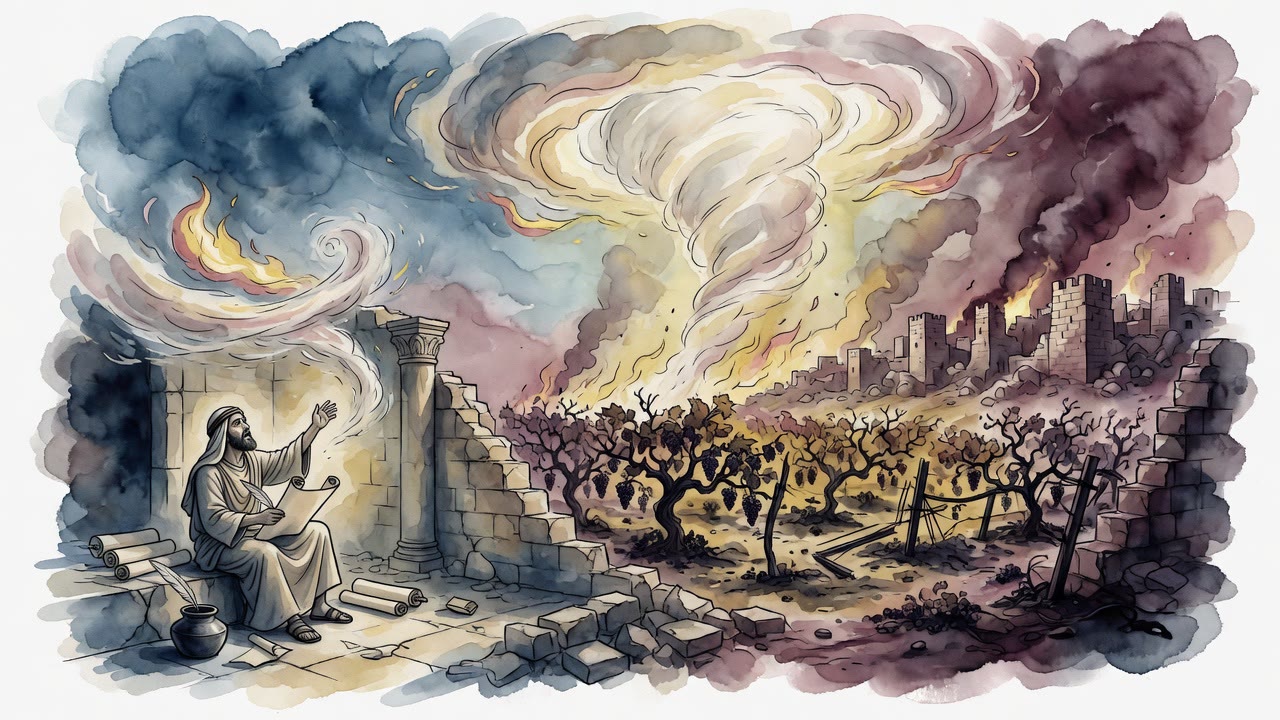
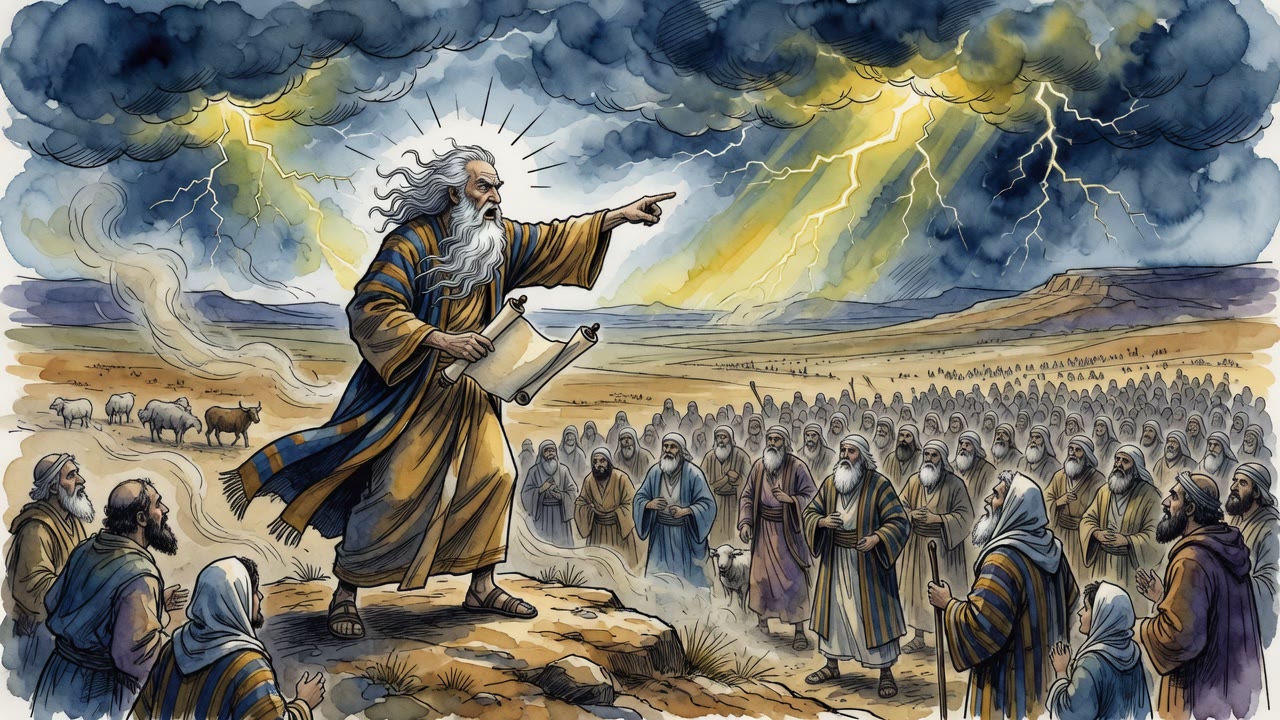
Jeremiah stood in the upper market and spoke a hard future: the remaining vessels of the house of the Lord shall be brought to Bavel and remain there. The words landed like cold iron. Men who polished hope every morning hated him for the polish he would not give. Someone threw a rotten fruit. Jeremiah wiped his sleeve and kept speaking.

In the lower market Chananiah ben Azur lifted a softer promise. He would restore to this place all the vessels of the house of the Lord. Crowds pressed close. Crowds always prefer the future that keeps their furniture. A woman raised her hands and cried thanks before a single cup had returned.

How Shall We Know

A craftsman wiped dust from his hands and asked the question Deuteronomy plants in the chest: how shall we know the thing the Lord has not spoken? The answer is not a mood. The answer is time. What the prophet speaks in the Name, if the thing is not and does not come to pass, that is the thing the Lord has not spoken. Presumption is liable. Unwitting error is weighed differently, but a mouth that borrows heaven's seal for its own comfort is still a dangerous mouth.

The craftsman looked from upper market to lower. One future emptied the shelves. One filled them. He wanted the full shelves. He walked downhill and stood in Chananiah's crowd because hope is easier on the feet.

Three Who Die by Heaven, Three by Court

There are three whose death is at the hands of Heaven: one who suppresses his prophecy, like Yonah son of Amittai, who fled rather than speak; one who dismisses a prophet's words, as did the colleague of Michah; and a prophet who transgresses his own prophecy, as did Iddo. There are three whose death is at the hands of the court: one who prophesies what he did not hear, like Tzidkiyahu ben Cna'anah; one who prophesies what was not spoken to him, like Chananiah who heard Jeremiah above and performed a different play below; and one who prophesies in the name of an idol even if the ruling happens to match clean and unclean.

Chananiah's crime was not only comfort. It was theft of a word and resale under a false seal. He rearranged heaven's order until the sequence itself became a lie. He took Jeremiah's material and carried it into another marketplace like stolen silver melted into a new coin.

The Day the Promise Fails

Months ground forward. The vessels did not parade home. Bavel's shadow lengthened. Messengers came with news that emptied faces. The craftsman remembered Jeremiah's iron sentence and felt shame for the cheers he gave in the lower market. He walked uphill and stood where the hard prophet had stood. Chananiah's mouth still moved, but the air around it had changed. Presumption has a smell once time refuses to ratify it.

Someone still wanted to stone the hard prophet and crown the soft one. Someone else finally understood that a true word can hurt and still be the only clean tool left in the city. The craftsman went home and covered his unused festival cups with cloth, as if mourning furniture could teach a mouth restraint.

After the Crowds Go Quiet

When the lower market emptied, a few men climbed the slope and stood in the place of the true sentence. They did not ask for softer vessels. They asked how to live under a hard one. The altar still needed honesty more than it needed applause. Prophecy that flatters the shelves ends in broken shelves and broken trust.

The craftsman kept one small cup that was never sacred and drank water from it at dusk. He had learned to fear a promise that arrives too quickly with too many cheers. Heaven's seal is not a market trick. When he slept, he dreamed of two markets stacked on one hill, and he always woke choosing the steeper path.


← All myths
From the tradition

Sources

2 sources

The texts behind this telling. Some cards carry a translation of the source; others are our own retelling of it, and each card says which. Every card links out to the original.

Sifrei Devarim 178:2Sifrei Devarim

Retold in our words. Read the original at the link below.Sifrei by Rabbi Shraga Silverstein · CC-BY

What happens when prophecies clash? What happens when someone claims to speak for G-d, but their words don't come true?

This very dilemma is addressed in Sifrei Devarim, a collection of legal midrashim (rabbinic interpretive commentary) on the Book of Deuteronomy. Chapter 178, specifically, tackles this thorny issue head-on, using a dramatic example ripped straight from the pages of the Tanakh (Hebrew Bible).

The passage begins with a quote from (Deuteronomy 18:21): "And when you say in your heart: How shall we know the thing which the L-rd has not spoken?" In other words, how can we tell a false prophecy? The Sifrei doesn't leave us hanging. It uses a powerful anecdote involving two prophets with directly contradictory predictions.

The stage is set: the Temple is under threat, and the precious Temple vessels are in danger of being lost to Bavel (Babylon). Jeremiah, the prophet of doom and unwavering truth, declares (Jeremiah 27:22): "They shall be brought to Bavel and there shall they remain." A grim forecast,.

But then comes Chananiah ben Azur, offering a much rosier picture. He boldly proclaims (Jeremiah 28:3): "I will restore to this place all the vessels of the house of the L-rd." Talk about conflicting messages! Who are the people to believe? Which prophet truly speaks for G-d?

The Sifrei Devarim cuts through the confusion with a clear and decisive principle, quoting (Deuteronomy 18:22): "What the prophet shall speak in the name of the L-rd and the thing not be and not come to pass, that is the thing which the L-rd has not spoken." Ouch. Pretty straightforward. If a prophet's words don't materialize, that's a pretty strong indication that they weren't divinely inspired.

And the consequences for false prophecy? Serious. The text concludes: "In presumption has the prophet spoken it." And then, the kicker: "He is liable (to the death penalty) for (willful) presumption, and not for unwittingness.”

Now, that’s a heavy sentence! The Sifrei emphasizes that this penalty applies to prophets who willfully presume to speak for G-d, not those who make an honest mistake. This distinction is crucial. It suggests that intent matters. A prophet who deliberately deceives is held to a higher standard.

What does this tell us? It tells us that discerning truth is a sacred responsibility. It's not enough to blindly accept pronouncements, even from those who claim divine authority. We must use our own judgment, observe the world around us, and see if the prophecies align with reality.

The story of Jeremiah and Chananiah ben Azur serves as a timeless reminder: question everything, seek the truth, and hold those who claim to speak for G-d accountable. It's a lesson that resonates just as powerfully today as it did centuries ago.

Full source
Sifrei Devarim 177:1Sifrei Devarim

Retold in our words. Read the original at the link below.Sifrei by Rabbi Shraga Silverstein · CC-BY

A foundational text of Jewish law, it’s about respecting the very order of things.

When (Deuteronomy 17:7) states, "all that I command him," it's not just about what we're commanded, but how we're commanded. It's about sequence, about priorities. As the Sifrei Devarim puts it, it means dealing with "first things first, second things, afterwards." Think of it like building a house. You can't put the roof on before the foundation!

What happens when we don't heed the words of prophets? What are the consequences of ignoring, distorting, or even suppressing divine messages? (Deuteronomy 18:19) warns, "And it shall be, the man who will not heed My words.." and the Sifrei Devarim elaborates, laying out some pretty serious consequences.

The text outlines a fascinating, and frankly a little scary, breakdown of different prophetic failures and their punishments.

First, there are those whose deaths are considered "at the hands of Heaven," meaning a direct divine intervention. The Sifrei Devarim gives three examples:

* One who suppresses their prophecy, like Yonah the son of Amittai. We all know Jonah's story, he tried to run from God's command to prophesy to Nineveh. * One who dismisses the words of a prophet, as did the colleague of Michah, found in I (Kings 20:35). * And a prophet who transgresses their own prophecy, as did Iddo, as recounted in I (Kings 13:21).

These aren't small mistakes. These are fundamental failures to listen to and act upon the divine word.

Then, there are those whose deaths are at the hands of the beth-din (court of law), a human legal consequence for their prophetic misdeeds. Again, three examples are given:

* One who prophesies what they did not hear from God, like Tzidkiyahu ben Cna'anah, as detailed in I (Kings 22:24). * One who distorts what was spoken to them, like Chananiah ben Azur. The Sifrei Devarim explains that he heard things from Jeremiah, who prophesied in the upper marketplace, and then went and prophesied in the lower marketplace, but changed the message (Jeremiah 28). It's a chilling reminder that even with a genuine source, the message can be corrupted. * And finally, one who prophesies in the name of idolatry. The text clarifies that even if what the false prophet says aligns with halachah (Jewish religious law) (Jewish law) – ruling "unclean what was unclean, and clean what was clean" – the very act of attributing it to an idol is a capital offense. (Deuteronomy 18:20) states plainly, "But the prophet who shall presume, etc."

It's a powerful reminder: the source of our words matters just as much as the content.

What does all this mean for us today? We may not all be prophets, but we all have voices. We all have the capacity to listen, to speak, and to share. The Sifrei Devarim reminds us of the immense responsibility that comes with that power. To speak truthfully, to listen deeply, and to respect the source of our inspiration. It challenges us to consider: are we honoring the integrity of the message, or are we twisting it to fit our own desires? It's a weighty question, one worth pondering long after the story ends.

Full source