The Father Who Finished the Wedding Feast Alone
The news came in at his ear while the courtyard was still singing. He set his cup down, then picked it up and poured for the next table.
Table of Contents
 Click for full size
The House Full of Guests
He had invited everyone. Kin from other towns, neighbors, men he owed and men who owed him, all of them under lamps in his own courtyard for the wedding of his son. Some had walked two days to get there. Dust from those roads still clung to the hems at the gate.
Wine went around. Somebody was playing. The bride was inside the house with the women. The father stood where he could watch the gate and the tables at once and counted heads the way a host counts them, checking for an empty cup. He had planned this night for months. He had bought more wine than he needed. He wanted no one to remember a dry place at his son's wedding.
The Word Brought Quietly
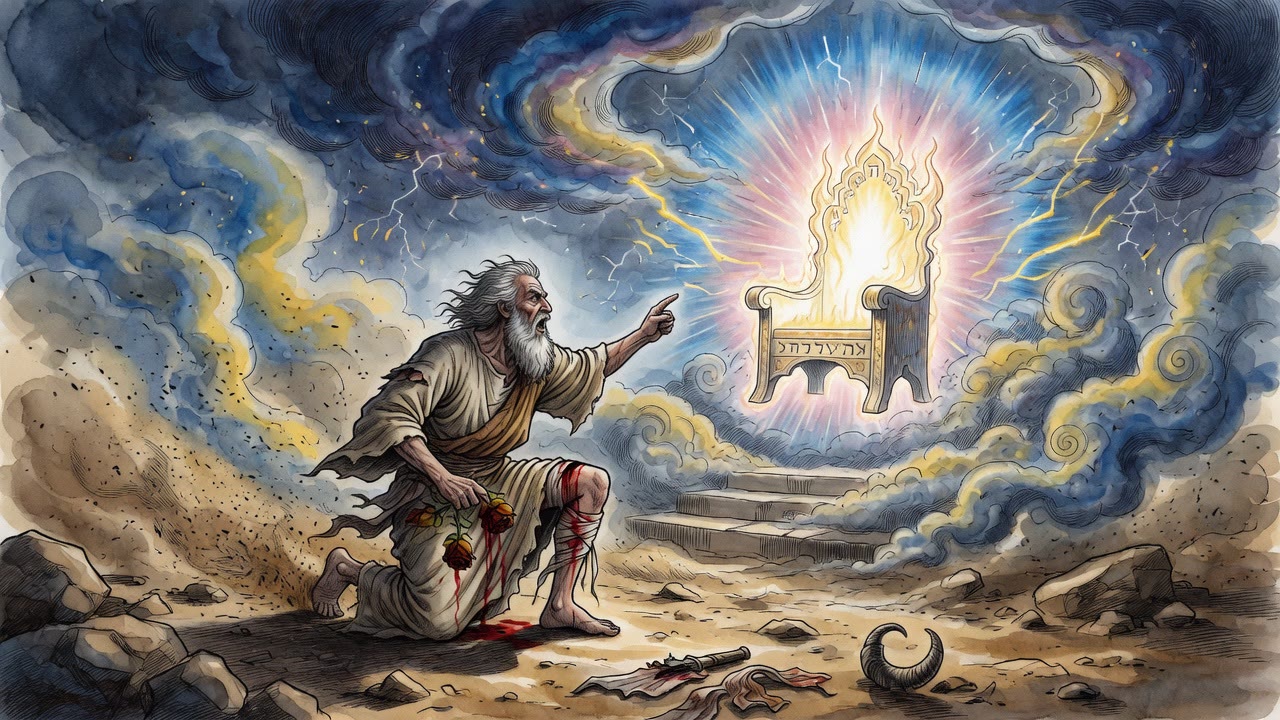
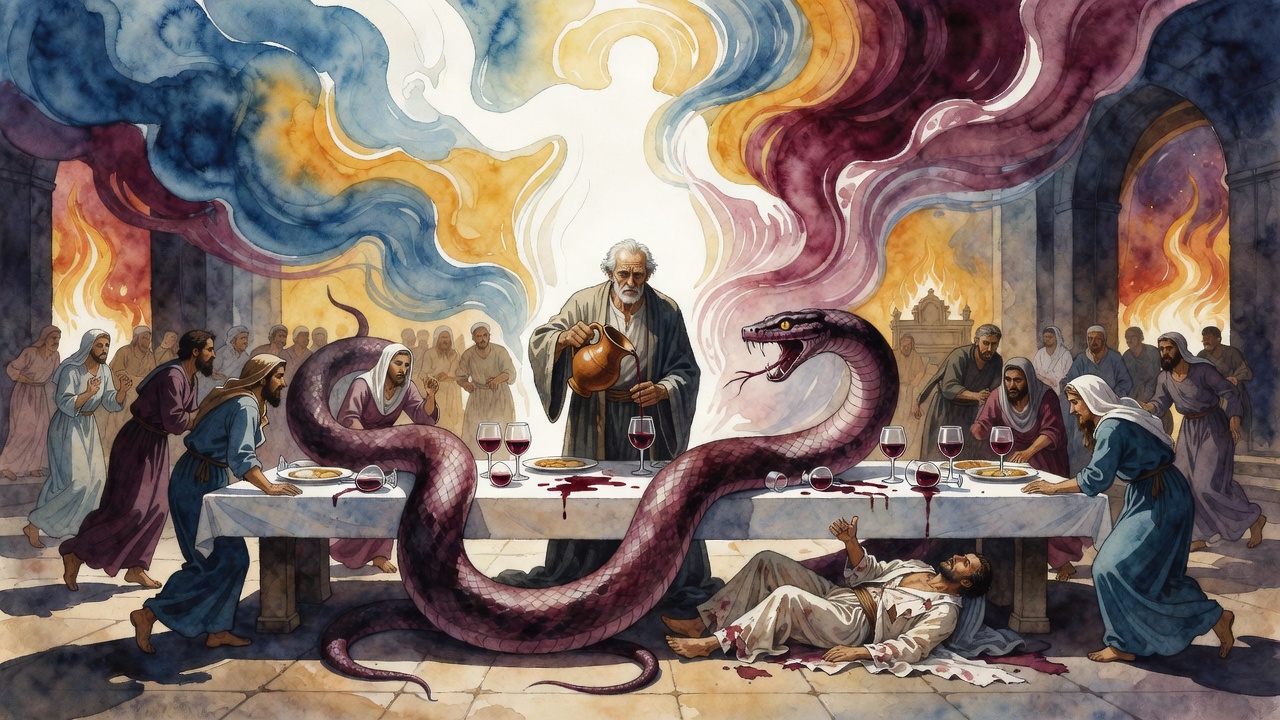
A serpent found the bridegroom.
It happened away from the tables, out of sight of the guests, behind the store-room where the extra jars stood. It took very little time. Whoever found him came looking for the father and did not shout it across the courtyard. He caught the host by the sleeve between one table and the next and said it close to the man's ear, the way a thing like that gets said.
"Your son is dead."
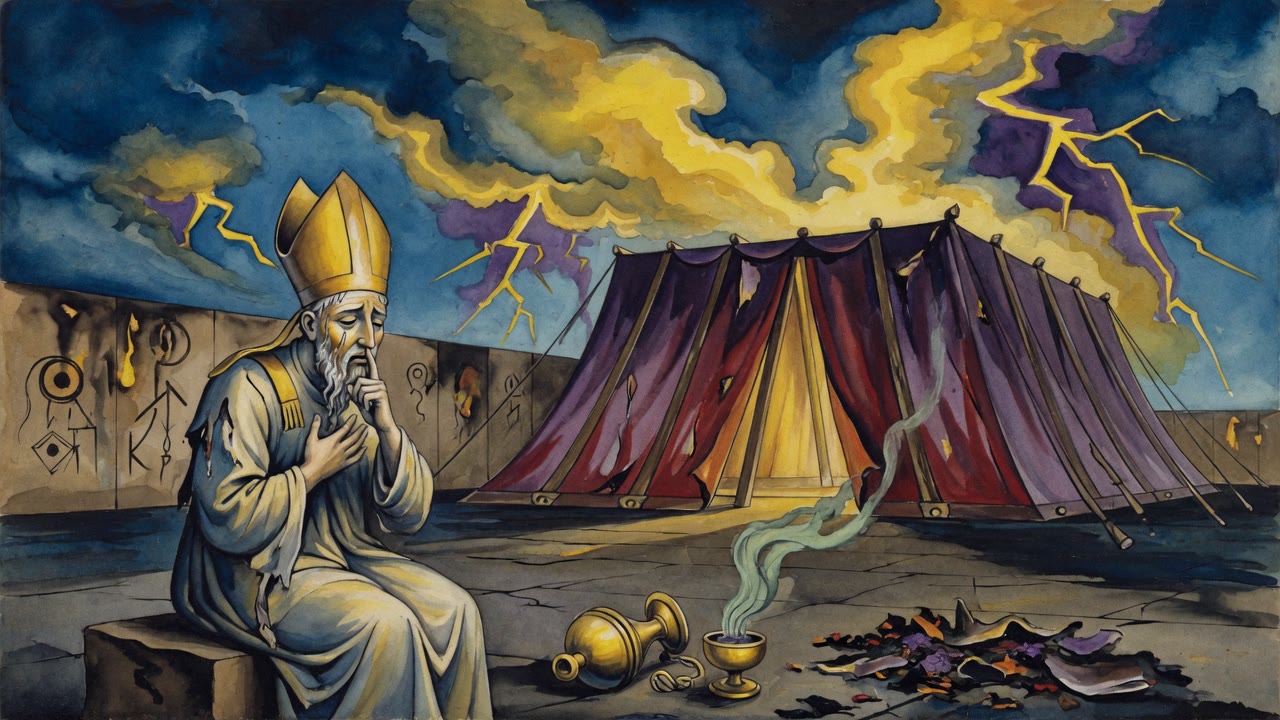
The father stood there with the noise of his own feast going on behind his back. A cup was still in his right hand. He felt the messenger's breath on his cheek. He did not look at the tables yet. He looked at the ground until the ground held still. Then he straightened his sleeves.
He Poured the Next Cup
He did not tear his clothes. He did not put a hand over his face. He walked back to the tables.
He poured. He answered a question about somebody's harvest. He raised his cup when it was his turn and said the blessings a host says, in order, at the right moments, and the courtyard never learned that anything had changed. No plate went empty. No cup went dry. When a guest asked where the groom had got to, he said the boy was seeing to something in the house, and moved along to the next table before the question could grow a second sentence.
His hands did not shake. That was the part people argued about afterward, when they had the whole night to turn over. In the hour itself there was only the pour, the blessing, the next empty cup, the next face that did not know.
After the Dinner
He waited until the eating was finished. Every dish, every blessing, the whole feast carried to its end with full honor, the way he had planned it back when there was nothing to hide. The musicians stopped because the meal had stopped, not because anyone had told them to.
Then he told them.
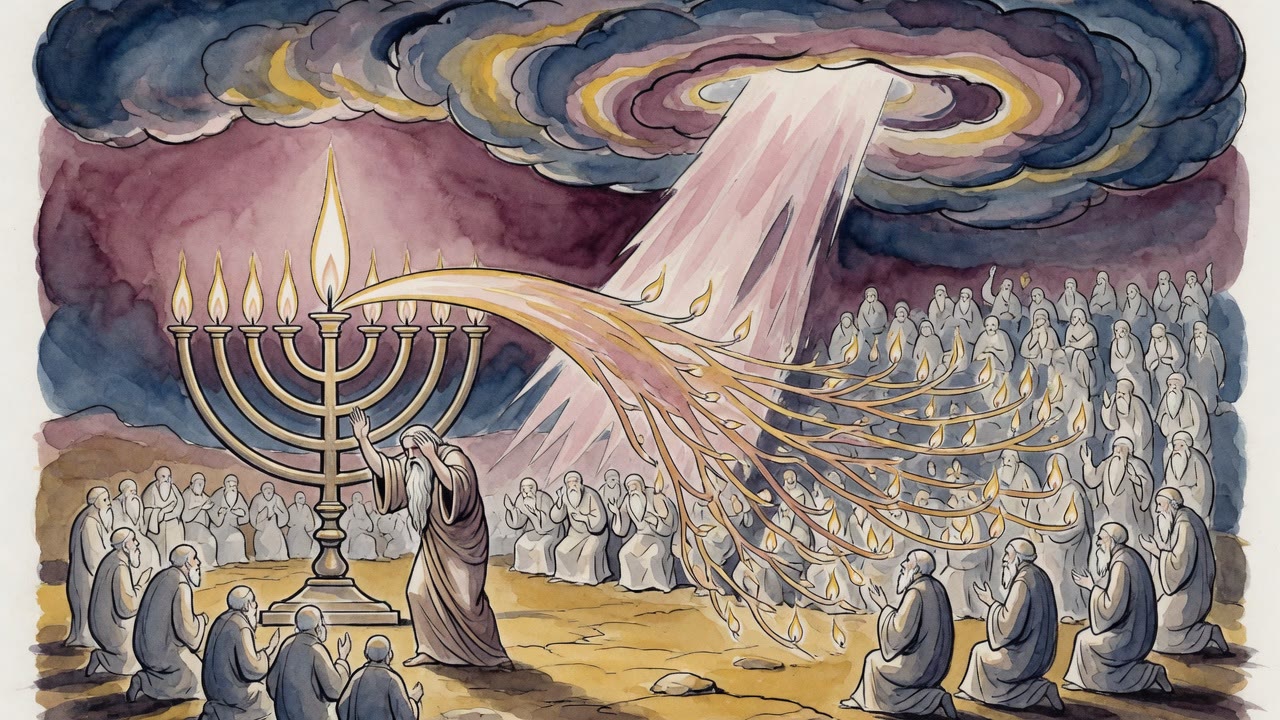
The courtyard that had been full of blessing a breath earlier came apart. Men who had walked two days sat down where they stood. A cup rolled and nobody picked it up. They wept for the young man, and then they wept harder for the one who had been filling their cups all evening with this in him. Grief could have taken that courtyard at any hour of the night. He chose the hour. He chose it after the last blessing, so that the dead son would still have had a feast, and the guests would still have had a host.
The Well on the Sabbath
Another household held the same kind of silence, in another place, on a Sabbath.
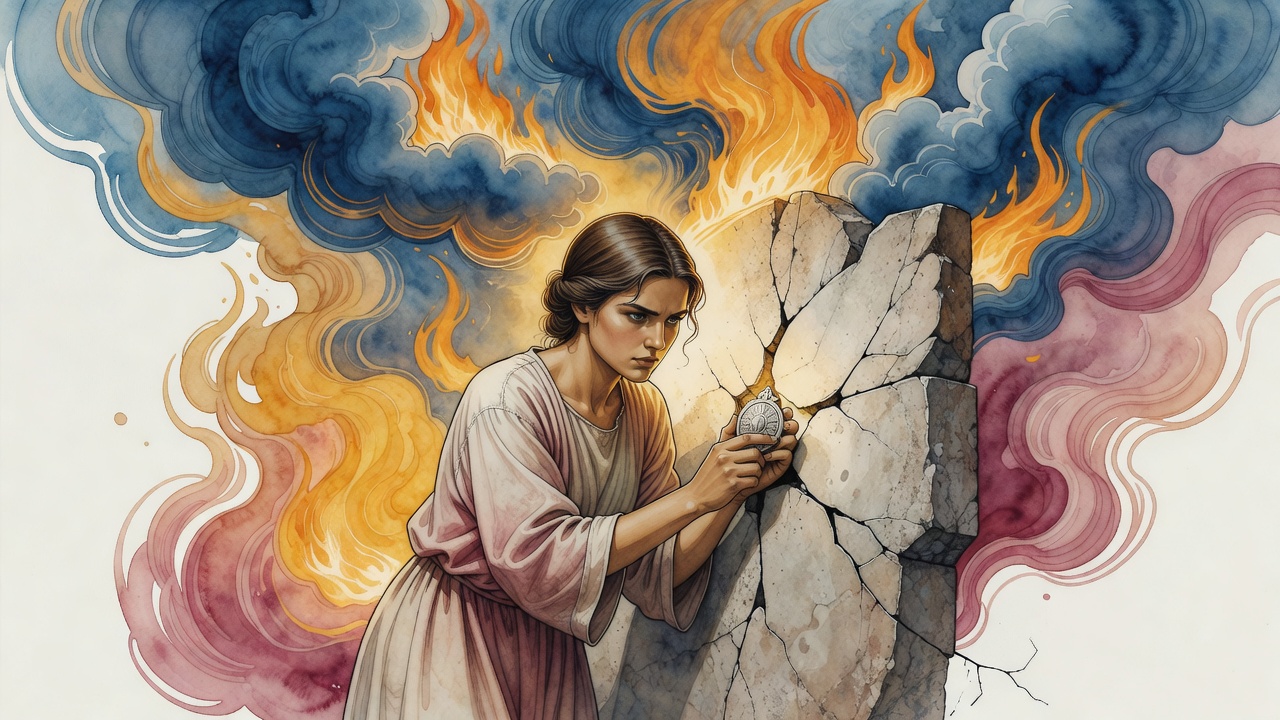
Children fell into a well. The day forbade the labor a rescue would take, and the town stood at the mouth of the shaft arguing the question while the parents said nothing. Everyone had already decided the children were dead. The parents did not grieve. Not a sound, not a torn seam, not one hour of that day given over to mourning. The neighbors watched them sit through the light and could not read their faces.
At evening, when the Sabbath went out, the children were found alive at the bottom, wet and crying and whole. The mother carried the news to her husband. She did not say it plainly either. She spoke of pledges, the kind a lender leaves in a house and comes back for when he wants them, and she let him work out for himself what had nearly been called in and what had been left with them a while longer.
He understood. He did not ask her to say the names. The pledges had been returned. The house still held them. The well had given back what the day would not let them pull up with their own hands.
← All myths