A Fiery Myrtle Descended for the Wedding Dancer
Rabbi Shmuel juggled myrtle branches at weddings while peers scowled, and at his funeral a branch of fire came down between coffin and crowd.
Table of Contents
Rabbi Shmuel bar Rav Yitzhak stepped into the wedding circle with three myrtle branches and began to juggle.
 Click for full size
Green leaves flashed. Guests laughed. The bride's shoulders dropped an inch. Other sages at the edge of the courtyard did not laugh. A man of Torah was supposed to sit heavy with honor, not toss perfume-wood through the air like a street player.
Branches in the Air
He did this more than once. Wedding after wedding, the same three myrtles, the same lift of joy aimed at people whose week had been flour and worry. The branches left oil on his fingers. His sleeves smelled of the grove. Children tried to catch the falling green and failed, which only made them cheer harder.
"Why does he act like this?" the critics asked. "Why does he demean the honor of the Torah?"
Rabbi Ze'eira waved them off. "Leave him. He knows what he is doing." Ze'eira did not offer a lecture. He offered room. In that room Shmuel kept dancing, because a bride's first hour under the canopy was, to him, a commandment with sweat in it.
The myrtles rose and fell. No fire yet. Only green, and the thud of feet on packed earth, and a groom who forgot for three songs that he was afraid of the future. When the music stopped, Shmuel tucked the branches under his arm and walked home with sap on his palms, as if the night's work were a page of study he had finished clean.
The Storm That Answered
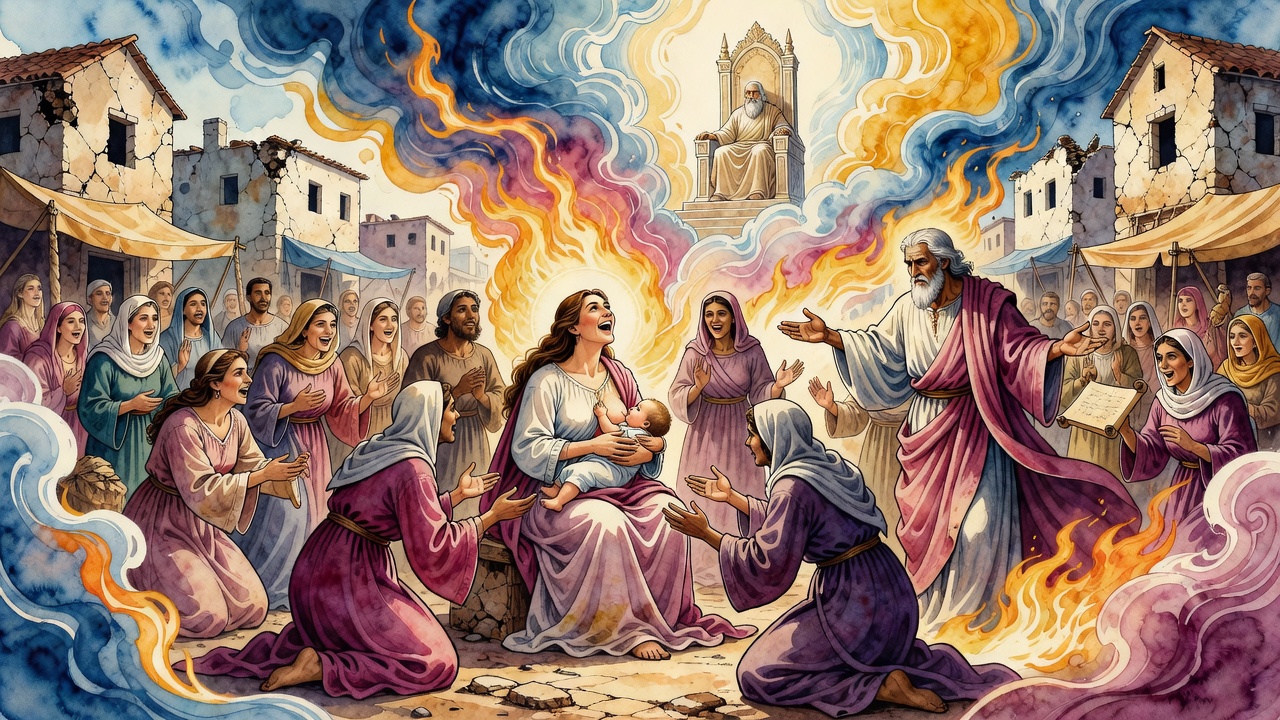
When Rabbi Shmuel died, a storm tore across the Land of Israel and ripped trees from the ground. Whole trunks went over. Roots stood in the air like hands. The wreckage sat beside his life as if the land itself had been harvested for his joy and now collected the debt in wind.
People who had frowned at the dancing now watched orchards break. The same wood that had spun above wedding tables lay shattered in fields and ditches. Grief arrived as weather. No one needed a sermon to feel the link between the man who loved myrtle and the land that threw myrtle's cousins down.
They gathered for the funeral with dust in their eyes and the memory of those three branches still oddly bright. Someone brought a living sprig and did not know where to set it. The coffin waited. The sky did not.
Fire Between Coffin and Crowd
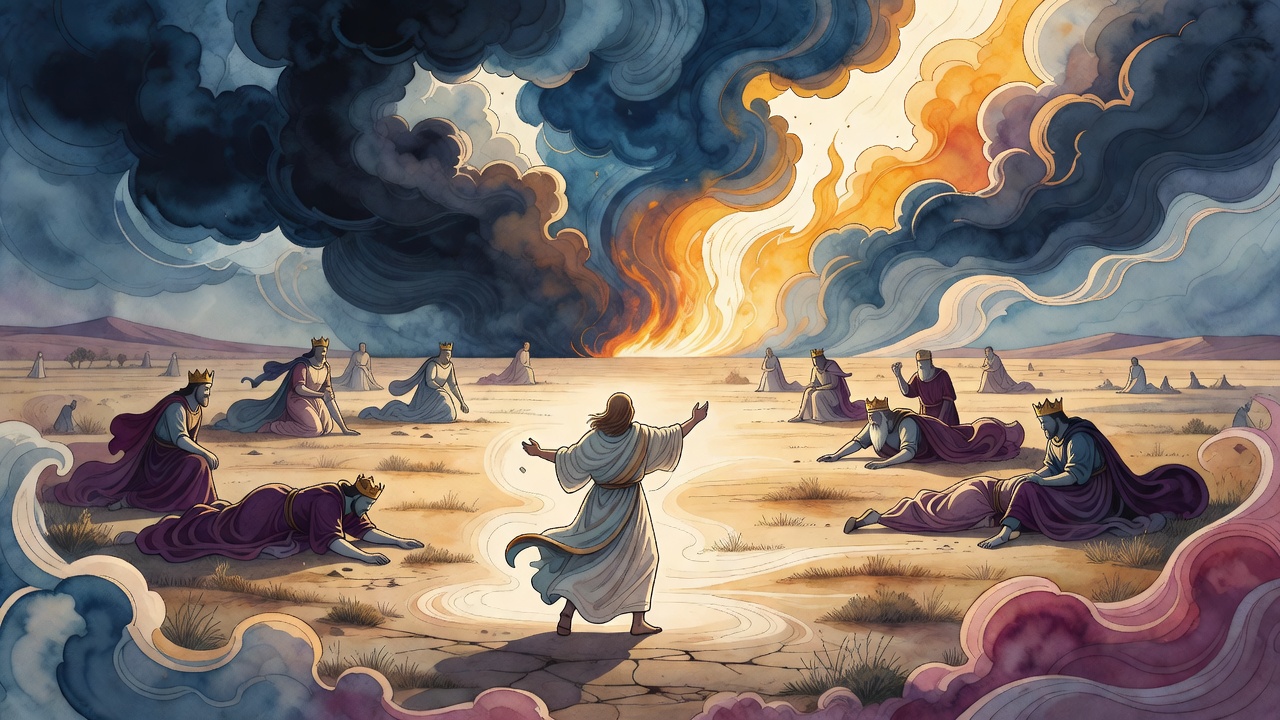
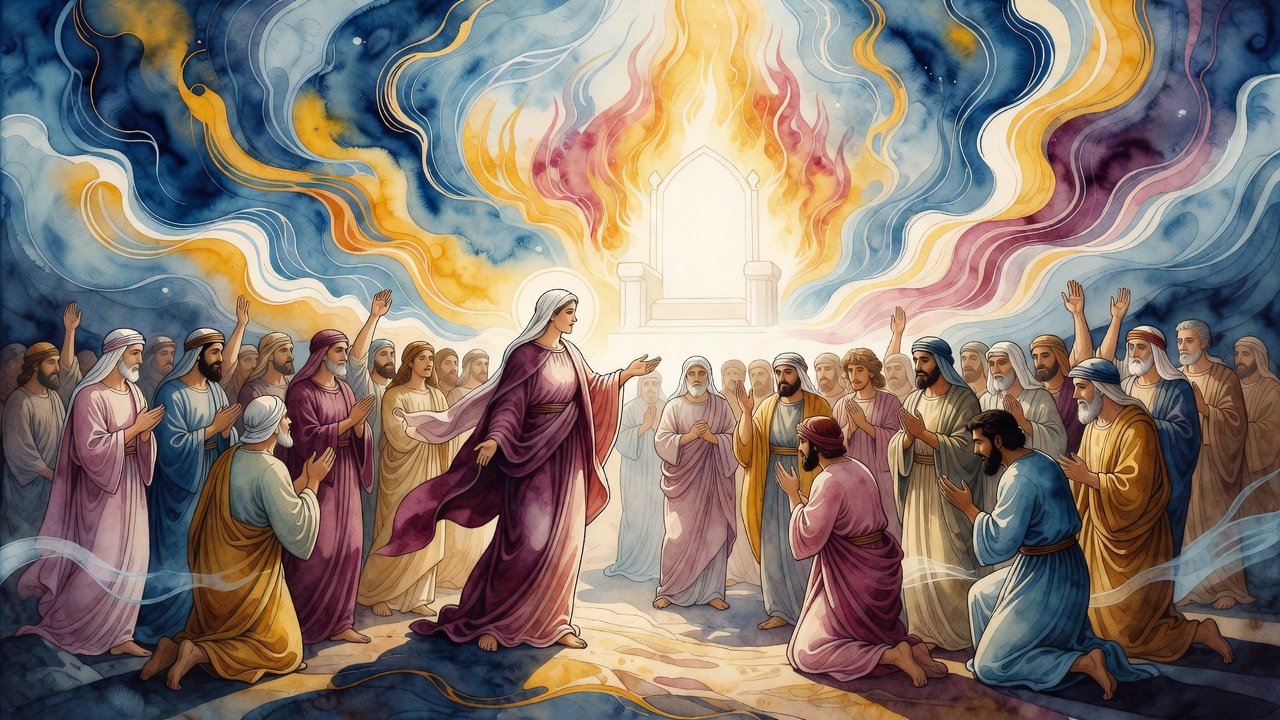
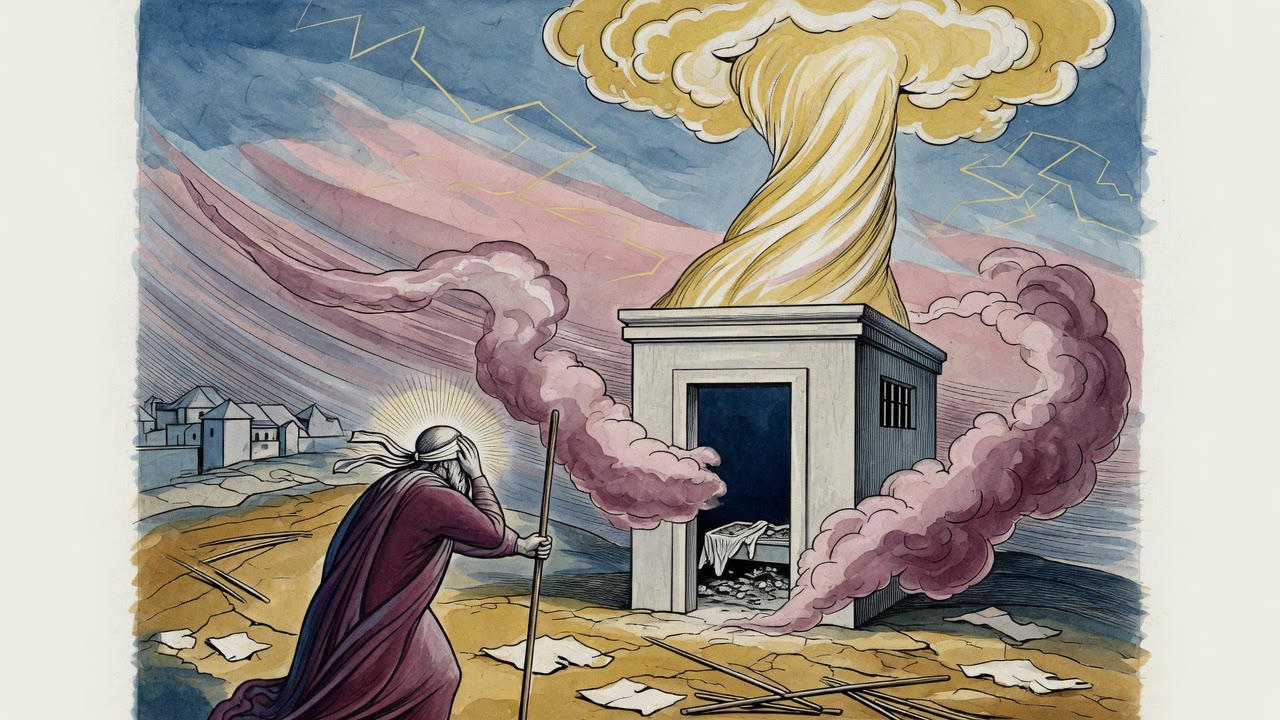
Then a branch of fire came down from the sky, shaped like myrtle, and took its place between the coffin and the mourners.
Not a metaphor. A burning form, green become flame, hovering where a living hand used to lift wood for a bride. Heat pressed the front row back a step. No one dared to bat it away. The crowd said what the sign forced them to say. "See this elder who rose and exerted himself in mitzvot (commandments)," they said. "So a branch rose for him."
The critics had asked whether joy belittled Torah. Heaven answered with a myrtle that could not be held, only witnessed. The honor they thought he had thrown away returned as fire that refused to scorch the coffin and refused to leave while the living still needed to look.
Shmuel could not bow to the sign. He was already still. The living had to rearrange their faces. A student who had once muttered about dignity wiped his eyes with a sleeve that smelled faintly, somehow, of old green oil.
Kindness That Buys a Grave
The same chain of teaching ties the pursuit of righteousness and kindness (Proverbs 21:21) to Abraham buying a burial place for Sarah in the cave of Makhpela (Genesis 23:19). Abraham chased righteousness in life and kindness in death. He counted silver into Hittite hands so his wife's body would rest with dignity in Canaan's soil. Life, righteousness, and honor followed him, the proverb's ledger filled in flesh and years.
Rabbi Shmuel's myrtles belong to that family of acts. Not silver for a cave, but motion for a bride. Not a purchase deed, but a body spent so another household's joy would not thin out under the weight of self-important silence. When his own burial came, heaven paid in fire what peers had been slow to pay in respect.
Abraham's kindness closed a grave. Shmuel's kindness opened a dance. Both stood inside the same verse about those who pursue righteousness and kindness until life and honor find them, whether the tool is coin or spinning wood.
At the edge of the funeral the fiery myrtle held its shape a little longer, then only memory kept the flame. The storms quieted. Broken trees were cleared. The critics walked home lighter or harder, each according to his spine. Somewhere a living wedding still needed three green branches, and someone else would have to decide whether to pick them up while the sages watched.
← All myths