Rabban Gamliel Poured Wine at His Sons Wedding
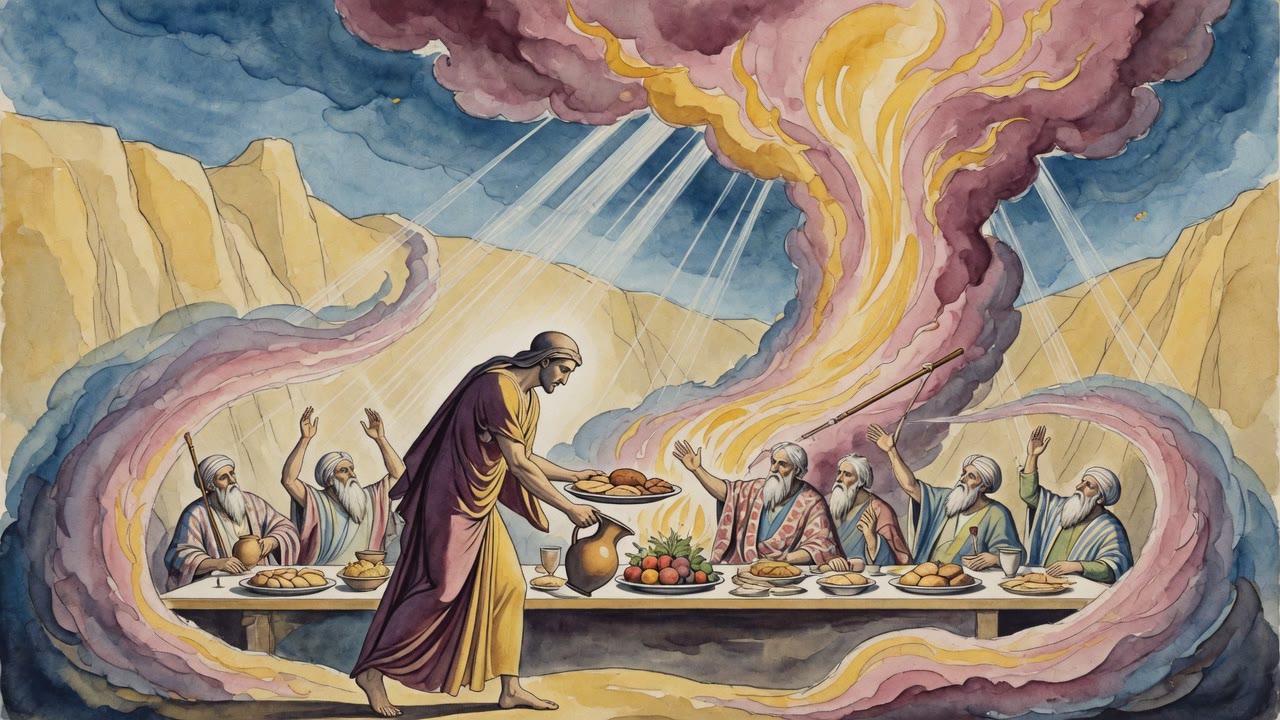
A flute missed a note when Rabbi Eliezer refused the cup. Rabbi Yehoshua drank instead, then set it down. A drop of wine marked the wood like a wound.
Table of Contents
 Click for full size
Wine in the Nasi's Hand
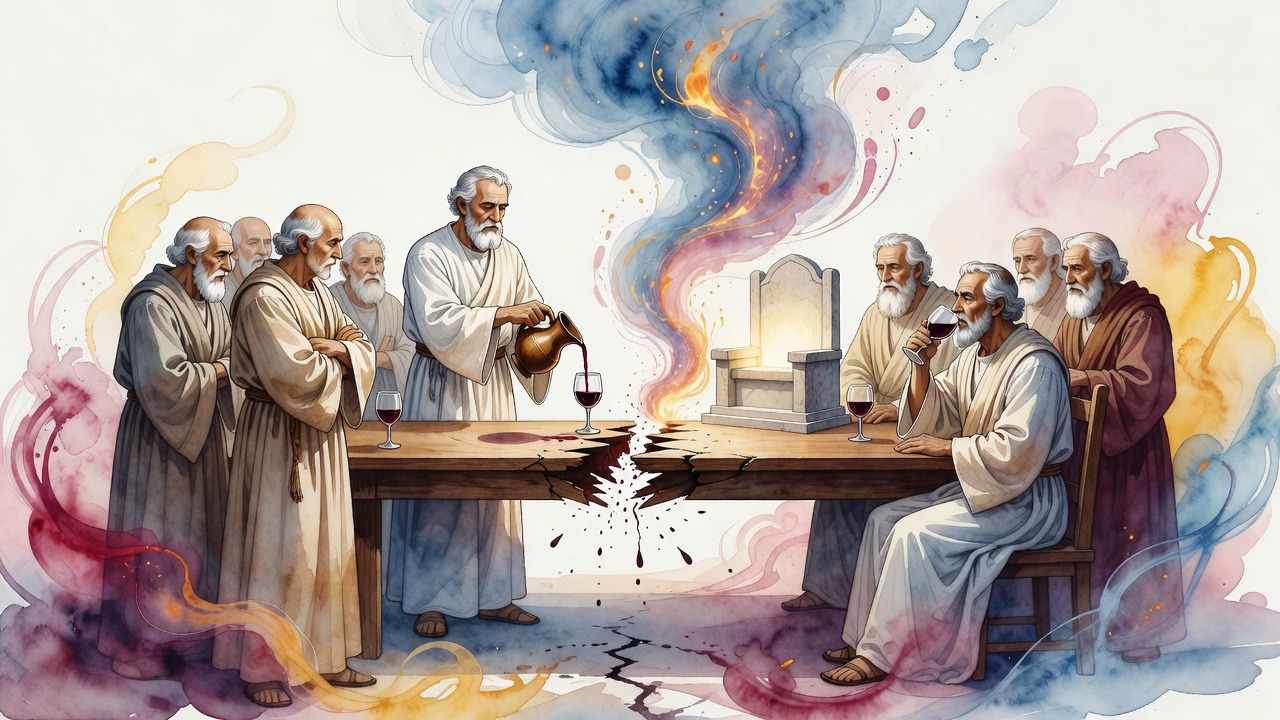
The wedding house roared with heat and song. Lamps smoked along the beams. At the center table the greatest of the generation sat with empty cups, and Rabban Gamliel himself moved among them with a pitcher, not as Nasi of Israel but as a father who would not let hired hands alone serve the guests who had come for his son.
He stopped first at Rabbi Eliezer. The cup was offered. Rabbi Eliezer's mouth tightened. He would not take wine from the man who stood above them in rank while they sat like clients at a feast. The refusal was polite and hard as stone.
Rabban Gamliel turned. The pitcher caught the light. He offered the same cup to Rabbi Yehoshua. Across the room a flute missed a note and recovered, as if even the music had noticed the pause.
What Is This, Yohoshua
Rabbi Yehoshua took it. He drank. The room did not quiet, but the corner of the table where the sages sat suddenly felt smaller than the house.
"What is this, Yohoshua?" Rabbi Eliezer said, using the name like a prod. "We are seated, and Rabban Gamliel stands over us and serves us?"
The insult, if it was an insult, was aimed at the order of the world. Teachers do not pour for students. Princes do not wait tables. A generation that blurs those lines, Rabbi Eliezer feared, will wake up not knowing who is owed silence and who is owed speech. He had spent a lifetime guarding the edges of honor so that Torah would not become a marketplace of charm.
Rabbi Yehoshua set the cup down carefully, as if the clay itself might crack under the weight of the answer. A drop of wine marked the wood like a small wound.
Abraham and the Dusty Guests
"Let him serve," Rabbi Yehoshua said. Then he reached for the oldest story that still had dust on it. Abraham, greatest in the world, ran to serve men he took for wandering Arabs, idolaters with sand on their hems, and only later learned they were messengers of the Holy One. If Abraham could set a table for strangers whose god he did not share, should Rabban Gamliel not pour for sages who shared his?
The argument landed with force. Humility is not a theory when wine is in the hand. Hospitality is not a verse when legs ache from standing. Rabbi Yehoshua would not let the feast become a courtroom of rank alone. He had seen too many men confuse dignity with distance.
Rabbi Eliezer's face did not soften. Across the table, Rabbi Tzaddok raised his chin. The bridegroom's laugh from the outer room sounded briefly like another world.
Who Sets the Table for Every Man
"You have left the honor of the Lord," Rabbi Tzaddok said, "and occupied yourselves with the honor of flesh and blood." He who spoke and the world was, he said, makes winds blow, lifts vapor, hangs clouds, brings rain, pushes green through crusted soil, and sets a table before every living person. If the Creator serves bread to the wicked and the righteous alike, shall Gamliel be forbidden to pour for those who sit under his roof?
Silence widened. Song from the outer room sounded suddenly far away. Rabbi Yehoshua had defended human humility with Abraham. Rabbi Tzaddok had lifted the dispute until even Abraham looked small beside the daily service of heaven. Rabban Gamliel stood with the pitcher still half full, neither prince nor servant, only a man caught between two true honors.
He poured for the next guest without announcing a verdict. The wedding had to go on. Arguments at a feast do not always end with applause. Sometimes they end with wine finding the bottom of a cup and a father returning to his son's joy while three sages sit with heat still in their faces.
The Blind Teacher and the Secret
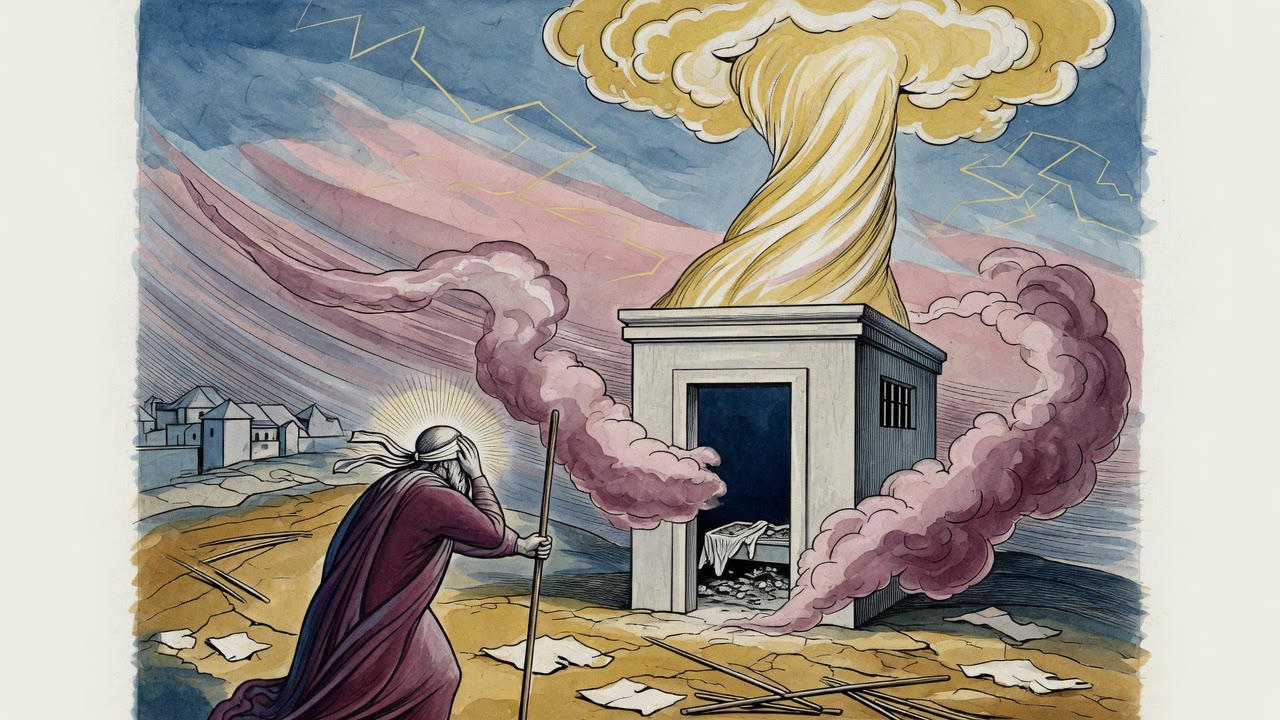
Years fold. In another town a student walked dusty roads to Lod to ask Rabbi Eliezer what had been taught in the study house. The student was Rabbi Yosi ben Durmaskis, hungry for a new word. Rabbi Eliezer answered with a thin-sounding law about Ammon and Moab and the poor man's tithe in the Sabbatical year.
Yosi spoke sharply, as if the old master were trading on private knowledge for status. Then Rabbi Eliezer stretched out his hands and received his sight, for he had been blind, and he wept. "The secret of the Lord is with those who fear Him," he cried, and he sent the teaching back down the chain from Rabbi Yochanan ben Zakkai, from his teacher, from Moses at Sinai. Counting and cleverness were not enough. Awe was the door. Secrets do not sit with the richest or the loudest. They sit with those who fear, and only after with those called righteous.
The wedding cup and the blind teacher's tears do not cancel each other. One scene teaches that honor can kneel. The other teaches that knowledge must kneel too. In both, a man who might have clung to rank learns that the Holy One keeps a longer table than any nasi, and a stricter secrecy than any academy.
When Yosi left Lod, the road looked the same, but the law he carried no longer felt like a trophy. It felt like a trust. That is how secrets survive the journey from Sinai to a dusty town and from a wedding table to a blind man's restored eyes.
← All myths