5 min read

The Fig Tree and the Season of the Righteous

Students leave a fig tree and the owner begs them back. Unpicked fruit turns wormy, teaching that God harvests each righteous soul in its season.

Curated by Arthur · Told by Maggid ·
Table of Contents
  1. A lamp that goes out clean
  2. Ishmael's years and the word for a righteous end
  3. Fasting so Torah will live in the house
  4. Worms as teachers of timing

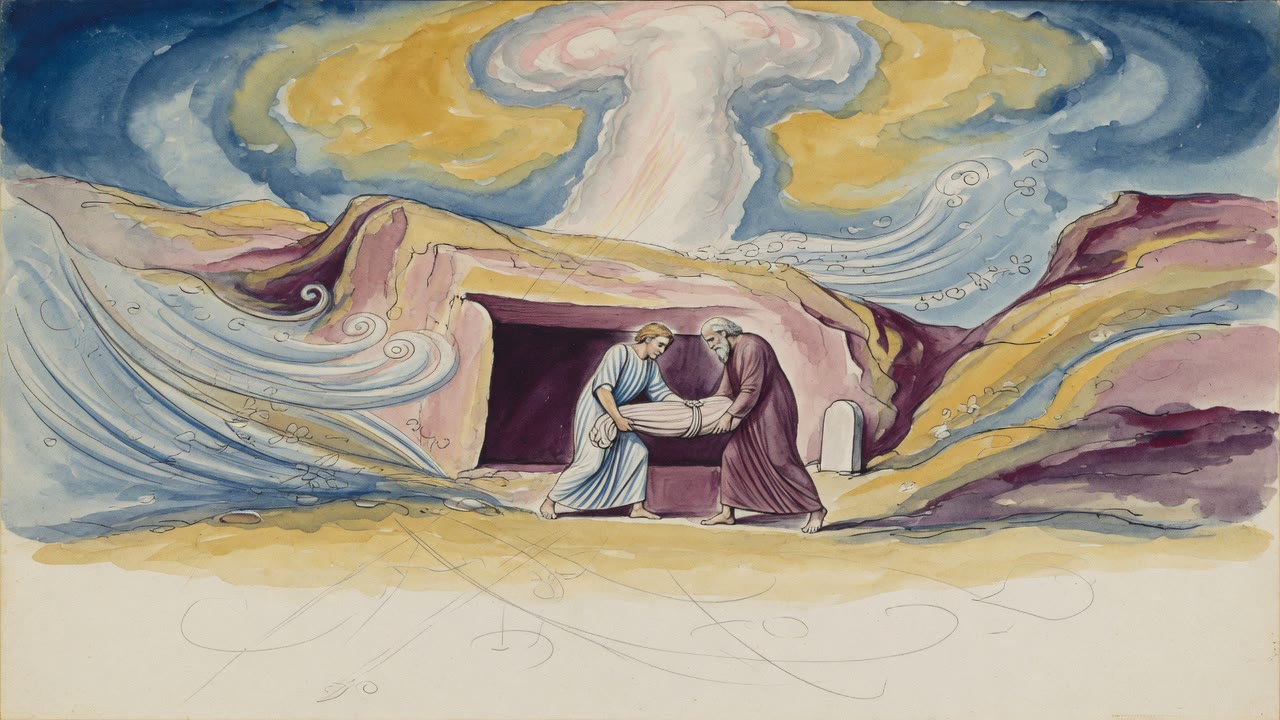
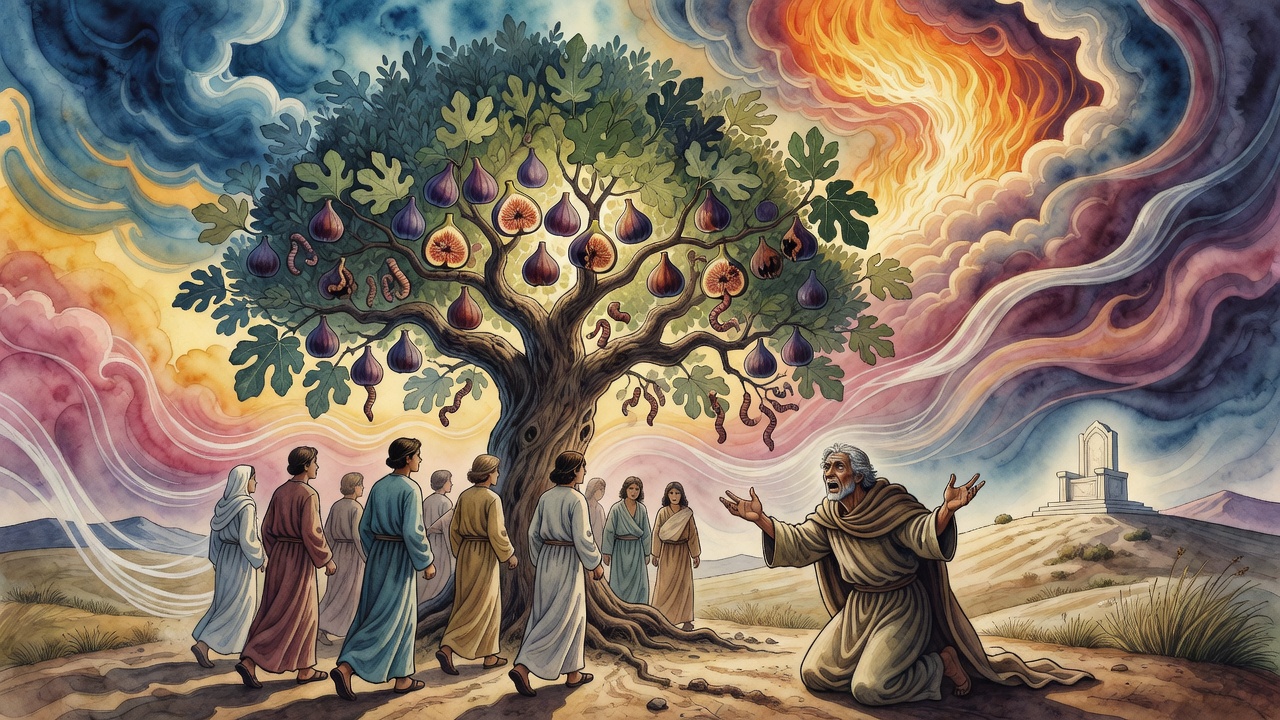
Before dawn the students sat under a neighbor's fig tree and learned. Leaves moved. Pages of memory opened. The owner, watching from his doorway, grew uneasy. Perhaps they thought he suspected them of stealing fruit. The circle moved to another spot to spare him shame. He came running after them with a complaint no thief would expect from a man guarding his orchard.
The Fig Tree and the Season of the Righteous Click for full size

"You have robbed me," he said, "of the merit your learning brought to my tree." To prove the hour of ripeness, he left the figs unpicked one morning. The sun rose. The fruit turned wormy on the branch. The owner of the orchard knows the exact moment each fig is ready. So, the sages taught, does the Holy One know the season of every righteous soul, and delay itself can be a kind of spoiling.

A lamp that goes out clean

Rabbi Yehudah and Rabbi Abahu asked whether there is mercy in death and answered with ordinary images. A lamp that burns down and goes out on its own spares wick and vessel. A fig gathered at the right moment is good for the picker and good for the fruit. Pluck too early or leave too long, and you ruin what you love. Death, in this teaching, is not only a taking. It is a harvest timed by Someone who knows the orchard better than the students who studied in its shade.

The teaching turns gentle. God does not simply seize the righteous. He first lets them glimpse the reward waiting, like a king who shows guests the banquet before they rest, so they fall asleep content. Rabbi Abahu near his end saw thirteen rivers of fragrant balsam and could scarcely believe they were his. Other sages died with verses of trust on their lips. "Precious in the eyes of the LORD is the death of His devoted ones," and the righteous woman laughs at the last day because the picking was not random.

Ishmael's years and the word for a righteous end

Why count the years of Ishmael when the chosen line runs through Isaac? The sages read the tally as a hidden ledger by which Jacob's age on the day of the blessing can be reckoned. Nothing in the verse is idle. Even a brother's lifespan becomes a lamp for counting the chosen's steps across a family history full of rivalry. Then the Torah says of Ishmael that he expired and died. Wherever Scripture chooses that word expired, the tradition hears the mark of a righteous end. The wild contender, at the last, is granted the language of the upright, a sign that he turned in repentance before he died.

A single closing verse does double work: it dates Jacob's blessing and quietly redeems Ishmael's death. The fig and the lifespan agree. Heaven times the picking, and Heaven can still write "righteous" over a life that began in strife and spent years outside the main tent, if return comes before the branch is left too long in the sun.

Fasting so Torah will live in the house

Not every righteous season ends in a deathbed vision. Some are purchased with hunger while the body is still strong. Rabbi Joseph fasted eight times, terrified that love of Torah might not pass to his children. He was not asking for wealth. He was asking that his sons love to study. Rabbi Yehudah the Prince personally taught the daughter of Rabbi Tarfon, becoming the teacher a dead father could no longer be. Rabbi Zeira fasted for a colleague's soul and sat in a fiery furnace unhurt, singed only once. What you love, you fast for. The life of Torah in a house is paid for with time and appetite, not with slogans about legacy.

Place those fasts beside the fig tree. The students' learning was merit for a tree; a father's hunger is merit for a lineage. Both are ways of ripening a world so that when the final picking comes, the fruit is ready and the house is not empty of song. The owner who ran after the students understood that Torah under branches is a kind of rain. The rabbis who fasted understood that rain must sometimes be begged with an empty stomach.

Worms as teachers of timing

The unpicked figs turning wormy are almost cruel as pedagogy, and that is why the midrash keeps them. Mercy is not infinite delay. Mercy is right season. Students thought they were being polite by leaving; the owner taught them that their presence was itself a blessing the fruit needed. So too the righteous life is not only private virtue. It is a presence that keeps other trees from spoiling, a shade under which neighbors grow better than they know until the shade is gone.

When Ishmael receives the word of a righteous death, and when Abahu sees balsam rivers, and when Joseph fasts for children not yet learned, the orchard expands. Timing, repentance, and labor before the end all belong to the same Husbandman. The myth does not promise that every death feels sweet. It promises that the One who times figs also times souls, and that learning, fasting, and return can still sweeten the hour when it comes.


← All myths
From the tradition

Sources

3 sources

The texts behind this telling. Some cards carry a translation of the source; others are our own retelling of it, and each card says which. Every card links out to the original.

Yalkut Shimoni on Torah 110:6Yalkut Shimoni on Torah

Translation of the source text.Torat Emet (Yalkut Shimoni) · CC-BY-NC

What is the difference between the death of the young and the death of the old? Rabbi Yehudah and Rabbi Abahu disagreed. Rabbi Yehudah said: This lamp, when it goes out by itself, that is good for it and good for the wick; but as long as it does not go out by itself, that is bad for it and bad for the wick. Rabbi Abahu said: This fig, when it is gathered in its season, that is good for it and good for the fig; when it is gathered out of its season, that is bad for it and bad for the fig.

Rabbi Chiyya the Great and his students - and some say Rabbi Akiva and his students, and some say Rabbi Yose ben Chalafta and his students - were accustomed to rise early, sit, and study beneath a certain fig tree. The owner of the fig tree would rise early and pick its fruit. They said: Perhaps he suspects us [of taking the figs]. What did they do? They changed their place. He went to them and said: My masters, the one good deed by which you used to gain merit for me, sitting and studying beneath my fig tree, you have abandoned it. They said to him: We said, perhaps you suspect us. He reassured them and they returned to their place. What did he do? He rose early in the morning and did not pick them, and the sun shone upon them, and they became wormy. They said: The owner of the house knows when it is the fig's season to be picked, and he picks them. So too the Holy One, blessed be He, knows when it is the season of the righteous, and He gathers them. This is what is written, "My beloved has gone down to his garden" (Song of Songs 6:2).

"Old and full" (Genesis 25:8). This is what is written, "Strength and dignity are her clothing, and she laughs at the last day" (Proverbs 31:25). All the giving of the reward of the righteous is prepared for the world to come. And the Holy One, blessed be He, shows them while they are still in this world the reward He is destined to give them in the world to come, and their soul is satisfied and they sleep. This is comparable to a king who made a feast for guests, and he showed them what they would eat and drink, and their soul was satisfied and they fell asleep. So too the Holy One, blessed be He, shows the righteous while they are still in this world the reward He is destined to give them in the future, and their soul is satisfied and they sleep. What is the reason? "For now I would have lain down and been quiet; I would have slept; then I would have been at rest" (Job 3:13).

When Rabbi Abahu was dying, he saw thirteen rivers of balsam. He said to them, "Whose are these?" They said to him, "Yours." He said, "These are for Abahu? 'And I said, I have labored in vain, I have spent my strength for nothing and emptiness; yet surely my judgment is with the LORD, and my recompense with my God'" (Isaiah 49:4).

Zavdi ben Levi, Rabbi Yehoshua, and Rabbi Yose ben Patra - the three of them recited these verses as they were dying. One of them said, "For this let every godly one pray to You" and so on (Psalms 32:6). One of them said, "You prepare a table before me; You anoint my head with oil; my cup overflows" (Psalms 23:5), and "Let all who take refuge in You rejoice" and so on (Psalms 5:12). And the other said, "For a day in Your courts is better than a thousand" (Psalms 84:11). The Rabbis said, "How abundant is Your goodness, which You have stored away" (Psalms 31:20). Thus, at the time of the departure of the righteous from the world, the Holy One, blessed be He, shows them the reward prepared for them. And when? Close to their death, as it is written, "Precious in the eyes of the LORD is the death of His devoted ones" (Psalms 116:15). This is the meaning of "and she laughs at the last day" (Proverbs 31:25).

Full source
Midrash Aggadah, Genesis 25:17Midrash Aggadah

Translation of the source text.Midrash Aggadah (Buber), Public Domain, on Sefaria · CC-BY-SA

"And these are the years of the life of Ishmael, one hundred years, etc." (Genesis 25:17). And why were the years of his life written? So that we may know through it how many years Jacob was when he was blessed by his father.

"And he expired and died" (Genesis 25:17). Every place where "expiring" is stated, he was a righteous man.

Full source
Gaster, Exempla of the Rabbis, no. 96The Exempla of the Rabbis (1924)

Retold in our words. Read the original at the link below.The Exempla of the Rabbis, Moses Gaster (1924) · PD-US-pre-1929

Three quiet stories, each one about keeping Torah alive in a household.

Rabbi Yehudah, the Prince, the redactor of the Mishnah, personally undertook the education of the daughter of Rabbi Tarfon. In an age where girls were rarely taught formally, Yehudah sat down with this one and shaped her learning himself. He understood what Tarfon's absence from the world left behind, and he made himself the teacher the father could no longer be.

Rabbi Joseph, terrified that the love of Torah might not carry into the next generation of his family, fasted eight times, two fasts, four times over, as a discipline of pleading. He was not asking for wealth or for healing. He was asking that his children should love to study. He fasted because he knew that the love of Torah cannot be commanded, only invited, and he was willing to afflict his own body to tilt the invitation toward his sons.

Rabbi Zeira fasted on behalf of Rabbi El'a, a colleague whose soul he feared would have a hard time in Gehinnom. And Zeira's fast was so deep, the tradition says, that he sat in a fiery furnace unhurt, tested, but not consumed. He was singed only once.

Gaster's Exempla (no. 96, 1924) gathers these three because they make a single point: in the world of the rabbis, what you love, you fast for. The life of Torah in a house is not a happy accident. It is paid for with hunger and with time.

Full source