The Scholar Who Smelled Hell Beside His Grave
A righteous scholar returned in every dream to say his burial smelled like a privy, until the living built a stone wall between his grave and the wicked.
Table of Contents
 Click for full size
The Burial Everyone Thought Was Finished
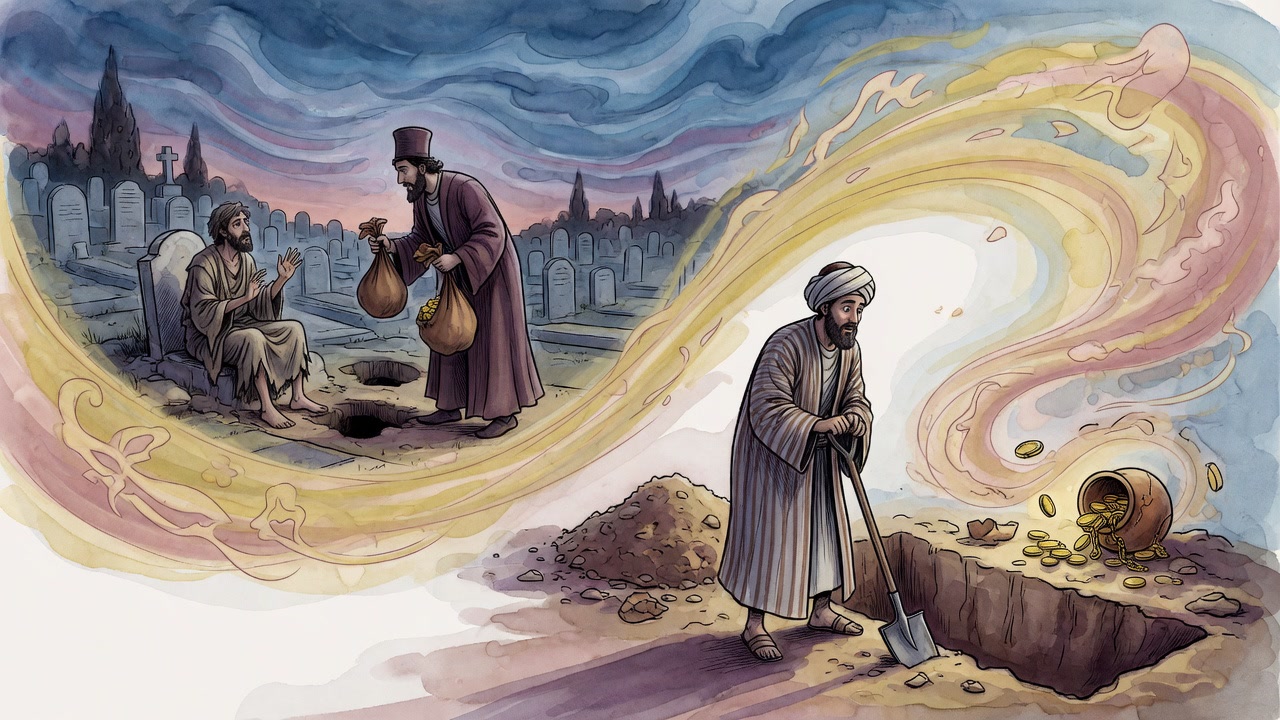
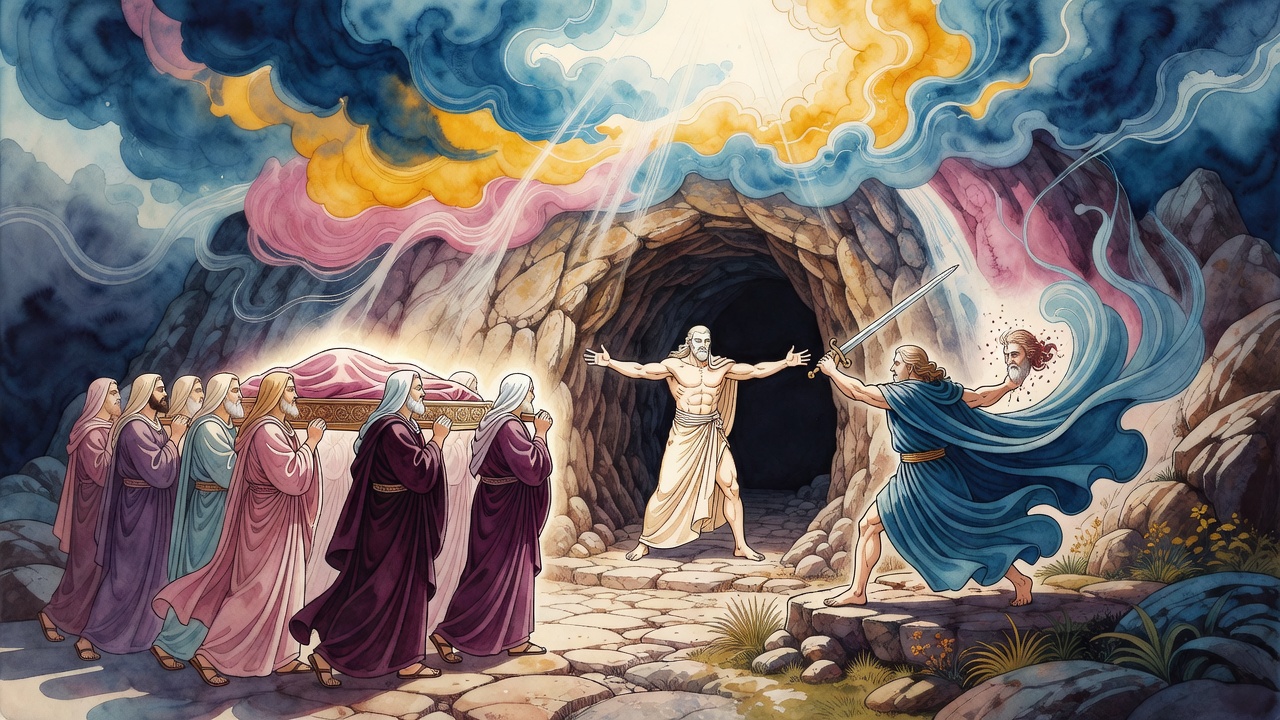
The city closed the grave and washed its hands in the basin by the gate. The righteous scholar had been carried with honor, eulogized with the right verses, covered with the right earth, mourned with the right number of days. Women tore cloth. Men said the words that put a life into the past tense. Then the mourners went home to soup and sleep. The cemetery returned to wind and tilted stones. Living people assume death ends logistics. They are often wrong, and the wrongness arrives after dark when no one is holding a shovel.
That night the scholar came to everyone in a dream, not as a soft blessing, not as a farewell wave from the next world, but as a plaintiff who had found the docket still open.
Beside a Privy
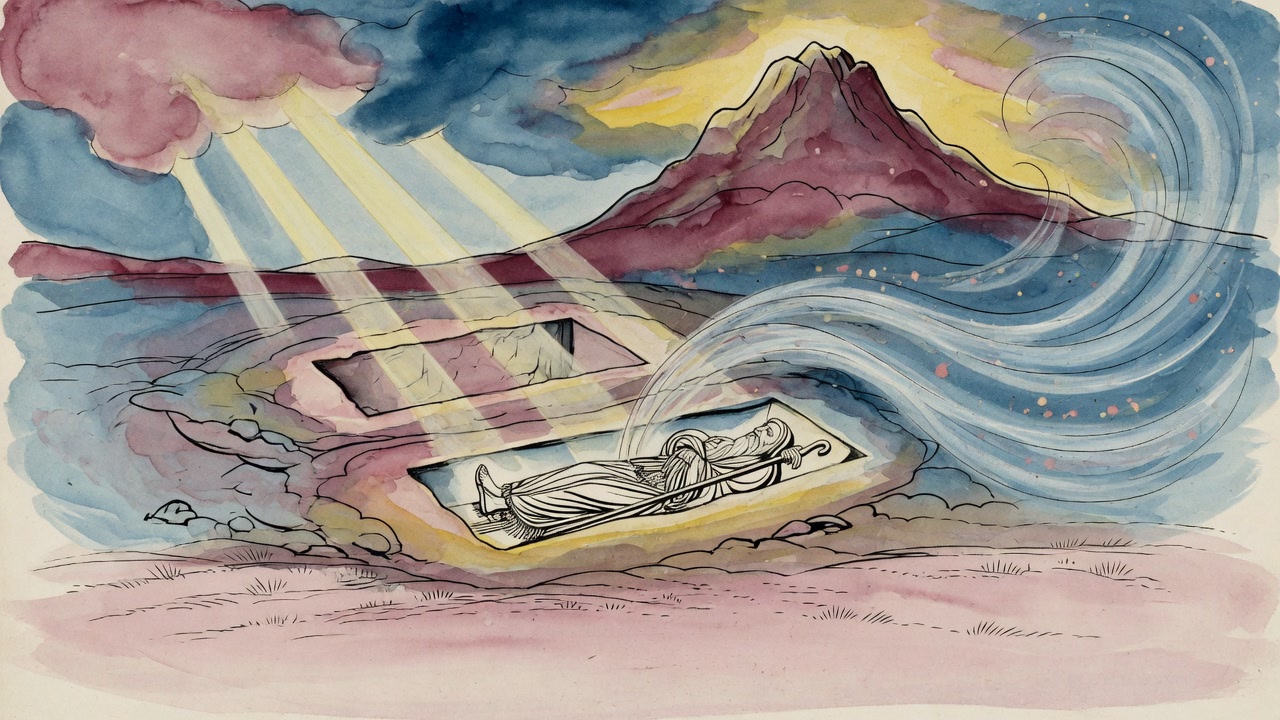
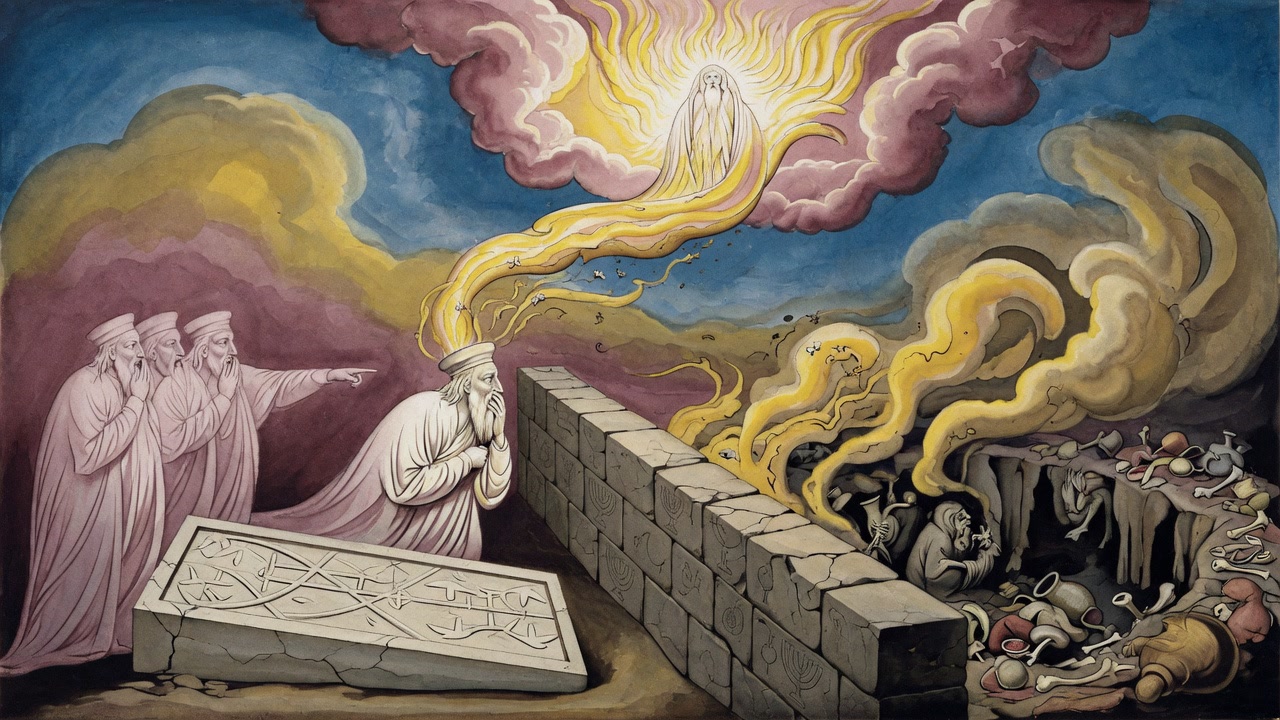
He did not praise their tears. He did not thank them for the stones set at his head. He said they had wronged him. They had buried him beside someone unworthy, and to him the place was like being set next to a privy. The smell was foul. Smoke rose and pained him, a spiritual weather that still had the manners of a body. Proximity after death, he insisted, still had moral weight. The wicked neighbor's grave pressed against his the way a stain presses into cloth and refuses to pretend it is only fabric touching fabric.
The living woke shaken, some angry, some ashamed, some already bargaining with the idea that grief invents visitors. One dream can be dismissed as the mind's theater. The same complaint in many mouths, with the same smell and the same demand, cannot be filed under coincidence. Men who had not spoken in weeks found they had shared a visitor. Women who thought they had imagined the scholar's face discovered the neighbor's wife had seen him too, standing with the same offended stillness.
The city had a problem that no eulogy could fix. The dead man wanted a boundary.
The Answer Made of Stones
They did not hold a long debate about the metaphysics of afterlife geography. They went to the cemetery with tools, ropes, and the kind of silence that means people have already decided. Between the grave of the righteous scholar and the grave of the wicked person they built a partition of stones, a wall thick enough to say the living had heard and heavy enough to stay when winter tried to argue. After that, the scholar did not return. The wall was enough. The dreams stopped as if a door had been shut on a hallway only the dead could walk.
Burial, in this telling, is not merely where a body lies. It is a last arrangement of honor, a seating chart for the world under the world. The dead can still be insulted by careless placement. The dead can still demand a boundary the way the living demand a seat away from a stench at a table. Sleep becomes the courtroom when daylight has closed the case too soon and congratulated itself on efficiency.
Smoke That Should Not Reach the Clean
The image is bodily and almost crude, and that is its power. Not light and darkness in the abstract. Smell. Smoke. The sense that corruption has a weather of its own, and the righteous refuse to breathe it even under the ground. The living had thought earth equalizes all, that dust is dust and the shovel is the last judge. The scholar taught them that moral distance continues after the shovel is put away, and that a community's laziness about who lies next to whom can become a torment with a voice.
Some in the town muttered that dreams are only leftover noise from the day, bread and worry reheated at midnight. Others remembered that dreams can come from angels, from demons, or from the sleeper's own thoughts, and that the hard work is telling which is which. A clean prophetic dream does not tangle with ordinary anxiety about taxes and children. A demon presses at the ear in the half-sleep, when the body cannot fully wake and the mind feels falsely alert. This visitation felt like complaint with a practical fix, not a riddle meant to keep them guessing forever. Build the wall. End the offense. Let the righteous rest without the smoke of the wicked in his face.
What the Wall Taught the City
Children later pointed at the partition and asked why two graves needed a fence when both men were finished with walking. Parents answered carefully, because the answer makes a child look at every cemetery differently. Because the dead are not finished with us when we are finished with them. Because honor is a shape you still owe after the last amen. Because a city that buries its scholars beside the wicked without thinking may find those scholars standing in its sleep until the stones go up and the air clears.
The wall stayed through rain and heat. Grass grew against it. The dreams did not resume. The lesson did not need a second visitation. Once the living learn that placement is moral, they do not easily unlearn it, even when they pretend the story was only a strange season of shared nightmares.
← All myths