5 min read

The Dead Forbade the Town to Abandon Its Cemetery

When a town planned to abandon its cemetery, the dead spoke in a dream, begged not to be left, and threatened death if the living walked away.

Curated by Arthur · Told by Maggid ·
Table of Contents
  1. Packing While the Graves Watched
  2. Do Not Abandon Us
  3. The Bond That Does Not End at the Shovel
  4. They Ignored the Night
  5. Which Voice in Sleep
The Dead Forbade the Town to Abandon Its Cemetery Click for full size

Packing While the Graves Watched

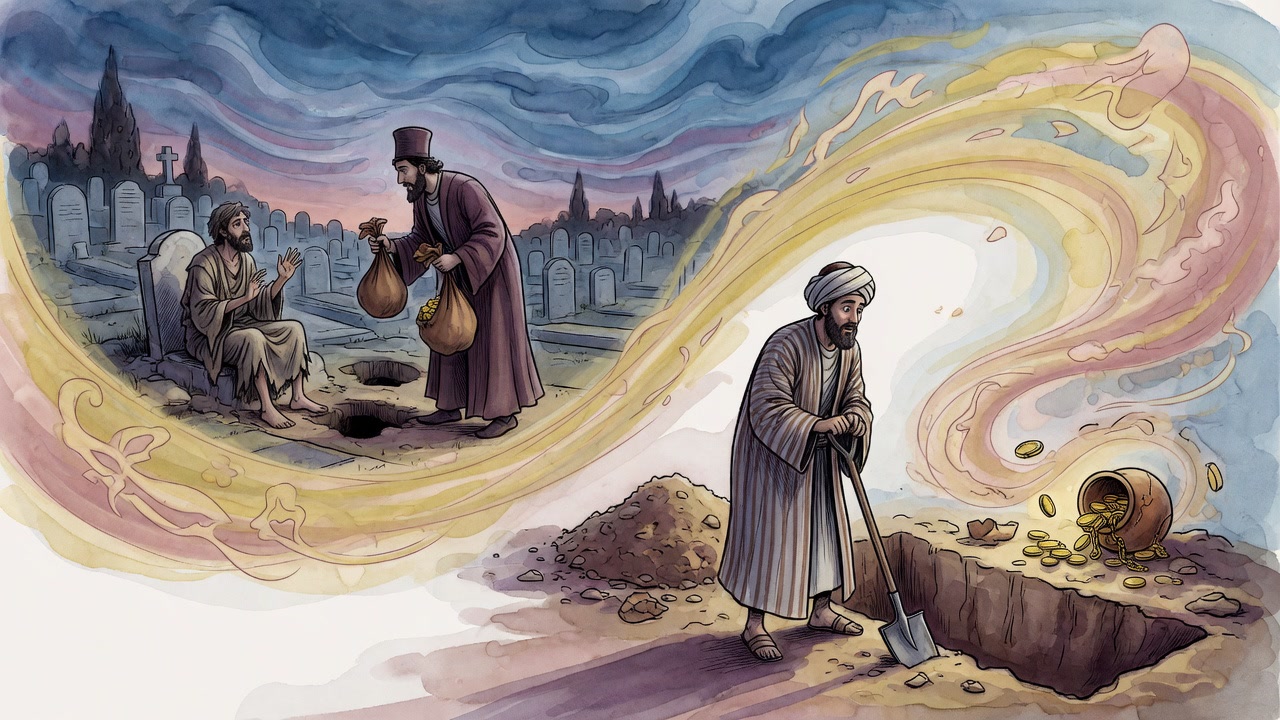
The town wanted to leave. Taxes, fear, better soil elsewhere, a landlord's hand growing heavier, the usual knives that cut a place loose from the map. Carts began to fill with pots, bedding, tools, the smaller children already half excited by the road. Families argued over which chairs were worth the weight and which memories could be abandoned without a ceremony. The cemetery sat at the edge of town the way it always had, quiet, stones leaning like old men at a gate, names the younger ones could barely read. No one asked the dead for permission. Permission is a living habit.

The dead asked anyway, and they did not ask politely.

Do Not Abandon Us

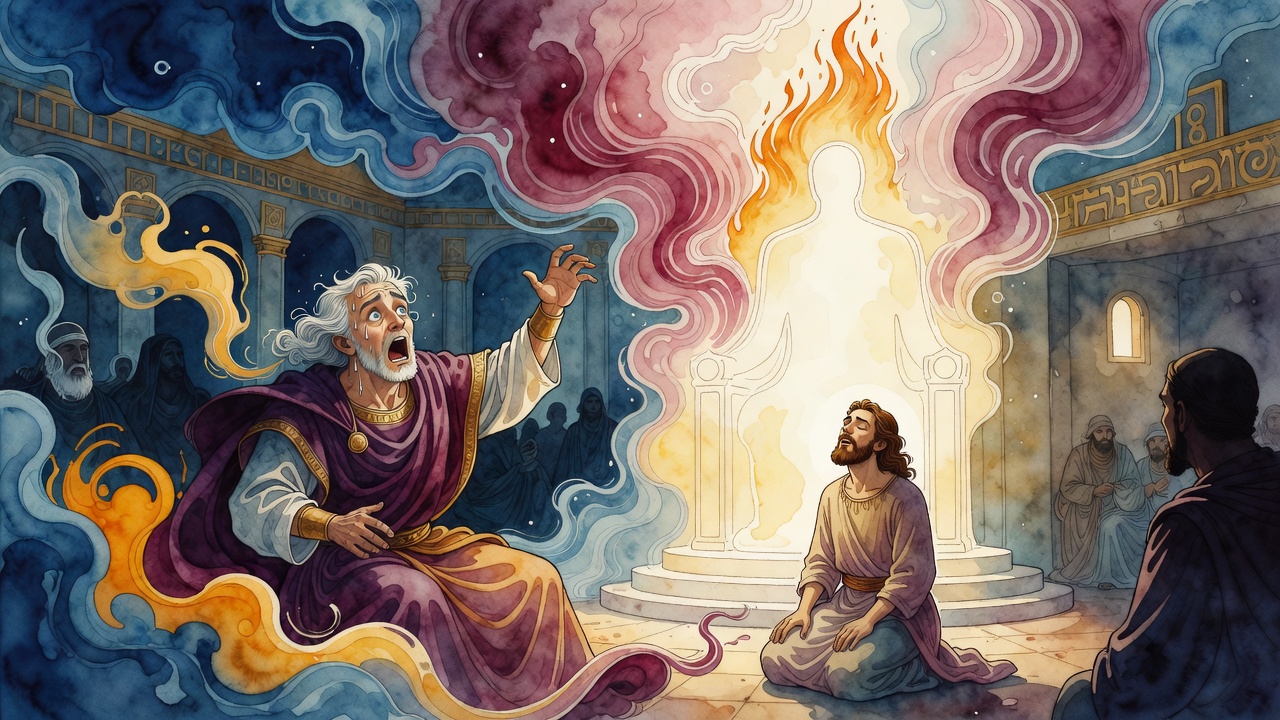
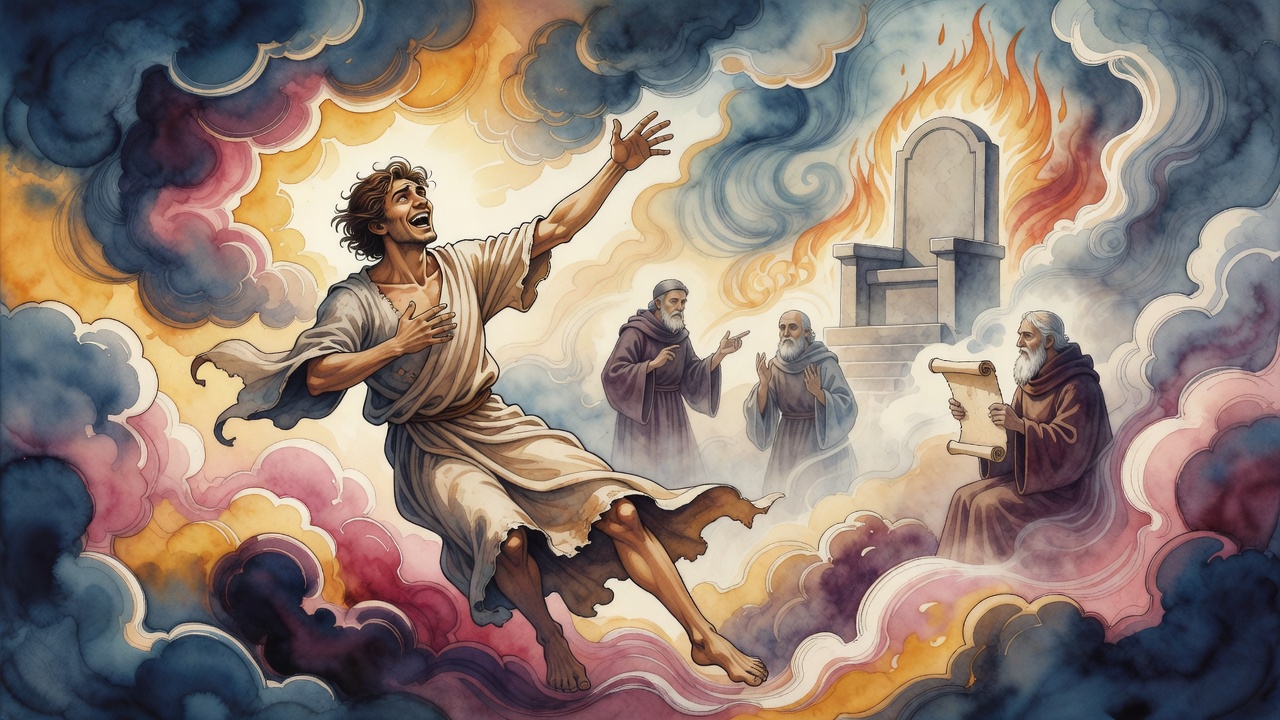
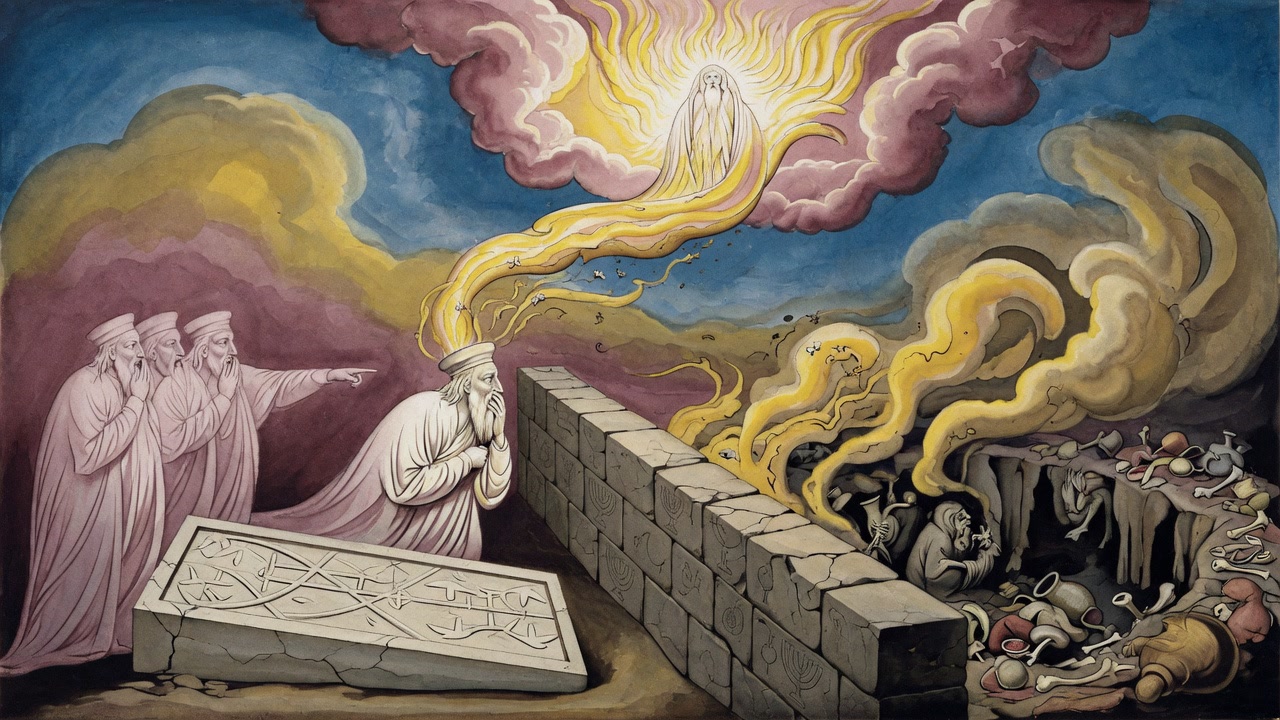
In a dream one townsman saw a dead person who spoke for those buried in the ground, not as a single lonely ghost but as a speaker for a whole field of mouths. "Do not abandon us," the dead warned. "We benefit when you come to the cemetery." Visitation was not decoration or nostalgia. Presence was food of a kind the living had never put on a ledger. Footsteps among the stones mattered. Prayers said where bones lay mattered. The simple fact of not being forgotten as a place mattered. The warning carried a threat sharp enough to wake a man sweating and already reaching for his boots. If the town left the dead behind, the living would be killed.

He told his wife before dawn. She told her sister at the well. By noon the dream had become a rumor with a spine, traveling faster than the packing lists. Some scoffed and called it fear dressed as piety. Some packed faster, as if speed could outrun a promise from under the earth. A few stopped mid-carton and stared toward the cemetery hill as if the stones might stand up and vote.

The Bond That Does Not End at the Shovel

Burial, in the pietist imagination, does not end obligation. The living who leave their dead without visitation do not only forget memory in the soft, private way families forget. They break a bond the dead still feel, a covenant of presence that outlasts the last shovelful of dirt. The cemetery is not a storage lot for finished stories. It is a neighborhood that still expects company, still registers absence, still knows when the town's noise has thinned toward departure.

The leaders of the town met in a room that smelled of dust and decision. They argued practicalities with the confidence of men who believe logistics can answer terror. Who would tend the graves if everyone left? Who would say Kaddish where no minyan (the ten adults required for public prayer) remained? Who would keep the wall from falling? The dream answered with simpler math than their committees. Stay, or die on the road. Mercy and threat braided into one sentence, the way a parent says both I love you and do not touch that fire in the same breath.

Outside, a cart horse stamped. Someone laughed too loudly at nothing. The cemetery kept its counsel in daylight.

They Ignored the Night

They ignored the dream. Carts rolled. Dust rose in a long brown banner behind them. The stones of the cemetery watched the last backs shrink toward the horizon, watched the gates left half secured, watched the quiet arrive too early for a place that had been full of living errands. What happened next the text leaves hanging like a blade above a neck, but the warning itself is the story's weight. A people can decide that the living must move for bread and safety, and still discover that the dead have a vote measured in blood and night speech.

Those who stayed later claimed the dream was true, pointing to empty roads and names missing from the next market day. Those who left, if any lived long enough to argue, claimed coincidence, illness, bandits, ordinary cruelty of travel. The tradition sides with the cemetery. It remembers the threat as serious speech, not theater for frightening children into visiting grandma's stone.

Which Voice in Sleep

Dreams are dangerous precisely because they are not one thing. An angel may bring a likeness from heaven, clean and unentangled. A demon may whisper in the ear canal while the body cannot fully wake, eyes shut, mind falsely alert. Hunger and longing throw their own pictures into the dark, and a man who has spent the day counting miles may dream of roads without any dead person voting on the itinerary. The town had to decide whether a dead neighbor speaking for a whole field of graves was prophecy, panic, or something meaner trying on a familiar face.

They chose motion over listening. The myth keeps the cost of that choice on the page even when it refuses to paint every corpse on the road. Come to the cemetery. Or learn what absence costs when the absent are not finished needing you.


← All myths
From the tradition

Sources

2 sources

The texts behind this telling. Some cards carry a translation of the source; others are our own retelling of it, and each card says which. Every card links out to the original.

Sefer Chasidim 709Sefer Chasidim

Translation of the source text.Sefer Chassidim, Zhitomir, 1857 + JewishMythology.com faithful English Beta translation · Public Domain

One community wanted to go to another place. A dead person came to one of them in a dream and said, "Do not leave us, for we have benefit when you go to the cemetery. If you leave us, know that you will be killed." They did not pay attention, and they were all killed.

Full source
Sefer Chasidim 441Sefer Chasidim

Translation of the source text.Sefer Chassidim, Zhitomir, 1857 + JewishMythology.com faithful English Beta translation · Public Domain

A dream that a person sees toward the end of sleep is close to happening first, and what he sees at the beginning of the night will happen later. Why does a dream come through much matter, and when it is interpreted according to its matter, it follows the mouth? Because nothing, whether good or bad, comes upon a person unless he first sees in a dream something like its pattern. A person does not merit seeing a dream without some likeness, unless it is the future event itself, without doubt or hesitation.

Thoughts are not true. When a person sleeps, thoughts mix with the words of the angel. Therefore dreams follow the mouth when they are interpreted according to their matter. The sages said that a dream is one-sixtieth of prophecy, and Scripture says, "I will use likenesses by the hand of the prophets." It is written, "I see an almond rod" (Jeremiah 1:11), because God hastens to perform His word. Through a parable, the human heart is prepared. Therefore it is written, "He took up his parable and said" (Numbers 23:7), and it is written, "to understand a proverb and a figure" (Proverbs 1:6).

In the dreams of the prophets, their thoughts did not mix in, nor did the word of the demon. But in the dreams of human beings, the words of the demon mix in. If a person needs to relieve himself, in his dream he appears tired and weary. If someone ate food containing pepper, drank, thought about a woman, and then slept, he dreams as if he is laughing and being intimate with a woman. Anyone whose soul yearns for a place or to do a certain thing, and whose whole soul is there, will see something like it in his dream.

All these dreams and the like are not dreams that the angel tells. He sees their likeness in his dream from his own thoughts. About them it is said, "the dreams speak falsely" (Zechariah 10:2).

But sudden dreams, where it seems as if a woman comes before him though he had not played with her before and had not thought about her, are from a demon. A dream that comes from a demon or spirit does not let a person sleep deeply. His eyes are as if closed, and he thinks thoughts, for the demon does not enter the thought. Rather, it whispers in his ear from the depth of the ear canal.

One who wants to know the truth in the morning should whisper into the ear of a small child something that he knows is dear to the child, and it will appear to him in his dream as if he dreamed something like what was whispered in his ear while awake. So the demon whispers, and the person wants to wake, but the demon blows before his nostrils and mouth, and the mind cannot return to the person in its proper state. In his own mind he is like a person awake.

All these dreams come from a demon, and about them it is said, "What has straw to do with grain?" (Jeremiah 23:28), because there is no substance in them. But a dream that comes through an angel, even though the person has not spoken or thought, comes when he is close to waking. Then the angel comes to tell him, because his thoughts and imaginings have already ceased.

Sometimes this happens at midnight or at the beginning of the night. But if the dream will not be fulfilled soon, it is not shown to him close to waking. When it is through an angel at the beginning of the night or at midnight, that dream is not mixed with another dream, and the person is not thinking about the vision he sees. If he thinks the thought, that dream is not through the angel, and neither the thought nor the dream will be fulfilled. It is like someone who threw a round object, and it rolls by itself to a place the thrower did not intend.

About dreams of an angel it is said, "In a dream I will speak with him" (Numbers 12:6), for the angel speaks inside the thoughts of a person like one leading a blind person. I said "like one leading a blind person" because the thought is sometimes true and sometimes false. So too a person in his dream. Do not be surprised. Even when a person is awake, the Holy One, blessed be He, turns the human heart to think falsely or to whatever the Holy One, blessed be He, desires, as it is said, "The king's heart is in the hand of the LORD like streams of water; He turns it wherever He desires" (Proverbs 21:1). It is written about Rehoboam, "for the turn of events was from Me" (I Kings 12:24), for Rehoboam became foolish and did not listen to the counsel of the elders. It is also written, "Who will entice Ahab?" (I Kings 22:20). The King turns thought to reflect on the thing the Holy One, blessed be He, decrees, all the more when a person sleeps and the mind is not directed toward the heart. For it says, "I will bless the LORD who has counseled me; even in the nights my reins instruct me" (Psalms 16:7). This teaches that at night, in a dream, the reins counsel. Therefore a person has no settled mind in a dream. He walks like a blind person. Sometimes he thinks truth and sometimes falsehood, and most of his thoughts are not directed.

Full source