Bar Kappara Clothed a Naked Roman and Saved His People
The tide left a Roman without a ship or a cloak. Bar Kappara pressed five coins into his palm. Years later the same palm held a decree.
Table of Contents
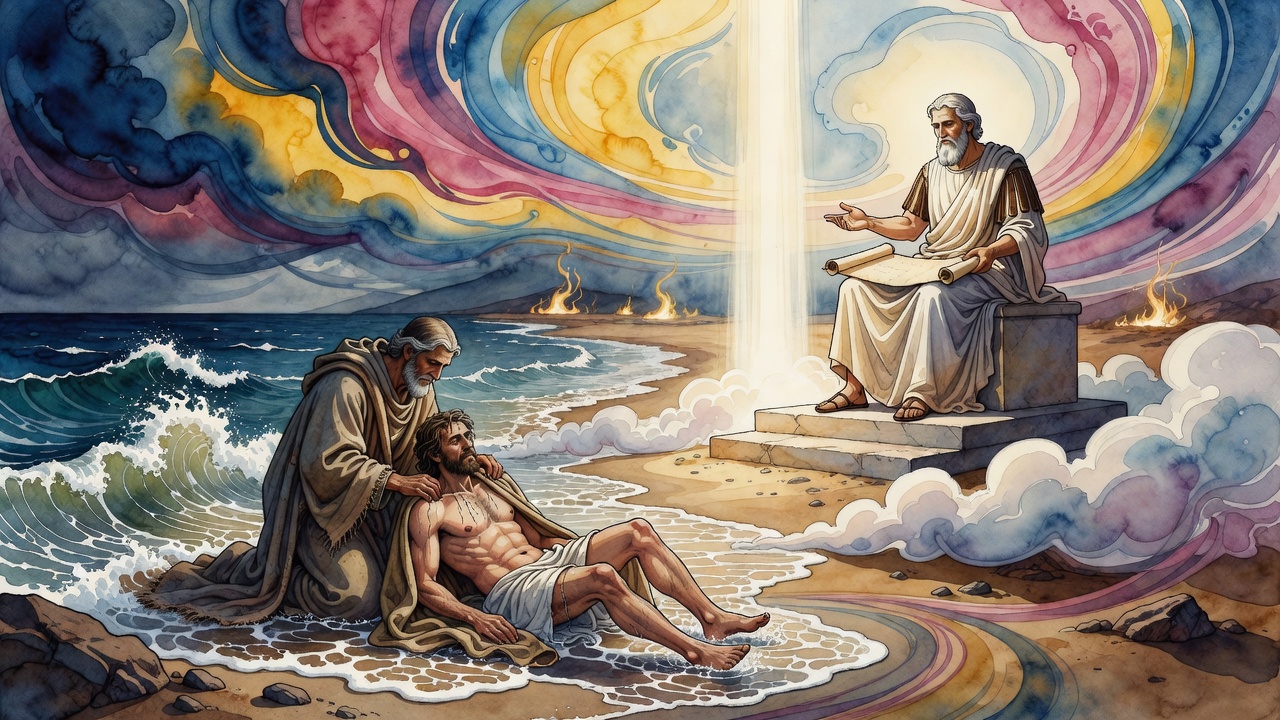
Bar Kappara found him where the tide leaves what it is finished with. Naked. Salt on the skin. No ship under him, no cloak on him. The title was still stuck to the man, Antipatos, a rank in Rome's machine, but a title does not warm a body.
 Click for full size
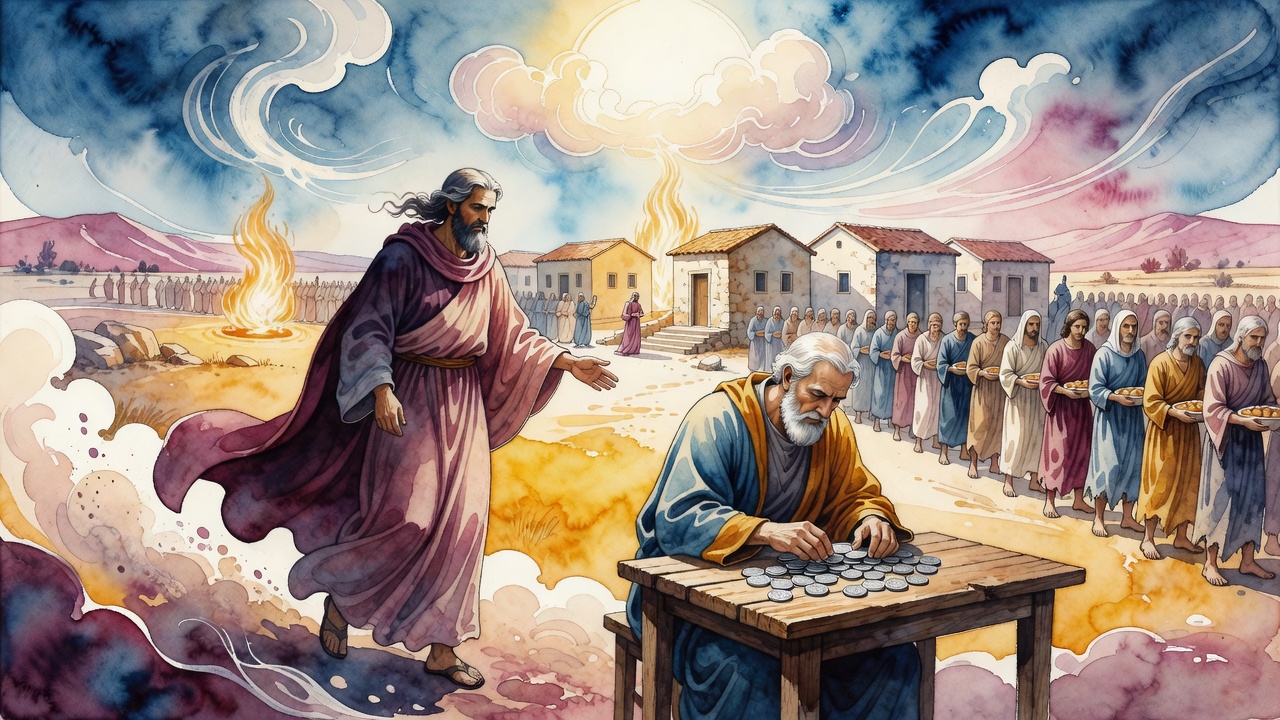
Bar Kappara did not ask which faction had owned the wreck. He took the stranger home. He sat him by the fire. He broke bread and poured oil. He put a cloak on shoulders the sea had burned. When the legs could hold, he pressed five selaim into the open palm for the road.
The man closed his fist around the coins and left without thanks.
Five Coins for the Road
The house smelled of bread. The coins clicked once in the palm and then were gone. That was the whole gift. Bar Kappara went back to his books and did not follow the road to see where a ruined Roman might walk.
The Antipatos vanished into the years. No letter came. No servant returned the cloak. Bar Kappara did not keep a ledger of kindness. He had fed a body. The rest was water.
Then Rome's mood turned, sudden and official, the way it always did. Persecution rose over the community. The people chose Bar Kappara to plead. He packed one hundred dinars, because in those days the empire did nothing without a fee. He walked toward a chamber of purple and iron with the purse under his cloak and a speech already dying in his mouth.
The Court That Remembered a Beach
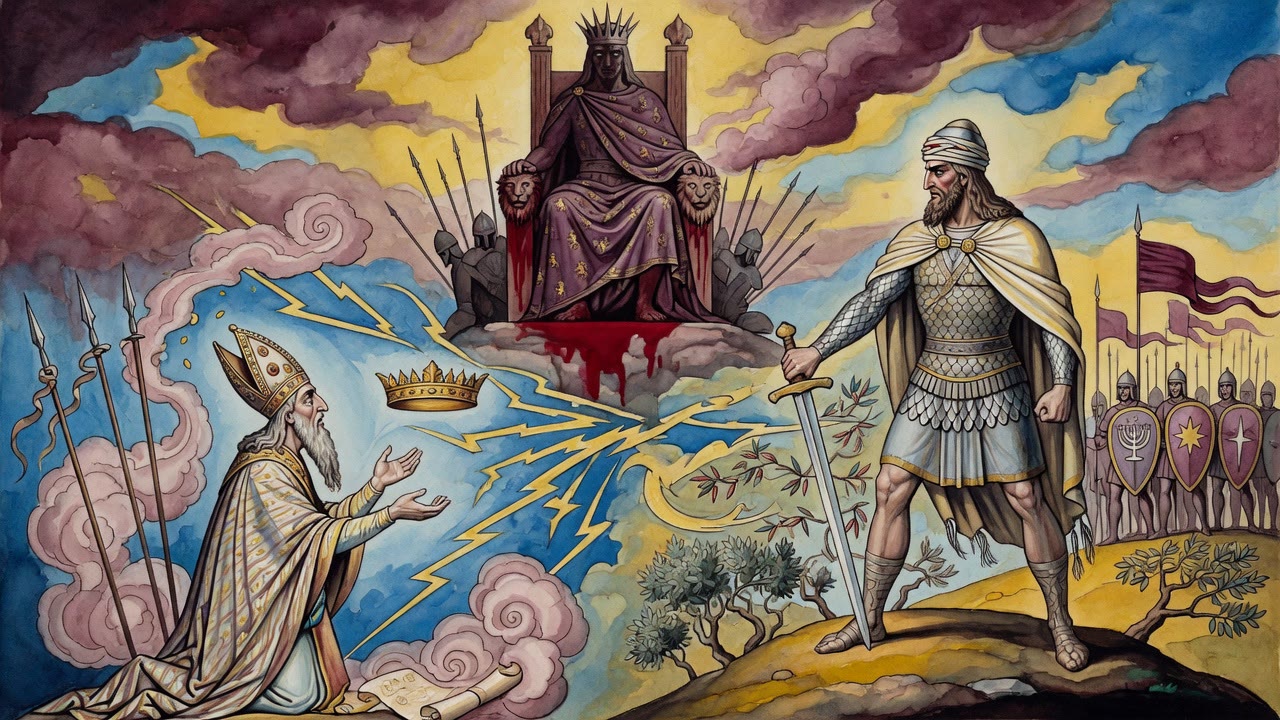
He entered and did not know the face under the robes. The face knew him.
The ruler looked at the purse, then at the man who had carried it. He did not ask for the speech. He did not weigh the dinars. He set the purse back on the table as if it had never been a bribe.
"You gave me five selaim on the beach," he said. "Here are one hundred dinars. I give them back, the sum you brought to buy me."
He granted the petition for free. The people lived. The bribe stayed in Jewish hands. Bar Kappara walked out of the court with the coins he had meant to spend and a decree he had not had to purchase.
Behind him the ruler sat in the chair that had once been a strip of wet sand. "Cast thy bread upon the waters, for thou shalt find it after many days" (Ecclesiastes 11:1). Five coins had found a whole community on the far side of time.
Two Officers and a Scroll
Mercy from one Roman did not close the empire. In another season the wicked kingdom sent two officers to the sages with a stranger assignment. Teach us your Torah.
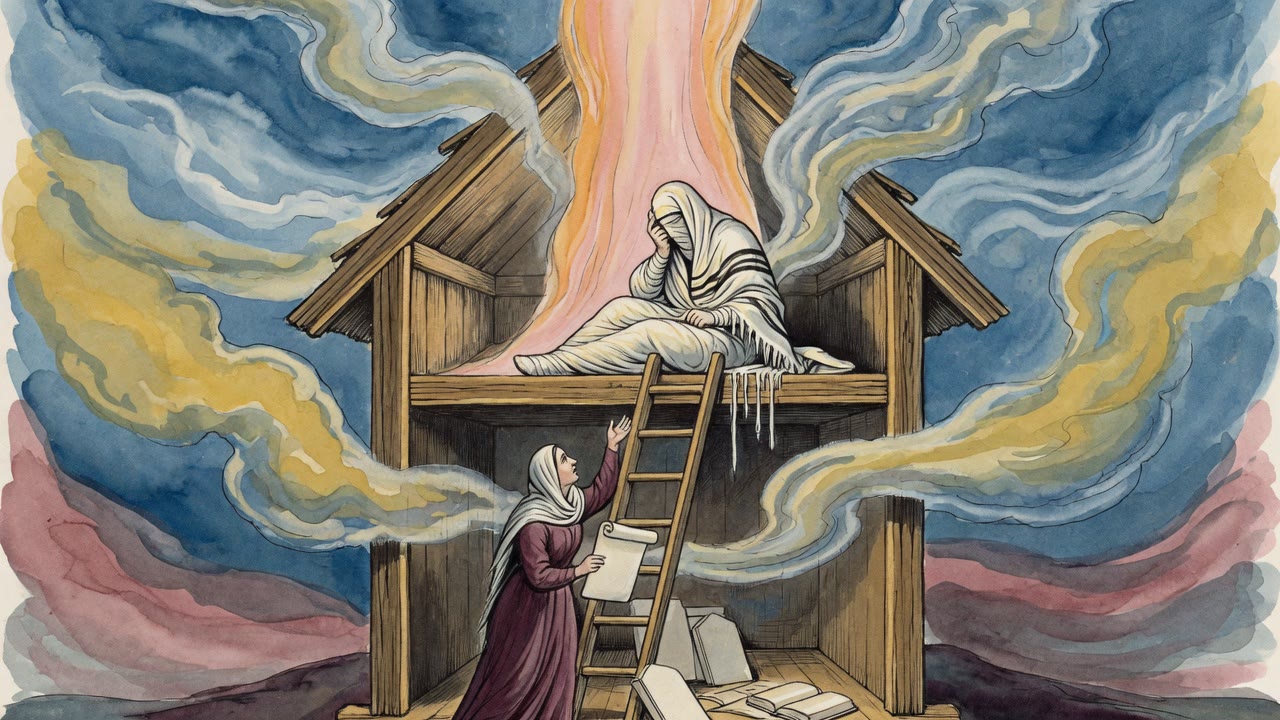
Bar Kappara was in the hall when they came. The manuscript was put into their hands. They sat. They read it three times through, the way auditors read a ledger, line after line, without looking up. Servants brought water. They did not drink until they had finished a pass.
When they rose to leave, they returned the scroll and stood in the doorway with one complaint left in their mouths.
"We have studied your law," they said. "We find it true, save in one particular."
The One Fault They Needed
The particular was an ox. "When the ox of an Israelite gores the ox of a stranger, you say the owner pays nothing. When the ox of a stranger gores the ox of an Israelite, you say the owner pays in full" (Exodus 21:35).
They had taken the word for neighbor and heard a fence. They needed that fence. Without it they would have had to say the whole book was just.
No one snatched the scroll back. The officers had already said the rest stood. They took their one seam and left, pride intact, the rest of the Torah still ringing in the room.
Bar Kappara stood with the returned manuscript and thought of a palm on a beach. One Roman had been clothed and had remembered. Two Romans had read and had conceded almost everything. The people who had lived by five coins now lived under that admission as well.
He could have kept the selaim. The hall could have locked the book. Instead a naked enemy had eaten at a Jewish table, and two officers had been forced to say, line by line, that the book they had come to score was true except for the seam they needed to keep.
The five coins stayed spent. The officers went home with their one fault. The community stayed.
← All myths